


Search results
Search for "electrodes" in Full Text gives 617 result(s) in Beilstein Journal of Nanotechnology. Showing first 200.
Uniform arrays of gold nanoelectrodes with tuneable recess depth
Beilstein J. Nanotechnol. 2021, 12, 957–964, doi:10.3762/bjnano.12.72
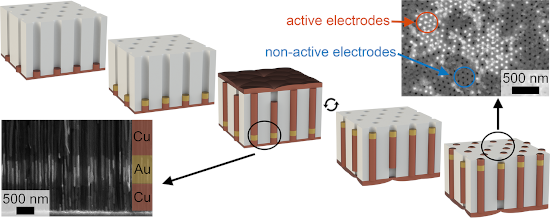
- approaches for the preparation of such systems is templated electrodeposition. In the present study, porous anodic alumina templates are used to prepare Au nanoelectrode arrays. Multistage electrodeposition is proposed for the formation of recessed electrodes with the ability to tune the distance between the
- electrodes with a small radius (usually less than 50 nm), which is comparable or less than the thickness of the electric double layer [1][2]. The main advantages of such systems include high mass-transfer rates under steady-state diffusion, diminished electric double layer capacitance, and short response
- direct-writing using electron beam lithography [11][12] or ion beam milling [13][14]) are limited by the ensemble area and expensive in mass production, but allow one to precisely tune the parameters of an array (a geometry of individual electrodes and the distance between them) over a wide range. An


The role of deep eutectic solvents and carrageenan in synthesizing biocompatible anisotropic metal nanoparticles
Beilstein J. Nanotechnol. 2021, 12, 924–938, doi:10.3762/bjnano.12.69

- surface coating with nanoparticles through electrodeposition. A general electrodeposition setup consists of three electrodes, that is cathode, anode, and a reference electrode [78]. The solvation property and the conductivity of DESs also play a critical role in determining the physical structure, yield


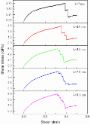
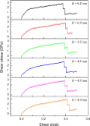
Effects of temperature and repeat layer spacing on mechanical properties of graphene/polycrystalline copper nanolaminated composites under shear loading
Beilstein J. Nanotechnol. 2021, 12, 863–877, doi:10.3762/bjnano.12.65
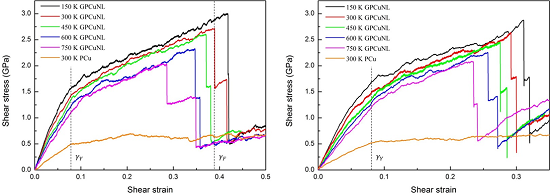
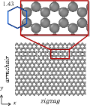
- properties in various fields, such as supercapacitors, integrated electrodes, catalysis, and sensors [10][11][12][13]. Furthermore, the interaction between graphene and matrix materials directly affects the mechanical properties of composites [14]. The van der Waals force between graphene and metals can













9.1% efficient zinc oxide/silicon solar cells on a 50 μm thick Si absorber
Beilstein J. Nanotechnol. 2021, 12, 766–774, doi:10.3762/bjnano.12.60
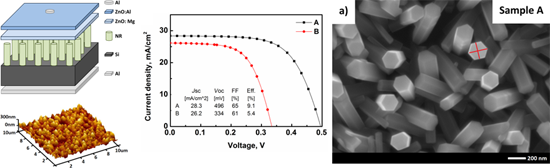
- structured top electrodes were examined by numerous measuring techniques. Scanning electron microscopy revealed a grain-like morphology of the magnesium-doped zinc oxide film. The size of the grains is closely related to the structure of the nanorods. The external quantum efficiency of the cells was measured
- , allowing us to construct a 3D top electrode and to improve light collection/harvesting in cells with such electrodes. Figure 3 shows cross sections of the studied photovoltaic structures. The cell labeled as sample A contains ZnONR grown via the hydrothermal method. On the nanorods, an MZO film was


Recent progress in magnetic applications for micro- and nanorobots
Beilstein J. Nanotechnol. 2021, 12, 744–755, doi:10.3762/bjnano.12.58
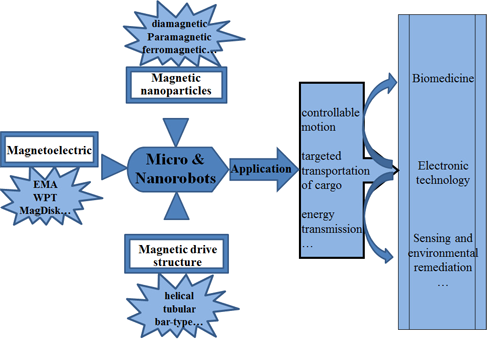
- improve and perfect micro- and nanorobotic systems. A combination of magnetic drive and micromixer can also be applied to MNRs. For example, there have been a variety of electromagnetic micromixers, including external permanent magnets, electromagnets, microstirrers, and integrated electrodes. The


Nanogenerator-based self-powered sensors for data collection
Beilstein J. Nanotechnol. 2021, 12, 680–693, doi:10.3762/bjnano.12.54
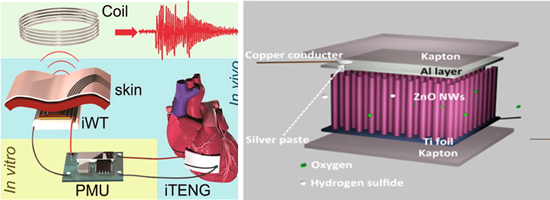
- under exposure to oxygen (O2), hydrogen sulfide (H2S) gas, and water vapor. The sensitivity to H2S gas was as low as 100 ppm. The design of the whole self-powered sensor system consists of three parts. A ZnO NW array as the piezoelectric energy generation module, Ti foil and Al layer as electrodes, and
- consisted of top and bottom Cr/Au electrodes, ZnO NWs on the electrodes and a flexible polyester substrate. Figure 6a shows the PENG fixed to the inner surface of the tire with adhesive tape. The output voltage of the PENG changed with the deformation of the tire during rolling. Figure 6b shows the output





A review of defect engineering, ion implantation, and nanofabrication using the helium ion microscope
Beilstein J. Nanotechnol. 2021, 12, 633–664, doi:10.3762/bjnano.12.52
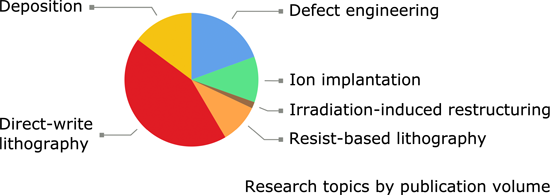
- irradiating just one side of a portion of WSe2 bridging two metal contacts to create semiconducting (pristine) and insulating (irradiated) halves contacted by the source and drain electrodes (Figure 2b). Direct-write of further logic circuits into single flakes of WSe2 and WS2 has also been demonstrated [26


High-yield synthesis of silver nanowires for transparent conducting PET films
Beilstein J. Nanotechnol. 2021, 12, 624–632, doi:10.3762/bjnano.12.51
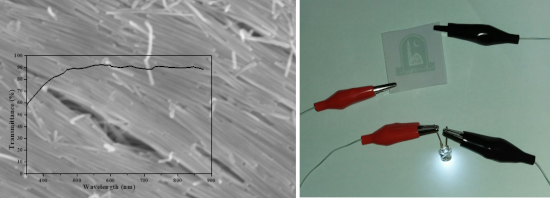
- electrodes made of sputtered indium tin oxide (ITO) films [1][2][3]. These films are widely used because of their high transmittance, low sheet resistance, and high electrical conductivity. Yet, they still have some major drawbacks such as high cost, intrinsic brittleness due to the ceramic nature [4], and


Properties of graphene deposited on GaN nanowires: influence of nanowire roughness, self-induced nanogating and defects
Beilstein J. Nanotechnol. 2021, 12, 566–577, doi:10.3762/bjnano.12.47
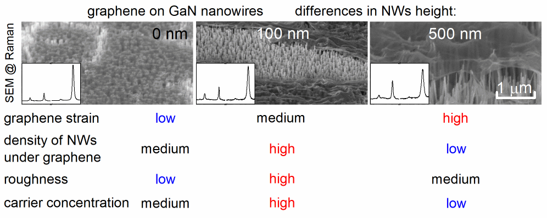
- interesting experimental material to study [1][2][3]. Importantly, it is a promising material for new kinds of low-dimensional transistors, gas sensors, ultra-capacitors, electrodes for solar cells, and for van der Waals heterostructures. In order to construct these devices, an interaction between graphene





On the stability of microwave-fabricated SERS substrates – chemical and morphological considerations
Beilstein J. Nanotechnol. 2021, 12, 541–551, doi:10.3762/bjnano.12.44
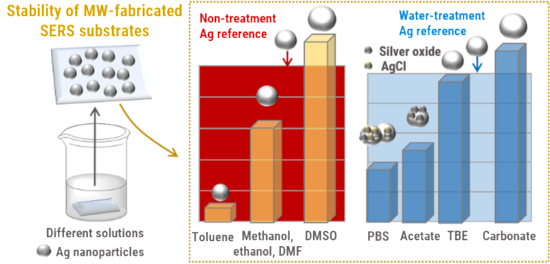
- Raman signals can be significantly improved when the measurements are performed on roughened silver electrodes [5], an understanding of the SERS enhancement process has been gained from a large number of investigations. This has rationalized the requirements for a good performance of SERS substrates


Determining amplitude and tilt of a lateral force microscopy sensor
Beilstein J. Nanotechnol. 2021, 12, 517–524, doi:10.3762/bjnano.12.42
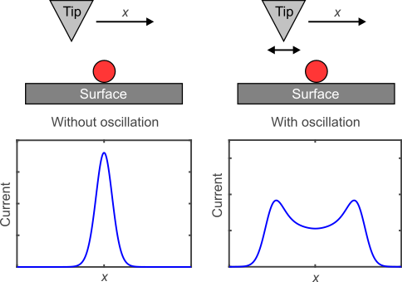
- , however, does not take the real geometry of the sensor and electrodes into account. At low temperatures, the most common method is to use STM to calibrate the amplitude, provided that STM is available and that the sample is conducting. This method is often used for normal AFM, where the cantilever


Surface-enhanced Raman scattering of water in aqueous dispersions of silver nanoparticles
Beilstein J. Nanotechnol. 2021, 12, 497–506, doi:10.3762/bjnano.12.40
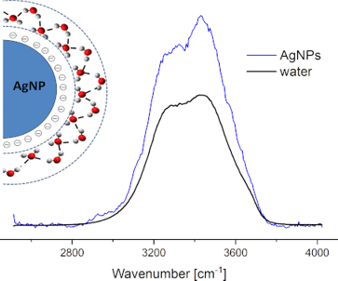
- discovery of the SERS effect in 1974 [27], most of the research is focused on biomolecules and medical applications [28][29]. The SERS effect of water has been studied since 1980. There are reports on the SERS effect of water in aqueous solutions of electrolytes placed between metal electrodes (Ag, Au, Cu


Boosting of photocatalytic hydrogen evolution via chlorine doping of polymeric carbon nitride
Beilstein J. Nanotechnol. 2021, 12, 473–484, doi:10.3762/bjnano.12.38
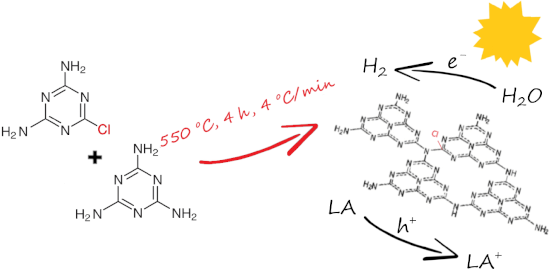
- three cycles of light on–off, the performance of both electrodes tends to stabilize, indicating that the photocatalysts are stable under visible-light irradiation [55]. The measurements obtained from electrochemical impedance spectroscopy (EIS) are shown in Figure 9b. It is known that the arc radius of


Solution combustion synthesis of a nanometer-scale Co3O4 anode material for Li-ion batteries
Beilstein J. Nanotechnol. 2021, 12, 424–431, doi:10.3762/bjnano.12.34
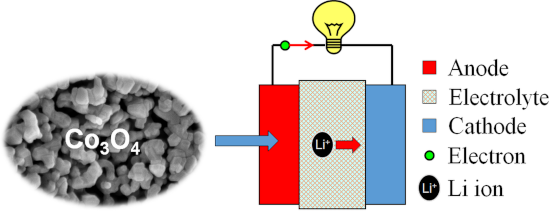
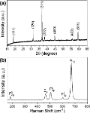
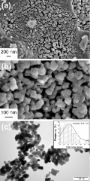
- , the lithium storage reactions associated with TMO electrodes are accompanied with large volume changes during lithiation–delithiation processes [1][2][3][4][6], but their volume variations are less significant [1]. This may lead to electrode pulverization and subsequent detachment of active materials
- cycle of Co3O4 electrodes and it has been frequently reported for Co3O4 nanostructures with various shapes [15][21][23][24][25][26][27][30][31][34][36]. This capacity fade is usually ascribed to an irreversible electrolyte decomposition, the formation of the SEI layer, and the formation of stable Li2O
- oscillates around 690 mAh·g−1 up to the 70th cycle. Then, it gradually fades and reaches about 533 mAh·g−1 after 100 cycles. Nevertheless, the measured capacity is still 1.43 times higher than the theoretical capacity of commercially used graphite electrodes (372 mAh·g−1 [10][21]). This behavior is


A stretchable triboelectric nanogenerator made of silver-coated glass microspheres for human motion energy harvesting and self-powered sensing applications
Beilstein J. Nanotechnol. 2021, 12, 402–412, doi:10.3762/bjnano.12.32
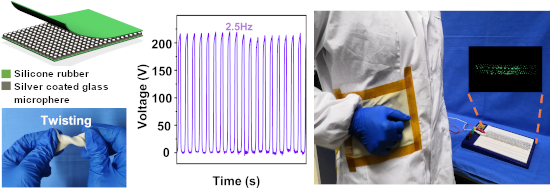
- contact-separated working mode with double electrodes makes it difficult to connect the current conducting wires to moving objects when trying to harvest mechanical energy. Besides, the organic–inorganic composites prepared by embedding relatively hard SCGMs into a soft silicone rubber matrix reduce the






Nickel nanoparticle-decorated reduced graphene oxide/WO3 nanocomposite – a promising candidate for gas sensing
Beilstein J. Nanotechnol. 2021, 12, 343–353, doi:10.3762/bjnano.12.28
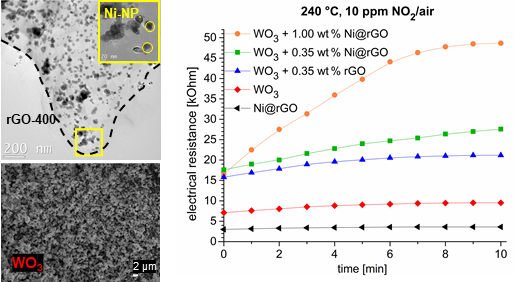
- , which leads to a rapid electron transfer from the surface reaction of the target gas with the MOS to the electrodes [35]. Additionally, MOS and graphene can form junctions at their interface. For example, p–p homojunctions can be formed between NiO and rGO to increase the gas sensing responsivity and
- placed in a tube furnace with a temperature regulator. To enhance electrical conductivity and to improve contact Ag electrodes were deposited on parallel sides of the pellets. The measurement procedure was carried out for NO2 and acetone in a stationary regime in a precisely controlled atmosphere (10 ppm


Intracranial recording in patients with aphasia using nanomaterial-based flexible electronics: promises and challenges
Beilstein J. Nanotechnol. 2021, 12, 330–342, doi:10.3762/bjnano.12.27
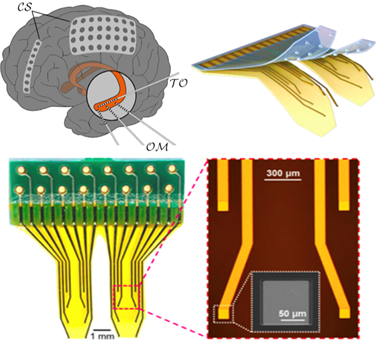
- reading processing. We then outline the strengths and weaknesses of iEEG in studying human cognition and the development of intracranial recordings that use brain-compatible flexible electrodes. We close by discussing the potential advantages and challenges of future investigations adopting nanomaterial
- , but its spatial resolution is rather poor. By placing electrodes on the scalp, EEG detects electrical activations of the brain. EEG has been used rather extensively in clinical settings to diagnose conditions such as epilepsy, brain tumours or damage, stroke, seizures, and sleep disorders by detecting
- aberrant EEG activity [3]. However, the quality of brain signals recorded from deep subcortical regions, such as the insula and hippocampus, remains questionable [4]. Similar to EEG, iEEG also uses electrodes to detect brain neural activity, but the electrodes are either placed on the surface of the brain


The nanomorphology of cell surfaces of adhered osteoblasts
Beilstein J. Nanotechnol. 2021, 12, 242–256, doi:10.3762/bjnano.12.20
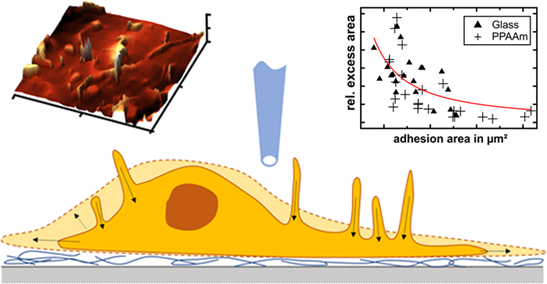
- measurement of I–V characteristics [21]. The bias voltage applied between pipette and bath electrode was approximately 100 mV. Both electrodes were non-polarizable (Ag/AgCl). For SICM topography measurements the nanopipette approached the surface until the setpoint of 0.98 nA (corresponding to an ion current


Toward graphene textiles in wearable eye tracking systems for human–machine interaction
Beilstein J. Nanotechnol. 2021, 12, 180–189, doi:10.3762/bjnano.12.14
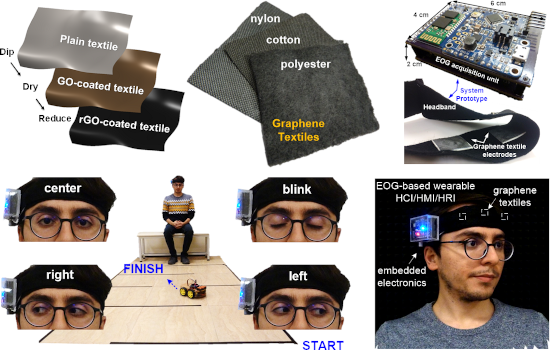
- reports the development of a graphene textile-based personal assistive device for the first time. This self-contained wearable prototype comprises a headband with soft graphene textile electrodes that overcome the limitations of conventional “wet” electrodes, along with miniaturized, portable readout
- facing spots (i.e., the cornea-retinal potential of 0.4–1.0 mV where the cornea is positive) [6]. This potential difference sets up an electrical field in the tissues surrounding the eye, which generates an electric field [7]. Two electrodes around the eyes can locate the field vector rotation, which
- technique that is reliable, easy to operate, and can be made cosmetically appealing, EOG-based devices still struggle to penetrate the wearables market, and their full potential has not been realized due to limitations of the sensing electrodes [20][21][22]. The combination of graphene with ordinary



Paper-based triboelectric nanogenerators and their applications: a review
Beilstein J. Nanotechnol. 2021, 12, 151–171, doi:10.3762/bjnano.12.12
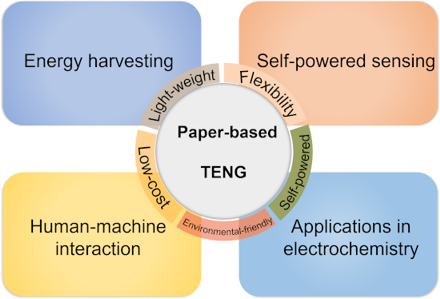
- moisture-retention capacity. This provides an efficient method to prepare paper electrodes for TENGs. Paper has also been proven to be a natural TENG friction layer. Due to that, it shows a tendency of easily losing electrons (i.e., electropositive) when contacting a material that can easily gain electrons
- electrostatic induction. If an electrical load is connected through an external circuit, the previously induced potential difference will drive the electrons to flow between the two materials (through the electrodes and the external circuit). Depending on the circuit configurations and on the variations in the
- plated with a metal electrode at the back surface of each layer. When the two dielectric films are vertically separated and periodically contacted due to the application of external forces, a small air gap is formed in the middle and a potential difference is induced between the two electrodes, which can






A review on the green and sustainable synthesis of silver nanoparticles and one-dimensional silver nanostructures
Beilstein J. Nanotechnol. 2021, 12, 102–136, doi:10.3762/bjnano.12.9
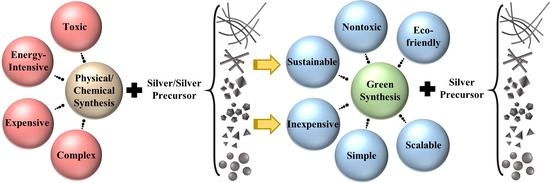
- devices [94], organic light emitting diodes (OLED) [95], transparent conductive electrodes [96][97], artificial skin [98], liquid crystal display (LCD) [99][100], and smart windows [101][102]. AgNWs can be embedded in flexible touch-screen substrates and electronic displays to provide an enhanced decrease
- . Another physical method widely used for the synthesis of AgNPs is the arc discharge method. In this method, two electrodes – a cathode and an anode – are connected in a high current DC circuit and submerged in a solvent – mostly deionized water – to run the process [129][131]. These electrodes can be
- either composed of an inert metal, such as titanium, or any metal of interest of which the nanoparticles will be produced, for instance, silver for the synthesis of AgNPs [129][131]. In the case of titanium electrodes, AgNO3 is used as the precursor, an electric discharge takes place between cathode and


Fusion of purple membranes triggered by immobilization on carbon nanomembranes
Beilstein J. Nanotechnol. 2021, 12, 93–101, doi:10.3762/bjnano.12.8
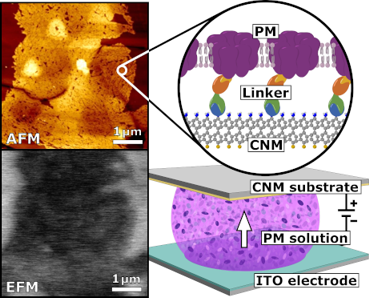
- consisting of the CNM substrate as the upper and an indium tin oxide (ITO) as the lower capacitor plate. A sample drop was placed between the two electrodes. For electrostatic experiments (drop was in contact with substrate plate only) the plate separation distance was held constant at 10 mm, while it was



Numerical analysis of vibration modes of a qPlus sensor with a long tip
Beilstein J. Nanotechnol. 2021, 12, 82–92, doi:10.3762/bjnano.12.7
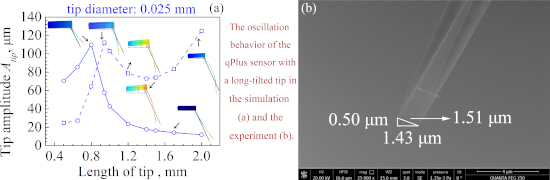
- = 687 µm, and thickness τ = 121 µm, are used in the finite element model. The arrangement of the gold electrodes on the tuning fork is the same as in reality. One electrode pair is grounded and the other is set to a virtual ground. The calculated mechanical eigenfrequency of the bare tuning fork is






ZnO and MXenes as electrode materials for supercapacitor devices
Beilstein J. Nanotechnol. 2021, 12, 49–57, doi:10.3762/bjnano.12.4
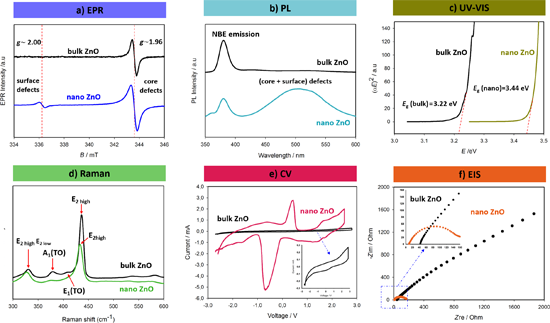
- materials; electrodes; MXenes; supercapacitors; zinc oxide (ZnO); Introduction In this article, the past, the present, and the prospects of ZnO and MXenes are discussed in terms of their usage as electrode materials in supercapacitor devices. Recently, supercapacitors gained a lot of attention due to their
- capacity and high energy density so that in the near future supercapacitors might work together with batteries as an integrated energy storage system. Metal oxides, MXenes, and perovskites are the most promising electrode materials for this end. However, the specific capacitance values of those electrodes
- are still too low compared to carbonaceous electrodes. Nanoscale dimensions, the increase of the surface-defect concentration, and metal-ion doping may play a vital role in increasing specific capacitance values as well as cycle life and in mitigating degradation problems. Recently, valuable
Atomic layer deposited films of Al2O3 on fluorine-doped tin oxide electrodes: stability and barrier properties
Beilstein J. Nanotechnol. 2021, 12, 24–34, doi:10.3762/bjnano.12.2
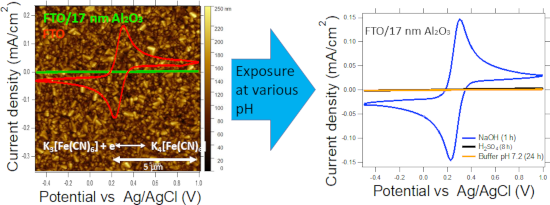
- , Technická 5, 166 28 Prague 6, Czech Republic 10.3762/bjnano.12.2 Abstract Al2O3 layers were deposited onto electrodes by atomic layer deposition. Solubility and electron-transport blocking were tested. Films deposited onto fluorine-doped tin oxide (FTO, F:SnO2/glass) substrates blocked electron transfer to
- semiconducting electrodes, such as ZnO. Aluminium oxide is another promising candidate for this task. It is amphoteric but insoluble in aqueous media at a neutral pH value [8][9]. ALD oxide layers, including Al2O3, were used as barrier coatings on copper to protect against corrosion in 0.1 M NaCl [10]. As
- polarization at −1.2 V vs Ag/AgCl, the reduction of FTO to tin took place (Equation 1). No Sn was found when the FTO layers were protected by alumina films (Figure 9). Conclusion ALD Al2O3 films, already at a thickness of 5 nm, exhibited very good blocking of the electron transport from solid electrodes (FTO





