Search results
Search for "gain" in Full Text gives 466 result(s) in Beilstein Journal of Nanotechnology. Showing first 200.
Applications of superparamagnetic iron oxide nanoparticles in drug and therapeutic delivery, and biotechnological advancements
Beilstein J. Nanotechnol. 2020, 11, 1092–1109, doi:10.3762/bjnano.11.94

- of the nanoparticles can become very large in relation to the volume, and the constituent atoms can be known in numbers. At the nanometer scale, the electromagnetic forces between the atoms gain importance and significantly influence the general behavior of the matter. This changes completely the


A new photodetector structure based on graphene nanomeshes: an ab initio study
Beilstein J. Nanotechnol. 2020, 11, 1036–1044, doi:10.3762/bjnano.11.88
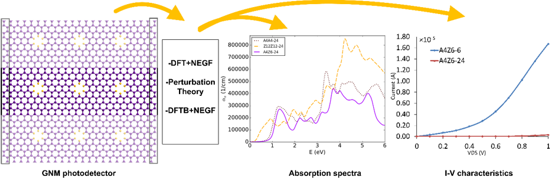
- Abstract Recent experiments suggest graphene-based materials as candidates in future electronic and optoelectronic devices. In this paper, we propose to investigate new photodetectors based on graphene nanomeshes (GNMs). Density functional theory (DFT) calculations are performed to gain insight into


Atomic layer deposition for efficient oxygen evolution reaction at Pt/Ir catalyst layers
Beilstein J. Nanotechnol. 2020, 11, 952–959, doi:10.3762/bjnano.11.79
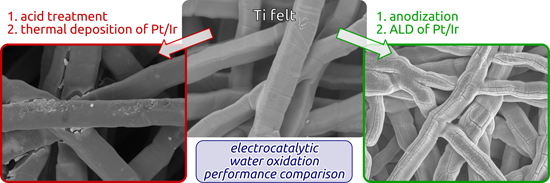
- further subsequent loss upon polarization (8% overall). Their ALD counterparts, however, remain unaffected (Figure 5b). Thus, a Pt/Ir catalyst coated with the ALD method on anodized felts results in a significant stability gain with respect to the traditional thermal decomposition method of catalyst
- not this activity gain remains as large in the membrane-electrode assemblies (MEAs) of full devices depends on the accessibility of the nanostructured surface to the polyelectrolyte. Furthermore, for application to regenerative fuel cells the studies will have to be repeated for the ORR and expanded
- −2 of salt based on macroscopic sample area. Only 1 cm2 of the support material was dipped into the well-mixed coating solution for 3 min. Subsequently, the sample was placed in an oven at 90 °C for 20 min. Based on the weight gain these steps were repeated until the desired loading was reached


Measurement of electrostatic tip–sample interactions by time-domain Kelvin probe force microscopy
Beilstein J. Nanotechnol. 2020, 11, 911–921, doi:10.3762/bjnano.11.76
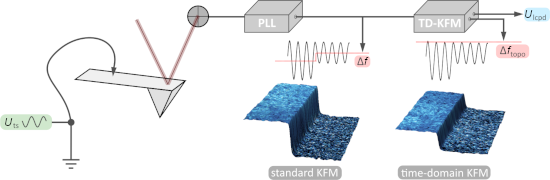
- sampled points. For the TD controller, these values represent the gain of each estimated channel. The sampling-rate-independent continuous noise density QK (QD) is divided (multiplied) by fs to obtain the discrete noise density Q. After the prediction step, a measurement update is performed. The Kalman
- gain Kk is calculated as It determines how much weight should be put onto the currently measured Δfk. Again, Hk has to be updated before using Equation 19 where the linearization is made around the time-updated state and the current bias voltage Uts,k. The a posteriori estimate and covariance are
- before conducting an actual closed-loop measurement. The algorithm is reliable and robust for a wide range of gain values. The three parameters of the state transition matrix are the only tuning parameters needed, apart from the PSD of the thermal noise, which can be calculated beforehand. Code


Adsorption behavior of tin phthalocyanine onto the (110) face of rutile TiO2
Beilstein J. Nanotechnol. 2020, 11, 821–828, doi:10.3762/bjnano.11.67
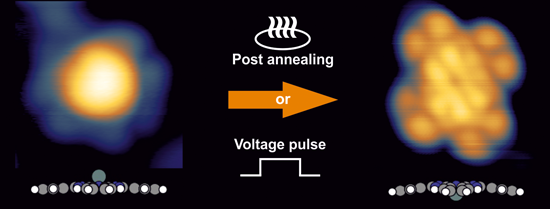
- optimal position. In the case of SnPc, the interaction is mainly concentrated in the central area of the molecule. The orientation of the molecule on the surface reflects the accommodation to the corrugated morphology of the substrate and is directed by weak physical forces. Consequently, the energy gain


Hexagonal boron nitride: a review of the emerging material platform for single-photon sources and the spin–photon interface
Beilstein J. Nanotechnol. 2020, 11, 740–769, doi:10.3762/bjnano.11.61




Structural optical and electrical properties of a transparent conductive ITO/Al–Ag/ITO multilayer contact
Beilstein J. Nanotechnol. 2020, 11, 695–702, doi:10.3762/bjnano.11.57
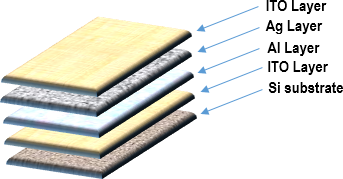
- during deposition. During annealing the adatoms gain additional energy resulting in an increased mobility. This enables grain growth and crystallization [32][33][34]. The grain sizes of as-deposited and annealed IAAI films were calculated using the Scherrer equation, where λ is the wavelength of the X


Soybean-derived blue photoluminescent carbon dots
Beilstein J. Nanotechnol. 2020, 11, 606–619, doi:10.3762/bjnano.11.48
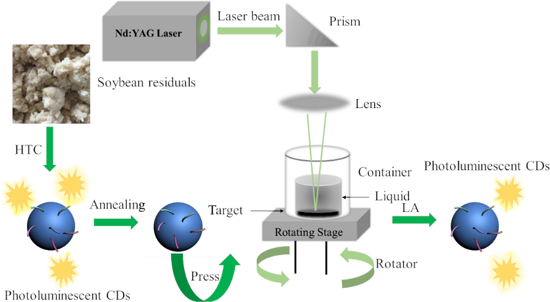
- at various wavelengths. The Raman scattering of the annealed CDs has a relatively low yield. The Raman peaks can be only observed when the gain or slit bandwidth of the instrument is increased to compensate for the low fluorescence signal. In contrast to the annealed-CDs, the LA-CDs-10%, which are


Multilayer capsules made of weak polyelectrolytes: a review on the preparation, functionalization and applications in drug delivery
Beilstein J. Nanotechnol. 2020, 11, 508–532, doi:10.3762/bjnano.11.41
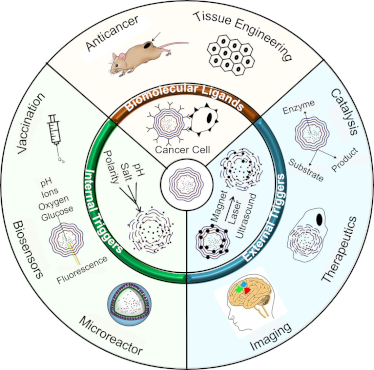
- indicated that some PAH chains penetrated into the PAA brush [37]. Notably, SAXS proved to be a powerful tool to gain more information about the inner structure of such systems. Driving forces for capsule formation The development of capsules with enhanced stimuli responsiveness, controlled loading and



Current measurements in the intermittent-contact mode of atomic force microscopy using the Fourier method: a feasibility analysis
Beilstein J. Nanotechnol. 2020, 11, 453–465, doi:10.3762/bjnano.11.37
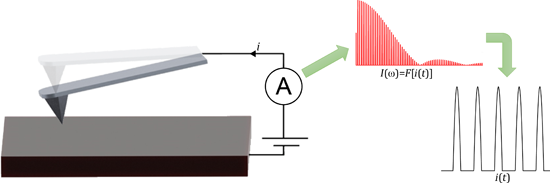
- in our case) acts like an antenna and creates a clear peak at the oscillation frequency in the measured current. This noise is not trivial to filter out due to its location being right at the principal frequency, where we also expect our strongest current peak. This noise may also cause high-gain




DFT calculations of the structure and stability of copper clusters on MoS2
Beilstein J. Nanotechnol. 2020, 11, 391–406, doi:10.3762/bjnano.11.30
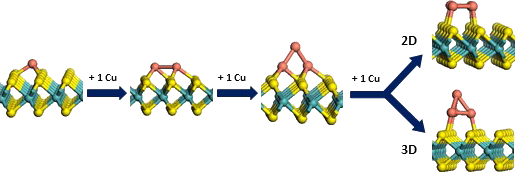
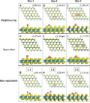
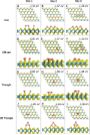
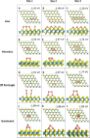
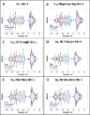
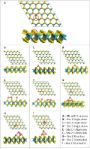
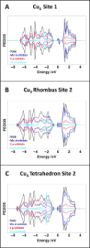
- allows us to investigate the first stages in the nucleation of a Cu film on MoS2 monolayers, as well as the fundamental copper–TMD interactions, and thus gain significant insights into the range of stable configurations for Cu adsorption on MoS2. In addition, we investigate the effect of a single S
- separated adatoms makes little difference for the stability; the difference in the binding energy is only 0.05 eV. The addition energy of the second Cu atom is similar to the binding energy in both cases, indicating that adding a second atom yields approximately the same energy gain as the adsorption of the
- . The addition energies were computed for addition of an atom at both sites, with a Cu atom already at the other site. With an atom adsorbed at site 1, adding a second atom at sites 2 or 3 gives an energy gain of −1.37 and −1.75 eV, respectively, while adding an atom at site 1 gives an addition energy
Interactions at the cell membrane and pathways of internalization of nano-sized materials for nanomedicine
Beilstein J. Nanotechnol. 2020, 11, 338–353, doi:10.3762/bjnano.11.25
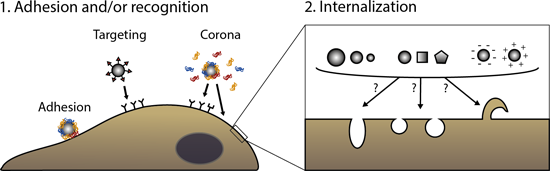
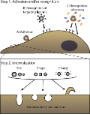
- could help us to gain a better knowledge of the endocytic processes involved in the uptake of nano-sized materials. Conclusion Nanomedicine aims at delivering drugs more efficiently to their target to treat diseases. Designing the properties of nano-sized materials to be able to control the interactions


Implementation of data-cube pump–probe KPFM on organic solar cells
Beilstein J. Nanotechnol. 2020, 11, 323–337, doi:10.3762/bjnano.11.24
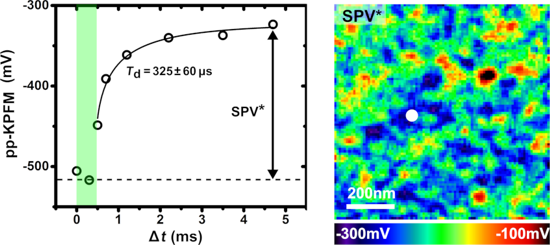
- , it is crucial to set a suitable time constant for the KPFM feedback loop and an adequate integration time per pixel. The signal-to-noise (S/N) ratio dramatically decreases when switching from KPFM to pp-KPFM due to a reduction of the bandwidth [22]. This effect demands a reduction of the loop gain




Using gold nanoparticles to detect single-nucleotide polymorphisms: toward liquid biopsy
Beilstein J. Nanotechnol. 2020, 11, 263–284, doi:10.3762/bjnano.11.20
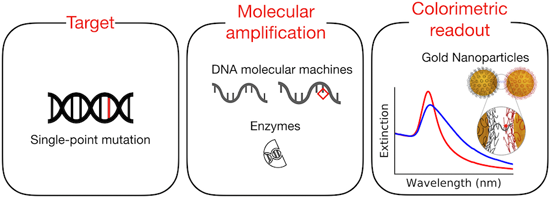
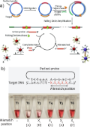
- is released based on a thermodynamically driven entropy gain process. The released target then triggers the next cycle to produce numerous HDP/HAP complexes [135]. In their work, Sang and co-workers [72] have proposed a method called target-catalyzed hairpin assembly amplification. Aggregation of




Nonclassical dynamic modeling of nano/microparticles during nanomanipulation processes
Beilstein J. Nanotechnol. 2020, 11, 147–166, doi:10.3762/bjnano.11.13
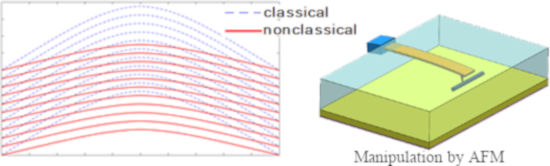
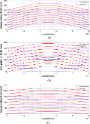
- be better employed. To gain a better understanding, it can be claimed that by decreasing the aspect ratio and increasing the manipulation distance, the results of classical and nonclassical models approach each other, and using classical models generates fewer errors. On the contrary, by increasing







Fabrication of Ag-modified hollow titania spheres via controlled silver diffusion in Ag–TiO2 core–shell nanostructures
Beilstein J. Nanotechnol. 2020, 11, 141–146, doi:10.3762/bjnano.11.12
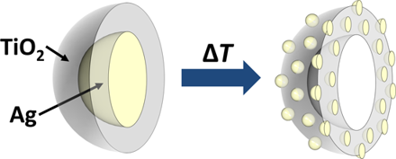
- in Ag@TiO2 CSNs can occur in the following manner. Titania is oxidized in an air atmosphere and as a result, holes, which may further oxidize AgNPs surrounded by the titania shell, are generated. Upon oxidation, AgNPs gain a positive electric charge and may eject positively charged Ag clusters. In



Internalization mechanisms of cell-penetrating peptides
Beilstein J. Nanotechnol. 2020, 11, 101–123, doi:10.3762/bjnano.11.10
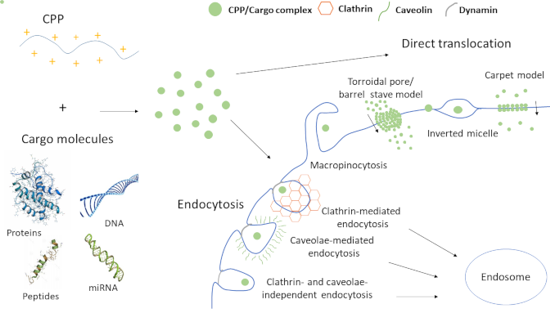
- a major breakthrough for the transport of macromolecules. They have been shown to successfully deliver proteins, peptides, siRNAs and pDNA in different cell types. In general, CPPs are basic peptides with a positive charge at physiological pH. They are able to translocate membranes and gain entry to


A review of demodulation techniques for multifrequency atomic force microscopy
Beilstein J. Nanotechnol. 2020, 11, 76–91, doi:10.3762/bjnano.11.8

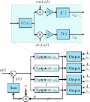
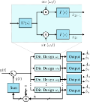
- noise and much larger fundamental and/or harmonic components [19][36]. The performance of the demodulator in this regard can be quantified by a metric herein referred to as the off-mode rejection (OMR). OMR is defined as the gain ratio between a modeled carrier frequency fi and another frequency fj as
- block diagram of the Kalman filter implementation is shown in Figure 5, it follows the standard recursive algorithm equations [53][54]. The prediction step is computed as where Pk|k−1 denotes the predicted covariance matrix. This is followed by the Kalman gain and state measurement updates Lastly, the
- scalar gain γ instead of updating covariance matrix and Kalman gain equations. This gives the Lyapunov filter a computational complexity of as additional frequencies are modeled, a significant improvement over the Kalman filter. A key property of the Lyapunov filter is exponential convergence of the


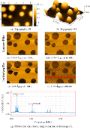
Influence of the epitaxial composition on N-face GaN KOH etch kinetics determined by ICP-OES
Beilstein J. Nanotechnol. 2020, 11, 41–50, doi:10.3762/bjnano.11.4
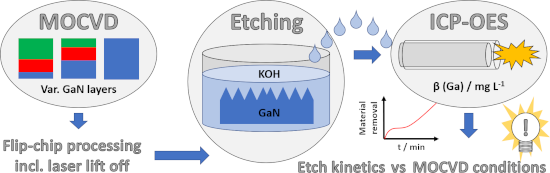
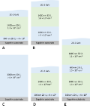
- and K700 tools. Epitaxy stacks A–E were prepared with different layer stacks (Figure 1). A acts as a reference sample in the following discussion. Usually 3D growth was applied in the layer closest to the substrate. We chose 2D growth to reach a high initial dislocation density and gain maximum


Synthesis of amorphous and graphitized porous nitrogen-doped carbon spheres as oxygen reduction reaction catalysts
Beilstein J. Nanotechnol. 2020, 11, 1–15, doi:10.3762/bjnano.11.1
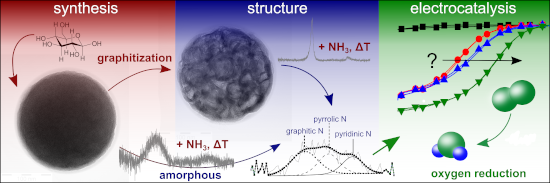
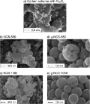
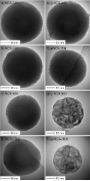
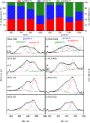
- Abstract Amorphous and graphitized nitrogen-doped (N-doped) carbon spheres are investigated as structurally well-defined model systems to gain a deeper understanding of the relationship between synthesis, structure, and their activity in the oxygen reduction reaction (ORR). N-doped carbon spheres were
- the ORR by comparison of as-synthesized and pre-graphitized N-doped carbon spheres. We believe that the use of structurally and chemically well-defined model systems, which necessarily might not be as sophisticated as other reported materials, is the proper way to gain a fundamental understanding of




Antimony deposition onto Au(111) and insertion of Mg
Beilstein J. Nanotechnol. 2019, 10, 2541–2552, doi:10.3762/bjnano.10.245
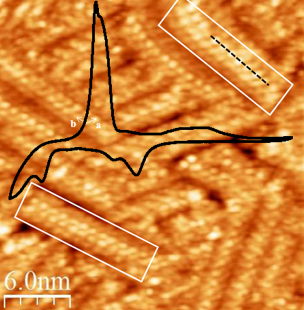
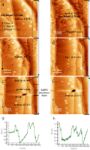
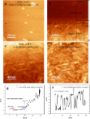
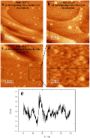
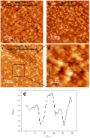
- potential was held at −0.31 V. Line-by-line correction was applied for the topographic images. The two profiles (g, h) correspond to the two black lines in image a and f. Sample bias of 50 mV, set point = 0.5 nA and scan rate of 3.04 ln/s. Integral gain: 6, proportional gain: 8. Arrows indicate the scan
- direction. STM images of the Sb adlayer structure on Au(111) in 0.25 mM Sb2O3/0.5 M H2SO4 electrolyte at −0.74 V. (a) 50 × 50 nm; (b) 30 × 30 nm; (c) the cross section of image a; (d) the cross section of image b. Sample bias of 50 mV, set point = 0.5 nA and scan rate of 12 ln/s. Integral gain: 2 and
- proportional gain: 3. Arrows indicate the scan direction. Line-by-line correction is used for images. Tentative model of the Sb adlayer structure on Au(111) in the direction of the rows (direction of vector = (3,1), cf. Figure 5b)). White circles: Au atoms; yellow circles: Sb atoms. Only atoms that are





Small protein sequences can induce cellular uptake of complex nanohybrids
Beilstein J. Nanotechnol. 2019, 10, 2477–2482, doi:10.3762/bjnano.10.238
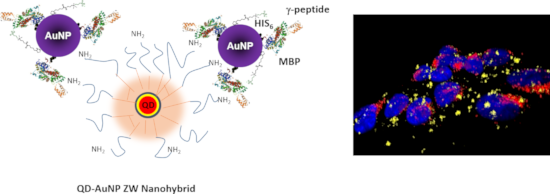
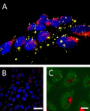
- comparison, no signal was measured from cells incubated with nanohybrids prepared in the absence of His6-MBP-γ (Figure S5 in Supporting Information File 1). To gain further insight into the distribution of QD stain, we visualized the cell cultures incubated with a lower nanohybrid concentration and lower MBP

Semitransparent Sb2S3 thin film solar cells by ultrasonic spray pyrolysis for use in solar windows
Beilstein J. Nanotechnol. 2019, 10, 2396–2409, doi:10.3762/bjnano.10.230
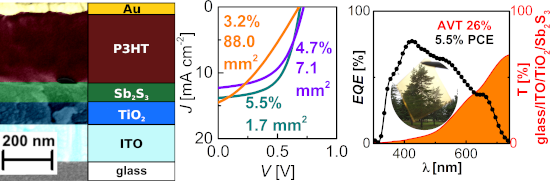
- increases the EQE at above 650 nm, where P3HT does not absorb light. The magnitude of the gain in EQE due to this effect depends on the thickness of the HTM and that of the absorber [21]. The optical spacer effect can have a strong influence on the EQE when the thickness of the absorber is around 100 nm or
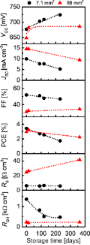
- (Se-annealed)/Au solar cells under continuous illumination by measuring J–V every 24 h [66]. The Se-annealed sample experienced a net gain in PCE in the first 24 h, which was retained over 400 hours of illumination [66]. The sample containing P3HT lost all PCE after 150 hours of illumination, mainly
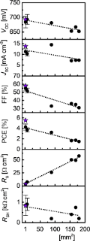
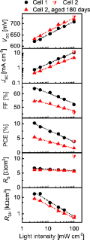
- gain of FF and RSH at decreased light intensity. The exact reasons for this dependence are yet to be clarified. An investigation on the low light intensity behavior of Cu- and Se-doped Sb2S3-based hybrid solar cells showed that the PCE of these cells was also significantly higher at lower light



BergaCare SmartLipids: commercial lipophilic active concentrates for improved performance of dermal products
Beilstein J. Nanotechnol. 2019, 10, 2152–2162, doi:10.3762/bjnano.10.208
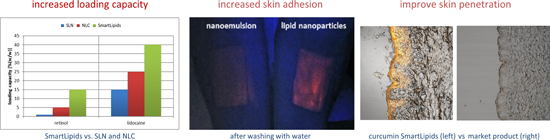
- (middle) and a commercial curcumin containing gel product (right). Incubation time was 24 h. Both laser strength (35%) and fluorescence detector gain (720 V) were kept constant during all measurements. Models of cosmetic active agents or drugs (green) incorporated into lipid nanoparticles, from left to


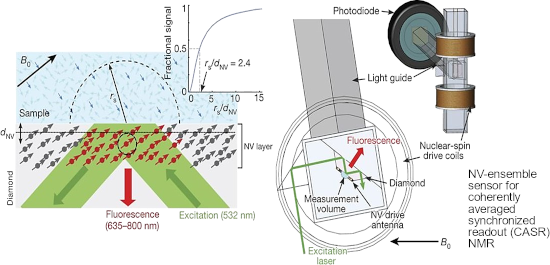
Nitrogen-vacancy centers in diamond for nanoscale magnetic resonance imaging applications
Beilstein J. Nanotechnol. 2019, 10, 2128–2151, doi:10.3762/bjnano.10.207