Search results
Search for "metal oxides" in Full Text gives 228 result(s) in Beilstein Journal of Nanotechnology. Showing first 200.
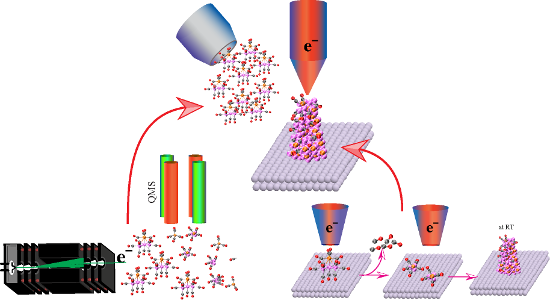
Electron interactions with the heteronuclear carbonyl precursor H2FeRu3(CO)13 and comparison with HFeCo3(CO)12: from fundamental gas phase and surface science studies to focused electron beam induced deposition
Beilstein J. Nanotechnol. 2018, 9, 555–579, doi:10.3762/bjnano.9.53


Facile synthesis of ZnFe2O4 photocatalysts for decolourization of organic dyes under solar irradiation
Beilstein J. Nanotechnol. 2018, 9, 436–446, doi:10.3762/bjnano.9.42
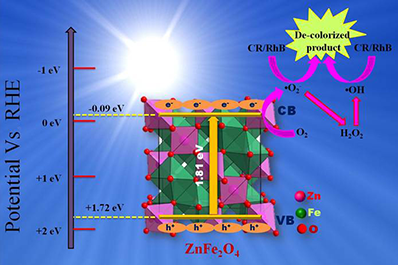
- ]. It is important to develop a suitable environmentally friendly material that can absorb the full range of the solar spectrum for solving energy and environmental challenges. Since last decade, ternary transition metal oxides (TTMOs) have gained tremendous popularity in the field of photocatalysis by
- the scientific community. To exploit solar light more efficiently, photocatalysts with narrow band gap (e.g., ZnSnO3 [2], Bi2WO6 [3], Ce(MoO4)2 [4] and ZnFe2O4 [5]) have been used, for absorbance of solar light in the visible region. Among ternary metal oxides, transition metal ferrites have drawn a


Engineering of oriented carbon nanotubes in composite materials
Beilstein J. Nanotechnol. 2018, 9, 415–435, doi:10.3762/bjnano.9.41
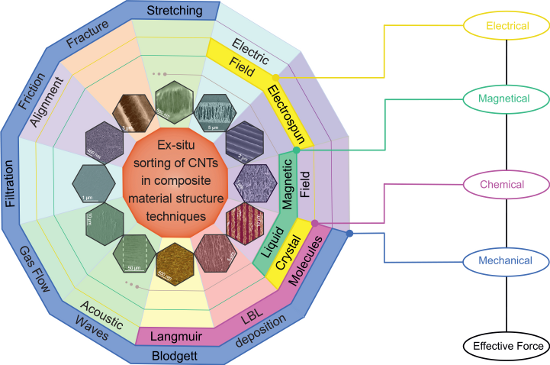
- oxides for metal-free catalysis [15] or in synergy with metal oxides [16][17], especially for sustainable energy applications [18][19]. Because of their electronic properties, CNT composites offer unmatched opportunities for conductive tissue regeneration [20], particularly if alignment, and thus 3D
- compared to their random placements [13]. In recent research reported by Lee et al., two factors, the CNT length and their arrangement, were introduced as important characteristics affecting electron transport properties in the matrix of composite materials [14]. CNTs are excellent alternatives to metal









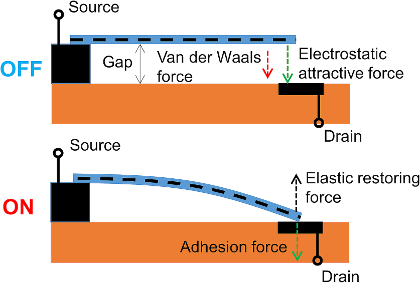
Review: Electrostatically actuated nanobeam-based nanoelectromechanical switches – materials solutions and operational conditions
Beilstein J. Nanotechnol. 2018, 9, 271–300, doi:10.3762/bjnano.9.29


Synthesis and characterization of electrospun molybdenum dioxide–carbon nanofibers as sulfur matrix additives for rechargeable lithium–sulfur battery applications
Beilstein J. Nanotechnol. 2018, 9, 262–270, doi:10.3762/bjnano.9.28
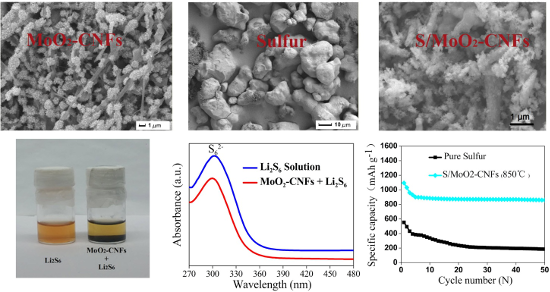
- . Molybdenum dioxide (MoO2) materials are particularly attractive among the transition-metal oxides due to their high melting point, high chemical stability and low electrical resistivity (190 S cm−1). This material has great potential for applications in several fields such as sensing, catalysis
- 50 cycles. The performance of the MoO2–CNF matrix for application in Li–S batteries is also compared with several other carbon nanofibers and metal oxides fibers (Table 3), which further demonstrates the long-life behavior of the sulfur/MoO2–CNF cathode. The EIS technique was used to investigate the


Anchoring of a dye precursor on NiO(001) studied by non-contact atomic force microscopy
Beilstein J. Nanotechnol. 2018, 9, 242–249, doi:10.3762/bjnano.9.26
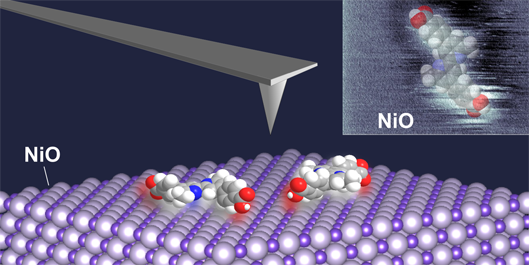
- , Switzerland 10.3762/bjnano.9.26 Abstract The properties of metal oxides, such as charge-transport mechanisms or optoelectronic characteristics, can be modified by functionalization with organic molecules. This kind of organic/inorganic surface is nowadays highly regarded, in particular, for the design of
- photovoltaics such as dye-sensitized solar cells (DSSCs) [1][2][3][4]. In the latter field, the wide band gap n-type semiconductor TiO2 has become one of the most common metal oxides for the design of classical n-type DSSCs, and is therefore a widely studied material, in particular in the field of scanning
- been observed for several molecules on ionic crystals [56][57]. Comparably, it has been observed on metal oxides that molecular islands can arise undergoing a step-flow growth process [41][58]. However, depending on the studied molecule, it has also been shown that some are not adsorbed preferentially





Al2O3/TiO2 inverse opals from electrosprayed self-assembled templates
Beilstein J. Nanotechnol. 2018, 9, 216–223, doi:10.3762/bjnano.9.23
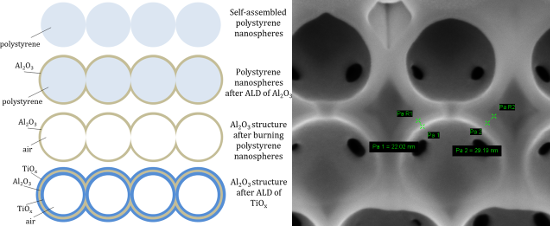
- issues with structure definition [25]. Inverse opals can be created using colloidal crystals (CCs) as templates to build close packed assemblies of air spheres. Several materials have been used as templates, for example, metal oxides [26][27][28][29], semiconductors [30] or silicon [31][32][33][34


Atomic layer deposition and properties of ZrO2/Fe2O3 thin films
Beilstein J. Nanotechnol. 2018, 9, 119–128, doi:10.3762/bjnano.9.14
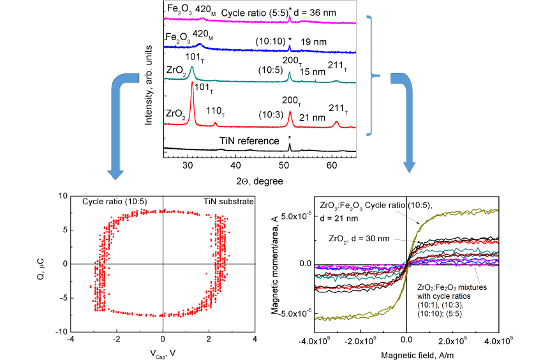
- with a Zr/Fe atomic ratio of 2.0. Keywords: atomic layer deposition; metal oxides; thin films; Introduction Doped ZrO2 has been a subject of interest because of several potential applications, for example, in microelectronics as a memory material [1]. Also, doping a dielectric film with a magnetic


Gas-sensing behaviour of ZnO/diamond nanostructures
Beilstein J. Nanotechnol. 2018, 9, 22–29, doi:10.3762/bjnano.9.4
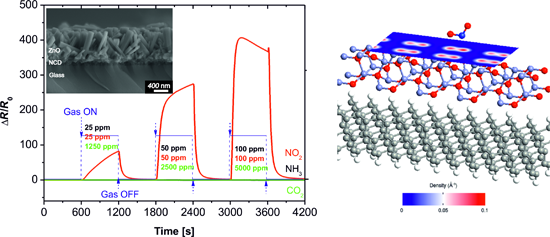
- : density functional theory (DFT); gas sensor; interdigital electrodes; nanocrystalline diamond; sensitivity; zinc oxide (ZnO); Introduction Currently, a number of studies have been focused on developing gas sensors based on nanomaterials and/or nanostructures. Metal oxides are the most common sensing
- cell electrodes, light emitting devices, quantum dots and gas sensors [5][6][7][8][9][10][11][12][13]. The improvement in response of metal-oxide sensors has been observed by several authors, due to the formation of isolated functional layers on the one-dimensional nanostructure surface using metal
- oxides or noble metals [14][15][16][17]. Aside from n-type semiconductors, p-type semiconductor materials have also been extensively used for the detection of toxic gases [3][18][19]. Recently, nanocrystalline diamond (NCD) films have been utilized for advanced electronic devices because of their


One-step chemical vapor deposition synthesis and supercapacitor performance of nitrogen-doped porous carbon–carbon nanotube hybrids
Beilstein J. Nanotechnol. 2017, 8, 2669–2679, doi:10.3762/bjnano.8.267
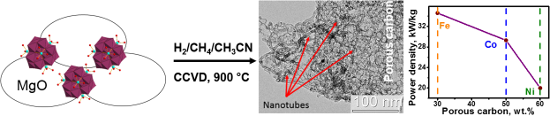
- Figure S5 in Supporting Information File 1). The samples started to lose a weight at 440–450 °C and finished at 640, 690, and 620 °С, for the catalysts Co/Mo, Ni/Mo, and Fe/Mo, respectively (Figure S5 in Supporting Information File 1). The residual mass of ≈5% corresponds to metal oxides. The broad peaks


Fabrication of CeO2–MOx (M = Cu, Co, Ni) composite yolk–shell nanospheres with enhanced catalytic properties for CO oxidation
Beilstein J. Nanotechnol. 2017, 8, 2425–2437, doi:10.3762/bjnano.8.241
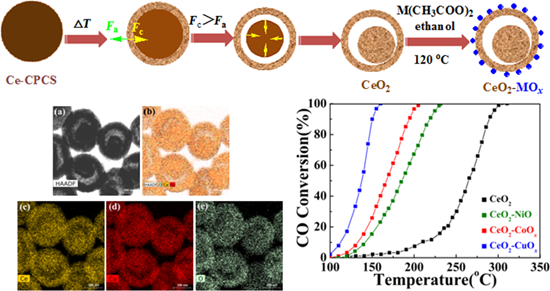
- , CeO2-based composite oxides by combining ceria with other low-valence metal oxides have been widely studied. Importantly, due to the synergistic effect between the two components, CeO2-based composite oxides exhibit a remarkable catalytic activity that is comparable with or even superior to that of






Increasing the stability of DNA nanostructure templates by atomic layer deposition of Al2O3 and its application in imprinting lithography
Beilstein J. Nanotechnol. 2017, 8, 2363–2375, doi:10.3762/bjnano.8.236
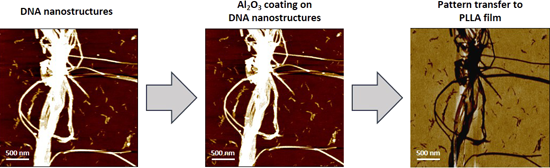
- metals, metal oxides, or inorganic oxides can also be used as long as they can be conformally coated at a temperature below 250 °C. Above 250 °C, the degradation of DNA nanostructures deposited onto silicon wafers starts to occur although the decomposition residue may still maintain their nanoscale




Systematic control of α-Fe2O3 crystal growth direction for improved electrochemical performance of lithium-ion battery anodes
Beilstein J. Nanotechnol. 2017, 8, 2032–2044, doi:10.3762/bjnano.8.204
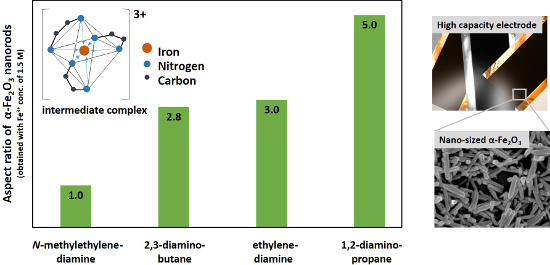
- coulombic efficiency, its flat voltage curve and the low operating voltage of 0.1 V vs Li/Li+ it is limited to a lithium storage capacity of only 372 mAh g−1, given a stoichiometry of LiC6 [8]. In 2000, the Tarascon research group brought attention to transition metal oxides as a new class of possible anode
- materials that showed capacities in the range of twice as high as graphite [9], and some of them even show values higher than 1000 mAh g−1 with the interaction with lithium ions [10]. Therefore, transition metal oxides are candidates as new, high-capacity, electrode active materials in next generation LIBs


Functional materials for environmental sensors and energy systems
Beilstein J. Nanotechnol. 2017, 8, 2015–2016, doi:10.3762/bjnano.8.201

- nanomaterials (e.g., nanowires, nanotubes, graphene, metal oxides, carbon nanostructures, large band gap semiconductors, and metals) with new sensing properties (e.g., ppb-level detection, high sensitivity, selectivity) that are self-heating and provide durable operation for low-power devices (tens of μW to
- tens of mW) are key elements for adequate air-quality measurement at indoor and outdoor levels. This Thematic Series, published in the platinum open access Beilstein Journal of Nanotechnology, is an exciting collection of works on functional nanomaterials such as metal oxides, carbon nanomaterials (e.g
- scientific community, policy makers and social networks. The topics of this Thematic Series, based on 23 peer-reviewed articles, includes works on advanced gas sensing semiconducting materials, hybrid materials and nanocomposites for chemical sensing, catalytic sensing materials, metal oxides for chemical
Effect of the fluorination technique on the surface-fluorination patterning of double-walled carbon nanotubes
Beilstein J. Nanotechnol. 2017, 8, 1688–1698, doi:10.3762/bjnano.8.169

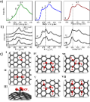
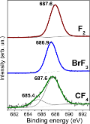
- diameter distribution of the DWCNTs ranged from 0.5 to 2.5 nm for the inner tubes and from 1.2 to 3.2 nm for the outer tubes. DWCNTs were purified by heating the sample in air at 450 °C for 1 h followed by treatment with concentrated HCl to dissolve metal oxides [47]. Fluorination of DWCNTs using a mixture



Two-dimensional carbon-based nanocomposites for photocatalytic energy generation and environmental remediation applications
Beilstein J. Nanotechnol. 2017, 8, 1571–1600, doi:10.3762/bjnano.8.159
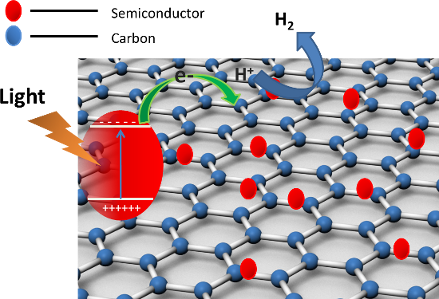
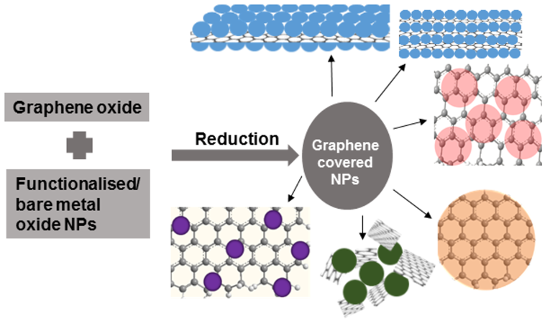
- , wherein micro- and nanostructures assemble spontaneously by supramolecular interactions to form larger functional units [58]. This self-assembly of nanoparticles is very useful for various applications. In the surfactant-assisted ternary self-assembly of metal oxides with functionalized graphene sheets
- , an anionic surfactant gets adsorbed on the surface of graphene sheets and helps in the dispersion of graphene sheets. Then, the surfactant micelles with graphene sheets bind with metal cations and hence act as building block for self-assembly of metal oxides. Finally metal oxides become crystallized
- nanoparticles and accelerate the photocatalytic rate by introducing more reaction sites and promoting charge separation in semiconductors [115]. In water splitting reactions, generally noble metals (e.g., Pt, Rh) and some metal oxides (e.g., NiO) act as the cocatalyst and these are loaded on the surface of


Parylene C as a versatile dielectric material for organic field-effect transistors
Beilstein J. Nanotechnol. 2017, 8, 1532–1545, doi:10.3762/bjnano.8.155
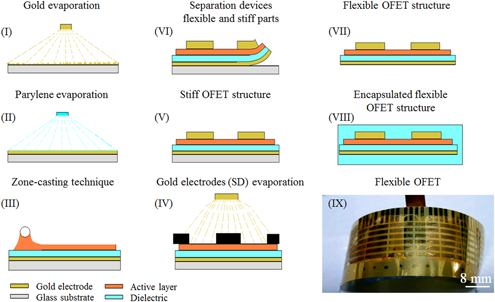
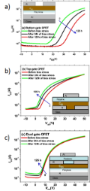
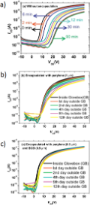
- insulating material. The capacitance is determined by the dielectric permittivity (ε) and the thickness of the insulating layer. Currently, two types of dielectric materials are commonly employed in transistor design and construction, either inorganic metal oxides (such as Ta2O5, Al2O3, SiO2) or organic




Development of a nitrogen-doped 2D material for tribological applications in the boundary-lubrication regime
Beilstein J. Nanotechnol. 2017, 8, 1476–1483, doi:10.3762/bjnano.8.147
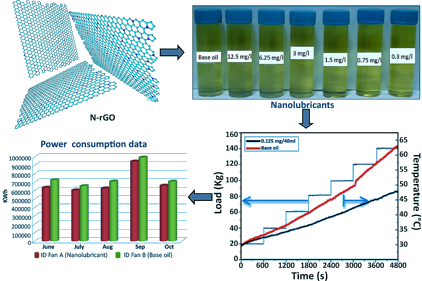
- tribological properties of nanolubricant based on metals [16], metal oxides [17][18], MoS2 [4][19], boron [20] and WS2 [21]. Among all the solid additives, 2D graphene is a promising material to improve the tribological performance because of its high surface area to volume ratio and excellent mechanical


Synthesis of [Fe(Leq)(Lax)]n coordination polymer nanoparticles using blockcopolymer micelles
Beilstein J. Nanotechnol. 2017, 8, 1318–1327, doi:10.3762/bjnano.8.133
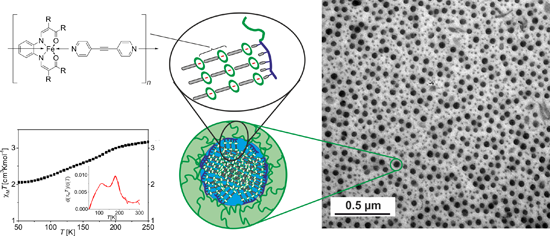
- procedures for nanoparticles with size control (gold [6][7], metal oxides [8][9]) and/or shape control (gold and silver [10]) are already well known. The reduction of metal salts is very common for noble metals [11], while (fast) precipitation or inverse-micelle technique are often used for metal oxides



Metal oxide nanostructures: preparation, characterization and functional applications as chemical sensors
Beilstein J. Nanotechnol. 2017, 8, 1205–1217, doi:10.3762/bjnano.8.122
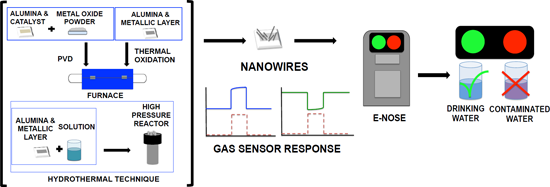
- nanowires have been integrated into an electronic nose and successfully applied to discriminate between drinking and contaminated water. Keywords: chemical sensors; electronic nose; metal oxides; nanowires; Introduction Nanotechnology is the base for improving knowledge about materials and phenomena at
- , since the ingestion of food not properly stored or treated is one of the most frequent reason of hospitalization [1]. Chemical sensors may play a pivotal role in all these applications. Metal oxides were the first to be commercialized as conductometric chemical sensors in form of thick films, and they
- stability of the final devices. In order to prepare an array of sensors, different metal oxides have been studied, both conventional and new ones. We have investigated different preparation techniques and materials and we have compared their sensing properties towards two well-known and studied species (an


Enhanced catalytic activity without the use of an external light source using microwave-synthesized CuO nanopetals
Beilstein J. Nanotechnol. 2017, 8, 1167–1173, doi:10.3762/bjnano.8.118
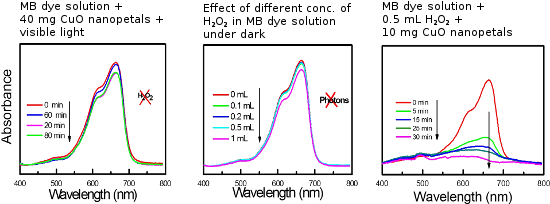
- with the development of cost effective and ecologically friendly methods [2]. Metal oxides have attracted significant attention as a photocatalyst for the degradation of these pollutants [3][4][5][6]. Copper oxide (CuO) is one of the most efficient materials for the oxidation of the air pollutant
- found to be less effective as compared to other metal oxides [8][9][10][11][12]. Thus, in order to enhance its photocatalytic activity, CuO can be used with hydrogen peroxide (H2O2) [12][13][14][15][16][17][18][19][20][21]. However, the degradation time of dyes is an important problem when using CuO as


BTEX detection with composites of ethylenevinyl acetate and nanostructured carbon
Beilstein J. Nanotechnol. 2017, 8, 982–988, doi:10.3762/bjnano.8.100

- polymer-based nanostructured composite filled with electroconductive nanoparticles. Compared to gas sensors based on metal oxides this type of sensor ensures a much easier usage because polymer-based composites do not require high operating temperatures and work at room temperature. The gas-sensing


Synthesis of graphene–transition metal oxide hybrid nanoparticles and their application in various fields
Beilstein J. Nanotechnol. 2017, 8, 688–714, doi:10.3762/bjnano.8.74








Graphene functionalised by laser-ablated V2O5 for a highly sensitive NH3 sensor
Beilstein J. Nanotechnol. 2017, 8, 571–578, doi:10.3762/bjnano.8.61
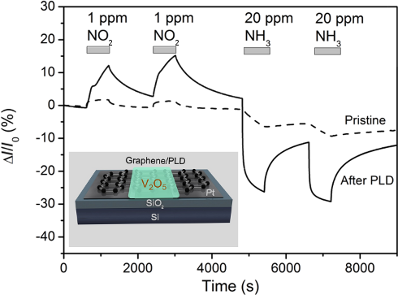
- precious metal [4] or metal oxide nanoparticles [5]. Also, introduction of suitable defects was shown to have a positive effect on gas adsorption and sensor properties of graphene [6]. Transition metal oxides constitute an important class of catalysts and photosensitizers. Apart from the very first and


Impact of air exposure and annealing on the chemical and electronic properties of the surface of SnO2 nanolayers deposited by rheotaxial growth and vacuum oxidation
Beilstein J. Nanotechnol. 2017, 8, 514–521, doi:10.3762/bjnano.8.55
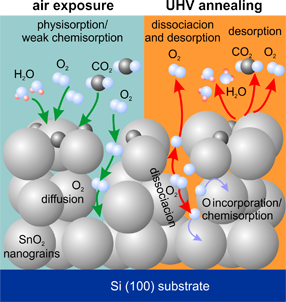
- research is focused on further improvement of the performance of sensors based on nanostructured metal oxides (including one-dimensional) [1][9][10][11]. Nevertheless, one of the most popular technologies for the fabrication of SnO2-based sensors is the thin-film technology. This is because of basic