Search results
Search for "nanoscale" in Full Text gives 929 result(s) in Beilstein Journal of Nanotechnology. Showing first 200.
Recent updates in applications of nanomedicine for the treatment of hepatic fibrosis
Beilstein J. Nanotechnol. 2024, 15, 1105–1116, doi:10.3762/bjnano.15.89
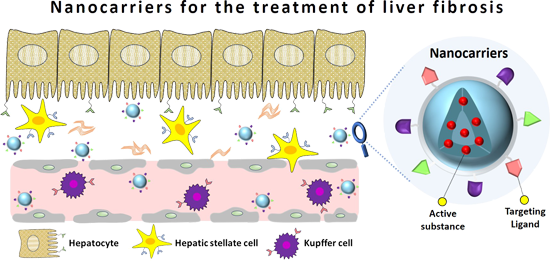
- targeting; hepatic fibrosis; nanocarriers; nanomedicine; passive targeting; Introduction Over the last three decades, we have witnessed tremendous progress in the field of nanomedicine through the preparation of a vast number of nanoscale (bio)materials. Nanomedicine itself is defined as the biomedical
- application of nanoscale systems with unique physicochemical properties, including small size, large specific surface area, high reactivity, and quantum effects of the nanoparticles (NPs) [1][2]. Nanomedicine is specifically designated for therapeutics (drug delivery), diagnostics, and imaging, as well as for


Unveiling the potential of alginate-based nanomaterials in sensing technology and smart delivery applications
Beilstein J. Nanotechnol. 2024, 15, 1077–1104, doi:10.3762/bjnano.15.88
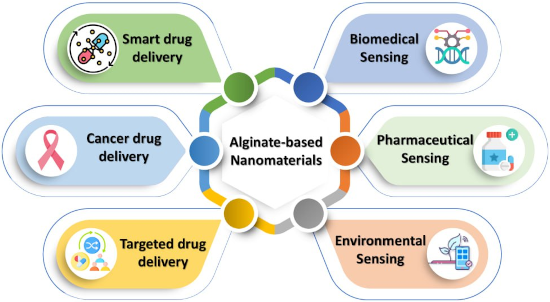
- of humidity sensing is the use of nanoparticles, particularly alginate-based nanoparticles. One research presented an autoregulatory system for humidity sensing employing a nanoscale wrinkle-patterned hydrogel with programmable feedback cycle. The wrinkled pattern monitors humidity fluctuations, and


Effect of wavelength and liquid on formation of Ag, Au, Ag/Au nanoparticles via picosecond laser ablation and SERS-based detection of DMMP
Beilstein J. Nanotechnol. 2024, 15, 1054–1069, doi:10.3762/bjnano.15.86

- by re-irradiation of mixed colloidal suspensions, as demonstrated by Compagnini et al. [18]. Additionally, Zhang et al. [19] reported the LML approach to synthesize germanium submicron spheres from picosecond (ps) laser irradiation of Ge powders containing nanoscale and microscale particles. Maximova


Interface properties of nanostructured carbon-coated biological implants: an overview
Beilstein J. Nanotechnol. 2024, 15, 1041–1053, doi:10.3762/bjnano.15.85
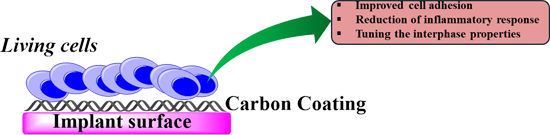
- to describe the study of materials at the nanoscale [2]. Afterwards, nanosized and nanostructured carbon species have attracted great interest thanks to their intrinsic properties and easy functionalization [3]. The utilization of nanocarbon species has been widely deployed in advanced medical



Atomistic insights into the morphological dynamics of gold and platinum nanoparticles: MD simulations in vacuum and aqueous media
Beilstein J. Nanotechnol. 2024, 15, 995–1009, doi:10.3762/bjnano.15.81
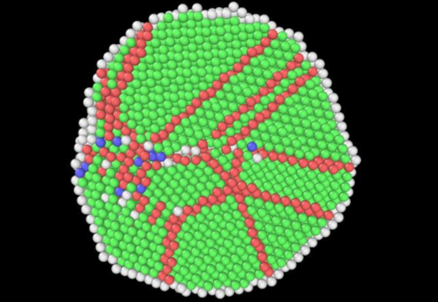
- have been some promising theoretical models [27] and in situ observations [28], crucial elements that can harmonize thermodynamic and kinetic controls remain unclear at the nanoscale. The plentiful theoretical efforts to understand and interpret structural modifications in metals upon thermal treatment


Recent progress on field-effect transistor-based biosensors: device perspective
Beilstein J. Nanotechnol. 2024, 15, 977–994, doi:10.3762/bjnano.15.80
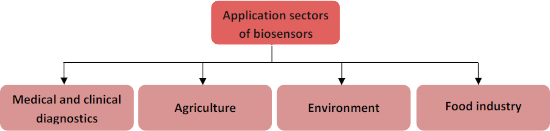
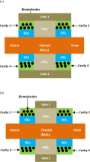
- is known as dielectric modulation, where a nanoscale gap cavity is introduced in either the gate metal or gate insulator region. The biomolecules are immobilized in this cavity region functionalized with bioreceptor elements, where the presence of the specific target biomolecule alters the effective
- coupling [55]. The variation of capacitance depends on the intrinsic charge density and the dielectric constant of the target biomolecule [48]. The cavity specification and thereby the sensor device design is also related to the diameter of targeting species, which varied from micro- to nanoscale (Figure 4
- emerging structures of FET-based biosensors is important for the design of future nanoscale FET-biosensors for different applications. There are a few reviews published regarding FET-based biosensors [56][57][58][59]. Most of these works are focused on the materials-based performance optimization of FET




Electrospun nanofibers: building blocks for the repair of bone tissue
Beilstein J. Nanotechnol. 2024, 15, 941–953, doi:10.3762/bjnano.15.77
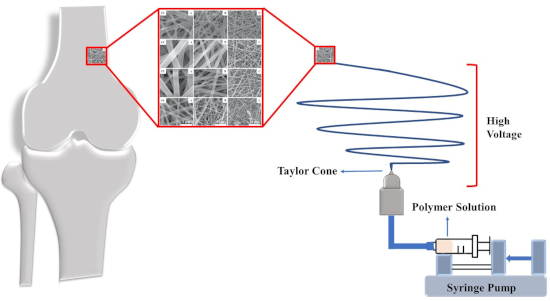
- for bone regeneration. Small fiber diameter, high surface area-to-volume ratio, high porosity, and the nanoscale biological structure of the natural extracellular matrix give nanofibers superiority in the treatment of bone regeneration and increase the treatment efficiency. Polymeric nanofibers can be


Effects of cutting tool geometry on material removal of a gradient nanograined CoCrNi medium entropy alloy
Beilstein J. Nanotechnol. 2024, 15, 925–940, doi:10.3762/bjnano.15.76
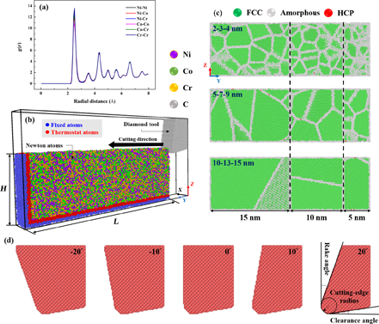
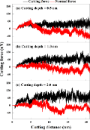
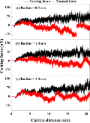
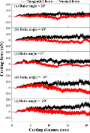
- , 1.0, and 2.0 nm) on the cutting process of GNG CoCrNi MEAs. The considered RTS parameters are summarized in Table 3. Cutting depth In conventional cutting, the cutting force increases with the cutting depth. When cutting at the nanoscale, cutting depth and cutting-edge radius are closely related to
- changed to the nanoscale below 10 nm. Moreover, the simulation assumes perfect defects in polycrystalline CoCrNi MEAs, whereas the experimental samples always contain a variety of defects. However, the hardness results of the CoCrNi MEAs in this study are comparable to the MD results for NiCoCr multi








Identification of structural features of surface modifiers in engineered nanostructured metal oxides regarding cell uptake through ML-based classification
Beilstein J. Nanotechnol. 2024, 15, 909–924, doi:10.3762/bjnano.15.75
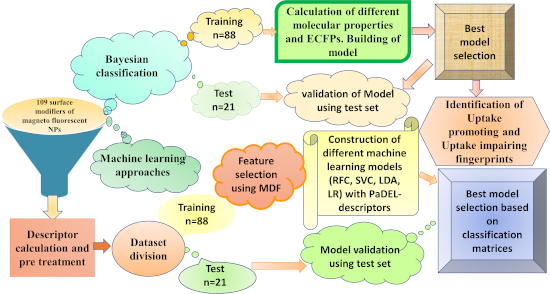
- to the surface of ENMOs to modify their properties and, specifically, the cellular uptake. A lot of computational studies (Table 1) have been reported using nanoscale quantitative structure–activity relationship (nano-QSAR) models (predominantly regression-based) that specifically employ the cellular


A review on the structural characterization of nanomaterials for nano-QSAR models
Beilstein J. Nanotechnol. 2024, 15, 854–866, doi:10.3762/bjnano.15.71
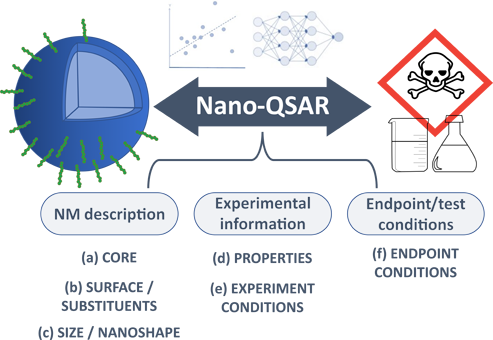
- of chemicals to direct synthetic advances, perform massive screenings, and even to register new substances according to international regulations. Currently, nanoscale QSAR (nano-QSAR) models, adapting this methodology to predict the intrinsic features of nanomaterials (NMs) and quantitatively assess
- structure of NMs [5][6][7]. The first described nano-QSAR model is from 2009 [8], but the number of relevant nano-QSAR models is growing significantly because new nanoscale descriptors are found [6], and more information on NMs is progressively generated, opening new ways of improving nano-QSARs. This is an
- identified and characterized by their chemical structure, often represented by a SMILES code [11]. This approach is insufficient for NMs, as a key component of their definition is their size. NMs are defined as materials with at least one of the dimensions (including internal features) on the nanoscale (1


Synthesis of silver–palladium Janus nanoparticles using co-sputtering of independent sources: experimental and theorical study
Beilstein J. Nanotechnol. 2024, 15, 808–816, doi:10.3762/bjnano.15.67
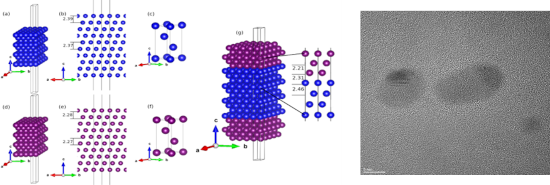
- offered by the same two metals in the bulk, such as Au and Ni [4]. Alloying immiscible elements is feasible in the nanoscale regime because the enthalpy of the mixture decreases as the size of the nanoparticles decreases, and it generally becomes negative below a certain particle size [5]. Silver




Electrospun polysuccinimide scaffolds containing different salts as potential wound dressing material
Beilstein J. Nanotechnol. 2024, 15, 781–796, doi:10.3762/bjnano.15.65
- has several functions in the human body, including wound healing [15][16]. Nanofibers produced by electrospinning have beneficial structural attributes, such as elevated porosity, high specific surface area, and nanoscale fiber dimensions; thus, adequately mimicking the ECM and promoting cellular
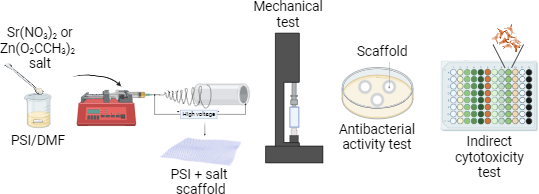
- antibacterial release from nanoscale fibrous biocompatible scaffolds in an environmentally friendly way by avoiding the potential risk of AMR. A) The synthesized PSI powder, 25 PSI solution, 20 PSI + salt solutions, and fibrous scaffolds were made using the electrospinning technique. B) FTIR spectra of the Sr



Exploring surface charge dynamics: implications for AFM height measurements in 2D materials
Beilstein J. Nanotechnol. 2024, 15, 767–780, doi:10.3762/bjnano.15.64
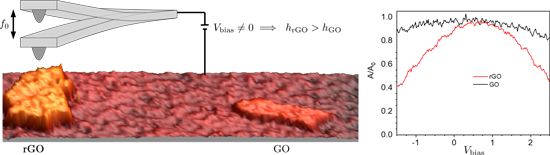
- microscopy (AFM) techniques emerge as ideal tools to investigate them [26][27]. Depending on the operation mode and under controlled environmental conditions, AFM offers the possibility to record morphology along with relevant electronic, mechanical, or magnetic properties with nanoscale resolution. In
- height dependence with the voltage is not seen when the flakes are supported on a conducting substrate (see Supporting Information File 1, section SI.4). Moreover, we can examine a nanoscale heterogeneous sample, such as a partially reduced rGO flake. The transition from GO to rGO under reduction with
- local degree of reduction, with a lateral size for the domains that varies from tens to hundreds of nanometers. This confirms, on the one hand, that this mechanism achieves nanoscale resolution, primarily attributable to the tip, and, on the other hand, that the voltage dissipation mechanism depends on


Effect of repeating hydrothermal growth processes and rapid thermal annealing on CuO thin film properties
Beilstein J. Nanotechnol. 2024, 15, 743–754, doi:10.3762/bjnano.15.62
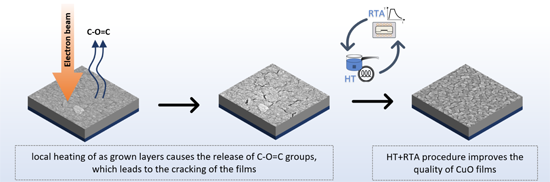
- devices. Keywords: CuO; hydrothermal method; rapid thermal annealing; thin films; Introduction Copper(II) oxide is a p-type semiconductor possessing a narrow bandgap, along with many beneficial electrical, optical, and magnetic properties. Particularly at the nanoscale, these properties set themselves




Level set simulation of focused ion beam sputtering of a multilayer substrate
Beilstein J. Nanotechnol. 2024, 15, 733–742, doi:10.3762/bjnano.15.61
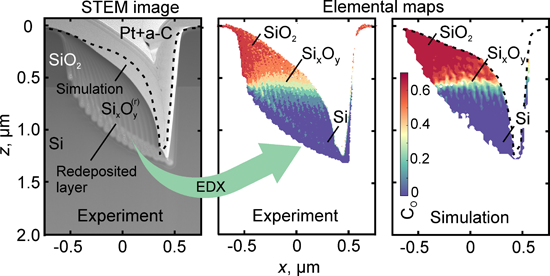
- possible to deterministically produce a nanoscale topography on the surface of almost any substrate [1]. FIB milling was originally established in semiconductor technology [2] and materials science applications [3]. Now it is increasingly used for fabrication of complex micro- and nanoscale structures and
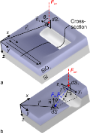
- nanoscale precipitates of gallium atoms, visible as small bright spots in Figure 3f–h, appeared in the redeposited layer. Comparing the left sides of the box in Figure 3f–h, it can be seen that the relative amount of deposited material decreased after the second and third ion beam passes because of the

![[Graphic 55]](/bjnano/content/inline/2190-4286-15-61-i68.svg?max-width=637&scale=1.18182)


Simultaneous electrochemical determination of uric acid and hypoxanthine at a TiO2/graphene quantum dot-modified electrode
Beilstein J. Nanotechnol. 2024, 15, 719–732, doi:10.3762/bjnano.15.60
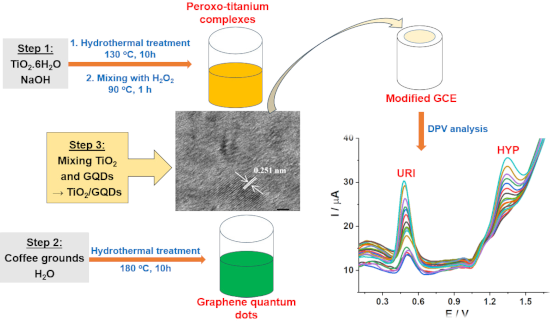
- suspensions. The UV–vis spectra show absorbance bands from 200–400 nm that are typical for the colloidal systems with nanoscale particles [24][25]. The UV–vis spectrum of GQDs shows a characteristic feature of GO at ≈300 nm due to the absorption of the graphitic structure [26], while that of titanium
- strategy employing TiO2/GQDs was used to fabricate a sensitive voltammetric sensor for the determination of URI and HYP in real samples. The decoration of nanoscale TiO2 with GQDs can provide excellent electrode modification because of the combination of enlarged active surface area and strong adsorptive


Elastic modulus of β-Ga2O3 nanowires measured by resonance and three-point bending techniques
Beilstein J. Nanotechnol. 2024, 15, 704–712, doi:10.3762/bjnano.15.58
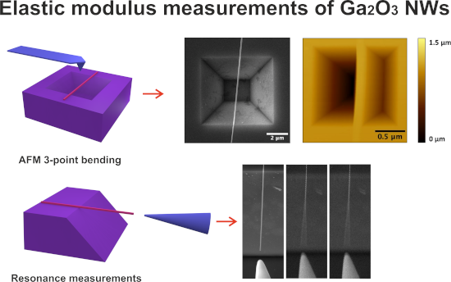
- finely controllable β-Ga2O3 NW synthesis methods and detailed post-examination of their mechanical properties before considering their application in future nanoscale devices. Keywords: atomic force microscopy; elastic modulus; gallium oxide; mechanical properties; nanowire; scanning electron microscopy
- chemical stability [4][5]. Ga2O3 is a promising candidate for visible-blind UV-light sensors [3], power devices and optoelectronics [6][7][8][9], gas sensors [10], and memory devices [8]. These applications can be scaled down to the nanoscale, including flexible nanodevices. Ga2O3 nanowires (NWs) could be
- -Ga2O3 NW synthesis methods and detailed post-examination of their mechanical properties before considering their application in future nanoscale devices. Results For structural analysis of the as-grown NW arrays on Si(100)/SiO2 substrates, X-ray diffraction (XRD) measurements were conducted. The marked


Enhancing higher-order modal response in multifrequency atomic force microscopy with a coupled cantilever system
Beilstein J. Nanotechnol. 2024, 15, 694–703, doi:10.3762/bjnano.15.57

- ; Introduction Multifrequency atomic force microscopy (AFM) has become an important tool for nanoscale imaging and characterization [1][2]. This technique involves the excitation and detection of multiple frequencies to improve data acquisition speed, sensitivity, and resolution, as well as to enable material


Gold nanomakura: nanoarchitectonics and their photothermal response in association with carrageenan hydrogels
Beilstein J. Nanotechnol. 2024, 15, 678–693, doi:10.3762/bjnano.15.56

- systems by architecting atoms, molecules, and nanomaterials as building blocks [1]. This interplay at the nanoscale renders a plethora of unique physicochemical properties to nanomaterials. These unique properties are due to the mean free path of an electron in a metal which is ≈10–100 nm at room




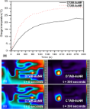


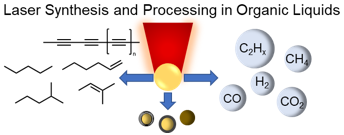
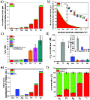
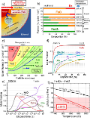
Laser synthesis of nanoparticles in organic solvents – products, reactions, and perspectives
Beilstein J. Nanotechnol. 2024, 15, 638–663, doi:10.3762/bjnano.15.54





Exfoliation of titanium nitride using a non-thermal plasma process
Beilstein J. Nanotechnol. 2024, 15, 631–637, doi:10.3762/bjnano.15.53
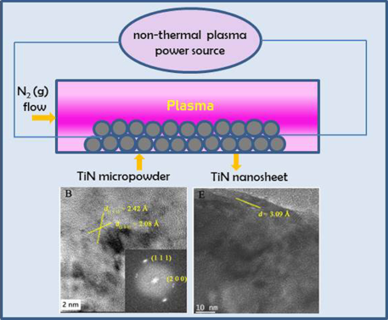
- conductivity [10][11][12]. On the nanoscale, TiN finds applications as additive in titanium alloys, as catalyst support material, as supercapacitor component, and as nanocoating for medical implants [13][14][15][16]. Furthermore, ultra-small TiN nanodots have been successfully obtained through liquid



AFM-IR investigation of thin PECVD SiOx films on a polypropylene substrate in the surface-sensitive mode
Beilstein J. Nanotechnol. 2024, 15, 603–611, doi:10.3762/bjnano.15.51
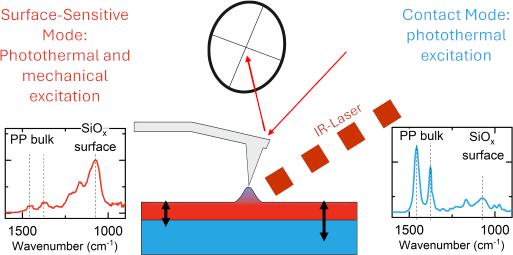
- nanoscale resolution of AFM-IR down to 10 nm [3]. Nowadays, the limit of the spatial resolution is given by the apex of the AFM tip. One of the first AFM-IR demonstrations was reported in 2005 by Dazzi et al. [4], who presented AFM-IR spectra of single bacterial cells. Further on, this technique became more


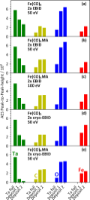
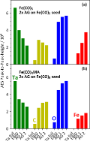
Electron-induced deposition using Fe(CO)4MA and Fe(CO)5 – effect of MA ligand and process conditions
Beilstein J. Nanotechnol. 2024, 15, 500–516, doi:10.3762/bjnano.15.45
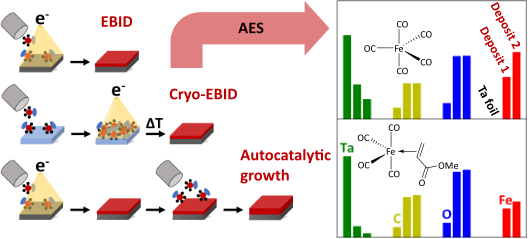
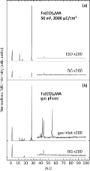
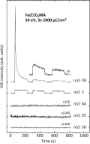
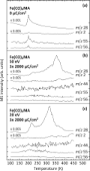
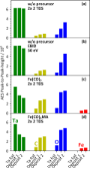
- surface reactions; Introduction Focused electron beam-induced deposition (FEBID) is a state-of-the-art direct-write process for the fabrication of nanoscale materials and devices with arbitrary shape and size down to the sub-10 nm regime [1][2][3]. In FEBID, precursor molecules that contain the element



Photocatalytic degradation of methylene blue under visible light by cobalt ferrite nanoparticles/graphene quantum dots
Beilstein J. Nanotechnol. 2024, 15, 475–489, doi:10.3762/bjnano.15.43
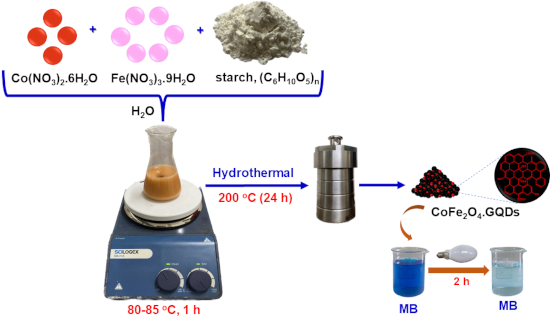
- GQDs with nanoscale size composed of few-layer graphene. These results confirm that the supernatant contains GQDs. Similarly, the supernatants from the CF/GQDs suspensions synthesized at 140 and 180 °C (Figure 2c) also contain graphene quantum dots (Figure 2c). Figure 3 presents some characterisations




Heat-induced morphological changes in silver nanowires deposited on a patterned silicon substrate
Beilstein J. Nanotechnol. 2024, 15, 435–446, doi:10.3762/bjnano.15.39
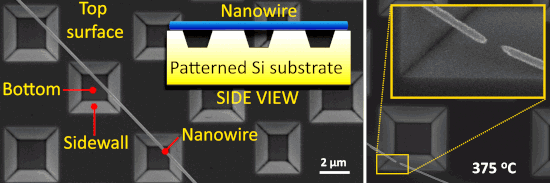
- nanoscale devices [8]. When deposited on a transparent substrate in the form of a low-density mesh, metal NWs can provide electrical conductivity while retaining sufficient transparency. The growing demand for transparent conductive materials has stimulated numerous studies aimed at the design, preparation
- organics. However, when the size of the structures is reduced to the nanoscale, metals exhibit distinct behavior at elevated temperatures compared to their larger counterparts [20][21]. Generally, a reduction in the melting point occurs as the size and dimensionality of the nanostructures decrease [20][22