


Search results
Search for "positioning" in Full Text gives 167 result(s) in Beilstein Journal of Nanotechnology.
Combination of surface- and interference-enhanced Raman scattering by CuS nanocrystals on nanopatterned Au structures
Beilstein J. Nanotechnol. 2015, 6, 749–754, doi:10.3762/bjnano.6.77
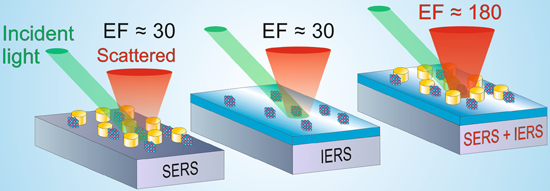
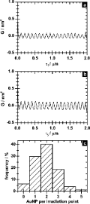
- in a backscattering geometry using a moving stage for precise positioning along the wedge-shaped sample in the direction of increasing thickness. Figure 2 shows the Raman spectra of CuS NCs recorded from areas with different SiO2 thickness. A significant periodic enhancement of the Raman scattering


A versatile strategy towards non-covalent functionalization of graphene by surface-confined supramolecular self-assembly of Janus tectons
Beilstein J. Nanotechnol. 2015, 6, 632–639, doi:10.3762/bjnano.6.64
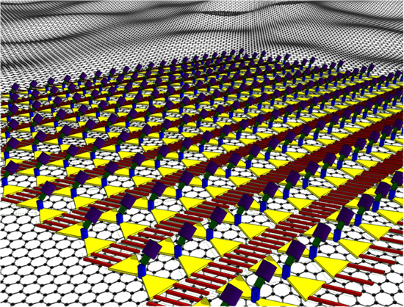
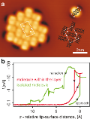
- be applied to impose a super-period in the graphene atomic lattice. This new method allows the band and sub-band structure to be finely tuned for innovative two-dimensional (2D) semiconductor junctions [8]. However, the controlled positioning and organization of functional molecules into self
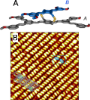
- the A face, the formation of a well-organized, in-plane monolayer covering the surface is expected as well as the steered positioning of the B face out of the plane. This concept was validated by designing and synthesizing the 3D tecton reported in Figure 4a. The pillar is a 3.3 Å [3.3
- molecules stack perpendicular to the substrate paving HOPG with long-range ordering, and (ii) the “floor” does not disturb the self-assembly in supramolecular, linear polymeric chains, even at large scales. Thus, this approach appears to be a breakthrough given the ability to control the 3-axis positioning




A scanning probe microscope for magnetoresistive cantilevers utilizing a nested scanner design for large-area scans
Beilstein J. Nanotechnol. 2015, 6, 451–461, doi:10.3762/bjnano.6.46
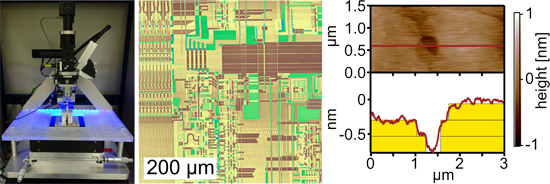
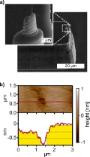
- force. The piezo elongations and the stage position are each monitored with a capacitive positioning sensor which allows for a linearization of the stage movement by an additional stage controller. The z-piezo of the large-area scanner is a piezo stack with a maximum travel of 35μm and a resonance
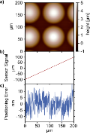
- scanner, the stability of the large-area scanner has to be high. The positioning accuracy can be tested during AFM scanning. If scanned with the open-loop scanner, also the stability and drift of the large-area scanner is of interest. In Figure 2a, a scan of polymeric microlenses is shown when using the
- optical beam deflection setup for the feedback. In parallel, the positioning error (profile after removing the 1st order component) of the fast scan axis was recorded and is shown in Figure 2c. By comparing the measured stage position and the desired position (given by the control signal), the positioning


Kelvin probe force microscopy in liquid using electrochemical force microscopy
Beilstein J. Nanotechnol. 2015, 6, 201–214, doi:10.3762/bjnano.6.19
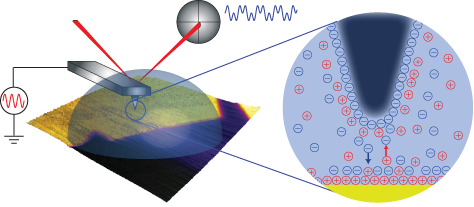
- Pro (Wavemetrics). After positioning the tip in the correct location, the tip was then retracted a predefined distance from the surface and a trigger was used to initiate the electrochemical measurement. In all measurements shown the tip–sample distance was chosen to ensure the interaction was purely


![[Graphic 6]](/bjnano/content/inline/2190-4286-6-19-i11.png?max-width=637&scale=1.18182) response collected 200 nm above a grounded Au electrode in (a, b, c) air, (d, e, f) decane an...
response collected 200 nm above a grounded Au electrode in (a, b, c) air, (d, e, f) decane an...


![[Graphic 22]](/bjnano/content/inline/2190-4286-6-19-i27.png?max-width=637&scale=1.18182) spectra [bias-on] collected 500 nm above HOPG in aqueous solutions of increasing salt concent...
spectra [bias-on] collected 500 nm above HOPG in aqueous solutions of increasing salt concent...

![[Graphic 25]](/bjnano/content/inline/2190-4286-6-19-i30.png?max-width=637&scale=1.18182) spectra [bias-on] collected 500 nm above (a) HOPG and (b) Au in milli-Q water (vertical color...
spectra [bias-on] collected 500 nm above (a) HOPG and (b) Au in milli-Q water (vertical color...

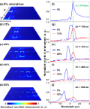
![[Graphic 27]](/bjnano/content/inline/2190-4286-6-19-i32.png?max-width=637&scale=1.18182) spectra [bias-on] recorded 500 nm above a HOPG/Au boundary in milli-Q water. T...
spectra [bias-on] recorded 500 nm above a HOPG/Au boundary in milli-Q water. T...

High-frequency multimodal atomic force microscopy
Beilstein J. Nanotechnol. 2014, 5, 2459–2467, doi:10.3762/bjnano.5.255
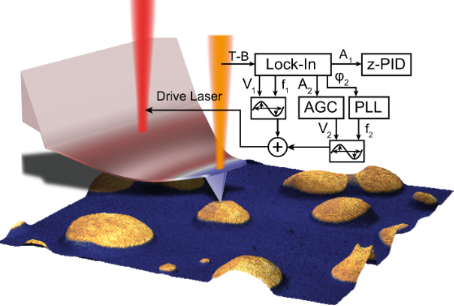
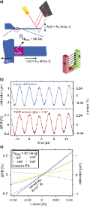
- laser spots to stay fixed when the lasers are aligned to the cantilever. Furthermore, because the optical axis of the assembly is normal to the cantilever top surface, we eliminate the need for refocusing when positioning the foci on the cantilever. Voltage-based arithmetic, which is used by most


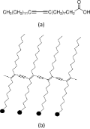
Characterization of 10,12-pentacosadiynoic acid Langmuir–Blodgett monolayers and their use in metal–insulator–metal tunnel devices
Beilstein J. Nanotechnol. 2014, 5, 2240–2247, doi:10.3762/bjnano.5.233
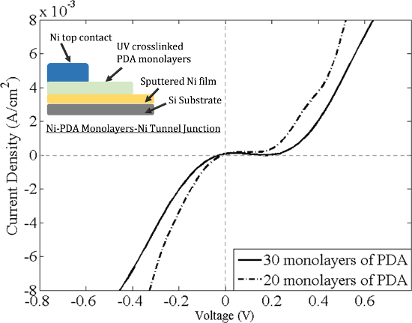
- probe tip positioning outside of the active area of the device without the need for a liquid top contact. After such optimization, the I–V characteristics of the Ni–PDA–Ni MIM configuration could be successfully measured using the 4145B Semiconductor Parameter Analyzer and micromanipulator setup to


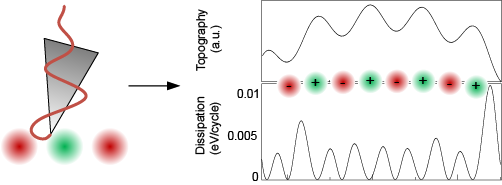
Dissipation signals due to lateral tip oscillations in FM-AFM
Beilstein J. Nanotechnol. 2014, 5, 2048–2057, doi:10.3762/bjnano.5.213
- the lateral spring (so that initially there is no energy in the lateral degree of freedom) with velocity set to zero. We therefore define the amplitude A with this initial positioning. The set point z0 can be used for variations of the distance between tip and sample. We will describe variations of z0


Towards bottom-up nanopatterning of Prussian blue analogues
Beilstein J. Nanotechnol. 2014, 5, 1933–1943, doi:10.3762/bjnano.5.204
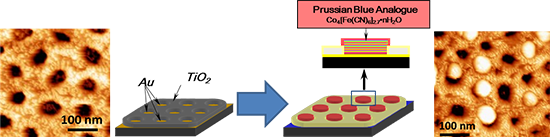
- low fabrication costs, and easy adaptability of the fabrication process to the industrial scale. Our synthesis process is based on two main chemistries. The positioning of the functional objects and their isolation from each other is realized thanks to the exceptional processing flexibility inherent


Patterning a hydrogen-bonded molecular monolayer with a hand-controlled scanning probe microscope
Beilstein J. Nanotechnol. 2014, 5, 1926–1932, doi:10.3762/bjnano.5.203
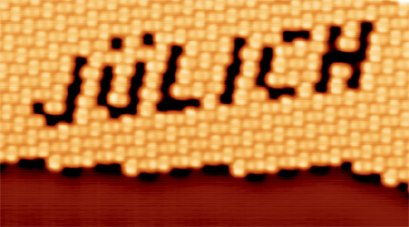
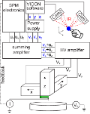
- the movements of an operator's hand to the sub-angstrom precise positioning of an SPM tip. Literally moving the tip by hand we write a nanoscale structure in a monolayer of large molecules, thereby showing that our method allows for the successful execution of complex manipulation protocols even when
- for a stable and precise positioning of the tip, while simultaneously measuring the current flowing through the junction (I) and the frequency shift of the oscillating tip (Δf). Measuring Δf provides additional information about the microscopic junction structure [15][16]. For the AFM functionality we
- fork used. The essence of our approach lies in the coupling of the sub-angstrom precise positioning of the tip of our instrument to the motion of the operator's hand [18]. This is achieved with the help of a commercial motion tracking system from VICON (see Figure 2). The VICON software was used to


High speed e-beam lithography for gold nanoarray fabrication and use in nanotechnology
Beilstein J. Nanotechnol. 2014, 5, 1918–1925, doi:10.3762/bjnano.5.202
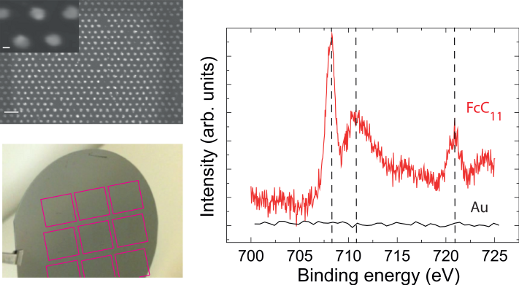
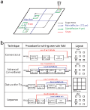
- covalent bond is one of the most promising methods for low-cost and high speed fabrication of such gold nanoarrays [18]. However, to keep the versatility, well positioning and reliable nanoarray fabrication offered by e-beam lithography, another way is to notice that high-speed e-beam writing can be


Mechanical properties of sol–gel derived SiO2 nanotubes
Beilstein J. Nanotechnol. 2014, 5, 1808–1814, doi:10.3762/bjnano.5.191
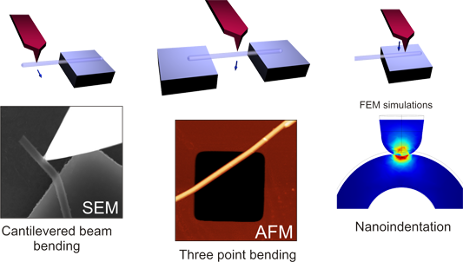
- tests. Prior to the three-point bending test an AFM image of a NT suspended over a trench was taken in tapping mode at low magnification (typically 10 × 10 μm, Figure 3a). In order to ensure proper tip positioning during force spectroscopy a NT was scanned sequentially at a higher magnification


Review of nanostructured devices for thermoelectric applications
Beilstein J. Nanotechnol. 2014, 5, 1268–1284, doi:10.3762/bjnano.5.141
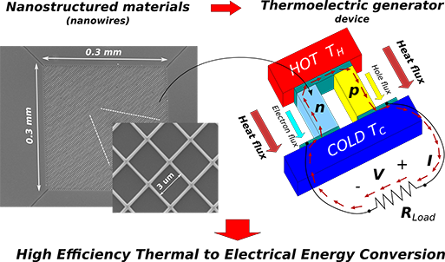
- fabrication process yields fully functional devices. Conversely, bottom-up approaches allow for an easier production of nanowires, but then the fabrication of devices requires the development of complex procedures for the positioning of nanowires with respect to contacts and connections. A typical top-down


Sublattice asymmetry of impurity doping in graphene: A review
Beilstein J. Nanotechnol. 2014, 5, 1210–1217, doi:10.3762/bjnano.5.133
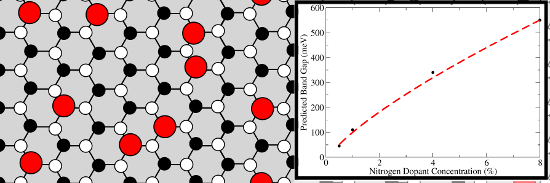
- effect comes from either the energetically preferable positioning of nitrogen on the graphene edge during the growth process [41][42], where the symmetry breaking effect is the edge structure, or from inter-impurity interactions in the impurity ensemble [39][43] where the symmetry is broken by the


Dry friction of microstructured polymer surfaces inspired by snake skin
Beilstein J. Nanotechnol. 2014, 5, 1091–1103, doi:10.3762/bjnano.5.122
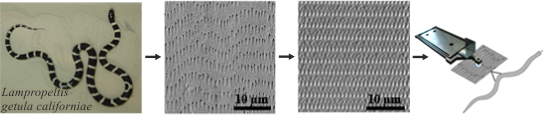
- motorized translation stage (Physik Instrumente GmbH, Germany) was used for sample positioning and translation. A computer controlled LCD element was used for setting the laser pulse energy. It features periodic groove-like microstructures (PGM) with different structural wavelengths of 5 µm, 25 µm, 50 µm


Nanoforging – Innovation in three-dimensional processing and shaping of nanoscaled structures
Beilstein J. Nanotechnol. 2014, 5, 1066–1070, doi:10.3762/bjnano.5.118
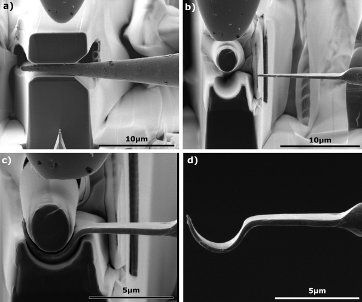
- ). A system of two micromanipulators (MM3A-EM from Kleindiek Nanotechnik) was mounted on the stage and at the door of the microscope in a angle of 90° to each other. Regarding nanoforging, the positioning accuracy is 3.5 nm and 5 nm, respectively, in the two rotational axes and 0.25 nm in the linear


Hole-mask colloidal nanolithography combined with tilted-angle-rotation evaporation: A versatile method for fabrication of low-cost and large-area complex plasmonic nanostructures and metamaterials
Beilstein J. Nanotechnol. 2014, 5, 577–586, doi:10.3762/bjnano.5.68
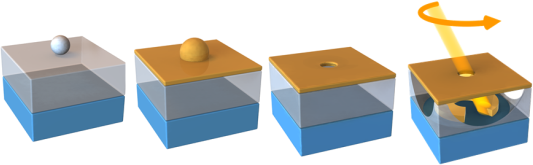
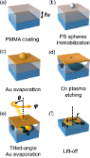
- allow for complex patterns), and capable of exact positioning of multiple materials in the sub-10 nm range over large areas. Also, stacking different materials or creation of 3D chiral structures is easy. First, we are going to describe the manufacturing process in detail, which consists of the hole


Control theory for scanning probe microscopy revisited
Beilstein J. Nanotechnol. 2014, 5, 337–345, doi:10.3762/bjnano.5.38
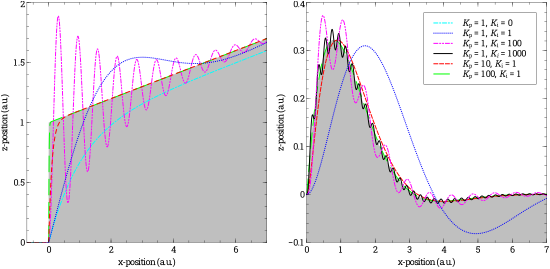
- consider the workings of the PI controller under perfect conditions. First, assume that the tip is stationary above a sample at a position Z, and that the z-piezoelectric actuator for tip positioning is extended by X (Figure 1). For this perfect model X is considered to be directly the output of the PI


Constant-distance mode SECM as a tool to visualize local electrocatalytic activity of oxygen reduction catalysts
Beilstein J. Nanotechnol. 2014, 5, 141–151, doi:10.3762/bjnano.5.14
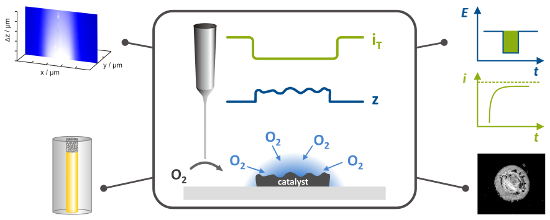
- interpretation of the current response can only be realized by discrimination between the impact of topography and local reactivity by means of a constant-distance mode (cd-mode) positioning of the SECM tip in known and constant distance to the sample surface. The basis of cd-mode scanning is the control of the
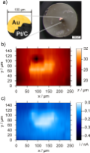
- outer ring with high catalyst loading due to a coffee drop effect [31][32], the topography of the catalyst spot was successfully visualized using shearforce-based positioning. The topographic features of the catalyst spot are also seen in the micrograph in the insert of Figure 1b. The oxygen consumption
- therefore unambiguously allocated to the local catalyst activity for ORR. This experiment demonstrates the feasibility of the 4D SF/CD mode for studying the local activity of catalyst spots removing any impact from the sample topography. The accuracy of the shearforce-based tip positioning enables to follow




Simulation of electron transport during electron-beam-induced deposition of nanostructures
Beilstein J. Nanotechnol. 2013, 4, 781–792, doi:10.3762/bjnano.4.89
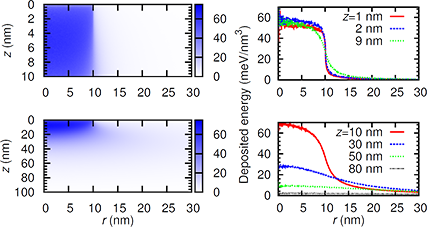
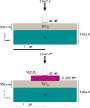
- geometries constructed by positioning a set of well-defined homogeneous bodies in space. Random trajectories are generated as follows [7]: particles are characterized by their position vector r = (x,y,z), energy E and a direction-of-flight unit vector d = (u,v,w), where u, v, and w are the direction cosines



Size-dependent characteristics of electrostatically actuated fluid-conveying carbon nanotubes based on modified couple stress theory
Beilstein J. Nanotechnol. 2013, 4, 771–780, doi:10.3762/bjnano.4.88
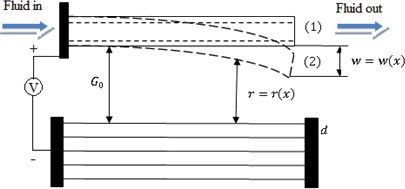
- corresponding voltage is the dynamic pull-in voltage. Since, the fluid flow influences both stiffness and damping properties of the CNT, it can be applied as a proper tool for controlling and positioning purposes. By using different parameters of the fluid flow, one can control the behaviors of the CNT for a


Controlling the near-field excitation of nano-antennas with phase-change materials
Beilstein J. Nanotechnol. 2013, 4, 632–637, doi:10.3762/bjnano.4.70
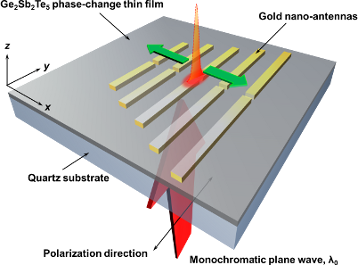
- plasmonic resonators placed on a thin film of phase-change material can be selectively excited, generating isolated near-field energy hot-spots with selective excitation under a monochromatic plane wave illumination. Unlike other proposed techniques, our method for energy hot-spot positioning is based on a
- positioning of the isolated energy hot-spot can be achieved, the challenge of lower field intensity with an increase of GST crystalline proportions still needs to be addressed. These weak energy localizations may result from more metal-like portion generated when the phase-change material is changed to the
- near-field energy controllable template for positioning nanoscale energy hot-spots on the nanostructure landscape. As illustrated in [15], strong plasmon coupling between the constituent dipole antennas plays an important role in a closely packed nano-antenna array. The mutual interactions among the



Kelvin probe force microscopy of nanocrystalline TiO2 photoelectrodes
Beilstein J. Nanotechnol. 2013, 4, 418–428, doi:10.3762/bjnano.4.49
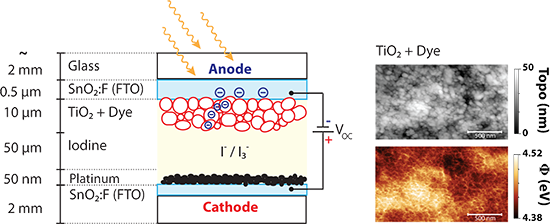
- photovoltage determination A UV-lamp (360 nm, L18W/73, Osram) was used for super-bandgap illumination. Trap and interface states were investigated under sub-bandgap illumination (λ > 385 nm) with LEDs (405 nm, 470 nm, 530 nm, 590 nm, Mightex Systems) or solid state lasers each mounted on a x-y-z positioning


Porous polymer coatings as substrates for the formation of high-fidelity micropatterns by quill-like pens
Beilstein J. Nanotechnol. 2013, 4, 377–384, doi:10.3762/bjnano.4.44
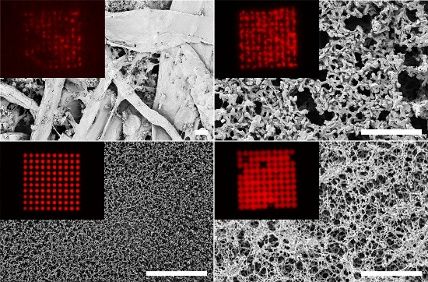
- velocity lines, there is a widening visible at the start and end of the lines. This is caused by the acceleration and deceleration, respectively, of the piezo positioning table of the instrument before reaching the target speed or when slowing down before the end of a line. For microarray printing, the


Guided immobilisation of single gold nanoparticles by chemical electron beam lithography
Beilstein J. Nanotechnol. 2013, 4, 336–344, doi:10.3762/bjnano.4.39
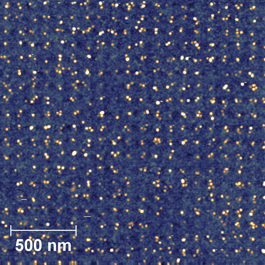
- . Afterwards, these arrays are characterised by using atomic force microscopy. Keywords: 2D pattern; indium tin oxide (ITO); positioning; SAM; self-assembly; Introduction Periodic arrays of nanometre-sized metal structures hold great promise for future applications, e.g., in nanoelectronics [1][2][3][4] or


Grating-assisted coupling to nanophotonic circuits in microcrystalline diamond thin films
Beilstein J. Nanotechnol. 2013, 4, 300–305, doi:10.3762/bjnano.4.33
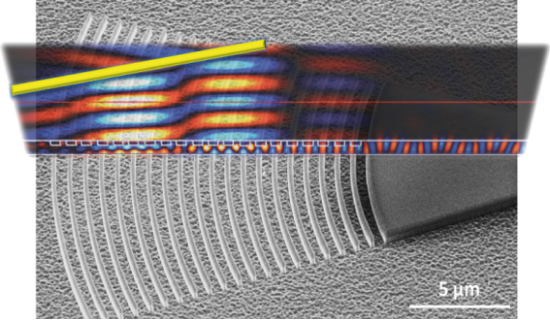
- traditional butt-coupling using optical fibres aligned to cleaved facets of photonic chips is commonly employed [25], such an approach requires careful positioning of the input–output fibres with respect to the waveguide, which is time consuming and not suitable for the investigation of large numbers of





