Search results
Search for "silver nanoparticles" in Full Text gives 152 result(s) in Beilstein Journal of Nanotechnology.
Raman spectroscopy as a tool to investigate the structure and electronic properties of carbon-atom wires
Beilstein J. Nanotechnol. 2015, 6, 480–491, doi:10.3762/bjnano.6.49
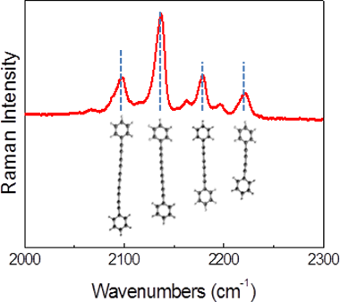
- spectrum. A shift in the main Raman peak locations is accompanied by the appearance of new spectral features at lower wavenumbers (below 2000 cm−1), as shown in Figure 6 for the case of silver nanoparticles. This occurs also in the case of gold nanoparticles for different excitation wavelengths ranging
- stability observed after mixing with silver nanoparticles [60]. Phenyl-capped polyynes show similar aggregation when mixed with metal nanoparticles. The changes occurring in the vibrational properties of wires upon interaction with metal nanoparticles (i.e., observed comparing Raman with SERS) suggest a


Green preparation and spectroscopic characterization of plasmonic silver nanoparticles using fruits as reducing agents
Beilstein J. Nanotechnol. 2015, 6, 293–299, doi:10.3762/bjnano.6.27
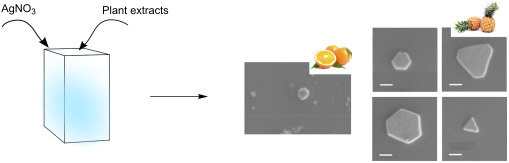
- capability to reduce silver and gold salts and to create silver and gold nanoparticles. We report the preparation of silver nanoparticles with sizes between 10 and 300 nm from silver nitrate using fruit extract collected from pineapples and oranges as reducing agents. The evolvement of a characteristic
- surface plasmon extinction spectrum in the range of 420 nm to 480 nm indicates the formation of silver nanoparticles after mixing silver nitrate solution and fruit extract. Shifts in plasmon peaks over time indicate the growth of nanoparticles. Electron microscopy shows that the shapes of the
- absorption band in the UV. This confirms the evolution of silver nanoparticles from silver clusters. The presence of various silver clusters on the surface of the “green” plasmonic silver nanoparticles is also supported by a strong multicolor luminesce signal emitted by the plasmonic particles during 473 nm


Synthesis of boron nitride nanotubes and their applications
Beilstein J. Nanotechnol. 2015, 6, 84–102, doi:10.3762/bjnano.6.9
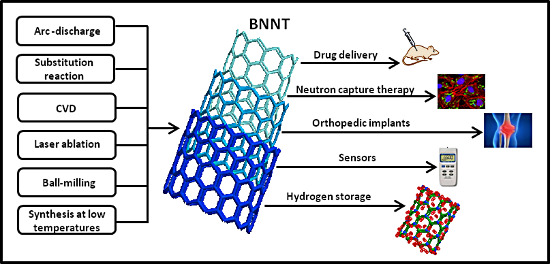
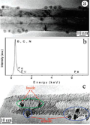
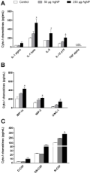
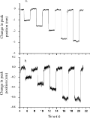
- combined with the properties of other nanomaterials to construct novel sensor devices for humidity, carbon dioxide detection, and clinical diagnostics. A highly sensitive humidity sensor using BNNTs and silver nanoparticles (AgNPs) for the rapid detection of humidity was fabricated [90]. Figure 8 shows the




SERS and DFT study of copper surfaces coated with corrosion inhibitor
Beilstein J. Nanotechnol. 2014, 5, 2489–2497, doi:10.3762/bjnano.5.258
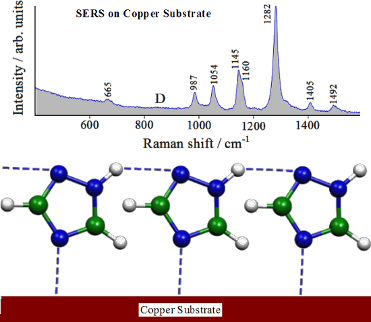
- the SERS enhancement, could to some extent change the ligand adsorption to copper. Hence, a roughening procedure of smooth copper plates was developed to ensure a suitable SERS activation without the aid of silver nanoparticles. The SERS spectra of 1,2,4-triazole adsorbed on nanostructured copper


Interaction of dermatologically relevant nanoparticles with skin cells and skin
Beilstein J. Nanotechnol. 2014, 5, 2363–2373, doi:10.3762/bjnano.5.245
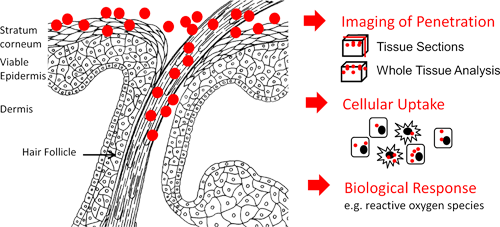
- penetration of silver nanoparticles (AgNP, mean size 70 nm) in porcine ear skin. By tracking the Raman signal of AgNP, the mean penetration depth in intact skin was found to be 4.4 ± 1.5 µm, which is in accordance with other investigations on silica [3], zink oxide [19], or AgNP in this size range or smaller
- ROS were formed compared to AgNP which were produced and stored in an argon atmosphere. The oxygen in the ambient atmosphere is responsible for the formation of Ag+ ions by oxidation of the metallic silver nanoparticles. Silver ions are probably responsible for the induction of oxidative stress. In
- in EPR signal, no ROS could be detected after particle application alone. A lack of particle penetration with rather superficial radical production in response to UVB exposure could be an explanation. Similarly, no free radical production was detected in skin treated with silver nanoparticles (Figure


Localized surface plasmon resonances in nanostructures to enhance nonlinear vibrational spectroscopies: towards an astonishing molecular sensitivity
Beilstein J. Nanotechnol. 2014, 5, 2275–2292, doi:10.3762/bjnano.5.237
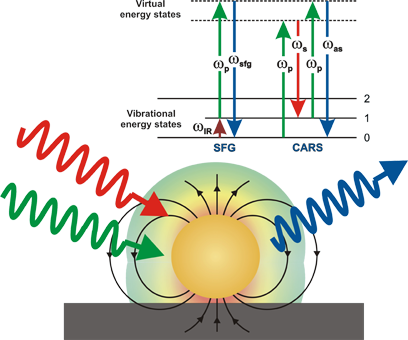
- calculated that CARS amplification of benzene molecules close to silver particles, averaged over all scattering angles, could be as large as 1021 [50]. Then, in 1994, Liang et al. experimentally demonstrated an enhancement of the CARS signature of benzene in the bulk phase, by adding colloidal silver
- nanoparticles directly into the liquid [79]. Although the phase matching condition was not fulfilled, the average particle spacing had been adjusted such as to be smaller than the coherence length, while the pump wavelength was matching the localized surface plasmon resonance of the silver NPs. In this first




Biopolymer colloids for controlling and templating inorganic synthesis
Beilstein J. Nanotechnol. 2014, 5, 2129–2138, doi:10.3762/bjnano.5.222
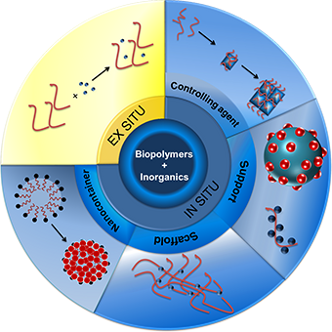
- ” geometries. In a very recent work, Taheri et al. [63] have presented the formation of potato starch capsules decorated with silver nanoparticles, which could have applications as drug carriers or antibacterial coatings. The capsules are prepared in an inverse (water-in-oil) miniemulsion and the surfactant


Effect of silver nanoparticles on human mesenchymal stem cell differentiation
Beilstein J. Nanotechnol. 2014, 5, 2058–2069, doi:10.3762/bjnano.5.214
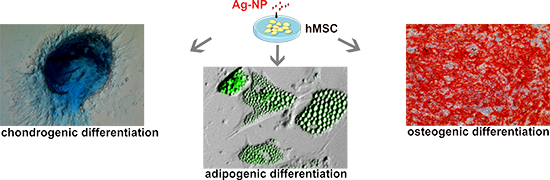
- of Duisburg-Essen, Universitaetsstr. 5-7, 45117 Essen, Germany 10.3762/bjnano.5.214 Abstract Background: Silver nanoparticles (Ag-NP) are one of the fastest growing products in nano-medicine due to their enhanced antibacterial activity at the nanoscale level. In biomedicine, hundreds of products
- −, S2−) in the microenvironment considerably decreased the adverse effects of silver ions and silver nanoparticles, indicating that these ligands bind silver [18][23]. Today, Ag-NP are increasingly used because particles with sizes in the range of a few nanometers lead to a dramatic increase in the
- [23][24]. Because of the high differentiating capacity of hMSCs they are an optimal cell model to analyze the possible influence of silver nanoparticles on cell differentiation. MSCs are neither transformed nor immortalized cells, rather, they represent primary pre-tissue cells. They can therefore be


PVP-coated, negatively charged silver nanoparticles: A multi-center study of their physicochemical characteristics, cell culture and in vivo experiments
Beilstein J. Nanotechnol. 2014, 5, 1944–1965, doi:10.3762/bjnano.5.205

- main text. 10.3762/bjnano.5.205 Abstract PVP-capped silver nanoparticles with a diameter of the metallic core of 70 nm, a hydrodynamic diameter of 120 nm and a zeta potential of −20 mV were prepared and investigated with regard to their biological activity. This review summarizes the physicochemical
- properties (dissolution, protein adsorption, dispersability) of these nanoparticles and the cellular consequences of the exposure of a broad range of biological test systems to this defined type of silver nanoparticles. Silver nanoparticles dissolve in water in the presence of oxygen. In addition, in
- biological media (i.e., in the presence of proteins) the surface of silver nanoparticles is rapidly coated by a protein corona that influences their physicochemical and biological properties including cellular uptake. Silver nanoparticles are taken up by cell-type specific endocytosis pathways as


In vitro and in vivo interactions of selected nanoparticles with rodent serum proteins and their consequences in biokinetics
Beilstein J. Nanotechnol. 2014, 5, 1699–1711, doi:10.3762/bjnano.5.180
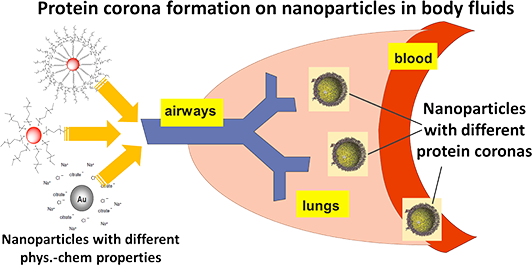
- studies already described adverse effects of silver nanoparticles (AgNP) on the lungs [20][21][22][23][24][25]. However, information about the effects of AgNP on diseased lungs is lacking. So, the aim of the current study was to investigate the effects of AgNP on lungs, which were subsequently incubated


Current state of laser synthesis of metal and alloy nanoparticles as ligand-free reference materials for nano-toxicological assays
Beilstein J. Nanotechnol. 2014, 5, 1523–1541, doi:10.3762/bjnano.5.165
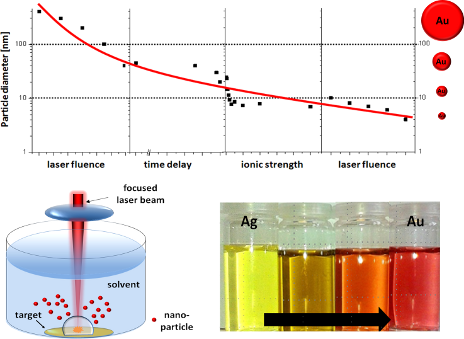
- surface area, is known to alter the dissolution behaviour of nanoparticles [95][96]. This may lead to elevated ion release and associated toxicity with decreasing particle diameters. Prior studies with silver nanoparticles seem to indicate that their stability and size distributions may also be altered by
- does not occur when the nanoparticles are coated by an albumin corona. In contrast, silver nanoparticles were toxic to oocytes and inhibited the maturation process (Figure 13A) [35]. In case of AuAg alloy nanoparticles, oocyte maturation was critically impaired at a GMF of 0.2, while for GMF > 0.2 no
- studies, toxicity of silver nanoparticles is reported to be linked to Ag+ ion release [149][150], which may be a reasonable assumption for AuAg alloy nanoparticles. This hypothesis is backed by data from Besner and Meunier [29] who reported the significant onset of particle dissolution at GMF < 0.4, the


Synthesis of hydrophobic photoluminescent carbon nanodots by using L-tyrosine and citric acid through a thermal oxidation route
Beilstein J. Nanotechnol. 2014, 5, 1513–1522, doi:10.3762/bjnano.5.164
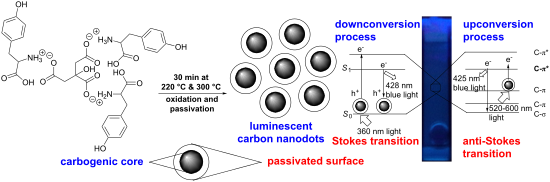
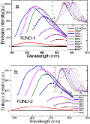
- CNDs are also soluble in water under basic conditions. The effects of base and silver nanoparticles on the luminescence properties of CNDs were studied and a quenching of fluorescence was observed. These tyrosine-passivated CNDs are applicable for both biologically and commercially. Keywords
- -passivated CNDs are insoluble in water under normal conditions, but soluble under basic conditions. The luminescence properties of the CNDs were investigated in organic solvents and in water under basic conditions. The basic aqueous solution of the CNDs was used to prepare a composite material with silver
- nanoparticles (Ag NPs). The luminescence properties of the composite material solution were investigated and a quenching of emission intensity was observed. Results and Discussion Synthesis Hydrophobic photoluminescent CNDs were synthesized by a thermal oxidation process in air using citric acid and L-tyrosine






Mimicking exposures to acute and lifetime concentrations of inhaled silver nanoparticles by two different in vitro approaches
Beilstein J. Nanotechnol. 2014, 5, 1357–1370, doi:10.3762/bjnano.5.149
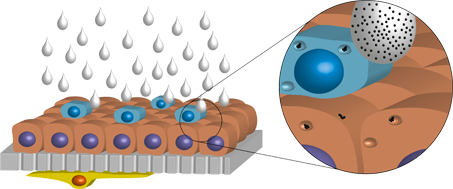
- Medicine, Department of Clinical Research, Inselspital University Hospital, University of Bern, Murtenstrasse 50, 3008 Bern, Switzerland 10.3762/bjnano.5.149 Abstract In the emerging market of nano-sized products, silver nanoparticles (Ag NPs) are widely used due to their antimicrobial properties. Human
- –liquid exposure; dosimetry; lung cells in vitro; silver nanoparticles; toxicity; Introduction Silver possesses antiseptic and germicidal properties [1]. These effects are enhanced in combination with the possibilities of nanotechnology, when silver is manufactured as particles at the nanoscale. Defined
- as objects with all three external dimensions between 1 and 100 nm [2], silver nanoparticles (Ag NPs) allow for a vast range of applications and are the most commonly used material in the emerging markets of nano-sized products [3][4][5][6]. Consumer applications using Ag NPs as antimicrobial agents



Nanostructure sensitization of transition metal oxides for visible-light photocatalysis
Beilstein J. Nanotechnol. 2014, 5, 696–710, doi:10.3762/bjnano.5.82
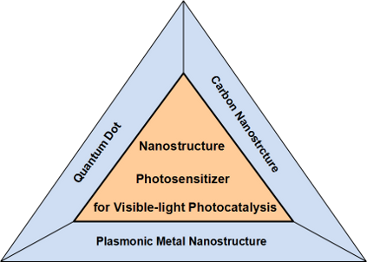
- loaded with gold and silver nanoparticles exhibited anodic photocurrents in response to visible light irradiation [75]. Based on this finding, they proposed a charge transfer mechanism to explain the phenomenon. More specifically, due to the plasmon resonance effect, gold nanoparticles can be




Injection of ligand-free gold and silver nanoparticles into murine embryos does not impact pre-implantation development
Beilstein J. Nanotechnol. 2014, 5, 677–688, doi:10.3762/bjnano.5.80
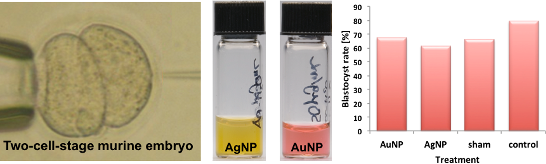
- Nanointegration Duisburg-Essen (CENIDE), University of Duisburg-Essen, Universitätsstrasse 7, 45141 Essen, Germany 10.3762/bjnano.5.80 Abstract Intended exposure to gold and silver nanoparticles has increased exponentially over the last decade and will continue to rise due to their use in biomedical applications
- . In particular, reprotoxicological aspects of these particles still need to be addressed so that the potential impacts of this development on human health can be reliably estimated. Therefore, in this study the toxicity of gold and silver nanoparticles on mammalian preimplantation development was
- control groups (gold nanoparticles: 67.3%, silver nanoparticles: 61.5%, sham: 66.2%, handling control: 79.4%). Real-time PCR analysis of six developmentally important genes (BAX, BCL2L2, TP53, OCT4, NANOG, DNMT3A) did not reveal an influence on gene expression in blastocysts. Contrary to silver




Effects of the preparation method on the structure and the visible-light photocatalytic activity of Ag2CrO4
Beilstein J. Nanotechnol. 2014, 5, 658–666, doi:10.3762/bjnano.5.77
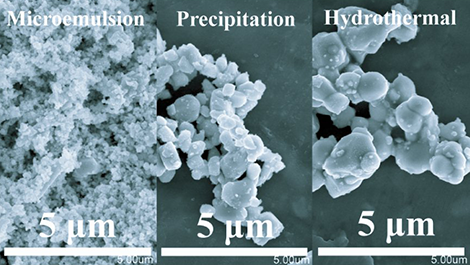
- corresponding colour of Ag2CrO4 after five circles of photocatalytic reaction is displayed in Figure 9d. It was found that the absorbance intensity in the visible-light region largely increased, which could be ascribed to the darkened colour of Ag2CrO4 after photocatalysis, resulting from the silver
- nanoparticles [32]. These results indicate that Ag2CrO4 was partially reduced to metallic Ag and formed an Ag–Ag2CrO4 composite. However, the majority of Ag2CrO4 was still preserved, and the formed Ag particles may further promote the photocatalytic activity in terms of surface plasmon resonance [75][76] and


Enhanced photocatalytic activity of Ag–ZnO hybrid plasmonic nanostructures prepared by a facile wet chemical method
Beilstein J. Nanotechnol. 2014, 5, 639–650, doi:10.3762/bjnano.5.75
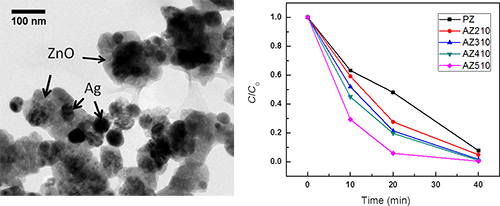
- visible region by controlling their size, shape, inter-particle spacing and surrounding medium [25]. In case of ZnO modified with noble metal nanoparticles, LSPR absorption can lead to enhanced utilization of UV–visible light as compared to pure ZnO [26][27][28]. Silver nanoparticles decorated ZnO


One pot synthesis of silver nanoparticles using a cyclodextrin containing polymer as reductant and stabilizer
Beilstein J. Nanotechnol. 2014, 5, 380–385, doi:10.3762/bjnano.5.44
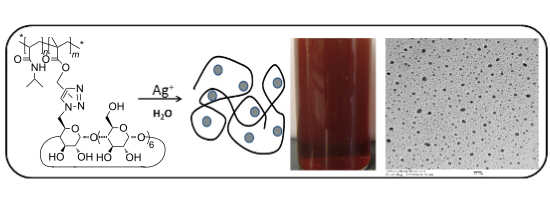
- Arkadius Maciollek Helmut Ritter Institute of Organic Chemistry and Macromolecular Chemistry, Heinrich-Heine-University Duesseldorf, Universitaetsstraße 1, 40225 Duesseldorf, Germany 10.3762/bjnano.5.44 Abstract A facile and one pot synthesis of silver nanoparticles with narrow size distributions
- structure of the silver nanoparticles has been confirmed by UV–vis spectroscopy and transmission electron microscopy. The optical properties of the nanoparticles have also been characterized by fluorescence spectroscopy. The formed spherical particles are stable in aqueous medium at room temperature over a
- nanoparticles; surface plasmon resonance; Introduction Recently the interest in noble metal nano scaled particles increased significantly. Due to their unique physicochemical and microbacterial properties silver nanoparticles (AgNP) are one of the most studied in the field of nanotechnology and have a broad


Manipulation of nanoparticles of different shapes inside a scanning electron microscope
Beilstein J. Nanotechnol. 2014, 5, 133–140, doi:10.3762/bjnano.5.13
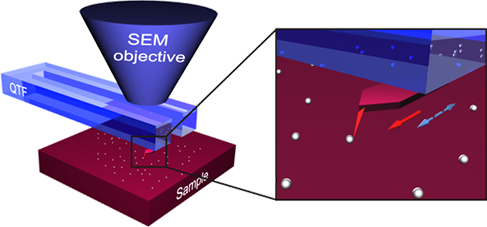
- Nanotechnology Competence Center, Riia 142, 51014, Tartu, Estonia 10.3762/bjnano.5.13 Abstract In this work polyhedron-like gold and sphere-like silver nanoparticles (NPs) were manipulated on an oxidized Si substrate to study the dependence of the static friction and the contact area on the particle geometry


Cytotoxic and proinflammatory effects of PVP-coated silver nanoparticles after intratracheal instillation in rats
Beilstein J. Nanotechnol. 2013, 4, 933–940, doi:10.3762/bjnano.4.105
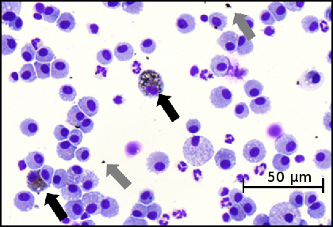
- -Maximilians-Universität München, Munich, Germany Current address: Institute of Epidemiology 2, Helmholtz Center Munich, Neuherberg/Munich, Germany Current address: Berufsgenossenschaft Holz und Metall, Am Knie 8, 81241 München, Germany 10.3762/bjnano.4.105 Abstract Silver nanoparticles (AgNP) are among the
- AgNP can induce moderate pulmonary toxicity, but only at rather high concentrations. Keywords: cytotoxicity; inflammation; pulmonary toxicity; silver nanoparticles; Introduction Silver nanoparticles (AgNP) are among the most promising nanomaterials, and their usage in medical applications and
- µg silver nanoparticles did not result in cytotoxic or inflammatory effects, the rationale to use an additional dose of 250 µg (1 mg/kg body weight) was to induce potential toxic effects but not death or severe suffering to the animal. To estimate whether the toxicity is driven by AgNP doses that are




Probing the plasmonic near-field by one- and two-photon excited surface enhanced Raman scattering
Beilstein J. Nanotechnol. 2013, 4, 834–842, doi:10.3762/bjnano.4.94
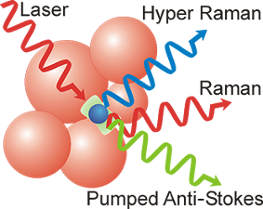
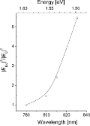
- small aggregates of silver nanoparticles and still, such aggregates seem to be the favorite “plasmonic substrate” for single-molecule SERS [23]. Most single-molecule SERS studies are using excitation wavelengths that are resonant with electronic transitions in the target molecule and, by this way




Photocatalytic antibacterial performance of TiO2 and Ag-doped TiO2 against S. aureus. P. aeruginosa and E. coli
Beilstein J. Nanotechnol. 2013, 4, 345–351, doi:10.3762/bjnano.4.40
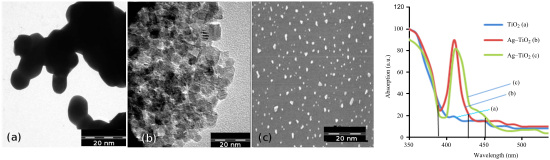
- photocatalytic efficiency [8][9]. However, silver nanoparticles have prospective applications including biosensing, biodiagnostics, optical fibers, and antimicrobial and photocatalytic uses. Silver ions are known to cause denaturation of proteins present in bacterial cell walls and slow down bacterial growth [5
- hand, TiO2 is also an excellent supporting metal oxide for the doping of silver nanoparticles due to its small crystal size and high surface area. The aim of this work is to investigate the comparative photocatalytic activity of TiO2 and Ag-doped TiO2 (visible light active) nanoparticles synthesized by
- nanoparticles at 60 mg/30 mL of culture, 0% viability in the case of P. aeruginosa was recorded, while in the case of S. aureus and E. coli 7% and 3% viabilities were recorded. Therefore 7% doped silver nanoparticles at 60 mg/30 mL of bacterial culture (0.2 O.D. at 660 nm) is the optimum concentration for the


Plasmonics-based detection of H2 and CO: discrimination between reducing gases facilitated by material control
Beilstein J. Nanotechnol. 2012, 3, 712–721, doi:10.3762/bjnano.3.81
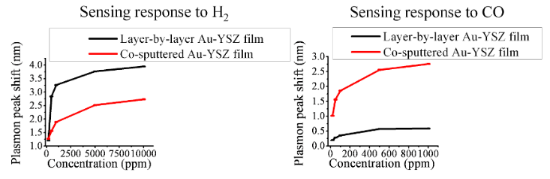
- , for example, is around 1150 K and decreases with decreasing particle size [7]). There have been studies investigating the use of catalytically active gold or silver nanoparticles as optical sensors [8][9][10][11][12], along with theoretical models of the sensing response [13] and calculations of the





The morphology of silver nanoparticles prepared by enzyme-induced reduction
Beilstein J. Nanotechnol. 2012, 3, 404–414, doi:10.3762/bjnano.3.47
- University Jena, Helmholtzweg 4, D-07743 Jena, Germany Max Planck Institute of Microstructure Physics, Weinberg 2, D-06120 Halle, Germany 10.3762/bjnano.3.47 Abstract Silver nanoparticles were synthesized by an enzyme-induced growth process on solid substrates. In order to customize the enzymatically grown
- nanoparticles (EGNP) for analytical applications in biomolecular research, a detailed study was carried out concerning the time evolution of the formation of the silver nanoparticles, their morphology, and their chemical composition. Therefore, silver-nanoparticle films of different densities were investigated
- by using scanning as well as transmission electron microscopy to examine their structure. Cross sections of silver nanoparticles, prepared for analysis by transmission electron microscopy were additionally studied by energy-dispersive X-ray spectroscopy in order to probe their chemical composition


Self-assembled monolayers and titanium dioxide: From surface patterning to potential applications
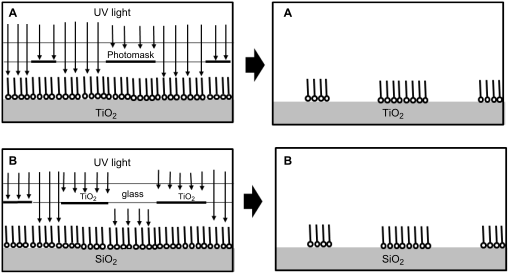
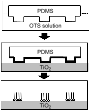
Beilstein J. Nanotechnol. 2011, 2, 845–861, doi:10.3762/bjnano.2.94