Search results
Search for "transfer" in Full Text gives 1093 result(s) in Beilstein Journal of Nanotechnology. Showing first 200.
Interface properties of nanostructured carbon-coated biological implants: an overview
Beilstein J. Nanotechnol. 2024, 15, 1041–1053, doi:10.3762/bjnano.15.85
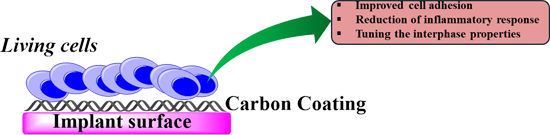
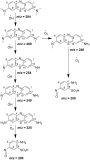
- adhesion of sulfate-reducing bacteria. Furthermore, graphene coatings can also exhibit antibacterial activity through electron transfer phenomena as reported by Yang et al. [114] for graphene coatings on titania. The authors reported that the increased electrical conductivity was due to the unpaired
- electrons at the Schottky-like interface between graphene and titanium. The enhancement of electron transfer rate promoted a relevant bactericidal action. Furthermore, the authors proved the relationship between activity and electron transfer rate by adding an insulating layer of zirconia and observing no
- strength. The improvements are due to the graphene coating, which allowed for a better load transfer, inter-layer sliding, and crack deflection. Similarly, Askarnia et al. [135] used electrophoretic deposition for coating a magnesium alloy with GO. The authors reported an increase of both hardness and



Entry of nanoparticles into cells and tissues: status and challenges
Beilstein J. Nanotechnol. 2024, 15, 1017–1029, doi:10.3762/bjnano.15.83
- other types of vesicles, for instance from the plasma membrane, may play a role in the transfer of information between cells. For a list of various types of extracellular vesicles (EVs), see [5]. For therapeutic purposes, EVs may not only be loaded with drugs after the release from cells, but incubation


Therapeutic effect of F127-folate@PLGA/CHL/IR780 nanoparticles on folate receptor-expressing cancer cells
Beilstein J. Nanotechnol. 2024, 15, 954–964, doi:10.3762/bjnano.15.78
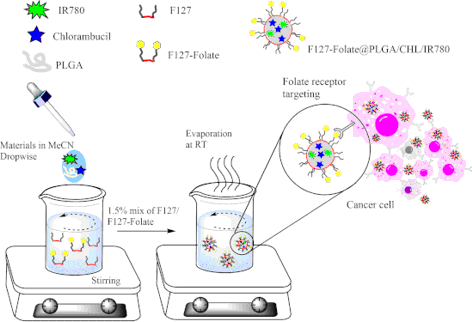
- /CHL/IR780 could be due to the presence of F127-folate on the surface of the nanoparticles (Table 1). Targeting ligand Cancer cells overexpress many receptors and markers for their growth; one of them is the folate receptor [35]. The folate receptor binds to folic acid and would then transfer it into



Intermixing of MoS2 and WS2 photocatalysts toward methylene blue photodegradation
Beilstein J. Nanotechnol. 2024, 15, 817–829, doi:10.3762/bjnano.15.68
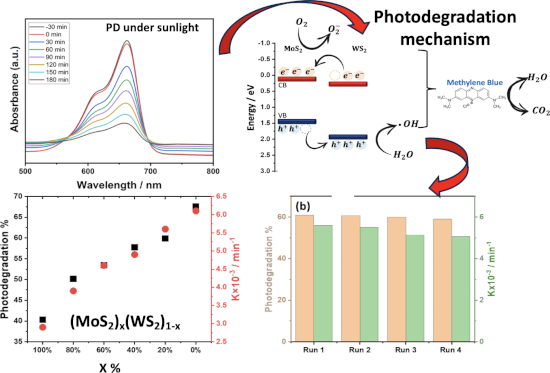
- 10 is obtained using the calculated conduction and valence bands positions. The more effective and faster electron transfer kinetics of MoS2/WS2 should account for the enhanced photocatalytic activity under irradiation. The PD process can take place as per the following two mechanisms: Or as follows


Exploring surface charge dynamics: implications for AFM height measurements in 2D materials
Beilstein J. Nanotechnol. 2024, 15, 767–780, doi:10.3762/bjnano.15.64
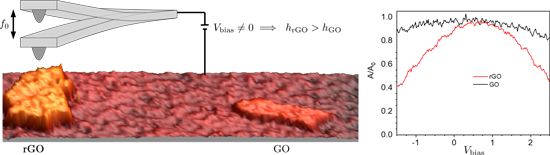
- apparent flake height seems to depend on both the tip–sample voltage and on the material, we explore these correlations on both GO and rGO flakes by biasing the tip with a DC voltage. To prevent any interaction between flakes arising from charge transfer through the substrate [79], we deliberately chose


Green synthesis of biomass-derived carbon quantum dots for photocatalytic degradation of methylene blue
Beilstein J. Nanotechnol. 2024, 15, 755–766, doi:10.3762/bjnano.15.63
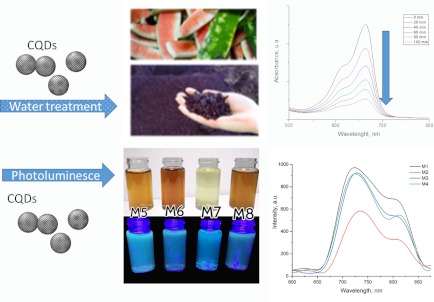
- industrial wastewater. Photocatalysis is an environmentally friendly water purification method that uses light-activated catalysts to destroy contaminants, offering an advantage over traditional methods that merely transfer contaminants between phases [17][18][19]. While some studies on CQDs involve costly


Level set simulation of focused ion beam sputtering of a multilayer substrate
Beilstein J. Nanotechnol. 2024, 15, 733–742, doi:10.3762/bjnano.15.61
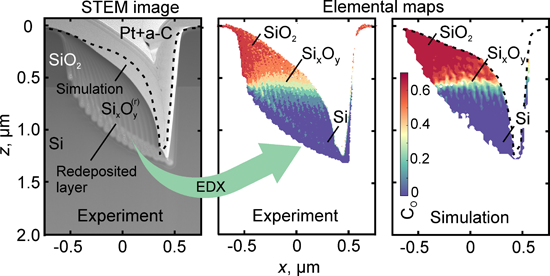
- solving Equation 1. The presence of gallium atoms in the redeposited material was taken into account by the coefficient μi. The transfer of the values of between the rectangular grid and the triangular mesh was carried out as outlined above for the ion fluxes and the displacement rate . The variation of

![[Graphic 55]](/bjnano/content/inline/2190-4286-15-61-i68.svg?max-width=637&scale=1.18182)


Simultaneous electrochemical determination of uric acid and hypoxanthine at a TiO2/graphene quantum dot-modified electrode
Beilstein J. Nanotechnol. 2024, 15, 719–732, doi:10.3762/bjnano.15.60
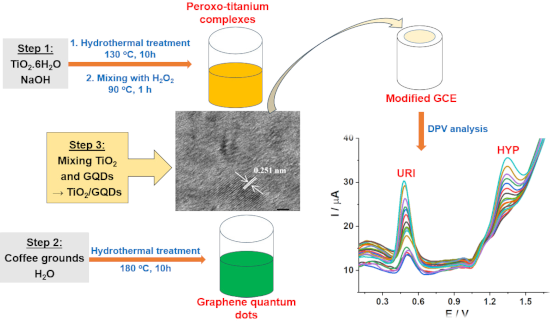
- through edge effects. Edge-functionalized GQDs have oxygen-containing functional groups such as hydroxy, carboxyl, carbonyl, and epoxy groups, which can conjugate to various biological/organic/inorganic molecules such as proteins, antibodies, or metal ions [12]. The capability of electron transfer/energy
- between the phenyl structure of purine and the planar hexagonal carbon structure of graphene. Effect of pH Figure 6a presents the pH dependence of the electrochemical response. The values of Ep and Ip vary as a function of pH, indicating that the oxidation process involves the transfer of protons. The
- equations (Figure 6c): The slopes of the EURI vs pH and EHYP vs pH plots are close to the theoretical value of the Nernst equation (0.0599), indicating that the oxidation process involves the transfer of an equal number of protons and electrons. Effect of scan rate The effect of the scan rate on the


Reduced subthreshold swing in a vertical tunnel FET using a low-work-function live metal strip and a low-k material at the drain
Beilstein J. Nanotechnol. 2024, 15, 713–718, doi:10.3762/bjnano.15.59
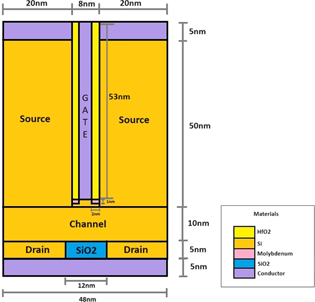
- barrier width enhances electron transfer in the on-state. Leakage current in the off-state is reduced by a wide tunneling barrier. Subthreshold swing The gate dielectric material and the geometry of the transistor help in reducing the subthreshold swing. The subthreshold swing is 5 mV/dec for VTFET with
- [12] is 2.96 × 10⁻¹³ A/μm. The threshold voltage is 0.28 V. The on-state current is 1.00 × 10⁻⁵ A/μm. The transfer characteristics of the three devices are presented in Figure 7. The leakage current is minimal in the proposed model. Miller capacitance and leakage The high dielectric constant of HfO2
- regarding energy band profile. Energy band diagrams of the proposed VTFET with DLWLS + spacer in on-and off-states. Id vs Vgs of the VTFET with DLWLS + spacer and the model in [12]. Comparison between transfer characteristics of VTFET with DLWLS + spacer, DLWLS, and spacer. Capacitance (Cgs)–voltage


Enhancing higher-order modal response in multifrequency atomic force microscopy with a coupled cantilever system
Beilstein J. Nanotechnol. 2024, 15, 694–703, doi:10.3762/bjnano.15.57

- additional resonance peaks, expanding its potential range of applications. Results and Discussion Transfer function analysis For a traditional rectangular cantilever beam, the dynamics of the system can be described by transfer functions [12][23]. Representing the cantilever as an isolated input/output
- beam. They are shown in Figure 1a. The Bode plots of the non-contact tip–sample interaction [12] and the contact tip–sample interaction [23] can be obtained through transfer function analysis. The results indicate that the higher-order modal response of the traditional rectangular cantilever gradually
- . More details about the derivation process can be found in [19]. The final result for the transfer function G of the infinite product expansion is obtained as: where s is the (complex) Laplace variable, and m is the mass per unit length. EI and c are the flexural stiffness and the damping coefficient


Functional fibrillar interfaces: Biological hair as inspiration across scales
Beilstein J. Nanotechnol. 2024, 15, 664–677, doi:10.3762/bjnano.15.55
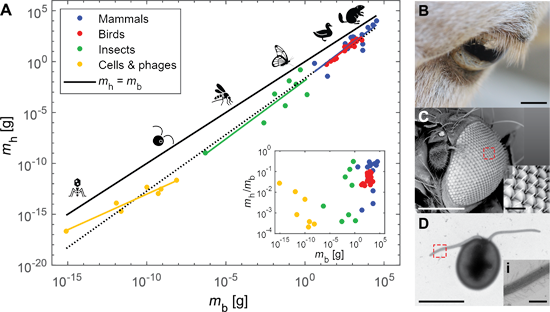
- is exemplified by hair's resistance to heat transfer in humans [4][24], and the role of hair in sensing mates by male mosquitoes [25]. Additionally, plants may exhibit hair-like fibrillar structures, such as the nanometer-thick mastigonemes on the flagella of microalgae [26] and the high-aspect-ratio


Laser synthesis of nanoparticles in organic solvents – products, reactions, and perspectives
Beilstein J. Nanotechnol. 2024, 15, 638–663, doi:10.3762/bjnano.15.54
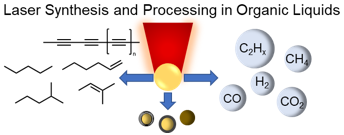
- radical cations can participate in various reactions such as dehydration, dimerization, and hydrogen transfer before recombination [112][113][114]. This was recently shown for fs-laser irradiation of C5 to C11 alkanes by Ishikawa et al., who reported C–C bond formation. They analyzed the formed products
- proposed a mechanism of electron transfer from the solvent, which produced acetone as a by-product. Since this transfer is not possible in water and only plasma reactions are available, Ag could not nucleate during LRL in water because of the oxidizing activity of hydroxyl radicals [121]. Overall, LSPC in




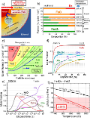

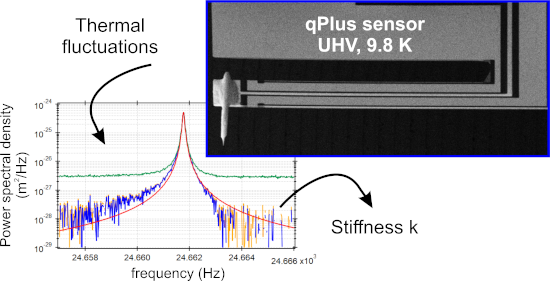
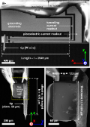
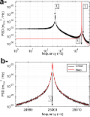
Stiffness calibration of qPlus sensors at low temperature through thermal noise measurements
Beilstein J. Nanotechnol. 2024, 15, 580–602, doi:10.3762/bjnano.15.50

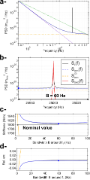
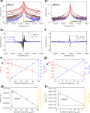
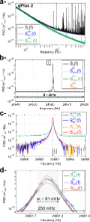
Photocatalytic degradation of methylene blue under visible light by cobalt ferrite nanoparticles/graphene quantum dots
Beilstein J. Nanotechnol. 2024, 15, 475–489, doi:10.3762/bjnano.15.43
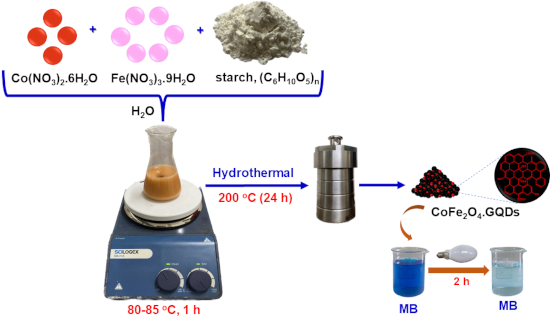
- simple electron transfer process [34]. If the •OH radicals play a crucial role in the MB degradation, the reaction rate is expected to decrease significantly. As depicted in Figure 8a, adding an excess amount of 10 mM IPA to the reaction mixture significantly suppresses the MB degradation (by ca. 28.5
- anions through a simple electron transfer process [37]. The photocatalytic degradation of MB is mildly affected by BQ (decolourisation efficiency drops by 13.5%, indicating the influence of during the photocatalytic degradation of MB [37]. The mineralisation of MB was estimated with COD measurements
- photocorrosion and exhibits excellent reusability for the degradation process. The mechanism of MB degradation over the CF/GQDs catalyst is illustrated in Scheme 2. Under visible light irradiation, photogenerated holes (h+) are created in the valence bands via the transfer of photogenerated electrons (e−) from




Superconducting spin valve effect in Co/Pb/Co heterostructures with insulating interlayers
Beilstein J. Nanotechnol. 2024, 15, 457–464, doi:10.3762/bjnano.15.41
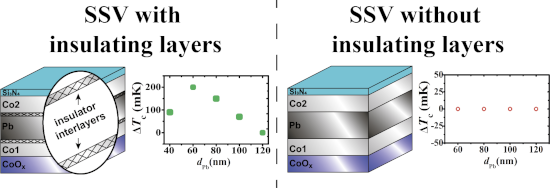
- the magnetization of the Co1 layer. The layers were deposited using electron beam evaporation (Co, Pb) and AC sputtering (Si3N4). The deposition setup had a load-lock station with vacuum shutters, allowing one to transfer the sample holder without breaking the ultrahigh vacuum in the deposition



![[Graphic 6]](/bjnano/content/inline/2190-4286-15-41-i6.svg?max-width=637&scale=1.18182)
Sidewall angle tuning in focused electron beam-induced processing
Beilstein J. Nanotechnol. 2024, 15, 447–456, doi:10.3762/bjnano.15.40
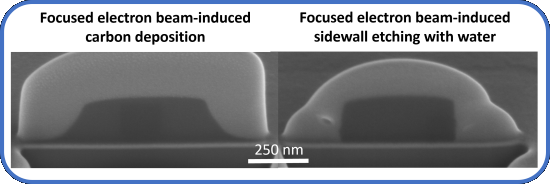
- Gaussian cross section will lead to pattern infidelity in subsequent pattern transfer into the underlying substrate. The aim of this work is to use FEBIE to modify the sidewalls of as-deposited FEBID lines in order to obtain vertical sidewalls. The paper is organised as follows. First, the idea is




Unveiling the nature of atomic defects in graphene on a metal surface
Beilstein J. Nanotechnol. 2024, 15, 416–425, doi:10.3762/bjnano.15.37
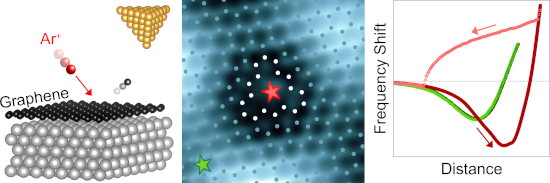
- from STS experiments [49][50][51], it is lower than the energy observed in photoemission experiments [52]. A possible rationale is the locally lifted graphene in the presence of the tip [53], which in turn decreases the charge transfer from graphene to the metal and reduces the p-doping [52] and
- ], hybridization of the graphene defect with the metal possibly induces electron transfer into graphene giving rise to local n-doping and the Dirac cone below EF. In addition, the distortion of the graphene lattice that accompanies the increased hybridization with the surface may explain the dim rim of the vacancy


Classification and application of metal-based nanoantioxidants in medicine and healthcare
Beilstein J. Nanotechnol. 2024, 15, 396–415, doi:10.3762/bjnano.15.36
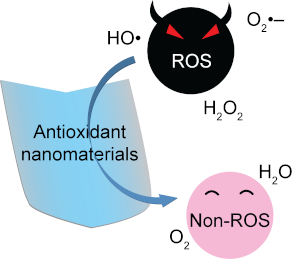
- antioxidant appearing in low-density lipoprotein and human blood plasma contributing to the decrease of oxidative stress. Its mechanism of action relies on the ability to transfer the phenolic H atom to a peroxyl radical (ROO•) much more rapidly than the propagation reactions [50][51][52][53]. Despite the


On the mechanism of piezoresistance in nanocrystalline graphite
Beilstein J. Nanotechnol. 2024, 15, 376–384, doi:10.3762/bjnano.15.34
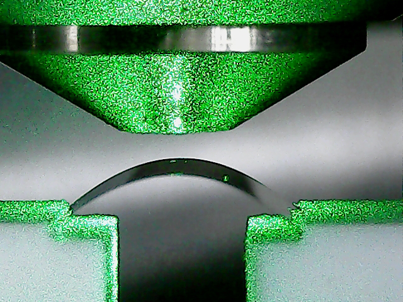
- transfer is required on glass in an aqueous medium [26]. Third, NCG fills the cracks present at the edges during spin coating the polymer and inhibits their propagation during the bending of the substrate. Raman spectroscopy is a powerful method to detect strain in graphene, which can be determined from
- measured thickness of the grown film was ca. 5 nm. The NCG film was then transferred onto a 100 μm thick PET substrate. For the transfer process, first, the NCG film on SiO2/Si was coated with 200 nm thick PMMA and put into 5 M NaOH solution at 80 °C. The NCG/PMMA film floats on the surface after the
- PET substrate. After that, the substrate was left in air for drying. Next, a drop of PMMA was dripped on top of the film and allowed to spread and dry. This has been shown to be helpful in removing wrinkles formed during the transfer process [46]. The NCG film on the PET substrate was then patterned


Investigating ripple pattern formation and damage profiles in Si and Ge induced by 100 keV Ar+ ion beam: a comparative study
Beilstein J. Nanotechnol. 2024, 15, 367–375, doi:10.3762/bjnano.15.33
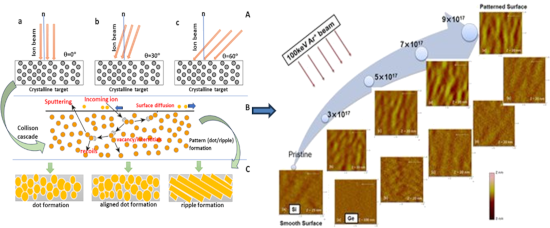
- subsequently transfers its energy to the atoms of the target material in all the collisions and finally stops. When this energy transfer is sufficient, a displacement of atoms from their equilibrium positions creating a vacancy or a recoil occurs. Alternatively, if the ion energy is high enough such recoils
- , which confirms the near surface amorphization in Si in comparison to Ge. The main defects are the point defects such as interstitials and vacancies produced due to energy transfer between the incoming ions and the target atoms (Figure 6). The range of defect depths calculated from RBS-c spectra for Ar


Modulated critical currents of spin-transfer torque-induced resistance changes in NiCu/Cu multilayered nanowires
Beilstein J. Nanotechnol. 2024, 15, 360–366, doi:10.3762/bjnano.15.32
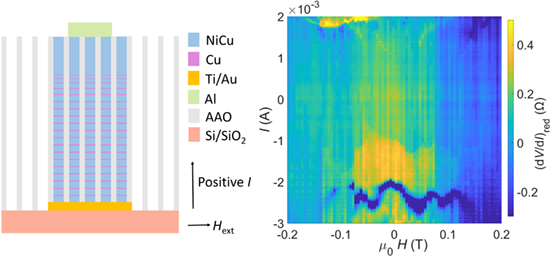
- oscillatory manner by the magnetic field in the nanowire-based devices. We present a toy model to qualitatively explain these observations. Keywords: AAO template; critical current; multilayered magnetic nanowires; spin-transfer torque; three-dimensional devices; Introduction Spin-transfer torque (STT) has


Nanomedicines against Chagas disease: a critical review
Beilstein J. Nanotechnol. 2024, 15, 333–349, doi:10.3762/bjnano.15.30
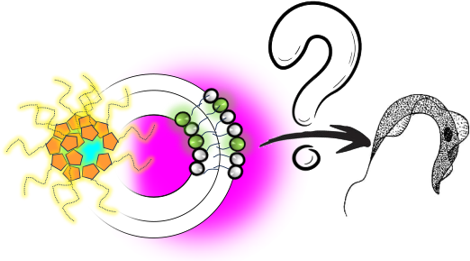
- hydroxylamine intermediates in a two-step, two-electron transfer reaction, culminating in 4,5-dihydro-4,5-dihydroxyimidazole, whose breakdown releases the reactive dialdehyde glyoxal, which, in the presence of guanosine, generates guanosine–glyoxal adducts. These reactive metabolites are toxic to the parasite

Determining by Raman spectroscopy the average thickness and N-layer-specific surface coverages of MoS2 thin films with domains much smaller than the laser spot size
Beilstein J. Nanotechnol. 2024, 15, 279–296, doi:10.3762/bjnano.15.26
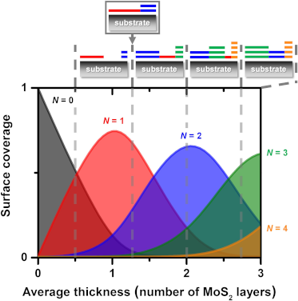
- when using precise transfer or AFM tip manipulation techniques [20], twisted MoS2 can be formed with two adjacent layers stacked with a relative twist angle (θ) varying from 0 to 60°. Such twisted-layered MoS2 structures can exhibit a variety of interesting physical properties including unconventional


Design, fabrication, and characterization of kinetic-inductive force sensors for scanning probe applications
Beilstein J. Nanotechnol. 2024, 15, 242–255, doi:10.3762/bjnano.15.23
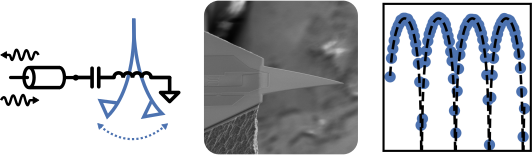
- photolithography defines the coarse circuit features in the superconducting film, such as coplanar waveguide, ground planes, and signal line. We use the same recipe as in steps (b) and (c) to define a resist etch mask; after development, we transfer the pattern into the superconducting film with a CF4/O2 reactive



Multiscale modelling of biomolecular corona formation on metallic surfaces
Beilstein J. Nanotechnol. 2024, 15, 215–229, doi:10.3762/bjnano.15.21
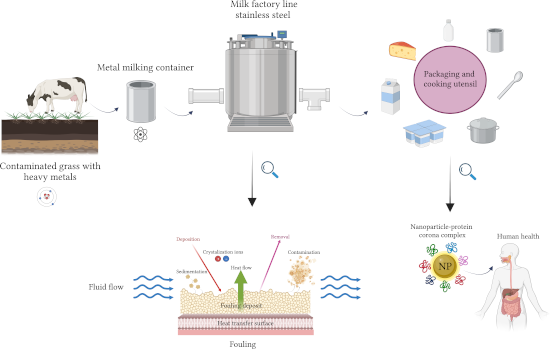
- reactivity, sensitivity of NPs, as well as their cellular uptake and systemic transfer [21]. However, in order to develop predictive models, a deeper understanding of the interactions at the bionano interface and their relationship to material and protein properties is necessary. Gathering more information