


Search results
Search for "ultrasonic" in Full Text gives 265 result(s) in Beilstein Journal of Nanotechnology. Showing first 200.
Uniform Sb2S3 optical coatings by chemical spray method
Beilstein J. Nanotechnol. 2019, 10, 198–210, doi:10.3762/bjnano.10.18
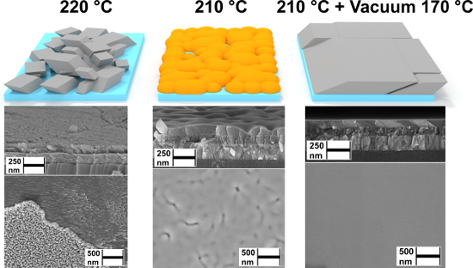
- uniform thickness. First, amorphous Sb2S3 layers, likely forming by 3D Volmer–Weber island growth through a molten phase reaction between SbCl3 and SC(NH2)2, were deposited in air on a glass/ITO/TiO2 substrate by ultrasonic spraying of methanolic Sb/S 1:3 molar ratio solution at 200–210 °C. Second, we
- were investigated using Raman spectroscopy, X-ray diffraction, scanning electron microscopy, energy dispersive X-ray spectroscopy and UV–vis–NIR spectroscopy. We demonstrated that Sb2S3 optical coatings with controllable structure, morphology and optical properties can be deposited by ultrasonic spray
- pyrolysis in air by tuning of the deposition temperature, the Sb/S precursor molar ratio in the spray solution, and the post-deposition treatment temperature. Keywords: antimony sulfide; thin films; ultrasonic spray; vacuum annealing; Volmer–Weber growth; Introduction Antimony sulfide (Sb2S3) is an




Nanoporous water oxidation electrodes with a low loading of laser-deposited Ru/C exhibit enhanced corrosion stability
Beilstein J. Nanotechnol. 2019, 10, 157–167, doi:10.3762/bjnano.10.15
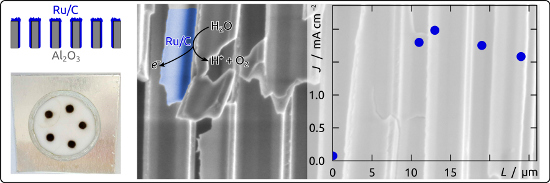
- conductive layer was subsequently annealed in N2 atmosphere for 4 h at 400 °C in a high-temperature P330 furnace from Nabertherm. The planar substrates were then coated with Ru/C layers via laser-induced deposition. The precursor solution was prepared by ultrasonic dissolving of 1 mg of triruthenium




Pull-off and friction forces of micropatterned elastomers on soft substrates: the effects of pattern length scale and stiffness
Beilstein J. Nanotechnol. 2019, 10, 79–94, doi:10.3762/bjnano.10.8
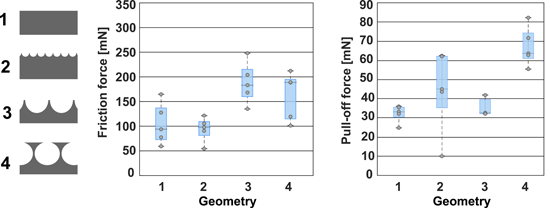
- a terminal PDMS layer. Following Akerboom et al. [30], residual particles were removed from the sample by cleaning it with Scotch Magic Tape, and by immersing it in NMP for 1 h under stirring. Subsequently, while still immersed in NMP, the sample was placed in an ultrasonic bath for 1 min. Dimples
- an ultrasonic bath for 1 min. Dimples without a terminal layer from microscale particles: Dimple arrays without a terminal layer from microscale particles were fabricated according to pathway 3 in Figure 1. Dimple arrays with a terminal layer were first fabricated as described in the previous





Characterization and influence of hydroxyapatite nanopowders on living cells
Beilstein J. Nanotechnol. 2018, 9, 3079–3094, doi:10.3762/bjnano.9.286
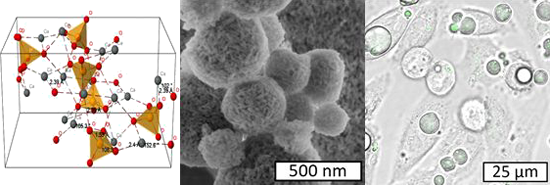
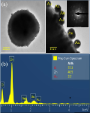
- , followed by 5 min of ultrasonic treatment. The samples were then left for about 10 min to evaporate the ethanol. Afterwards, they were dripped on the surface of carbon-coated copper grids. Sizes of crystallites were measured with the ImageJ software [34], using representative TEM images. Average values

![[Graphic 1]](/bjnano/content/inline/2190-4286-9-286-i2.svg?max-width=637&scale=1.18182) .
.



Near-infrared light harvesting of upconverting NaYF4:Yb3+/Er3+-based amorphous silicon solar cells investigated by an optical filter
Beilstein J. Nanotechnol. 2018, 9, 2788–2793, doi:10.3762/bjnano.9.260
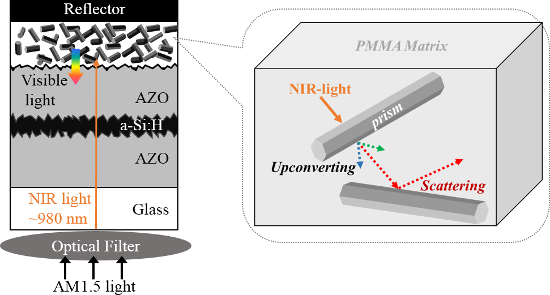
- %), sodium hydroxide (NaOH, 98+%), ammonium fluoride (NH4F, 98+%) and oleic acid (OA, 90+%) were used as starting materials. 4.5 mL of NaOH solution (5 mol/L) was mixed with ethanol (15 mL) and OA (15 mL) under ultrasonic treatment. Next, to the resulting transparent solution was successively added 6 mL of


Impact of the anodization time on the photocatalytic activity of TiO2 nanotubes
Beilstein J. Nanotechnol. 2018, 9, 2628–2643, doi:10.3762/bjnano.9.244
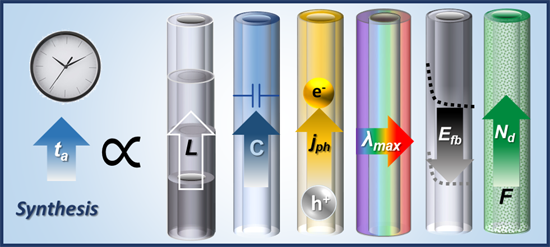
- #2000 successively, thereafter immersed in ethanol (Sigma-Aldrich), placed in ultrasonic bath, for 15 min, and dried under N2 flow. An ethylene glycol-based solution with a concentration of 0.1M NH4F (96% purity, Alfa-Aesar) and 2% w/w deionized water was used as electrolyte. A Pt foil (99.9% purity


Hydrothermal-derived carbon as a stabilizing matrix for improved cycling performance of silicon-based anodes for lithium-ion full cells
Beilstein J. Nanotechnol. 2018, 9, 2381–2395, doi:10.3762/bjnano.9.223
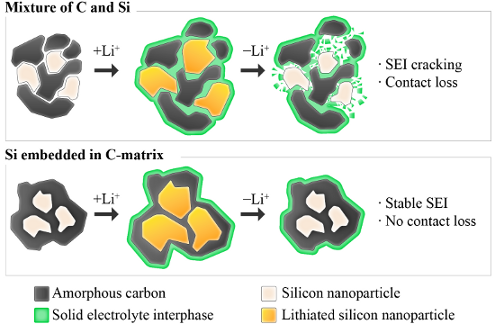
- small amount of DI water and added to the D-glucose solution. A specific volume was set to obtain a glucose concentration of 0.75 mol L−1. The (combined) solution was treated in an ultrasonic bath for 45 min in order to break agglomerates and obtain a homogeneous suspension. For the hydrothermal


High-throughput micro-nanostructuring by microdroplet inkjet printing
Beilstein J. Nanotechnol. 2018, 9, 2372–2380, doi:10.3762/bjnano.9.222
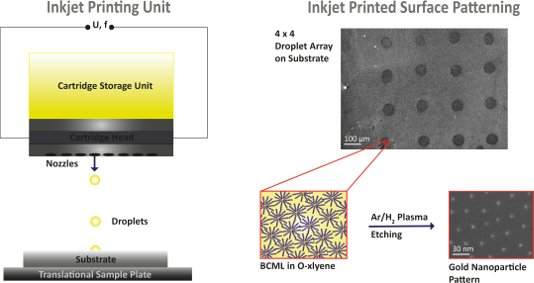
- ][35]. Poly(styrene-b-2-vinylpyridine) (PS(79000)-P2VP(36500), 4 mg/mL, Polymer Source, Canada) was dissolved in o-xylene (p.A., Merck, Germany) and loaded with hydrogen tetrachloroaurate(III) (Aldrich, Germany) in a molecular ratio of 0.4. The substrates were cleaned in an acetone ultrasonic bath for


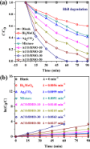
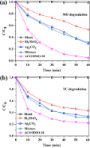
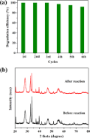
Hierarchical heterostructures of Bi2MoO6 microflowers decorated with Ag2CO3 nanoparticles for efficient visible-light-driven photocatalytic removal of toxic pollutants
Beilstein J. Nanotechnol. 2018, 9, 2297–2305, doi:10.3762/bjnano.9.214
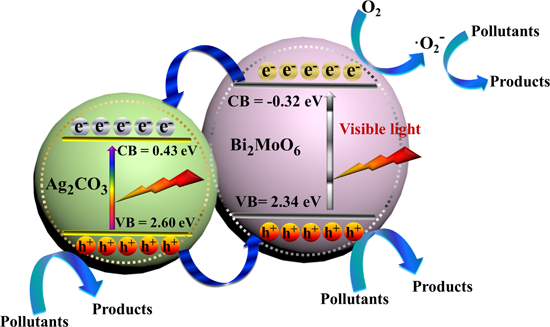
- glycol with the aid of ultrasonic treatment. Then Bi(NO3)3·5H2O (2 mmol) was also dissolved in the above solution in the same way. Subsequently, the solution was magnetically stirred for 1 h, and then loaded into a 100 mL Teflon container and reacted at 160 °C for 25 h. After the reaction system had




Self-assembled quasi-hexagonal arrays of gold nanoparticles with small gaps for surface-enhanced Raman spectroscopy
Beilstein J. Nanotechnol. 2018, 9, 1977–1985, doi:10.3762/bjnano.9.188
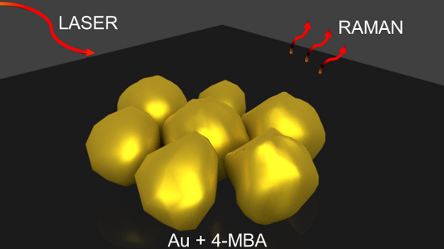
- cleaned with acetone in an ultrasonic bath for two minutes. Then they were rinsed with isopropanol, and finally dried with nitrogen gas. A symmetric diblock copolymer (polystyrene-block-poly-2-vinylpyridine, PS(133000)-block-P2VP(132000), polymer source) was dissolved in toluene at a concentration of 1 mg

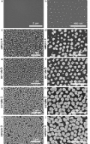


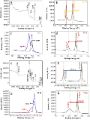
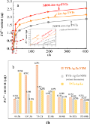
A visible-light-controlled platform for prolonged drug release based on Ag-doped TiO2 nanotubes with a hydrophobic layer
Beilstein J. Nanotechnol. 2018, 9, 1793–1801, doi:10.3762/bjnano.9.170
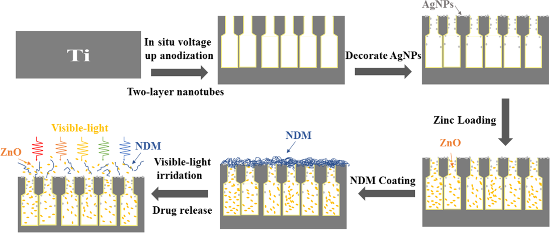
- , in the second stage, the lower layer was prepared by increasing the voltage from 20 to 60 V at the same rate, and then holding for 23 min. Finally, all samples were cleaned using distilled water in an ultrasonic bath and then desiccated. All the obtained TNT arrays were annealed at 450 °C for 2 h in





Photoluminescence of CdSe/ZnS quantum dots in nematic liquid crystals in electric fields
Beilstein J. Nanotechnol. 2018, 9, 1544–1549, doi:10.3762/bjnano.9.145
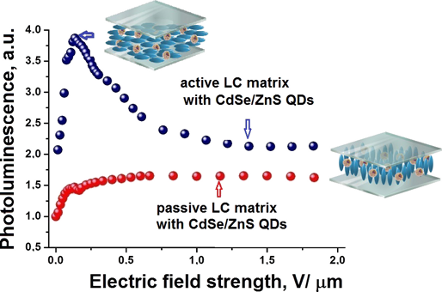
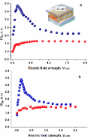
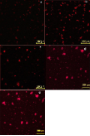
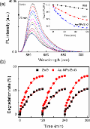
- (NIOPIK, Moscow, Russia) with dielectric constants = 16.0 and = 5.5, and the isotropic–nematic transition temperature of 62 °C has been used in the study. The dry QDs were mixed with LC for 30 min in an ultrasonic bath. The concentration of QDs was 1 wt %. We have used plane-parallel LC cells consisting


Single-crystalline FeCo nanoparticle-filled carbon nanotubes: synthesis, structural characterization and magnetic properties
Beilstein J. Nanotechnol. 2018, 9, 1024–1034, doi:10.3762/bjnano.9.95
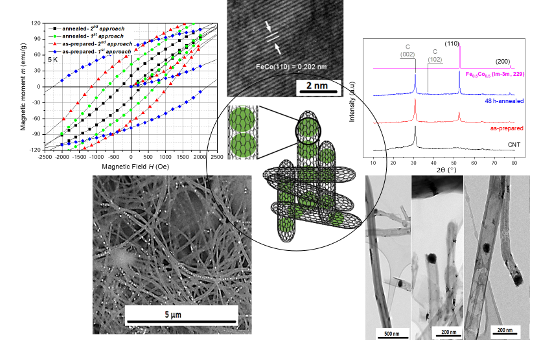
- and no further purification was performed. The solutions were combined in a stoichiometric ratio with respect to the metal ions (i.e., Fe/Co 1:1), where about 100 mg of MWNTs were added and the mixture was treated in an ultrasonic bath for 45 min at room temperature. The mixture was then vacuum


Enzymatically promoted release of organic molecules linked to magnetic nanoparticles
Beilstein J. Nanotechnol. 2018, 9, 986–999, doi:10.3762/bjnano.9.92
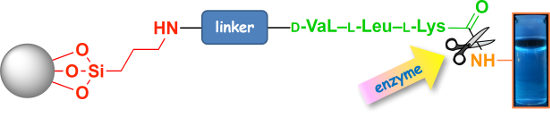
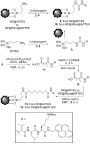
- to ultrasonic vibrations to decrease the aggregation, and deposited on a lacey carbon copper grid. TGA was performed using a Labsys EVO Setaram instrument. Approximately 5 mg of sample was weighed in an open alumina crucible and heated from 50 °C to 1000 °C in He flux (20 mL/min) with a heating rate




Effect of ferroelectric BaTiO3 particles on the threshold voltage of a smectic A liquid crystal
Beilstein J. Nanotechnol. 2018, 9, 824–828, doi:10.3762/bjnano.9.76
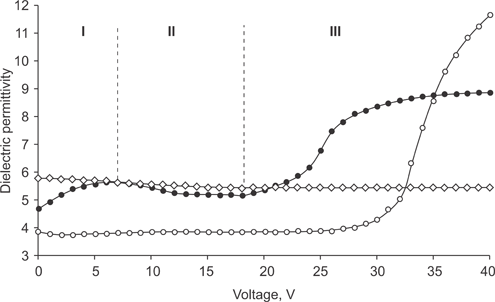
- smectic A LC was carried out according to the following procedure: After weighing (balance ADAM PW-124), particles were added to the LC, then the mixture was shaken for 40 min in Ultrasonic Cleaner (NATO CD-4800) at 75 °C (isotropic phase) with subsequent cooling to 35 °C (smectic A phase). The transition


Surface-plasmon-enhanced ultraviolet emission of Au-decorated ZnO structures for gas sensing and photocatalytic devices
Beilstein J. Nanotechnol. 2018, 9, 771–779, doi:10.3762/bjnano.9.70
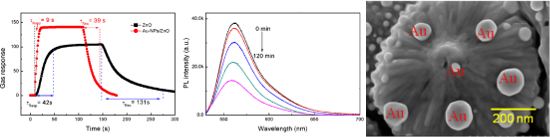
- spheres Glass microscope slides were cleaned in ethanol and deionized water in an ultrasonic bath for 3 min, and then dried at 80 °C. In order to obtain the ZnO films, typically, a portion of 10 mL of a 0.1 M aqueous solution of zinc acetate dihydrate [Zn(CH3COO)2·2H2O], and 20 mL of mono-ethanolamine




Heavy-metal detectors based on modified ferrite nanoparticles
Beilstein J. Nanotechnol. 2018, 9, 762–770, doi:10.3762/bjnano.9.69
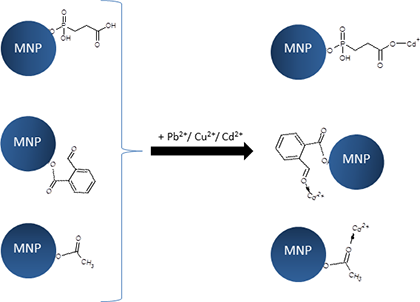
- studies as potential heavy-metal detectors are 3-phosphonopropionic acid (3-PPA) and 16-phosphonohexadecanoic (16-PHDA). Before the modification with 3-PPA or 16-PHDA, nanoparticles were washed firstly in acetone and then ethanol, and placed for about 30 s in an ultrasonic bath to ensure proper particles
- separation. In the next step, 1 mL of 1 mM solution of 3-PPA or 16-PHDA, respectively, were added to the nanoparticles and left at room temperature for 18 h. After this time the mixture was placed in an ultrasonic bath for 1 min, then the supernatant was removed and the nanoparticles were washed three times


A review of carbon-based and non-carbon-based catalyst supports for the selective catalytic reduction of nitric oxide
Beilstein J. Nanotechnol. 2018, 9, 740–761, doi:10.3762/bjnano.9.68

Optimisation of purification techniques for the preparation of large-volume aqueous solar nanoparticle inks for organic photovoltaics
Beilstein J. Nanotechnol. 2018, 9, 649–659, doi:10.3762/bjnano.9.60
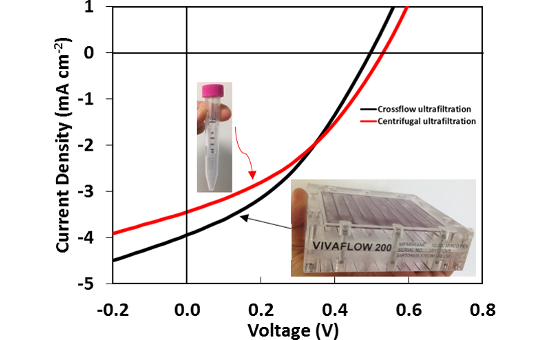
- industrial potential of this method. Method 2: The mini-emulsion method: This method involves ultrasonic mixing of the two-phase organic–aqueous system in the presence of a surfactant, which is commonly sodium dodecyl sulfate (SDS), to produce the mini-emulsion [10]. The presence of free (unbound) SDS in the
- ). The second step is macro-emulsion formation (≈736 g), which is the vigorous mixing of organic and aqueous solutions with stirring at 1200 rpm and 33 °C for 60 min. The third step is formation of a mini-emulsion (≈736 g) by ultrasonic treatment of the macro-emulsion (10 min, 60% amplitude and 450–500 W


Ultralight super-hydrophobic carbon aerogels based on cellulose nanofibers/poly(vinyl alcohol)/graphene oxide (CNFs/PVA/GO) for highly effective oil–water separation
Beilstein J. Nanotechnol. 2018, 9, 508–519, doi:10.3762/bjnano.9.49
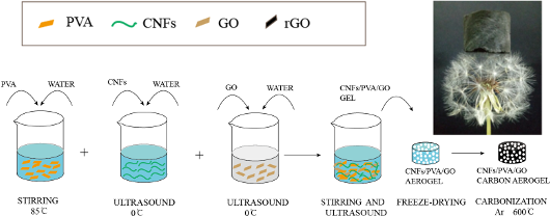
- stirring for 1 h, and the mixture was then sonicated in an ultrasonic bath for another hour. Then, the solution was placed in a water bath at 35 °C for 30 min to remove any residual air bubbles. The obtained aqueous gel was subsequently cross-linked/cured in an oven at 75 °C for 3 h. The cross-linked/cured


BN/Ag hybrid nanomaterials with petal-like surfaces as catalysts and antibacterial agents
Beilstein J. Nanotechnol. 2018, 9, 250–261, doi:10.3762/bjnano.9.27
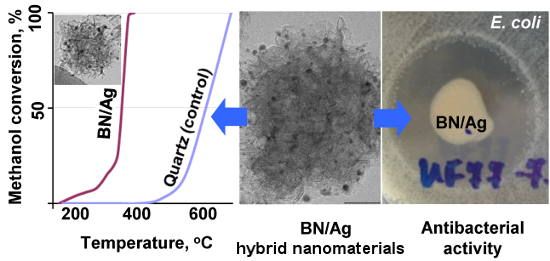
- produce grams of BN/Ag HNMs in a single experimental run (referred to as CVD BN/Ag HNMs). To prepare BN/Ag HNMs via UV decomposition of AgNO3 (abbreviated as UV BN/Ag HNMs), we have dispersed 100 mg of raw BN NPs in 50 mL of polyethylene glycol 400 (PEG-400) using an ultrasonic homogenizer Bandelin HD2200





Material discrimination and mixture ratio estimation in nanocomposites via harmonic atomic force microscopy
Beilstein J. Nanotechnol. 2017, 8, 2771–2780, doi:10.3762/bjnano.8.276
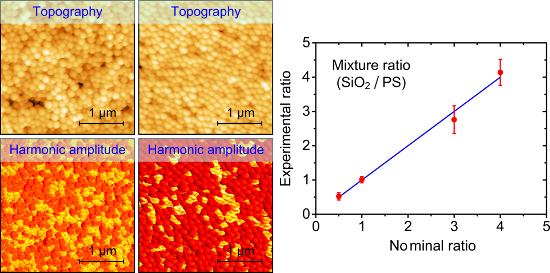
- NPs were mixed and diluted with deionized water. To avoid agglomeration, ultrasonic dispersion was applied for at least 5 min. After that, a drop of the solution was deposited on a silicon substrate and dried under natural air conditions in a clean room. For this sample, the two types of particles




Localized growth of carbon nanotubes via lithographic fabrication of metallic deposits
Beilstein J. Nanotechnol. 2017, 8, 2592–2605, doi:10.3762/bjnano.8.260
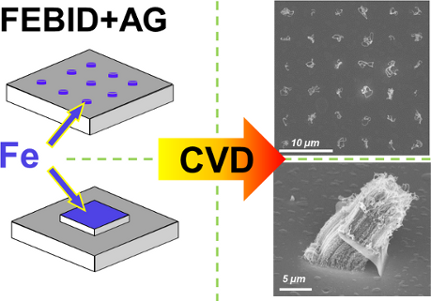
- precursor exposure after EBID. Transmission electron microscope (TEM) analysis was performed with a FEI Tecnai G2 20 X-TWIN instrument with a point resolution of 0.26 nm. The silica wafer was put in an Eppendorf tube and mixed with 1 mL ethanol. After ultrasonic treatment, one drop was put on a holey carbon




Robust nanobubble and nanodroplet segmentation in atomic force microscope images using the spherical Hough transform
Beilstein J. Nanotechnol. 2017, 8, 2572–2582, doi:10.3762/bjnano.8.257
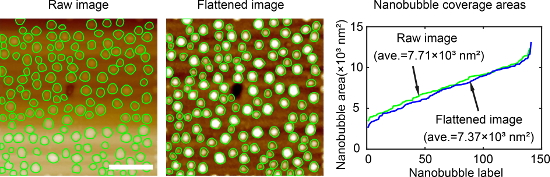
- ameliorate oxygen mass transfer to living microorganisms [7], reduce drag force at solid–liquid interfaces in micro/nanofluidics [2][8][9], and enhance ultrasonic tumor imaging contrast [10]. Regarding NDs, they can be applied to fabricate nanolenses on solid surfaces to modify them for antireflection and


A comparative study of the nanoscale and macroscale tribological attributes of alumina and stainless steel surfaces immersed in aqueous suspensions of positively or negatively charged nanodiamonds
Beilstein J. Nanotechnol. 2017, 8, 2045–2059, doi:10.3762/bjnano.8.205
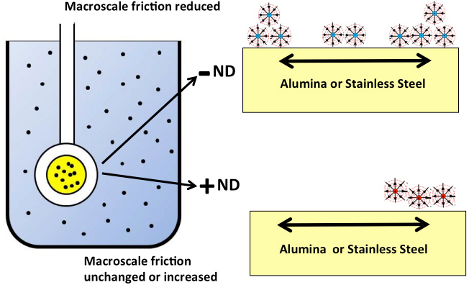
- ultrasonic bath, and then measured again. In these trials, µk remained unchanged for samples that had been exposed to +ND suspensions, and increased slightly for those which had been exposed to −ND suspensions. Exposure of the samples to a ND suspension of the opposite sign would, however, immediately alter





