Search results
Search for "Atomic force microscopy (AFM)" in Full Text gives 433 result(s) in Beilstein Journal of Nanotechnology. Showing first 200.
Kelvin probe force microscopy work function characterization of transition metal oxide crystals under ongoing reduction and oxidation
Beilstein J. Nanotechnol. 2019, 10, 1596–1607, doi:10.3762/bjnano.10.155
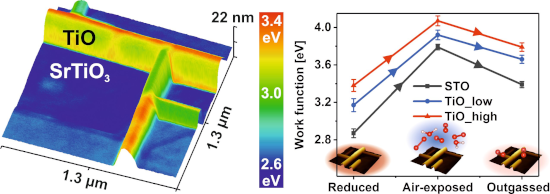
- obtaining work function and conductivity maps on the same area by combining noncontact and contact modes of atomic force microscopy (AFM). As most of the real applications require ambient operating conditions, we have additionally checked the impact of air venting on the work function of the TiO/SrTiO3(100


Development of a new hybrid approach combining AFM and SEM for the nanoparticle dimensional metrology
Beilstein J. Nanotechnol. 2019, 10, 1523–1536, doi:10.3762/bjnano.10.150
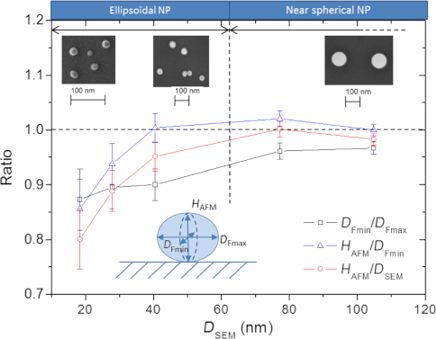
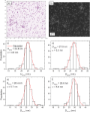
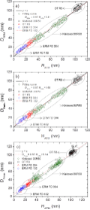
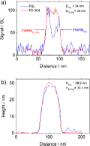
- proposes a new approach of hybrid metrology taking advantage of the complementary nature of atomic force microscopy (AFM) and scanning electron microscopy (SEM) techniques for measuring the main characteristic parameters of nanoparticle (NP) dimensions in 3D. The NP area equivalent, the minimal and the



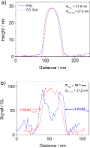

Kelvin probe force microscopy of the nanoscale electrical surface potential barrier of metal/semiconductor interfaces in ambient atmosphere
Beilstein J. Nanotechnol. 2019, 10, 1401–1411, doi:10.3762/bjnano.10.138
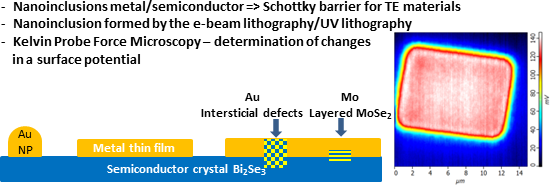
- nanosheets through the reaction with the Bi2Se3. The Schottky barrier formed by the 1D and 2D nanoinclusions was characterized by means of atomic force microscopy (AFM). We used Kelvin probe force microscopy (KPFM) in ambient atmosphere at the nanoscale and compared the results to those of ultraviolet
- harm to other transport parameters. The characterization of NIs or NPs in TE materials is realized most frequently by the different modes of atomic force microscopy (AFM): i) by comparing the conductivity/resistivity (CAFM) or I–V curves measurement in the direct-contact of the conductive tip and the


Nanoscale spatial mapping of mechanical properties through dynamic atomic force microscopy
Beilstein J. Nanotechnol. 2019, 10, 1332–1347, doi:10.3762/bjnano.10.132
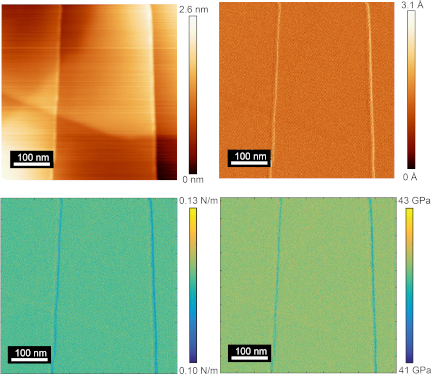
- Zahra Abooalizadeh Leszek Josef Sudak Philip Egberts Department of Mechanical and Manufacturing Engineering, University of Calgary, 40 Research Place NW, Calgary, Alberta T2L 1Y6, Canada 10.3762/bjnano.10.132 Abstract Dynamic atomic force microscopy (AFM) was employed to spatially map the elastic
- , and predictive models of failure. Dynamic atomic force microscopy (AFM) is one technique that is well suited for experimentally measuring the mechanical properties of materials with high spatial resolution [10][11][12]. More specifically, a focus on two dynamic AFM modes, force modulation microscopy




Imaging the surface potential at the steps on the rutile TiO2(110) surface by Kelvin probe force microscopy
Beilstein J. Nanotechnol. 2019, 10, 1228–1236, doi:10.3762/bjnano.10.122
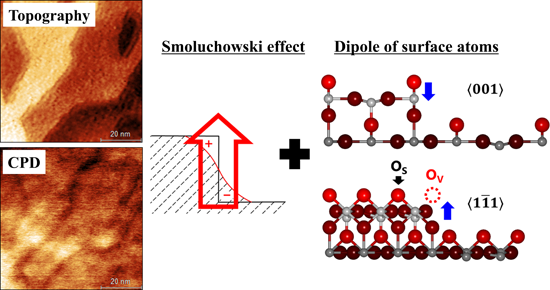
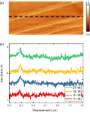
- function between the tip and the sample, on the basis of atomic force microscopy (AFM) [39][40]. Since the CPD strongly depends on the charge distribution on the surface, KPFM allows us to investigate the electrostatic properties of surfaces [41][42][43]. In this study, we measured the CPD around the steps
![[Graphic 16]](/bjnano/content/inline/2190-4286-10-122-i16.svg?max-width=637&scale=1.18182) and
and ![[Graphic 17]](/bjnano/content/inline/2190-4286-10-122-i17.svg?max-width=637&scale=1.18182) .
.

![[Graphic 38]](/bjnano/content/inline/2190-4286-10-122-i38.svg?max-width=637&scale=1.18182) and
and ![[Graphic 39]](/bjnano/content/inline/2190-4286-10-122-i39.svg?max-width=637&scale=1.18182) steps. (a) Topographic image...
steps. (a) Topographic image...


![[Graphic 72]](/bjnano/content/inline/2190-4286-10-122-i72.svg?max-width=637&scale=1.18182) , b)
, b) ![[Graphic 73]](/bjnano/content/inline/2190-4286-10-122-i73.svg?max-width=637&scale=1.18182) , c) reduced
, c) reduced ![[Graphic 74]](/bjnano/content/inline/2190-4286-10-122-i74.svg?max-width=637&scale=1.18182) , and d)
, and d) ![[Graphic 75]](/bjnano/content/inline/2190-4286-10-122-i75.svg?max-width=637&scale=1.18182) steps. B...
steps. B...
Tailoring the stability/aggregation of one-dimensional TiO2(B)/titanate nanowires using surfactants
Beilstein J. Nanotechnol. 2019, 10, 1024–1037, doi:10.3762/bjnano.10.103
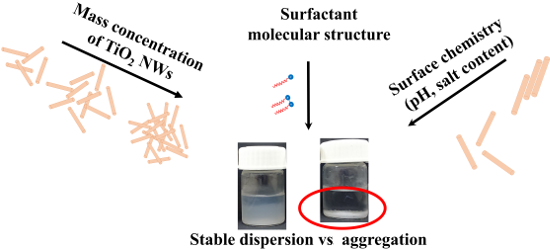
- ) micrographs revealed that the synthesized TNWs have a distinct, straight, wire-like morphology (Figure 1a). The analysis of the micrographs showed that the length of the TNWs is in the range from 900 to 2000 nm, while the measured diameter ranged from 25 to 250 nm. Atomic force microscopy (AFM) revealed the


Direct growth of few-layer graphene on AlN-based resonators for high-sensitivity gravimetric biosensors
Beilstein J. Nanotechnol. 2019, 10, 975–984, doi:10.3762/bjnano.10.98
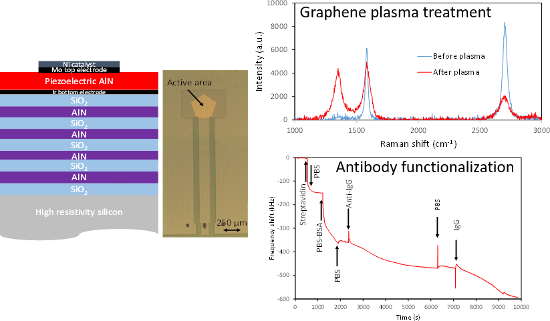
- surface of the Ni film suffered from restructuration during the CVD process that strongly depended on the heating rate. In order to assess the surface of the films after the growth of graphene, the samples were analysed by atomic force microscopy (AFM) using a Molecular Imaging Pico LE apparatus operated


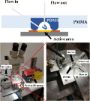
In situ AFM visualization of Li–O2 battery discharge products during redox cycling in an atmospherically controlled sample cell
Beilstein J. Nanotechnol. 2019, 10, 930–940, doi:10.3762/bjnano.10.94
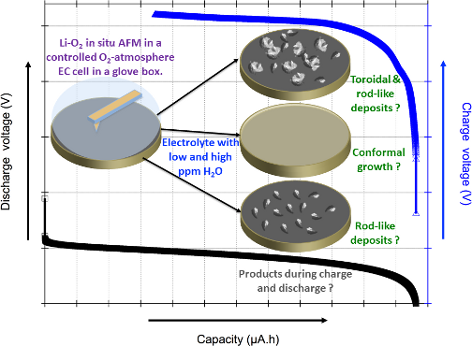
- /bjnano.10.94 Abstract The in situ observation of electrochemical reactions is challenging due to a constantly changing electrode surface under highly sensitive conditions. This study reports the development of an in situ atomic force microscopy (AFM) technique for electrochemical systems, including the
- these redox materials at the micrometer and nanometer scales. Gewirth et al. [2] reviewed the use of scanning tunneling microscopy (STM) and atomic force microscopy (AFM) investigations of phenomena such as reconstructions, restructuring and adsorption of ions. Phenomena such as under-potential


Nanoscale optical and structural characterisation of silk
Beilstein J. Nanotechnol. 2019, 10, 922–929, doi:10.3762/bjnano.10.93
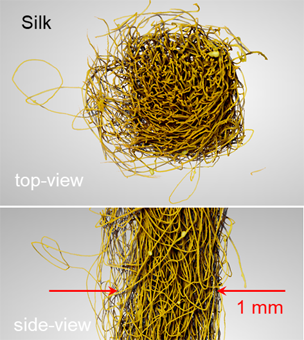
- different methods, i.e., (i) a table-top Fourier-transform infrared (FTIR) transmission spectrometer, (ii) a synchrotron-based attenuated total reflection (ATR) FTIR spectrometer, and (iii) an atomic force microscopy (AFM) tip responding to the absorbed IR light (nano-IR [9]), produced comparable spectral
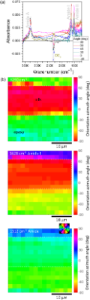
- diffractometer using a Cu Kα microfocus X-ray source with λ = 1.5418 Å (Figure 2a). IR spectral measurements The sub-diffraction scattering scanning near-field optical microscope (s-SNOM, neaspec GmbH) uses a metalized atomic force microscopy (AFM) tip. The tip maps the surface relief (topography) by its basic


Novel reversibly switchable wettability of superhydrophobic–superhydrophilic surfaces induced by charge injection and heating
Beilstein J. Nanotechnol. 2019, 10, 840–847, doi:10.3762/bjnano.10.84
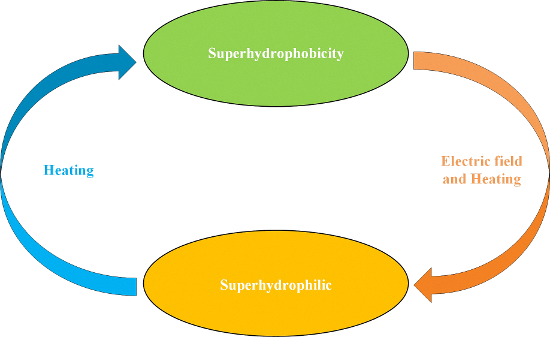
- surface-potential characterization. Atomic force microscopy (AFM) was used to characterize the physical morphology (Bruker Dimension Icon, Brook). The water contact angle (CA) of all surfaces was measured using a JC2000C1 contact angle measurements system (Shanghai Zhongchen Digital equipment). At room


Self-assembly and wetting properties of gold nanorod–CTAB molecules on HOPG
Beilstein J. Nanotechnol. 2019, 10, 696–705, doi:10.3762/bjnano.10.69
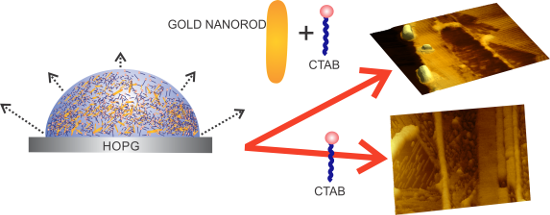
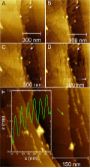
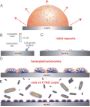
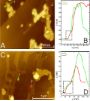
- drying on a nonwetting highly ordered pyrolytic graphite (HOPG) surface have been investigated using scanning electron microscopy (SEM) and atomic force microscopy (AFM). Although SEM did not reveal coverage of CTAB layers, AFM showed not only CTAB assembly, but also the dynamics of the process on the
- superstructures on HOPG substrates using atomic force microscopy (AFM). The assembly of CTAB molecules was investigated at various positions on the substrate. Also, the role of CTAB molecules that changes the wettability of the HOPG terraces is discussed in relation to the previous work [51]. The application of


Ultrathin hydrophobic films based on the metal organic framework UiO-66-COOH(Zr)
Beilstein J. Nanotechnol. 2019, 10, 654–665, doi:10.3762/bjnano.10.65
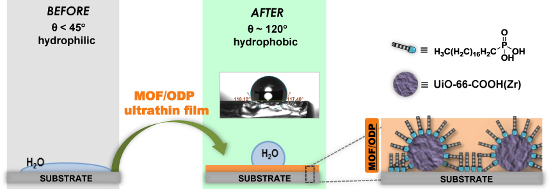
- OPD/MOF ultrathin films have been fabricated onto glass, calcium fluoride, quartz crystal microbalance (QCM), Si(100) substrates and mica and characterized using scanning electron microscopy (SEM), Fourier transform infrared spectroscopy (FTIR), X-ray diffraction (XRD), atomic force microscopy (AFM
- substrates using an optical tensiometer (Theta Lite) purchased from Attension. Average values and error are calculated from four measurements performed at different positions of each sample. Atomic force microscopy (AFM) imaging was conducted on a NTEGRA Aura microscope from NT-MDT under ambient conditions


Direct observation of the CVD growth of monolayer MoS2 using in situ optical spectroscopy
Beilstein J. Nanotechnol. 2019, 10, 557–564, doi:10.3762/bjnano.10.57
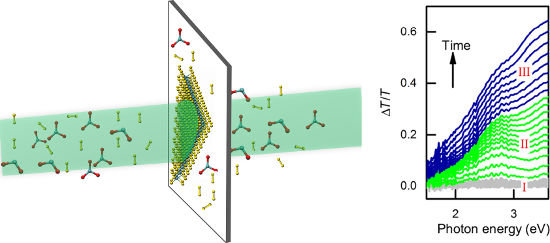
- of the sapphire substrate. This conclusion is based on a thorough ex situ characterization after CVD growth using differential reflectance spectroscopy (DRS), Raman spectroscopy, photoluminescent spectroscopy (PL), optical microscopy (OM), and atomic force microscopy (AFM). Actually, from the first


Mechanical and thermodynamic properties of Aβ42, Aβ40, and α-synuclein fibrils: a coarse-grained method to complement experimental studies
Beilstein J. Nanotechnol. 2019, 10, 500–513, doi:10.3762/bjnano.10.51
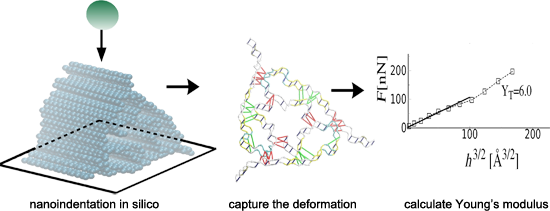
- mechanism of deformation that gives rise to the linear response can be characterized in the CG simulations. From the experimental point of view, there is a long-standing discussion in the atomic force microscopy (AFM) community whether Hertzian mechanics is applicable to all soft-matter samples explored


Temperature-dependent Raman spectroscopy and sensor applications of PtSe2 nanosheets synthesized by wet chemistry
Beilstein J. Nanotechnol. 2019, 10, 467–474, doi:10.3762/bjnano.10.46
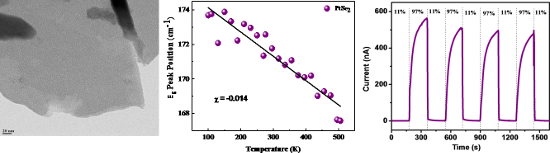
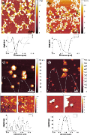
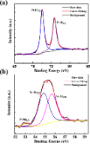
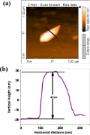
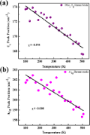
- low intensity at 52.9 eV which corresponds to Pt 5d3/2 [24]. The thickness of the as-prepared PtSe2 nanosheets was calculated using atomic force microscopy (AFM). Figure 5a shows the AFM image which clearly shows that the lateral dimensions of the nanosheets are ≈700 nm. Figure 5b represents the



Biocompatible organic–inorganic hybrid materials based on nucleobases and titanium developed by molecular layer deposition
Beilstein J. Nanotechnol. 2019, 10, 399–411, doi:10.3762/bjnano.10.39
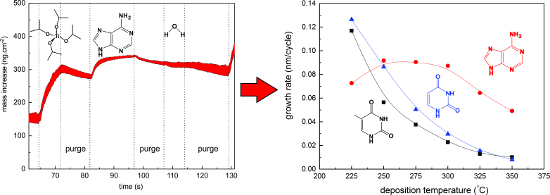
- for 15 minutes was measured by atomic force microscopy (AFM) (Figure 8). All as-deposited films exhibit high surface roughness; however, the roughness of the Ti-adenine film is caused by small islands appearing on an otherwise almost flat surface. After water treatment, the surface roughness decreases
- purging system. An uncoated Si(100) substrate was used to collect the background. Atomic force microscopy (AFM) measurements were performed in contact mode using a Park XE70 device. The data were analyzed using the Gwyddion 2.44 SPM visualization tool. The contact angle measurements were performed using a




Nitrous oxide as an effective AFM tip functionalization: a comparative study
Beilstein J. Nanotechnol. 2019, 10, 315–321, doi:10.3762/bjnano.10.30
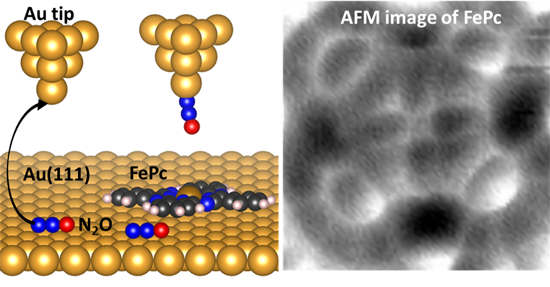
- apexes. Keywords: atomic force microscopy; Au(111); carbon monoxide; functionalization; high resolution; nitrous oxide; submolecular resolution; Introduction Frequency-modulated atomic force microscopy (AFM) has become the tool of choice for the characterization of molecules on the atomic scale


Pull-off and friction forces of micropatterned elastomers on soft substrates: the effects of pattern length scale and stiffness
Beilstein J. Nanotechnol. 2019, 10, 79–94, doi:10.3762/bjnano.10.8
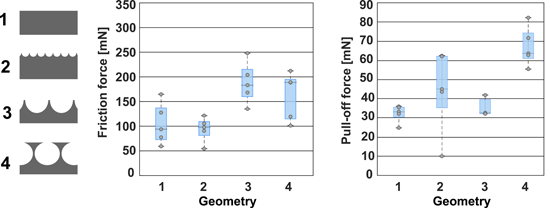
- samples from sub-microscale particles were characterized with atomic force microscopy (AFM), optical microscopy, and scanning electron microscopy (SEM). Monolayers and samples from microscale particles were characterized with optical microscopy and SEM. The elastic modulus of the fabricated micropatterns





Threshold voltage decrease in a thermotropic nematic liquid crystal doped with graphene oxide flakes
Beilstein J. Nanotechnol. 2019, 10, 71–78, doi:10.3762/bjnano.10.7
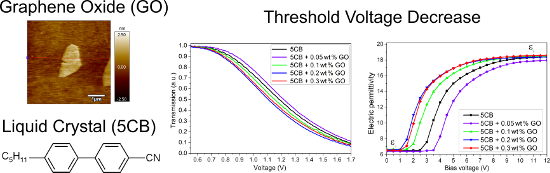
- , electric anisotropy, splay elastic constant, switch-on time, and switch-off time. The shape and dimensions of the GO flakes were studied using atomic force microscopy (AFM) and scanning electron microscopy (SEM). The influence of the GO concentration on the physical properties and switching process in the



Electrostatic force microscopy for the accurate characterization of interphases in nanocomposites
Beilstein J. Nanotechnol. 2018, 9, 2999–3012, doi:10.3762/bjnano.9.279
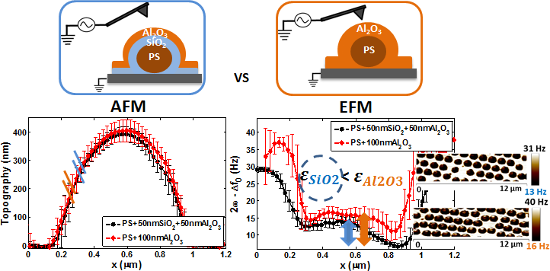
- conditions are fulfilled by electrostatic force microscopy (EFM) [18][19]. EFM is an atomic force microscopy (AFM)-based electrostatic method in which a conductive tip and a metallic sample holder are used. The probe-to-stage system is electrically polarized for the detection of electrostatic forces or force




Investigation of CVD graphene as-grown on Cu foil using simultaneous scanning tunneling/atomic force microscopy
Beilstein J. Nanotechnol. 2018, 9, 2953–2959, doi:10.3762/bjnano.9.274
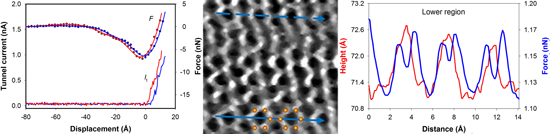
- Majid Fazeli Jadidi Umut Kamber Oguzhan Gurlu H. Ozgur Ozer Department of Physics Engineering, İstanbul Technical University, 34469, İstanbul, Turkey 10.3762/bjnano.9.274 Abstract Scanning tunneling microscopy (STM) and atomic force microscopy (AFM) images of graphene reveal either a triangular
- scanning tunneling microscopy (STM) and atomic force microscopy (AFM) by various groups [3]. The interaction of graphene with its substrate affects the STM measurements and that casts doubts on its electronic structure. Having the possibility to make simultaneous STM and AFM measurements, on the same area


In situ characterization of nanoscale contaminations adsorbed in air using atomic force microscopy
Beilstein J. Nanotechnol. 2018, 9, 2925–2935, doi:10.3762/bjnano.9.271
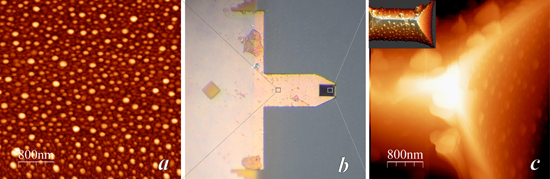
- of clean and well-prepared surfaces. Accordingly, a wealth of experimental techniques have been developed to control and characterize their contamination state [8]. In the present work we propose atomic force microscopy (AFM) [9][10] as a valuable tool to visualize nanoscale surface contamination and


Layered calcium phenylphosphonate: a hybrid material for a new generation of nanofillers
Beilstein J. Nanotechnol. 2018, 9, 2906–2915, doi:10.3762/bjnano.9.269
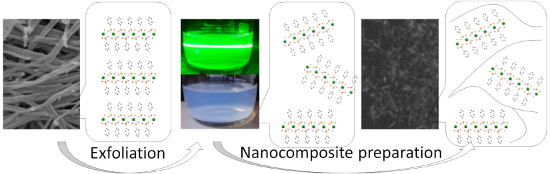
- as nucleation centers; however, these methods were not successful. Although the shape of the particles differs minimally as they are rod-shaped in each case, the thickness of the individual lamellas differs significantly with the selected procedure, as was confirmed by the atomic force microscopy
- (AFM) analysis. The samples prepared by the “drop by drop” and “several portions” methods contained thinner particles in comparison those where the portion was all added at once. Nevertheless, as it can be seen in scanning electron microscopy (SEM) images (Figure 2) and as was also verified by AFM


Charged particle single nanometre manufacturing
Beilstein J. Nanotechnol. 2018, 9, 2855–2882, doi:10.3762/bjnano.9.266
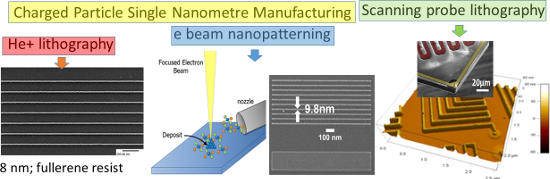
- techniques of atomic force microscopy (AFM) and scanning tunneling microscopy (STM). In both cases, a probe is scanned over a sample and the interaction is used to study the sample properties. For AFM, the atomic force between a sharp tip at the end of a cantilever beam and the sample surface is measured by


Controlling surface morphology and sensitivity of granular and porous silver films for surface-enhanced Raman scattering, SERS
Beilstein J. Nanotechnol. 2018, 9, 2813–2831, doi:10.3762/bjnano.9.263
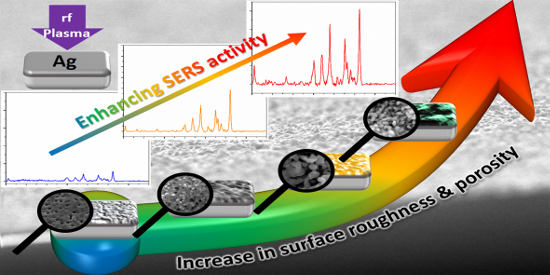
- silver films were characterized using atomic force microscopy (AFM) in contact mode on a CP-II AFM (Bruker-Veeco) with SiC cantilevers to determine the topography and surface roughness (root mean square roughness, Rq). Scanning electron microscopy (SEM) of the silver films was performed on a Philips XL
- surfaces act as efficient SERS substrates showing greater enhancement factors compared to as prepared, sputtered, but untreated silver films when using rhodamine B as Raman probe molecule. The obtained roughened silver films were fully characterized by scanning electron microscopy (SEM), atomic force
- microscopy (AFM), X-ray diffraction (XRD), transmission electron microscopy (TEM), X-ray photoelectron (XPS and Auger) and ultraviolet–visible spectroscopy (UV–vis) as well as contact angle measurements. It was found that different morphologies of the roughened Ag films could be obtained under controlled