Search results
Search for "SEM" in Full Text gives 1114 result(s) in Beilstein Journal of Nanotechnology. Showing first 200.
Vinorelbine-loaded multifunctional magnetic nanoparticles as anticancer drug delivery systems: synthesis, characterization, and in vitro release study
Beilstein J. Nanotechnol. 2024, 15, 256–269, doi:10.3762/bjnano.15.24
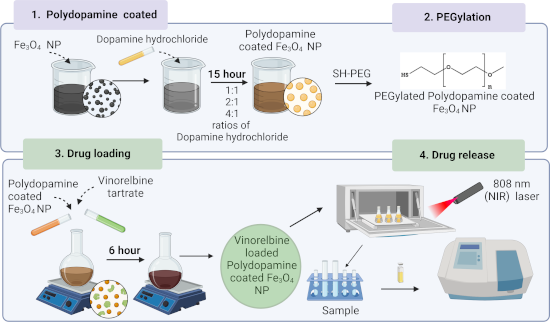
- -resolution analytical electron microscope (FE-SEM, Thermo Scientific, Apreo 2S LoVac) and a scanning transmission electron microscope (STEM, Phillips XL, 30 ESEM-FEG/EDAX) operating at 120 kV acceleration voltage. The structure of the nanoparticles was analyzed by X-ray diffraction (XRD, PANalytical, Xpert
- a solvothermal technique in a stainless steel reactor at 200 °C for 6 h. According to the results of FE-SEM and STEM examinations, the Fe3O4 NPs are spherical, as depicted in Figure 1a–c. When examining the STEM size distribution, it was observed that Fe3O4 NPs were efficiently synthesized with an
- ]. During this process in an alkaline environment, PDA polymerizes into its oxide form. As a result, the nanostructure undergoes coating with PDA [47]. The average distribution of PDA coating sizes and thicknesses was determined using FE-SEM size analysis. In Figure 1c, the average size of bare Fe3O4 NPs


Design, fabrication, and characterization of kinetic-inductive force sensors for scanning probe applications
Beilstein J. Nanotechnol. 2024, 15, 242–255, doi:10.3762/bjnano.15.23
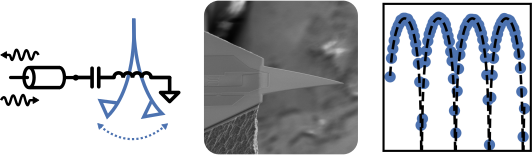
- by setting the deposition height to 10 μm. Defocusing of the electron spot during vertical growth naturally forms a narrowing conical structure. At the apex of this cone, we routinely achieve a curvature radius of less than 10 nm, as verified by the SEM image in Figure 6c. Finally, we deposit a thin
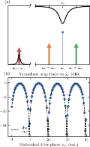
- direction. (a) Scanning electron microscope (SEM) image of a fabricated sensor seen from an angled topside view. The cantilever is formed from a Si-N plate protruding from and supported by a Si substrate. A thin film of Nb-Ti-N is deposited on top of the Si-N and patterned to form the microwave resonator. A
- inductor is placed transversely to the base of the released cantilever. (d–f) SEM images of nanowires from three different devices, showing three different nominal nanowire widths: 200, 100, and 75 nm. (g) SEM image of an underside view of the clamping line of a released cantilever using an isotropic



Quantitative wear evaluation of tips based on sharp structures
Beilstein J. Nanotechnol. 2024, 15, 230–241, doi:10.3762/bjnano.15.22
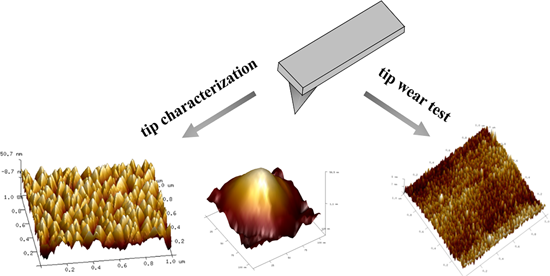
- are currently two primary methods for obtaining the tip morphology, namely microscopic observation and blind reconstruction based on AFM images. Strahlendorff et al. [12] employed a scanning electron microscope (SEM) to evaluate the shape of the probe before and after scanning to determine tip wear
- AFM scanning. Xue et al. [18] used SEM to study the state of the probe before and after scanning under different scanning parameters and found that good scanning parameters can be obtained under low scanning speed, large integration gain, and high set point, which significantly reduces tip wear. Su et
- shown in Figure 6. The crest’s location in the plane view indicates potential tips of structures. Images of the AFM probes were acquired using a Thermo Fisher Scientific Quattro model scanning electron microscope system. The imaging parameters for the SEM were set to 20 kV electron beam voltage with a




Ion beam processing of DNA origami nanostructures
Beilstein J. Nanotechnol. 2024, 15, 207–214, doi:10.3762/bjnano.15.20
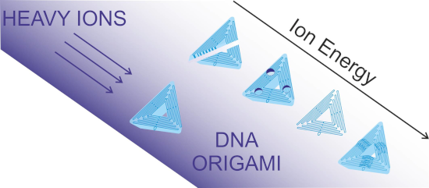
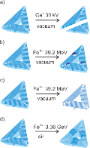
- detector was calibrated beforehand using a Faraday cup. Focused ion beam irradiation A Tescan Amber FIB-SEM was used to etch the sample surface. A Ga+ focused ion beam was used (E = 30 keV, I = 10 pA) to draw 10 μm trenches with a nominal depth of 100 nm using single line scan. This resulted in actual
- beam of the SEM component; hence, for irradiation, the sample is tilted at 55° through the motorized compucentric stage from the default configuration to be exactly perpendicular to the ion beam. Results and Discussion Fe beam irradiation in vacuum Dry DNA origami nanotriangles deposited on Si
- depth were drawn on the surface using a FIB-SEM. Although the lines could be clearly observed, the nanostructures could not be resolved in FIB or SEM imaging modes because of poor contrast for both and the observed sample charging during SEM imaging (Supporting Information File 1, Figure S4). Because of


Graphene removal by water-assisted focused electron-beam-induced etching – unveiling the dose and dwell time impact on the etch profile and topographical changes in SiO2 substrates
Beilstein J. Nanotechnol. 2024, 15, 190–198, doi:10.3762/bjnano.15.18
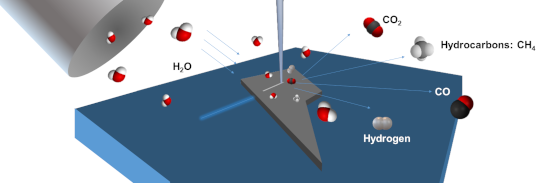
- studies: A) optical microscopy, B) scanning electron microscopy (SEM), C) AFM, and D) correlative probe and electron microscopy (CPEM). The optical contrast of graphene placed onto SiO2/Si allows us to easily distinguish between its mono-, bi-, triple, and thicker flakes layers. The values (approx. 2.5 nm
- exposed lines for all used dose values and dwell times (Figure 1C.i–iii), whose origin we discuss further in the subsequent section of the manuscript. The SEM and in situ AFM signals (Figure 1B, Figure 1C) are integrated into CPEM data, which yields additional insight into the substrate morphology. Apart
- be optimized to prevent unnecessary defects and reduce the detrimental impact on the underlying substrate. The optical microscope image of the graphene flake before the patterning process is shown in Figure 2A. The size of the etched lines, estimated based on SEM measurements, is usually smaller than


Nanocarrier systems loaded with IR780, iron oxide nanoparticles and chlorambucil for cancer theragnostics
Beilstein J. Nanotechnol. 2024, 15, 180–189, doi:10.3762/bjnano.15.17
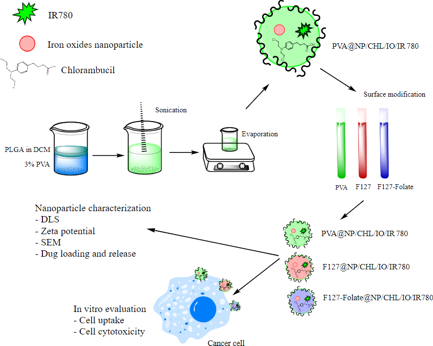
- were performed in both 0.1× PBS (13.7 mM of NaCl, 0.27 mM of KCl, 1 mM of Na2HPO4, and 0.18 mM of KH2PO4, pH 7.4) and animal cell culture media containing DMEM and 10% FBS. Scanning electron microscopy For scanning electron microscopy (SEM) experiments, 10 μL of F127-folate@NP was loaded on the silica
- film for 1 min, and water was allowed to evaporate. Then, the NPs were coated with titanium and SEM images were acquired using a FE-SEM S4800 HITACHI, Japan. Loading capacity Entrapment and release of CHL and IR780 in the NPs were measured by the absorbance of CHL at 256 nm and IR780 at 780 nm using
- DLS and PDI increased to approx. 280 nm and 0.24, respectively. The NPs were still well dispersed in cell culture media; however, the size increase suggested the adsorption of FBS proteins onto the NPs. The SEM results (Figure 1B) showed the actual size of the nanoparticles, which had a round shape of


Modification of graphene oxide and its effect on properties of natural rubber/graphene oxide nanocomposites
Beilstein J. Nanotechnol. 2024, 15, 168–179, doi:10.3762/bjnano.15.16
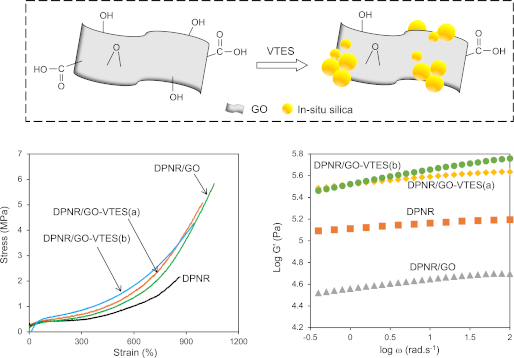
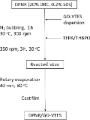
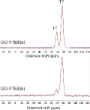
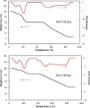
- investigated by 29Si NMR, and it was found that the hydrolysis and condensation of VTES proceed more completely in basic conditions than in acidic conditions. The silica content of GO-VTES(b) was 43%, which is higher than that of GO-VTES(a) (8%). Morphology of silica was observed by SEM. The DPNR/GO-VTES
- gravimetric analysis (TGA) of the samples was performed on a TA Q500 instrument. The temperature was increased at a heating rate of 10 °C /min from room temperature to 900 °C in air atmosphere. The morphology of the DPNR/GO-VTES was observed with field-emission scanning electron microscopy (FE-SEM) performed
- efficiently attached to GO, and the attachment was more efficient in basic conditions rather than acidic conditions. Scanning electron microscopy images Figure 8 shows SEM images for GO-VTES(a) and GO-VTES(b). As can be seen, silica was produced with a size of approx. 50 nm for GO-VTES(a) and GO-VTES(b). It






In situ optical sub-wavelength thickness control of porous anodic aluminum oxide
Beilstein J. Nanotechnol. 2024, 15, 126–133, doi:10.3762/bjnano.15.12
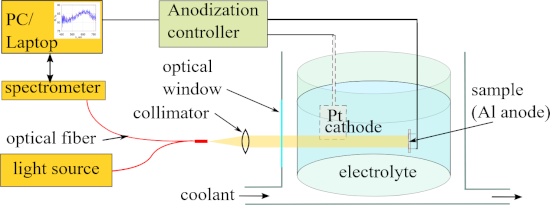
- materials in phase 2. A simulated annealing fitting algorithm was employed. The PAAO structure (Figure 1a) was confirmed using field-emission scanning electron microscopy (FE-SEM-4800, Hitachi, Tokyo, Japan). The relationship between thickness measurements using SEM and optical interferometry has been
- Innovation Program under TRANSLATE project (Grant agreement: 964251). A. J. acknowledges support from European Regional Development Fund for postdoctoral project ”Patterned hybrid multilayer films for optical sensors” (no. 1.1.1.2/VIAA/4/20/615). (a) Scanning electron microscopy (SEM) micrograph showing top


Assessing phytotoxicity and tolerance levels of ZnO nanoparticles on Raphanus sativus: implications for widespread adoptions
Beilstein J. Nanotechnol. 2024, 15, 115–125, doi:10.3762/bjnano.15.11

- light scattering (DLS), and scanning electron microscopy (SEM). The effect of ZnO NPs (70 nm) on R. sativus grown in coir was evaluated. The application of 1,000 mg/L of ZnO NPs resulted in a significant increase (p < 0.05) in soluble protein content, carbohydrates, chlorophyll a (Chl-a), chlorophyll b
- synthesized ZnO NPs were characterized via several techniques such as powder X-ray diffraction (PXRD), Fourier-transform infrared (FTIR) spectroscopy, solid-UV–vis spectroscopy, dynamic light scattering (DLS), and scanning electron microscopy (SEM). Then the potential phytotoxicity of the synthesized ZnO NPs
- (Figure 1c) shows significant absorption peaks at 545, 718, 902, 2028, and 2159 cm−1. The UV–vis spectrum of synthesized ZnO-NPs displays a broad band at 362 nm (Figure 1d). The SEM images (Figure 1e) confirmed that ZnO NPs have spherical morphology with an average diameter of 70 nm. Phytotoxicity of ZnO


New application of bimetallic Ag/Pt nanoplates in a colorimetric biosensor for specific detection of E. coli in water
Beilstein J. Nanotechnol. 2024, 15, 95–103, doi:10.3762/bjnano.15.9
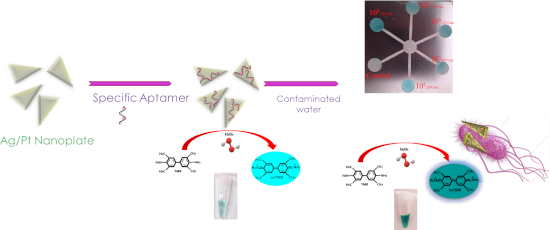
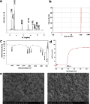
- detection is described using a silver/platinum nanoplate (Ag/Pt NPL) that interacts with an oligonucleotide aptamer as a bioreceptor. The size of the Ag/Pt NPLs was about 42 nm according to the FE-SEM images. The EDS result indicates that a thin layer of Pt ions was coated on the surface of the Ag NPLs
- microscopy (FE-SEM) was used to investigate the form and shapes of NPLs. The size of the NPLs is approx. 42 nm. Figure 1a shows a combination of truncated triangular and circular plates of Ag/Pt NPLs. The NPLs were evenly distributed and shaped in the form of discs or triangles. Energy-dispersive X-ray
- that, one drop of the E. coli-contaminated sample was put onto a paper chip. The final stage in the paper evaluation was to add 6 µL of H2O2 and 6 µL of TMB to paper chips. The ImageJ software was utilized to evaluate the intensity of the resulting blue color. a) The SEM image AND b) EDS analysis of Ag


Study of the reusability and stability of nylon nanofibres as an antibody immobilisation surface
Beilstein J. Nanotechnol. 2024, 15, 83–94, doi:10.3762/bjnano.15.8
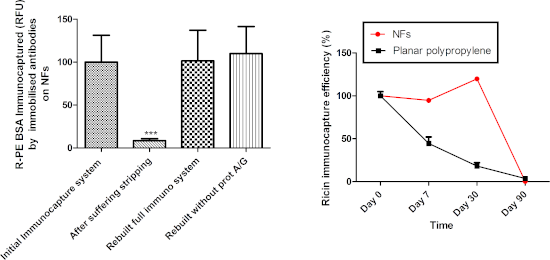
- measured as relative fluorescence unit (RFU) (index explained in the Experimental section). Results are expressed as the mean RFU of the replicates, and the variation is expressed as the standard error of the mean (SEM). When the immunocapture system had been reconstituted after the stripping procedure


Berberine-loaded polylactic acid nanofiber scaffold as a drug delivery system: The relationship between chemical characteristics, drug-release behavior, and antibacterial efficiency
Beilstein J. Nanotechnol. 2024, 15, 71–82, doi:10.3762/bjnano.15.7
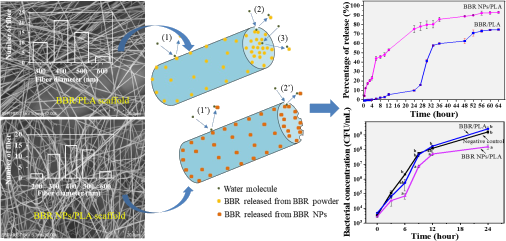
- observed by scanning electron microscopy (SEM, Figure 1). The BBR powder appeared as aggregates of rods in the micrometer size (Figure 1a), while BBR NPs were formed as nanoscale rectangles (Figure 1b). The electrospun PLA nanofibers showed bead-free and uniform morphology with fiber diameter in the range
- conducted for 6 h to obtain the PLA, BBR/PLA, and BBR NPs/PLA nanofiber scaffolds. Characterization of prepared scaffolds The morphology of PLA and BBR-loaded PLA nanofiber scaffolds was observed by a scanning electron microscope (JSM-6510LV). Fiber diameters were measured from the SEM images by using the
- inverted microscope every 24 h. Statistical analysis The data were reported as mean values ± standard deviations. Statistical analysis of antibacterial data was performed using one-way analysis of variance (ANOVA). A p-value of less than 0.05 was considered statistically significant. (a) SEM image of BBR


Influence of conductive carbon and MnCo2O4 on morphological and electrical properties of hydrogels for electrochemical energy conversion
Beilstein J. Nanotechnol. 2024, 15, 57–70, doi:10.3762/bjnano.15.6
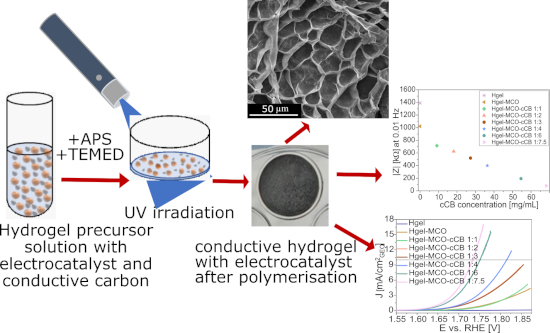
- structures were examined in terms of their morphology, electrical properties, and catalytic layers in the OER process. Results and Discussion Characterisation of hydrogel-based polymer composites with dispersed catalytic and conductive particles Scanning electron microscopy (SEM) analysis of hydrogel samples
- temperature above LCST results in shrinkage of the hydrogel structure and formation of inhomogeneities. Such a hydrogel ceases to be transparent and loses most of its water [42]. Morphological and physicochemical characterisation Scanning electron microscopy was performed with an FE-SEM FEI Quanta FEG 250 at
- 1 V to 1.7 V vs RHE). SEM micrographs of freeze-dried nanostructures of pure (a, d) and composite hydrogel samples: Hgel-MCO-cCB 1:3 (b, e) and Hgel-MCO-cCB 1:6 (c, f). EDS analysis of hydrogel composites: Hgel-MCO (a, d, g), Hgel-MCO-cCB 1:3 (b, e, h), Hgel-MCO-cCB 1:6 (c, f, i). Transmittance plot


Measurements of dichroic bow-tie antenna arrays with integrated cold-electron bolometers using YBCO oscillators
Beilstein J. Nanotechnol. 2024, 15, 26–36, doi:10.3762/bjnano.15.3
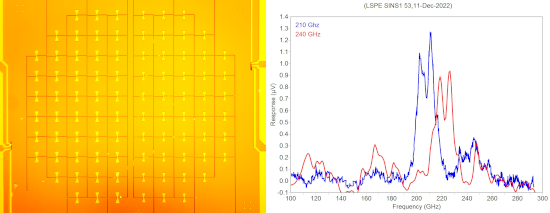
- sensitivity. Scanning electron microscopy (SEM) images of the sample LSPE VB 210/240 SINS1 No. 43 deposited at NNSTU were obtained using an electron microscope at the Collective Use Center of the IPM RAS (Figure 4a,b). The dimensions of the junctions can be precisely measured using SEM and compared with the
- a substrate thickness of 0.29 mm seem to be closer to the experimental results, see Measurement results section below. (a) Design of the sample of LSPE VB 210/240 from the SINS1 series. (b) Optical photo of the sample of LSPE VB 210/240 from the SINS1 series. (a) SEM image of the LSPE sample; bow
- -tie antennas are visible. (b) SEM image where the required elements are painted with pseudocolors; red: normal metal absorber, green: SN contact, and blue: SIN tunnel junctions. I–V characteristics of two receiving structures of a sample receiving system from the LSPE VB 210/240 SINS1 series. Measured


TEM sample preparation of lithographically patterned permalloy nanostructures on silicon nitride membranes
Beilstein J. Nanotechnol. 2024, 15, 1–12, doi:10.3762/bjnano.15.1
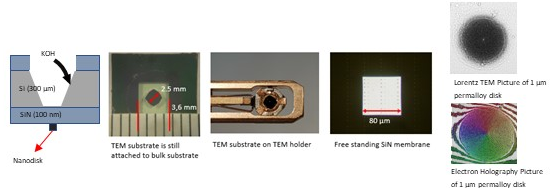
- lower dose than the main exposure so that it does not induce chain scission in the top resist layer, but only in the bottom resist layer, which is more sensitive. The result of the multi-dose exposure was controlled by observing a cross section of the developed bilayer resist using a SEM in snapshot
- lithographically patterned nanostructures to be examined using TEM. The results of the fabrication methods mentioned above were examined using SEM. This is important because the structural information (disk dimensions and deformation from fences) later correlates to the magnetic properties. A magnetic vortex
- results are consistent with the observations from LTEM. Conclusion Electron beam lithography in combination with lift-off and IBE methods for the preparation of Py nanodisks has been optimized. The results have been compared using SEM and TEM. In addition, the application of stencil lithography for the


Determination of the radii of coated and uncoated silicon AFM sharp tips using a height calibration standard grating and a nonlinear regression function
Beilstein J. Nanotechnol. 2023, 14, 1200–1207, doi:10.3762/bjnano.14.99
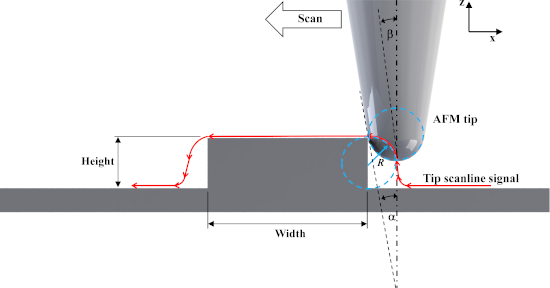
- for 30 nm depth to obtain sufficient data of force curves. The blunted tips were imaged by SEM immediately after running the nanoindentation process in the AFM program. Then, each tip radius was determined by fitting the force loading curves with the Hertz model equation using the indentation depth
- . Figure 1 shows SEM images of the three different tips. The calibration standard grating used in this experiment is a HS-20MG height calibration standard (supplied by Budget Sensor) with an external size of 1 mm × 1 mm and an inner size of 500 µm × 500 µm [15]. The rectangular height grate pattern is made
- calibration grating as imaged by SEM [17]. The lines in the lower panel of Figure 3 were created through connecting the point-to-point data of the AFM tip position while the tip was moved along the calibration grate. The height of the lines indicates the height of the grate. At this point, we were interested


A combined gas-phase dissociative ionization, dissociative electron attachment and deposition study on the potential FEBID precursor [Au(CH3)2Cl]2
Beilstein J. Nanotechnol. 2023, 14, 1178–1199, doi:10.3762/bjnano.14.98
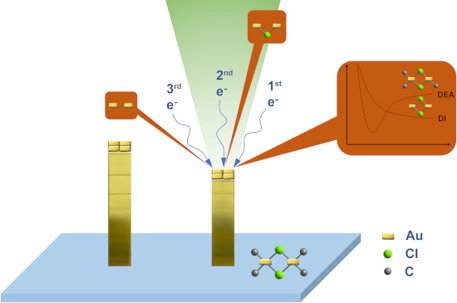
- (500 nm)/Si(111) In this experiment, 4 × 4 µm2 FEBID structures were written with [Au(CH3)2Cl]2 as the precursor using an acceleration voltage of 5 keV and a beam current of 1.5 nA. The fabricated structures were examined with scanning electron microscopy (SEM) and Auger electron spectroscopy (AES
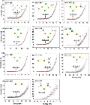
- ). Figure 1a depicts an SEM image of the FEBID deposit created with an electron exposure of 7.80 C/cm2. The position of the corresponding AES analysis is marked in Figure 1a by a green-colored star. The AES spectra acquired on the bare substrate and the deposit are shown in Figure 1b. On the pristine SiO2
- selected area of the SEM image shown in Figure 1a is depicted in Figure 1c, where nanoparticles in the deposition are noticeable, although the picture is somewhat blurry. To better visualize the observed nanoparticles, a background subtraction was performed with the image enhancement program ImageJ [35



Hierarchically patterned polyurethane microgrooves featuring nanopillars or nanoholes for neurite elongation and alignment
Beilstein J. Nanotechnol. 2023, 14, 1157–1168, doi:10.3762/bjnano.14.96
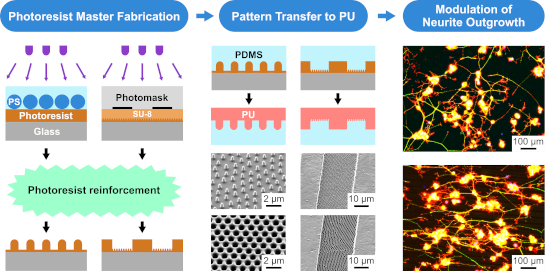
- Supporting Information File 1, Figure S2). Scanning electron microscopy (SEM) images (Figure 1C–E) confirm the featureless surface of flat PU and the ordered arrays of nanopillars and nanoholes on the nanopatterned films. For the PU nanopillar substrate, some short pillars occassionally appeared (Figure 1D
- dimensions of high-aspect-ratio nanostructures [16], we re-measured some dimensions using SEM images (Supporting Information File 1, Figure S4). The nanopillars were around 860 nm high and 350 nm wide at the base and had a rounded tip. The nanoholes were around 960 nm deep and 860 nm wide at the opening and
- flat substrate for neurite extension despite higher cell and primary neurite counts (Figure 2A). SEM images of the PC12 cells on PU samples (Figure 2G–I) show that the neurites grew unimpeded on both the flat and nanostructured substrates. On the nanopillar array (Figure 2H), the neurites and neurite


Curcumin-loaded albumin submicron particles with potential as a cancer therapy: an in vitro study
Beilstein J. Nanotechnol. 2023, 14, 1127–1140, doi:10.3762/bjnano.14.93
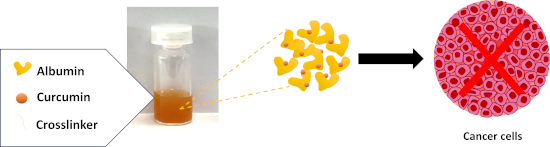
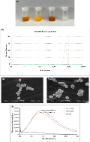
- together with evasion from recognition by macrophages and the immune system because of the low binding of proteins on the particles’ surface [32]. Representative SEM images of HSA-MPs and CUR-HSA-MPs are displayed in Figure 2C,D. The results reveal that the submicron particles displayed a “hairy” surface
- morphology of the particles was examined in a JSM-5910 SEM (JEOL USA, Peabody, MA, USA). The microparticle samples were diluted in distilled water, and a drop of the particle suspension was applied on copper tape and then allowed to dry at RT overnight. The dried samples were then sputter-coated with gold
- . SEM images were obtained under high-vacuum conditions at an operation voltage of 15 kV. Fourier-transform infrared spectroscopy Chemical characteristics of CUR, HSA, HSA-MPs, and CUR-HSA-MPs were examined using Fourier-transform infrared spectroscopy (FTIR, Thermo Scientific, NICOLET IS5, Waltham, MA




Sulfur nanocomposites with insecticidal effect for the control of Bactericera cockerelli
Beilstein J. Nanotechnol. 2023, 14, 1106–1115, doi:10.3762/bjnano.14.91
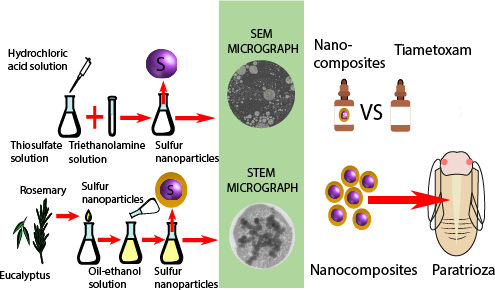
- eucalyptus and rosemary at different concentrations. Characterizations were carried out through UV–visible spectroscopy, energy-dispersive X-ray spectroscopy (EDS), transmission electron microscopy (TEM), and scanning electron microscopy (SEM); also the insecticidal efficacy of the NCMPs for the control of
- distribution were calculated. UV–vis spectrum of SNPs. (a) SEM micrograph and (b) EDS spectrum of synthesized SNPs. (a) TEM micrograph of synthesized SNPs and (b) density function. STEM micrographs (left) and density plots (right) of eucalyptus nanocomposites with oil concentrations of (a) 0.25%, (b) 0.5%, and


Dual-heterodyne Kelvin probe force microscopy
Beilstein J. Nanotechnol. 2023, 14, 1068–1084, doi:10.3762/bjnano.14.88




Experimental investigation of usage of POE lubricants with Al2O3, graphene or CNT nanoparticles in a refrigeration compressor
Beilstein J. Nanotechnol. 2023, 14, 1041–1058, doi:10.3762/bjnano.14.86
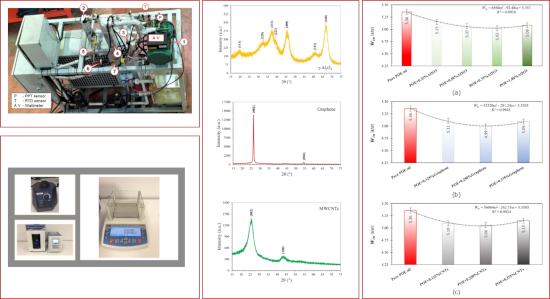
- nanoparticles is presented separately in the subsequent sections to verify the catalog information provided by the manufacturer. In the characterization of the nanoparticles used in the study, field-emission scanning electron microscopy (FE-SEM), energy-dispersive X-ray spectroscopy (EDS), and X-ray diffraction
- (XRD) analyses were performed. Characterization of Al2O3 nanoparticles The morphological features of the Al2O3 nanoparticles were investigated with the help of FE-SEM micrograph (Figure 2a). It is seen that the Al2O3 nanoparticles exhibit amorphous nature. Thus, it can be stated that the particle size
- cannot be clearly determined in FE-SEM micrograph, but the primary particle size is smaller than 50 nm. On the other hand, EDS analysis was conducted on the Al2O3 sample to determine the elemental composition and purity of Al2O3 nanoparticles. The result of the EDS analysis is given in Figure 2b and it





Prediction of cytotoxicity of heavy metals adsorbed on nano-TiO2 with periodic table descriptors using machine learning approaches
Beilstein J. Nanotechnol. 2023, 14, 939–950, doi:10.3762/bjnano.14.77
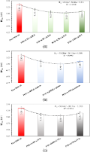
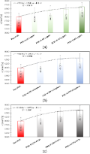
- XGBoost gives the highest R2 (0.99) for the training set, while AdaBoost gives the lowest R2 (0.88) with the highest MAEtest (0.33). Cross-validation (CV) statistics were obtained based through 20 times fivefold repetitive CV along with 1000 times shuffle split CV (mean ± SEM) method. This is done to
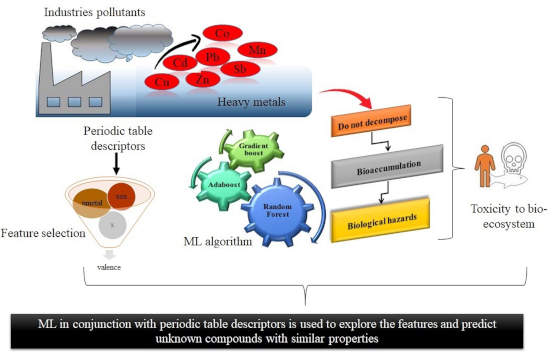
- . SHAP summary plot. Cross-validation statistics based on 20 times fivefold repetitive CV and 1000 times shuffle split CV method (mean ± SEM). General mechanism of toxicity to HK-2 cell by heavy metals. Different concentrations of heavy metal salt samples in µmol/L. Statistical parameters and selected


Upscaling the urea method synthesis of CoAl layered double hydroxides
Beilstein J. Nanotechnol. 2023, 14, 927–938, doi:10.3762/bjnano.14.76
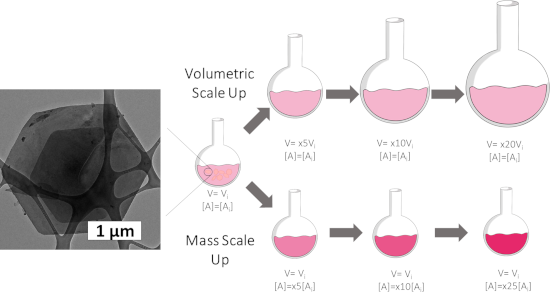
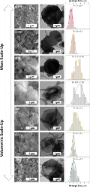
- CoAl-LDH synthesis method. We thoroughly study the effects of the mass scale-up (25-fold: up to 375 mM) and the volumetric scale-up (20-fold: up to 2 L). For this, we use a combination of several structural (XRD, TGA, and N2 and CO2 isotherms), microscopic (SEM, TEM, and AFM), magnetic (SQUID), and
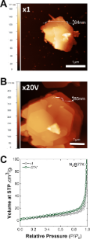
- CoAl-based LDH synthesis through an ARR method had been demonstrated, morphological aspects were addressed by means of scanning electron microscopy (SEM), transmission electron microscopy (TEM), and atomic force microscopy (AFM) (Figure 4 and Figure 5). For reference x1, well-defined hexagonal single
- experimental conditions extracted from SEM analysis. Besides slight differences in size and morphology (sharpness of the edges), the AFM comparison of single hexagonal platelets of reference x1 and sample x20V shows a similar thickness of around 85 nm (Figure 5A,B and Supporting Information File 1, Figure S15


N-Heterocyclic carbene-based gold etchants
Beilstein J. Nanotechnol. 2023, 14, 865–871, doi:10.3762/bjnano.14.71
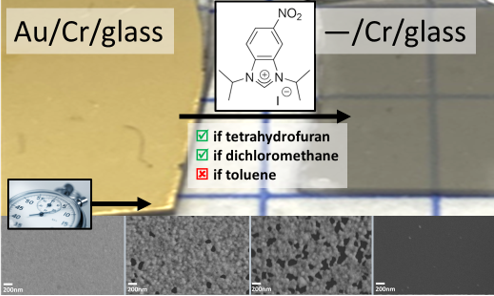
- of etching observed in Figure 3d. Figure 4 shows the effect of species 2–4 in solutions of THF and DCM. Species 2 at a concentration of 3.25 × 10⁻² M in THF in Figure 4a shows the most aggressive etching across species 1–4 in all solvents. After only 30 min there was no evidence by SEM of extant gold
- maps in Figure S5 (Supporting Information File 1) support that the black sections of the SEM images in Figure 3 and Figure 4 correspond to the absence of gold, that is, to complete loss of gold to the action of the etchant solution. We mixed, with 10 min of vortexing, citrate-capped AuNPs in 10 mL
- % nitrogen gas. Electron micrographs were recorded using the SE2 detector of a Zeiss SIGMA VP field emission scanning electron microscope (SEM). Energy dispersive X-ray spectroscopy (EDS) spectra were obtained for each sample using an Oxford Instruments X-max 50 mm2 EDS attachment. Peaks were identified