


Search results
Search for "X-ray photoelectron spectroscopy" in Full Text gives 323 result(s) in Beilstein Journal of Nanotechnology. Showing first 200.
Temperature-dependent Raman spectroscopy and sensor applications of PtSe2 nanosheets synthesized by wet chemistry
Beilstein J. Nanotechnol. 2019, 10, 467–474, doi:10.3762/bjnano.10.46
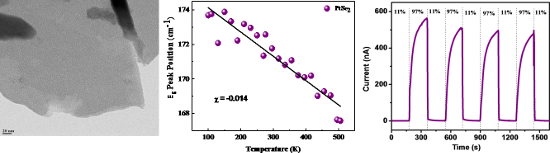
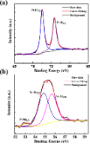
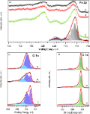
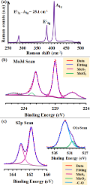
- -synthesized PtSe2 sample. The X-ray photoelectron spectroscopy (XPS) spectra of the Pt 4f and Se 3d regions acquired on a PtSe2 nanosheet sample were carried out on a film deposited on the Si substrate. The Figure 4a represents the fitted spectrum for Pt 4f7/2 and Pt 4f5/2 with binding energy 72.55 eV and



Reduced graphene oxide supported C3N4 nanoflakes and quantum dots as metal-free catalysts for visible light assisted CO2 reduction
Beilstein J. Nanotechnol. 2019, 10, 448–458, doi:10.3762/bjnano.10.44
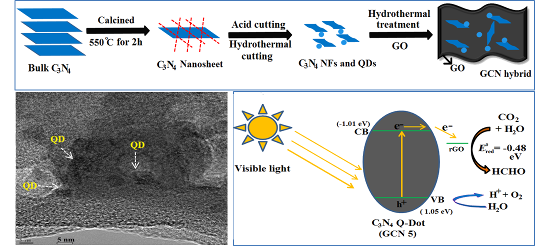
- , X-ray photoelectron spectroscopy, Fourier transform infrared spectroscopy, field emission scanning electron microscopy, transmission electron microscopy (TEM), and UV–vis spectroscopy. High-resolution TEM images clearly show that C3N4 QDs (average diameter of 2–3 nm) and NFs (≈20–45 nm) are
- by X-ray photoelectron spectroscopy (XPS) analysis, which is carried out to study the surface composition and the interactions and valence states of the elements present in the hybrid materials. The full XPS survey spectrum of the GCN-5 hybrid material reveals the presence of C, N and O, while no
- gas. Schematic representation of the preparation of C3N4 nanoflakes (NFs), quantum dots (QDs) and the rGO-supported C3N4 (GCN) hybrid material. Powder X-ray diffraction patterns of the synthesized rGO-supported C3N4 (GCN) hybrid materials. X-ray photoelectron spectroscopy analysis of the prepared GCN





Biocompatible organic–inorganic hybrid materials based on nucleobases and titanium developed by molecular layer deposition
Beilstein J. Nanotechnol. 2019, 10, 399–411, doi:10.3762/bjnano.10.39
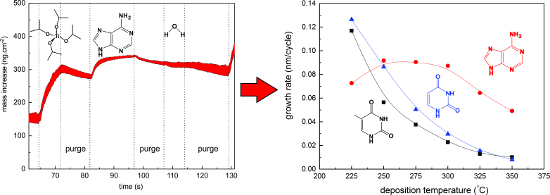
- 250 and 300 °C, while an overall reduction in growth rate with increasing temperature was observed for the uracil and thymine systems. The bonding modes of the films have been further characterized by Fourier transform infrared spectroscopy, X-ray photoelectron spectroscopy and X-ray diffraction
- the films was measured by a Bruker AXS D8 advance film diffractometer equipped with a LynxEye strip detector. The thin film diffractometer had a Göbel mirror and a Ge(220) four bounce monochromater for XRR measurements. X-ray photoelectron spectroscopy (XPS) was performed using a Thermo Scientific




A Ni(OH)2 nanopetals network for high-performance supercapacitors synthesized by immersing Ni nanofoam in water
Beilstein J. Nanotechnol. 2019, 10, 281–293, doi:10.3762/bjnano.10.27
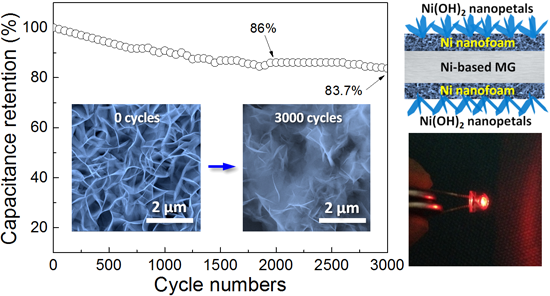
- , Bruker D8) with Cu Kα radiation. Chemical composition and valence state of the products were studied using X-ray photoelectron spectroscopy (XPS, Thermo Fisher Scientific). The surface morphology of the samples was characterized using a scanning electron microscope (SEM, Nova nanoSEM 450) equipped with




Interaction of Te and Se interlayers with Ag or Au nanofilms in sandwich structures
Beilstein J. Nanotechnol. 2019, 10, 238–246, doi:10.3762/bjnano.10.22
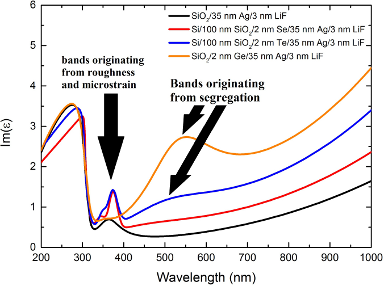
- the crystallinity, atomic concentration profile and optical parameters of ≈35 nm-thick silver and gold layers deposited on glass substrates with 2 nm-thick tellurium or selenium interlayers. Our study, based on X-ray reflectometry (XRR), X-ray diffraction (XRD), X-ray photoelectron spectroscopy (XPS


Nanoporous water oxidation electrodes with a low loading of laser-deposited Ru/C exhibit enhanced corrosion stability
Beilstein J. Nanotechnol. 2019, 10, 157–167, doi:10.3762/bjnano.10.15
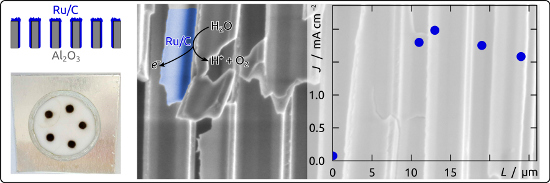
- samples The chemical and phase identity of the Ru/C material obtained by laser-induced deposition is delivered by a combination of X-ray diffraction, Raman spectroscopy and X-ray photoelectron spectroscopy. Firstly, the Ru/C layer is amorphous, since only crystalline Al peaks of the substrate are visible
- ]. Importantly, the absence of carbonyl stretching vibrations around 1950–2190 cm−1 rules out any remnants of molecular precursor Ru3(CO)12 (Figure 7b [52][62]). X-ray photoelectron spectroscopy (XPS, Figure 8) is used to differentiate between the oxidation states of ruthenium at its surface and in its inner




Wet chemistry route for the decoration of carbon nanotubes with iron oxide nanoparticles for gas sensing
Beilstein J. Nanotechnol. 2019, 10, 105–118, doi:10.3762/bjnano.10.10
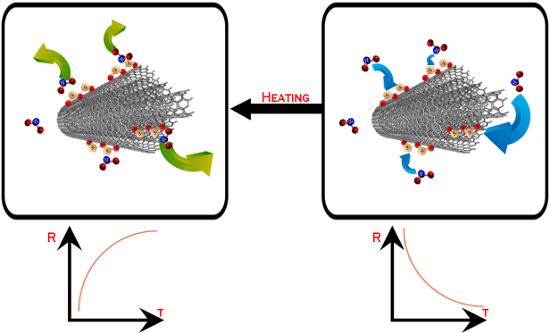
- chemical composition of the iron oxide decorated carbon nanotube samples were investigated employing transmission electron microscopy (TEM), Raman spectroscopy and X-ray photoelectron spectroscopy (XPS). The differently decorated CNT samples were used to make gas sensors for detecting nitrogen dioxide. A
- absorbed acetic acid [28]. Finally, the powder was calcined at 450 °C during either 15 or 30 minutes. In this way the effect of the calcination time on the decoration process was also evaluated. The chemical composition of the decorated CNTs were measured by X-ray photoelectron spectroscopy (XPS) using a




Amorphous NixCoyP-supported TiO2 nanotube arrays as an efficient hydrogen evolution reaction electrocatalyst in acidic solution
Beilstein J. Nanotechnol. 2019, 10, 62–70, doi:10.3762/bjnano.10.6
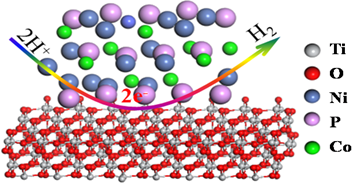
- , transmission electron microscopy, UV–vis diffuse reflection spectroscopy, X-ray photoelectron spectroscopy and scanning transmission electron microscopy/energy-dispersive X-ray spectroscopy were used to characterize the physiochemical properties of the samples. The electrochemical performance was investigated
- crystallographic texture, scanning electron microscopy (SEM, JSM-5900 LV, JEOV) for micro-morphology, transmission electron microscopy (TEM, Tecnai G2 F20 S-TWIN) for microstructure, UV–vis diffuse reflectance spectroscopy (UV2100) for photoabsorption properties, X-ray photoelectron spectroscopy (XPS, Escalab
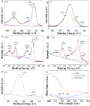
- NiCoP, there might be other phases of Ni, Co, or P. To further probe the surface chemical composition and valence states in the NixCoyP/TNAs, we conducted X-ray photoelectron spectroscopy measurements. In Figure 5a, TiO2 shows two peaks, the Ti 2p3/2 peak at 458.3 eV and Ti 2p1/2 at 464.1 eV, along with




Zn/F-doped tin oxide nanoparticles synthesized by laser pyrolysis: structural and optical properties
Beilstein J. Nanotechnol. 2019, 10, 9–21, doi:10.3762/bjnano.10.2
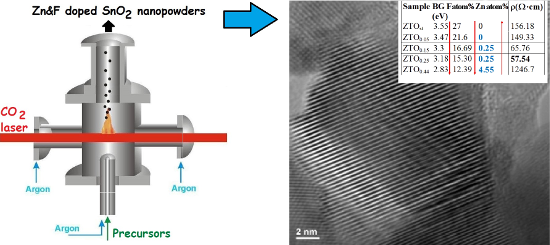
- structure. The main diffraction patterns of stannous fluoride (SnF2) were also identified and a reduction in intensity with increasing Zn percentage was evidenced. For the elemental composition estimation, energy dispersion X-ray spectroscopy (EDX) and X-ray photoelectron spectroscopy (XPS) measurements



A novel polyhedral oligomeric silsesquioxane-modified layered double hydroxide: preparation, characterization and properties
Beilstein J. Nanotechnol. 2018, 9, 3053–3068, doi:10.3762/bjnano.9.284
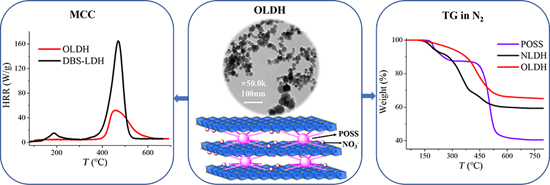
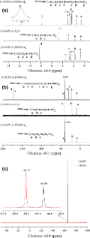
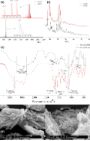
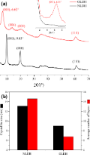
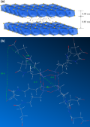
- via a one-step method and characterized by Fourier-transform infrared spectroscopy, X-ray photoelectron spectroscopy, X-ray diffraction, transmission electron microscopy, scanning electron microscopy, elemental analysis, thermogravimetric analysis, and microscale combustion calorimetry (MCC). Results
- /ionization-time of flight (MALDI-TOF) mass spectra were recorded with a Bruker Daltonics UltrafleXtreme using methanol as solvent and 2,5-dihydroxybenzoic acid as matrix. X-ray photoelectron spectroscopy (XPS) was carried out on a VG ESCALABMK II electron energy spectrometer using Mg Kα (1253.6 eV) as the X







Optimization of Mo/Cr bilayer back contacts for thin-film solar cells
Beilstein J. Nanotechnol. 2018, 9, 2700–2707, doi:10.3762/bjnano.9.252
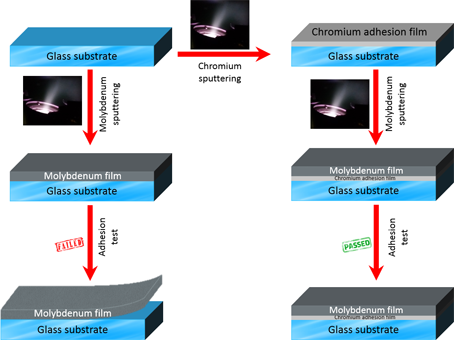
- scanning electron microscopy (SEM), atomic force microscopy (AFM), UV–vis–NIR spectroscopy and X-ray photoelectron spectroscopy. A careful analysis of the resulting Mo/Cr thin film across all the sputtering parameters led us to the best combination, optimizing both the electro-optical response of the Mo/Cr
- . Patterns were collected for 1 h at a step size of 0.01° from 10 to 85° 2θ at 1.3° per minute over the 2θ axis. X-ray photoelectron spectroscopy (XPS) was performed using a Kratos Axis Supra with Al Kα X-ray radiation (hν 1486.7 eV). High-resolution scans of the O 1s, C 1s, Na 1s, Cr 2p, Na 1s and Mo 3d


Impact of the anodization time on the photocatalytic activity of TiO2 nanotubes
Beilstein J. Nanotechnol. 2018, 9, 2628–2643, doi:10.3762/bjnano.9.244
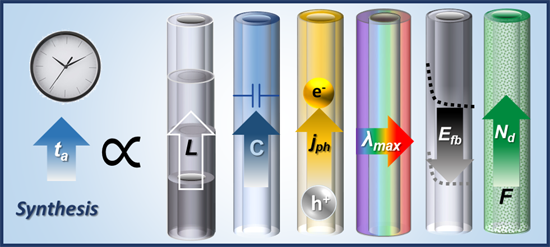
- measured at a laser power of 2.5 mW/cm2 and a slit width of 25 μm. X-ray photoelectron spectroscopy (XPS) was used to complement the information of the surface chemistry with a Thermo Scientific instrument (model K-Alpha + surface analysis). Electrochemical and photo-electrochemical characterization The


Au–Si plasmonic platforms: synthesis, structure and FDTD simulations
Beilstein J. Nanotechnol. 2018, 9, 2599–2608, doi:10.3762/bjnano.9.241
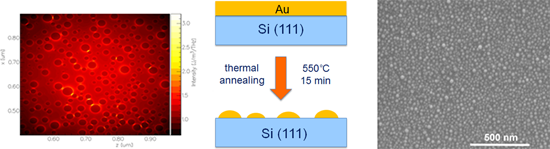
- the obtained nanostructures and valence states of Au was measured using X-ray photoelectron spectroscopy (XPS) with an Omicron NanoTechnology spectrometer with 128-channel collector. XPS measurements were performed at room temperature under ultra-high vacuum conditions, below 1.1 × 10⁻⁸ mbar. The



Phosphorus monolayer doping (MLD) of silicon on insulator (SOI) substrates
Beilstein J. Nanotechnol. 2018, 9, 2106–2113, doi:10.3762/bjnano.9.199
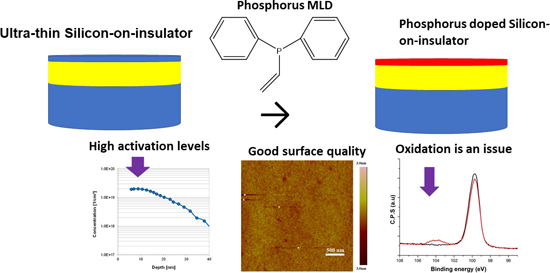
- under neutral conditions. Controlled-voltage etching was carried out with step widths of 2–5 nm. Secondary ion mass spectrometry data was acquired on a Phi Adept 1010 using a 0.5–1.0 keV Cs+ bombardment with negative ion detection. X-ray photoelectron spectroscopy XPS spectra were acquired on an Oxford
- variation of the molecule concentration during functionalization. A 50 nm sputtered SiO2 cap and annealing at 1050 °C for 5 s was used for all samples. X-ray photoelectron spectroscopy (XPS) study showing that there is a degree of surface oxidation after functionalization procedure even when carried out




Metal-free catalysis based on nitrogen-doped carbon nanomaterials: a photoelectron spectroscopy point of view
Beilstein J. Nanotechnol. 2018, 9, 2015–2031, doi:10.3762/bjnano.9.191
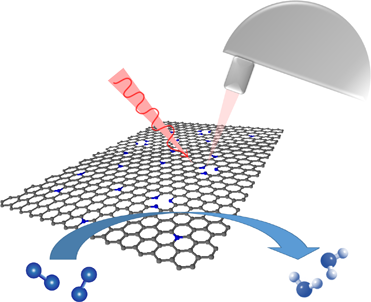
- literature on the catalytic performance of nitrogen-doped carbon nanomaterials is vast. However, there are only few research groups that performed detailed X-ray photoelectron spectroscopy measurements on their samples. In the already mentioned work by Qu et al. [20], one of the first reports on the




Defect formation in multiwalled carbon nanotubes under low-energy He and Ne ion irradiation
Beilstein J. Nanotechnol. 2018, 9, 1951–1963, doi:10.3762/bjnano.9.186
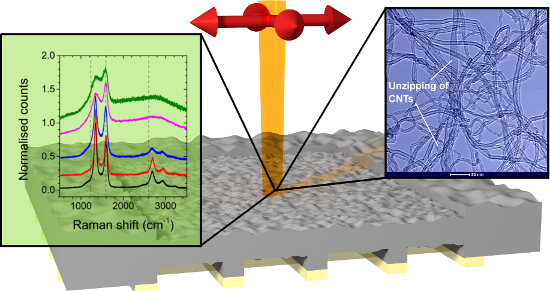
- directly related to the number of defects in CNTs [30], or X-ray photoelectron spectroscopy (XPS) which provides some information on the chemical environment of the carbon atoms [31]. In this context, it is to be noted that helium ion microscopy (HIM) has received increasing attention recently as a high



Synthesis of a MnO2/Fe3O4/diatomite nanocomposite as an efficient heterogeneous Fenton-like catalyst for methylene blue degradation
Beilstein J. Nanotechnol. 2018, 9, 1940–1950, doi:10.3762/bjnano.9.185
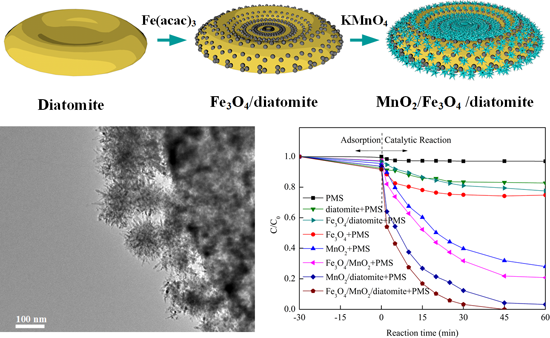
- Fourier transform infrared spectroscopy (FTIR) using a Nicolet Nexus 670 spectrometer. The morphology of samples was observed with a TESCAN MIRA3 LMU scanning electron microscope (SEM) and a JEOL JEM-1200EX transmission electron microscope (TEM). The X-ray photoelectron spectroscopy (XPS) measurements


Synthesis of rare-earth metal and rare-earth metal-fluoride nanoparticles in ionic liquids and propylene carbonate
Beilstein J. Nanotechnol. 2018, 9, 1881–1894, doi:10.3762/bjnano.9.180
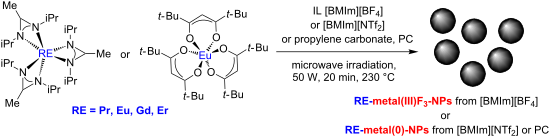
- IL [BMIm][BF4] for RE = Pr, Eu, Gd and Er. The crystalline phases and the absence of significant oxide impurities in RE-NPs and REF3-NPs were verified by powder X-ray diffraction (PXRD), selected area electron diffraction (SAED) and high-resolution X-ray photoelectron spectroscopy (XPS). The size
- not done, because matching of the F Kα1 binding energy against the Lα1 or Lβ1 binding energies for Eu, Gd and Er is not very accurate. The measured oxidation state 3+ of the rare-earth metals in the fluorides was corroborated by high-resolution X-ray photoelectron spectroscopy (HR-XPS) (Figure 4 and
- powder X-ray diffraction (PXRD), selected area electron diffraction (SAED) and high-resolution X-ray photoelectron spectroscopy (HR-XPS). To the best of our knowledge, there have been so far no reports on the synthesis of non-oxidized nanoparticles of any rare-earth element by soft-wet chemical routes


A visible-light-controlled platform for prolonged drug release based on Ag-doped TiO2 nanotubes with a hydrophobic layer
Beilstein J. Nanotechnol. 2018, 9, 1793–1801, doi:10.3762/bjnano.9.170
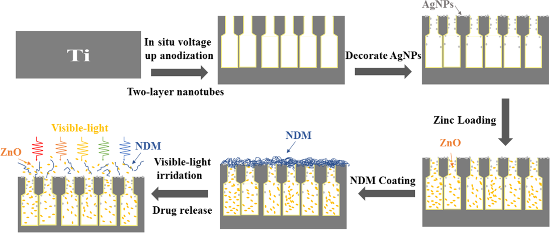
- + and the NDM hydrophobic layer was verified by SEM and EDS; the results are shown in Figure 3. Furthermore, X-ray photoelectron spectroscopy (XPS) was employed to analyze the chemical state of the coating layer of Ag-TNTs and Zn-Ag-TNTs shown in Figure 4. Figure 3a,b clearly demonstrates that some




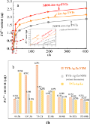

SO2 gas adsorption on carbon nanomaterials: a comparative study
Beilstein J. Nanotechnol. 2018, 9, 1782–1792, doi:10.3762/bjnano.9.169

- at 20 kV. X-ray photoelectron spectroscopy (XPS) measurements were performed using a K-Alpha XPS spectrometer (ThermoFisher Scientific, East Grinstead, UK). Data acquisition and processing using the Thermo Avantage software is described elsewhere [58]. All samples were analyzed using a microfocused


Uniform cobalt nanoparticles embedded in hexagonal mesoporous nanoplates as a magnetically separable, recyclable adsorbent
Beilstein J. Nanotechnol. 2018, 9, 1770–1781, doi:10.3762/bjnano.9.168
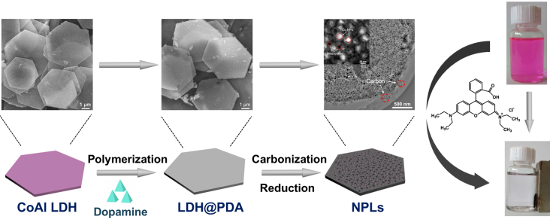
- adsorption spectra were recorded on a UV-2550 (Shimadzu, Japan) instrument. X-ray photoelectron spectroscopy (XPS) was conducted on a PHA-5400 (SPECS, America) spectrometer. Raman spectra were performed on an In-Via Raman spectroscopy system (Renishaw, England) with excitation laser wavelengths of 532 nm


Cryochemical synthesis of ultrasmall, highly crystalline, nanostructured metal oxides and salts
Beilstein J. Nanotechnol. 2018, 9, 1755–1763, doi:10.3762/bjnano.9.166
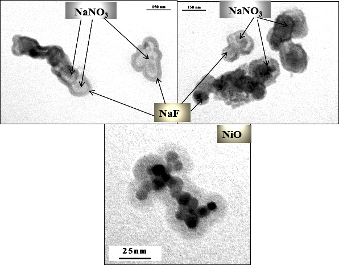
- atomic emission spectrometer (ICP-MS, Optima-5300). It was shown that the content of residual carbon and nitrogen in the powders did not exceed 0.08 and 0.07 wt %, respectively. The NiO nanopowder was characterized by X-ray photoelectron spectroscopy (XPS, PHI5500 Versa Probe II) with a monochromatic Al


Toward the use of CVD-grown MoS2 nanosheets as field-emission source
Beilstein J. Nanotechnol. 2018, 9, 1686–1694, doi:10.3762/bjnano.9.160
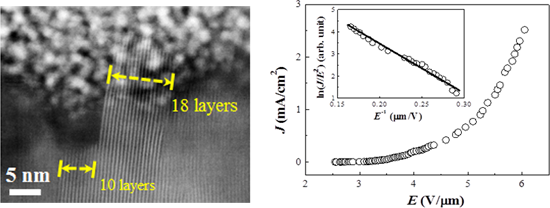
- deposited on SiO2 by sulfurization. The quality of the obtained NSs was analyzed by scanning electron and transmission electron microscopy, and Raman and X-ray photoelectron spectroscopy. The as-grown NSs were then successfully transferred to the substrates using a wet chemical etching method. The
- tip radius below 10 nm) with a resonant frequency of 312 kHz. To confirm the layer number of the NSs, micro-Raman spectroscopy was performed using a 473 nm laser at room temperature. X-ray photoelectron spectroscopy (XPS) measurements were performed using a Thermo Fisher Scientific K-alpha



Nitrogen-doped carbon nanotubes coated with zinc oxide nanoparticles as sulfur encapsulator for high-performance lithium/sulfur batteries
Beilstein J. Nanotechnol. 2018, 9, 1677–1685, doi:10.3762/bjnano.9.159
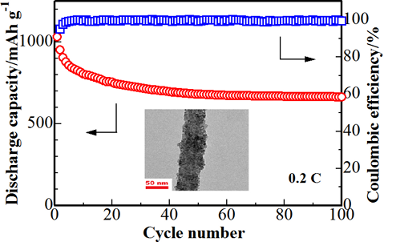
- mAh·g−1 at a charge/discharge rate of 0.2C and maintained a reversible capacity of 665 mAh·g−1 after 100 cycles. The coulombic efficiency of the cathode remains unchanged above 99%, showing stable cycling performance. X-ray photoelectron spectroscopy analysis confirmed the formation of S–Zn and S–O
- a strong bonding capacity for S. This will reduce the S losses to the electrolyte, and thus improve the cycling performance of the Li/S battery. In fact, the S–Zn and S–O bonds were confirmed by X-ray photoelectron spectroscopy (XPS) of the as-obtained S/ZnO@NCNT composite (Figure 5). In the S 2p
- characterization Powder X-ray diffraction (XRD, SmartLab, Rigaku Corporation) with Cu Ka radiation was used to analyze the crystal structure of the S/ZnO@NCNT sample. The chemical status and elemental compositions of the sample were investigated by X-ray photoelectron spectroscopy (XPS, Shimadzu Axis Ultra


Sulfur-, nitrogen- and platinum-doped titania thin films with high catalytic efficiency under visible-light illumination
Beilstein J. Nanotechnol. 2018, 9, 1629–1640, doi:10.3762/bjnano.9.155
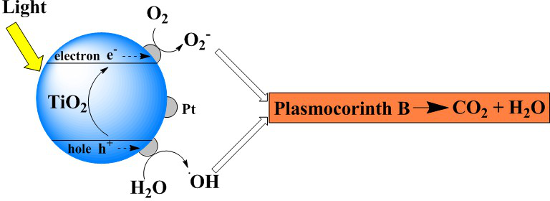
- dispersions [45]. The prepared samples were analyzed using thermogravimetric analysis–differential scanning calorimetry–mass spectrometry (TGA-DSC-MS), X-ray diffraction spectroscopy (XRD), specific surface area measurements via Brunauer–Emmett–Teller method (BET), X-ray photoelectron spectroscopy (XPS
- width (band gap is 3.44 eV for REF, 3.16 eV for Urea_15 and 2.81 eV for Thiourea_15). X-ray photoelectron spectroscopy XPS measurements were performed on selected samples to determine the amount of dopant present and the oxidation states. XPS spectra for selected samples are presented in Figure 5. The





