


Search results
Search for "anisotropic" in Full Text gives 246 result(s) in Beilstein Journal of Nanotechnology. Showing first 200.
Charge transfer from and to manganese phthalocyanine: bulk materials and interfaces
Beilstein J. Nanotechnol. 2017, 8, 1601–1615, doi:10.3762/bjnano.8.160
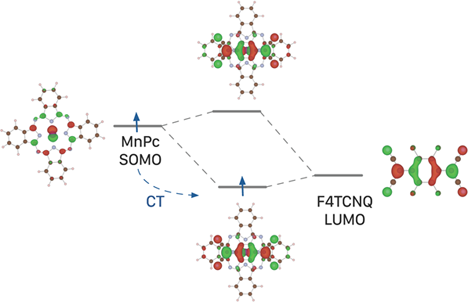
- excitations into the Co orbital [130]. For thin F16CoPc films deposited onto MnPc we observe considerably different spectra. Features that are characteristic for pure F16CoPc disappear while new structures show up around 780 eV, which are still anisotropic. This provides clear evidence that there is a


Luminescent supramolecular hydrogels from a tripeptide and nitrogen-doped carbon nanodots
Beilstein J. Nanotechnol. 2017, 8, 1553–1562, doi:10.3762/bjnano.8.157
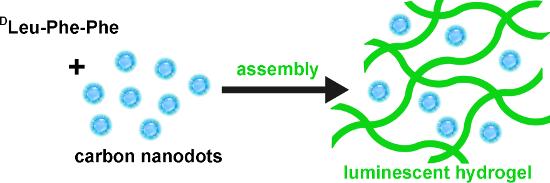
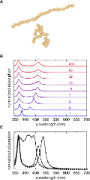
- wide distribution ranging from individual fibrils to thick bundles that grow in thickness over time [25]. The TEM imaging performed in the present study confirmed the presence of the anisotropic structures in all cases, with no significant difference in individual fibril diameter upon addition of NCNDs


Spin-chemistry concepts for spintronics scientists
Beilstein J. Nanotechnol. 2017, 8, 1427–1445, doi:10.3762/bjnano.8.143
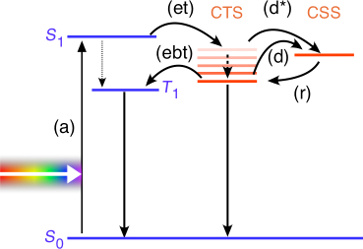
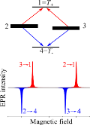
- , however, such states are mixed by the anisotropic parts of the HFCs, which thus become relevant as well as the electron–electron dipolar coupling. In liquids anisotropic interactions are averaged out by molecular motion. To simplify the description, it is common to present the spin state of SCRPs using a
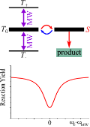
- reaction yield on the field strength, but also on the molecular orientation [91], for instance due to the anisotropy of the hyperfine interaction. The orientation dependence is of importance in solids, since in liquids molecules usually tumble so fast that anisotropic spin interactions are averaged out and



Two-dimensional silicon and carbon monochalcogenides with the structure of phosphorene
Beilstein J. Nanotechnol. 2017, 8, 1338–1344, doi:10.3762/bjnano.8.135
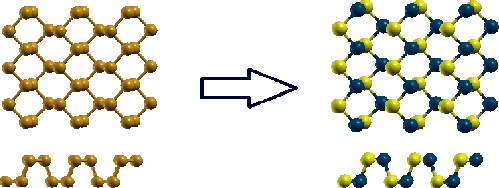
- materials. For example, it was shown that SnSe and GeSe phosphorene-like monochalcogenides are characterized by an anisotropic spin splitting of energy bands, leading to potential applications involving directionally dependent spin transport [22]. In [21] it was suggested that in phosphorene-like SnS, SnSe


AgCl-doped CdSe quantum dots with near-IR photoluminescence
Beilstein J. Nanotechnol. 2017, 8, 1156–1166, doi:10.3762/bjnano.8.117
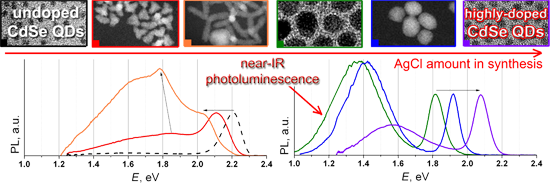
- . Halide ions have their own hole traps [26], which can reduce the energy of PL. They also play an important role in the surface passivation, which can lead to higher QYs and result in anisotropic growth of nanoparticles [27]. Herein, we explore the combined influence of both Ag and Cl ions in the modified
- amount of AgCl results in the formation of anisotropic particles with tetrapod-like shape and XRD patterns that are still characteristic of cubic ZB structure (Figure 1b). Further increase of AgCl content in synthesis causes the formation of tetrapods (TPs) in samples AgCl_4 (Figure 1c) and AgCl_8 and


Near-field surface plasmon field enhancement induced by rippled surfaces
Beilstein J. Nanotechnol. 2017, 8, 956–967, doi:10.3762/bjnano.8.97
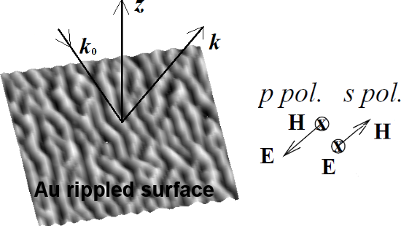
- considered here is composed of the interplay of patterns made of grooves, hills and valleys showing some degree of anisotropy. Alignment effects induced, for example, by the anisotropic ion bombardment can in fact take place, leading to the occurrence of one preferential direction. The surface plasmon


Recombinant DNA technology and click chemistry: a powerful combination for generating a hybrid elastin-like-statherin hydrogel to control calcium phosphate mineralization
Beilstein J. Nanotechnol. 2017, 8, 772–783, doi:10.3762/bjnano.8.80
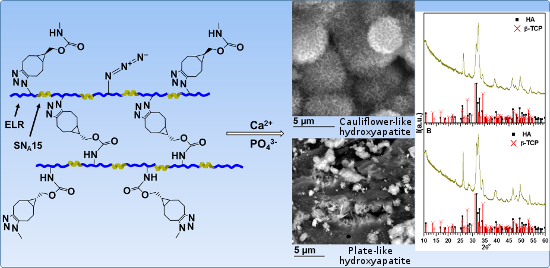
- calcium phosphate (ACP) phase [9][12][13] remains a challenge due to the fast nucleation, aggregation and subsequent anisotropic growth of the crystal faces. Biomineralization-inspired “soft chemistry” routes provide simple and often rather cheap protocols for the synthesis of complex CP-based hybrid



Selective detection of Mg2+ ions via enhanced fluorescence emission using Au–DNA nanocomposites
Beilstein J. Nanotechnol. 2017, 8, 762–771, doi:10.3762/bjnano.8.79
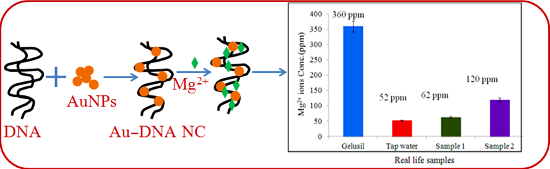
- show any band in this region as seen in Figure 1a. The anisotropic Au nanorods (AuNRs) also displayed a red shift in the transverse and longitudinal bands after DNA addition, as shown in Figure 1b [22][23][24]. The shift in λmax was 13 nm and 28 nm for transversal and longitudinal peaks, respectively




Silicon microgrooves for contact guidance of human aortic endothelial cells
Beilstein J. Nanotechnol. 2017, 8, 675–681, doi:10.3762/bjnano.8.72
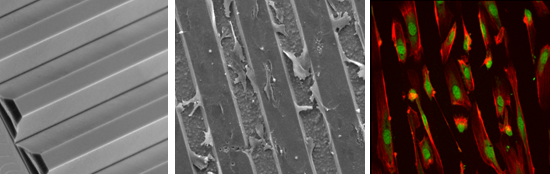
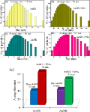
- -defined topographical and chemical cues to assess cell micropatterning [12][13][14][15][16]. Some of these approaches are based on photolithography and reactive ion etching that in some cases are followed by anisotropic etching [17]. A simple and effective geometry previously described, involves line
- microscale features. Experimental Fabrication of grooved silicon substrates Groove samples were prepared on p-type silicon(100) wafers with a resistivity of 1–5 Ω·cm. The wafers were thermally oxidized at 1000 °C for 15 min in order to grow a thin SiO2 layer that will act as a mask in the anisotropic


Modeling of the growth of GaAs–AlGaAs core–shell nanowires
Beilstein J. Nanotechnol. 2017, 8, 506–513, doi:10.3762/bjnano.8.54
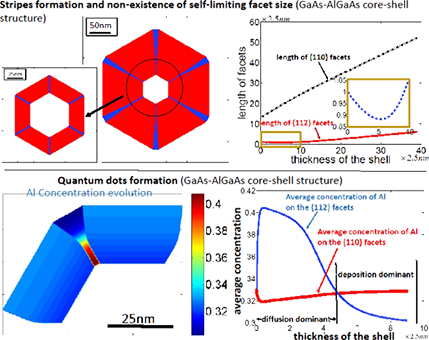
- concentrations give a complete system for the evolution of morphology and surface concentration. A derivation of the model on faceted surfaces with anisotropic surface energy density and numerical simulation details can be found in [8]. Similar models on smooth surfaces with isotropic surface energy density were


Formation and shape-control of hierarchical cobalt nanostructures using quaternary ammonium salts in aqueous media
Beilstein J. Nanotechnol. 2017, 8, 494–505, doi:10.3762/bjnano.8.53
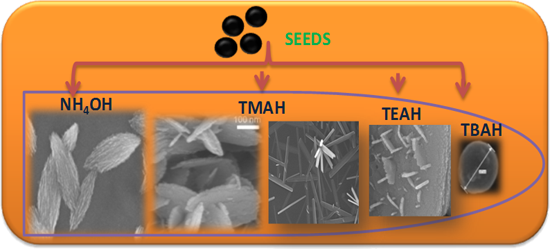
- is not observed in other ferromagnetic materials such as nickel and iron. Synthesizing anisotropic and hierarchical nanostructures of cobalt is an effective strategy for tuning its electronic, magnetic and crystal properties. The interest in these nanostructures lies in comprehending the physical and
- lattice arrangement in an anisotropic dendritic cobalt nanocrystal, via adsorption and chemical catalytic oxidation, increases the efficacy for sewage water treatment [12][13] compared to its spherical counterparts. In addition to the catalytic activity of cobalt, its magnetic characteristics are also
- extended to obtain other anisotropic shapes formed by using various quaternary ammonium compounds. The quaternary ammonium salts used here are also commonly used, in their pure form as ionic liquids, as solvents [28]. In this form they exhibit structures of high directionality and were recently used as


Diffusion of dilute gas in arrays of randomly distributed, vertically aligned, high-aspect-ratio cylinders
Beilstein J. Nanotechnol. 2017, 8, 64–73, doi:10.3762/bjnano.8.7
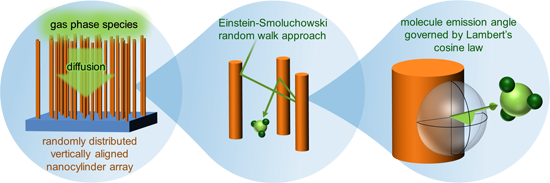
- direction. Laterally, the diffusion is two-dimensional (k = 2). Therefore it is equal to which is half the value of the longitudinal one, and, effectively, the diffusion is anisotropic. The anisotropic diffusion is modelled with the three-dimensional diffusion equation where t is time, is the gradient


Intercalation and structural aspects of macroRAFT agents into MgAl layered double hydroxides
Beilstein J. Nanotechnol. 2016, 7, 2000–2012, doi:10.3762/bjnano.7.191
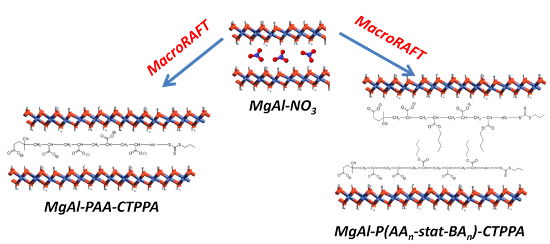
- -Voigt function was chosen as profile function [55]. The background was refined by adjusting the height of preselected points for linear interpolation modeled and the spherical harmonics correction for an anisotropic peak broadening was applied. Afterwards, the hydroxide part of the structure was entered


Precise in situ etch depth control of multilayered III−V semiconductor samples with reflectance anisotropy spectroscopy (RAS) equipment
Beilstein J. Nanotechnol. 2016, 7, 1783–1793, doi:10.3762/bjnano.7.171
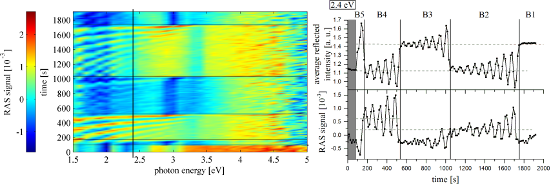
- -etching is an essential step of many lithographic processes, e.g., in semiconductor device fabrication, and offers several advantages over wet-etching as for instance the opportunity to achieve anisotropic etching and vertical etch flanks [10][11]. As the requirements for accuracy in microfabrication


Morphology of SiO2 films as a key factor in alignment of liquid crystals with negative dielectric anisotropy
Beilstein J. Nanotechnol. 2016, 7, 1743–1748, doi:10.3762/bjnano.7.167
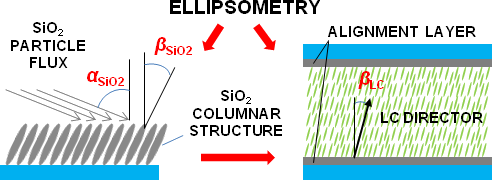
- account birefringence while Gospodyn et al. [18] studied anisotropic refractive index as well. However, information on the index ellipsoid orientation of obliquely evaporated SiO2 films is still missing. The connection between SiO2 column tilt and pretilt of LCs is not clarified yet. Most papers focused
- , and Jps are the corresponding elements of the matrices with rpp, rss, rps, rsp (tpp, tss, tps, tsp) representing the reflection (transmission) coefficients for p-, s-, and cross-polarizations, respectively. GE is a technique that measures thickness and dielectric constants of anisotropic thin films
- system, whose coordinates (x',y',z') are chosen with the y' axis normal to the incidence plane, and the z' axis normal to the sample plane. The second one is the sample reference system, whose coordinates (x,y,z) diagonalize the anisotropic permittivity tensor. These two systems are related to each other


Effect of tetramethylammonium hydroxide/isopropyl alcohol wet etching on geometry and surface roughness of silicon nanowires fabricated by AFM lithography
Beilstein J. Nanotechnol. 2016, 7, 1461–1470, doi:10.3762/bjnano.7.138
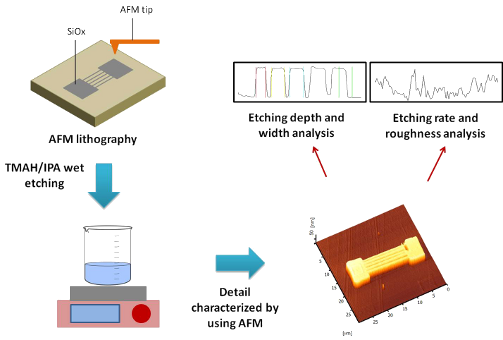
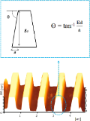
- substrate itself. Wet etching can be either isotropic or anisotropic, depending on the silicon wafer orientation and the type of etchant being used [5][6]. In isotropic etching, the etchant removes the material uniformly in all directions [7], whereas in anisotropic etching, the material is removed
- uniformly in the vertical direction only. Anisotropic wet etching is mostly used to fabricate simple microstructures and nanostructures on a single crystal SOI wafer [8]. Tetramethylammonium hydroxide (TMAH) [9][10][11], potassium hydroxide (KOH) [12], sodium hydroxide (NaOH) [13], ethylenediamine
- potassium hydroxide solution that has become a popular anisotropic etchant because of its good etching performance and lack of toxicity. However, KOH is not CMOS compatible because of the mobile K+ ion contamination [16]. By contrast, TMAH has attracted the interest of researchers because of its simple




Tunable longitudinal modes in extended silver nanoparticle assemblies
Beilstein J. Nanotechnol. 2016, 7, 1219–1228, doi:10.3762/bjnano.7.113
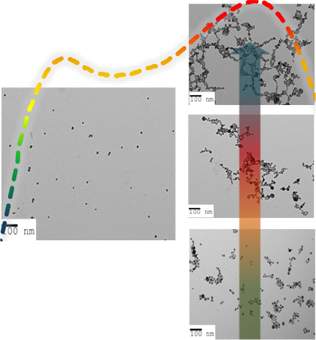
- with tunable properties are of great interest for a wide range of applications. The self-assembly of simple nanoparticle building blocks could provide an inexpensive means to achieve this goal. Here, we generate extended anisotropic silver nanoparticle assemblies in solution using controlled amounts of
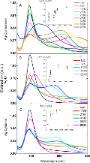
- these unprecedented anisotropic structures. Our results show a correlation between the chain nature of the assembly and the generation of spectral anisotropy. Deuterating the ligand further enhances the anisotropic signal by triggering more compact aggregates and reveals the importance of solvent
- Raman spectroscopic enhancement [22]. Although AgNPs have been assembled into higher-order structures via multiple strategies [23][24][25][26], none of the resulting structures exhibit highly anisotropic spectral signatures, i.e., well-resolved isotropic/axial and anisotropic/longitudinal SPR bands that


Reasons and remedies for the agglomeration of multilayered graphene and carbon nanotubes in polymers
Beilstein J. Nanotechnol. 2016, 7, 1174–1196, doi:10.3762/bjnano.7.109
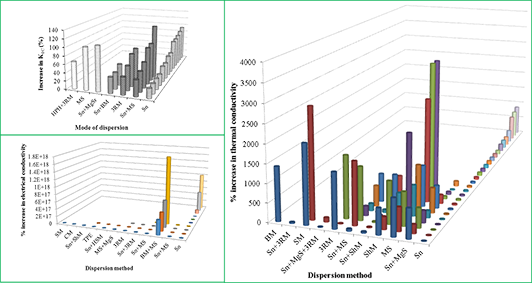
- property changes anisotropic [135]. The enhancement is then maximum along the orientation axis of the filler and minimum in the transverse direction [2]. There are two factors that govern the degree of CNT alignment in the polymer matrix: (1) the diameter of CNTs, and (2) the CNT content. Smaller diameters
- and lower content improves the CNT alignment [40]. The fiber alignment can be improved by fiber spinning. It yields anisotropic composite properties, but an improvement of the mechanical properties of the CNT–polymer nanocomposites was shown [35]. Haggenmuller et al. used fiber spinning to align SWNTs
- , the manufacturing of nanocomposites should be carried out at the lowest possible temperature. Elevated temperatures lower the viscosity, which results in CNT scattering. CNTs can be aligned magnetically because of their anisotropic magnetic susceptibility [134]. Magnetic fields may be applied during


An ellipsometric approach towards the description of inhomogeneous polymer-based Langmuir layers
Beilstein J. Nanotechnol. 2016, 7, 1156–1165, doi:10.3762/bjnano.7.107
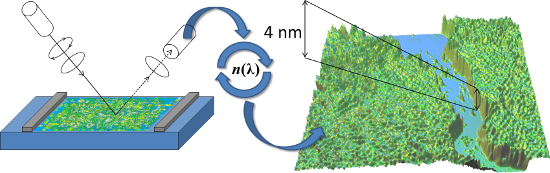
- , inhomogeneous or anisotropic. Considering this, the overall complex reflection coefficients are measured as a function of the angle of incidence, φ, and wavelength, λ, as where NSubstrate are the optical constants of the substrate, nAmbient is the refractive index of the ambient medium, and nlayer, klayer and


Phenalenyl-based mononuclear dysprosium complexes
Beilstein J. Nanotechnol. 2016, 7, 995–1009, doi:10.3762/bjnano.7.92
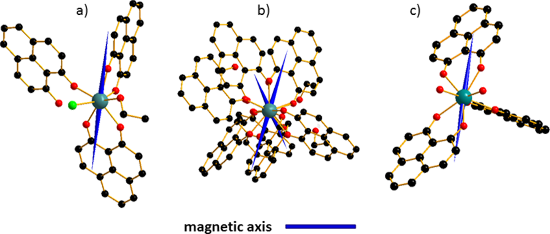
- -based molecules could potentially be utilized in building molecular-scale quantum spin memory and processors. Taking all these points into consideration, one idea would be to step further and to introduce anisotropic lanthanide ions into these phenalenyl-based complexes with the focus on their
- work is currently in progress. During the submission of this work, a few interesting Dy(III)-SIMs with D5h symmetry have been reported [60][61][62]. The three examples all show a fascinating anisotropic barrier over 500 K as a result of the higher order symmetry around Dy(III) ion. This is related to
- = 0.71073 Å). Structure solution and refinement against F2 were carried out using shelxs and shelxl software. Refinement was performed with anisotropic temperature factors for all non-hydrogen atoms (disordered atoms were refined isotropically); hydrogen atoms were calculated on idealized positions


Large-scale fabrication of achiral plasmonic metamaterials with giant chiroptical response
Beilstein J. Nanotechnol. 2016, 7, 914–925, doi:10.3762/bjnano.7.83
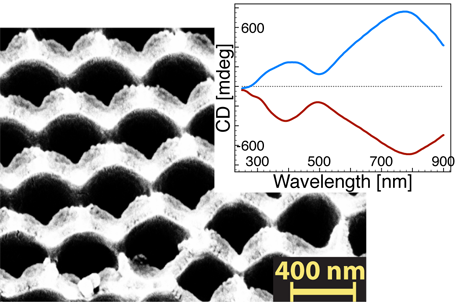
- factor [10] (ΔΔλ) of the shifts of the right-handed spectrum compared to the left-handed spectrum (ΔΔλ = Δλright − Δλleft) is an indication of an anisotropic adsorption (Table 3) [10]. Whereas a perfect isotropic adsorption would result in a ΔΔλ value of zero. Interestingly, the adsorption of the two

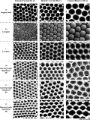


![[Graphic 2]](/bjnano/content/inline/2190-4286-7-83-i2.png?max-width=637&scale=1.18182) , of incident light with respect to the ECM structures.
, of incident light with respect to the ECM structures.



Reorientation of single-wall carbon nanotubes in negative anisotropy liquid crystals by an electric field
Beilstein J. Nanotechnol. 2016, 7, 825–833, doi:10.3762/bjnano.7.74
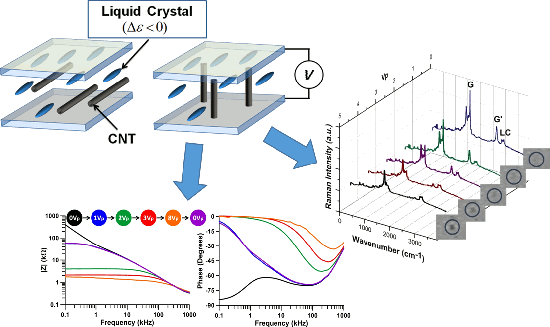
- , Universidad Carlos III de Madrid, Butarque 15, Leganés, 28911, Spain, CNR-ISASI and Physics Department, University of Naples Federico II, Via Cinthia Monte S. Angelo, 80126, Naples, Italy 10.3762/bjnano.7.74 Abstract Single-wall carbon nanotubes (SWCNT) are anisotropic nanoparticles that can cause
- ; Introduction Single-wall carbon nanotubes (SWCNTs) are highly anisotropic nanoparticles (NPs) formed from a single, wrapped graphene sheet. SWCNTs may be metallic or semiconductive, depending on the rolling angle (chirality) and diameter [1]. The SWCNT one-dimensional structure leads to an anisotropic
- conductivity, where the charge transport is favored along the longitudinal axis [2]. Liquid crystals (LCs) are self-organized anisotropic fluids, well-known for their use in flat panel mobile, PC, and TV displays. Besides consumer electronic products, LCs are employed in many photonic devices such as spatial


Microscopic characterization of Fe nanoparticles formed on SrTiO3(001) and SrTiO3(110) surfaces
Beilstein J. Nanotechnol. 2016, 7, 817–824, doi:10.3762/bjnano.7.73
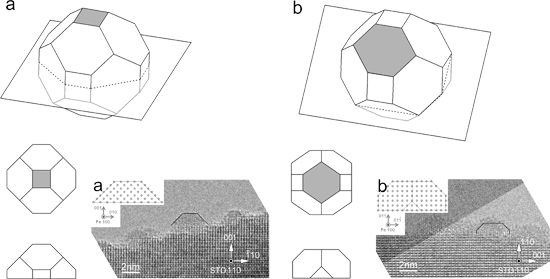
- be larger than the nanoparticle sizes observed here [56][57]. Although a more precise evaluation of kinetic factors and of the possibility of anisotropic growth should be made, it is not unreasonable to suppose that ideal nanoparticles have a simple Wulff shape. And nanoparticles with OR1 and OR2 can


Magnetic switching of nanoscale antidot lattices
Beilstein J. Nanotechnol. 2016, 7, 733–750, doi:10.3762/bjnano.7.65
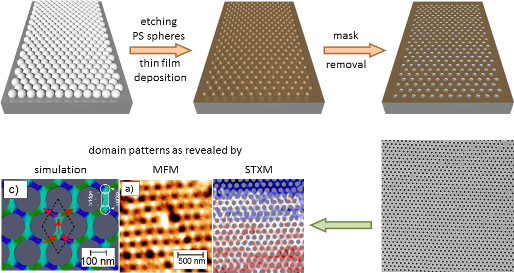
- application of micromagnetic simulations leads to a detailed understanding of the switching modes of specific sample geometries. We highlight that even anisotropic magnetoresistance curves can be simulated in good agreement with experiments. In the second part, we first focus on the detailed discussion of the
- × 2 × 10 nm3) [28]. As will be shown later in connection with the anisotropic magnetoresistance (AMR) the major part of the total resistance arises from the 2.5 × 20 µm2 FIB-cut constriction. But still the continuous antidot film surrounding the channel influences the magnetic switching via dipolar
- <0.75 The intrinsic domain structure in antidot arrays always stands in close relation to the orientation of the antidot lattice. According to the hexagonal lattice of holes, we expect a 6-fold in-plane anisotropy. In this section, we investigate the anisotropic switching for a ratio d/a ≈ 0.5, i.e



Orientation of FePt nanoparticles on top of a-SiO2/Si(001), MgO(001) and sapphire(0001): effect of thermal treatments and influence of substrate and particle size
Beilstein J. Nanotechnol. 2016, 7, 591–604, doi:10.3762/bjnano.7.52
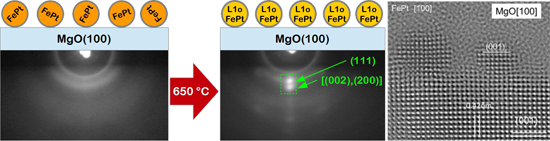
- films and oriented growth of nanoparticles (NPs) on single crystal supports are of general interest for improved physical and chemical properties especially of anisotropic materials. In the case of FePt, the main focus lies on its highly anisotropic magnetic behavior and its catalytic activity, both due
- desired L10 phase by an additional annealing step. Accompanying this structural transformation, one observes highly anisotropic magnetic properties leading to, e.g., huge coercive fields in the Tesla range [4][8][9][10][11]. While ultrathin FePt films usually exhibit large magnetic domains, the use of
- superstructure {001} and {011} peaks for L10-ordered FePt NPs (as compared to the disordered A1 structure) gives direct proof for the formation of the highly anisotropic L10 phase. Results and Discussion In the following first part we present a HRTEM study of a few FePt NPs on a MgO(001) substrate proving the





