Search results
Search for "bilayer" in Full Text gives 190 result(s) in Beilstein Journal of Nanotechnology.
Characterisation of thin films of graphene–surfactant composites produced through a novel semi-automated method
Beilstein J. Nanotechnol. 2016, 7, 209–219, doi:10.3762/bjnano.7.19
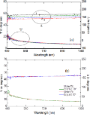
- composite films in the visible spectral range similar to that reported in [22][23]. The absorption peak of graphene reported earlier [22][23] at about 260 nm is outside the spectral range of our ellipsometric instrument (370–1000 nm). The example of ellipsometry data fitting for one PAH/graphene bilayer
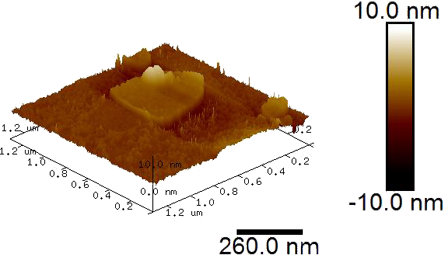
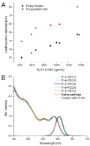
- deposited on Si is shown in Figure 9b with the dotted (fitting) lines almost perfectly reproducing the experimental spectra (solid lines). The thicknesses were found to be of 6.65, 9.3, and 10.88 nm for 1st, 2nd, and 3rd PAH/graphene bilayer, respectively. Although the d value of the first bilayer appeared
- 2.5 nm per PEI/graphene bilayer which was reported earlier. Conclusion A simple semi-automated technique for graphene production by aqueous sonochemical exfoliation of graphite in the presence of ionic surfactants, e.g., CTAB or SDS, was developed. Full automation could be potentially achieved by




Synthesis and applications of carbon nanomaterials for energy generation and storage
Beilstein J. Nanotechnol. 2016, 7, 149–196, doi:10.3762/bjnano.7.17
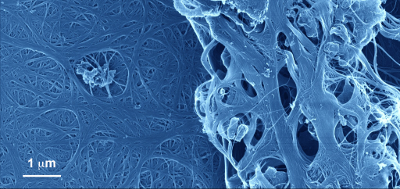
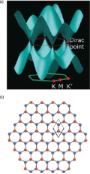
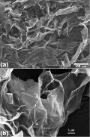
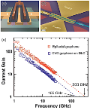
- quality. In fact, the graphene produced is mostly polycrystalline with aperiodic heptagon/pentagon pairs [143] or overlapped bilayer regions [144] at the grain boundaries (Figure 22b). It has also been demonstrated that the presence of grain boundaries can reduce the mechanical and electrical properties















Single pyrimidine discrimination during voltage-driven translocation of osmylated oligodeoxynucleotides via the α-hemolysin nanopore
Beilstein J. Nanotechnol. 2016, 7, 91–101, doi:10.3762/bjnano.7.11
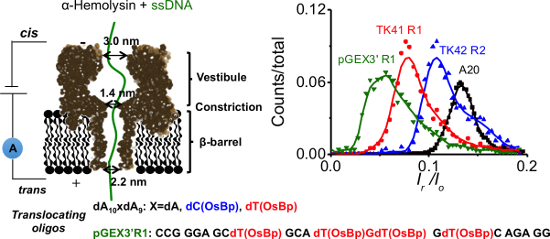
- Biological Laboratories in the monomer form of lyophilized power and dissolved in water at 1 mg/mL. 1,2-Diphytanoyl-sn-glycero-3-phosphocholine (DPhPC) was dissolved in decane at 10 mg/mL and used to form the bilayer. The bilayer was supported by a glass nanopore membrane (GNM), which was modified with a 2
- , University of Utah. The KCl solution was used as the electrolyte to fill the solution reservoir and the GNM capillary. A voltage was applied across the GNM between two Ag/AgCl electrodes placed inside and outside of the capillary. A lipid bilayer was deposited across the GNM orifice as indicated by a
- resistance increase from ca. 10 MΩ (associated with the open GNM) to ca. 100 GΩ. A pressure of 20 to 40 mmHg was applied to the inside of the GNM capillary using a syringe, allowing the lipid bilayer to be functional for the protein channel reconstitution. Next, 0.2 µL of α-HL monomer solution at 1 mg/mL was



Fabrication and characterization of novel multilayered structures by stereocomplexion of poly(D-lactic acid)/poly(L-lactic acid) and self-assembly of polyelectrolytes
Beilstein J. Nanotechnol. 2016, 7, 81–90, doi:10.3762/bjnano.7.10
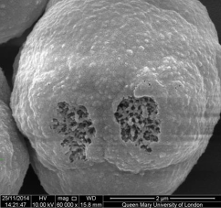
- in Figure 9b, the thickness of the PLL/(PDLA/PLLA)10 multilayer is approximately 100 nm. Hence, the thickness of each PDLA/PLLA bilayer is estimated to be 10 nm. Interestingly, the thickness of the PLA layers on the silicon substrate (see Ellipsiometry) was not as thick as that of the microcapsules
- adsorption steps (15 min in duration) of anionic PSS (2 mg/mL in 0.5 M NaCl) and cationic PAH (2 mg/ml in Milli-Q water) followed. After each adsorption step, three washings in Milli-Q water (1500 rpm for 1 min) were carried out. Once the four bilayer structures were deposited, one layer of PLL (5 mg/mL in


pH-Triggered release from surface-modified poly(lactic-co-glycolic acid) nanoparticles
Beilstein J. Nanotechnol. 2015, 6, 2504–2512, doi:10.3762/bjnano.6.260
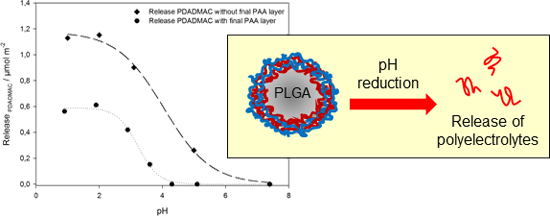
- taken up by endocytosis. During the process of endocytosis, nanoparticular drug carriers most often end up in endolysosomes with a reduced internal pH value. In order to provide improved accessibility of the drug to the whole cell, membrane destruction of the endolysosomal bilayer would be beneficial


Mapping bound plasmon propagation on a nanoscale stripe waveguide using quantum dots: influence of spacer layer thickness
Beilstein J. Nanotechnol. 2015, 6, 2046–2051, doi:10.3762/bjnano.6.208
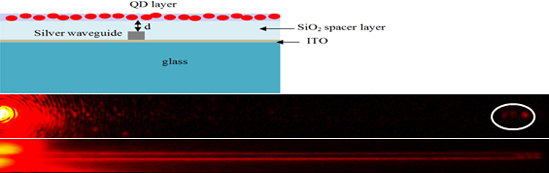
- , 750 nm wide with grating using electron beam lithography (EBL). Bilayer PMMA (950k A4 and 495k A4 PMMA from Microchem GmbH) was patterned using EBL and then developed for 30 seconds in MIBK:IPA developer solution. A silver film with 30 nm thickness was evaporated onto the resist using PVD 75 electron
- beam evaporator under 0.1 Å/s. Lift-off of the resist was achieved in an acetone bath. Stripes with length 20 µm were fabricated (Figure 2). When using bilayer PMMA in EBL, the substrate must be relatively conductive. We used ITO-coated glass substrate as a conductive substrate. The presence of the ITO



Distribution of Pd clusters on ultrathin, epitaxial TiOx films on Pt3Ti(111)
Beilstein J. Nanotechnol. 2015, 6, 2007–2014, doi:10.3762/bjnano.6.204
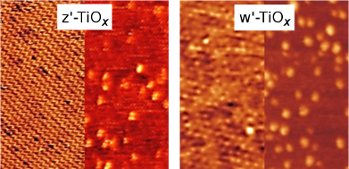
- obtained on the Pt3Ti(111) surface exhibits characteristic stripes of densely packed, Ti–O rows of bilayer thickness. These are separated 1.44 nm apart from each other with parallel trenches in between. The w'-TiOx phase consists of a hexagonal, oxygen-terminated, Ti–O bilayer, which shows similarities to
- photoelectron spectroscopy (XPS) measurements indicated the existence of an oxygen-terminated Ti–O bilayer [6][7]. Depending on the applied oxygen dose, the z'-TiOx phase covers different fractions of the crystal surface, ranging from small separated islands up to a nearly complete film covering the whole
- '-TiOx phase is the second stable titanium oxide phase that can be grown on the Pt3Ti(111) surface with oxygen doses higher than 200 L within a temperature window of 800–1100 K [6]. HREELS and XPS studies also indicated a Ti–O bilayer structure with oxygen termination as a basic structure element for


Enhancing the thermoelectric figure of merit in engineered graphene nanoribbons
Beilstein J. Nanotechnol. 2015, 6, 1176–1182, doi:10.3762/bjnano.6.119
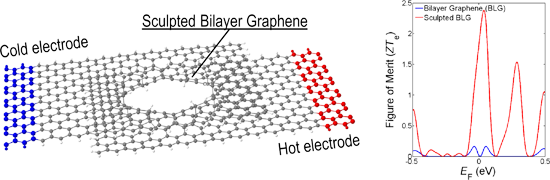
- . In monolayer graphene, this increases the electronic thermoelectric figure of merit ZTe from 0.01 to 0.5. The largest values of ZTe are found when a nanopore is introduced into bilayer graphene, such that the current flows from one layer to the other via the inner surface of the pore, for which
- ) in low dimensional materials [8]. In what follows we apply this approach to engineered graphene nanoribbons [9][10] and show that introducing nanopores into bilayer graphene [11], a room-temperature ZTe higher than 2 could be achieved. Computational methods The electrical conductance G(T), the
- investigating the thermoelectric properties of various forms of engineered graphene, obtained by sculpting nanopores in bilayer graphene and allowing the pore surface to reconstruct [9]. Pores in bilayer graphene are not only more stable than anti-dots in monolayer graphene, but should also be effective in


Pulmonary surfactant augments cytotoxicity of silica nanoparticles: Studies on an in vitro air–blood barrier model
Beilstein J. Nanotechnol. 2015, 6, 517–528, doi:10.3762/bjnano.6.54
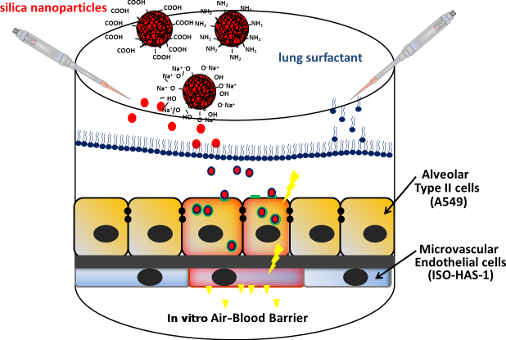
- (aSNPs) that they will be entirely coated with a phospholipid bilayer [7]. Consequently, an impaired cytotoxicity and transport/translocation to other organs may be perceived due to this surfactant coating. Several in vitro studies on aSNP toxicity have already been conducted using simple as well as


Tailoring the ligand shell for the control of cellular uptake and optical properties of nanocrystals
Beilstein J. Nanotechnol. 2015, 6, 232–242, doi:10.3762/bjnano.6.22
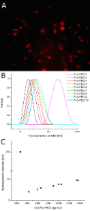
- -PEG nanocontainers a powerful tool for further in vivo experiments in future. Fluorescence microscopy image of vesicles from PI-b-PEG 1 in water, the bilayer was visualized using the hydrophobic dye Nile Red (A); Size distribution of the micelles build from PI-b-PEG 2 – PI-b-PEG 10 in water






Mammalian cell growth on gold nanoparticle-decorated substrates is influenced by the nanoparticle coating
Beilstein J. Nanotechnol. 2014, 5, 2479–2488, doi:10.3762/bjnano.5.257
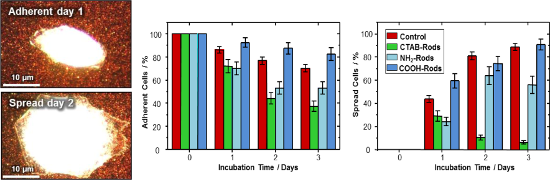
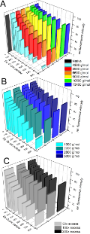
- division took place in the sample, which resulted in a confluent cell layer after seven days of incubation. In the micromotility assay, we found an impact of nanoparticle density (the number of particles available for one cell) on the cell behavior. Since CTAB nanorods are covered with a bilayer of the
- surfactant [31], the amount of CTAB exposed to the cells correlates with the particle density inducing cytotoxicity. For the live cell imaging assay, we replaced the cell medium for imaging and culturing, possibly reducing or eventually removing the CTAB bilayer during incubation, which could have resulted


Intake of silica nanoparticles by giant lipid vesicles: influence of particle size and thermodynamic membrane state
Beilstein J. Nanotechnol. 2014, 5, 2468–2478, doi:10.3762/bjnano.5.256
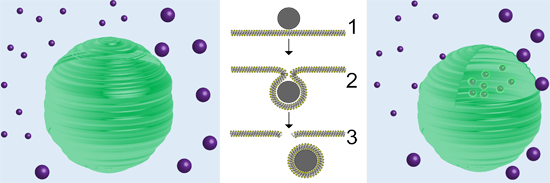
- particle and the membrane. As shown in [33], the interaction between a neutral (i.e., zwitterionic) lipid bilayer and negatively charged silica surface is repulsive in pure water but attractive in phosphate buffered saline. The authors also give a plausible theoretical explanation for this finding by
- inner and outer medium the GUVs sink down to the chamber bottom. Vesicles in the fluid state will show strong adhesion to the cover glass, rupture and form a solid supported bilayer (SLB) eventually. However, vesicles settling down on top of such a SLB show no significant adhesion and are used for the


Nanobioarchitectures based on chlorophyll photopigment, artificial lipid bilayers and carbon nanotubes
Beilstein J. Nanotechnol. 2014, 5, 2316–2325, doi:10.3762/bjnano.5.240
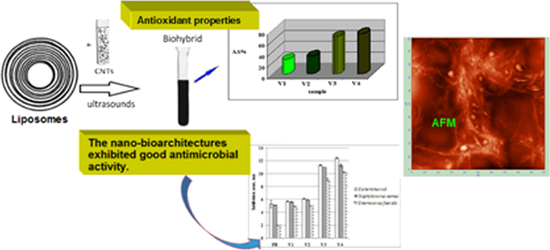
- biomimetic membranes (above 41 °C) exhibits low anisotropy and high fluorescence emission intensity due to an increase in the lipid bilayer mobility and hence the chlorophyll has the possibility to move and to minimize the energy transfer leading to fluorescence quenching. In the gel phase of the artificial


Two-dimensional and tubular structures of misfit compounds: Structural and electronic properties
Beilstein J. Nanotechnol. 2014, 5, 2171–2178, doi:10.3762/bjnano.5.226

- . Generally, Sn2+ can act as an acceptor if a stronger reducer is present. By comparing the standard potentials of the S2−/S and Sn/Sn2+ systems, it appears that this explanation is possible and is supported by the fact that in the SnS2–SnS bilayer, only the SnS2-sulfur atoms facing the SnS layer become


Carbon-based smart nanomaterials in biomedicine and neuroengineering
Beilstein J. Nanotechnol. 2014, 5, 1849–1863, doi:10.3762/bjnano.5.196
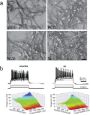
- the spontaneous extracellular electrical activity in a murine neuronal cell line, which yielded results in good agreement with recordings made by means of conventional MEAs (Figure 5). Single-spin NV-NDs embedded in an artificial lipid bilayer [136] and in a real cell membrane, in which there is a


Donor–acceptor graphene-based hybrid materials facilitating photo-induced electron-transfer reactions
Beilstein J. Nanotechnol. 2014, 5, 1580–1589, doi:10.3762/bjnano.5.170
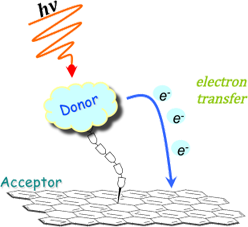
- graphene, in which the organic unit is tightly attached on the graphene network, is the method of choice for preparing novel donor–acceptor hybrid materials that can potentially facilitate photo-induced electron-transfer phenomena. Single-layer, bilayer and oligo-layer graphene sheets have been utilized to


Formation of CuxAu1−x phases by cold homogenization of Au/Cu nanocrystalline thin films
Beilstein J. Nanotechnol. 2014, 5, 1491–1500, doi:10.3762/bjnano.5.162
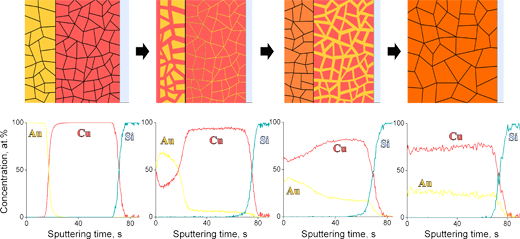
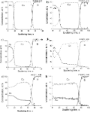
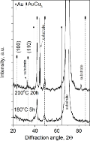
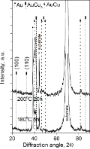
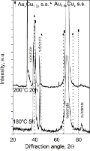
- larger in Au (of the order of 10−11 m/s) than in Cu (of the order of 10−13 m/s). Experimental Au/Cu nanocrystalline thin films were prepared by DC magnetron sputtering onto (001)-oriented Si wafers with native SiO2 layer. The following bilayer samples were deposited: Au(25nm)/Cu(50nm), Au(25nm)/Cu(25nm
- ) system a) as deposited sample and b) annealed samples. XRD θ–2θ patterns of Au(25nm)/Cu(12nm) annealed samples. Bright field (top view) TEM images of Au(10nm)/Cu(15nm) bilayer a) as deposited and c) after 1 h of heat treatment at 160 °C. The arrow indicates the area of formation of a new phase. Selected
- area electron diffraction patterns of Au(10nm)/Cu(15nm) bilayer b) as deposited and d) after 1 h of heat treatment at 160 °C. Dependence of the average concentration of elements on the annealing time at 150 °C in a) Au(25nm)/Cu(50nm), b) Au(25nm)/Cu(25nm) and c) Au(25nm)/Cu(12nm) systems. Calculated






Sublattice asymmetry of impurity doping in graphene: A review
Beilstein J. Nanotechnol. 2014, 5, 1210–1217, doi:10.3762/bjnano.5.133
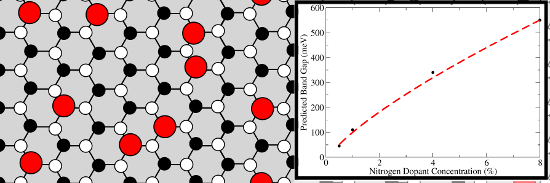
- more recent studies suggest that this could also be possible with other impurities [43]. Whilst it is known experimentally that molybdenum impurities exhibit same sublattice configurations in bilayer epitaxial graphene, the mechanism behind this is not currently understood [60]. Boron has been studied


Model systems for studying cell adhesion and biomimetic actin networks
Beilstein J. Nanotechnol. 2014, 5, 1193–1202, doi:10.3762/bjnano.5.131
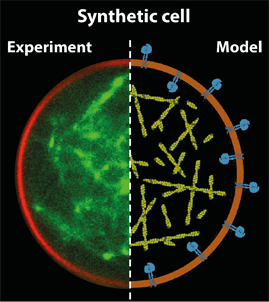
- actin networks and talin into model cells. Keywords: actin network; cell adhesion; giant unilamellar vesicle; integrin; lipid bilayer; synthetic cell; protein reconstitution; talin; Review Introduction Since Hooke first described a biological cell in 1665 tremendous progress has been made in
- found to quantify the binding energy of different integrin–ligand pairs under bioanalogue conditions [43]. This system was developed further to facilitate the mobility of the integrin receptors within the supported lipid bilayer. Thus, it was shown that integrin mobility controls the force-induced
- lipid bilayer, like the membrane of natural cells. With these attributes GUVs have gained increasing importance as bottom-up model systems in synthetic biology over the past years. GUVs can be used to study cellular functions and the interplay between various proteins, which are incorporated in the


Electron-beam induced deposition and autocatalytic decomposition of Co(CO)3NO
Beilstein J. Nanotechnol. 2014, 5, 1175–1185, doi:10.3762/bjnano.5.129
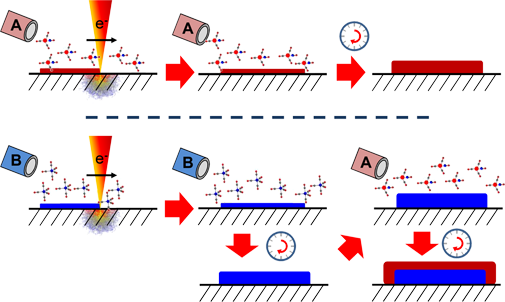
- bilayer and even multilayer nanostructures. Results and Discussion EBID plus autocatalytic growth EBID structures were deposited from Co(CO)3NO on native SiOx on Si(100) and 100 nm Si3N4 membranes, and on commercially available, thermal 300 nm SiO2 on Si(100). The beam energy was 15 keV at a beam current
- energies, a contribution of (25 ± 5)% of the Fe intensity at the Fe L3 edge is determined for the Co L3 edge, i.e., This correction was taken into account to determine the apparent thickness of the Co contribution in the CoOxNyCz/Fe bilayer. As the first step, the autocatalytic growth of the iron




Adsorption and oxidation of formaldehyde on a polycrystalline Pt film electrode: An in situ IR spectroscopy search for adsorbed reaction intermediates
Beilstein J. Nanotechnol. 2014, 5, 747–759, doi:10.3762/bjnano.5.87
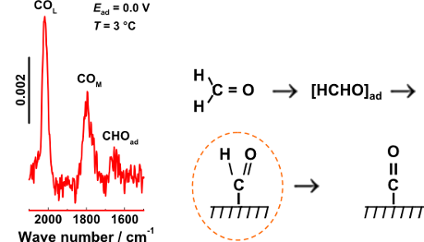
- (111) surface at 0.5 V (NHE) [51]. A recent detailed theoretical study on the stability, configuration and interconversion of formyl (CHO) and hydroxymethylidyne (COH) adsorbed on Pt(111) under a water bilayer suggested that CHOad is the only (meta-)stable form under these conditions, while the COHad
- configuration dissociates easily to COad + H [52]. For CHOad on a bridge site under a water bilayer, only a single C–O bond vibration was calculated at wave numbers of 1250 cm−1 [52]. For an adsorption potential of 0.4 V (Figure 2b), the initial IR spectra exhibit distinct differences compared to the spectra


Analytical development and optimization of a graphene–solution interface capacitance model
Beilstein J. Nanotechnol. 2014, 5, 603–609, doi:10.3762/bjnano.5.71
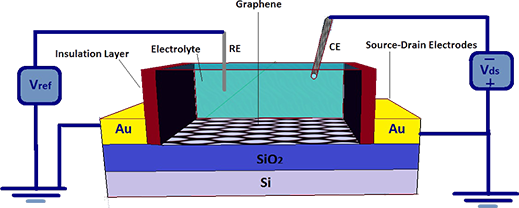
- the measurement of quantum capacitance of bilayer graphene in an ionic liquid electrolyte. The aim of this study is to evaluate the quantum capacitance of single layer graphene sheet as a function of voltage, and validate theoretical predictions with the experimental results [26]. Results and




Towards precise defect control in layered oxide structures by using oxide molecular beam epitaxy
Beilstein J. Nanotechnol. 2014, 5, 596–602, doi:10.3762/bjnano.5.70
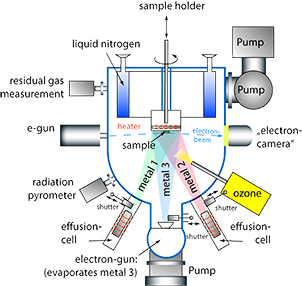
- ) oscillations observed at low grazing angle (right inset). No XRR modulations deriving from the bilayer structure are expected, given the similar density of the constituent layers (7.22 g/cm3 for LCO and 7.14 g/cm3 for LNO). A crucial parameter for the growth of complex oxides is the system oxidation power. The
- substrate. XRD θ–2θ scan of a bilayer heterostructure La2NiO4 (diamonds)–La2CuO4 (circles) on a STO(100) substrate (S). The thickness of the La2NiO4 and La2CuO4 is 26 nm and 40 nm respectively, according to the number of RHEED oscillations recorded during the growth. In the left inset: magnification of the


In vitro toxicity and bioimaging studies of gold nanorods formulations coated with biofunctional thiol-PEG molecules and Pluronic block copolymers
Beilstein J. Nanotechnol. 2014, 5, 546–553, doi:10.3762/bjnano.5.64
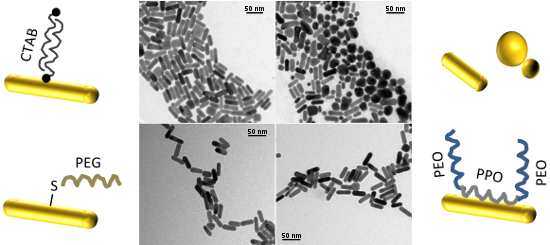
- of gold rod-like particles in the aqueous medium. The issue with CTAB, however, is that it forms a tightly bound cationic bilayer on the surface of the AuNR with the cationic trimethylammonium head group exposed to the external environment. The presence of CTAB on the AuNRs surface poses a threat to
- group of CTAB molecules preferentially binds to specific crystallographic faces of gold. Thus the gold atoms are directed to deposit on selective faces of gold and attain anisotropic nanoparticles in the solution medium [6][28][29]. In this process, CTAB forms a tightly bound cationic bilayer on the


Effect of contaminations and surface preparation on the work function of single layer MoS2
Beilstein J. Nanotechnol. 2014, 5, 291–297, doi:10.3762/bjnano.5.32
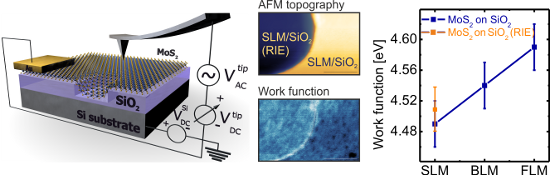
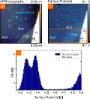
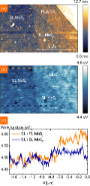
- , e.g., lower the contact resistance and improve their performance. First experiments adressing this issue for MoS2 by using Kelvin probe force microscopy (KPFM) have already been reported [28][29]. However, these measurements were not done on SLM but bilayer MoS2 (BLM) and higher layer numbers and the