Search results
Search for "displays" in Full Text gives 457 result(s) in Beilstein Journal of Nanotechnology. Showing first 200.
Ultrathin Ni1−xCoxS2 nanoflakes as high energy density electrode materials for asymmetric supercapacitors
Beilstein J. Nanotechnol. 2019, 10, 2207–2216, doi:10.3762/bjnano.10.213
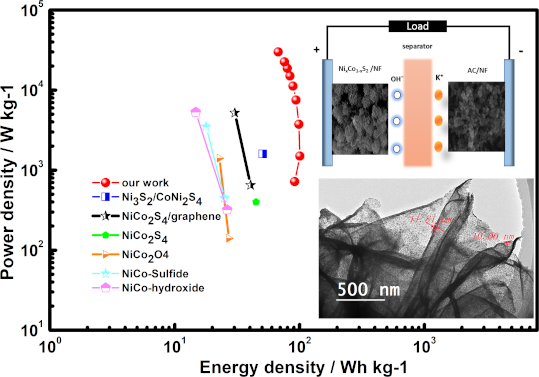
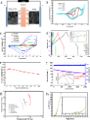
- performance of the ASC was evaluated at a large current density of 10 A·g−1 shown in Figure 4f. The ASC displays excellent cycling stability with about 65% of the initial specific capacitance even after 2000 cycles. Figure 4g shows the energy density as a function of the power density (Ragone plot) of the as


Incorporation of doxorubicin in different polymer nanoparticles and their anticancer activity
Beilstein J. Nanotechnol. 2019, 10, 2062–2072, doi:10.3762/bjnano.10.201
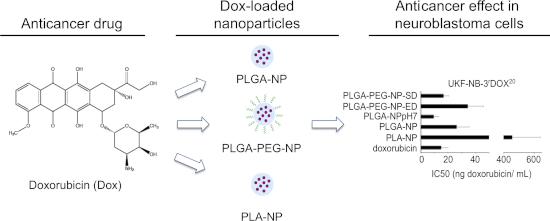
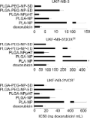
- cells, when compared to free doxorubicin in solution [26][27][28][29][30][31]. The doxorubicin-adapted UKF-NB-3 sub-line UKF-NB-3rDOX20 is characterised by high ABCB1 expression [54]. In addition, the vincristine-resistant UKF-NB-3 sub-line UKF-NB-3rVCR1 displays cross-resistance to doxorubicin and





Facile synthesis of carbon nanotube-supported NiO//Fe2O3 for all-solid-state supercapacitors
Beilstein J. Nanotechnol. 2019, 10, 1923–1932, doi:10.3762/bjnano.10.188
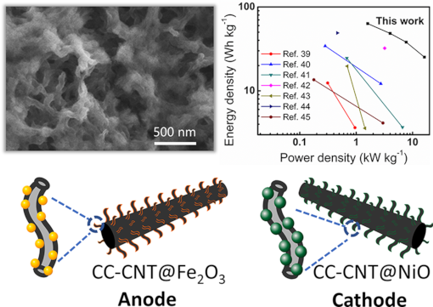
- , the optimal voltage window is chosen to be 1.6 V in subsequent tests. CV curves of the ASC at different scan rates are presented in Figure 8b. The CV curves are quasi-rectangular, revealing that the ASC displays a superior electrochemical performance, which mainly originates from the deliberately


Charge-transfer interactions between fullerenes and a mesoporous tetrathiafulvalene-based metal–organic framework
Beilstein J. Nanotechnol. 2019, 10, 1883–1893, doi:10.3762/bjnano.10.183
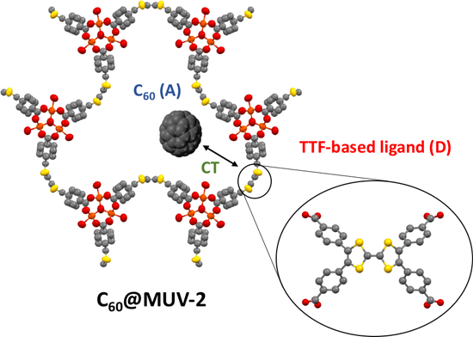
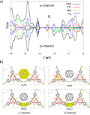
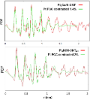
- C60@MUV-2 corresponds to the electron-rich TTF unit (Figure 6a). The highest occupied crystal orbital (HOCO) displays the typical shape of the TTF HOMO and confirms the TTF-nature of the VBM (Figure 6b). In the α-channel, the conduction band minimum (CBM) is described by the fullerene moiety, being
- photoinduced CT process of C60@MUV-2. Figure 8 displays the simulated absorption spectra predicted for the cluster C60@TTFTB system in the most stable arrangement B, the TTFTB ligand, and the fullerene guest (the triplet excitation energies are indicated). The high-energy region (below 400 nm) of the




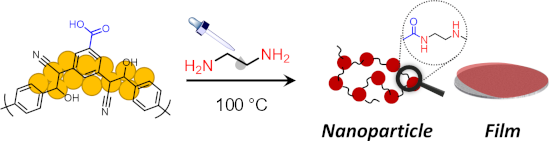
Processing nanoporous organic polymers in liquid amines
Beilstein J. Nanotechnol. 2019, 10, 1844–1850, doi:10.3762/bjnano.10.179
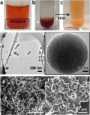
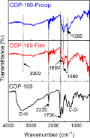
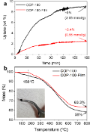
- at 40 °C. (b) Thermogravimetric analysis of COP-100 and COP-100-Film under N2 atmosphere. Inset displays a photograph of the carbonized COP-100-Film. Supporting Information Synthetic details and methods. A TEM image and a photograph of dissolved polymers in liquid amines. A schematic illustration of



TiO2/GO-coated functional separator to suppress polysulfide migration in lithium–sulfur batteries
Beilstein J. Nanotechnol. 2019, 10, 1726–1736, doi:10.3762/bjnano.10.168
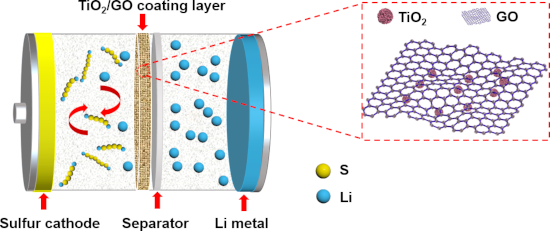
- of as-dealloyed TiO2 is featureless due to its amorphous nature [36], and the GO alone shows the typical D- and G-bands at ≈1350 cm−1 and 1592 cm−1. Meanwhile, the composite displays the spectral characteristics of GO with two distinct peaks at ≈1343 cm−1 and 1580 cm−1. The slight shift in the
- . Therefore, the as-prepared TiO2/GO composite is expected to exhibit enhanced conductivity and render excellent rate performance [40]. Figure 4 displays the SEM images of the pristine and TiO2/GO-coated separator. The pristine separator shows abundant pores with an average diameter of 100 nm (Figure 4a


Development of a new hybrid approach combining AFM and SEM for the nanoparticle dimensional metrology
Beilstein J. Nanotechnol. 2019, 10, 1523–1536, doi:10.3762/bjnano.10.150
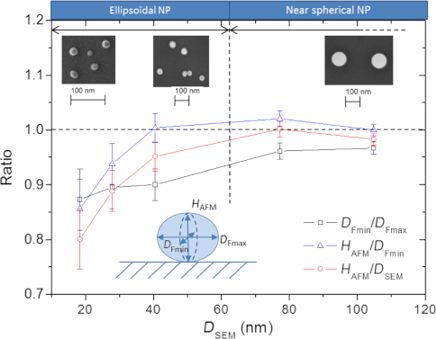
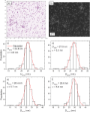
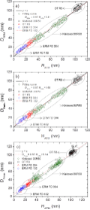
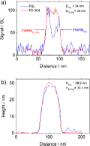
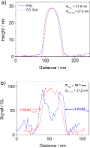
- in Figure 5 in three graphs showing DSEM, DFmin and DFmax as a function of the AFM height, HAFM. This figure displays that the size of various NP populations (for a total of 1050 NPs) ranges from 10 to 110 nm. The curve y = x was added to highlight the eventual discrepancies between AFM and both SEM




Hierarchically structured 3D carbon nanotube electrodes for electrocatalytic applications
Beilstein J. Nanotechnol. 2019, 10, 1475–1487, doi:10.3762/bjnano.10.146
- discovery in 1991 [1] due to their high electrical conductivity, large surface area, good chemical stability, high mechanical strength and high aspect ratio and are considered as promising materials for diverse applications such as field emission displays, energy storage devices, sensors, and so on [2][3][4
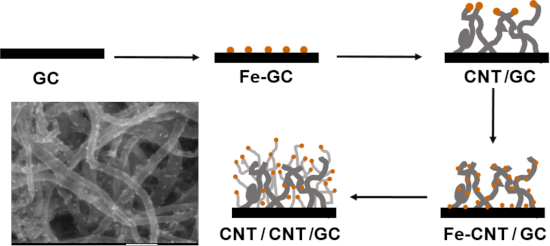
- nearly uniformly grown on the surface of GC with a diameter of approximately 40–80 nm. Accordingly, the optical image (Supporting Information File 1, Figure S2g) displays a matt black thin layer at those areas of the GC chips that were covered with Fe particles. However, no CNT growth was observed with a
- should be mentioned that N-CNT/N-CNT/GC displays no redox peak attributed to oxygen-containing functional groups since Fe was electrochemically leached out in H2SO4 and not chemically in concentrated HNO3 for the sake of follow-up studies not presented here. Additionally, CNT/CNT/GC is hydrophobic, while





Energy distribution in an ensemble of nanoparticles and its consequences
Beilstein J. Nanotechnol. 2019, 10, 1452–1457, doi:10.3762/bjnano.10.143
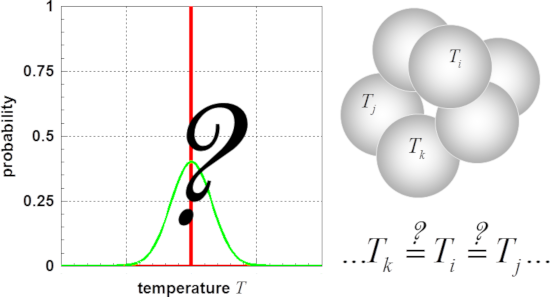
- . Therefore, the description of fluctuations has to be expanded. This necessary extension is demonstrated using as an example of melting gold particles at different particle sizes. Figure 1 displays the free enthalpy of the solid and the liquid phase of a 2 nm gold particle in the vicinity of the melting
- bulk values were selected [4]. The probability F(Te) of the existence of the solid–liquid phase at the temperature Te is given by Figure 2 displays the probability for the solid–liquid phase in the vicinity of the transformation temperature. As examples, particles with a diameter of 2 and 5 nm were
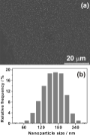
- displays the particle size distribution found in this case. Conclusion The most important result of this study is the fact that, within an “isothermal” ensemble of nanoparticles, there is an individual temperature for each one of the particles. Starting with the assumption that, within an ensemble of


Selective gas detection using Mn3O4/WO3 composites as a sensing layer
Beilstein J. Nanotechnol. 2019, 10, 1423–1433, doi:10.3762/bjnano.10.140
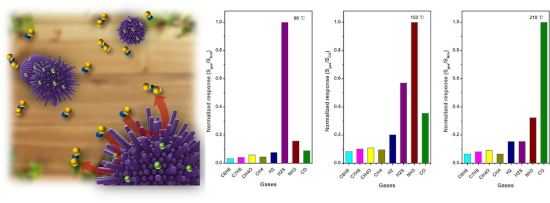
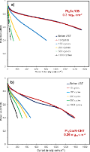
- composite sample as the research object for further study. To further investigate the sensing properties of the 3 atom % Mn3O4/WO3 composite based gas sensor, real-time response transient experiments were conducted on all sensors. Figure 8 displays the dynamic response–recovery curves toward H2S at 90 °C


Multicomponent bionanocomposites based on clay nanoarchitectures for electrochemical devices
Beilstein J. Nanotechnol. 2019, 10, 1303–1315, doi:10.3762/bjnano.10.129
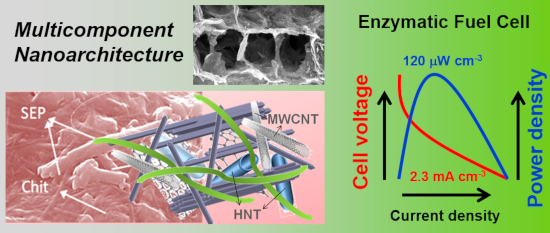
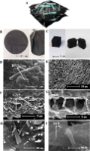
- Figure 3A, while SEM images (Figure 3D,F) reveal that the components are uniformly distributed throughout the film and are organized as a compact particle assembly within the chitosan matrix. Furthermore, the film cross section (Figure 3F) displays the typical layered structure of films solvent-cast from
- isotherms (Figure S2a,b in Supporting Information File 1). The BET specific surface area of the samples Film-1 and Foam-1 was 5 and 58 m2·g−1, respectively. The microstructure of the films was characterized by X-ray diffraction (XRD). The diffractogram of Film-1 displays the main reflections of both
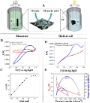
- therefore assessed by the van der Pauw method based on the four-point technique [26]. This method is useful to accurately measure the surface properties of a sample of arbitrary shape. Figure 4C displays the in-plane electrical conductivity of the films as a function of the MWCNT content (composition of



Fabrication of phase masks from amorphous carbon thin films for electron-beam shaping
Beilstein J. Nanotechnol. 2019, 10, 1290–1302, doi:10.3762/bjnano.10.128
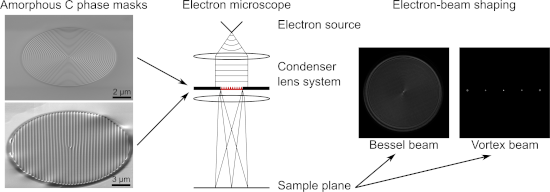
- contrast. Defocusing the diffraction lens to (b) 75 mm and (c) 150 mm displays the preserved shape of a BB upon propagation. The intensity in (b) and (c) is shown on a logarithmic scale to visualize the bright center and the outer rings. The inserts display the center of the respective image. Since



Alloyed Pt3M (M = Co, Ni) nanoparticles supported on S- and N-doped carbon nanotubes for the oxygen reduction reaction
Beilstein J. Nanotechnol. 2019, 10, 1251–1269, doi:10.3762/bjnano.10.125
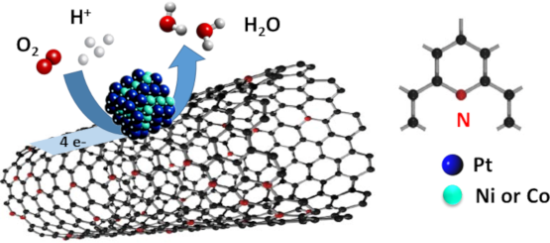
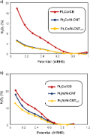
- also evidenced by STEM-HAADF images of Pt3Co/N-CNT (Figure 7b, 001 selected area). In the same way, the Pt3Ni composition was determine by EDX analysis for the sample Pt3Ni/N-CNTHT (Supporting Information File 1, Figure S9). This sample also displays some residual nickel atoms or clusters







Green fabrication of lanthanide-doped hydroxide-based phosphors: Y(OH)3:Eu3+ nanoparticles for white light generation
Beilstein J. Nanotechnol. 2019, 10, 1200–1210, doi:10.3762/bjnano.10.119
- results in the generation of white light. WLED systems composed of a blue LED and YAG:Ce3+ is a facile and inexpensive way of obtaining white light. However, the white light by this system displays some inadequate optical properties, such as high correlated color temperature (CCT) and low color rendering
- levels of the transition states through adjusting the dopant ion, different emission and PL intensities can be obtained [11][26][27][28]. These phosphors have been employed in various applications, including optoelectronics, field emissive displays and HDTVs, and advanced ceramics [29][30]. To date



Pure and mixed ordered monolayers of tetracyano-2,6-naphthoquinodimethane and hexathiapentacene on the Ag(100) surface
Beilstein J. Nanotechnol. 2019, 10, 1188–1199, doi:10.3762/bjnano.10.118
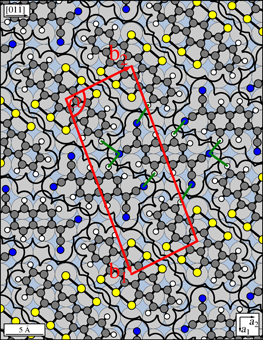
- the symmetry of the Ag(100) surface (space group P4mm) and the symmetry of the molecules (HTPEN: D2h, TNAP: C2h) four symmetry-equivalent domains with four different orientations of the rows can be expected. All of these possible orientations could be observed in STM images. Figure 6b displays an


Quantitative analysis of annealing-induced instabilities of photo-leakage current and negative-bias-illumination-stress in a-InGaZnO thin-film transistors
Beilstein J. Nanotechnol. 2019, 10, 1125–1130, doi:10.3762/bjnano.10.112
- -panel displays (FPDs). Amorphous InGaZnO (a-IGZO), an outstanding active channel material, is generally adopted in TFTs because of its high electron mobility, great environmental/thermal stability, and preparation versatility. The enhanced mobility of a-IGZO originates from the fact that the electrical
- the backlight for non-emissive displays. The degradation of oxide-based TFTs under this kind of negative-bias-illumination-stress (NBIS) is a key issue that has been investigated over the last decade [6][7]. Despite all efforts to unveil the mechanisms of NBIS, such as first-principles calculations
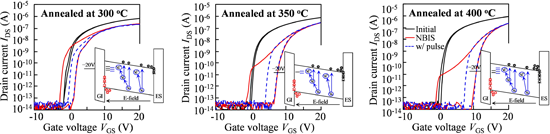
- –530 nm is used. The details of the NBIS measurement (gate voltage VGS = −20 V; λ = 460 nm) in double-scan mode are described in [8]. The duration of the NBIS measurements is 104 s. Results and Discussion Figure 1 displays the double-scan transfer characteristics (VDS = 10.1 V) of the TFTs annealed at


Synthesis and characterization of quaternary La(Sr)S–TaS2 misfit-layered nanotubes
Beilstein J. Nanotechnol. 2019, 10, 1112–1124, doi:10.3762/bjnano.10.111
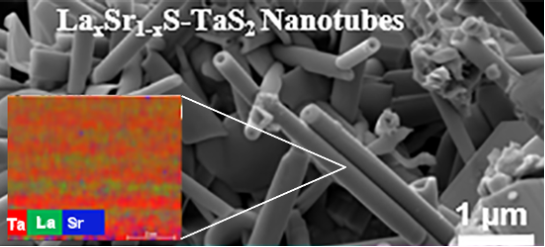
- % Sr content (Figure 10a). At higher Sr content, the function Q displays an S-shaped profile and diminishes (in absolute value) dramatically from 0.16 to 0.06 e−/TaS2 of a hypothetical (SrS)1.11TaS2 misfit (i.e., upon a complete La to Sr substitution). This phenomenon can be explained by the excessive


Glucose-derived carbon materials with tailored properties as electrocatalysts for the oxygen reduction reaction
Beilstein J. Nanotechnol. 2019, 10, 1089–1102, doi:10.3762/bjnano.10.109
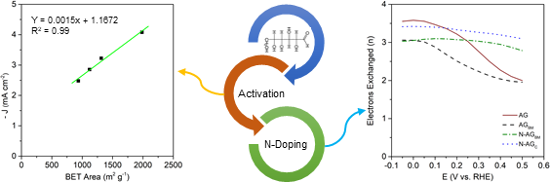
- throughout all potentials. Without a considerable number of electrons exchanged during the ORR, the nitrogen atoms do not seem to improve their stability to stay closer to a four-electron pathway. However, the conventionally doped sample (N-CGC) displays a slight increase of electron exchange at low


Direct growth of few-layer graphene on AlN-based resonators for high-sensitivity gravimetric biosensors
Beilstein J. Nanotechnol. 2019, 10, 975–984, doi:10.3762/bjnano.10.98
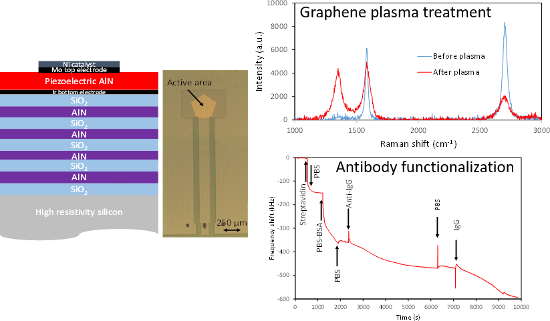
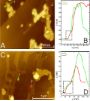
- in contact mode; AFM images are shown in Figure 1. Compared with the surface of the bare Ni surface (Figure 1a), high heating rates induce the partial dewetting of the Ni layer (Figure 1b), which displays a non-uniform thickness distribution, combining areas with hillocks and areas with voids
- and quality factor of the resonators remain almost constant, with typical values of, respectively, 3% and 150 [20]. It is worth noting that the modulus of the impedance displays a minimum at around 3000 MHz due to the LC resonance that arises from the static capacitance of the resonator and the series


Structural and optical properties of penicillamine-protected gold nanocluster fractions separated by sequential size-selective fractionation
Beilstein J. Nanotechnol. 2019, 10, 955–966, doi:10.3762/bjnano.10.96
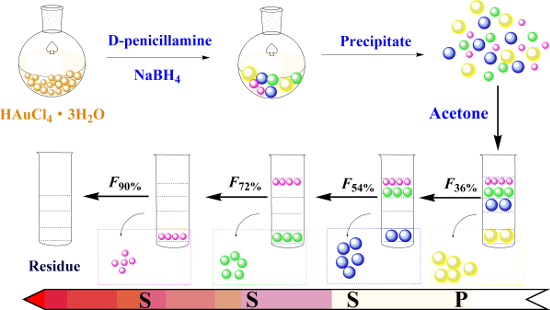
- %) from large to small have been obtained by repeating the above procedure and controlling the volume percentage of acetone corresponding to 36%, 54%, 72%, and 90%, respectively. The remaining soluble fraction is represented as F0%. Figure 3 displays the TEM images of the four AuNCs fractions (F36%, F54
- characteristic broadening peaks from 1.58 to 1.88 and from 3.88 to 4.10 ppm, which displays a slight chemical shift consistent with expectations for the presence of nanocluster-bound ligand [5]. This resonance broadening (relative to the monomer ligand) is due to the discontinuity of the diamagnetic
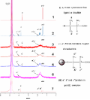
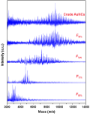
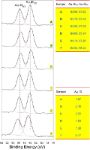
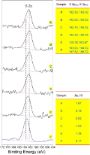
- AuNC product and the sequential size-selected fractions (B) F36%, (C) F54%, (D) F72%, (E) F90%, and (F) F0%. The right panel displays the S 2p3/2 and S 2p1/2 binding energies of the samples. (A) UV–visible absorption and (B) corrected photoluminescence spectra (excited at 380 nm) of the (0) crude



In situ AFM visualization of Li–O2 battery discharge products during redox cycling in an atmospherically controlled sample cell
Beilstein J. Nanotechnol. 2019, 10, 930–940, doi:10.3762/bjnano.10.94
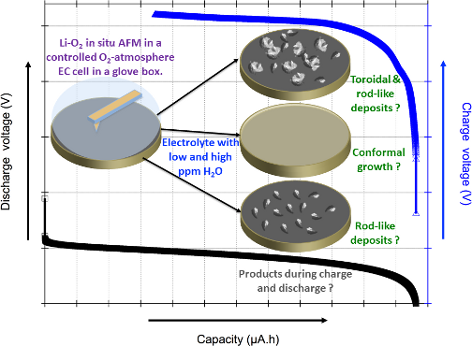
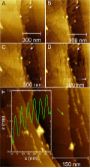
- -circuit potential of 2.948 V, the surface of glassy carbon is smooth and free of electrochemical deposits. At about 4.3% of discharge capacity, the first nanostructures suddenly appear on the glassy carbon surface. In Figure 4b, the cell is at 12.7% discharge capacity and displays partial and complete


Synthesis of novel C-doped g-C3N4 nanosheets coupled with CdIn2S4 for enhanced photocatalytic hydrogen evolution
Beilstein J. Nanotechnol. 2019, 10, 912–921, doi:10.3762/bjnano.10.92
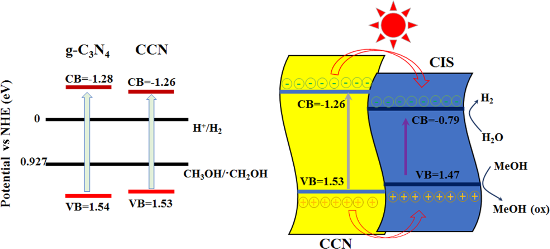
- transfer nanochannels [5]. The as-prepared g-C3N4 nanosheet@ZnIn2S4 nanoleaf structure displays an enhanced photocatalytic activity for H2 production without the addition of a Pt co-catalyst. As visible-light-active photocatalysts, ternary metal sulfide (e.g., ZnIn2S4 and CdIn2S4) have attracted great
- samples were characterized by transmission electron microscopy (TEM) images. As can be seen in Figure 4a,b, the CCN sample displays a representative two-dimensional layered structure that is ultrathin. After the addition of CdIn2S4 to form the heterojunction with CCN, the CdIn2S4 crystals are attached to
- -induced charge carriers of these as-fabricated samples has been studied via room temperature photoluminescence (PL) characterization. Figure 7 displays the PL emission spectra of g-C3N4, CCN and CISCCN3 hybrid photocatalysts at the excitation wavelength of 410 nm. It is observed that the pure CCN shows


An efficient electrode material for high performance solid-state hybrid supercapacitors based on a Cu/CuO/porous carbon nanofiber/TiO2 hybrid composite
Beilstein J. Nanotechnol. 2019, 10, 781–793, doi:10.3762/bjnano.10.78
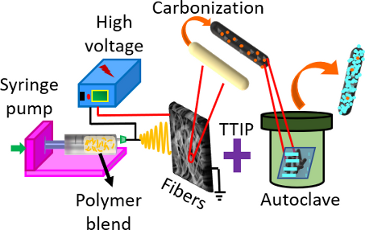
- stabilization and carbonization processes to enhance the performance. More importantly, the obtained results have demonstrated that the composite material displays outstanding rate capability and long cycling stability which demonstrates its great potential as an efficient electrode material for supercapacitors
- , CNF, PCNF, Cu/PCNF and Cu/CuO/PCNF/TiO2 composite electrodes at a scan rate of 100 mV s−1 in the potential range (0–1 V). CNF, PCNF and Cu/PCNF samples show a quasi-rectangular box loop which represents electric double layer capacitance performance. Besides, the Cu/CuO/PCNF/TiO2 composite displays


The effect of translation on the binding energy for transition-metal porphyrines adsorbed on Ag(111) surface
Beilstein J. Nanotechnol. 2019, 10, 706–717, doi:10.3762/bjnano.10.70
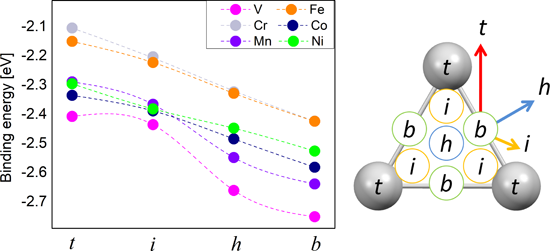
- mechanism (see Supporting Information File 1, Figure S5, right). The analysis of the quantity displays shapes specific to a covalent bond, i.e., charge accumulation between the atoms in direct interaction. For one of the two spin components of charge density charge accumulation is present, while there is a


![[Graphic 1]](/bjnano/content/inline/2190-4286-10-70-i1.svg?max-width=637&scale=1.18182) , for all systems and relative molecule–surface positions. Right: symm...
, for all systems and relative molecule–surface positions. Right: symm...


![[Graphic 7]](/bjnano/content/inline/2190-4286-10-70-i7.svg?max-width=637&scale=1.18182) for selected TMPP systems (M = V, Mn, Co; red: positive values, blue: negative value...
for selected TMPP systems (M = V, Mn, Co; red: positive values, blue: negative value...
Self-assembly and wetting properties of gold nanorod–CTAB molecules on HOPG
Beilstein J. Nanotechnol. 2019, 10, 696–705, doi:10.3762/bjnano.10.69
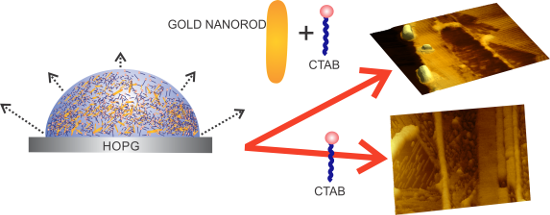
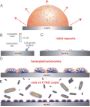
- . However, Figure 1A–C displays a montage of SEM images that shows monolayer nanorod deposits on the HOPG terraces, analogous to the results reported previously [51]. Since this work was more focused on the deposition and alignment of the nanorods near the step edges (comparable to the observation