Search results
Search for "dynamic" in Full Text gives 808 result(s) in Beilstein Journal of Nanotechnology. Showing first 200.
Titania nanoparticles for photocatalytic degradation of ethanol under simulated solar light
Beilstein J. Nanotechnol. 2023, 14, 616–630, doi:10.3762/bjnano.14.51
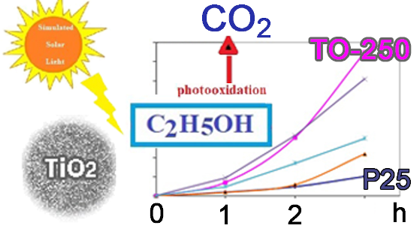
- detector (TCD, Buck Scientific, model 910). The total time of a photocatalytic test was 180 min. The photoreactor works thus under static conditions, which differs from the dynamic conditions used by other researchers where a continuous flow of ethanol vapors (mixed with water vapors) was employed via




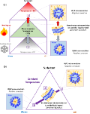
Suspension feeding in Copepoda (Crustacea) – a numerical model of setae acting in concert
Beilstein J. Nanotechnol. 2023, 14, 603–615, doi:10.3762/bjnano.14.50
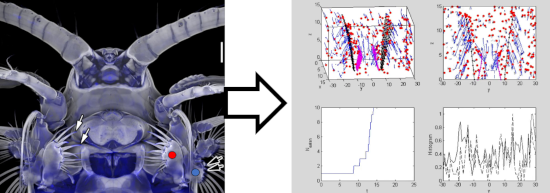
- mechanical property gradients, the mechanical behavior and the adhesion of setae, and the feeding efficiency of the system. In this context, we set-up a simple dynamic numerical model that takes all of these parameters into account and describes the interaction with food particles and their delivery into the
- system containing short and long setae. The results are presented in Figure 7. It is important to note that the angle ϕmin = −0.5π (here the basic segments run parallel to the surface z = 0) yields worse results than the optimal angle ϕmin = −0.4π. The dynamic behavior of the systems with different
- , Massachusetts, USA). Our discrete numerical model describes the dynamics of two pairs of initially parallel aligned elastic crests, resembling the maxillae 1 and 2. The conceptual structure of the model is depicted in Figure 10. The dynamic behavior of the model can be found in the movie in Supporting


Transferability of interatomic potentials for silicene
Beilstein J. Nanotechnol. 2023, 14, 574–585, doi:10.3762/bjnano.14.48
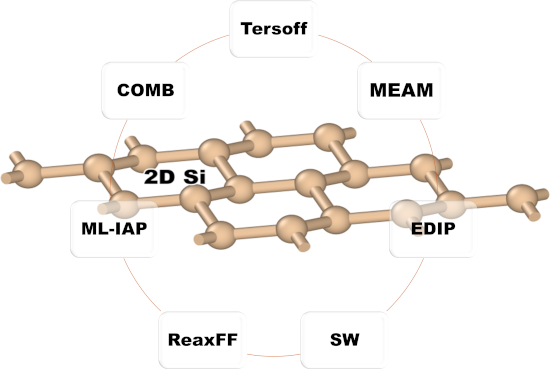
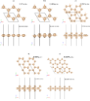
- (TDS), honeycomb dumbbell (HDS), and large honeycomb dumbbell (LHDS) silicene [8]. There are still doubts about their dynamic stability. For example, for a flat phase, the negative ZO phonon mode could be removed by the selection of an appropriate substrate [3][9]. The ability of potentials for 3D
![[Graphic 3]](/bjnano/content/inline/2190-4286-14-48-i7.svg?max-width=637&scale=1.18182)

Specific absorption rate of randomly oriented magnetic nanoparticles in a static magnetic field
Beilstein J. Nanotechnol. 2023, 14, 485–493, doi:10.3762/bjnano.14.39
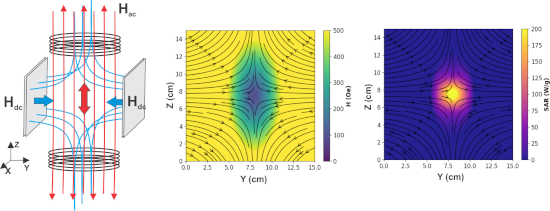
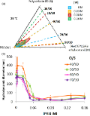
- of the field-free point is obtained for assemblies with different nanoparticle size distributions. The results obtained seem to be helpful for the development of a promising joint application of magnetic nanoparticle imaging and magnetic hyperthermia. Keywords: dynamic hysteresis loop; magnetic
- environment, except for a certain area near the field-free point (FFP). This will allow one to localize the heat release in the tumor area with millimeter accuracy. The search for optimal assemblies for joint MH-MPI therapy is an urgent task in this research area. Experimental measurements of dynamic
- combined action of ac and dc magnetic fields is studied using a numerical simulation based on the solution of the stochastic Landau–Lifshitz equation [17][20][22][23][26]. The SAR of a randomly oriented assembly is calculated in terms of the area of the dynamic hysteresis loop according to the well-known


The steep road to nonviral nanomedicines: Frequent challenges and culprits in designing nanoparticles for gene therapy
Beilstein J. Nanotechnol. 2023, 14, 351–361, doi:10.3762/bjnano.14.30

- , specifically for dose/particle calculations. Lastly, a volume or mass distribution should be presented. Dynamic light scattering (DLS) is often be used for the inspection of aqueous suspensions with results bedeviled by the normal constraints of DLS and ensemble detection [64]. Both disc centrifugation and

Polymer nanoparticles from low-energy nanoemulsions for biomedical applications
Beilstein J. Nanotechnol. 2023, 14, 339–350, doi:10.3762/bjnano.14.29
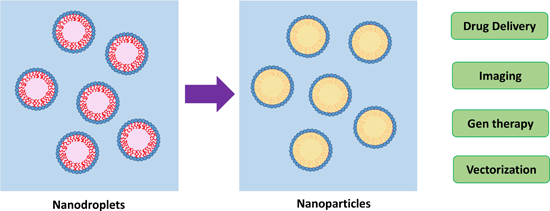
- diameter dE = 50 ± 12 nm (estimated by cryo-TEM), whereas the diameter of the derived PLGA nanoparticles (dP) was 25 ± 7 nm as estimated from TEM [24], which gives a dP/dE ratio of 0.5. Higher dP/dE ratios were found by dynamic light scattering, especially at low polymer concentrations (note that the
- decreased with O/S ratio. The hydrodynamic diameter of the nanoemulsion droplets as measured by dynamic light scattering (DLS) was ca. 200 nm. It should be pointed out that ethyl acetate is a polar oil, and that the ethyl acetate/water interfacial tension is low (6.8 mN/m [41]). Usually, the excess




Overview of mechanism and consequences of endothelial leakiness caused by metal and polymeric nanoparticles
Beilstein J. Nanotechnol. 2023, 14, 329–338, doi:10.3762/bjnano.14.28
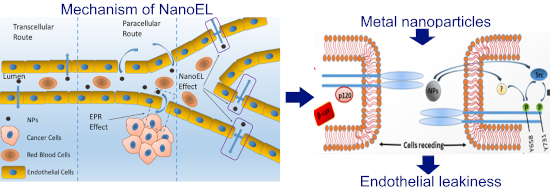
- junctions, which are a cluster of transmembrane channels located throughout the vascular system. The intercellular junctions between endothelial cells play an important role in maintaining the monolayer integrity, but they also connect cells in a dynamic and communicative manner [13][14]. Any change in


Biocatalytic synthesis and ordered self-assembly of silica nanoparticles via a silica-binding peptide
Beilstein J. Nanotechnol. 2023, 14, 280–290, doi:10.3762/bjnano.14.25
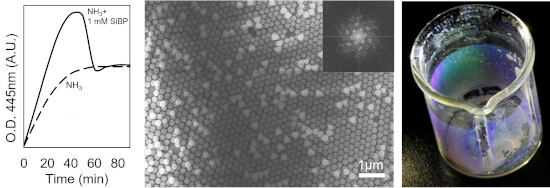
- combination with NH3. The reaction kinetics were monitored via measuring the optical density (OD) with UV–vis spectroscopy and the conversion of substrate via gas chromatography coupled with mass spectroscopy (GC–MS). Size and net surface charge distribution of the particles were determined with dynamic light




Nanotechnology – a robust tool for fighting the challenges of drug resistance in non-small cell lung cancer
Beilstein J. Nanotechnol. 2023, 14, 240–261, doi:10.3762/bjnano.14.23
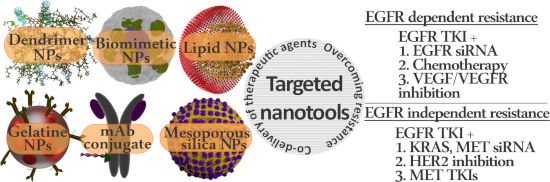
- toxicological profiles [134]. A systematic approach in synthesizing statistical copolymer libraries, fine-tuning nanoparticle biointeractions, and polymer bioresponsiveness, hand in hand with cell culture experiments for fast screening and dynamic cell culture models, may greatly improve the successful outcomes


Spin dynamics in superconductor/ferromagnetic insulator hybrid structures with precessing magnetization
Beilstein J. Nanotechnol. 2023, 14, 233–239, doi:10.3762/bjnano.14.22
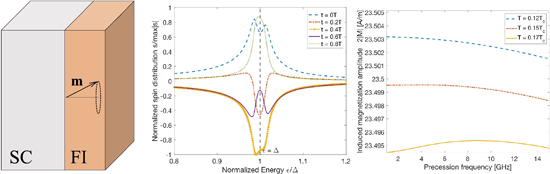
- ][19] frameworks. However, the main subject of these works is the magnetic excitation spectrum in hybrid structures. Most of the works ignore the dynamics of nonuniform distributions of induced magnetization and spin current inside the superconducting film, which can be called the “dynamic inverse
- superconductor/ferromagnetic insulator hybrid structures was applied to describe nonstationary phenomena, such as generation of spin transfer torques, nonuniform thermoelectric effects, and domain wall movement. The theoretical description of the dynamic proximity effect is the more complex task because of the
- in [18][19]. In these works, calculations based on Usadel equations combined with adiabatic, nonstationary boundary conditions were made. We show that the adiabatic approximation is useful in a wide range of magnetization precession frequencies. The main goal of our theory is to describe the dynamic


Cyclodextrins as eminent constituents in nanoarchitectonics for drug delivery systems
Beilstein J. Nanotechnol. 2023, 14, 218–232, doi:10.3762/bjnano.14.21
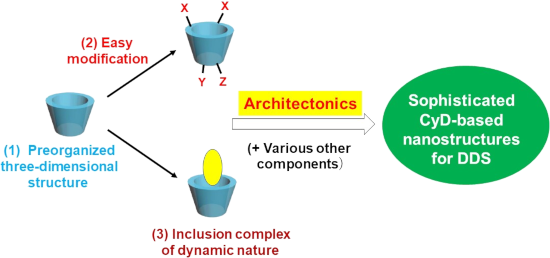
- molecular structure of nanometer size, (2) the easy chemical modification to introduce functional groups, and (3) the formation of dynamic inclusion complexes with various guests in water. With the use of photoirradiation, drugs are released from cyclodextrin-based nanoarchitectures at designated timing
- nanoarchitectures is greatly facilitated by three important features of CyDs, namely (1) the preorganized three-dimensional molecular structure of nanometer-size, (2) the easy chemical modification to introduce functional groups, and (3) the formation of dynamic inclusion complexes with various guests in water. The
- are presented with the emphasis on the three features of CyDs in Figure 1. First, the photoinduced delivery of chemical drugs by CyD-based carriers is described (section 2). The dynamic features of CyD inclusion complexes are essential here since minor changes of the molecular structure of




Characterisation of a micrometer-scale active plasmonic element by means of complementary computational and experimental methods
Beilstein J. Nanotechnol. 2023, 14, 110–122, doi:10.3762/bjnano.14.12
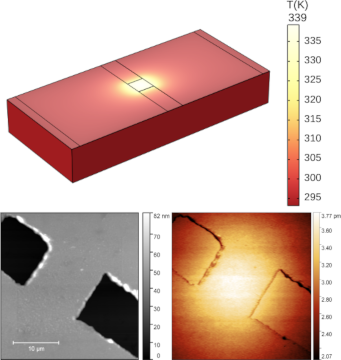
- computational methods to characterise the response of this system. First, an enhanced surface plasmon resonance experiment in a classical Kretschmann configuration is used to measure the changes in the reflectivity induced by an alternating electric current. A lock-in amplifier is used to extract the dynamic
- software COMSOL Multiphysics has been used to predict and confirm the dynamic temperature distribution and the optical response of the system. Experimental The manufacturing of the active plasmonic elements employed in the present work is detailed in [5]. At first, a 48 ± 2 nm film of silver is deposited
- the conditions in the above SPR measurements as closely as possible. The Cypher-S AFM is capable of detecting dynamic changes in height of the sample down to the sub-picometer scale. Scans were performed at multiple current densities to demonstrate the differences in temperature distribution




Frontiers of nanoelectronics: intrinsic Josephson effect and prospects of superconducting spintronics
Beilstein J. Nanotechnol. 2023, 14, 79–82, doi:10.3762/bjnano.14.9

- a very high responsivity at 77 K (up to 9 kV/W), low noise equivalent power (NEP) of 3 × 10⁻¹³ W/Hz(1/2), and with a wide power dynamic range equal to 1 × 10⁶ [18]. Integrating an aluminum Josephson junction, with a size of a few micrometers, operating as a single photon counter in the microwave
Two-step single-reactor synthesis of oleic acid- or undecylenic acid-stabilized magnetic nanoparticles by thermal decomposition
Beilstein J. Nanotechnol. 2023, 14, 11–22, doi:10.3762/bjnano.14.2
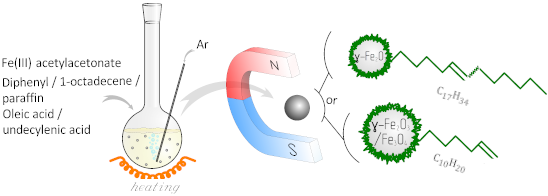
- , and composition via several techniques, such as transmission electron microscopy, dynamic light scattering, thermogravimetric analysis, Fourier-transform infrared spectroscopy/attenuated total reflectance, 57Fe Mössbauer spectroscopy, and X-ray diffraction. The effect of unsaturated oleic (OA) and
- diameter, X-ray diffraction, transmission electron microscopy, and dynamic light scattering (Malvern Zetasizer Nano S, Palaiseau, France) were used. Transmission electron microscopy observations were conducted using a JEOL JEM 2100 HR microscope (Croissy Sur Seine, France) equipped with a LaB6 source, and
- ThermoScientific iD5 ATR Nicolet iS5 IR spectrometer (Waltham, MA USA) on a diamond crystal and Spectrum Two FTIR Spectrometer with Universal ATR (PerkinElmer, USA). The thermogravimetric measurements were carried out using a TA Instrument, Hi-Res-Dynamic TGA Q 500 (New Castle, USA) in a nitrogen atmosphere and in


Atmospheric water harvesting using functionalized carbon nanocones
Beilstein J. Nanotechnol. 2023, 14, 1–10, doi:10.3762/bjnano.14.1
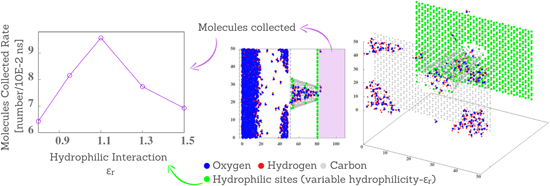
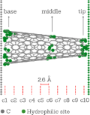
- thermostat, but the temperature varies from 800 to 300 K in a dynamic process every 10000 temporal steps. The blue region, thermostat 2, maintains a constant temperature of 300 K during the entire simulation. The variation of temperature in thermostat 1 is responsible for the condensation at reservoir 2. The




Observation of collective excitation of surface plasmon resonances in large Josephson junction arrays
Beilstein J. Nanotechnol. 2022, 13, 1578–1588, doi:10.3762/bjnano.13.132
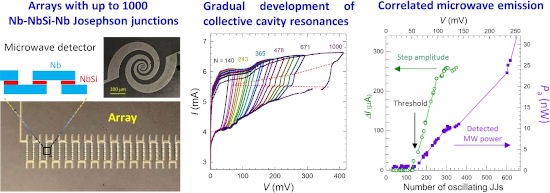
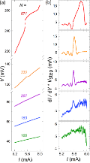
- steps appear via rectification of the cavity-mode-induced MW current in the electrodes and the amplitude of the rectified current is proportional to Ic of the JJs [38]. Dynamic states with different number of active junctions We want to emphasize that the discussed cavity resonances represent a
- and Figure 1d. However, application of a small magnetic field introduces a spread in critical currents, as can be seen from Figure 2b. In combination with the hysteresis in the I–V characteristics, this makes it possible to reach a large variety of dynamic states with different numbers of active JJs
- variety of dynamic states with different numbers of active junctions in the oscillating resistive state. This allowed for a detailed analysis of the collective phenomena that take place in the arrays. We reported a gradual development of cavity mode resonances in the arrays upon sequential switching of




Structural studies and selected physical investigations of LiCoO2 obtained by combustion synthesis
Beilstein J. Nanotechnol. 2022, 13, 1473–1482, doi:10.3762/bjnano.13.121
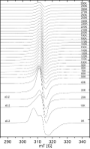
- dynamic Jahn–Teller effect. Below about 20 K the dynamic effect becomes static, and the spectra show a clear anisotropy due to static Jahn–Teller distortion. Experimental spectra obtained at 5 K (Figure 7) show that the EPR spectra for each sample consist of two different nickel complexes. From the




Facile preparation of Au- and BODIPY-grafted lipid nanoparticles for synergized photothermal therapy
Beilstein J. Nanotechnol. 2022, 13, 1432–1444, doi:10.3762/bjnano.13.118
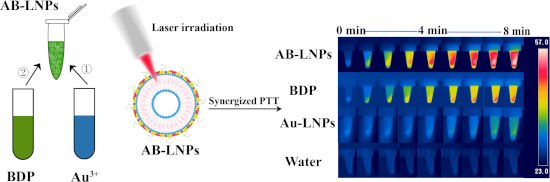
- aqueous suspension. The mixture was vortexed for 30 s and further sonicated for 10 min to obtain AB-LNPs. Characterization of AB-LNPs The size distributions and zeta potentials were measured using a dynamic light scattering (DLS) technique on Malvern Zetasizer (Malvern Instruments Ltd., UK). Ultraviolet


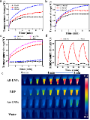

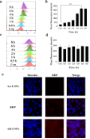

Orally administered docetaxel-loaded chitosan-decorated cationic PLGA nanoparticles for intestinal tumors: formulation, comprehensive in vitro characterization, and release kinetics
Beilstein J. Nanotechnol. 2022, 13, 1393–1407, doi:10.3762/bjnano.13.115
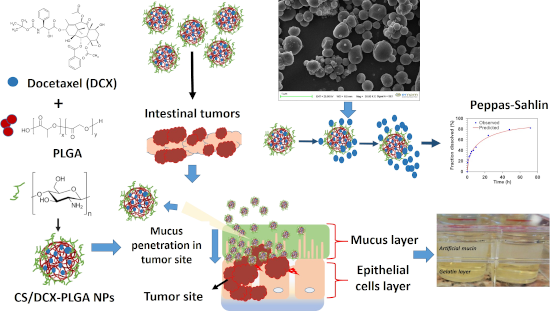
- efficiently encapsulated in the NPs. In addition, SEM micrographs were interpreted to be in accordance with the mean particle size data measured with the dynamic light scattering. Determination of drug loading capacity The rate of drug encapsulation is one of the important characterization parameters that
- phase for the blank PLGA nanoparticles. In vitro characterization of the nanoparticles Mean particle size and surface charge Mean particle size (nm), PDI, and zeta potential (mV) of the NPs were investigated by dynamic light scattering (DLS; Malvern Zetasizer Nano ZS series, UK) with a disposable


Supramolecular assembly of pentamidine and polymeric cyclodextrin bimetallic core–shell nanoarchitectures
Beilstein J. Nanotechnol. 2022, 13, 1361–1369, doi:10.3762/bjnano.13.112
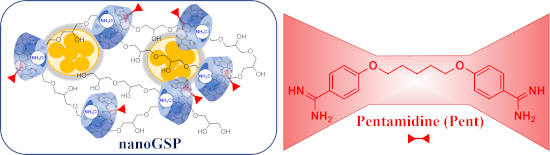
- -inflammatory, and anticancer). The physicochemical characterization of the supramolecular assembly (nanoGSP) in terms of size and colloidal stability was investigated by complementary spectroscopic techniques, such as UV–vis, ζ-potential, and dynamic light scattering (DLS). Furthermore, the role of PolyCD
- -potential), and dynamic light scattering (DLS). Experimental data suggested a multiple set of interactions between Pent and nanoGS that involves mainly the CD cavities. The biological profile of nanoG, nanoGS, and nanoGSP has been evaluated in terms of antileishmanial activity and cytotoxicity by in vitro


A super-oscillatory step-zoom metalens for visible light
Beilstein J. Nanotechnol. 2022, 13, 1220–1227, doi:10.3762/bjnano.13.101
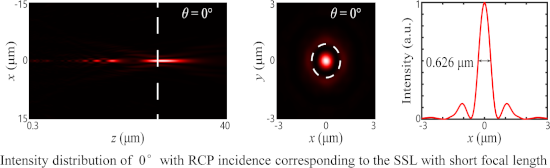
- materials still have issues regarding dynamic tunability and inflexibility. Therefore, it is vital to develop a flexible and tunable modulation approach for super-oscillatory lenses. In this paper, we propose a super-oscillatory step-zoom lens based on the geometric phase principle, which can switch between


Design of surface nanostructures for chirality sensing based on quartz crystal microbalance
Beilstein J. Nanotechnol. 2022, 13, 1201–1219, doi:10.3762/bjnano.13.100
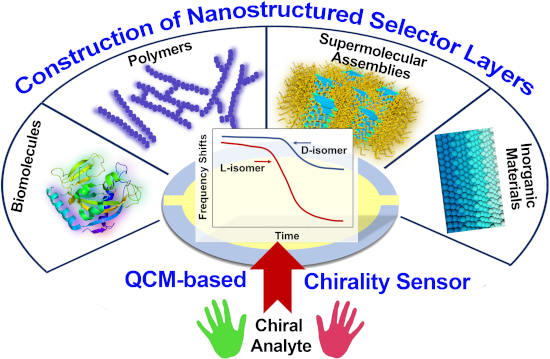
- that metal surfaces may be an ideal platform to study the dynamic chiral recognition process. The adsorption orientations of the two enantiomers may have clear differences on the chiral metal surface, which makes the binding energy of enantiomers different on the crystalline surface. Dong and Wang et


Application of nanoarchitectonics in moist-electric generation
Beilstein J. Nanotechnol. 2022, 13, 1185–1200, doi:10.3762/bjnano.13.99
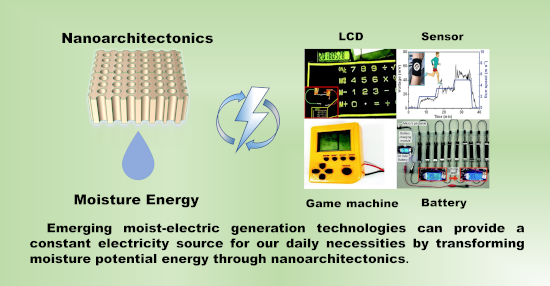
- water molecules move on the surface of the material (ν), the higher the output voltage (ΔV) [10]. This conclusion was also drawn in reports regarding carbon nanomaterials [9]. The fluid in the real device will also evaporate while being absorbed. Hence, theoretically there will be a dynamic balance
- between absorption and evaporation. Whether there is an upper limit for the dynamic balance is not clear for the time being, but the qualitative conclusion conforms to basic logic and is still used as a guiding principle for improving the output power. In terms of airflow direction, the output voltage is


Recent advances in green carbon dots (2015–2022): synthesis, metal ion sensing, and biological applications
Beilstein J. Nanotechnol. 2022, 13, 1068–1107, doi:10.3762/bjnano.13.93




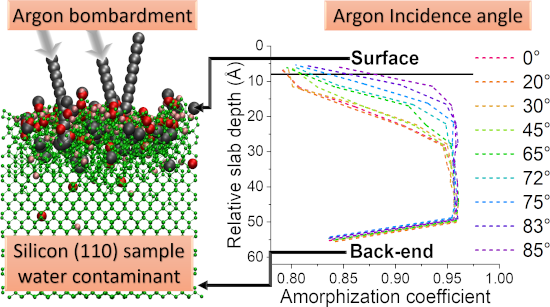
Influence of water contamination on the sputtering of silicon with low-energy argon ions investigated by molecular dynamics simulations
Beilstein J. Nanotechnol. 2022, 13, 986–1003, doi:10.3762/bjnano.13.86
- many-body systems whereas classical MD makes the assumption of fixed bonds and usually do not include complex chemical reactions. ReaxFF captures the dynamic nature of bond formation and breaking, based on bond-order calculation from interatomic distances. ReaxFF also includes nonbonded terms such as
- potential was performed using the algorithms developed by Rappé et al. [49][50][51], namely QEq, allowing charge distributions to be calculated according to geometry. Due to the dynamic nature of bonds and geometrical configurations, the charge distribution QEq is performed every 10 time steps during the
- energy at 100 eV and argon ions were bombarding the sample one after the other, in a dynamic sputtering mode. This differs from the literature where monatomic and cluster bombardment at high energies can be found (e.g., [66][67][68]). These studies also use single ion bombardment and no dynamic