


Search results
Search for "electrolyte" in Full Text gives 301 result(s) in Beilstein Journal of Nanotechnology. Showing first 200.
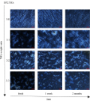
Synthesis and characterization of two new TiO2-containing benzothiazole-based imine composites for organic device applications
Beilstein J. Nanotechnol. 2018, 9, 721–739, doi:10.3762/bjnano.9.67
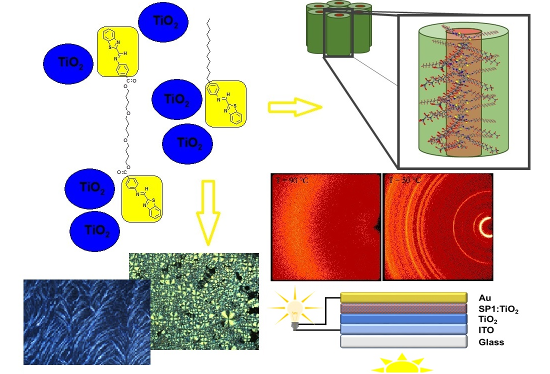
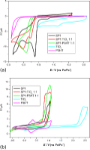
- the internal standard. Cyclic voltammetry experiments were conducted in a standard one-compartment cell, in CH2Cl2 (Carlo Erba, HPLC grade), under argon. 0.2 M Bu4NPF6 (Aldrich, 99%) was used as the supporting electrolyte. The compound concentration was 1.0 × 10⁻⁶ mol/dm3. Deaeration of the solution






Facile synthesis of ZnFe2O4 photocatalysts for decolourization of organic dyes under solar irradiation
Beilstein J. Nanotechnol. 2018, 9, 436–446, doi:10.3762/bjnano.9.42
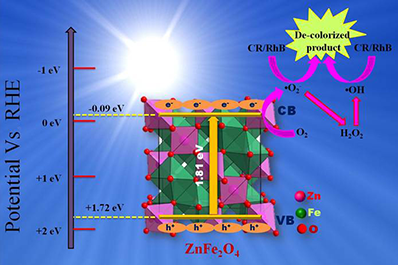
- working photo anode, Ag/AgCl as reference electrode and Pt as counter electrode. The electrolyte chosen for the study was 0.1 M Na2SO4 aqueous solution of pH 6.8. A 400 nm cut-off filter was used for the light irradiation during linear sweep voltammetry (LSV) analysis. Results and Discussion XRD analysis
- band-edge potential, a mechanism of the photocatalytic reaction has been proposed which is discussed later. Electrochemical impedance study Impedance measurements are commonly used to determine the charge transfer, resistance, and effective charge separation processes occurring at electrode–electrolyte


The nanofluidic confinement apparatus: studying confinement-dependent nanoparticle behavior and diffusion
Beilstein J. Nanotechnol. 2018, 9, 301–310, doi:10.3762/bjnano.9.30
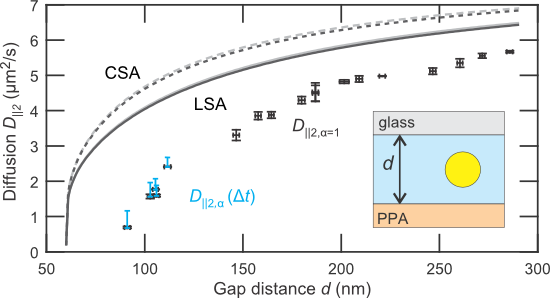
- role in a nanofluidic system, in particular when a particle is close to a charged wall. Whereas diffusion measurements for uncharged particles [15] and for particles in electrolyte with higher ionic concentration [33] are in agreement with predictions that consider only a hydrodynamically hindered drag
- . There is considerable evidence of an increased drag of charged particles near charged walls in a weak electrolyte [18][38]. In a similar experimental configuration Eichmann et al. [18] measured a ≈30% (≈55%) lower lateral diffusion coefficient for 60 nm (100 nm) gold nanospheres with a relative radius



Synthesis and characterization of electrospun molybdenum dioxide–carbon nanofibers as sulfur matrix additives for rechargeable lithium–sulfur battery applications
Beilstein J. Nanotechnol. 2018, 9, 262–270, doi:10.3762/bjnano.9.28
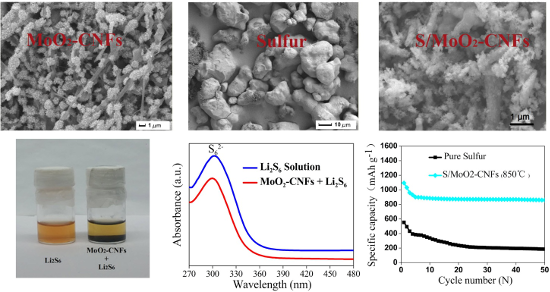
- caused by dissolved polysulfide molecules [1]. All of these issues still pose a challenge to overcome for the production of reversible, stable, and efficient sulfur cathodes. The currently proposed approaches to solve these issues include sulfur-based cathode modification, electrolyte modification and
- , Shanghai Mapada Instrument Co. Ltd). Electrochemical measurements The electrochemical performance of the samples was measured in CR 2032-type coin cells. The electrolyte contained 1 M lithium bis(trifluoromethanesulfone)imide (LITFSI) and 0.1 M LiNO3 dissolved in 1,3-dioxolane (DOL) and 1.2-dimethoxyethane
- (DME) at a volume ratio of 1:1. The electrolyte solution volume used in the cells was 75 μL. The coin cells were galvanostatically charged–discharged at 0.25 mA/cm2 (1 C = 1675 mA g−1) and a voltage ranging from 1.7 and to 3.0 V (vs Li/Li+) using a CT2001A cell test instrument (LAND model, Wuhan RAMBO


Dielectric properties of a bisimidazolium salt with dodecyl sulfate anion doped with carbon nanotubes
Beilstein J. Nanotechnol. 2018, 9, 164–174, doi:10.3762/bjnano.9.19
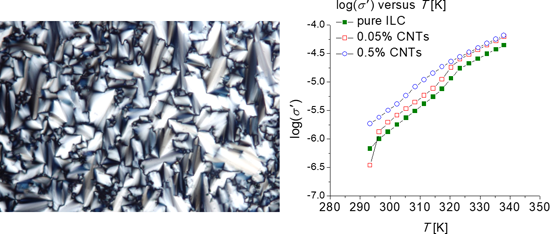
- movements in the bulk of the electrolyte. At low frequencies (10−1–103 Hz), approximately region 1 in Figure 11, the behavior is controlled by “electrode polarization” effects. Thus, the electric conductivity decreases significantly when the frequency decreases. In the frequency range below 100 MHz, the


Ab initio study of adsorption and diffusion of lithium on transition metal dichalcogenide monolayers
Beilstein J. Nanotechnol. 2017, 8, 2711–2718, doi:10.3762/bjnano.8.270
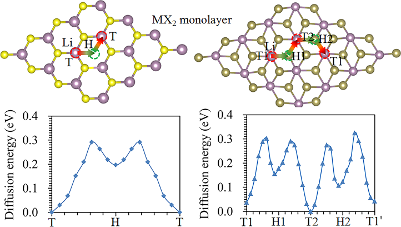
- -dimensional materials have higher exposure to the electrolyte [1]. Two-dimensional materials, such as Co3O4, NiO, phosphorene, SnS and V2O5 all exhibit an excellent capacity retention, rate performance, lower energy barrier and long cycling life compared to their bulk counterparts used as electrode materials


One-step chemical vapor deposition synthesis and supercapacitor performance of nitrogen-doped porous carbon–carbon nanotube hybrids
Beilstein J. Nanotechnol. 2017, 8, 2669–2679, doi:10.3762/bjnano.8.267
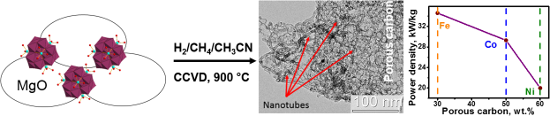
- concentration of incorporated nitrogen. The hybrid materials were tested as electrodes in a 1M H2SO4 electrolyte and the best performance was found for a nitrogen-enriched material produced using the Fe/Mo catalyst. From the electrochemical impedance spectroscopy data, it was concluded that the nitrogen doping
- reduces the resistance at the carbon surface/electrolyte interface and the nanotubes permeating the porous carbon provide fast charge transport in the cell. Keywords: bimetallic catalyst; electrochemical impedance spectroscopy; N-doped carbon; porous carbon–carbon nanotube hybrid; supercapacitor
- possess a high surface area available for electrolyte ions, good wettability and electrical conductivity. Carbon is a traditional material for electrochemical applications owing to its mechanical and chemical stability, light weight, as well as the possibility to control the properties depending on the


Enhanced photoelectrochemical water splitting performance using morphology-controlled BiVO4 with W doping
Beilstein J. Nanotechnol. 2017, 8, 2640–2647, doi:10.3762/bjnano.8.264
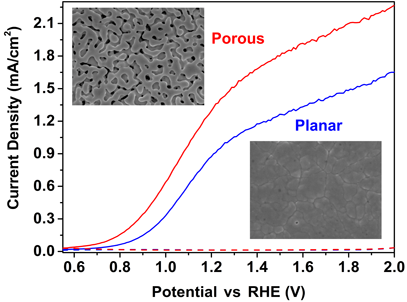
- substrate and a worse performance than the other two samples (1-EG, 2-EG). In the following, we attempt to quantify the contributions from light absorption, charge separation, and charge injection across the electrode/electrolyte interface. These three factors contribute to the water oxidation photocurrent
- the porous structure contributes a 13% increase to Jabs. The oxidation of water is known to have slow oxidation kinetics. To probe the photoelectrochemical properties, an effective hole scavenger, Na2SO3, was added to the electrolyte. The interfacial charge injection efficiency can be approximated to
- be 100% (ηinj = 1) due to the fast oxidation kinetics of Na2SO3 [21]. Under such an approximation, the photocurrent measured with Na2SO3 electrolyte can be determined by [21]: where JNa2SO3 is the oxidation photocurrent using Na2SO3. From Equation 1 and Equation 2, we obtain the charge separation


The role of ligands in coinage-metal nanoparticles for electronics
Beilstein J. Nanotechnol. 2017, 8, 2625–2639, doi:10.3762/bjnano.8.263
- to a more compact coverage of the metal surface, rendering the gold nanoparticles more resistant and stable against aggregation in an electrolyte [95]. 2.2 Ligand-initiated agglomeration Changes in the capping layer can induce agglomeration of dispersed nanoparticles or establish physical contact


Synthesis of metal-fluoride nanoparticles supported on thermally reduced graphite oxide
Beilstein J. Nanotechnol. 2017, 8, 2474–2483, doi:10.3762/bjnano.8.247
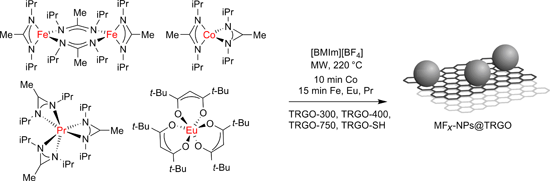
- the interfacial charge storage at the interface between nanosized Fe and the electrolyte LiF, analogous to the phenomena in RuO2 proposed by Maier et al. [90]. The capacity is around 800 mAh/g. During the charging process, there are several oxidation processes, which can be ascribed to the reaction of
- immediate phases [88][89][90][91]. At the first discharge and charge process, the very high capacity may be caused by the formation of a solid–electrolyte interface. After several cycles at 50 mA/g, the capacity stabilizes to around 500 mAh/g and decreases to 220 and 130 mAh/g with the current density
- slurry composed of 75 wt % FeF2-TRGO, 15 wt % active carbon and 10 wt % PVDF in NMP on an aluminum foil. A half-cell was assembled in Ar-filled glovebox with lithium foil as counter electrode and 1 M LiFeF6 in ethylene carbonate/ethylmethyl carbonate (50:50) as electrolyte. The galvanostatic charge


Synthesis and characterization of noble metal–titania core–shell nanostructures with tunable shell thickness
Beilstein J. Nanotechnol. 2017, 8, 2083–2093, doi:10.3762/bjnano.8.208
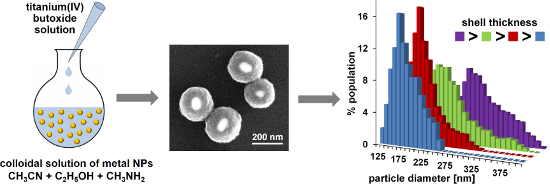
- out using a qNano instrument (Izon Science) with tunable nanopore membranes NP100 (50–200 nm particles size range) for metal colloid measurements and NP150 (100–400 nm particle size range) for the CSNs measurements. The upper and lower cell chambers were filled with an electrolyte (PBS buffer). The


Systematic control of α-Fe2O3 crystal growth direction for improved electrochemical performance of lithium-ion battery anodes
Beilstein J. Nanotechnol. 2017, 8, 2032–2044, doi:10.3762/bjnano.8.204
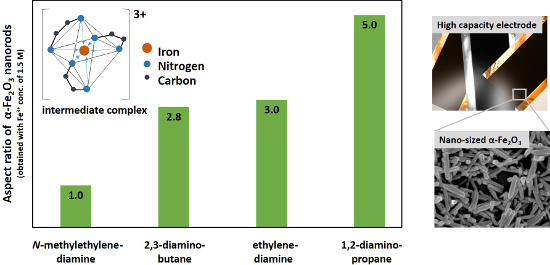
- foil (0.59 mm thickness, Hohsen Corp., Japan) as both a counter and a reference electrode in an argon-filled glove box (H2O, O2 < 1 ppm, Mbraun, Unilab, USA). 150 μL of LiPF6 (1 M) in ethylene carbonate/diethyl carbonate (1:1 w/w, Danvec) was used as the electrolyte and a Celgard 2400 membrane was used
- the reduction to Fe0, associated with the conversion reaction leading to metallic particles finely dispersed in Li2O and electrolyte decomposition with solid–electrolyte interface (SEI) formation [39]. From the second cathodic cycle onwards, the peaks from 1.5 to 1.3 V and at 1.1 V do not appear and


Bi-layer sandwich film for antibacterial catheters
Beilstein J. Nanotechnol. 2017, 8, 1982–2001, doi:10.3762/bjnano.8.199
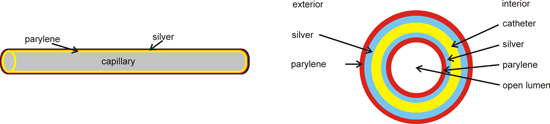
- electrochemical cell, which consists of two electrodes in an electrolyte with defined concentration and DC conductivity, is used as basis. One electrode, the device under test, is coated with a porous layer of a dielectric medium, here PPX, which would yield an infinite DC resistance for perfect coverage
- capacitance of the electrochemical double layer, Cdl. RΩ is the ohmic resistance of the solution of the electrolyte (Figure 11). To measure the impedance of the system the electrodes are connected to a HP 4192A Impedance Analyzer, which measures the impedance Z and the phase angle φ between test voltage and


Freestanding graphene/MnO2 cathodes for Li-ion batteries
Beilstein J. Nanotechnol. 2017, 8, 1932–1938, doi:10.3762/bjnano.8.193
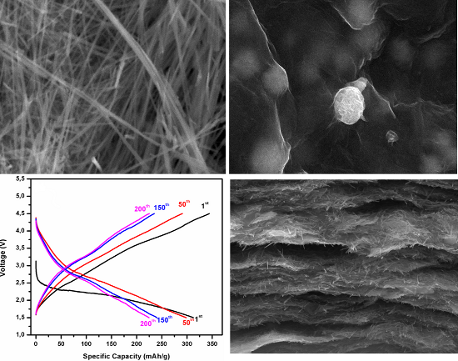
- carbonate (EC) and dimethyl carbonate (DMC) (EC/DMC, 1:1 v/v), which was used as the electrolyte. In order to separate the electrodes, a microporous polypropylene membrane was used. Electrochemical tests of the cathodes were implemented between 1.5 and 4.5 V at a constant current density of 0.1 mA cm−2. The


Three-in-one approach towards efficient organic dye-sensitized solar cells: aggregation suppression, panchromatic absorption and resonance energy transfer
Beilstein J. Nanotechnol. 2017, 8, 1705–1713, doi:10.3762/bjnano.8.171
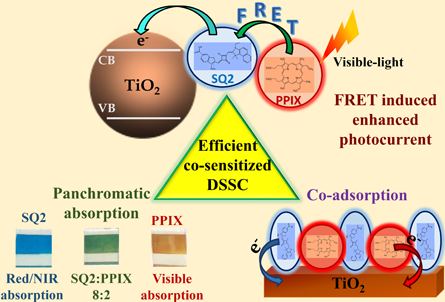
- (TBP) using acetonitrile as a solvent, was used as electrolyte. The active area of all the devices were 0.64 cm2. Device characterization A Keithley multimeter was used to record the photocurrent–voltage (I–V) characteristics of the DSSCs, under 1 sun (100 mW cm−2) irradiance (AM 1.5 simulated


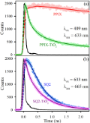

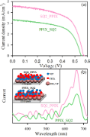
Oxidative stabilization of polyacrylonitrile nanofibers and carbon nanofibers containing graphene oxide (GO): a spectroscopic and electrochemical study
Beilstein J. Nanotechnol. 2017, 8, 1616–1628, doi:10.3762/bjnano.8.161
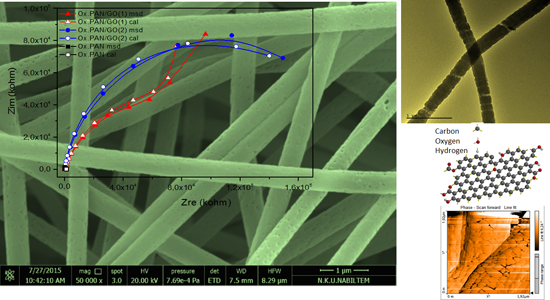
- interior pores filled with electrolyte. Keywords: carbon nanofiber; graphene oxide; oxidized polyacrylonitrile (PAN); Introduction Carbon nanofibers are of great interest because of their chemical similarity to fullerenes and carbon nanotubes. Carbon nanofibers (CNF) have promising electrochemical and
- measurements were performed in 0.5 M H2SO4 electrolyte in the frequency range of 100 mHz to 100 kHz at open circuit potential with an AC perturbation of 10 mV. A standard three-electrode cell was used to study the electrochemical performances of PAN nanofibers which were stabilized at 250 °C for 1 h in air
- ohmic resistance of the solution, Rct represents the charge-transfer resistance between nanofiber electrodes and electrolyte interface and Qdl (constant phase element (CPE)) is the double-layer CPE, a frequency-dependent element. The Nyquist plot in Figure 6a consists of a semicircle related to the


Fabrication of hierarchically porous TiO2 nanofibers by microemulsion electrospinning and their application as anode material for lithium-ion batteries
Beilstein J. Nanotechnol. 2017, 8, 1297–1306, doi:10.3762/bjnano.8.131
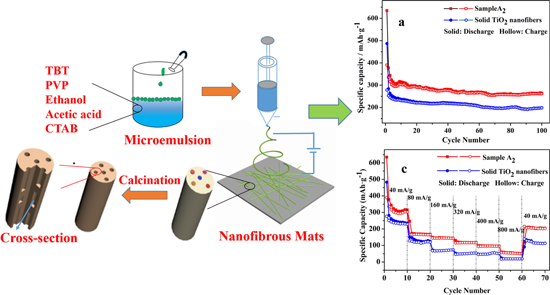
- ] that have advantages over normal structures including a large specific surface area, a high electrolyte–electrode contact area and excellent mass transport of products or reactants to active sites inside meso- or micropores. One-dimensional (1D) nanostructures such as nanofibers, nanotubes, nanowires
- counter electrode, and 1 M LiPF6 dissolved in ethylene carbonate (EC), dimethyl carbonate (DMC) and ethylene methyl carbonate (EMC) (1:1:1, v/v/v) as the electrolyte, respectively. Coin cells were assembled in an argon-filled glove box. The galvanostatic discharge–charge tests were conducted at the
- . The merits of porous nanofibers with a higher specific surface area lie in the higher lithium-ion flux across the interfaces and the larger contact area between the electrode and electrolyte [2][34][35]. Herein, sample A2 should have the best performances as the electrode of lithium-ion battery in




Bright fluorescent silica-nanoparticle probes for high-resolution STED and confocal microscopy
Beilstein J. Nanotechnol. 2017, 8, 1283–1296, doi:10.3762/bjnano.8.130
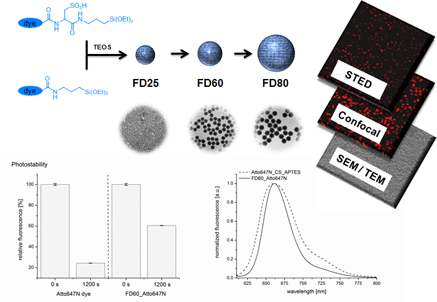
- -potential of the nanoparticles was determined using a Nanosizer ZSP from Malvern Instruments (Herrenberg, Germany) in water at 150 V using 1·10−3 M KCl as background electrolyte. Each sample underwent three series of measurements (with each series comprising 40 runs). Nanoparticle concentration: The


Growth, structure and stability of sputter-deposited MoS2 thin films
Beilstein J. Nanotechnol. 2017, 8, 1115–1126, doi:10.3762/bjnano.8.113
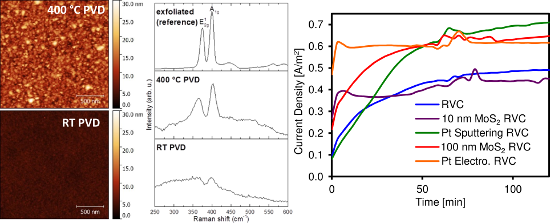
- /AgCl as the reference electrode. Ag/AgCl data was recalculated to yield potential versus reversible hydrogen electrode (RHE) values for easier comparison with the wider literature. 0.1 M Na2SO4 with pH close to neutral was used as the electrolyte. Further electrochemical testing for water electrolysis


High photocatalytic activity of Fe2O3/TiO2 nanocomposites prepared by photodeposition for degradation of 2,4-dichlorophenoxyacetic acid
Beilstein J. Nanotechnol. 2017, 8, 915–926, doi:10.3762/bjnano.8.93
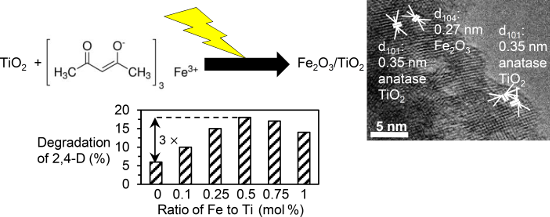
- used and prepared as follows. The photocatalyst sample (10 mg) was dispersed in water (6 mL) and the mixture was homogeneously mixed in an ultrasonic bath for 15 min. The mixture (20 µL) was then dropped onto the working electrode of the SPE, followed by immersion of the SPE in 6 mL of electrolyte


Vapor deposition routes to conformal polymer thin films
Beilstein J. Nanotechnol. 2017, 8, 723–735, doi:10.3762/bjnano.8.76
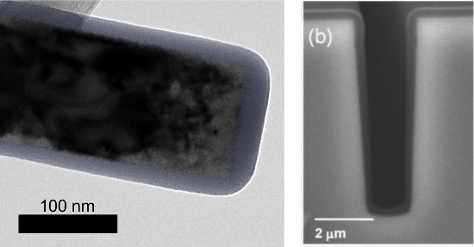
- alloys have an incredibly high gravimetric lithium storage capacity. He at al. have used MLD to encapsulate Si nanoparticles with alucone for this application [49]. The alucone layer prevents the formation of a resistive secondary electrolyte interphase (SEI), thus yielding improved electrode performance
- . Gleason and coworkers, having previously shown pV4D4 as potential solid electrolyte, are exploring the Si nanowire assembly in Figure 8a as a route toward anodes for micro lithium ion batteries [39]. Figure 9e shows a corresponding, conformal pV4D4 coating on a lithium spinel oxide particle, a material


Synthesis of graphene–transition metal oxide hybrid nanoparticles and their application in various fields
Beilstein J. Nanotechnol. 2017, 8, 688–714, doi:10.3762/bjnano.8.74
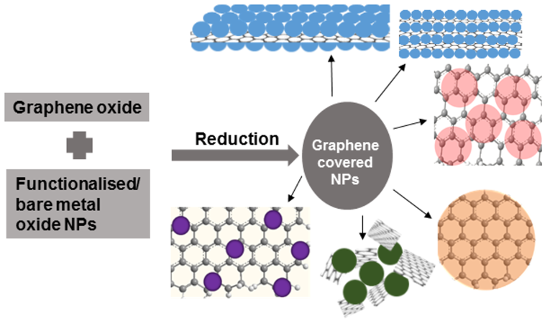
- the carbon-coated Fe2O3–graphene hybrids show that the improved performance in LIBs is attributed also to the carbon layer around the Fe2O3 NPs [146][162]. The thin carbon shells effectively inhibit the direct exposure of encapsulated Fe3O4 NPs to the electrolyte and preserve the structural and






Carbon nanotube-wrapped Fe2O3 anode with improved performance for lithium-ion batteries
Beilstein J. Nanotechnol. 2017, 8, 649–656, doi:10.3762/bjnano.8.69
- polypropylene film. Electrolyte was prepared by dissolving 1 M lithium hexafluorophosphate (LiPF6) in a mixed solution of fluoroethylene carbonate/ethyl methyl carbonate/dimethyl carbonate (FEC/EMC/DMC, 1:1:1 by volume). Coin cells (2032 type) were assembled inside an argon filled glove box with a moisture and
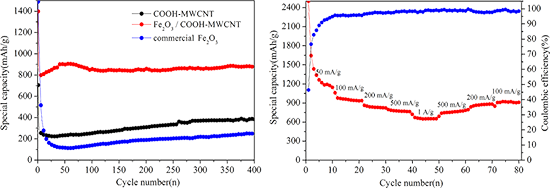
- -MWCNT were 710 and 300 mAh·g−1 with a coulombic efficiency of 42%. The large capacity fading and low coulombic efficiency observed for the electrode in the first cycle can be ascribed to irreversible processes such as formation of a solid–electrolyte interface (SEI) film and the decomposition of
- electrolyte [9][10]. The 10th and 50th discharge curves almost coincide with the 2nd discharge curve, which can be attributed to the high conductivity of carbon nanotubes. Figure 4b shows charge and discharge profiles of the Fe2O3/COOH-MWCNT composites. The first discharge curve of cells exhibited an apparent


Gas sensing properties of MWCNT layers electrochemically decorated with Au and Pd nanoparticles
Beilstein J. Nanotechnol. 2017, 8, 592–603, doi:10.3762/bjnano.8.64
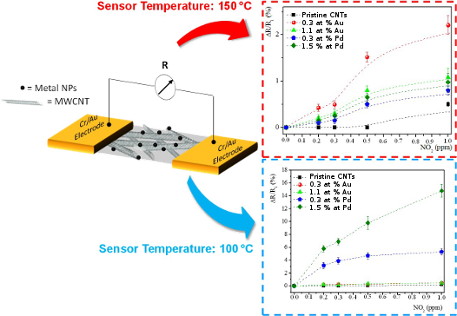
- , a gold or palladium sacrificial anode, used as the working electrode. A platinum cathode was used as the counter electrode. The electrolyte solution was composed of quaternary ammonium halide (0.05 M) dissolved in a 3:1 mixture of tetrahydrofuran and acetonitrile. Specifically, the quaternary
- ammonium salt was used both as a supporting electrolyte and as a nanoparticle capping agent. Tetrabutylammonium bromide (TBAB) was used for Pd NP synthesis and tetraoctylammonium chloride (TOAC) for the Au NPs [35]. The electrochemically synthesized Au and Pd NPs had a uniform dispersion with a diameter of


Liquid permeation and chemical stability of anodic alumina membranes
Beilstein J. Nanotechnol. 2017, 8, 561–570, doi:10.3762/bjnano.8.60
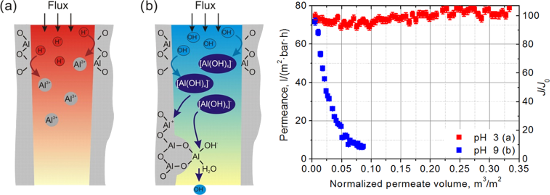
- [20][21], our results can unlikely be used as proof for the suggested mechanism because alumina polycation formation pH (≈5) strongly changes the pH of the electrolyte used during anodization (≈1). However, dissolution of the membrane material does not explain the loss of membrane permeability in the
- . The electrolyte was pumped through the cell by a peristaltic pump, and its temperature was kept in the range of 0–2 °C during anodization. For the preparation of membranes with an average pore diameter of 40 nm and 90 nm, aluminium was anodized in 0.3 M H2C2O4 (98%, Aldrich) under mild and hard





