Search results
Search for "electron microscopy" in Full Text gives 1257 result(s) in Beilstein Journal of Nanotechnology. Showing first 200.
Synthesis of silver–palladium Janus nanoparticles using co-sputtering of independent sources: experimental and theorical study
Beilstein J. Nanotechnol. 2024, 15, 808–816, doi:10.3762/bjnano.15.67
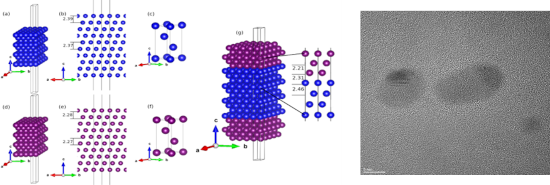
- promote the synthesis of bimetallic Janus nanoparticles. The structural properties of the resulting nanoparticles were investigated by transmission electron microscopy (TEM), and the chemical composition was analyzed by TEM energy dispersive spectroscopy (TEM-EDS), which, together with structural analysis
- methods. MD and electron microscopy simulations show that the features observed in the electron micrographs of real Janus AgPd BNPs can be fairly reproduced if the Ag lattice is slightly rotated with respect to the Pd lattice. Using DFT approximations, we have proposed a set of structural models that




Electrospun polysuccinimide scaffolds containing different salts as potential wound dressing material
Beilstein J. Nanotechnol. 2024, 15, 781–796, doi:10.3762/bjnano.15.65
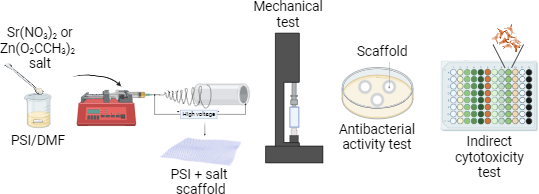
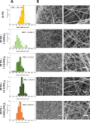
- biological properties of the scaffolds developed for application as wound dressings. The scaffold systems obtained by PSI synthesis, salt addition, and fiber formation were first investigated by scanning electron microscopy. In almost all cases, different salts caused a decrease in the fiber diameter of PSI
- scanning electron microscopy (SEM), Fourier-transform infrared spectroscopy (FTIR), mechanical tests, investigation of salt dissolution from the scaffolds, examination of their antibacterial activity against four different bacterial strains (Escherichia coli, Pseudomonas aeruginosa, Bacillus subtilis, and
- . Scanning electron microscopy and energy-dispersive X-ray spectroscopy Scanning electron microscopy images were taken to determine the fiber diameters of salt-containing polymer scaffolds. They were made at the Budapest University of Technology and Economics, Department of Polymer Technology, applying a



Level set simulation of focused ion beam sputtering of a multilayer substrate
Beilstein J. Nanotechnol. 2024, 15, 733–742, doi:10.3762/bjnano.15.61
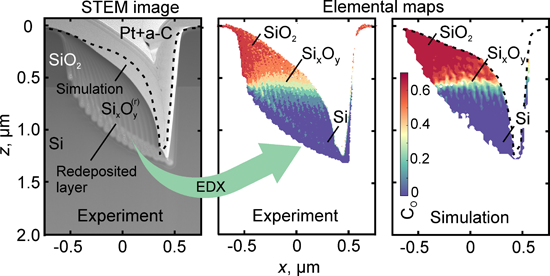
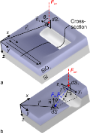
- , and their cross sections were visualized in scanning transmission electron microscopy images. The superimposition of the calculated structure profiles onto the images showed a satisfactory agreement between simulation and experimental results. In the case of boxes that were prepared with an asymmetric
- understanding of the sputtering process, the distribution of oxygen atoms in the redeposited layer derived from the numerical data was compared with the corresponding elemental map acquired by energy-dispersive X-ray microanalysis. Keywords: electron microscopy; focused ion beam; level set simulation
- sputtering of a multilayer substrate under FIB irradiation. The results of the calculations for narrow trenches and rectangular boxes with varying aspect ratios were compared with cross-sectional scanning transmission electron microscopy (STEM) images of experimental test structures fabricated in the silicon

![[Graphic 55]](/bjnano/content/inline/2190-4286-15-61-i68.svg?max-width=637&scale=1.18182)


Simultaneous electrochemical determination of uric acid and hypoxanthine at a TiO2/graphene quantum dot-modified electrode
Beilstein J. Nanotechnol. 2024, 15, 719–732, doi:10.3762/bjnano.15.60
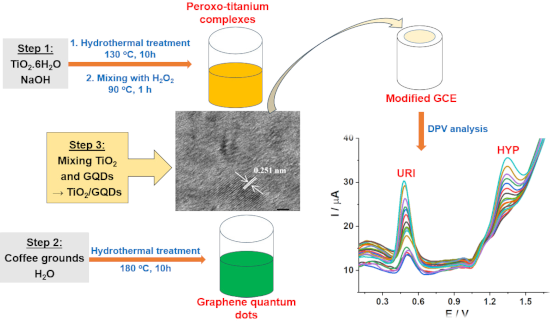
- diffraction, Raman spectroscopy, high-resolution transmission electron microscopy, and energy-dispersive X-ray mapping. The TiO2/GQDs-GCE exhibits better electrochemical activity for uric acid and hypoxanthine than GQDs/GCE or TiO2/GCE in differential pulse voltammetry (DPV) measurements. Under optimized
- GQDs were observed by using a JEM 2100 high-resolution transmission electron microscopy (HRTEM), Joel, Japan. Raman spectroscopy measurements were performed on a WiTec, Alpha 300R with a 532 nm laser. Surface analyses of the obtained materials were carried out using a S-4800 scanning electron


Elastic modulus of β-Ga2O3 nanowires measured by resonance and three-point bending techniques
Beilstein J. Nanotechnol. 2024, 15, 704–712, doi:10.3762/bjnano.15.58
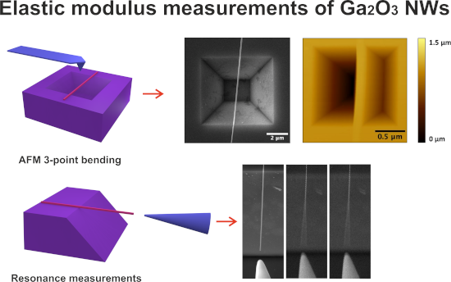
- the mechanical properties of Ga2O3 nanowires (NWs). In this work, we investigated the elastic modulus of individual β-Ga2O3 NWs using two distinct techniques – in-situ scanning electron microscopy resonance and three-point bending in atomic force microscopy. The structural and morphological properties
- finely controllable β-Ga2O3 NW synthesis methods and detailed post-examination of their mechanical properties before considering their application in future nanoscale devices. Keywords: atomic force microscopy; elastic modulus; gallium oxide; mechanical properties; nanowire; scanning electron microscopy
- peaks are associated with monoclinic β-Ga2O3 (ICDD-PDF #41–1103), as indicated in Figure 1a, while the Bragg peak at around 33 degrees corresponds to the Si substrate (forbidden Si(200) reflection). Furthermore, transmission electron microscopy (TEM) was used to study the inner crystalline structure of


Gold nanomakura: nanoarchitectonics and their photothermal response in association with carrageenan hydrogels
Beilstein J. Nanotechnol. 2024, 15, 678–693, doi:10.3762/bjnano.15.56

- incorporation into k-CG hydrogel beads. Transmission electron microscopy and atomic force microscopy measurements The actual mean size of the synthesized makura-shaped nanoparticles was calculated in terms of length/width aspect ratio. Figure 4 shows transmission electron microscopy (TEM) and atomic force
- scanning electron microscopy with energy-dispersive X-ray spectroscopy (SEM/EDX) of the powdered form of AuNM, as shown in Supporting Information File 1, Figure S4. Growth mechanism in AuNMs during seed-mediated synthesis Seed-mediated synthesis approach has been adopted in the present work which is quite






Exfoliation of titanium nitride using a non-thermal plasma process
Beilstein J. Nanotechnol. 2024, 15, 631–637, doi:10.3762/bjnano.15.53
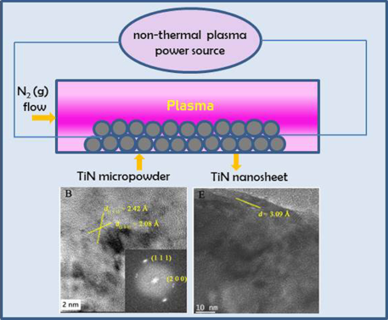
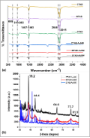
- temperature to generate ionized particles. These ionized species interact with the ceramic crystal of TiN, resulting in a pronounced structural expansion. The exfoliated TiN products were comprehensively characterized using transmission electron microscopy, X-ray diffraction, and Raman spectroscopy
- cellulose acetate membrane with 200 nm pores. The process was concluded by drying to obtain the TiN nanosheets. The flowchart of the synthesis procedure is shown in Figure 1. The morphology of the exfoliated material was investigated by transmission electron microscopy (TEM) with a Jeol JEM-2100 electron
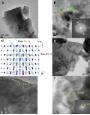
- the same exfoliation method. These combined findings highlight the structural changes during the non-thermal plasma exfoliation process, further supporting the successful transformation of bulk TiN into nanosheets. Figure 3 shows high-resolution transmission electron microscopy (HRTEM) images of TiN



Comparative analysis of the ultrastructure and adhesive secretion pathways of different smooth attachment pads of the stick insect Medauroidea extradentata (Phasmatodea)
Beilstein J. Nanotechnol. 2024, 15, 612–630, doi:10.3762/bjnano.15.52
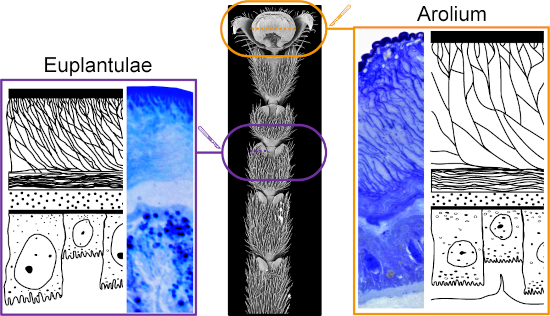
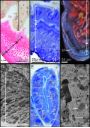
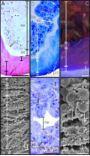
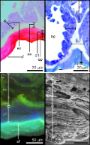
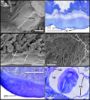
- stick insect Medauroidea extradentata using scanning electron microscopy, micro-computed tomography, light microscopy, and confocal laser scanning microscopy. Our observations revealed structural differences between both attachment pads, reflecting their distinct functionality. Furthermore, our results
- relatively large adhesive organs that bear no further surface microstructures [47][55][56] and because the droplet morphology of its tarsal secretion has been recently analysed [28][38][47][55][56]. Combining different imaging techniques, including scanning electron microscopy (SEM), confocal laser scanning
- , Germany) with 40× and 100× lenses. The images were processed using Adobe Photoshop (version CS6; Adobe Systems Inc., San Jose, CA, USA). Scanning electron microscopy Tarsi of M. extradentata were cut from adult females and fixed in 2.5% glutaraldehyde in PBS for 24 h. Then, they were washed two times with



Stiffness calibration of qPlus sensors at low temperature through thermal noise measurements
Beilstein J. Nanotechnol. 2024, 15, 580–602, doi:10.3762/bjnano.15.50
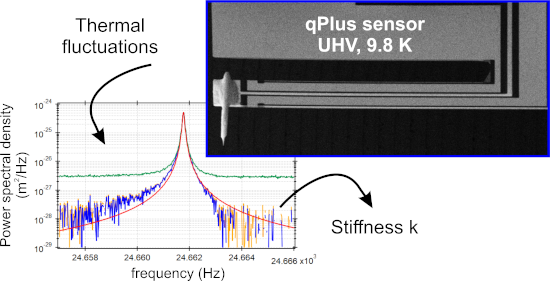
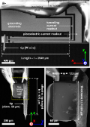
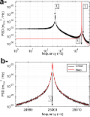
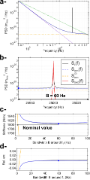
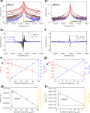
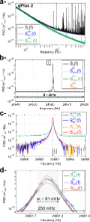
- -Omicron, operated at 9.8 K. We use commercial qPlus sensors purchased from Scienta-Omicron. Scanning electron microscopy (SEM) pictures of one of these probes are shown in Figure 1. SEM analysis was performed with a Zeiss GeminiSEM 500 ultrahigh-resolution FESEM at 15 kV. Secondary electron detection was

Radiofrequency enhances drug release from responsive nanoflowers for hepatocellular carcinoma therapy
Beilstein J. Nanotechnol. 2024, 15, 569–579, doi:10.3762/bjnano.15.49
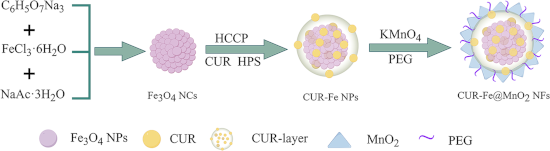
- solubility limit its functionality. In this study, radiofrequency- (RF) enhanced responsive nanoflowers (NFs), containing superparamagnetic ferric oxide nanoclusters (Fe3O4 NCs), – CUR layer, – and MnO2 (CUR-Fe@MnO2 NFs), were verified to have a thermal therapeutic effect. Transmission electron microscopy
- ), and CUR-Fe@MnO2 NFs were observed via transmission electron microscopy (TEM) (Figure 2a–c). The sizes of Fe3O4 NCs, CUR-Fe NPs, and CUR-Fe@MnO2 NFs were 50.72 ± 10.16 nm, 94.00 ± 12.21 nm, and 96.27 ± 19.14 nm, respectively. The Fe3O4 NCs surface coating can be seen in Figure 1b, indicating that CUR
- CUR-Fe@MnO2 NFs were collected by magnetic separation and washed 3 times with deionized water. Characterization of the synthesized nanomaterials The morphology and size of Fe3O4 NCs, CUR-Fe NPs, and CUR-Fe@MnO2 NFs were determined via transmission electron microscopy (Tecnai F20, FEI, USA). The TEM


Aero-ZnS prepared by physical vapor transport on three-dimensional networks of sacrificial ZnO microtetrapods
Beilstein J. Nanotechnol. 2024, 15, 490–499, doi:10.3762/bjnano.15.44
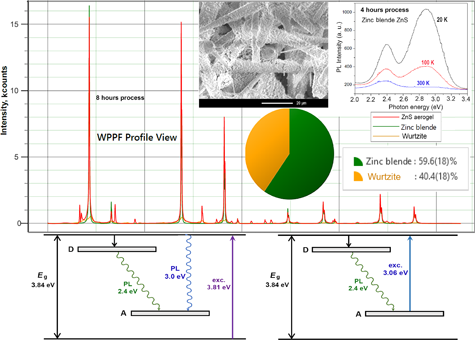
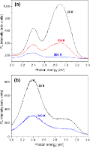
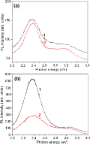
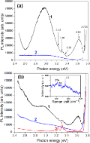
- produced material is investigated by scanning electron microscopy (SEM), while its crystalline and optical qualities are assessed by X-ray diffraction (XRD) analysis and photoluminescence (PL) spectroscopy, respectively. We demonstrate possibilities for controlling the composition and the crystallographic
- sensor applications. Keywords: aeromaterial; crystallographic structure; luminescence; physical vapor transport; scanning electron microscopy (SEM); X-ray diffraction (XRD); Introduction Porous materials represent a class of solid-state networks widely used in adsorptive and photocatalytic removal of



Photocatalytic degradation of methylene blue under visible light by cobalt ferrite nanoparticles/graphene quantum dots
Beilstein J. Nanotechnol. 2024, 15, 475–489, doi:10.3762/bjnano.15.43
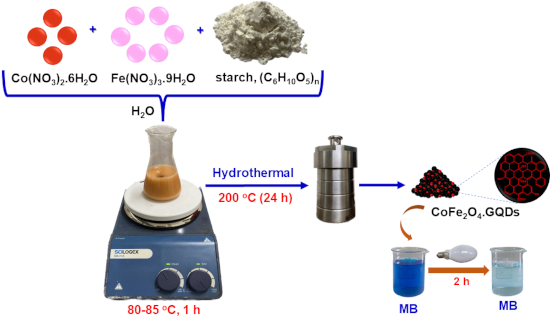
- electron microscopy, transmission electron microscopy, ultraviolet–visible diffuse reflectance spectroscopy, Fourier-transform infrared spectroscopy, photoluminescence spectroscopy, vibrating-sample magnetometry, and nitrogen adsorption/desorption isotherms. Cobalt ferrite crystals of around 8–10 nm and
- Tristar-3030 system (Micromeritics, USA). The magnetic properties were measured on a Micro Sense vibrating-sample magnetometer (VSM) at room temperature. Scanning electron microscopy (SEM) observations and energy-dispersive X-ray elemental mapping (EDX mapping) were carried out on a Hitachi S-4800 FESEM
- (Japan). High-resolution transmission electron microscopy (HR-TEM) observation was performed with a JEM 1010. The intermediates in the MB degradation were determined by using an Agilent 1100 LC/MS-MS system with an electron spray ionization source combined with an ion trap. Synthesis of CoFe2O4, CoFe2O4




Fabrication of nanocrystal forms of ᴅ-cycloserine and their application for transdermal and enteric drug delivery systems
Beilstein J. Nanotechnol. 2024, 15, 465–474, doi:10.3762/bjnano.15.42
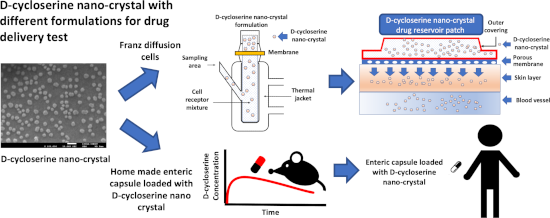
- formulation in the transdermal delivery system. Scanning electron microscopy images of commercial DCS (A) and DCS nanocrystals (B). The X-ray powder diffraction spectra of DCD nanocrystal and commercial DCS. The pH stability test of DCS in neutral (pH 7.4) and acidic (pH 1.2) environments (p < 0.01). In vitro


Sidewall angle tuning in focused electron beam-induced processing
Beilstein J. Nanotechnol. 2024, 15, 447–456, doi:10.3762/bjnano.15.40
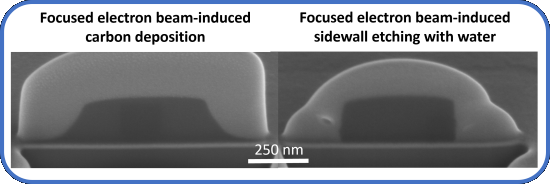
- by etching with water and it is shown, using transmission electron microscopy imaging, that the sidewall angle can be tuned from outward to inward by controlling the etch position on the sidewall. A surprising under-etching due to the emission of secondary electrons from the deposit was observed




Heat-induced morphological changes in silver nanowires deposited on a patterned silicon substrate
Beilstein J. Nanotechnol. 2024, 15, 435–446, doi:10.3762/bjnano.15.39
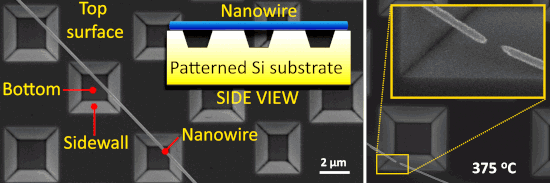
- process, fragmentation in either adhered or suspended parts can dominate. Experiments were supported by finite element method and molecular dynamics simulations. Keywords: diffusion; finite element method; heat treatment; molecular dynamics simulations; morphological changes; scanning electron microscopy
- the results from the scheme 1. Approximately one hour waiting time between cycles was chosen to give enough time for taking series of scanning electron microscopy (SEM, FEI, Nanosem 450) images after each heating cycle. Additionally, a separate series of transmission electron microscopy (TEM


Insect attachment on waxy plant surfaces: the effect of pad contamination by different waxes
Beilstein J. Nanotechnol. 2024, 15, 385–395, doi:10.3762/bjnano.15.35
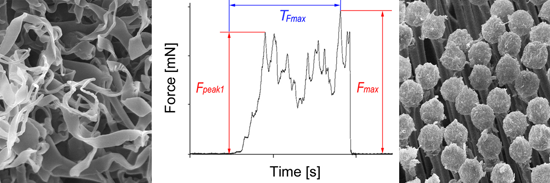
- ) were tested. Scanning electron microscopy To visualize the waxy plant surfaces and attachment devices in the C. fastuosa male beetle in both clean and contaminated conditions, scanning electron microscopy was employed. For plant surfaces, small (ca. 1 cm2) pieces of plant organs were used. In the case
- , experiments with all waxy plant surfaces (d.f. = 44) and (2) data obtained from five test insects on each plant surface separately (d.f. = 4). Scanning electron microscopy (SEM) micrographs of waxy plant surfaces in the young stem of Acer negundo (a) and adaxial (upper) leaf sides of Aloe vera (b), Aquilegia




Investigating ripple pattern formation and damage profiles in Si and Ge induced by 100 keV Ar+ ion beam: a comparative study
Beilstein J. Nanotechnol. 2024, 15, 367–375, doi:10.3762/bjnano.15.33
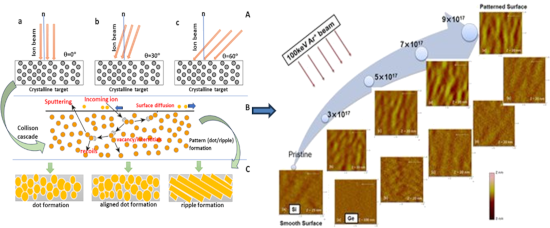
- using atomic force microscopy, and induced damage profiles inside Si and Ge by Rutherford backscattering spectrometry and transmission electron microscopy. The ripple wavelength was found to scale with ion fluence, and energetic ions created more defects inside Si as compared to that of Ge. Although
- electron microscopy; Introduction Scientific research varying from electronics to photonics, homeland security, high-resolution parallel patterning of magnetic media, biotechnology, and medicine are based upon nanotechnology. These applications require nanopatterning techniques to fabricate devices or
- microscopy (AFM) [3] and transmission electron microscopy (TEM), it is possible to visualize these features. Formation of dots, ripples, and pits have been well studied using IBS [4][5][6][7][8][9]. In the last few decades, numerous efforts have been made to understand IBS through simulations [10] as well as


Modulated critical currents of spin-transfer torque-induced resistance changes in NiCu/Cu multilayered nanowires
Beilstein J. Nanotechnol. 2024, 15, 360–366, doi:10.3762/bjnano.15.32
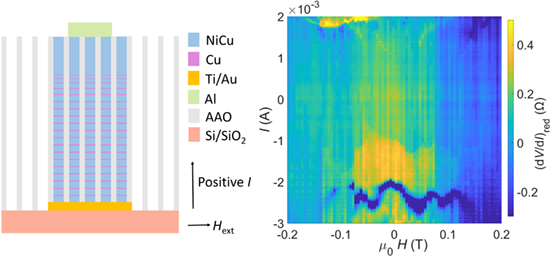
- device fabrication, and scanning electron microscopy (SEM) images of the devices during the fabrication process are presented in Supporting Information File 1. In most reported works, the nanowires were deposited in all pores of the AAO templates [18][19][20][21]. Additional etching steps or coating


Comparative electron microscopy particle sizing of TiO2 pigments: sample preparation and measurement
Beilstein J. Nanotechnol. 2024, 15, 317–332, doi:10.3762/bjnano.15.29
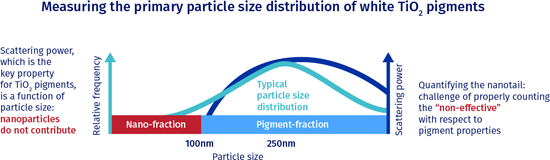
- regulatory classification for some of the samples tested. The electron microscopy results published here are supported by results from other complementary methods including surface area measurements. It is the intention of this publication to contribute to an ongoing discussion on size measurements of TiO2
- pigments and other particulate materials and advance the development of widely acceptable, precise, and reproducible measurement protocols for measuring the number-based PSDs of particulate products in the size range of TiO2 pigments. Keywords: electron microscopy; nanomaterials definition; number-based
- critical. Among the methods used to determine particle size distributions, the evaluation of particle sizes from electron microscopy (EM) images is considered as a confirmatory method for correct classification [3]. In the case of monomodal particle distributions, this method is straightforward [4


Ultrasensitive and ultrastretchable metal crack strain sensor based on helical polydimethylsiloxane
Beilstein J. Nanotechnol. 2024, 15, 270–278, doi:10.3762/bjnano.15.25
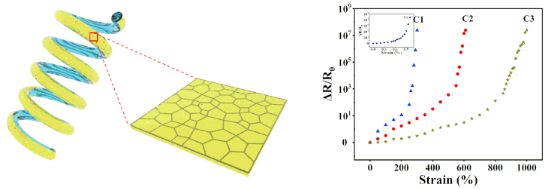
- with PDMS. Parts of the experimental procedure are shown in Figure S6 (Supporting Information File 1). Characterization The surface morphology of the samples prepared in this study was examined through the utilization of scanning electron microscopy (SEM) (TESCAN MIRA3, Czech Republic) and an optical


Quantitative wear evaluation of tips based on sharp structures
Beilstein J. Nanotechnol. 2024, 15, 230–241, doi:10.3762/bjnano.15.22
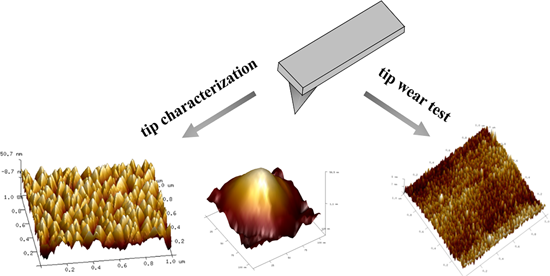
- nanotechnology [1][2][3][4][5]. Compared to optical and electron microscopy, AFM enables three-dimensional (3D) measurements of nanostructures in air and liquid environments [6]. The interaction between the tip and sample influences the measurement results of AFM by convoluting the tip topography with the sample




Ion beam processing of DNA origami nanostructures
Beilstein J. Nanotechnol. 2024, 15, 207–214, doi:10.3762/bjnano.15.20
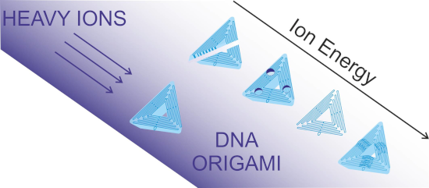
- , ENSICAEN, UNICAEN, CEA, CNRS, CIMAP, Boulevard Henri Becquerel, BP 5133, 14070, Caen cedex 5, France Electron Microscopy Center, Institute of Molecular Genetics of the CAS, Vídenská 1083, 142 20, Prague, Czech Republic 10.3762/bjnano.15.20 Abstract DNA origami nanostructures are emerging as a bottom-up
- supported by the Czech Science Foundation, Project No. 21-26601X. We also acknowledge the Electron Microscopy Core Facility, IMG ASCR - Prague supported by the MEYS CR (LM2018129 Czech-BioImaging) and ERDF (No. CZ.02.1.01/0.0/0.0/16_013/0001775) for the use of the FIB-SEM. L.S. finally acknowledges support


Graphene removal by water-assisted focused electron-beam-induced etching – unveiling the dose and dwell time impact on the etch profile and topographical changes in SiO2 substrates
Beilstein J. Nanotechnol. 2024, 15, 190–198, doi:10.3762/bjnano.15.18
- studies: A) optical microscopy, B) scanning electron microscopy (SEM), C) AFM, and D) correlative probe and electron microscopy (CPEM). The optical contrast of graphene placed onto SiO2/Si allows us to easily distinguish between its mono-, bi-, triple, and thicker flakes layers. The values (approx. 2.5 nm
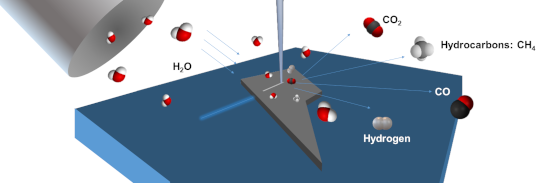
- that with certain precautions water-assisted FEBIE can be applied for such a nanopatterning process. The experimental data obtained with scanning Raman spectroscopy, correlative probe and electron microscopy, and in situ AFM measurements provide a comprehensive image of FEBIE etch profiles. In addition
- different microscopy methods: A) optical microscopy; B) SEM; C) AFM of the lines etched using different dwell times: i) 1 μs, ii) 10 μs, and iii) 100 μs. D) Correlative probe and electron microscopy composed from the correlated signals of SEM and AFM analysis. The inset shows the AFM scan profile over


Nanocarrier systems loaded with IR780, iron oxide nanoparticles and chlorambucil for cancer theragnostics
Beilstein J. Nanotechnol. 2024, 15, 180–189, doi:10.3762/bjnano.15.17
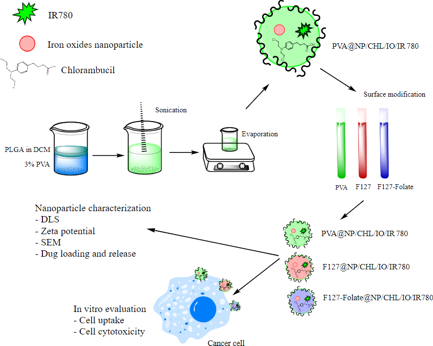
- were performed in both 0.1× PBS (13.7 mM of NaCl, 0.27 mM of KCl, 1 mM of Na2HPO4, and 0.18 mM of KH2PO4, pH 7.4) and animal cell culture media containing DMEM and 10% FBS. Scanning electron microscopy For scanning electron microscopy (SEM) experiments, 10 μL of F127-folate@NP was loaded on the silica


Modification of graphene oxide and its effect on properties of natural rubber/graphene oxide nanocomposites
Beilstein J. Nanotechnol. 2024, 15, 168–179, doi:10.3762/bjnano.15.16
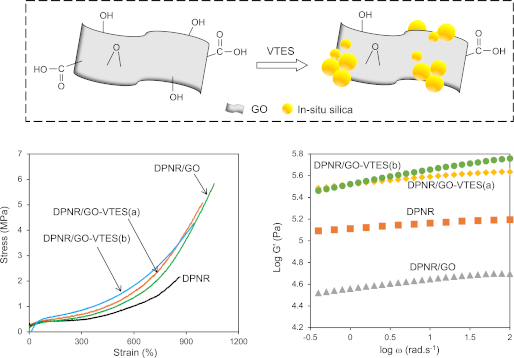
- characterized by X-ray diffraction (XRD), Fourier-transform infrared spectroscopy, contact angle, thermal gravimetric analysis, and scanning electron microscopy. The XRD results showed the appearance of an amorphous region of silica particles at a diffraction angle of 22°. The formation of silica was
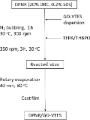
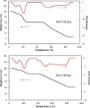
- gravimetric analysis (TGA) of the samples was performed on a TA Q500 instrument. The temperature was increased at a heating rate of 10 °C /min from room temperature to 900 °C in air atmosphere. The morphology of the DPNR/GO-VTES was observed with field-emission scanning electron microscopy (FE-SEM) performed
- efficiently attached to GO, and the attachment was more efficient in basic conditions rather than acidic conditions. Scanning electron microscopy images Figure 8 shows SEM images for GO-VTES(a) and GO-VTES(b). As can be seen, silica was produced with a size of approx. 50 nm for GO-VTES(a) and GO-VTES(b). It