Search results
Search for "feedback" in Full Text gives 232 result(s) in Beilstein Journal of Nanotechnology. Showing first 200.
The eNanoMapper database for nanomaterial safety information
Beilstein J. Nanotechnol. 2015, 6, 1609–1634, doi:10.3762/bjnano.6.165
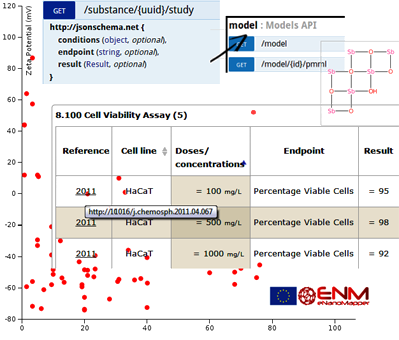


Experiences in supporting the structured collection of cancer nanotechnology data using caNanoLab
Beilstein J. Nanotechnol. 2015, 6, 1580–1593, doi:10.3762/bjnano.6.161
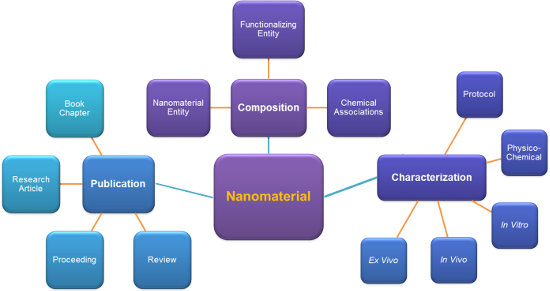
- Feedback The caNanoLab team is interested in feedback from the user community on the new caNanoLab features and plans for future enhancements. A discussion forum was created to receive this feedback at https://nciphub.org/groups/cananolab_usability. The team is especially interested in the community’s





Electrical properties and mechanical stability of anchoring groups for single-molecule electronics
Beilstein J. Nanotechnol. 2015, 6, 1558–1567, doi:10.3762/bjnano.6.159
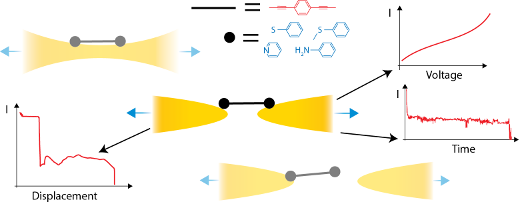
- experiment we break and reform the gold contact while recording the current with an applied bias voltage of typically 0.1 V separating the electrodes at a speed of 5 nm/s. A feedback on the conductance is used: we break for 6 nm after reaching 20G0 and we close the junction until the conductance reaches 40G0


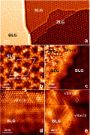
Enhanced fullerene–Au(111) coupling in (2√3 × 2√3)R30° superstructures with intermolecular interactions
Beilstein J. Nanotechnol. 2015, 6, 1421–1431, doi:10.3762/bjnano.6.147
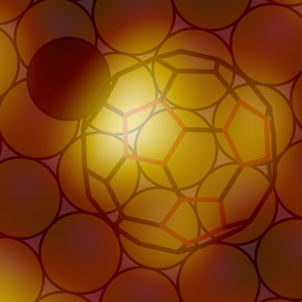
- of the ac tunnelling current achieved by modulating the sample bias after switching off the feedback loop. The single crystal Au(111) substrate (MaTecK, Germany) was cleaned in UHV by cycles of Ne+ ion sputtering (1 kV, 10 min) and thermal annealing (600 °C, 20 min). The cleanliness was checked by


Electron and heat transport in porphyrin-based single-molecule transistors with electro-burnt graphene electrodes
Beilstein J. Nanotechnol. 2015, 6, 1413–1420, doi:10.3762/bjnano.6.146
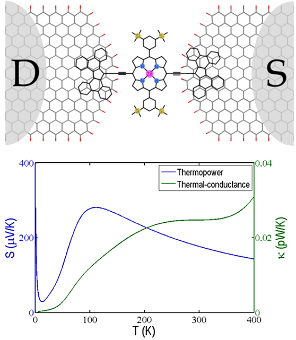
- in the porphyrin central group in the LUMO and LUMO+1 state. Electro-burnt graphene electrodes Feedback-controlled electro-burnt graphene (EBG) electrodes with nanometre separation were formed using mechanically exfoliated, few-layer graphene [9] and CVD-grown, monolayer graphene [17][18]. To form
- carbon atoms to instantaneously react with atmospheric oxygen, resulting in combustion. A feedback signal is used to impede this oxidation before the sample is destroyed. After successive repetitions of this process, the graphene nanoribbon becomes more and more narrow and finally breaks to create a


Nano-contact microscopy of supracrystals
Beilstein J. Nanotechnol. 2015, 6, 1229–1236, doi:10.3762/bjnano.6.126
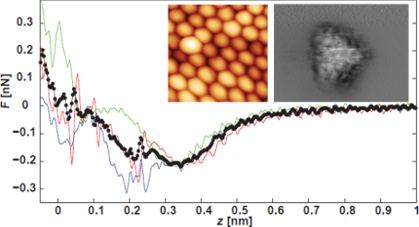
- using conventional Δf feedback on the attractive branch. Oscillation amplitudes (A0) between 0.1 and 0.3 nm were typically used for DFM imaging. We reduced any possible electronic crosstalk [19] or so-called “phantom force” [21] effects by ensuring DFM imaging was performed in the absence of a
- constant Δf feedback and slowly increased the Δf setpoint until stable, high contrast DFM imaging was obtained. Figure 1C is an image of the same nanocrystal as shown in the centre of Figure 1B acquired in constant Δf DFM mode at a Δf of −2 Hz. We note that the appearance of the nanocrystals in DFM
- feedback is broadly comparable to that in dSTM, with the particles having the same approximate size and shape with little internal contrast. After completing the DFM scan, the tip was positioned over the centre of a nanocrystal and the feedback loop turned off. The same region was then imaged in constant

![[Graphic 1]](/bjnano/content/inline/2190-4286-6-126-i1.png?max-width=637&scale=1.18182) = 20 pA, ...
= 20 pA, ...


Tattoo ink nanoparticles in skin tissue and fibroblasts
Beilstein J. Nanotechnol. 2015, 6, 1183–1191, doi:10.3762/bjnano.6.120
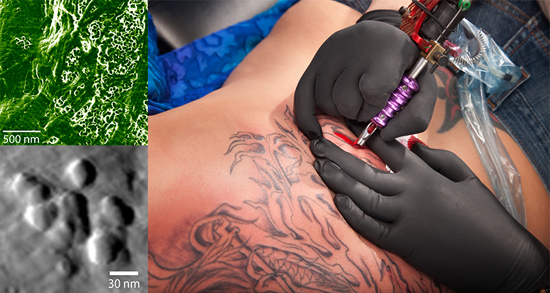
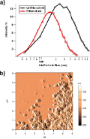
- greater clarity, as it is a more efficient edge detector and is not low-pass filtered through the electronic feedback loops [23]. The z-scale on the amplitude images reflects changes in the height moved by the piezo sensors to maintain the engage amplitude setpoint. From the amplitude image in Figure 1b


Closed-loop conductance scanning tunneling spectroscopy: demonstrating the equivalence to the open-loop alternative
Beilstein J. Nanotechnol. 2015, 6, 1116–1124, doi:10.3762/bjnano.6.113
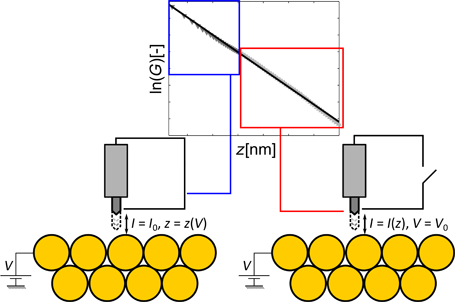
- results and theoretical calculations, these effects only take place at tip–sample separations below 500 pm, i.e., in the z(V) regime of Figure 6. As such, any relaxation effects will be negated by the active feedback loop during z(V) measurements. If this were not the case, the onset of relaxation effects


Superluminescence from an optically pumped molecular tunneling junction by injection of plasmon induced hot electrons
Beilstein J. Nanotechnol. 2015, 6, 1100–1106, doi:10.3762/bjnano.6.111
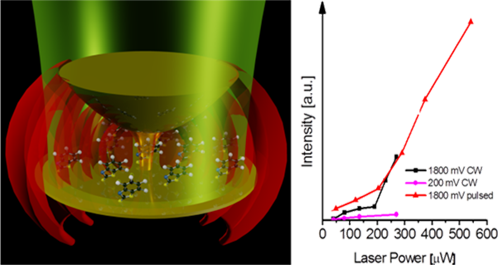
- Information File 1), leading to a spectral narrowing of the luminescence of about 40% to 55 nm. Such a spectral narrowing along with the nonlinear intensity increase observed as a function of optical pump power is a reliable sign of signal amplification by positive feedback. This feedback directs a portion of
- , Supporting Information File 1). Hence, a feedback of the emitted energy into the quantum system can occur. When our system is optically pumped, a large population of plasmon-induced hot electrons near the Fermi level is created, which can refill the hole in the HOMO. Thus, there is a feedback of energy into


Optimization of phase contrast in bimodal amplitude modulation AFM
Beilstein J. Nanotechnol. 2015, 6, 1072–1081, doi:10.3762/bjnano.6.108
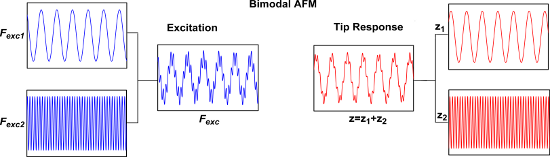
- feedback loop keeps constant the amplitude of the first mode while the observables of the second mode have not feedback restrictions (bimodal AM). Here we study the conditions to enhance the compositional contrast in bimodal AM while imaging heterogeneous materials. The contrast has a maximum by decreasing
- on the feedback schemes [16][17][18][19][20][21][22][23][24]. In the first bimodal AFM configuration (bimodal AM) [15][16], the feedback acts on the amplitude of the first mode by keeping it at a fixed value during imaging while the second mode operates in an open loop. The ability of bimodal AM to
- and detected. The feedback operates on the amplitude of the first mode while both second and third modes are in open loops. It has been shown the usefulness of the third mode to modulate the indentation [23]. A comparison of the trade-offs in sensitivity and sample depth have been performed with



Graphene on SiC(0001) inspected by dynamic atomic force microscopy at room temperature
Beilstein J. Nanotechnol. 2015, 6, 901–906, doi:10.3762/bjnano.6.93
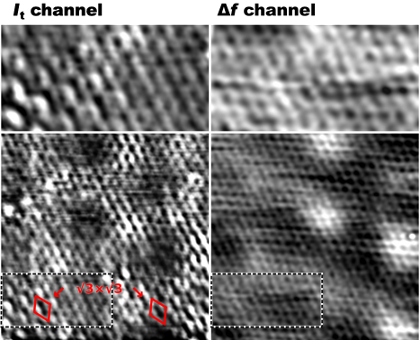
- signal from the tuning fork piezo [22][23]. The tip has been treated by annealing to 1200 °C in contact with a hot tungsten filament. The simultaneous current and frequency shift measurements were done in constant height mode. A very slow tunneling current feedback was applied for compensation of the
- sample tilt. The reason to use current as a feedback, as opposed to using the frequency shift (Δf), is the possibility of doing measurements in the region of a negative frequency shift gradient (repulsive regime), even at room temperature, without enhanced risk of losing the tip apex. This approach is
- specifically chosen for the conditions when the graphene contrast provided by the Δf is not giving atomic resolution in the attractive regime. Kelvin probe force measurements (KPFM) were also done in the constant-height mode, with a slow feedback between the measurement points, to compensate the tilt of the


![[Graphic 1]](/bjnano/content/inline/2190-4286-6-93-i1.png?max-width=637&scale=1.18182) × 6
× 6Electroburning of few-layer graphene flakes, epitaxial graphene, and turbostratic graphene discs in air and under vacuum
Beilstein J. Nanotechnol. 2015, 6, 711–719, doi:10.3762/bjnano.6.72
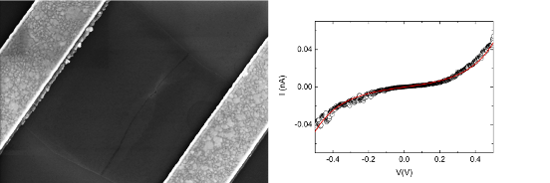
- feedback loop in order to stop the current immediately after the opening of the junction. We used the same method previously employed for the electromigration of gold nanowires [26]. A typical example of the process is visible in Figure 1a. Above a certain voltage value, the I–V curves become strongly non
- the resistance is observed [10]. When the measured resistance overcomes a fixed value corresponding to the complete formation of an open gap in the device, a feedback control of our electronics restores the voltage to zero very rapidly (<100 µs). The complete process takes approximately 10 to 20 s
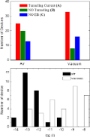
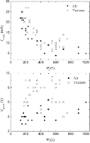
- al. [20], but with a different electroburning procedure (i.e., feedback controlled). Moving to the devices electroburned under vacuum, in 33 junctions (ca. 58%) we measured a sizeable tunneling current after the process, while only in eight (ca. 14%) we did not find any measurable current. Finally



A scanning probe microscope for magnetoresistive cantilevers utilizing a nested scanner design for large-area scans
Beilstein J. Nanotechnol. 2015, 6, 451–461, doi:10.3762/bjnano.6.46
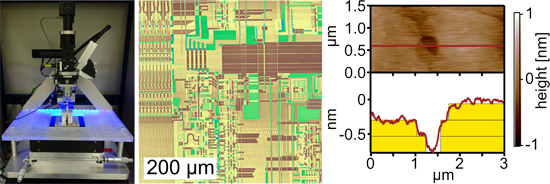
- AFM is equipped with an optical beam deflection setup to measure the deflection of the cantilever [10][11]. This setup also allows for the use of conventional silicon and silicon nitrite cantilevers using only the optical beam deflection setup for the feedback. Additionally, the instrument is designed
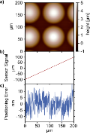
- optical beam deflection setup for the feedback. In parallel, the positioning error (profile after removing the 1st order component) of the fast scan axis was recorded and is shown in Figure 2c. By comparing the measured stage position and the desired position (given by the control signal), the positioning
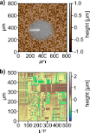
- × 1024 pixels. Imaging was done in the intermittent contact mode of the AFM with a setpoint of 89% of the free amplitude of the cantilever. Due to the large step heights of up to 2 μm on the surface of the chip, and the corresponding high demands on the z-feedback loop the scan speed was set to 30 μm/s


Influence of spurious resonances on the interaction force in dynamic AFM
Beilstein J. Nanotechnol. 2015, 6, 420–427, doi:10.3762/bjnano.6.42
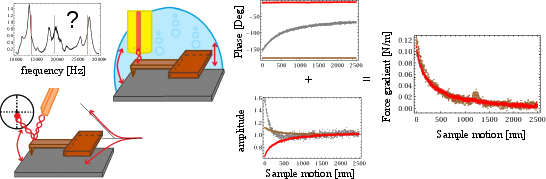
- conditions [4] and at solid/liquid interfaces [5]. A complete overview is given in [3] and [6]. In AM-AFM, micro-sized cantilevers are conventionally excited at a frequency close to their first eigenmode. The oscillation amplitude of the tip is the feedback signal that is kept constant to obtain the sample
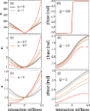
- piezoelectric excitation (red), showing the presence of spurious resonances. Approach force curves were acquired in force feedback mode [17][18] at the mica/deionized water interface. The oscillation amplitude of the tip was 0.3 nm. Amplitude and phase were recorded and converted into conservative and


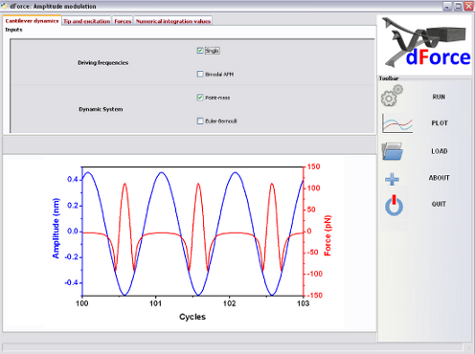
Dynamic force microscopy simulator (dForce): A tool for planning and understanding tapping and bimodal AFM experiments
Beilstein J. Nanotechnol. 2015, 6, 369–379, doi:10.3762/bjnano.6.36
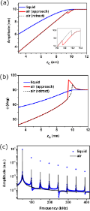
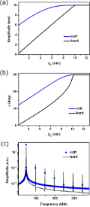
- first two flexural modes are excited and an amplitude modulation feedback controls the amplitude of the first mode [33]. The parameters used in the bimodal AM simulations are presented in Table 4. Figure 6 shows the tip response under the influence of excitation and the tip–surface interactions. The


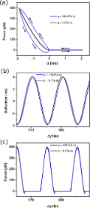


Boosting the local anodic oxidation of silicon through carbon nanofiber atomic force microscopy probes
Beilstein J. Nanotechnol. 2015, 6, 215–222, doi:10.3762/bjnano.6.20
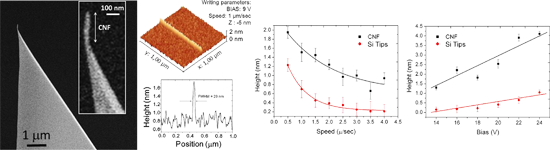
- (<20 nm), to ensure a close tip–surface distance and the set point amplitude is routinely set to 80% of the free amplitude for imaging when the feedback is active. Under these conditions, attractive forces dominate and, in consequence, it can be inferred that the AFM is operated in non-contact mode. In
- current experiments we focus on the definition of line patterns. Prior to patterning, the AFM control feedback is disabled and the required voltage is applied. However, in order to keep a constant tip–surface distance, previously the surface inclination with respect to the X–Y piezo-scanning plane is
- present paper. As far as the tips did not make contact with the surface (either by particle contamination or the surface or problems with feedback loop control) we did not observe tip wear. Discussion In Figure 6 the main results of the kinetics study of LAO-AFM are summarized. Figure 6a shows the line


Kelvin probe force microscopy in liquid using electrochemical force microscopy
Beilstein J. Nanotechnol. 2015, 6, 201–214, doi:10.3762/bjnano.6.19
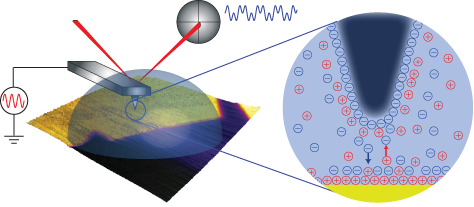
- , become complicated by feedback artefacts and stray capacitance even in vacuum [33][34][35]. In ambient environments, the interpretation of surface potential values increases in complexity due to the possible shielding of the surface by mobile adsorbates and the presence of a thin water layer, resulting
- previously reported [40][41][42][43]. In general, open loop-KPFM does not require the application of a DC bias via a feedback loop and can be performed by utilizing either (i) both AC voltage and DC bias (referred to here as open loop bias spectroscopy, OLBS) [44], or (ii) AC voltage alone (referred to here
- second harmonic cantilever amplitude (Aω and A2ω) and phase (θω and θ2ω) using lock-in techniques. Equation 2 predicts a linear dependence of Fω with respect to the probe–sample DC bias, which is minimized when Vdc = Vcpd. KPFM employs this principle via a feedback loop to minimize Aω. Depending on the


![[Graphic 6]](/bjnano/content/inline/2190-4286-6-19-i11.png?max-width=637&scale=1.18182) response collected 200 nm above a grounded Au electrode in (a, b, c) air, (d, e, f) decane an...
response collected 200 nm above a grounded Au electrode in (a, b, c) air, (d, e, f) decane an...


![[Graphic 22]](/bjnano/content/inline/2190-4286-6-19-i27.png?max-width=637&scale=1.18182) spectra [bias-on] collected 500 nm above HOPG in aqueous solutions of increasing salt concent...
spectra [bias-on] collected 500 nm above HOPG in aqueous solutions of increasing salt concent...

![[Graphic 25]](/bjnano/content/inline/2190-4286-6-19-i30.png?max-width=637&scale=1.18182) spectra [bias-on] collected 500 nm above (a) HOPG and (b) Au in milli-Q water (vertical color...
spectra [bias-on] collected 500 nm above (a) HOPG and (b) Au in milli-Q water (vertical color...

![[Graphic 27]](/bjnano/content/inline/2190-4286-6-19-i32.png?max-width=637&scale=1.18182) spectra [bias-on] recorded 500 nm above a HOPG/Au boundary in milli-Q water. T...
spectra [bias-on] recorded 500 nm above a HOPG/Au boundary in milli-Q water. T...

Tunable light filtering by a Bragg mirror/heavily doped semiconducting nanocrystal composite
Beilstein J. Nanotechnol. 2015, 6, 193–200, doi:10.3762/bjnano.6.18
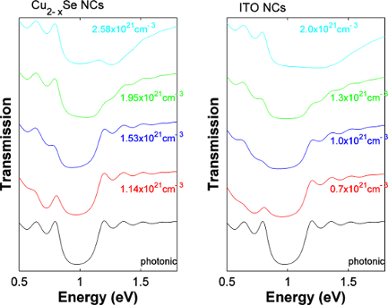
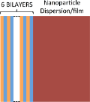
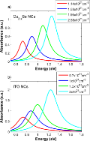
- exploited in several types of devices, such as distributed feedback lasers [11][12][13][14][15], sensors [16][17], absorption enhancement for photovoltaics [18] or in dye-sensitized solar cells [19][20][21]. Furthermore, nanoparticle-based photonic crystals have been employed for switching applications [22


Accurate, explicit formulae for higher harmonic force spectroscopy by frequency modulation-AFM
Beilstein J. Nanotechnol. 2015, 6, 149–156, doi:10.3762/bjnano.6.14
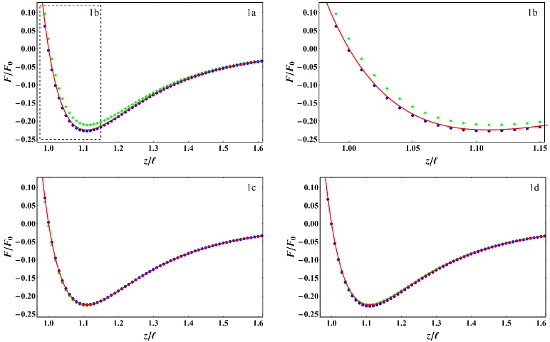
- formulae for both conservative and dissipative forces. In FM-AFM, a cantilever is oscillated at its resonance frequency using an external driving force and a feedback loop. The motion of the cantilever is often modelled as a driven damped harmonic oscillator with an additional force, Fts, stemming from tip


High-frequency multimodal atomic force microscopy
Beilstein J. Nanotechnol. 2014, 5, 2459–2467, doi:10.3762/bjnano.5.255
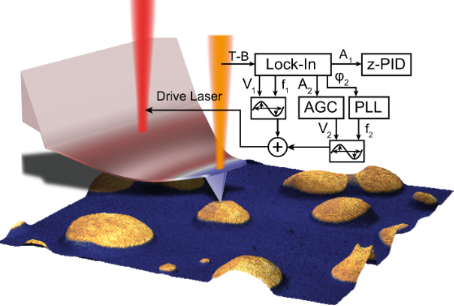
- simultaneously tracking topography. The resonant excitation power needed to keep the second eigenmode at a specific amplitude is mapped, while a phase locked loop (PLL) ensures resonant excitation. Topography feedback deconvolutes material specific effects acting on the second resonance. As the resonant
- squeeze-film damping of the cantilever, the latter of which is roughly constant while in feedback. We used a thin-film blend of polystyrene (PS) and poly(methyl methacrylate) (PMMA) as a sample (PS–PMMA–15M, Bruker AFM probes); its separation into soft and hard domains makes it a widely used standard for
- contrast for the softer globular areas with no visible effects from the topography feedback. At present, we are uncertain of the source of the apparent contrast inversion at the edges of the globular areas in Figure 4d versus Figure 4a, although it may be due to surface restructuring of the polymer blend


Advanced atomic force microscopy techniques II
Beilstein J. Nanotechnol. 2014, 5, 2326–2327, doi:10.3762/bjnano.5.241

- properties [21] are based on the implementation of proportional-integral controllers to give realistic feedback behaviours. Stirling proposed a theoretical model for studying the SPM feedback in the context of control theory providing the possibility to understand and model the performance from SPM systems
Spectroscopic mapping and selective electronic tuning of molecular orbitals in phosphorescent organometallic complexes – a new strategy for OLED materials
Beilstein J. Nanotechnol. 2014, 5, 2248–2258, doi:10.3762/bjnano.5.234
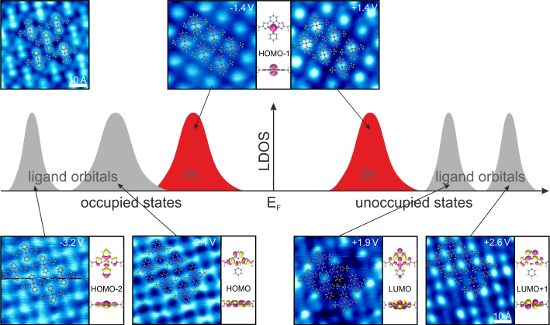
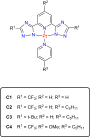
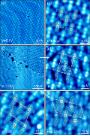
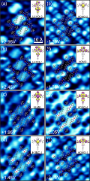
- transferred in situ into the cold STM (T = 5 K). All images where taken in constant-current mode. For the tunneling spectra the current I and the differential conductance dI/dV (via lock-in technique, modulation voltage 10–20 mV) were measured simultaneously as a function of sample bias V under open-feedback



Characterization of 10,12-pentacosadiynoic acid Langmuir–Blodgett monolayers and their use in metal–insulator–metal tunnel devices
Beilstein J. Nanotechnol. 2014, 5, 2240–2247, doi:10.3762/bjnano.5.233
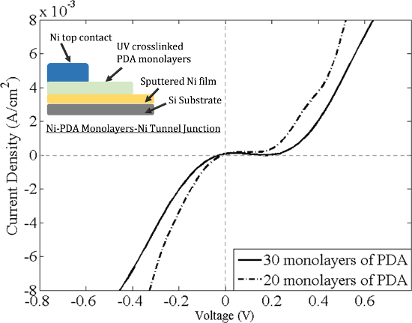
- concentration of PDA dissolved in chloroform. The surface tension was measured using a paper Wilhelmy plate suspended in the water in the LB trough. The deposition conditions were regulated using surface tension and compression feedback control. This resulted in the formation of a closely packed film at the air


Patterning a hydrogen-bonded molecular monolayer with a hand-controlled scanning probe microscope
Beilstein J. Nanotechnol. 2014, 5, 1926–1932, doi:10.3762/bjnano.5.203
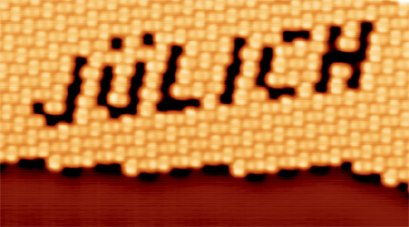
- contacting and the current feedback loop of the SPM software was opened. The contact to the molecule was established by approaching the tip vertically towards the surface; this approach was effected by downward movement of the hand of the operator. Over the course of HCM the current I flowing through the
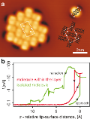
- junction and the frequency shift Δf were displayed on the screen of an oscilloscope and served as feedback signals for the operator. Formation (loss) of the contact was monitored in real time by a sharp increase (decrease) of I (cf. Figure 1b) or a kink in Δf [15][16]. After establishing the contact
- the tip with the removed PTCDA molecule hanging on its apex towards the Ag(111) surface and applying a voltage pulse of 0.6–1 V. Afterwards the current feedback loop was closed and the manipulation area was scanned in constant current STM mode (a movie that was made of the scanned STM images can be


Multi-frequency tapping-mode atomic force microscopy beyond three eigenmodes in ambient air
Beilstein J. Nanotechnol. 2014, 5, 1637–1648, doi:10.3762/bjnano.5.175
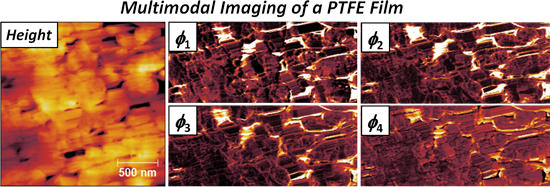
- higher modes are excited by using constant drive frequency and amplitude without any feedback (i.e., in ‘open loop’ [2][3]). In such cases, as long as the oscillation is not chaotic, the user will generally be able to obtain an image, but imaging stability does not guarantee that the results are