Search results
Search for "impedance" in Full Text gives 197 result(s) in Beilstein Journal of Nanotechnology.
Reorientation of single-wall carbon nanotubes in negative anisotropy liquid crystals by an electric field
Beilstein J. Nanotechnol. 2016, 7, 825–833, doi:10.3762/bjnano.7.74
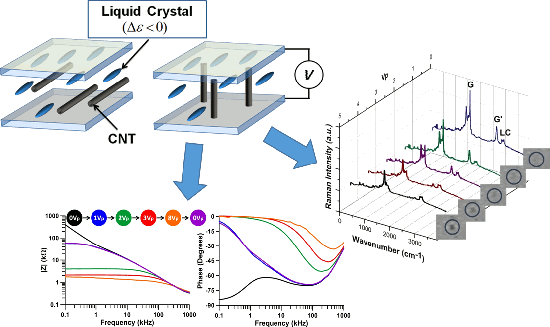
- system where the liquid crystal orientation effect has been isolated. Complementary studies including Raman spectroscopy, microscopic inspection and impedance studies were carried out. The results reveal an ordered reorientation of the CNTs induced by an electric field, which does not alter the
- orientation of the liquid crystal molecules. Moreover, impedance spectroscopy suggests a nonnegligible anchoring force between the CNTs and the liquid crystal molecules. Keywords: Anchoring; carbon nanotubes; impedance; liquid crystal; negative anisotropy; Raman spectroscopy; reorientation; single-wall CNTs
- negative LC matrix and the macroscopic impedance of a liquid crystal cell filled with negative LC doped with SWCNTs. In order to separate the field induced switching of the LC and the SWCNTs, a cells with homogenously aligned LC of negative dielectric anisotropy is employed. The SWCNT switching pattern in


Gold nanoparticles covalently assembled onto vesicle structures as possible biosensing platform
Beilstein J. Nanotechnol. 2016, 7, 655–663, doi:10.3762/bjnano.7.58
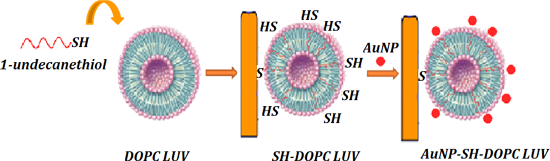
- electrochemical impedance spectroscopy or square wave voltammetry [22][23]. It is known that antibodies can be immobilized onto AuNPs without losing their biological properties [24][25]. Thus, the covalent immobilization of vesicles decorated with AuNPs on a gold surface could increase the amount of immobilized


Functional fusion of living systems with synthetic electrode interfaces
Beilstein J. Nanotechnol. 2016, 7, 296–301, doi:10.3762/bjnano.7.27
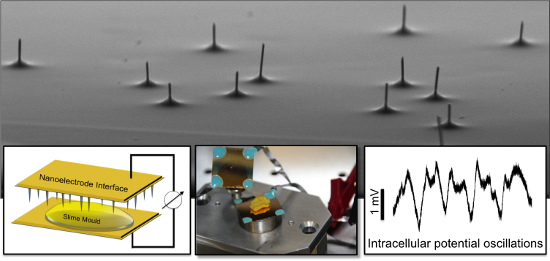
- (Figure 3, red) was even better, presumably due to their direct, low impedance access to the cell interior, proving the suitability of the system for electrophysiological recordings and biosensor applications. The fact that under these conditions the periodic potential changes were only rarely observed


High-bandwidth multimode self-sensing in bimodal atomic force microscopy
Beilstein J. Nanotechnol. 2016, 7, 284–295, doi:10.3762/bjnano.7.26
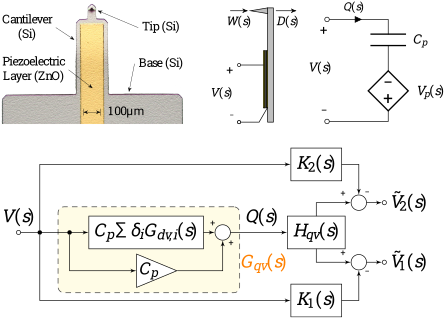
- , an impedance analyzer such as the Keysight E4990A was used to measure Cp and the obtained value of 20.27 pF adequately matches the estimation. Feedthrough cancellation The first and the fifth modes are clearly visible in the frequency response shown in Figure 6c albeit excessively buried in


Mismatch detection in DNA monolayers by atomic force microscopy and electrochemical impedance spectroscopy
Beilstein J. Nanotechnol. 2016, 7, 220–227, doi:10.3762/bjnano.7.20
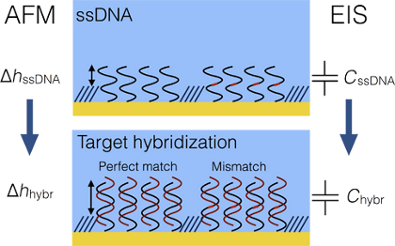
- mismatches. The second strategy exploits the change in capacitance at the interface between an ssDNA-functionalized gold electrode and the solution due to the hybridization process in a miniaturized electrochemical cell. Through electrochemical impedance spectroscopy measurements on extended ssDNA self
- microRNAs or in genomic DNA. Keywords: atomic force microscopy; DNA monolayers; electrochemical impedance spectroscopy; hybridization; mismatches; Introduction Most current technologies for genotyping and sequencing are based on DNA hybridization, exploiting the high grade of selectivity due to the unique
- cell. In a previous work we demonstrated the ability to follow the hybridization of perfectly matched sequences in real time through electrochemical impedance spectroscopy (EIS) measurements on extended ssDNA self-assembled monolayers (SAMs) [27]. Here we successfully tested EIS for the detection of


3D solid supported inter-polyelectrolyte complexes obtained by the alternate deposition of poly(diallyldimethylammonium chloride) and poly(sodium 4-styrenesulfonate)
Beilstein J. Nanotechnol. 2016, 7, 197–208, doi:10.3762/bjnano.7.18
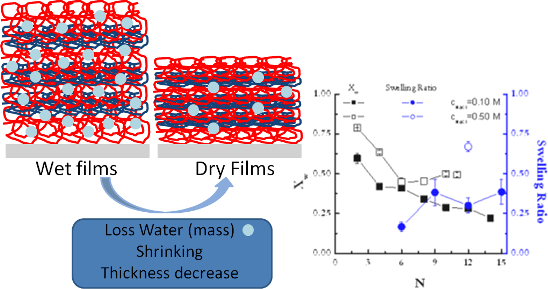
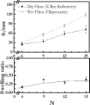
- dissipative quartz-crystal microbalance (QCM-D) from KSV (Model QCM Z-500, Finland) for the study of the wet films, and an impedance/gain phase analyzer from Hewlett-Packard (HP4194A, U.S.A.) coupled to a QCM electrode for the study of the dry films. In similar manner as described in [19], the gold coated AT
- initially formed on the surface of the gold electrode of the quartz crystal, in order to obtain a charged substrate [19]. QCM-D provided the impedance spectra of the crystal for the fundamental resonance frequency and for its odd overtones, ν, up to 11 [26]. Ellipsometry An imaging null-ellipsometer from



Synthesis and applications of carbon nanomaterials for energy generation and storage
Beilstein J. Nanotechnol. 2016, 7, 149–196, doi:10.3762/bjnano.7.17
















Single pyrimidine discrimination during voltage-driven translocation of osmylated oligodeoxynucleotides via the α-hemolysin nanopore
Beilstein J. Nanotechnol. 2016, 7, 91–101, doi:10.3762/bjnano.7.11
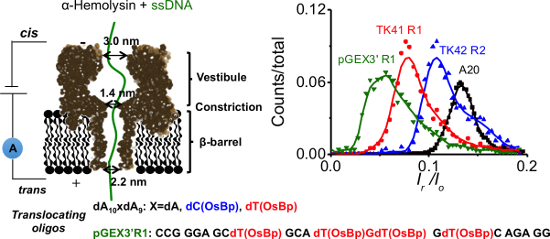
- % (v/v) (3-cyanopropyl)dimethylchlorosilane in acetonitrile to create a moderately hydrophobic surface. Current–time (I–t) recordings were performed at 22 ± 1 °C using a custom-built high impedance and low-noise system (Electronic BioSciences Inc., San Diego, CA) for the Chemistry Department



Charge injection and transport properties of an organic light-emitting diode
Beilstein J. Nanotechnol. 2016, 7, 47–52, doi:10.3762/bjnano.7.5
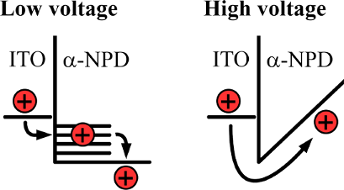
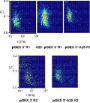
- investigated by steady-state current–voltage technique and impedance spectroscopy at various temperatures to obtain activation energies of charge injection and transport processes. Good agreement of activation energies obtained by steady-state and frequency-domain was used to analyze their contributions to the
- identification of major bottleneck of charge injection and transport. Keywords: activation energy; impedance spectroscopy; organic light-emitting device; Introduction Since the discovery of organic electroluminescent (EL) materials such as tris(8-hydroxyquinolinato)aluminum(III) (Alq3), organic light-emitting
- steady-state current density–voltage characteristics [5][6], or measurement in time- or frequency-domain, such as transient currents [7] and impedance spectroscopy [8][9]. Furthermore, the measurements can be extended by the temperature dependence of electrical properties which reveal the thermally


Controlled graphene oxide assembly on silver nanocube monolayers for SERS detection: dependence on nanocube packing procedure
Beilstein J. Nanotechnol. 2016, 7, 9–21, doi:10.3762/bjnano.7.2
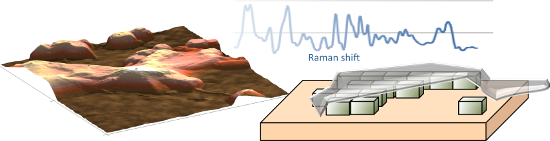
- substrates were simultaneously coated by the same AgNC layer. Quartz crystal microbalance measurements. QCM experiments with impedance monitoring were performed on a QCM-Z500 (KSV Instruments Ltd) equipped with a thermoelectric (TE) module (Oven Instruments). The resonant frequency shift and the change in


A single-source precursor route to anisotropic halogen-doped zinc oxide particles as a promising candidate for new transparent conducting oxide materials
Beilstein J. Nanotechnol. 2015, 6, 2161–2172, doi:10.3762/bjnano.6.222
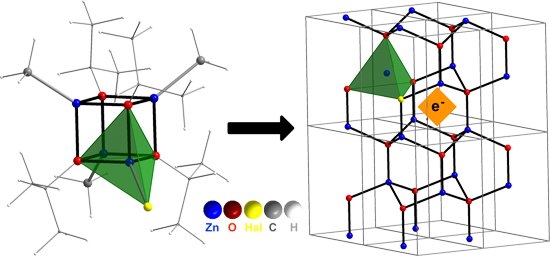
- molecular scale (Hal = I, Br, Cl). We report about the synthesis of the precursors, their transformation into halogene-containing ZnO materials, and finally structural, optical and electronic properties are investigated using a combination of techniques including FT-Raman, low-T photoluminescence, impedance
- longitudinal optical phonon–plasmon coupling and describes the interaction of collective oscillating free carriers (plasmons) with LO phonons [80]. Consequently, the concentration of free carriers increases with Cl doping. The dielectric properties of thin ZnO1−xClx pellets were investigated with impedance
- spectroscopy. In the Nyquist plot in Figure 6 the imaginary part of the impedance is plotted as a function of the real part. For materials having resistive and capacitive components a series of two semicircles usually occurs in the Nyquist plot. The semicircle in the high frequency region is assigned to grain



Electrochemical behavior of polypyrrol/AuNP composites deposited by different electrochemical methods: sensing properties towards catechol
Beilstein J. Nanotechnol. 2015, 6, 2052–2061, doi:10.3762/bjnano.6.209
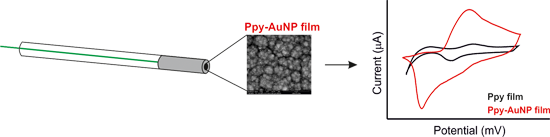
- incorporated in the Ppy films was higher when electropolymerization was carried out by chronopotentiometry (CP). Besides, cogeneration method allowed for the incorporation of a higher number of AuNPs than trapping. Impedance experiments demonstrated that the insertion of AuNPs increased the conductivity. As an
- incorporated in the Ppy films was higher when using CP than that when using CA. In turn, using cogeneration, the amount of nanoparticles incorporated was higher than using trapping. Electrochemical impedance spectroscopy Electrochemical impedance spectroscopy (EIS) can provide information about the
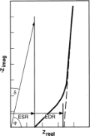
- conductivity changes resulting from the insertion of AuNPs in the Ppy films. The complex impedance can be plotted as the real (Zreal) vs imaginary (Zimaginary) components (Nyquist plot), which are related to the resistance and capacitance of the cell, respectively. At high frequencies (left part of the diagram


Nitrogen-doped graphene films from chemical vapor deposition of pyridine: influence of process parameters on the electrical and optical properties
Beilstein J. Nanotechnol. 2015, 6, 2028–2038, doi:10.3762/bjnano.6.206
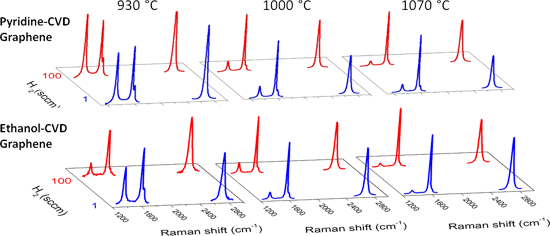
- temperature, while it is not influenced by the hydrogen flow. The films grown at 930 °C have all an average transmittance of 94% at 550 nm, those grown at 1000 °C have 90%, while the 1070 °C samples have 83%. The optical conductivity was calculated as T = (1 + Z0/2 σOp·t)−2, where Z0 is the impedance of free


Optimized design of a nanostructured SPCE-based multipurpose biosensing platform formed by ferrocene-tethered electrochemically-deposited cauliflower-shaped gold nanoparticles
Beilstein J. Nanotechnol. 2015, 6, 1840–1852, doi:10.3762/bjnano.6.187
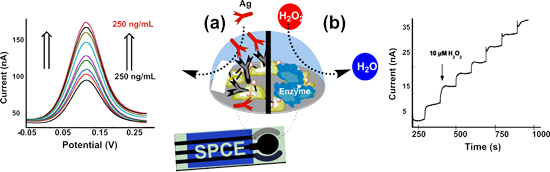
- and concentration of the ferrocene derivatives have been studied using cyclic voltammetry (CV), electrochemical impedance spectroscopy (EIS) and scanning electron microscopy (SEM). Selectivity and specificity tests have been also performed in the presence of potentially interfering substances to
- competitive proteins using a panel of electrochemical techniques such as cyclic voltammetry (CV), differential pulse voltammetry (DPV) and electrochemical impedance spectroscopy (EIS). Application of the two platforms for the detection of hIgG and H2O2 respectively in human serum and in honey are presented
- obtained nanostructures which should be carefully optimized before stepping further. Electrochemical properties of the nanostructured surface To further investigate the properties of the modified carbon surface, it was characterized using cyclic voltammetry, chronocoulometry and electrochemical impedance


Surface engineering of nanoporous substrate for solid oxide fuel cells with atomic layer-deposited electrolyte
Beilstein J. Nanotechnol. 2015, 6, 1805–1810, doi:10.3762/bjnano.6.184
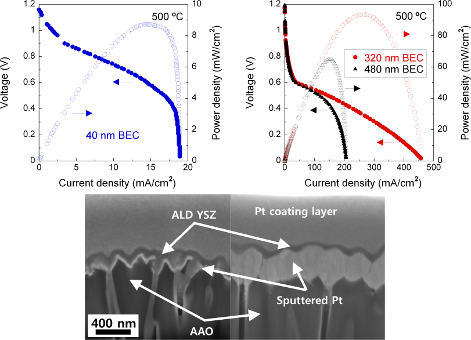
- via impedance spectroscopy To investigate the effects of BEC thickness on the individual resistances, electrochemical impedance spectroscopy (EIS) data were obtained for the Cell-A and Cell-B. Before comparing the EIS data for two kinds of cells, the EIS curves obtained under different direct current
- , respectively. The Cell-A, on the other hand, shows the EIS behavior with a diagonal form at a lower frequency region below 20 Hz, which is not observed in the impedance spectra of Cell-B. This diagonal component is considered to the effect of Waburg element signifying a lack of active fuel supply [13]. This
- (left side) and 320 (right side) nm-thick BECs; (B) transmission electron microscopic image for 80 nm pore AAO supported 320 nm-thick BEC. Tafel plots, measured at 500 °C, for the Cell-A and Cell-B. Electrochemical impedance spectroscopy analysis results, measured at 500 °C, at bias voltage of 0.1 V for


Radiation losses in the microwave Ku band in magneto-electric nanocomposites
Beilstein J. Nanotechnol. 2015, 6, 1700–1707, doi:10.3762/bjnano.6.173
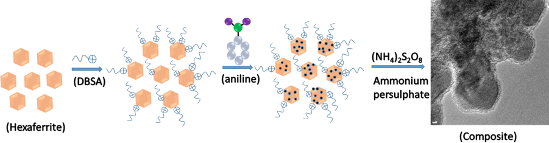
- electromagnetic noise by using absorbing materials. Earlier, carbon black, metal flakes, iron balls and recently carbon nanotubes with magnetic particles were used as absorbent. However, there are some limitations such as a fixed absorption range, difficulties during synthesis, impedance matching problems [3
- energy. Reflection loss calculation has been carried out by using the input impedance from the following relations in accordance with theory of absorbing wall [41]: where Z is the normalized input impedance, ε* is complex permittivity and µ* is the complex permeability, λ is the wavelength and tis the


Attenuation, dispersion and nonlinearity effects in graphene-based waveguides
Beilstein J. Nanotechnol. 2015, 6, 1221–1228, doi:10.3762/bjnano.6.125
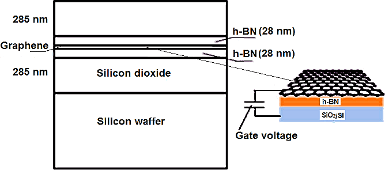
- nanoribbons is given by [17]: where εr is the relative permitivity in which the graphene nanoribbon is embedded. The dispersion relation for graphene nanoribbons for TM modes propagating along a graphene/dielectric interface is also given by [18]: where η0 = 377 Ω is the air impedance and k0 = 2π/λ0


Interaction of electromagnetic radiation in the 20–200 GHz frequency range with arrays of carbon nanotubes with ferromagnetic nanoparticles
Beilstein J. Nanotechnol. 2015, 6, 1056–1064, doi:10.3762/bjnano.6.106
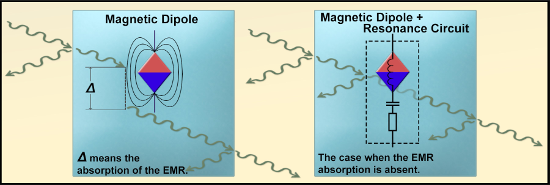
- matrix. The interface between the NPs and the CNT matrix was also considered and characterized by the wave impedance, Zi. The calculated R and T coefficients adequately describe the experimental data for the X and Ka bands [8]. Here, we modify this approach [8] by specifying the expressions for the
- : where ε1 and ε2 are the relative permittivities of the carbon matrix and the NP, respectively, ε0 is permittivity of vacuum, and σ is the specific conductivity of CNT-based nanocomposite. The reflection coefficient is determined as where , and Z0 = 377 Ω is the characteristic impedance of the plane wave
- in vacuum. The transmission coefficient, which determines the efficiency of shielding, consists of the absorption, reflection, and multi-reflection processes, where d is the nanocomposite thickness, and is the propagation coefficient. The impedance of the nanocomposite depends on the contribution of


From lithium to sodium: cell chemistry of room temperature sodium–air and sodium–sulfur batteries
Beilstein J. Nanotechnol. 2015, 6, 1016–1055, doi:10.3762/bjnano.6.105
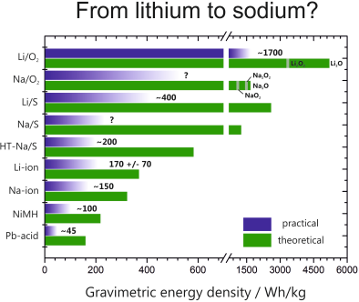
- chosen for several reasons: Counteracting the sluggish cathode reactions, lowering the cell impedance, eliminating dendrites and minimizing interference with water and carbon dioxide. On the other hand, the high reactivity towards the electrolyte was an issue. The cell discharged at 1.75 V (100 µA) and


Pt- and Pd-decorated MWCNTs for vapour and gas detection at room temperature
Beilstein J. Nanotechnol. 2015, 6, 919–927, doi:10.3762/bjnano.6.95
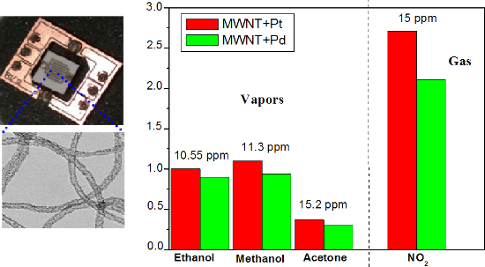
- used as reported in [40]. Gas sensing measurements The electrical characterisation under gas or vapour environment was performed employing an HP 4192A impedance analyzer [17]. Since all devices showed a resistive behavior at frequencies below 100 kHz, the resistance of the metal-decorated carbon



Stiffness of sphere–plate contacts at MHz frequencies: dependence on normal load, oscillation amplitude, and ambient medium
Beilstein J. Nanotechnol. 2015, 6, 845–856, doi:10.3762/bjnano.6.87
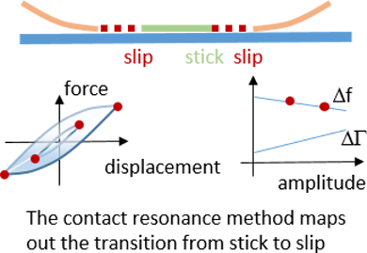
- related to the dissipation factor, D, by D = Γ/(2f). fF is the fundamental frequency, which is often 5 MHz. Zq = 8.8 × 10⁶ kg∙m−2s−1 is the shear wave impedance of AT-cut quartz. is the area-averaged complex amplitude of the tangential stress at the resonator surface, and u0 is the amplitude of
- oscillation. The ratio of stress and velocity (where the latter is equal to iωu0) is the complex load impedance, ZL. In the second step in Equation 1, the stress was converted to force by area. The force, in turn, was expressed as tangential stiffness times amplitude (that is, as κu0). n is the overtone order
- Equation 3 and the principle of operation of lock-in amplifiers. Δf and ΔΓ are proportional to the in-phase and the out-of-phase components of the force. Underlying both Equation 1 and Equation 3 is the small load approximation, which states that the load impedance (often called ZL, the ratio of σ0 and




Entropy effects in the collective dynamic behavior of alkyl monolayers tethered to Si(111)
Beilstein J. Nanotechnol. 2015, 6, 583–594, doi:10.3762/bjnano.6.60
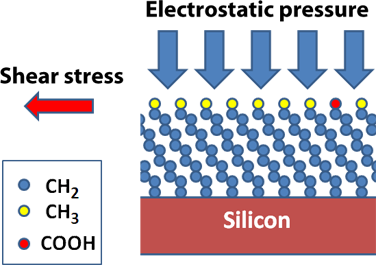
- Technologies). The sample holder was inserted in a two terminal active cell with the impedance converter mounted directly above the sample. The junction was placed into a cryostat under dry nitrogen flow to avoid extensive water condensation and to minimize surface oxidation during electrical measurements [39

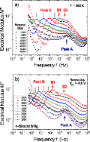

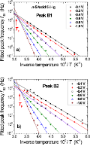


Electrical response of liquid crystal cells doped with multi-walled carbon nanotubes
Beilstein J. Nanotechnol. 2015, 6, 396–403, doi:10.3762/bjnano.6.39
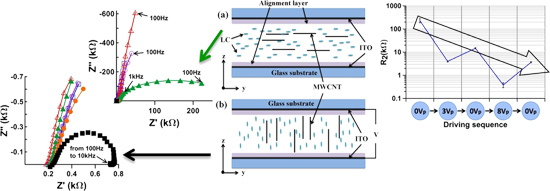
- characteristic impedance has been studied at different frequencies and excitation voltages. The results demonstrate alterations in the anisotropic conductivity of the samples with the applied electric field, which can be followed by monitoring the impedance evolution with the excitation voltage. Results are
- consistent with a possible electric contact between the coated substrates of the LC cell caused by the reorientation of the nanotubes. The reversibility of the doped system upon removal of the electric field is quite low. Keywords: carbon nanotubes; Cole–Cole diagrams; impedance; liquid crystal; PEDOT:PSS
- LC cells under different conditions seems to be missing. This could be achieved by studying the impedance evolution of the doped cells with voltage and frequency. Indeed, the electrical response may be fairly complex since dielectric and anisotropic conductive elements are present in the system. The


Comparative evaluation of the impact on endothelial cells induced by different nanoparticle structures and functionalization
Beilstein J. Nanotechnol. 2015, 6, 300–312, doi:10.3762/bjnano.6.28
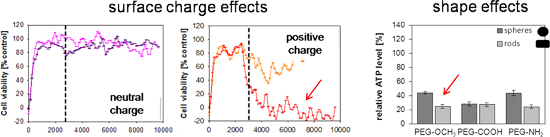
- monolayers around the CdSe core of QDs showed that the lowest impact on cell metabolism (cellular dehydrogenase activities) was present when QDs were coated with two monolayers (Figure S1, Supporting Information File 1). Impedance measurements (electric cell–substrate impedance sensing, ECIS) revealed a
- nanoparticles and nearly absent for the D-penicillamine (DPA)-coated QDs. These effects most certainly depend upon the positive charge of CyA, which resulted in an electrostatic attraction to the negatively charged cell membranes. Beyond impedance measurements, the MTS assay with endothelial cells (SVEC4-10
- , Germany) after a 4 h incubation period at 37 °C. The production of light was measured with a luminescence plate reader (BMG LABATECH GmbH, Germany). Relative cellular dehydrogenase and ATP levels were expressed as relative values to the untreated control. Measuring cell viability through impedance




The effect of surface charge on nonspecific uptake and cytotoxicity of CdSe/ZnS core/shell quantum dots
Beilstein J. Nanotechnol. 2015, 6, 281–292, doi:10.3762/bjnano.6.26
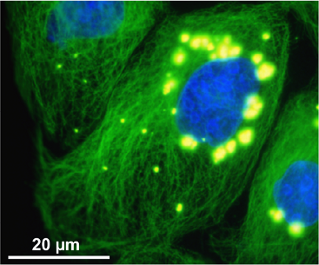
- -Planck-Institute for Dynamics and Self-Organization (MPIDS), Laboratory for Fluid Dynamics, Pattern Formation and Biocomplexity, Am Fassberg 17, 37077 Goettingen, Germany 10.3762/bjnano.6.26 Abstract In this work, cytotoxicity and cellular impedance response was compared for CdSe/ZnS core/shell quantum
- -particle tracking), was shown to compromise the integrity of the cytoskeletal and plasma membrane dynamics, as evidenced by electric cell–substrate impedance sensing. Keywords: biocompatibility; CdSe/ZnS; cytotoxicity; ECIS; quantum dots; single-particle tracking; Introduction Quantum dots (QDs) are
- membrane permeability assays. We demonstrate that these methods, however, can overlook other more subtle impacts on cell viability and metabolism caused by binding of QDs to cellular compartments, without release of Cd2+ ions. In the present study, we use a noninvasive and label-free impedance setup to