Search results
Search for "infrared spectroscopy" in Full Text gives 187 result(s) in Beilstein Journal of Nanotechnology.
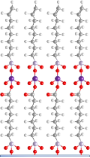
Nanostructured surfaces by supramolecular self-assembly of linear oligosilsesquioxanes with biocompatible side groups
Beilstein J. Nanotechnol. 2015, 6, 2377–2387, doi:10.3762/bjnano.6.244
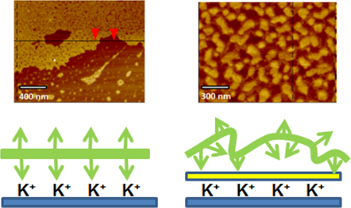
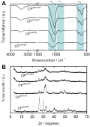
- , citric acid, thioglycolic or acid). The adsorption of both silsesquioxane oligomers and organic primers was confirmed with attenuated total reflectance infrared spectroscopy. The observed physiochemical and textural variations in the adsorbed materials correlate with the differences in the chemical
- force microscopy (AFM) and attenuated total reflectance infrared spectroscopy (ATR-FTIR) were used as analytic tools for the studies. The changes in the free surface energy of the prepared hydrophilic surfaces were also investigated for all LPSQ-COOH/X adsorbed on native and primed mica. The obtained




Plasma fluorination of vertically aligned carbon nanotubes: functionalization and thermal stability
Beilstein J. Nanotechnol. 2015, 6, 2263–2271, doi:10.3762/bjnano.6.232
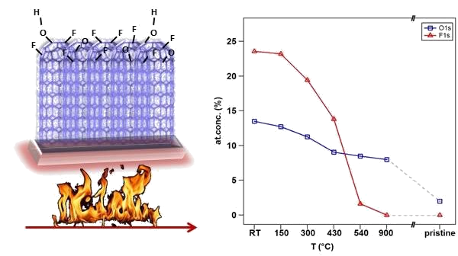
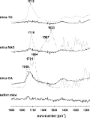
- ][12][13][14][15]. A key characteristic of fluorine-based species is the different chemical interactions in carbon–fluorine bond formation [16][17]. Primarily covalent bonding occurs as a result of the plasma process, which is easily verified by different techniques such as Fourier transform infrared
- spectroscopy (FTIR), Raman spectroscopy and X-ray photoelectron spectroscopy (XPS) [10][18][19]. Although a large number of fluorination strategies and characterization routes have been reported, the choice of the precursor gas is a crucial issue that should not be underestimated due to the risk of


Temperature-dependent breakdown of hydrogen peroxide-treated ZnO and TiO2 nanoparticle agglomerates
Beilstein J. Nanotechnol. 2015, 6, 1897–1903, doi:10.3762/bjnano.6.193
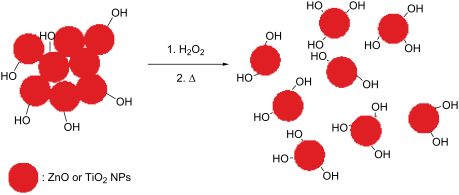
- stored at room temperature. Fourier transform infrared spectroscopy (FTIR) measurements FTIR analysis was performed using a Thermo Scientific, Nicolet iS50 FTIR instrument (Massachusetts, USA) in attenuated total reflectance mode with a diamond plate and ZnSe lens. The samples were dried at 90 °C on a




Radiation losses in the microwave Ku band in magneto-electric nanocomposites
Beilstein J. Nanotechnol. 2015, 6, 1700–1707, doi:10.3762/bjnano.6.173
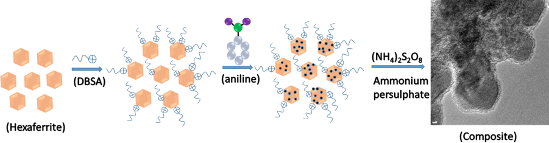
- nanocomposites, namely La–Co-substituted barium hexaferrite and polyaniline, is presented. The study was performed by means of a vector network analyser, X-ray diffraction, Fourier transform infrared spectroscopy, transmission electron microscopy, electron spin resonance spectroscopy and a vibrating sample
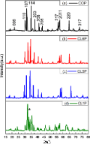
- structural, magnetic and radiation absorbance properties of synthesized compounds have been investigated by using X-ray diffraction (XRD), Fourier transform infrared spectroscopy (FTIR), electron spin resonance spectroscopy (ESR), transmission electron microscopy (TEM), vibrating sample magnetometry (VSM


Synthesis, characterization and in vitro biocompatibility study of Au/TMC/Fe3O4 nanocomposites as a promising, nontoxic system for biomedical applications
Beilstein J. Nanotechnol. 2015, 6, 1677–1689, doi:10.3762/bjnano.6.170
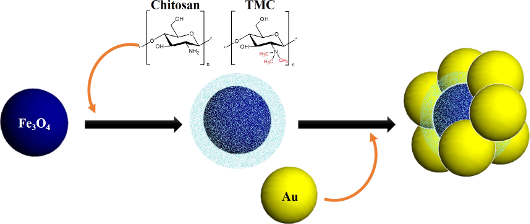
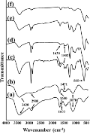
- , chitosan/TMC-containing, magnetic nanoparticles and their respective characterization using transmission electron microscopy (TEM), ultraviolet–visible absorption spectroscopy (UV–vis), X-ray diffraction spectroscopy (XRD), Fourier transform infrared spectroscopy (FTIR), a vibrating sample magnetometer




Heterometal nanoparticles from Ru-based molecular clusters covalently anchored onto functionalized carbon nanotubes and nanofibers
Beilstein J. Nanotechnol. 2015, 6, 1287–1297, doi:10.3762/bjnano.6.133
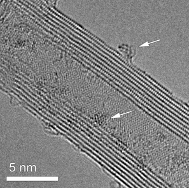
- that all remain on the support but might segregate into separate entities. This correlates with the fact that when analyzing the loading solutions after filtration using infrared spectroscopy, we usually find the unreacted (unloaded) cluster in its intact molecular form. The experimental XPS values are




Growth and morphological analysis of segmented AuAg alloy nanowires created by pulsed electrodeposition in ion-track etched membranes
Beilstein J. Nanotechnol. 2015, 6, 1272–1280, doi:10.3762/bjnano.6.131
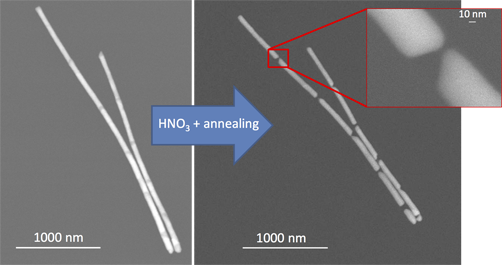
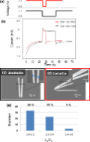
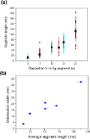
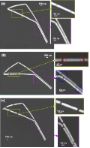
- EELS-TEM [45][61] and surface enhanced infrared spectroscopy measurements. CVs using an electrolyte containing 50 mM KAu(CN)2 (blue line), an electrolyte containing 50 mM KAg(CN)2 (red line) and a solution containing only 0.25 M Na2CO3 (black line) using as working electrode (a) a gold wire and (b) a

From lithium to sodium: cell chemistry of room temperature sodium–air and sodium–sulfur batteries
Beilstein J. Nanotechnol. 2015, 6, 1016–1055, doi:10.3762/bjnano.6.105
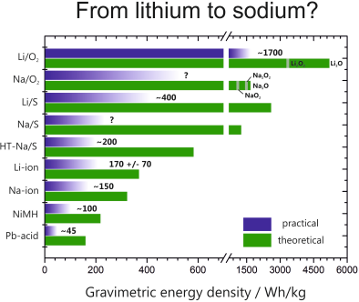
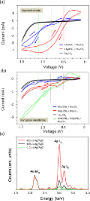
- electron microscopy, single area electron diffraction and Fourier transform infrared spectroscopy sodium peroxide (Na2O2) and sodium carbonate (Na2CO3) were proven as discharge products. These products vanished during charge with overpotentials exceeding 1 V similar to lithium–oxygen cells. Overall, the


Protein corona – from molecular adsorption to physiological complexity
Beilstein J. Nanotechnol. 2015, 6, 857–873, doi:10.3762/bjnano.6.88
- techniques such as fluorescence spectroscopy [76][77], Fourier transform infrared spectroscopy [78], Raman spectroscopy and surface-enhanced Raman spectroscopy (SERS) [36][79] as well as circular dichroism spectroscopy [6][47][53][80][81]. Also, other established techniques were used to study protein



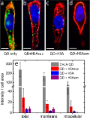
Structural, optical, opto-thermal and thermal properties of ZnS–PVA nanofluids synthesized through a radiolytic approach
Beilstein J. Nanotechnol. 2015, 6, 529–536, doi:10.3762/bjnano.6.55
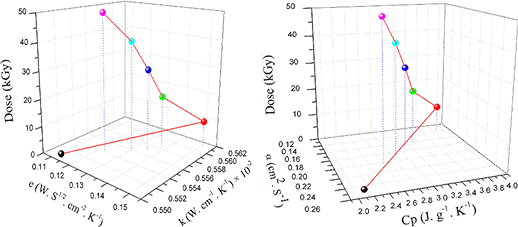
- investigate the physical and chemical properties of the samples. Fourier transform infrared spectroscopy (FTIR) was used to determine the chemical structure and bonding conditions of the final products, transmission electron microscopy (TEM) for determining the shape morphology and average particle size
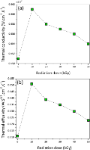
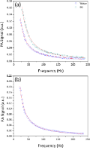
- effusivity of the samples, from which, for the first time, the values of specific heat and thermal diffusivity of the samples were then calculated. Keywords: Fourier transform infrared spectroscopy (FTIR); specific heat; thermal conductivity; thermal effusivity; ZnS nanoparticles; Introduction Over the
- doses from 10 to 50 kGy. The chemical structure of samples were investigated by Fourier transform infrared spectroscopy (Perkin Elmer model 1650), the morphology of samples was observed by transmission electron microscopy (JOEL 2010F UHR) operated at 200 kV, the structure of the final products was


Conformal SiO2 coating of sub-100 nm diameter channels of polycarbonate etched ion-track channels by atomic layer deposition
Beilstein J. Nanotechnol. 2015, 6, 472–479, doi:10.3762/bjnano.6.48
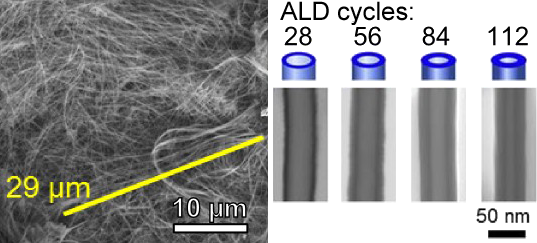
- photoelectron spectroscopy (XPS) and Fourier-transform infrared spectroscopy (FTIR). The hydrophilicity of SiO2-coated PC membranes was tested by contact angle measurements. Experimental Figure 1 displays schematically the three main steps involved in the fabrication of SiO2 coated track-etched membranes. These


Tunable white light emission by variation of composition and defects of electrospun Al2O3–SiO2 nanofibers
Beilstein J. Nanotechnol. 2015, 6, 313–320, doi:10.3762/bjnano.6.29
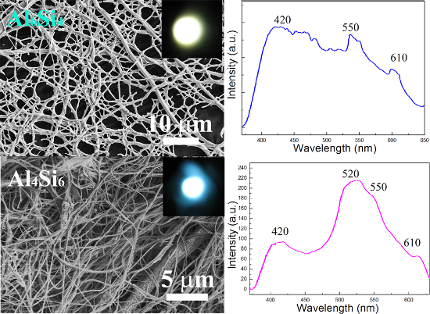
- -SEM, Hitachi S4800), transmission electron microscopy (TEM, JEM 3000F, JOEL), Fourier transform infrared spectroscopy (FTIR, IFS66v/S, 400–4000 cm−1), and fluorescence spectroscopy (RF-540, Shi-Madzu) using a 15 mW, 325 nm, He–Cd laser (spot size of about 1 mm) in addition to a spectroscopy with a FLS


Release behaviour and toxicity evaluation of levodopa from carboxylated single-walled carbon nanotubes
Beilstein J. Nanotechnol. 2015, 6, 243–253, doi:10.3762/bjnano.6.23
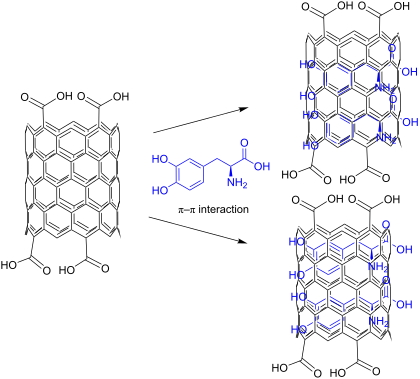
- materials characterization methods including Fourier transform infrared spectroscopy, Raman spectroscopy, elemental analysis, UV–vis spectroscopy and scanning electron microscopy. The results showed that SWCNT–COOH were able to form supramolecular complexes with LD via a π–π stacking interaction and




Materials and characterization techniques for high-temperature polymer electrolyte membrane fuel cells
Beilstein J. Nanotechnol. 2015, 6, 68–83, doi:10.3762/bjnano.6.8
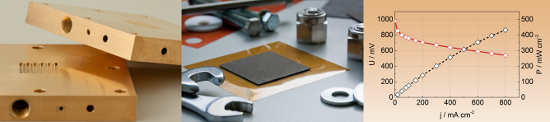
- . MEAs built from binderless electrodes demonstrated a stable cell performance over 900 h of operation [53]. Characterisation techniques for HT-PEMFCs Optical spectroscopy Raman and infrared spectroscopy – Acid-doping process of PBI membranes: Raman and infrared (IR) spectroscopy are powerful tools to
- protonation of the N-sites by transferring protons from phosphoric acid to the imidazole groups of PBI with increasing acid content can also be observed with infrared spectroscopy [29][54][57][58]. IR spectra of the pristine and acid-doped PBI films are shown in Figure 11. The most relevant region of the




Size-dependent density of zirconia nanoparticles
Beilstein J. Nanotechnol. 2015, 6, 27–35, doi:10.3762/bjnano.6.4
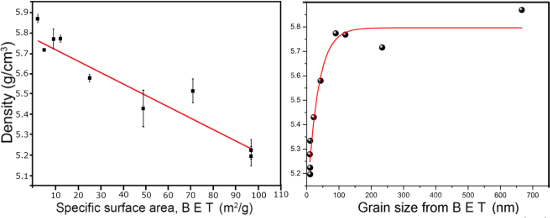
- correlated with a larger contribution of the low density surface layer to the average density. To prove the existence of such a layer, the material was synthesized using 50% heavy water. Fourier transform infrared spectroscopy (FTIR) permitted the identification of the –OD groups created during synthesis. It


Characterization of 10,12-pentacosadiynoic acid Langmuir–Blodgett monolayers and their use in metal–insulator–metal tunnel devices
Beilstein J. Nanotechnol. 2014, 5, 2240–2247, doi:10.3762/bjnano.5.233
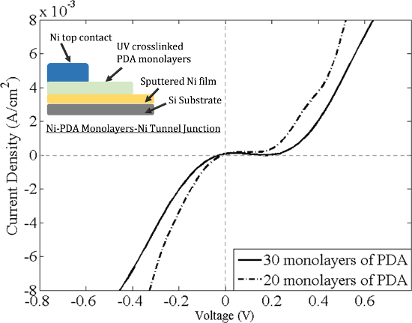
- defect-prone PDA monomolecular layers on a solid substrate. A comparison between a UV cross-linked PDA monolayer and one without UV exposure was carried out with the help of infrared spectroscopy, cyclic voltammogram and AFM imaging. An insulating layer of PDA deposited using this technique was used as


Towards bottom-up nanopatterning of Prussian blue analogues
Beilstein J. Nanotechnol. 2014, 5, 1933–1943, doi:10.3762/bjnano.5.204
- investigation Infrared spectroscopy, and especially the ν(C≡N) vibration band located in the spectral range of 2100–2200 cm−1 is usually used to characterize PBA species. Indeed, the cyanide bridge is extremely sensitive to its environment, including the oxidation state and the spin state of the transition
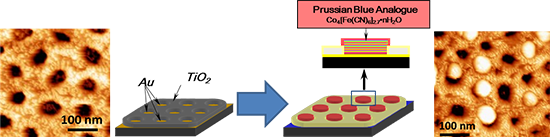
- monolayers fabricated through sol–gel chemistry were used to grow isolated particles of Prussian blue analogues (PBA). The elaboration of the TiO2/CoFe PBA nanocomposites involves five steps. The samples were characterized by scanning electron microscopy (SEM), atomic force microscopy (AFM), infrared
- spectroscopy and X-ray photoelectron spectroscopy (XPS) all along the synthesis process. Selected physico-chemical parameters have been varied in order to determine the key steps of the synthesis process and to optimize it. This study is an important step towards the full control of the fabrication process


Ionic liquid-assisted formation of cellulose/calcium phosphate hybrid materials
Beilstein J. Nanotechnol. 2014, 5, 1553–1568, doi:10.3762/bjnano.5.167
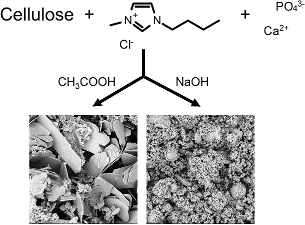
- -14476 Potsdam, Germany 10.3762/bjnano.5.167 Abstract Cellulose/calcium phosphate hybrid materials were synthesized via an ionic liquid-assisted route. Scanning electron microscopy, transmission electron microscopy, energy-dispersive X-ray spectroscopy, X-ray diffraction, infrared spectroscopy, and
- precipitate was filtered, washed with distilled water, and the IL was extracted from the products by Soxleth extraction with methanol for two days. The products were subsequently dried at 40 °C for 24 h in a vacuum oven. Characterization. Attenuated total reflection-Fourier transform infrared spectroscopy was


Model systems for studying cell adhesion and biomimetic actin networks
Beilstein J. Nanotechnol. 2014, 5, 1193–1202, doi:10.3762/bjnano.5.131
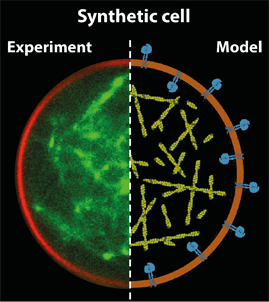
- as native talin interacts with negatively charged lipid monolayers [78]. These observations were in good agreement with previous results from differential scanning calorimetry and Fourier transform infrared spectroscopy [74]. Binding assays of talin on lipid membranes later revealed that the protein


Enhanced photocatalytic hydrogen evolution by combining water soluble graphene with cobalt salts
Beilstein J. Nanotechnol. 2014, 5, 1167–1174, doi:10.3762/bjnano.5.128
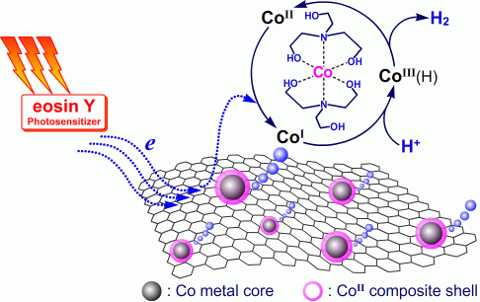
- initial concentration of cobalt salts added. And hydrogen constantly evolves even after 20 h irradiation. Results and Discussion Fourier transform infrared spectroscopy (FTIR) is employed to characterize GO and G-SO3. As shown in Figure 1, compared to GO, G-SO3 has typical absorptions at 1177, 1123 and


Organic and inorganic–organic thin film structures by molecular layer deposition: A review
Beilstein J. Nanotechnol. 2014, 5, 1104–1136, doi:10.3762/bjnano.5.123
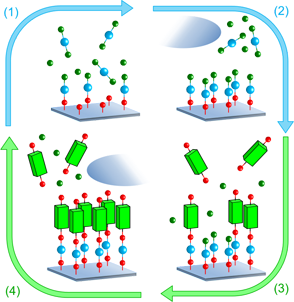
- combination, PMDA+ODA, was also employed by Haq et al. [65], who used reflection–absorption infrared spectroscopy to study the growth on Cu(110) surfaces as a function of temperature and coverage but did not discuss growth rates of the films. Also Miyamae et al. [66] deposited thin films by using PMDA and ODA
- ) is the only aromatic diisocyanate so far used to fabricate polyureas by MLD. Kim et al. [69] employed ED as the second precursor, depositing the films on Ge(100)-2×1 at room temperature. The growth of the ultrathin films was investigated with multiple-internal-reflection Fourier-transform infrared
- spectroscopy, demonstrating the formation of urea linkages, although some imperfections in the growth, possibly due to double reactions of ED, were also observed. In a later study by Loscutoff et al. [70] the same precursors were used to fabricate thin films on Si(100), treated with 3




DFT study of binding and electron transfer from colorless aromatic pollutants to a TiO2 nanocluster: Application to photocatalytic degradation under visible light irradiation
Beilstein J. Nanotechnol. 2014, 5, 1016–1030, doi:10.3762/bjnano.5.115
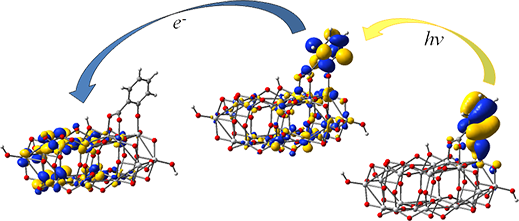
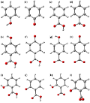
- hydrogen bond involving the same carboxy group. We clearly demonstrate that the ‘common knowledge’ that the binding configuration is in a six ring chelate, suggested by infrared spectroscopy measurements [19][20] or simply assumed by other authors [14][18], is wrong. There are two direct bonds to two



Nanodiamond-DGEA peptide conjugates for enhanced delivery of doxorubicin to prostate cancer
Beilstein J. Nanotechnol. 2014, 5, 937–945, doi:10.3762/bjnano.5.107
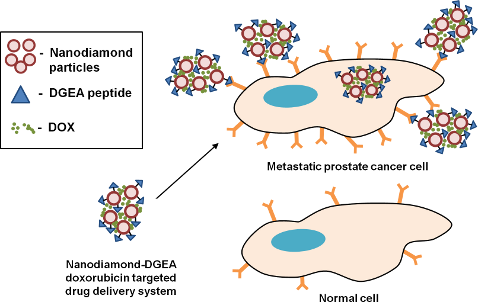
- -DGEA conjugates and ND-DGEA+DOX system were characterized to confirm successful bonding of ND to DGEA and adsorption of DOX, respectively. Transmission electron microscopy (TEM, FEI Tecnai T12) was used to qualitatively confirm the conjugation and adsorption. Fourier transform infrared spectroscopy


Volcano plots in hydrogen electrocatalysis – uses and abuses
Beilstein J. Nanotechnol. 2014, 5, 846–854, doi:10.3762/bjnano.5.96
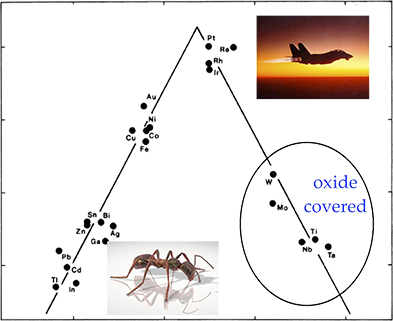
- strongly adsorbed hydrogen is clearly visible in the cyclic voltammogram at potentials above the onset of hydrogen evolution; the total coverage of this species reaches about 70% in this region. However, the weakly adsorbed species has also been detected by infrared spectroscopy above the hydrogen


Shape-selected nanocrystals for in situ spectro-electrochemistry studies on structurally well defined surfaces under controlled electrolyte transport: A combined in situ ATR-FTIR/online DEMS investigation of CO electrooxidation on Pt
Beilstein J. Nanotechnol. 2014, 5, 735–746, doi:10.3762/bjnano.5.86
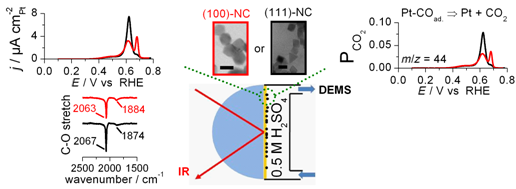
- controlled employing the so-called internal reflection configuration (attenuated total reflection Fourier transform infrared spectroscopy, ATR-FTIRS) [12][15]. In this case, however, the working electrode consists of a structurally little defined polycrystalline metal film, which is directly deposited on the