


Search results
Search for "irradiation" in Full Text gives 590 result(s) in Beilstein Journal of Nanotechnology. Showing first 200.
Tin dioxide nanomaterial-based photocatalysts for nitrogen oxide oxidation: a review
Beilstein J. Nanotechnol. 2022, 13, 96–113, doi:10.3762/bjnano.13.7
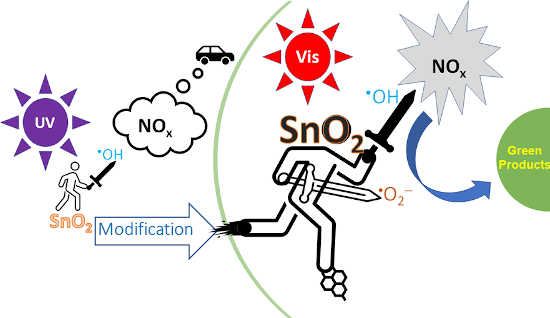
- morphology [25][26][27][28][29][30]. However, pure SnO2 suffers from some inherent drawbacks that limit its practical applications. With a wide bandgap (3.5–3.7 eV) [31][32], SnO2 can only be excited by UV irradiation. As a typical oxidation photocatalyst with the CB edge energy level, which is not conducive
- % after 30 min under solar light irradiation, and the conversion efficacy from NO to NO2 is 1.66%. The high photocatalytic performance and the stability of SnO2 NPs under solar light is promising for potential application [69]. Recent approaches in the modification of SnO2 for photocatalytic NOx oxidation
- and acetone [75]. The presence of graphene induces the formation of SnO2 and introduces Sn vacancies, which supports the electron transfer from the CB of Zn2SnO4 to oxygen under visible light irradiation (Figure 12). The authors only used a visible light LED with low power (3 W) and obtained a high


Sputtering onto liquids: a critical review
Beilstein J. Nanotechnol. 2022, 13, 10–53, doi:10.3762/bjnano.13.2






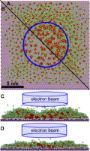
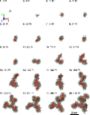
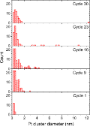
Irradiation-driven molecular dynamics simulation of the FEBID process for Pt(PF3)4
Beilstein J. Nanotechnol. 2021, 12, 1151–1172, doi:10.3762/bjnano.12.86
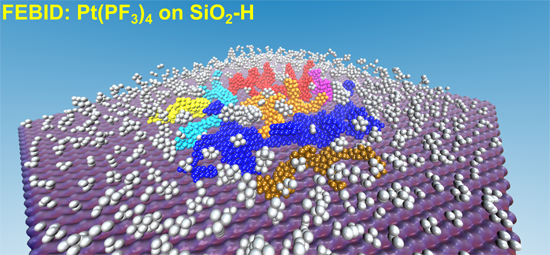
- presents a detailed computational protocol for the atomistic simulation of formation and growth of metal-containing nanostructures during focused electron beam-induced deposition (FEBID). The protocol is based upon irradiation-driven molecular dynamics (IDMD), a novel and general methodology for computer
- simulations of irradiation-driven transformations of complex molecular systems by means of the advanced software packages MBN Explorer and MBN Studio. Atomistic simulations performed following the formulated protocol provide valuable insights into the fundamental mechanisms of electron-induced precursor
- fragmentation and the related mechanism of nanostructure formation and growth using FEBID, which are essential for the further advancement of FEBID-based nanofabrication. The developed computational methodology is general and applicable to different precursor molecules, substrate types, and irradiation regimes








Self-assembly of amino acids toward functional biomaterials
Beilstein J. Nanotechnol. 2021, 12, 1140–1150, doi:10.3762/bjnano.12.85
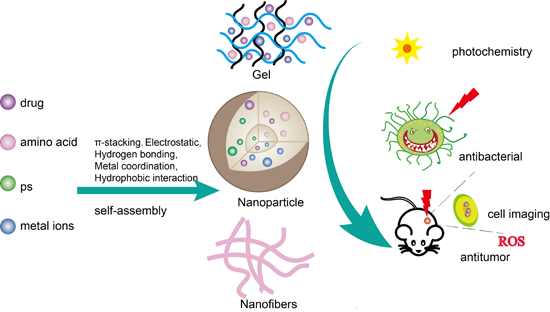
- exhibited high accumulation and ultra-long tumor retention effects. Importantly, animal experiments demonstrated complete eradication of tumor in mice after injection of PWG NPs and laser irradiation, demonstrating the efficacy of PWG nanoparticles in vivo. Indocyanine green (ICG) is widely used in
- maintain the photothermal conversion efficiency up to 32.0%. After entering the tumor cells, the nanoparticles convert light into heat under a laser irradiation of 808 nm and effectively kill the tumor cells. Inspired by natural photosynthesis, artificial light systems consisting of photosensitizers and

Is the Ne operation of the helium ion microscope suitable for electron backscatter diffraction sample preparation?
Beilstein J. Nanotechnol. 2021, 12, 965–983, doi:10.3762/bjnano.12.73
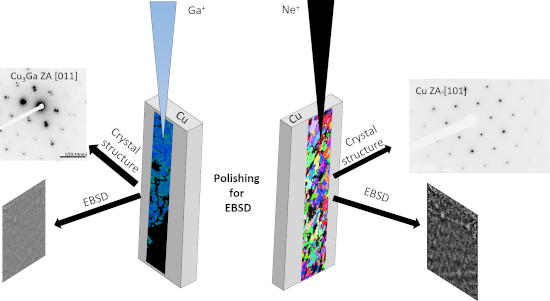
- values throughout the work against which the ion-irradiation-induced effects are evaluated. All values can be found in Table 1. Non-irradiated copper: electropolishing and Ar ion polishing To evaluate the effect of electropolishing and argon ion polishing on EBSD measurements, the Cu sample was polished
- challenging stress/strain analysis. Irradiation of copper at 0° incidence angle To assess the effect of ion irradiation, the copper TEM lamella grids were irradiated with Ga ions using a Ga FIB/SEM or Ne ions using HIM. An ion dose of 3371 ions/nm2 was chosen to allow a comparison with a previously reported
- study on Ga-induced phase transformations in copper [34]. A lower ion dose (2247 ions/nm2) was also evaluated as it corresponds to the dose that is achieved for commonly reported EBSD polishing time values over larger areas [39]. 30 keV Ga ion irradiation at 0° incidence angle The ion trajectory plot



The role of convolutional neural networks in scanning probe microscopy: a review
Beilstein J. Nanotechnol. 2021, 12, 878–901, doi:10.3762/bjnano.12.66
- localization microscopy and wide-field images. High-quality, super-resolution images of microtubules, nuclear pores, and mitochondria can be reconstructed from low-resolution images with two orders of magnitude fewer frames than usual. This shortens acquisition time and reduces sample irradiation [119]. Deep







Comprehensive review on ultrasound-responsive theranostic nanomaterials: mechanisms, structures and medical applications
Beilstein J. Nanotechnol. 2021, 12, 808–862, doi:10.3762/bjnano.12.64
- . reported that when the distance between the cell and the MB was increased to 5.5 µm, the exerted shear stress on the cell membrane suddenly decreased [78]. Schlicher et al. exposed prostate cancer cells (DU145) to 24 kHz US irradiation to investigate the cavitation events and the changes in the cell
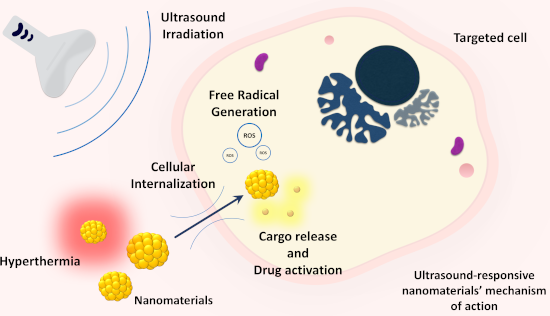
- be improved by employing a nanotechnology-based hyperthermia approach [147]. The schematic illustration of this mechanism is presented in Figure 2. Free radical species generation Free radical molecules, such as ROS, NO, HO•, can be generated after the US irradiation interacts with specific
- components in water-based media, which plays a role in both therapeutic and diagnostic applications [148][149]. Due to the toxicity of free radicals, some chemical compounds called sonosensitizers have been used as sonodynamic therapy agents which produce synergistic effects with US irradiation by generating


Recent progress in actuation technologies of micro/nanorobots
Beilstein J. Nanotechnol. 2021, 12, 756–765, doi:10.3762/bjnano.12.59
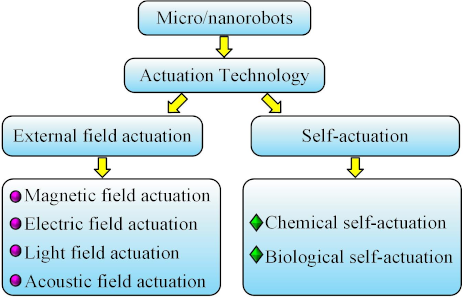
- actuation Wang et al. [31] designed a needle-shaped liquid metal gallium nanoswimmer with controllable movement under near-infrared laser irradiation. Its propulsion force is mainly derived from the thermophoresis force generated by the temperature gradient along the longitudinal axis. Experiments show that


A review of defect engineering, ion implantation, and nanofabrication using the helium ion microscope
Beilstein J. Nanotechnol. 2021, 12, 633–664, doi:10.3762/bjnano.12.52
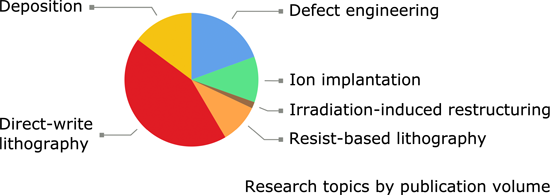
- irradiation effects, such as defect formation and ion implantation, are used to locally change the properties of the material, and at higher doses, nanofabrication is performed using localized material removal (by sputtering) or addition (by gas-assisted deposition). Sometimes, lower-dose irradiation effects
- following, the field of materials modification research using the HIM is reviewed, subdivided into the following areas: 1. defect engineering, 2. ion implantation, 3. irradiation-induced restructuring, 4. resist-based lithography, 5. direct-write lithography/milling (including gas-assisted milling), and 6
- either purposefully creating, or avoiding, varying degrees of disorder in a material. In the following, a range of applications based on these irradiation effects is described, starting with defect engineering studies at the lowest doses and then moving through higher-dose applications. The final


High-yield synthesis of silver nanowires for transparent conducting PET films
Beilstein J. Nanotechnol. 2021, 12, 624–632, doi:10.3762/bjnano.12.51
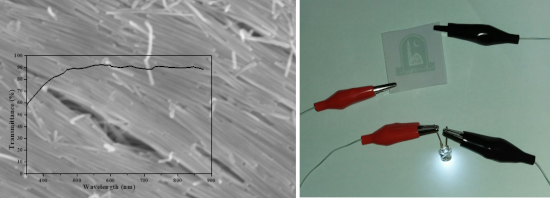
- effective synthetic method is still needed for high yields of impurity-free AgNWs. In order to synthesize silver nanowires several methods have been successfully developed, including ultraviolet irradiation, salt-free solution-based, salt-mediated solution-based, photo reduction, hydrothermal, wet-chemical


Nanoporous and nonporous conjugated donor–acceptor polymer semiconductors for photocatalytic hydrogen production
Beilstein J. Nanotechnol. 2021, 12, 607–623, doi:10.3762/bjnano.12.50
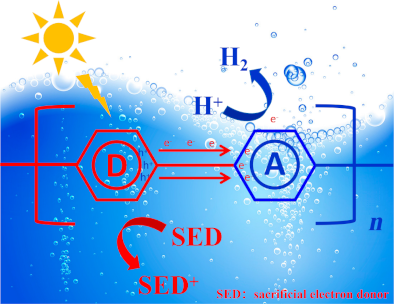
- and Honda [4] reported the first example of hydrogen production by photocatalytic water splitting in 1972, using TiO2 as the photocatalyst under ultraviolet-light irradiation. Since then, numerous semiconductors have been explored for photocatalytic hydrogen production (PHP) by water splitting, which
- generate hydrogen under visible-light irradiation, for the first time. After that, g-C3N4 triggered substantial research interest [12][13][14]. Various strategies have been developed to improve the PHP activity of g-C3N4, such as introducing heterojunctions [15][16][17], copolymerization [18][19][20
- edges of the frameworks to delicately tune the bandgaps of conjugated polymers. Among them, three polymers, that is, P2, P3, and P4 (Figure 2), showed suitable bandgaps of ca. 2.2 eV, and conferred HERs of 4.72, 9.15, and 2.90 μmol·h−1 (10 mg), respectively, under visible-light irradiation [46][47]. The




On the stability of microwave-fabricated SERS substrates – chemical and morphological considerations
Beilstein J. Nanotechnol. 2021, 12, 541–551, doi:10.3762/bjnano.12.44
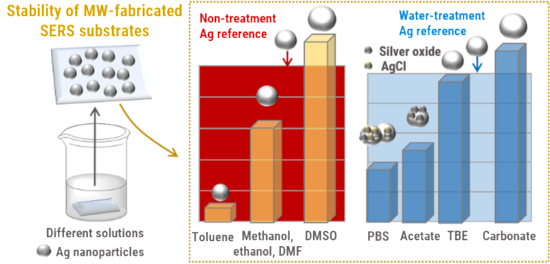
- . Van Duyne and others elaborated the fundamental concept of the enhancement process, which was found to be mainly based on the amplification of the electric field component when the illuminating laser irradiation interacts with metal nanoparticles [6]. Suitable nanoparticles consist preferentially of
- salt to metallic silver by microwave irradiation in the presence of ethanol utilized as reducing agent (Figure 1a). In practice, the functionalization of the substrates requires only the placement of the cleaned glass supports into a microwave vial containing an aqueous silver acetate precursor co
- -mixed with ethanol. Subsequently, the closed microwave vials are subjected to microwave irradiation for two minutes. In the first phase of the microwave irradiation the temperature of the precursor mixture rapidly increases (see Supporting Information File 1, Figure S1 for the temperature diagram of a


Surface-enhanced Raman scattering of water in aqueous dispersions of silver nanoparticles
Beilstein J. Nanotechnol. 2021, 12, 497–506, doi:10.3762/bjnano.12.40
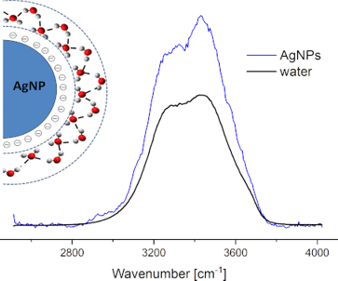
- phenomenon is present only in the AgNPs blue sample, not in the AgNPs yellow sample. Also, changes in the structure of AgNPs induced by laser irradiation may be excluded, as an identical UV–vis absorption spectra of the investigated AgNPs dispersions (see Figure S1 in Supporting Information File 1) collected


Boosting of photocatalytic hydrogen evolution via chlorine doping of polymeric carbon nitride
Beilstein J. Nanotechnol. 2021, 12, 473–484, doi:10.3762/bjnano.12.38
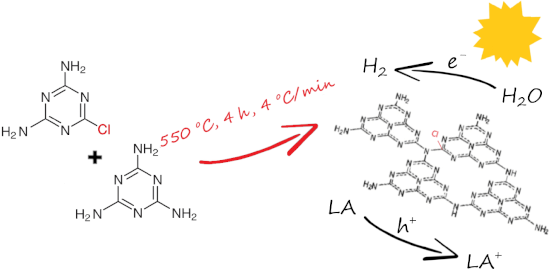
- of the photocatalytic hydrogen generation process under simulated solar light irradiation is presented in Figure 7. It is clear that the designed modification of the samples strongly boosts the photocatalytic efficiency. The hydrogen evolution of Cl-PCN was approx. 4.4 times higher after 3 h in
- three cycles of light on–off, the performance of both electrodes tends to stabilize, indicating that the photocatalysts are stable under visible-light irradiation [55]. The measurements obtained from electrochemical impedance spectroscopy (EIS) are shown in Figure 9b. It is known that the arc radius of
- and sonicating for 1 h. The photocatalytic water splitting reaction was carried out in an outer irradiation-type reactor (Pyrex reaction vessel) connected to an argon source. After the reaction solution was placed in the reactor, 5 mL of lactic acid was poured into and purged with argon for air


Rapid controlled synthesis of gold–platinum nanorods with excellent photothermal properties under 808 nm excitation
Beilstein J. Nanotechnol. 2021, 12, 462–472, doi:10.3762/bjnano.12.37
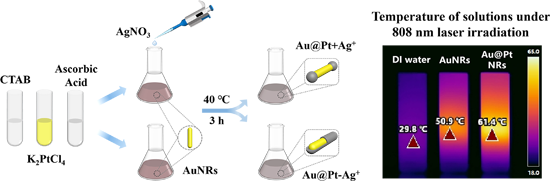
- proposed. The synthesized Au@Pt NRs have a longitudinal LSPR wavelength of 812 nm, which is very close to a common laser wavelength of 808 nm. The Au@Pt NRs exhibit excellent photothermal properties when irradiated with a laser. The temperature increased by more than 36 °C after irradiation for 10 min
- on the tip of AuNRs, and their LSPR peak can be adjusted to a desired range. Importantly, we evaluated that the Au@Pt NRs have high PCE and fairly great photothermal stability under 808 nm laser irradiation, which proves that they have great potential as an excellent PTA. Results and Discussion
- absorption spectrum of the optimized Au@Pt NRs is shown in Figure 4a. The LSPR peak is located at a wavelength of 812 nm, which is very satisfactory for the photothermal effect under laser irradiation with 808 nm. The corresponding micrograph is shown in Figure 4b. Photothermal effect To test the efficiency


A review on nanostructured silver as a basic ingredient in medicine: physicochemical parameters and characterization
Beilstein J. Nanotechnol. 2021, 12, 440–461, doi:10.3762/bjnano.12.36
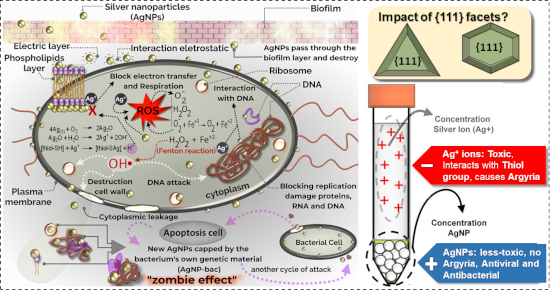
- effect of light irradiation on AgNPs with spherical and cubic morphologies under ambient conditions. They confirmed that light wavelengths below 495 nm, corresponding to the UV/blue part of the electromagnetic spectrum, were mainly responsible for their photo-transformation [52]. In both the cases, the
- (AgxO) around the spherical AgNPs after light exposure, observed in the TEM micrograph shown in Figure 4a, confirmed the quicker photo-oxidation process [52][58]. After 40 h of light irradiation, the level of oxidation in cubic AgNPs was about 30%, while it took only 9 h of light irradiation for the


Exploring the fabrication and transfer mechanism of metallic nanostructures on carbon nanomembranes via focused electron beam induced processing
Beilstein J. Nanotechnol. 2021, 12, 319–329, doi:10.3762/bjnano.12.26
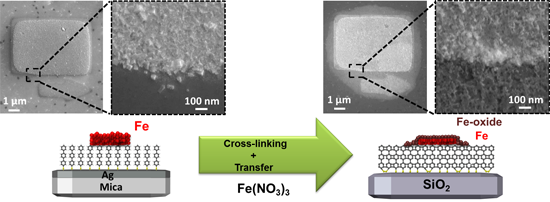
- both precursors [14][15]. It is known that electron irradiation of aromatic SAMs causes the cleavage of C–H bonds and, thus, the formation of reactive, that is, activated C species. This is found to be the starting point for the formation of laterally cross-linked CNMs via the formation of C–C linked
- time frame in which the cross-linking between electron beam-activated C atoms occurs based on the latter consideration. To investigate this assumption, we performed experiments in which we varied the waiting time between irradiation of the SAM (Figure 1c) and the following precursor dosage (Figure 1d
- differ in the waiting time between electron irradiation and precursor dosage. All twelve structures were exposed to 3.0 × 10⁻⁷ mbar Fe(CO)5 background pressure for 3 h 29 min. In addition, local AE spectra were acquired at the positions indicated with the correspondingly colored stars. After a comparably


The patterning toolbox FIB-o-mat: Exploiting the full potential of focused helium ions for nanofabrication
Beilstein J. Nanotechnol. 2021, 12, 304–318, doi:10.3762/bjnano.12.25
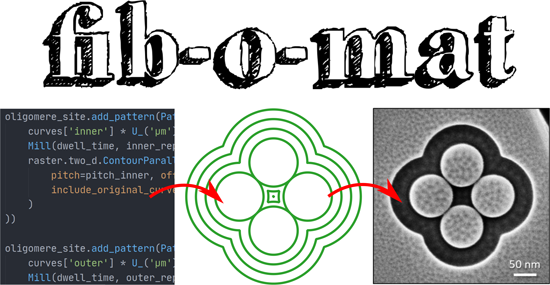
- -based devices encoding bits using nanoscale domain walls or skyrmions [4]. The magnetic properties of thin magnetic films and multilayers can directly be modified in a controlled manner by low-dose ion irradiation. Local variation of the dose using masks or focused ion beams leads to pure magnetic
- , atomic composition, and crystallographic phase [33][34]. Here, the impact of He irradiation on the ferromagnetic multilayer [Co0.6/Pt0.8]15 is studied [35][36]. This multilayer shows perpendicular magnetic anisotropy arising from the Co/Pt interfaces and forms nanometer-scale, labyrinth-like domains with
- opposite out-of-plane magnetization in remanence. We are particularly interested in how ion irradiation changes the morphology of the magnetic domains and how it influences the nucleation and annihilation of domains in a typical adiabatic field cycle as well as after picosecond laser excitation [37][38


Doxorubicin-loaded gold nanorods: a multifunctional chemo-photothermal nanoplatform for cancer management
Beilstein J. Nanotechnol. 2021, 12, 295–303, doi:10.3762/bjnano.12.24
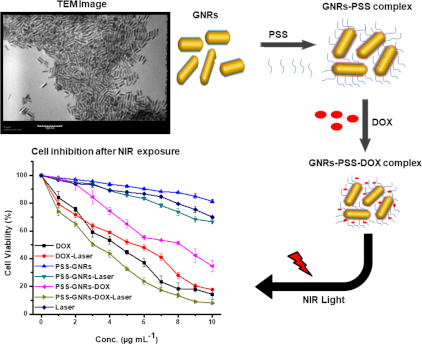
- poly(sodium-4-styrenesulfonate) (PSS-GNRs) with and without NIR laser (808 nm, power density = 1.5 W/cm2 for 2 min) irradiation. The drug-loading capacity of PSS-GNRs was about 76% with a drug loading content of 3.2 mg DOX/mL. The cumulative DOX release significantly increased after laser exposure
- nanocomplexes with NIR laser irradiation appear more efficient in cell inhibition (93%) than those without laser exposure (65%) and doxorubicin alone (84%). The IC50 values of PSS-GNRs-DOX and PSS-GNRs-DOX were measured as 7.99 and 3.12 µg/mL, respectively, with laser irradiation. Thus, a combinatorial approach
- of death worldwide from which 9.6 million people died in 2018 [1]. Hepatocellular carcinoma (HCC) is one of the major types of liver cancer with high incidence of mortality [2]. Currently, there are a number of treatment modalities, including chemotherapy, immunotherapy, targeted therapy, irradiation


Gold(I) N-heterocyclic carbene precursors for focused electron beam-induced deposition
Beilstein J. Nanotechnol. 2021, 12, 257–269, doi:10.3762/bjnano.12.21
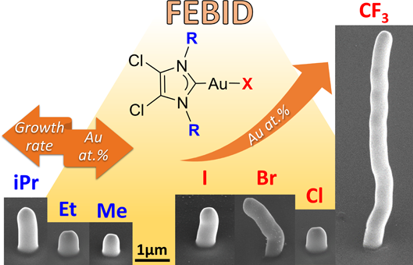
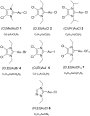
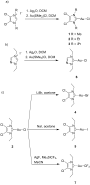
- nanostructures [1][2][3][4]. This mask-less nanofabrication technique uses gaseous molecules as precursors. The gas molecules are introduced in the specimen chamber of a scanning electron microscope (SEM), adsorb onto a substrate, and dissociate upon electron irradiation, leaving a solid deposit on the substrate
- for deposition upon e-beam irradiation. When deposition was successful, two types of deposits were created. Firstly, large deposits for composition analysis were written by repeatedly (2000 passes) exposing a 250 × 250 nm2 area, using point exposures with a dwell time of 500 µs and a pitch of 10 nm
- , and decompose in a clean manner to the desired products. Furthermore, it should be inexpensive and easy to prepare, non-toxic, and easy to store and handle [17]. The choice of such molecules requires a compromise to be made between volatility, stability, and reactivity induced by electron irradiation





Scanning transmission helium ion microscopy on carbon nanomembranes
Beilstein J. Nanotechnol. 2021, 12, 222–231, doi:10.3762/bjnano.12.18
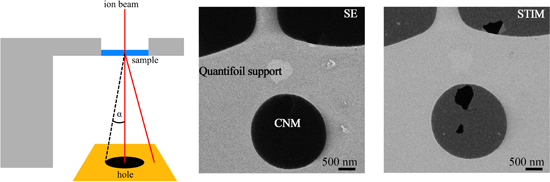
- samples. These membranes are made from aromatic molecules, typically from self-assembled monolayers. Upon electron irradiation, cross-linking of the molecules is induced. A mechanically stable membrane is formed, which can be transferred onto any other substrate, such as TEM grids [22][23]. Since CNMs
- regarding the absolute values, EFTEM shows a deviation. The approximation of the electron mean free path and the alteration of the CNM upon irradiation with high electron flux in EFTEM can explain this deviation. Conclusion This work demonstrates the capability of an easy-to-build dark-field STIM detector
- with line integration of 64 lines. The field of view was set to 10 µm for the thin carbon membrane and to 15 µm for the thick membrane. The carbon nanomembranes (CNMs) were formed by low-energy electron irradiation of aromatic self-assembled monolayers (thin CNMs) or spin coated layers of aromatic


A review on the green and sustainable synthesis of silver nanoparticles and one-dimensional silver nanostructures
Beilstein J. Nanotechnol. 2021, 12, 102–136, doi:10.3762/bjnano.12.9
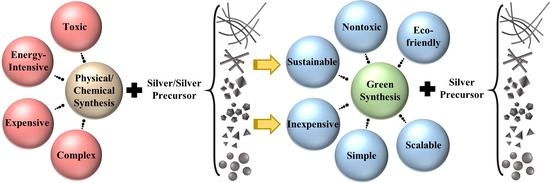
- synthesis, but similar to chemical synthesis, the biological synthesis of nanoparticles is classified under bottom-up approaches [104]. However, green synthesis is not limited to synthesis by bio-based compounds or biological species. For example, laser irradiation can also be used without using any
- reducing agent in order to synthesize AgNPs [252]. In addition, AgNPs were synthesized by microwave irradiation [254][255], ionizing irradiation [252][256], and pulse radiolysis [252]. Since these techniques may be utilized to produce nanoparticles with harmless procedures, they may also be classified


Fusion of purple membranes triggered by immobilization on carbon nanomembranes
Beilstein J. Nanotechnol. 2021, 12, 93–101, doi:10.3762/bjnano.12.8
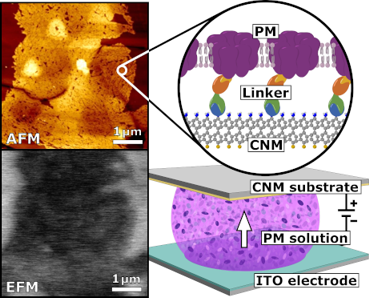
- electron irradiation-induced cross-linking of a self-assembled monolayer (SAM) of 4′-nitro-1,1′-biphenyl-4-thiol (NBPT) and second, purple membrane (PM) containing genetically modified bacteriorhodopsin (BR) carrying a C-terminal His-tag. The NBPT-CNM was further modified to carry nitrilotriacetic acid
- stable freestanding monolayers produced from irradiation-induced cross-linking of self-assembled monolayers (SAMs) [35]. They have a thickness in the range of 1–2 nm and can be made from a variety of carbon precursor molecules [36]. They are well characterized in terms of their permeability [37][38] and
- . Afterwards the sample was rinsed with ethanol, dried in a stream of nitrogen, and stored under argon gas. Sample characterization X-ray photoelectron spectroscopy (XPS) has been conducted in an Omicron Multiprobe UHV system (Scienta Omicron GmbH, Taunusstein, Germany) using monochromatic Al Kα irradiation, a


Bio-imaging with the helium-ion microscope: A review
Beilstein J. Nanotechnol. 2021, 12, 1–23, doi:10.3762/bjnano.12.1
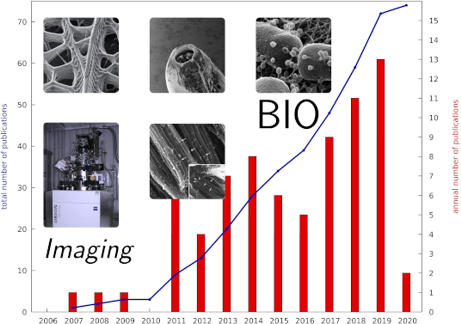
- temporal decay of IL after excitation contain information about the emitting material. IL emitted under megaelectronvolt proton or alpha-particle irradiation has proven to be a powerful tool for the investigation of medical and biological samples [50]. In the context of bio-imaging with the HIM, IL-HIM
- doped with the fluorescent nitrogen-vacancy defect as well as rare earth metal-based nanoparticles regarding bleaching under the ion beam. Although they are believed to be photostable under electron irradiation, the IL of the nanoscale diamonds decreased significantly under the ion beam even at doses
- lower than 1014 ions·cm−2. However, lanthanide-doped nanoparticles proved to be relatively stable against the ion irradiation and seem to be promising materials for biomarkers to be used with the HIM. Later, Mi developed a particle-accelerator-based setup with high-energy protons and alpha particles to


Unravelling the interfacial interaction in mesoporous SiO2@nickel phyllosilicate/TiO2 core–shell nanostructures for photocatalytic activity
Beilstein J. Nanotechnol. 2020, 11, 1834–1846, doi:10.3762/bjnano.11.165
- yield a material that absorbs light in the UV and visible region [29][52][53]. These results suggest that a change in the bandgap could readily reduce the recombination of electrons and holes during UV irradiation of mSiO2@NiPS/TiO2 and, consequently, improve its photocatalytic activity. Infrared
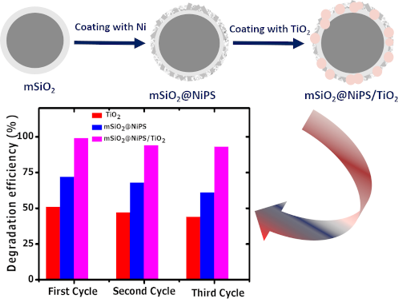
- methylene violet dye under UV light irradiation. Figure 5a shows the degradation results using the composites as well as that of pristine TiO2 for comparison. The degradation efficiency was found to increase with irradiation time for all the photocatalysts. The degradation efficiency was calculated to be 51
- of the methyl violet solution. Figure 5b shows three cycles of degradation of the dye using the photocatalysts under UV light irradiation for 1 h. The degradation efficacy of the catalyst decreased with an increase in the number of cycles. This could be due to i) the loss of catalyst in the process





