


Search results
Search for "layers" in Full Text gives 1202 result(s) in Beilstein Journal of Nanotechnology. Showing first 200.
Controllable physicochemical properties of WOx thin films grown under glancing angle
Beilstein J. Nanotechnol. 2024, 15, 350–359, doi:10.3762/bjnano.15.31
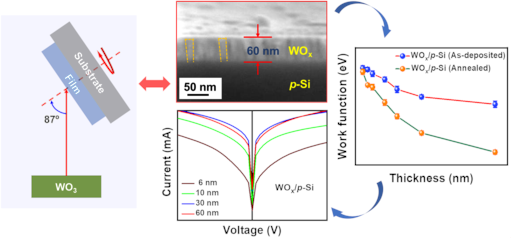
- stronger with the increasing number of interface gap states [52][53], this explains the comparatively higher values of RR in all annealed samples (Table 1). Thus, there exists a critical thickness (30 nm) of the NS-WOx layers in terms of effective elimination of Fermi level pinning at the interface and
- on the variation in work function with thickness for GLAD-grown WOx films in this study is valuable towards potential device applications, where work function optimization among consecutive layers is imperative. Moreover, the adopted rf sputtering technique in the present work ensures reduced surface


Determining by Raman spectroscopy the average thickness and N-layer-specific surface coverages of MoS2 thin films with domains much smaller than the laser spot size
Beilstein J. Nanotechnol. 2024, 15, 279–296, doi:10.3762/bjnano.15.26
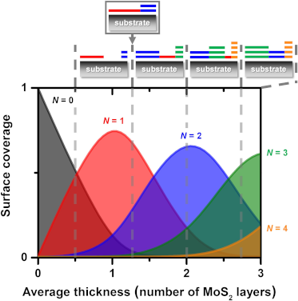
- injection pulsed-pressure chemical vapor deposition (DLI-PP-CVD). Such samples are constituted of nanoflakes (with a lateral size of typically 50 nm, i.e., well below the laser spot size), with possibly a distribution of thicknesses and twist angles between stacked layers. As an essential preliminary, we
- SiO2 on Si substrates. Then, we discuss the applicability of the same criteria for significantly different DLI-PP-CVD MoS2 samples with average thicknesses ranging from sub-monolayer up to three layers. Finally, an original procedure based on the measurement of the intensity of the layer breathing
- modes is proposed to evaluate the surface coverage for each N (i.e., the ratio between the surface covered by exactly N layers and the total surface) in DLI-PP-CVD MoS2 samples. Keywords: molybdenum disulfide; number of layers; Raman spectroscopy; thin film; transition metal dichalcogenides


Design, fabrication, and characterization of kinetic-inductive force sensors for scanning probe applications
Beilstein J. Nanotechnol. 2024, 15, 242–255, doi:10.3762/bjnano.15.23
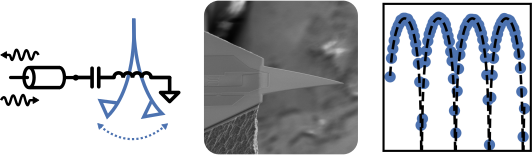
- with a mask consisting of a 190 nm thick layer of Cr and PMMA. After the release, we strip the PMMA and Cr layers, while taking care to not break the cantilevers. The difficulties associated with using KOH lead us to prefer the dry-etch described above in step (h). Tip deposition In scanning probe
- an electron-beam deposited platinum tip on the released Si-N cantilever of one chip. The tip has total height in the range of 1–2 μm. (b) An SEM image of the reverse cone structure, deposited using multiple layers of platinum. Note the larger connection to the Nb-Ti-N thin film to the left of the tip



Multiscale modelling of biomolecular corona formation on metallic surfaces
Beilstein J. Nanotechnol. 2024, 15, 215–229, doi:10.3762/bjnano.15.21
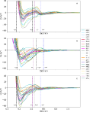
- 0.15–0.18 nm and 0.42–0.48 nm away from the aluminum surface. These regions corresponded to the first and second water layers adjacent to the metal surface, respectively (as depicted in Supporting Information File 1, Figure S1). Further examination of the ion density profiles indicated the presence of
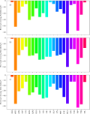
- vertical lines indicate the positions of water and ion layers. (a) Al(100), (b) Al(110), and (c) Al(111). Minimum energy of adsorption (kBT) for each SCA on three Al fcc slabs obtained through all-atom simulations: (a) Al(100), (b) Al(110), and (c) Al(111). Notably, Al(111) exhibits a stronger binding




Ion beam processing of DNA origami nanostructures
Beilstein J. Nanotechnol. 2024, 15, 207–214, doi:10.3762/bjnano.15.20
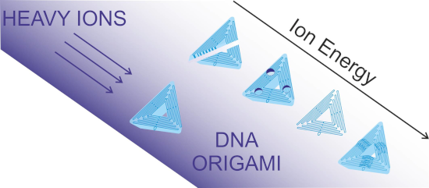
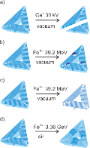
- with N2. We also performed several depositions on mica, but the material was found to be unsuitable for the irradiation studies at such high fluences because of significant macroscopic ion-induced damage through cracking and flaking of the upper layers after irradiation. Therefore, in the present study


Graphene removal by water-assisted focused electron-beam-induced etching – unveiling the dose and dwell time impact on the etch profile and topographical changes in SiO2 substrates
Beilstein J. Nanotechnol. 2024, 15, 190–198, doi:10.3762/bjnano.15.18
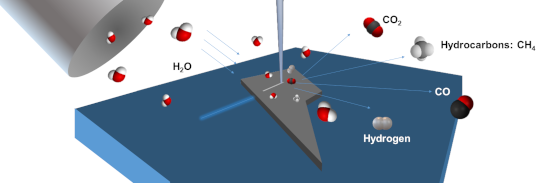
- extraordinary mechanical and electronic properties. Although many years have passed since its discovery, manipulating single graphene layers is still challenging using standard resist-based lithography techniques. Recently, it has been shown that it is possible to etch graphene directly in water-assisted
- formed, and they start to chemically react with graphene. There are a few possible reaction paths which could occur during this process: A first series of water FEBIE experiments have been performed on single, bi-, and triple layers of graphene in ESEM mode at a background pressure of 130 Pa, with a beam
- studies: A) optical microscopy, B) scanning electron microscopy (SEM), C) AFM, and D) correlative probe and electron microscopy (CPEM). The optical contrast of graphene placed onto SiO2/Si allows us to easily distinguish between its mono-, bi-, triple, and thicker flakes layers. The values (approx. 2.5 nm


Modification of graphene oxide and its effect on properties of natural rubber/graphene oxide nanocomposites
Beilstein J. Nanotechnol. 2024, 15, 168–179, doi:10.3762/bjnano.15.16
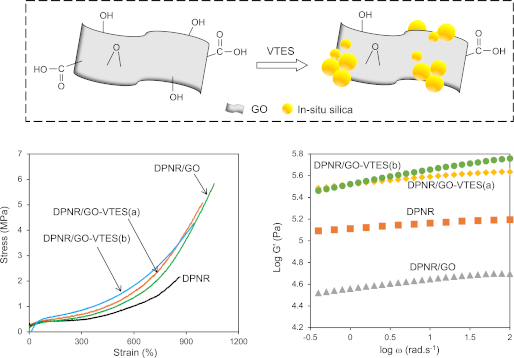
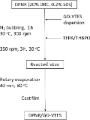
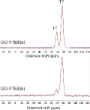
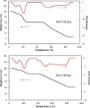
- G' value of DPNR/GO could be explained by thin and large surface GO layers. The GO sheet could not withstand large shearing force, causing the rubber particles to slip. The high G' value of DPNR/GO-VTES(a) and DPNR/GO-VTES(b) may be due to hard silica particles, which may contribute to higher energy






CdSe/ZnS quantum dots as a booster in the active layer of distributed ternary organic photovoltaics
Beilstein J. Nanotechnol. 2024, 15, 144–156, doi:10.3762/bjnano.15.14
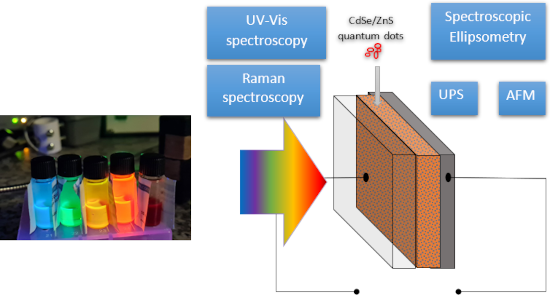
- relations of refractive indices and extinction coefficient were investigated. The morphologies of the thin films were studied with atomic force microscopy. The chemical boundaries of the ternary layers were determined by Raman spectroscopy. Based on UPS studies, the energy diagram of the potential devices
- was determined. The resistivity of the layers was determined using impedance spectroscopy. Simulations (General-Purpose Photovoltaic Device Model) showed a performance improvement in the cells with quantum dots of 0.36–1.45% compared to those without quantum dots. Keywords: efficiency; luminescence
- -transporting layers [24], active absorbing layers, and other components [25][26]. Inorganic quantum dots are considered substitutes for fullerene acceptors. Their biggest advantages are a tunable band gap, various absorption spectra, and comparatively high mobility of carriers [27][28]. The application of




In situ optical sub-wavelength thickness control of porous anodic aluminum oxide
Beilstein J. Nanotechnol. 2024, 15, 126–133, doi:10.3762/bjnano.15.12
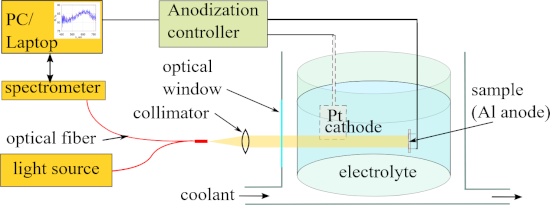
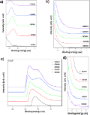
- . Automation software was designed to terminate the anodization process at preset PAAO thickness values. While the concept was illustrated using the widely used method of anodization in a 0.3 M oxalic acid electrolyte with a 40 V potential, it can be readily customized for other protocols. PAAO layers with
- achieve precise optical characterization, one could employ spectroscopic ellipsometry (SE) with more refined division into sub-layers [26] and consider additional material properties, such as the anisotropy of PAAO [27] and the optical dispersion of the refractive index (RI) of Al2O3 [28]. However, for
- attenuate the signal at short and long wavelengths. For very thin PAAO layers (hPAAO < 200 nm), the reflectance spectra did not have significant interferometric features (i.e., Fabry–Pérot-like fringes) in the usable wavelength range of the system. Furthermore, as will be discussed later, at the initial


Influence of conductive carbon and MnCo2O4 on morphological and electrical properties of hydrogels for electrochemical energy conversion
Beilstein J. Nanotechnol. 2024, 15, 57–70, doi:10.3762/bjnano.15.6
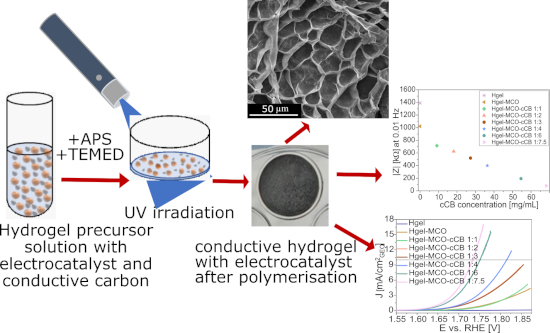
- structures were examined in terms of their morphology, electrical properties, and catalytic layers in the OER process. Results and Discussion Characterisation of hydrogel-based polymer composites with dispersed catalytic and conductive particles Scanning electron microscopy (SEM) analysis of hydrogel samples
- presented in this work indicate a promising direction for further work aimed at obtaining electrocatalytic layers participating in the OER process and characterized by high efficiency, while using a simple one-step method for synthesizing a conductive hydrogel containing electrochemically active particles


Nanotechnological approaches in the treatment of schistosomiasis: an overview
Beilstein J. Nanotechnol. 2024, 15, 13–25, doi:10.3762/bjnano.15.2

- . It can have one or multiple layers. Due to that, their size can range from 30 nm to the micrometer range [37]. As drug vehicles, they exhibit unique properties, such as protection of encapsulated compounds from physiological degradation, extended drug half-life, controlled release of the drug


TEM sample preparation of lithographically patterned permalloy nanostructures on silicon nitride membranes
Beilstein J. Nanotechnol. 2024, 15, 1–12, doi:10.3762/bjnano.15.1
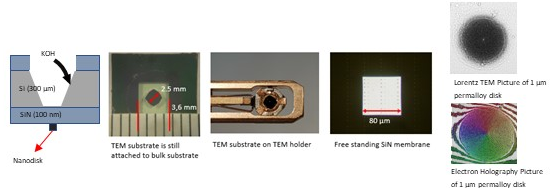
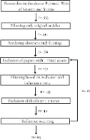
- membrane also allows for high-resolution patterning since there is less electron scattering during exposure [26]. The purpose of applying two layers of resist is to create a large undercut by using a bottom layer that is more sensitive than the top layer. This prevents the unwanted deposition of metal that
- techniques, a one-time exposure is possible with the help of high accelerating voltage during electron beam exposure. In this process, rather than doing one resist deposition and exposure after another, the layer selectivity is controlled by the electron beam dose and the sensitivity of the two layers. Only
- in the copolymer (higher sensitivity) the chain scission reaction occurs at low doses; at higher doses, both layers were exposed. The exposure scheme is given in Figure 3. The doses were chosen by considering that the copolymer is 2–3 times more sensitive than PMMA [25]. If the exposure dose is too


A combined gas-phase dissociative ionization, dissociative electron attachment and deposition study on the potential FEBID precursor [Au(CH3)2Cl]2
Beilstein J. Nanotechnol. 2023, 14, 1178–1199, doi:10.3762/bjnano.14.98
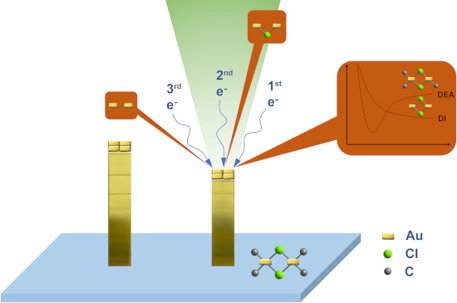
- low-energy electron interaction under a variety of different conditions. Those are the gas phase [59][61] in thin layers under non-steady state conditions [57], in comparative FEBID experiments under HV and UHV conditions [60], and with respect to post-deposition purification through electron exposure
- and through reductive halogen removal using atomic hydrogen [58]. In an early study by Spencer et al. [57], 0.7 nm layers of Pt(CO)2Cl2 were exposed to 500 eV electrons and desorbing ligands were monitored by mass spectrometry, while the development of the deposit was monitored using XPS. It was found



Spatial variations of conductivity of self-assembled monolayers of dodecanethiol on Au/mica and Au/Si substrates
Beilstein J. Nanotechnol. 2023, 14, 1169–1177, doi:10.3762/bjnano.14.97
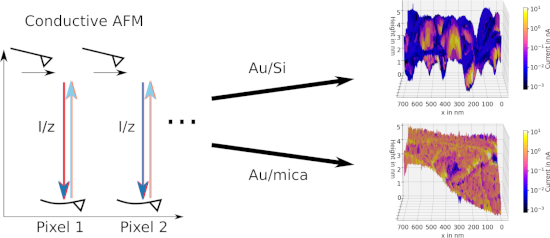
- , Niels Bohrweg 2, 2333 CA Leiden, Netherlands Physikalisches Institut, Karlsruhe Institute of Technology, Wolfgang-Gaede-Straße 1, 76131, Karlsruhe, Germany 10.3762/bjnano.14.97 Abstract Determining the conductivity of molecular layers is a crucial step in advancing towards applications in molecular
- electronics. A common test bed for fundamental investigations on how to acquire this conductivity are alkanethiol layers on gold substrates. A widely used approach in measuring the conductivity of a molecular layer is conductive atomic force microscopy. Using this method, we investigate the influence of a
- ][3] has always held a central role, as the flexibility and control over the structure of molecules is unmatched. One of the fundamental parts of devices employing a bottom-up approach combined with molecular electronics is comprised of metal electrodes and molecular layers deposited onto them. For


Elasticity, an often-overseen parameter in the development of nanoscale drug delivery systems
Beilstein J. Nanotechnol. 2023, 14, 1149–1156, doi:10.3762/bjnano.14.95
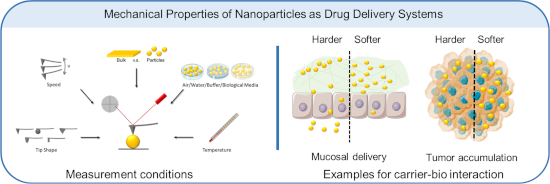
- filled with poly(lactic-co-glycolic acid) (PLGA) cores of different sizes resulting in interfacial water layers with different thicknesses and therefore with tunable elasticity [38]. Semielastic particles whose Young’s moduli were around 50 mPa showed the fastest diffusion in mucus. However, harder


Density functional theory study of Au-fcc/Ge and Au-hcp/Ge interfaces
Beilstein J. Nanotechnol. 2023, 14, 1093–1105, doi:10.3762/bjnano.14.90
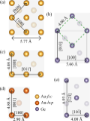
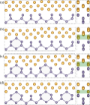
- of atomic layers and the epitaxial Au-fcc(001)/Ge(001) heterojunction shown in Figure 2 (two variants of mutual positions of the slabs are presented). This simplest heterostructure can be built by setting the [110] direction of the Au crystal parallel to the [100] direction of the Ge lattice [32
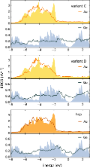
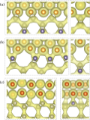
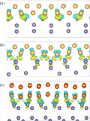
- layers in the supercell. In variant T1 of the considered heterostructure, the Au atoms are at maximum distance from the Ge atoms, while in variant T2 some of the gold atoms are located on the top of Ge sites. Our preliminary calculations indicated that variant T1 is preferred, and we conducted
- tests performed to find the optimal thickness of the Au layer in the Au/Ge heterostructure with five Ge layers. The plot of the interfacial energy reveals a much weaker dependence on the number of Au layers. Values of the work of separation for the Au-fcc(001)/Ge(001) heterojunction include both the





Properties of tin oxide films grown by atomic layer deposition from tin tetraiodide and ozone
Beilstein J. Nanotechnol. 2023, 14, 1085–1092, doi:10.3762/bjnano.14.89
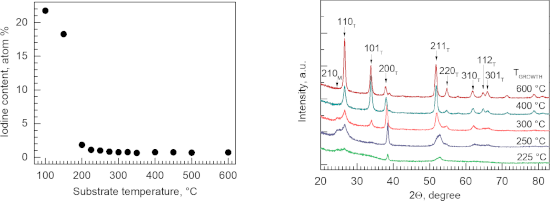
- have been studied from many perspectives. For example, one can mention anodes for Li-ion batteries [1], gas sensors [2], catalytic activities [3], and stable buffer [4] or base [5] layers in solar cells. More applications can be found, when SnO2 is considered as constituent of a nanostructure or a
- nanocomposite layer. ZrO2–SnO2 stacked layers have been shown to perform as mechanically elastic and magnetizable films [6]. SnO2-coated carbon nanotubes have been studied as catalysts [7] and ZnO–SnO2 as functional composite in Li-ion batteries [8]. A recent review article from 2022 lists 27 different
- distances average to less sharp XAS peaks. Because of the somewhat less shallow probe depth of XAS recorded in TEY mode (ca. 10 nm) compared to the high surface sensitivity of the recorded photoemission spectra (a few atomic layers) [41] we suggest that less completely oxidised species appear below the


Isolation of cubic Si3P4 in the form of nanocrystals
Beilstein J. Nanotechnol. 2023, 14, 971–979, doi:10.3762/bjnano.14.80
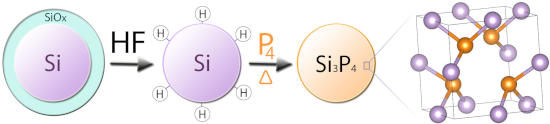
- phosphorus as a dopant. From the outset, phosphorus diffusion through hydrogenated and oxide layers was surmised to be different. In the case of similar previously performed syntheses of Si NPs with an oxide layer [21], phosphorus diffuses deep into the NP cores and distributes rather homogenously with a


Low temperature atomic layer deposition of cobalt using dicobalt hexacarbonyl-1-heptyne as precursor
Beilstein J. Nanotechnol. 2023, 14, 951–963, doi:10.3762/bjnano.14.78
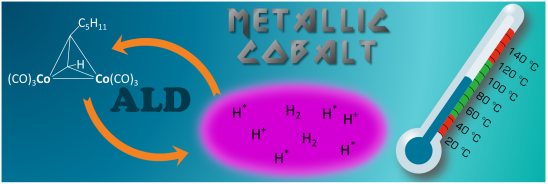
- . Typically, these systems require ultrathin layers within the nanometre scale [6]. The thickness and conformality criteria of future microelectronics devices require the development of cobalt metal films deposited by ALD. Because of the self-limiting growth process, ALD allows for the sub-nanometre control
- significant influence on the deposition behaviour. Figure 10 shows the thickness distribution of ALD layers deposited at 85 °C after 1500 cycles for different plasma pulse times as violin plot [41]. This plot shows the film thickness distribution on the wafer surface for each plasma pulse time. The results


Upscaling the urea method synthesis of CoAl layered double hydroxides
Beilstein J. Nanotechnol. 2023, 14, 927–938, doi:10.3762/bjnano.14.76
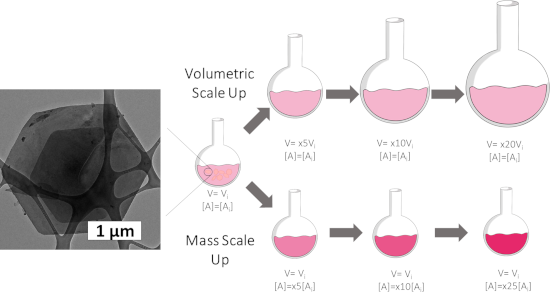
- layers containing MII and MIII octahedral cations connected by μ3-OH bridges that interact electrostatically with interlayer anions. Typically, LDHs can be represented by the chemical formula , where M represents cations (e.g., Mg, Zn, Co, Ni, Cu, Al, Fe, or Cr) and x the metallic ratio (typically, 0.20


Antibody-conjugated nanoparticles for target-specific drug delivery of chemotherapeutics
Beilstein J. Nanotechnol. 2023, 14, 912–926, doi:10.3762/bjnano.14.75
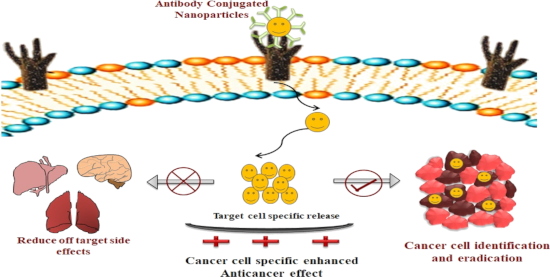
- or elimination of NP targeting capability by shielding or completely covering relevant functional groups. To block the adhesion of corona proteins on NP surfaces, various strategies have been established using surface barrier layers, such as polymer, protein, or biomimetic coatings, with the ultimate



Industrial perspectives for personalized microneedles
Beilstein J. Nanotechnol. 2023, 14, 857–864, doi:10.3762/bjnano.14.70
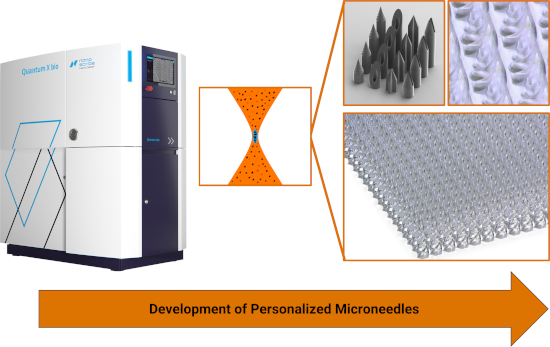
- artifact from slicing the computer-aided design (CAD) into layers [47][48]. The staircase effect leads to increased surface roughness of the order of micrometers, and high surface roughness on the microneedles will require substantially more pressure to penetrate the skin. These slicing artifacts


Biomimetics on the micro- and nanoscale – The 25th anniversary of the lotus effect
Beilstein J. Nanotechnol. 2023, 14, 850–856, doi:10.3762/bjnano.14.69

- repellency, but also on the capability of some surfaces to keep stable air layers under water – the so-called Salvinia Effect. Such air layers are of great importance for drag reduction (passive air lubrication), antifouling, sensor applications, or oil–water separation. Up to now, based on the


A wearable nanoscale heart sound sensor based on P(VDF-TrFE)/ZnO/GR and its application in cardiac disease detection
Beilstein J. Nanotechnol. 2023, 14, 819–833, doi:10.3762/bjnano.14.67
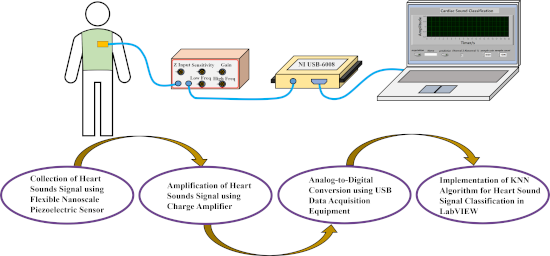
- “db6 wavelet decomposition” decomposes the heart sound signal into five layers, selects seven optimal bases of the heart sound signal according to the filtering characteristics of the binary wavelet sub-band, and reconstructs feature vectors. As shown in Figure 18, the shaded background annotation


In situ magnesiothermic reduction synthesis of a Ge@C composite for high-performance lithium-ion batterie anodes
Beilstein J. Nanotechnol. 2023, 14, 751–761, doi:10.3762/bjnano.14.62
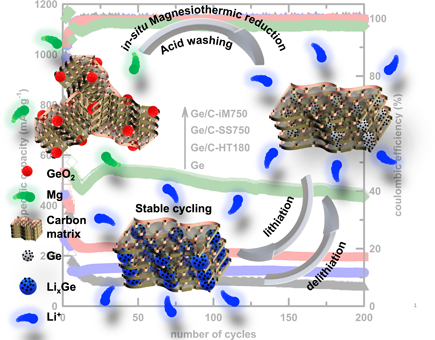
- compositions such as Li7Ge2, Li9Ge4, and Li22Ge2 [53][54][55]. The remaining shoulder can be ascribed to the decomposition of the electrolyte and the formation of solid–electrolyte interface (SEI) layers [55][56]. In the following cycles, the signal of the SEI layer formation at a potentials of 0.3 V vs Li/Li





