


Search results
Search for "liquid" in Full Text gives 996 result(s) in Beilstein Journal of Nanotechnology. Showing first 200.
Molecular nanoarchitectonics: unification of nanotechnology and molecular/materials science
Beilstein J. Nanotechnol. 2023, 14, 434–453, doi:10.3762/bjnano.14.35
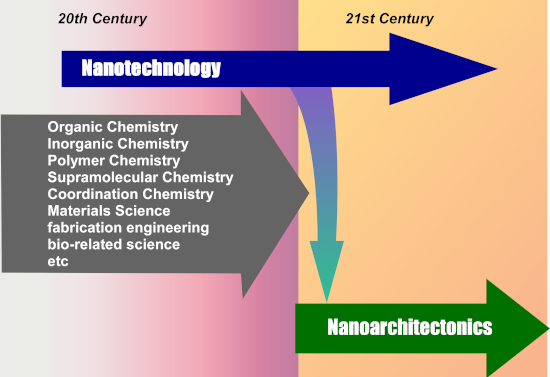
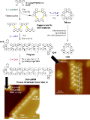
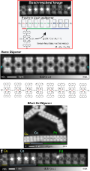
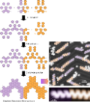
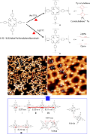
- expression through nanoarchitectonics. Shi and co-workers created nanoparticle surfactants at liquid–liquid interfaces by exploiting the interaction between nanoparticles and polymer ligands [101]. They showed that a size-dependent aggregation of nanoparticle surfactants can be generated at the interface





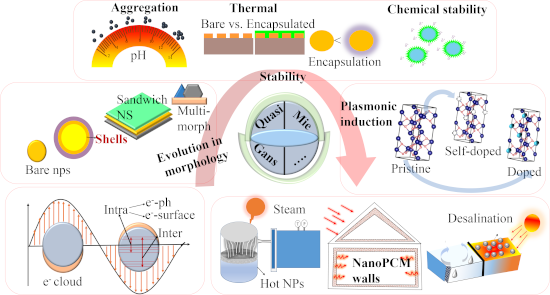
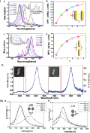
Plasmonic nanotechnology for photothermal applications – an evaluation
Beilstein J. Nanotechnol. 2023, 14, 380–419, doi:10.3762/bjnano.14.33




Quercetin- and caffeic acid-functionalized chitosan-capped colloidal silver nanoparticles: one-pot synthesis, characterization, and anticancer and antibacterial activities
Beilstein J. Nanotechnol. 2023, 14, 362–376, doi:10.3762/bjnano.14.31
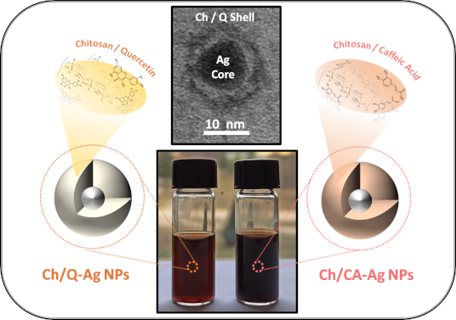
- . Small volumes of Ch/Q- and Ch/CA-Ag NPs were placed on carbon-coated copper grids and allowed to evaporate at room temperature. For negative staining, a drop of freshly prepared 2% uranyl acetate solution was dripped on the copper grid, and excess liquid is removed by a piece of paper after 2 min. Zeta


Polymer nanoparticles from low-energy nanoemulsions for biomedical applications
Beilstein J. Nanotechnol. 2023, 14, 339–350, doi:10.3762/bjnano.14.29
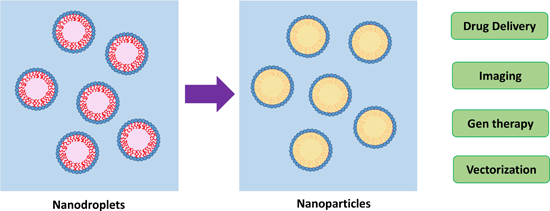
- liquid phase. They are out-of-equilibrium nanocolloids in which phase separation is expected from thermodynamics, but is delayed by the presence of surfactants adsorbed on the droplets surface. Accordingly, nanoemulsion formation depends on the way the sample is prepared, for example, on the order of
- . Nanoemulsions can be formulated to contain oily (hydrophobic) droplets in a continuous aqueous phase, that is, as in oil-in-water (O/W) nanoemulsions or aqueous droplets in a continuous oily (hydrophobic) phase as in water-in-oil (W/O) nanoemulsions. To form an emulsion, the liquid to be dispersed should be
- , the system passes through structures with zero curvature, such as bicontinuous microemulsions or flexible lamellar liquid crystals [15]. The PIC method is amenable for scaling up since it mainly involves a simple dilution process and is suitable for components that cannot withstand high temperatures
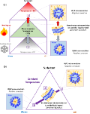


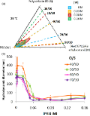


Biocatalytic synthesis and ordered self-assembly of silica nanoparticles via a silica-binding peptide
Beilstein J. Nanotechnol. 2023, 14, 280–290, doi:10.3762/bjnano.14.25
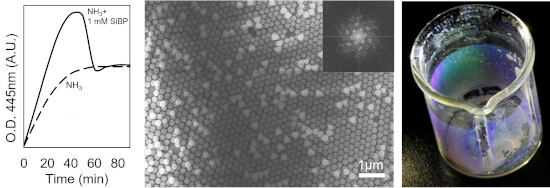
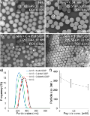
- covers were moved completely out of the colloidal solution. Scanning electron microscopy To analyze as-synthesized particles, 50 µL aliquots of the reaction solutions were placed on standard microscope cover slides. The excess liquid was removed by absorbing on a clean absorbent paper. To analyze self




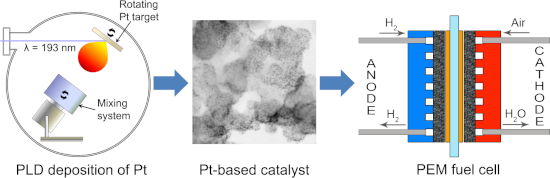
A novel approach to pulsed laser deposition of platinum catalyst on carbon particles for use in polymer electrolyte membrane fuel cells
Beilstein J. Nanotechnol. 2023, 14, 190–204, doi:10.3762/bjnano.14.19
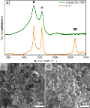
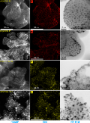
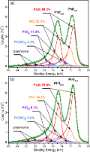
- based on N2 adsorption–desorption measurements performed at liquid nitrogen temperature using an Autosorb IQ analyzer (Quantachrome Instruments – Anton Paar, United States). The samples were outgassed at 250 °C for 10 h prior to analysis. The Brunauer–Emmett–Teller specific surface area (SBET) was



Batch preparation of nanofibers containing nanoparticles by an electrospinning device with multiple air inlets
Beilstein J. Nanotechnol. 2023, 14, 141–150, doi:10.3762/bjnano.14.15
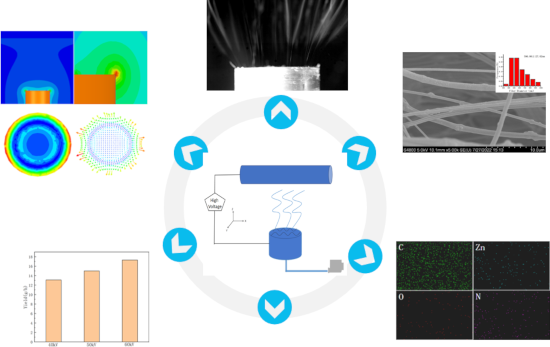
- force (Ph) caused by the fluctuation height of spinning solution, surface tension (Ps) of the spinning solution, and electric field force (PE) produced by the applied voltage. These forces determine whether a jet could be formed at point A. The polymer fluid surface tension would make the liquid surface
- the electric field intensity of the thin liquid surface (V/m), εα is the dielectric constant of the polymer, and k is the amount of radial fluctuations on the spinning solution surface. In addition, the centripetal force F1 at point B is generated by the horizontal component of the viscous force (τ


Formation of nanoflowers: Au and Ni silicide cores surrounded by SiOx branches
Beilstein J. Nanotechnol. 2023, 14, 133–140, doi:10.3762/bjnano.14.14
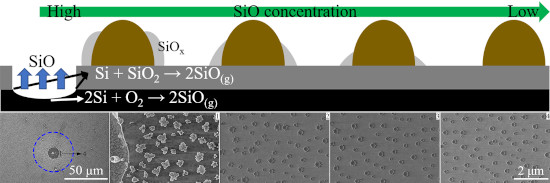
- to the strong ability of Au to enhance SiO2 decomposition, and nanoflowers with less difference in their branches can be observed across the whole sample. Keywords: Au/Ni bilayers; dewetting; vapor–liquid–solid; SiO2 decomposition; SiOx nanowires; Introduction Substantial efforts have been devoted
- to developing different kinds of nanofabrication methods during the past decades. For example, silicon oxide (SiOx) nanostructures can be grown by the catalyzing effect of Au nanoparticles based on the vapor–liquid–solid (VLS) mechanism [1][2][3][4]. Au–SiOx nanoflowers consisting of Au nanoparticles


Antimicrobial and mechanical properties of functionalized textile by nanoarchitectured photoinduced Ag@polymer coating
Beilstein J. Nanotechnol. 2023, 14, 95–109, doi:10.3762/bjnano.14.11
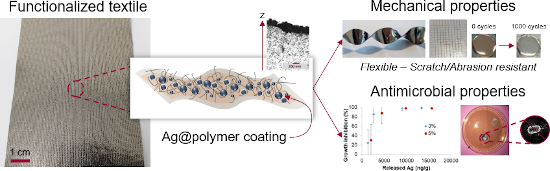
- coupling between the in situ chemical reduction of metallic precursors and photopolymerization of acrylic monomers ensures a depth-wise MNP distribution inside the cross-linked network, which prevents possible leaching processes. Based on these results, we investigated the antimicrobial properties (liquid
- activity of the functionalized textiles was quantified via a liquid diffusion assay, while a plate diffusion assay was used to visualize the microbial growth inhibition. Preliminary tests showed that the Ag@PEG600DA-coated textile does not stay flat during immersion into microbial suspensions, despite
- being glued to the glass dishes. For this reason, antimicrobial characterizations were only carried out on Ag@PEG600DA/PETIA loaded with 3 wt % and 5 wt % of AgNO3 in order to observe the impact of the silver concentration on the E. coli bacteria and the C. albicans fungus. Liquid diffusion assay


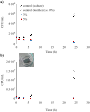
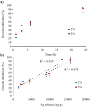
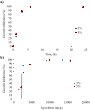

Liquid phase exfoliation of talc: effect of the medium on flake size and shape
Beilstein J. Nanotechnol. 2023, 14, 68–78, doi:10.3762/bjnano.14.8
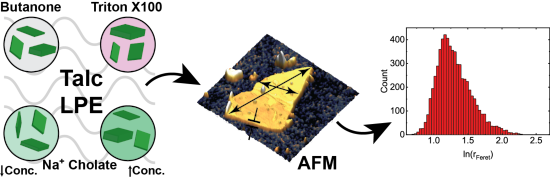
- Horizonte – MG, 31270-901, Brazil Campus Ouro Preto, Instituto Federal de Minas Gerais, R. Pandiá Calógeras, 898, Ouro Preto – MG, 35400-000, Brazil 10.3762/bjnano.14.8 Abstract Industrial applications of nanomaterials require large-scale production methods, such as liquid phase exfoliation (LPE
- applications that have specific requirements. Keywords: 2D materials; atomic force microscopy; liquid phase exfoliation; nanomaterials; talc; Introduction Two-dimensional (2D) materials have attracted a lot of interest due to their outstanding properties [1]. However, large-scale production is still a
- challenge that needs to be addressed to integrate 2D materials into industrial applications. One approach to producing large quantities of few-layer flakes of a broad range of exfoliatable materials is liquid-phase exfoliation (LPE) [2][3][4][5]. This method relies on mechanical energy to exfoliate



Solvent-induced assembly of mono- and divalent silica nanoparticles
Beilstein J. Nanotechnol. 2023, 14, 52–60, doi:10.3762/bjnano.14.6
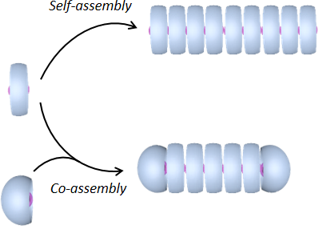
- by liquid bridging [23], and into a series of structures under an AC electric field [24]. The linear self-assembly of patchy gold nanorods tethered with hydrophobic polymer chains at both ends can be triggered by solvophobic attractions induced by a change in solvent quality [25]. By using post
- . Characterization methods Transmission electron microscopy experiments were performed using a Hitachi H600 microscope operating at an acceleration voltage of 75 kV. The samples were prepared by depositing one drop of the colloidal dispersion on conventional carbon-coated copper grids. The liquid evaporated in the


Two-step single-reactor synthesis of oleic acid- or undecylenic acid-stabilized magnetic nanoparticles by thermal decomposition
Beilstein J. Nanotechnol. 2023, 14, 11–22, doi:10.3762/bjnano.14.2
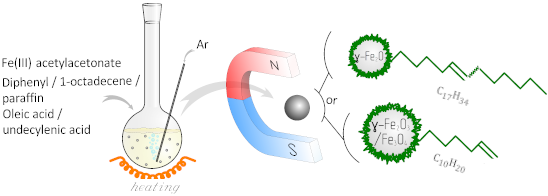
- ). By applying the Fe(III) acetylacetonate/OA molar ratio of 1:3.29, partially stable dispersions of nanoparticles (samples MT-I and MT-VI) were obtained. When a significant excess of UA stabilizing agent was used (sample TMU-III, molar ratio above 1:5.5), a brown liquid without particles or magnetic


Atmospheric water harvesting using functionalized carbon nanocones
Beilstein J. Nanotechnol. 2023, 14, 1–10, doi:10.3762/bjnano.14.1
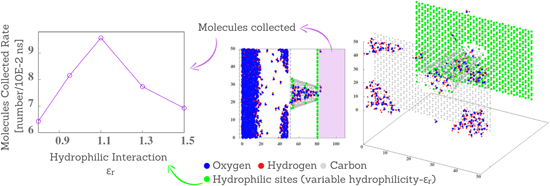
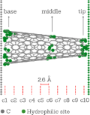
- Fernanda R. Leivas Marcia C. Barbosa Instituto de Física, Universidade Federal do Rio Grande do Sul, CP 15051, 91501-970, Porto Alegre, RS, Brazil 10.3762/bjnano.14.1 Abstract In this work, we propose a method to harvest liquid water from water vapor using carbon nanocones. The condensation
- water. The cactus for example has spikes where droplets move from the tip to the base, or from the higher to the lower Laplace area. One mechanism developed by nature to capture liquid water from water vapor is present in the Namibian desert beetle, which collects water from morning steam in the desert
- [17]. This beetle has hydrophilic spots on its back, which transform vapor into liquid water. For the collection to be efficient, below the hydrophilic spots, its wings are hydrophobic, and the captured water moves from hydrophilic to hydrophobic parts driven by gravity. The efficiency of this process




Non-stoichiometric magnetite as catalyst for the photocatalytic degradation of phenol and 2,6-dibromo-4-methylphenol – a new approach in water treatment
Beilstein J. Nanotechnol. 2022, 13, 1531–1540, doi:10.3762/bjnano.13.126
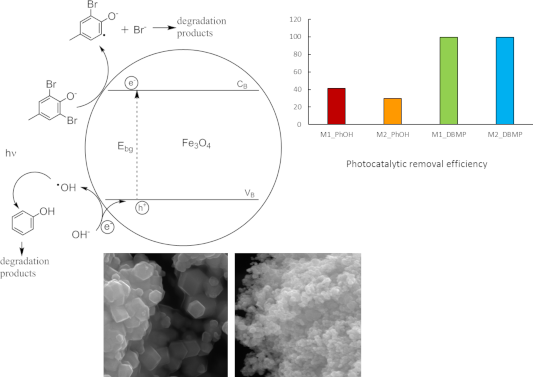
- up to 1h). The organic compound concentrations were evaluated by using HPLC. Analysis Changes in phenol concentration were determined by a high-performance liquid chromatography system (Shimadzu, Japan) equipped with a UV detector (SPD-10AV) and a C18 column (Knauer 250 × 4.6 mm, Eurospher II 100-5


Coherent amplification of radiation from two phase-locked Josephson junction arrays
Beilstein J. Nanotechnol. 2022, 13, 1445–1457, doi:10.3762/bjnano.13.119
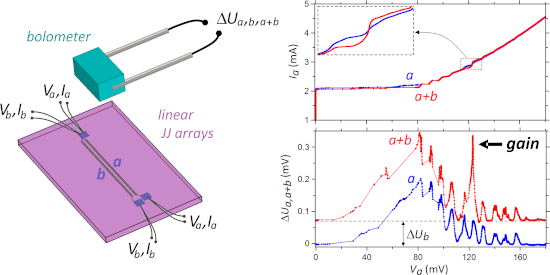
- > 0 where U0 and U are the voltages on the crystal in absence and in presence of the radiation, respectively. All measurements were performed in a liquid helium dewar at a temperatures T 4.2 K both for the samples and the detector. The calibrated responsivity of the detector at this temperature was
- top array-b is biased with a fixed current. To obtain the most prominent effect, we slightly increased the temperature of the stack to T = 4.4 K by placing it above the surface of liquid helium. Figure 5b shows the IVC of the individually biased top array-b together with the simultaneously measured


Straight roads into nowhere – obvious and not-so-obvious biological models for ferrophobic surfaces
Beilstein J. Nanotechnol. 2022, 13, 1345–1360, doi:10.3762/bjnano.13.111
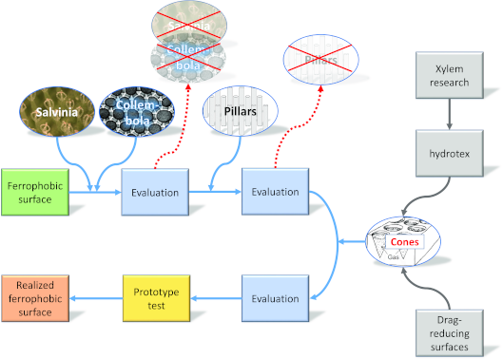
- is described that started with a posed technical problem for which seemingly obvious biological models exist. The technical problem was to devise a ferrophobic surface that prevents the contact between the copper surface of a tuyère (a water cooled aeration pipe within a blast furnace) and liquid
- able to create stable air bodies, which support the refilling of embolised conduits. By adopting the shape of these micropores, a successful prototype for a ferrophobic copper surface repelling liquid iron could be devised. This case study illustrates that straight road maps from technical problems to
- furnace; Collembola; gas/liquid interfaces; interfacial effects; persistant air layers; pits; Salvinia molesta; surfaces; tuyère failure; water transport in plants; xylem; Young–Laplace equation; Introduction and Motivation The basic concept of biomimetics is the derivation of technical applications from


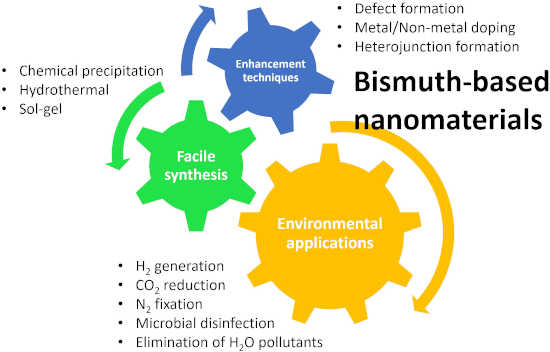
Recent trends in Bi-based nanomaterials: challenges, fabrication, enhancement techniques, and environmental applications
Beilstein J. Nanotechnol. 2022, 13, 1316–1336, doi:10.3762/bjnano.13.109




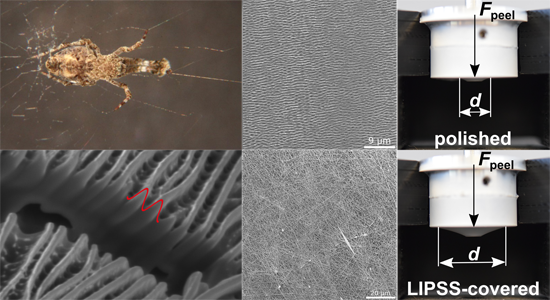
Laser-processed antiadhesive bionic combs for handling nanofibers inspired by nanostructures on the legs of cribellate spiders
Beilstein J. Nanotechnol. 2022, 13, 1268–1283, doi:10.3762/bjnano.13.105
- , Switzerland) pointprobe. Electrospinning Electrospinning was performed using a custom-made setup (Figure 11). The liquid PA-6 solution consisting of 6 g PA-6 polymer, 15 g formic acid, and 29 g acetic acid was mixed at 80 °C for about 90 min. The dope solution was delivered to the blunt needle tip (Sterican






Studies of probe tip materials by atomic force microscopy: a review
Beilstein J. Nanotechnol. 2022, 13, 1256–1267, doi:10.3762/bjnano.13.104
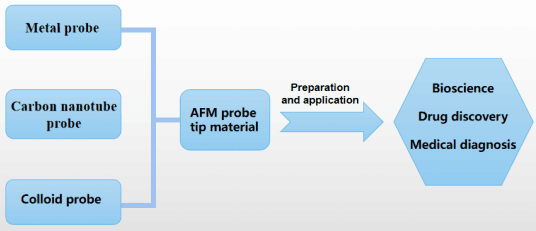
- understanding interactions in various domains to study adhesion phenomena, particle-surface interactions, mechanical properties, suspensions, liquid dynamics, and boundary slips. Colloidal gold probe Colloidal gold particles [48][49] have the advantage of stable adsorption of proteins without significant
- to the reaction system. Therefore, the method is suitable for the field detection of antibiotics in liquid foods. More importantly, the proposed homogeneity method has been successfully applied to actual milk samples. This novel homogeneity method with high sensitivity and selectivity is a powerful
- surface of nano-, micron, and micro- and nanocomposite structures. In this study, ten μm diameter silica spheres were selected as the particles for the colloidal probe and dispersed into an aqueous solution and sonicated for five minutes. A small amount of the dispersed liquid was removed and added
Design of surface nanostructures for chirality sensing based on quartz crystal microbalance
Beilstein J. Nanotechnol. 2022, 13, 1201–1219, doi:10.3762/bjnano.13.100
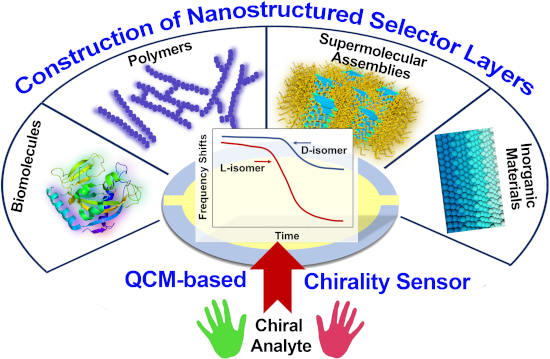
- resonance [10], Fourier transform infrared spectrometry (FTIR) [11], UV–vis absorption spectrometry [12], mass spectrometry (MS) [13], titration microcalorimetry [14], high-performance liquid chromatography (HPLC) [15], gas chromatography (GC), capillary electrophoresis (CE) [16], and electrochemical chiral
- sensing systems for enantiomers, which still remains challenging. Quartz crystal microbalance (QCM) is a well-known mass-sensor technique capable of recording changes in nanogram or even picogram levels in both gas and liquid phases [20][21]. The sensing of mass changes is based on the oscillation
- induced by external stimulus. As there are almost no limitations for the receptor layers in QCM sensor systems, various materials and nanostructures have been developed for constructing sensing layers on the surface of the electrode. The sensing process may also be implemented in the liquid and gas phases


Application of nanoarchitectonics in moist-electric generation
Beilstein J. Nanotechnol. 2022, 13, 1185–1200, doi:10.3762/bjnano.13.99
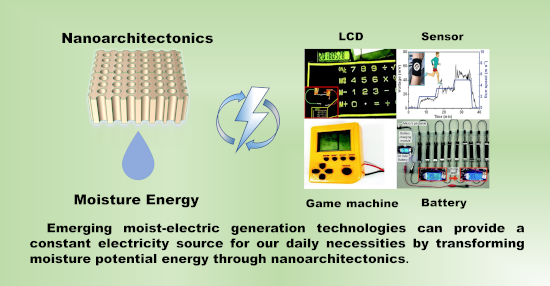
- from the perspective of different material classifications and to provide guidance for future work in the field of MEGs. The effects of various parameters and structural designs on the output power, recent important literature and works, the mechanism of liquid–solid interactions at the nanoscale, and
- occurs when a liquid is in contact with a solid with a surface charge. This interaction is mainly dominated by the electric double layer (EDL), which consists of a layer of ions (Stern layer) that is tightly adsorbed to the charged surface and a layer of counter ions (diffusion layer) that is attracted
- to the surface charges. When the liquid moves in the microchannel, it will drag the diffusion layer ions to form a flowing current, thus creating a potential difference, namely the flowing potential between the two ends of the channel. In nanochannels, approximating the channel geometry to be


Microneedle-based ocular drug delivery systems – recent advances and challenges
Beilstein J. Nanotechnol. 2022, 13, 1167–1184, doi:10.3762/bjnano.13.98
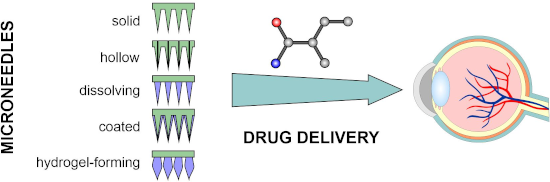
- a constant controlled rate according to zero-order kinetics [79][80][81]. Drug-loaded soft contact lenses can be classified as non-dissolving implants [82][83]. Satisfactory results are also obtained with in situ gelling liquid implants [84][85] or film forming liquids [86][87][88]. In addition to
- conventional needles, with a channel located inside and a hole at the tip. These systems can be used to deliver liquid drug formulations to deeper skin layers, depending on the length of the needles [141]. They have higher drug incorporation capacity compared to the solid and coated systems. Moreover, as they
- porous ceramic materials, the pores in the carrier material can be filled with the active ingredient in liquid or solid form. In the first case, the drug diffuses from the solution in the microneedle pores upon application. In the other case, the drug solution is loaded to the microneedles and in the


A cantilever-based, ultrahigh-vacuum, low-temperature scanning probe instrument for multidimensional scanning force microscopy
Beilstein J. Nanotechnol. 2022, 13, 1120–1140, doi:10.3762/bjnano.13.95
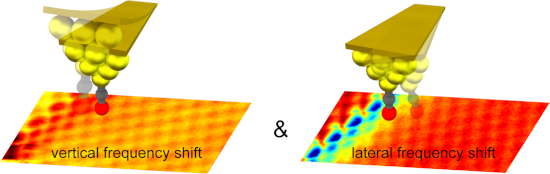
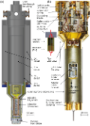
- manufactured by Cryovac [40] is mounted on top of the cryostat chamber outside the long axis of the chamber system (Figure 1); this permits a rapid transfer of (precooled) sample/cantilever holders from the manipulator to the microscope. The liquid helium (LHe) tank of the cryostat is surrounded by a liquid





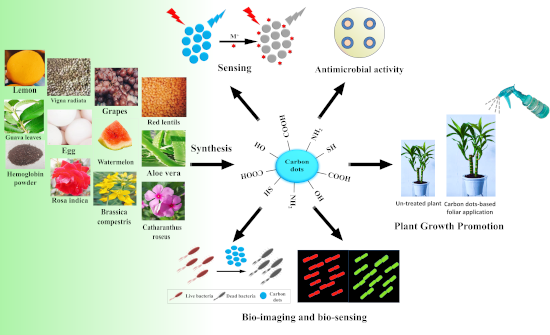
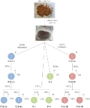
Recent advances in green carbon dots (2015–2022): synthesis, metal ion sensing, and biological applications
Beilstein J. Nanotechnol. 2022, 13, 1068–1107, doi:10.3762/bjnano.13.93




Spindle-like MIL101(Fe) decorated with Bi2O3 nanoparticles for enhanced degradation of chlortetracycline under visible-light irradiation
Beilstein J. Nanotechnol. 2022, 13, 1038–1050, doi:10.3762/bjnano.13.91
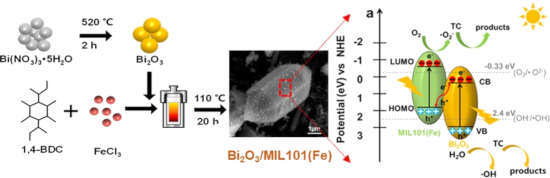
- . The intermediate products were analyzed by liquid chromatography–mass spectrometry (LC–MS), and a possible photocatalytic degradation path of CTC was proposed. This work provides a new perspective for the preparation of efficient MOF-based photocatalysts. Keywords: Bi2O3; chlortetracycline; metal
- existence of a BOM-20 heterojunction, the intermediate products in CTC degradation were detected by liquid chromatography–mass spectrometry (LC–MS), and the mass spectra are showed in Supporting Information File 1, Figure S3. Based on analysis of intermediates, the possible degradation pathways were





