


Search results
Search for "mechanical" in Full Text gives 1136 result(s) in Beilstein Journal of Nanotechnology. Showing first 200.
Elastic modulus of β-Ga2O3 nanowires measured by resonance and three-point bending techniques
Beilstein J. Nanotechnol. 2024, 15, 704–712, doi:10.3762/bjnano.15.58
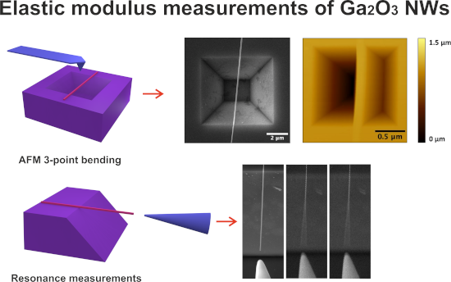
- the mechanical properties of Ga2O3 nanowires (NWs). In this work, we investigated the elastic modulus of individual β-Ga2O3 NWs using two distinct techniques – in-situ scanning electron microscopy resonance and three-point bending in atomic force microscopy. The structural and morphological properties
- finely controllable β-Ga2O3 NW synthesis methods and detailed post-examination of their mechanical properties before considering their application in future nanoscale devices. Keywords: atomic force microscopy; elastic modulus; gallium oxide; mechanical properties; nanowire; scanning electron microscopy
- suitable for use on bendable and stretchable substrates in line with the current trends in electronic technologies focusing on flexible electronic device development [11][12]. Consequently, understanding the mechanical properties of β-Ga2O3 NWs becomes an important step. For instance, precise determination


Enhancing higher-order modal response in multifrequency atomic force microscopy with a coupled cantilever system
Beilstein J. Nanotechnol. 2024, 15, 694–703, doi:10.3762/bjnano.15.57

- resonant mode tracking the sample topography and the higher-order resonant mode providing information about mechanical properties [5][6]. Bimodal AFM is relatively simple to operate and offers improved imaging quality. Hence, it is widely applicable in diverse fields such as physics, chemistry, and biology


Functional fibrillar interfaces: Biological hair as inspiration across scales
Beilstein J. Nanotechnol. 2024, 15, 664–677, doi:10.3762/bjnano.15.55
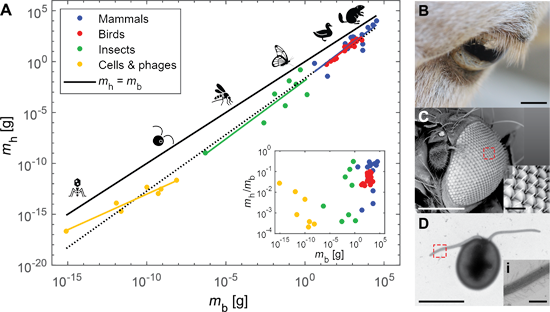
- providing insulation (Figure 2A), prevent the penetration of water through hierarchical superhydrophobicity (Figure 2B), or provide protection from predators or disease vectors through mechanical interactions (Figure 2C). Thermoregulation Regarding thermal regulation, mammals have evolved certain traits
- underwater to generate adhesion [51]. Mechanical protection While hairs provide protection via their thermal and chemical properties, they also offer protection based on their mechanical properties. Hairs are typically made of stiff materials, such as keratin and chitin, that have Young’s moduli of the order
- of gigapascals, comparable to typical values for wood. Therefore, they can be quite robust to mechanical stimuli from external sources. Mammals possess guard hairs, that are interspersed with the rest of their body hairs or furs. These hairs are distinctly thicker than the rest and have been reported


Laser synthesis of nanoparticles in organic solvents – products, reactions, and perspectives
Beilstein J. Nanotechnol. 2024, 15, 638–663, doi:10.3762/bjnano.15.54
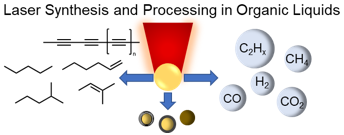
- observed. They concluded that laser-driven mechanical shockwaves induced these bond-formation reactions [52]. Irradiation of benzene was shown to produce biphenyl as a dimerization product and higher molecular aromatics [115][116]. However, additional products including hydrogen, methane, acetylene




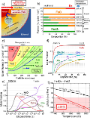

Exfoliation of titanium nitride using a non-thermal plasma process
Beilstein J. Nanotechnol. 2024, 15, 631–637, doi:10.3762/bjnano.15.53
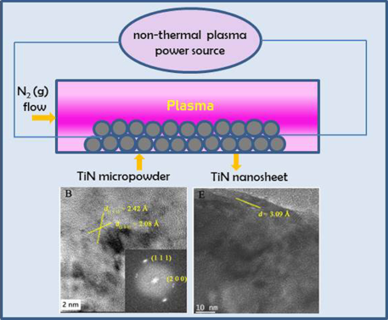
- and Konstantin Novoselov in 2004 [1], the field of nanostructures has witnessed remarkable advancements. Various methods to fabricate graphene, such as mechanical and chemical exfoliation, combined with innovative characterization techniques, have enabled the preparation of diverse layered two



Comparative analysis of the ultrastructure and adhesive secretion pathways of different smooth attachment pads of the stick insect Medauroidea extradentata (Phasmatodea)
Beilstein J. Nanotechnol. 2024, 15, 612–630, doi:10.3762/bjnano.15.52
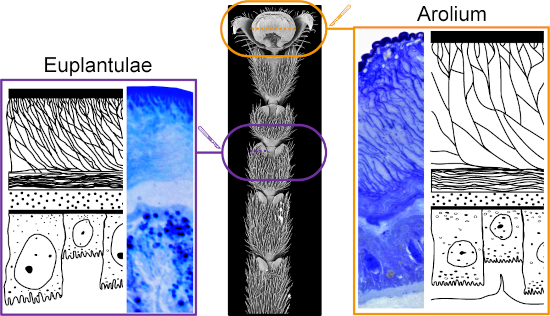
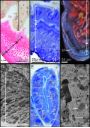
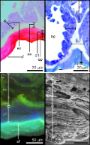
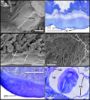
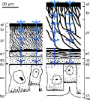
- basal layer, similar to that found in G. portentosa [45], confirmation requires TEM analysis. The presence of the wide basal layer potentially augments the mechanical stability of the exocrine cells and ultimately of the arolium [79]. Another difference lies in the autofluorescence of both exocrine
- secretion, as well as allowing the pad to deform more easily, making it more resistant to mechanical stresses. Endocuticle layer 2 The endocuticle layer 2 is strongly pronounced around the exocrine cells of the euplantulae, as evidenced by the darker staining with toluidine blue and Cason (Figure 5A, Figure




AFM-IR investigation of thin PECVD SiOx films on a polypropylene substrate in the surface-sensitive mode
Beilstein J. Nanotechnol. 2024, 15, 603–611, doi:10.3762/bjnano.15.51
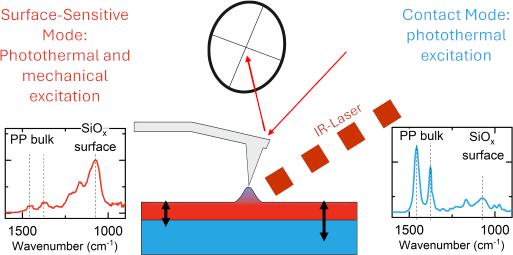
- ). To tackle this problem, the surface-sensitive mode was developed. Surface-sensitive AFM-IR Surface-sensitive AFM-IR mode [10] operates in contact mode on the absorbing sample and utilizes nonlinear frequency mixing of IR-laser-induced photothermal and an additional dither piezo-induced mechanical
- surface excitation at two different frequencies schematically shown in Figure 1. Due to their different propagation characteristics in the material, the evanescent mechanical waves created by these two processes can only interact in a small volume directly beneath the tip (typically to a depth of less
- measured in a first-order detection scheme with or without additional resonance enhancement. However, it contains chemical information from a much larger depth (hundreds of nanometers to several micrometers). If the difference or sum of freely selectable laser pulse repetition frequency and mechanical


Stiffness calibration of qPlus sensors at low temperature through thermal noise measurements
Beilstein J. Nanotechnol. 2024, 15, 580–602, doi:10.3762/bjnano.15.50
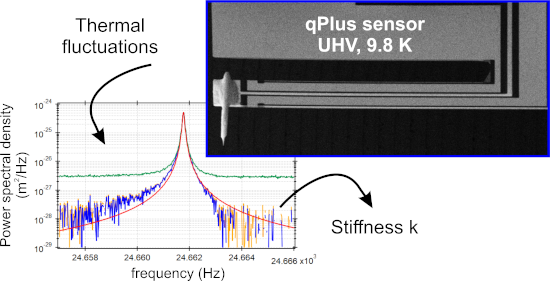
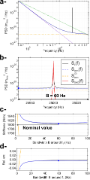
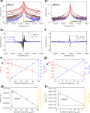
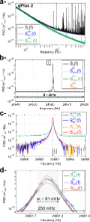
- reported on artificial atoms formed by quantum corrals [9]. In nc-AFM, the probe, whose mechanical behavior may advantageously be compared to that of a one-dimensional simple harmonic oscillator (SHO) of resonance frequency f1 (flexural fundamental eigenmode) and stiffness k1, is sinusoidally excited at f1
- temperature has never been reported. Furthermore, because the force sensitivity in nc-AFM critically depends on the mechanical stability of both probe and tip, it seems crucial to perform the probe stiffness calibration in situ, that is, within the LT UHV system, by means of a non-destructive method. In UHV
- because it cannot be glued on the prong with high reproducibility (regarding, e.g, mass of glue and location on the prong), the mechanical properties of each sensor must differ in detail. Therefore, the actual stiffness of each probe must differ and has no reason to match a particular predefined value

Cholesterol nanoarchaeosomes for alendronate targeted delivery as an anti-endothelial dysfunction agent
Beilstein J. Nanotechnol. 2024, 15, 517–534, doi:10.3762/bjnano.15.46
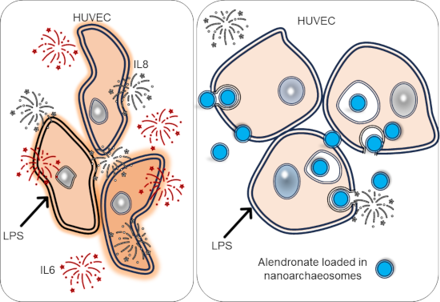
- simplicity and resistance to mechanical stress. Recently, we have reported the structural characterization and effect on J774A.1 murine macrophages of ALN loaded in nanoarchaeosomes, that is, nanoARC(ALN) and nanoARC-Chol(ALN). Remarkably, these formulations do not seek to modify the solubility of ALN, but





Aero-ZnS prepared by physical vapor transport on three-dimensional networks of sacrificial ZnO microtetrapods
Beilstein J. Nanotechnol. 2024, 15, 490–499, doi:10.3762/bjnano.15.44
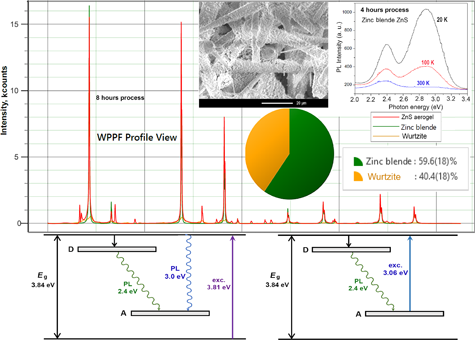
- 10 × 10 mm2 to prepare 2 mm thick sample tablets. In order to increase the mechanical stability, the tablets with a density of 0.5 g/cm3 were annealed at 1000 °C for 1 h in air. Morphology analysis was carried out with a VEGA TESCAN 5130 SEM instrument equipped with an EDX detector from Oxford



Photocatalytic degradation of methylene blue under visible light by cobalt ferrite nanoparticles/graphene quantum dots
Beilstein J. Nanotechnol. 2024, 15, 475–489, doi:10.3762/bjnano.15.43
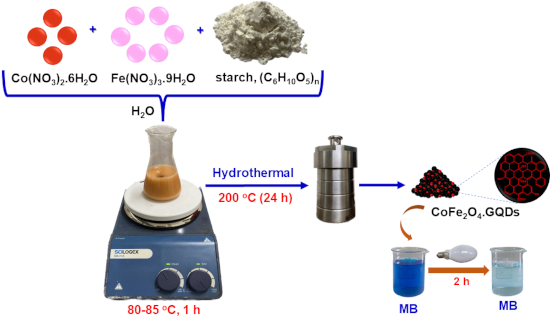
- CF/GQDs samples as catalysts. The decolourisation occurs in two steps. First, the catalyst was mixed with the MB solution in the dark for 60 min to ensure the adsorption/desorption equilibrium; second, the lamp was turned on to irradiate the MB solution under mechanical stirring. It is found that the




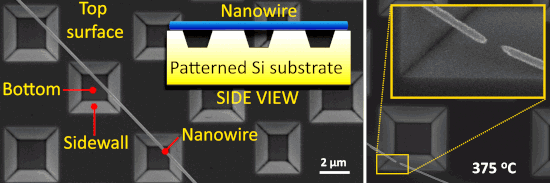
Heat-induced morphological changes in silver nanowires deposited on a patterned silicon substrate
Beilstein J. Nanotechnol. 2024, 15, 435–446, doi:10.3762/bjnano.15.39
- ) experiments were performed to study the effect of heat treatment on the inner structure of NWs. Two transmission electron microscopes (Tecnai GF20, FEI and JEOL microscope, model ARM-200F) were used at a 200 kV acceleration voltage. Simulations The extent and distribution of mechanical stresses induced by
- exceed the ultimate strength of Ag NWs. Based on these facts, we expect that the thermal expansion of Ag NWs will compete with friction forces between the NWs and Si substrate, causing significant mechanical stresses inside the NWs, especially at the interface between the two materials. This may serve as
- mechanical stresses in a partially suspended NW, we performed corresponding FEM simulations (Supporting Information File 1, Figure S3). According to simulations, the highest stresses (up to 1.5 × 10⁹ N/m2) are concentrated at the interface between the adhered part and the Si substrate, followed by the


Unveiling the nature of atomic defects in graphene on a metal surface
Beilstein J. Nanotechnol. 2024, 15, 416–425, doi:10.3762/bjnano.15.37
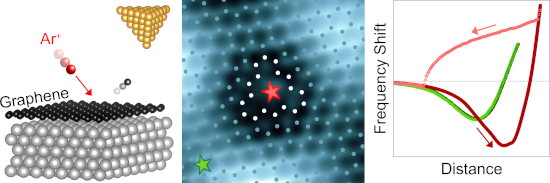
- , defects profoundly impact, in a beneficial or detrimental manner, characteristic properties of 2D materials [2]. A prominent 2D material is graphene. Intact graphene, the 2D sp2 arrangement of C atoms in a honeycomb mesh, is well known for its appealing electronic and mechanical properties [3][4]. However
- ][14][15][16][17][18][19][20][21][22][23]. Even single missing C atoms were demonstrated to severely change electronic [11][13][14][18], mechanical [17], and magnetic [7][8][10][12] characteristics. It is therefore not surprising that the intentional creation of defects, which has mainly been achieved
- bond remains intact during further tip approach up to Δzp and during tip retraction. The retraction of the tip may be accompanied by a partial detachment of graphene from the surface. As soon as the mechanical load surpasses the bond strength, it breaks at Δza. A comparable scenario was put forward


Classification and application of metal-based nanoantioxidants in medicine and healthcare
Beilstein J. Nanotechnol. 2024, 15, 396–415, doi:10.3762/bjnano.15.36
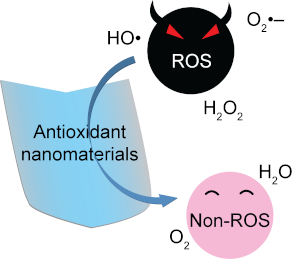
- a bioresorbable magnesium alloy stent coated with an anti-proliferative drug, offering a dual benefit of mechanical support and localized drug release, leading to improved outcomes in atherosclerosis treatment [173][174]. Besides, since zinc has emerged as a promising candidate because of its anti
- capacity to diminish the infarct area and preserve cardiac function [185]. NP scaffolds, capable of controlled degradation over time, provide temporary mechanical support while facilitating tissue healing and implantation. The presence of AuNPs in infarcted heart tissues has been associated with a
- alloys, owing to their favorable mechanical properties and biocompatibility, have been explored for the fabrication of vascular grafts highlighting their potential as a durable and biocompatible alternative in atherosclerosis-related revascularization procedures [187]. Similarly, studies conducted by Li


Insect attachment on waxy plant surfaces: the effect of pad contamination by different waxes
Beilstein J. Nanotechnol. 2024, 15, 385–395, doi:10.3762/bjnano.15.35
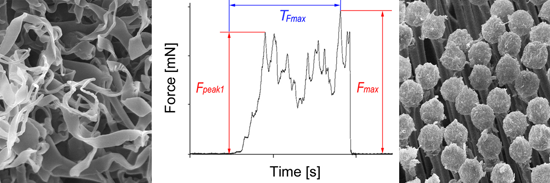
- fracture behavior, which in turn determines their contamination ability, was examined using a theoretical mechanical approach [35]. It was demonstrated that during contact formation between insect pads and a plant surface, the wax projections having very high slenderness ratio (i.e., aspect ratio) may




On the mechanism of piezoresistance in nanocrystalline graphite
Beilstein J. Nanotechnol. 2024, 15, 376–384, doi:10.3762/bjnano.15.34
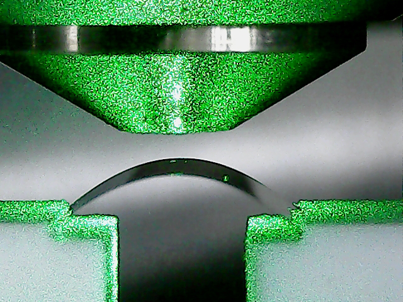
- , Technische Universität Darmstadt, 64287 Darmstadt, Germany 10.3762/bjnano.15.34 Abstract Strain sensors are sensitive to mechanical deformations and enable the detection of strain also within integrated electronics. For flexible displays, the use of a seamlessly integrated strain sensor would be beneficial


Exploring the relationships between physiochemical properties of nanoparticles and cell damage to combat cancer growth using simple periodic table-based descriptors
Beilstein J. Nanotechnol. 2024, 15, 297–309, doi:10.3762/bjnano.15.27
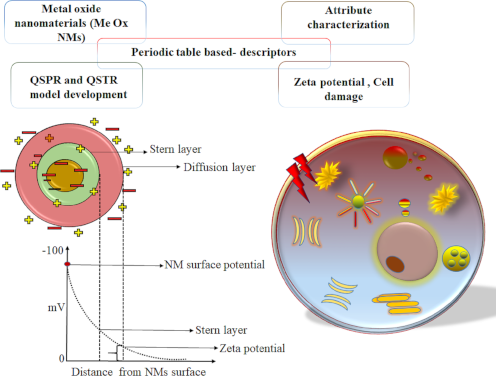
- production of ROS. Also, they can have a mechanical effect on the membrane, leading to depolarization of the membrane and cell damage. The “Electron Active M” descriptor is a representation of the number of electrons that an active metal possesses. Active metals are known for their quick and robust reactions


Determining by Raman spectroscopy the average thickness and N-layer-specific surface coverages of MoS2 thin films with domains much smaller than the laser spot size
Beilstein J. Nanotechnol. 2024, 15, 279–296, doi:10.3762/bjnano.15.26
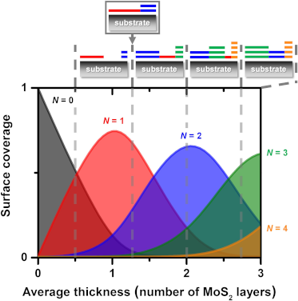
- flakes In this part, we report and discuss the advantages and limits of some Raman criteria that were found to be efficient to derive the thickness (i.e., the number of layers N) of large MoS2 flakes prepared by different ways, namely mechanical exfoliation and standard CVD (including twisted CVD 2L-MoS2


Ultrasensitive and ultrastretchable metal crack strain sensor based on helical polydimethylsiloxane
Beilstein J. Nanotechnol. 2024, 15, 270–278, doi:10.3762/bjnano.15.25
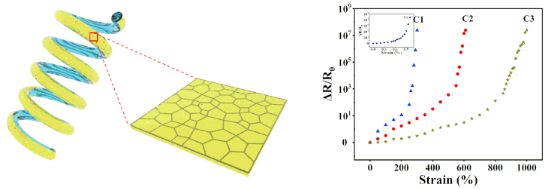
- gauge factor of 107, a broad strain range of 300%, a rapid response time of 158 ms, minimal hysteresis, and outstanding durability. (The GF serves as a means to assess the sensitivity of stretchable strain sensors; it is defined as the ratio of the relative change in resistance to the applied mechanical
- strain, expressed as GF = [(R − R0)/R0]/ε. Here, R represents the resistance observed during stretching, R0 denotes the initial resistance, and ε signifies the magnitude of the mechanical strain applied.) This versatile sensor not only accurately detects small physiological signals such as human joint
- movement and identifies variations in ambient temperature, but it can also monitor diverse large deformation movements in real time, such as those involved in the mechanical control of security alert systems. To the best of our knowledge, this study represents the first examination of a metal film with


Design, fabrication, and characterization of kinetic-inductive force sensors for scanning probe applications
Beilstein J. Nanotechnol. 2024, 15, 242–255, doi:10.3762/bjnano.15.23
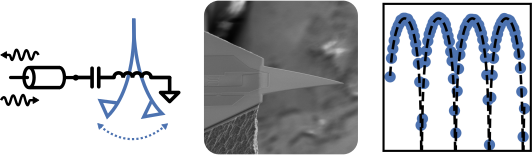
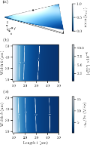
- . We present design simulations including mechanical finite-element modeling of surface strain and electromagnetic simulations of meandering nanowires with large kinetic inductance. We discuss a lumped-element model of the force sensor and describe the role of an additional shunt inductance for tuning
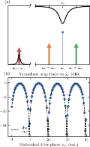
- -induced deposition of platinum. Finally, we present measurements that characterize the spread of mechanical resonant frequency, the temperature dependence of the microwave resonance, and the sensor’s operation as an electromechanical transducer of force. Keywords: atomic force microscopy; force sensing
- (KIMEC) sensors. A force sensor designed specifically for scanning probe microscopy must have a sharp tip that is readily positioned and scanned over a surface. We operate the sensor near a mechanical resonance with a high quality factor Q for enhanced responsivity to force. The mechanical resonator is a



Exploring disorder correlations in superconducting systems: spectroscopic insights and matrix element effects
Beilstein J. Nanotechnol. 2024, 15, 199–206, doi:10.3762/bjnano.15.19
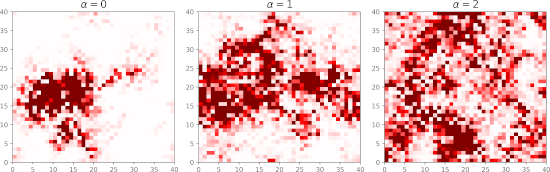
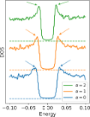
- superconducting order parameter Δi and the Hartree potential Ui are determined through the self-consistency equations [6]: where the angular brackets ⟨…⟩ denote quantum mechanical averages, and the sum goes over the eigenfunctions of the BdG equations, labeled by index n. The Hartree self-consistency condition


Graphene removal by water-assisted focused electron-beam-induced etching – unveiling the dose and dwell time impact on the etch profile and topographical changes in SiO2 substrates
Beilstein J. Nanotechnol. 2024, 15, 190–198, doi:10.3762/bjnano.15.18
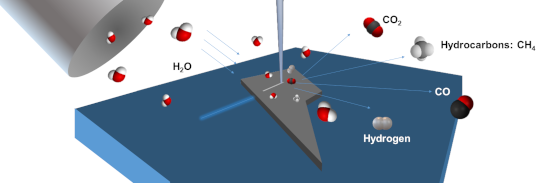
- extraordinary mechanical and electronic properties. Although many years have passed since its discovery, manipulating single graphene layers is still challenging using standard resist-based lithography techniques. Recently, it has been shown that it is possible to etch graphene directly in water-assisted


Modification of graphene oxide and its effect on properties of natural rubber/graphene oxide nanocomposites
Beilstein J. Nanotechnol. 2024, 15, 168–179, doi:10.3762/bjnano.15.16
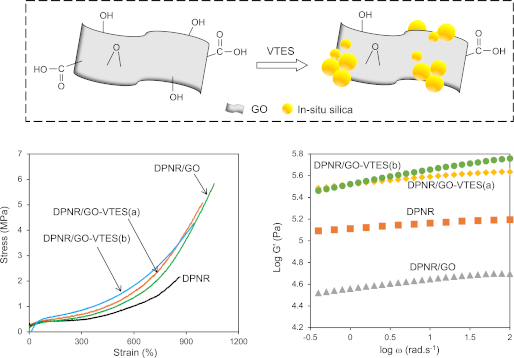
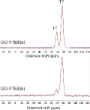
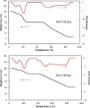
- nanocomposites prepared with the same amount of GO, GO-VTES(a), and GO-VTES(b) were characterized with tensile tests and dynamic mechanical tests. The stress at break of DPNR/GO-VTES(a) and DPNR/GO-VTES(b) was 5.2 MPa and 4.3 MPa, respectively, which were lower than that of DPNR/GO. However, it exhibited higher
- desire to enhance the green strength of NR to achieve the comparable mechanical properties of vulcanized natural rubber (VNR) [1][2][3]. VNR is commonly utilized for NR commercial products. However, due to its crosslinked structure, VNR products cannot be recycled or degraded after diposal [4][5
- significant impacts on improving the mechanical properties of NR. Numerous studies have utilized suitable monomers to graft onto NR via radical routes. For instance, graft copolymerization of styrene [11][12], methyl methacrylate [13][14], and hydroxyethyl methacrylate [15][16] onto NR enhances the green






Enhanced feedback performance in off-resonance AFM modes through pulse train sampling
Beilstein J. Nanotechnol. 2024, 15, 134–143, doi:10.3762/bjnano.15.13
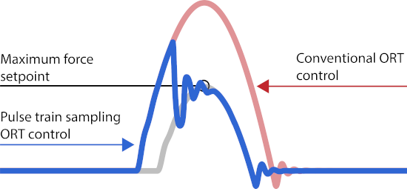
- force, as well as reduced lateral force. Simultaneously, they enable mechanical property mapping of the sample. However, ORT modes have an intrinsic drawback: a low scan speed due to the limited ORT rate, generally in the low-kilohertz range. Here, we analyze how the conventional ORT control method
- rate and therefore enables higher scan rates while refining the mechanical property mapping. Keywords: atomic force microscopy (AFM); feedback control; off-resonance tapping (ORT); pulsed-force mode; Introduction Constant force mode, a widely used AFM imaging mode, utilizes a feedback controller that
- . describe an improvement upon jumping mode, where, instead of performing a force curve, they turn on the feedback to bring the cantilever into contact with the sample to minimize the tip–sample forces [7]. In this approach, however, no mechanical properties are extracted from the force curve. In addition


Influence of conductive carbon and MnCo2O4 on morphological and electrical properties of hydrogels for electrochemical energy conversion
Beilstein J. Nanotechnol. 2024, 15, 57–70, doi:10.3762/bjnano.15.6
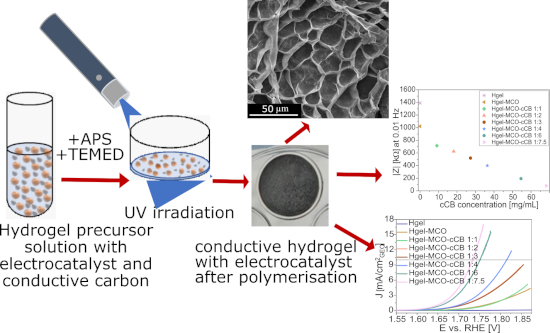
- metabolites), flexibility with high mechanical strength, chemical and thermal resistance, high rate of reversible fluid absorption, and low interfacial tension with water [6][7]. A very desirable property of hydrogels is the ability to incorporate or suspend various particles in their structure, such as dyes





