


Search results
Search for "metals" in Full Text gives 652 result(s) in Beilstein Journal of Nanotechnology. Showing first 200.
Topographic signatures and manipulations of Fe atoms, CO molecules and NaCl islands on superconducting Pb(111)
Beilstein J. Nanotechnol. 2022, 13, 1–9, doi:10.3762/bjnano.13.1
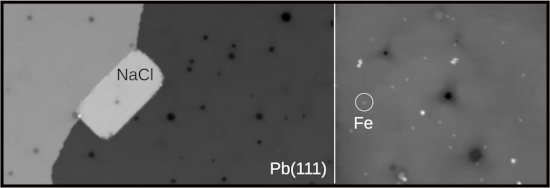
- superconducting Re(0001) [16] and Ta(100)-O surfaces [37]. Despite being well established on many noble metals, the use of CO-terminated tips also remains quite scarce in the literature [38], which severely limits the use of AFM as imaging tool on superconductors. Recently, Heinrich et al. have demonstrated the
- minute. This leads to a surface coverage of about 0.1–0.3 monolayers, as we readily observed on noble metals such as Cu, Ag or Au [45][46]. Iron adatoms were evaporated in the microscope head on the substrate at a temperature below 15 K. NaCl was evaporated from a quartz crucible on samples kept at room
- metal surface, as observed on different noble metals [45][46]. Figure 1b and Figure 1c show STM topographic images after such process. While the surface topography remains unchanged in comparison to Figure 1a, numerous scan instabilities are now present, which we attribute to CO molecules diffusing


Chemical vapor deposition of germanium-rich CrGex nanowires
Beilstein J. Nanotechnol. 2021, 12, 1365–1371, doi:10.3762/bjnano.12.100
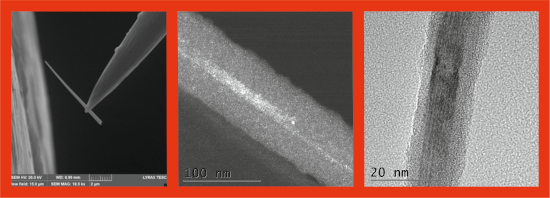
- reasonable choice for DMS alloys with chromium for the best compatibility with silicon-based industry. However, precipitation of transition metals is the main obstacle; but in low-dimensional semiconductors the precipitation is significantly reduced. Therefore, CrGe nanowires (NWs) were prepared to study



Biocompatibility and cytotoxicity in vitro of surface-functionalized drug-loaded spinel ferrite nanoparticles
Beilstein J. Nanotechnol. 2021, 12, 1339–1364, doi:10.3762/bjnano.12.99
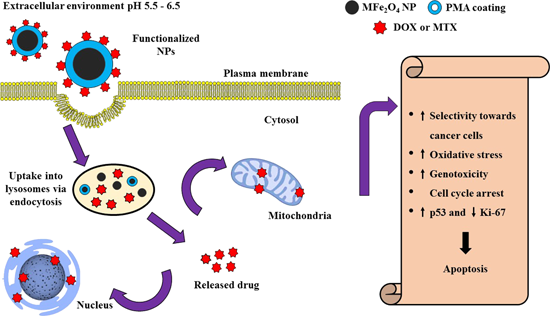
- coercivity (883 Oe) and saturation magnetization values (56 emu/g) in comparison to other ferrites due to a high anisotropy. Also, during cationic distribution, Co+2 cations incorporate into Fe–O, whereas the cationic distribution of other divalent metals (e.g., Ni+2 or Zn+2) leads to a decrease in magnetic
- programmed cell death [39]. However, the chemical composition of NPs plays an important role in determining cytotoxic behavior. For example, NPs with cores made up with toxic metals (e.g., Cd and Ag) cause cytotoxicity. Conversely, metals such as Fe and Zn are biocompatible and cause toxicity at higher doses
- family, responsible for the efflux of xenobiotics and hydrophobic drugs, namely methotrexate, vinca alkaloids, anthracyclines, antiandrogens, and heavy metals. Both multidrug resistance protein 1 (MDR1) and MRP1 proteins are majorly responsible for lowering the therapeutic outcomes of chemotherapy [64




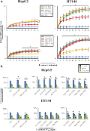





The effect of cobalt on morphology, structure, and ORR activity of electrospun carbon fibre mats in aqueous alkaline environments
Beilstein J. Nanotechnol. 2021, 12, 1173–1186, doi:10.3762/bjnano.12.87
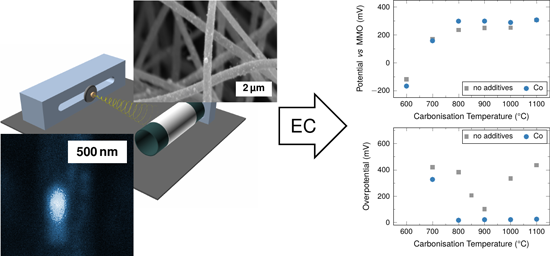
- three main groups: electroplating, electroless plating, and bottom-up methods such as vapour deposition. Another way to introduce metals to a carbon fibre system in form of nanoparticles was reported by groups who prepared cobalt/cobalt oxide-decorated carbon nanofibres from electrospinning by adding a
- additives and those with metal additives can be hardly compared, because of the marked difference in the carbon XPS signal composition. However, even samples without metals have been reported to be converted to graphitic carbon when carbonised at temperatures above 1100 °C [12]. Nitrogen-type distribution


Self-assembly of amino acids toward functional biomaterials
Beilstein J. Nanotechnol. 2021, 12, 1140–1150, doi:10.3762/bjnano.12.85
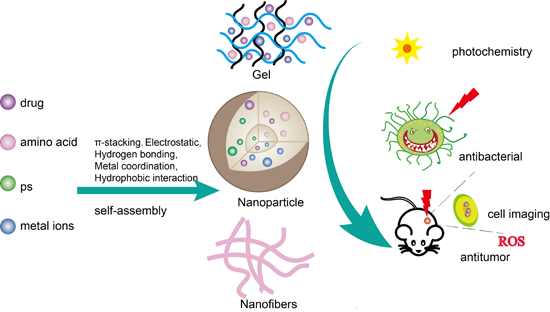
- biomaterials; intermolecular interactions; self-assembly; Review Introduction Biomaterials play a crucial role in the treatment of diseases and health care and have been widely used in prostheses and drug delivery devices [1]. Clinical applications of biomaterials include the use of metals, ceramics, and

Open-loop amplitude-modulation Kelvin probe force microscopy operated in single-pass PeakForce tapping mode
Beilstein J. Nanotechnol. 2021, 12, 1115–1126, doi:10.3762/bjnano.12.83
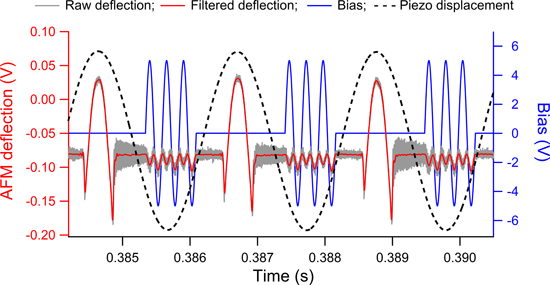
- structures including metals [1], semiconductors [2][3][4], dielectrics [5][6][7], photovoltaics [8][9][10], polymers [11][12][13], ferroelectrics [14][15][16], and biological samples [17][18][19]. Technical descriptions and applications of KPFM methods for nanoscale material property characterizations are







Assessment of the optical and electrical properties of light-emitting diodes containing carbon-based nanostructures and plasmonic nanoparticles: a review
Beilstein J. Nanotechnol. 2021, 12, 1078–1092, doi:10.3762/bjnano.12.80
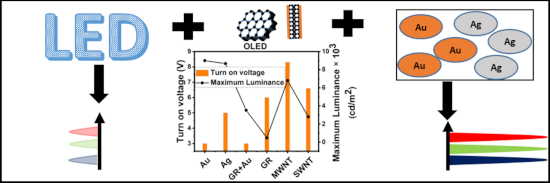
- efficiency. Despite the high work function of Al (4.31 eV), it is among the most suitable cathode materials due to its high stability in ambient conditions. Alkali and alkali-rare earth metals have lower work function (2.8–3.7 eV) but are unstable in ambient conditions. There are a few examples where


An overview of microneedle applications, materials, and fabrication methods
Beilstein J. Nanotechnol. 2021, 12, 1034–1046, doi:10.3762/bjnano.12.77
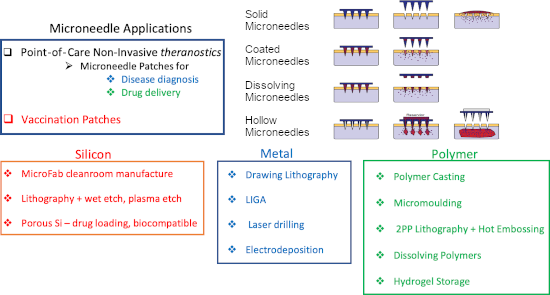
- feature sizes are fabricated using the tools of the microelectronics industry from metals, silicon, and polymers. Various types of subtractive and additive manufacturing processes have been used to manufacture microneedles, but the development of microneedle-based systems using conventional subtractive
- and sizes for a wide range of applications. Metals such as titanium [61][62], stainless steel [58][63][64], silicon [65][66][67], ceramics [68][69], biodegradable polymers such as polylactic acid (PLA) [70], PLGA [71], and polyglycolic acid (PGA) [72], and non-degradable polymers such as
- (COP) material using this method [5]. Fabrication and use of metal microneedles In addition to silicon and polymers, microneedles are also fabricated from metals including nickel, titanium, stainless steel, and palladium. Metals provide good mechanical properties and biocompatibility for microneedle


Progress and innovation of nanostructured sulfur cathodes and metal-free anodes for room-temperature Na–S batteries
Beilstein J. Nanotechnol. 2021, 12, 995–1020, doi:10.3762/bjnano.12.75
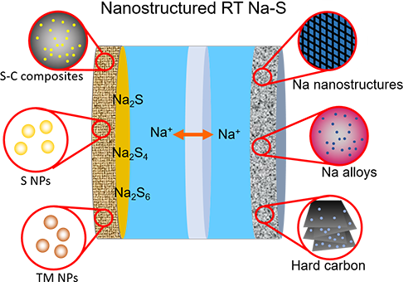
- available anode and cathode materials are sought. Table 1 lists some abundant metals as anode materials with high capacity and reduction potential values that are explored in metal-ion batteries [7][8][9]. Besides sodium as alternative anode material, also sulfur as abundant cathode material has emerged due
- interactions, and the free space for volume expansion that is provided by the HSMC matrix. In addition to sequestering polysulfides, transition metals may also act as electrocatalysts in the reduction reaction of long-chain sodium polysulfides into short-chain sodium polysulfides or sodium sulfide
- certain metals, semimetals, phosphorous, and carbon allotropes. Dispersed Na anodes In strict terms this approach is not Na metal-free as it relies on finely dispersed metallic Na. But the small dimensions of the Na phase result in battery behavior distinct from macroscopic metal Na foil anodes. There are





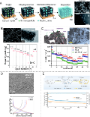
Uniform arrays of gold nanoelectrodes with tuneable recess depth
Beilstein J. Nanotechnol. 2021, 12, 957–964, doi:10.3762/bjnano.12.72
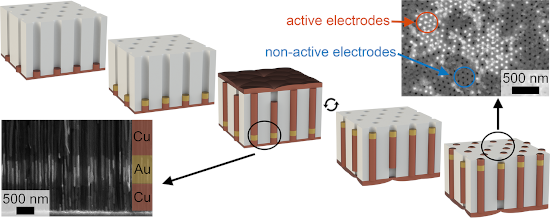
- surface. Segment 3 – copper At this step, a key quality parameter is the percentage of pores filled by the metals completely from the bottom to the top of the AAO template. Only nanowires in this type of pores can take part in an electrochemical reaction during the operation of the NEAs because only these
- deposited by magnetron sputtering onto the bottom side of the AAO template. Electrodeposition of metals into channels of the AAO template was performed in a three-electrode cell with an electrodeposition area of 0.2 cm2 and a volume of 50 mL at room temperature in a potentiostatic mode. A platinum ring


Molecular assemblies on surfaces: towards physical and electronic decoupling of organic molecules
Beilstein J. Nanotechnol. 2021, 12, 950–956, doi:10.3762/bjnano.12.71

- these ultrathin interfacial layers significantly reduce both the molecular adsorption energy and the hybridization of molecular states with the electronic bands in metals and semiconductors. However, charge transport is not completely inhibited, and electrons can still tunnel from the metal through
- space. Molecular adsorption and self-assembly are significantly altered compared to metals due to an often weak interaction between organics and bulk insulators. In contrast to face-on adsorption on metals, a tilted and edge-on adsorption becomes possible for planar aromatic molecules on bulk insulators
- , or metals [83]. Rothe et al. [84] demonstrated that semimetallic graphene is an appropriate buffer layer for the physical and chemical decoupling of rubrene from Pt(111). The strong molecule–surface interaction on Pt(111) is expressed by hit-and-stick adsorption due to a substantial diffusion barrier
The role of deep eutectic solvents and carrageenan in synthesizing biocompatible anisotropic metal nanoparticles
Beilstein J. Nanotechnol. 2021, 12, 924–938, doi:10.3762/bjnano.12.69

- utilizing safe nanomaterials for advanced biomedical and clinical applications. Keywords: anisotropic nanoparticles; carrageenan; cytotoxicity; eutectic solvents; surfactants; Review Introduction Plasmonic metals such as gold and silver, upon achieving nanoscale dimensions, exhibit unusual physicochemical
- coating methods. There are contrasting results of toxicity based on various parameters conducted either in vitro or in vivo [48][49][50][51][52][53]. Gold is one of the most promising inert metals for synthesizing nanoparticles and is ideal for biomedical research. The safety and risk assessment of these


Effects of temperature and repeat layer spacing on mechanical properties of graphene/polycrystalline copper nanolaminated composites under shear loading
Beilstein J. Nanotechnol. 2021, 12, 863–877, doi:10.3762/bjnano.12.65
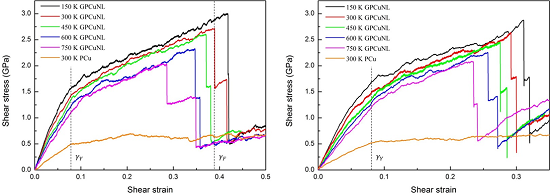
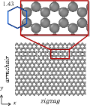
- properties in various fields, such as supercapacitors, integrated electrodes, catalysis, and sensors [10][11][12][13]. Furthermore, the interaction between graphene and matrix materials directly affects the mechanical properties of composites [14]. The van der Waals force between graphene and metals can
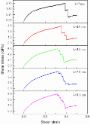
- in Figure 5b,d, that is, perfect, Shockley, Hirth, stair-rod, and Frank dislocations with corresponding Burgers vectors of 1/2<110>, 1/6<112>, 1/3<100>, 1/6<110>, and 1/3<111>, respectively. For face-centered metals, the Shockley partial dislocations are important since they are associated with














Recent progress in magnetic applications for micro- and nanorobots
Beilstein J. Nanotechnol. 2021, 12, 744–755, doi:10.3762/bjnano.12.58
- ). Nayak [39] used metal-organic frameworks (MOFs) to adsorb heavy metals in water for water purification. MOFs have a very high specific surface area and modular structure, showing great advantages in the sustainable supply of clean drinking water. Later, Yu et al. [40] reported a method to disassemble


Prediction of Co and Ru nanocluster morphology on 2D MoS2 from interaction energies
Beilstein J. Nanotechnol. 2021, 12, 704–724, doi:10.3762/bjnano.12.56
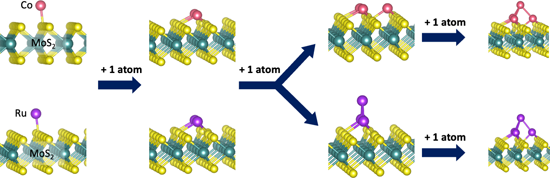
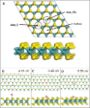
- interaction between metals and the MoS2 monolayer is of great importance when selecting systems for specific applications. In previous studies the focus has been largely on the strength of the interaction between a single atom or a nanoparticle of a range of metals, which has created a significant knowledge
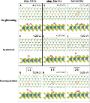
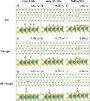
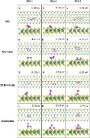
- stability of metal clusters on MoS2, and how these interactions change in the presence of a sulfur vacancy, to develop insight to allow for a prediction of thin film morphology. The strength of interaction between the metals and MoS2 is in the order Co > Ru. The competition between metal–substrate and metal
- or doping with transition metals [4][5][18][19][20][21][22], alkali and alkali earth metals [23][24][25], and non-metals [25] on MoS2 and other 2D materials. While experimental studies can be used to probe the performance of the 2D material in a device or some of the interfacial interactions between







Electromigration-induced formation of percolating adsorbate islands during condensation from the gaseous phase: a computational study
Beilstein J. Nanotechnol. 2021, 12, 694–703, doi:10.3762/bjnano.12.55
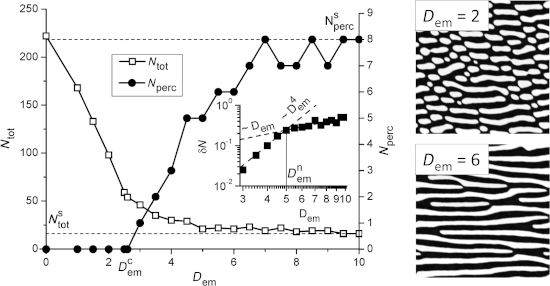
- between anode and cathode); e is the electron charge. The direction of the force Fel is defined by the effective valence Z, which is negative for most metals. Thus, the adsorbed atoms move in the opposite direction to the electric field. In the general case if the electric field is applied across the


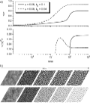


![[Graphic 29]](/bjnano/content/inline/2190-4286-12-55-i36.svg?max-width=637&scale=1.18182) on the adsorption coefficient α ...
on the adsorption coefficient α ...

Fate and transformation of silver nanoparticles in different biological conditions
Beilstein J. Nanotechnol. 2021, 12, 665–679, doi:10.3762/bjnano.12.53
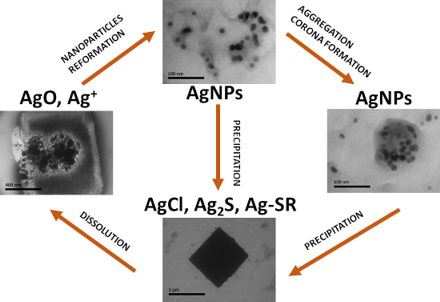
- owing to their many physiological roles and evidences for thiol-containing proteins as major targets for toxic effects of ionic Ag [25]. In the presence of biothiols the soluble complexes are formed. Thiols possess a high affinity for soft Lewis acid metals and may easily coordinate Ag+ [9][26][27]. The





Impact of GaAs(100) surface preparation on EQE of AZO/Al2O3/p-GaAs photovoltaic structures
Beilstein J. Nanotechnol. 2021, 12, 578–592, doi:10.3762/bjnano.12.48
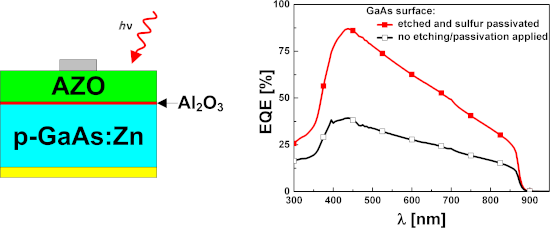
- ][18][19]. Many protocols for etching solutions are known. Depending on the requirements (e.g., etched compound – oxide or semiconductor, etching profiles, etching rate, ability to remove contaminants – heavy metals, and crystallographic orientation of the substrate) one can use a suitable solution [20




Influence of electrospray deposition on C60 molecular assemblies
Beilstein J. Nanotechnol. 2021, 12, 552–558, doi:10.3762/bjnano.12.45
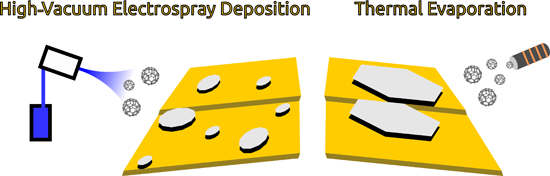
- materials, ranging from metal surfaces [5][6][7][8][9][10][11][12][13], over metal oxides [14] and insulating substrates [15] to graphene monolayers on metals [16]. In HV-ESD-based devices, a solution containing the molecules reaches an emitter located in front of the entrance capillary, as shown in Figure
- , especially in SPM under UHV conditions. The ease of its thermal evaporation, the organised structure generally obtained, and the potential of its uses have made C60 a model case for on-surface molecular studies [19][20][21][22][23][24][25][26][27]. Two-dimensional C60 layers have been observed on metals [20
- not be neglected when studying molecular structures, especially, when no post-deposition treatment is carried out. The influence of HV-ESD on the surfaces themselves is negligible under proper conditions. The influence on the molecular assemblies depends on the surface. For metals, HV-ESD is found to


Interface interaction of transition metal phthalocyanines with strontium titanate (100)
Beilstein J. Nanotechnol. 2021, 12, 485–496, doi:10.3762/bjnano.12.39
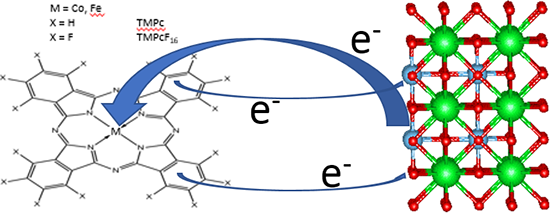
- might become possible between particular atoms of substrate and adsorbate. For example, for many CoPc and CoPcF16 interfaces to noble metals, the interfacial interaction is governed by a local interaction between the Co 3dz2 orbital and states of the metal substrate [38][39][40]. Thus, the selected
- bond energies. Indeed, a substrate-induced decomposition of the C–F bond was observed for perfluoropentacene on coinage metals [65] Another interface component is found in the Co 2p3/2 spectra of Figure 4. Similar to CoPc on STO, the interface component appears at about 2 eV lower binding energy (779.0


A review on nanostructured silver as a basic ingredient in medicine: physicochemical parameters and characterization
Beilstein J. Nanotechnol. 2021, 12, 440–461, doi:10.3762/bjnano.12.36
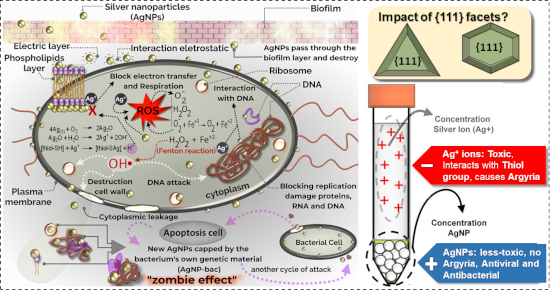
- induce the production of hot electrons from plasmonic metals, while larger size nanoparticles favor the scattering of the light. There is a strong electromagnetic field that is produced by fast and coherent oscillating electrons which extend into the metal and the surrounding environment [62][63]. The
- to Figure 6 [106]. Effect on viruses: The emergence of resistant viral strains and the lack of effective antiviral therapies increase the need to develop safe and potent alternatives to conventional antiviral drugs. Metals can attack a wide range of targets in the virus; therefore, there is great
- the synthesis of gold nanoparticles in solution using trisodium citrate to reduce AuCl4−. Since then, this methodology is popularly known as the Turkevich method and it has been extended to other metals such as silver [137][138]. Following the same principle, this method is used to reduce Ag+. The


Spontaneous shape transition of MnxGe1−x islands to long nanowires
Beilstein J. Nanotechnol. 2021, 12, 366–374, doi:10.3762/bjnano.12.30
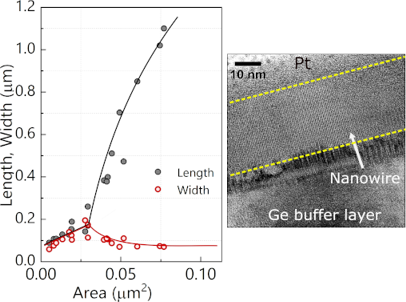
- epilayer and the substrate as detected in several heteroepitaxial systems, such as Ge on Si [42][43][44], InAs on GaAs [45], Co silicide [36], and silicides with different metals [35]. Such a mechanism is expected to occur in our Mn layers deposited on Ge(111) substrates, due to the large lattice mismatch


Nickel nanoparticle-decorated reduced graphene oxide/WO3 nanocomposite – a promising candidate for gas sensing
Beilstein J. Nanotechnol. 2021, 12, 343–353, doi:10.3762/bjnano.12.28
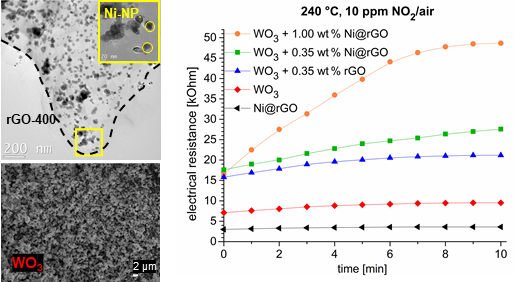
- 200 to 400 °C, which means a high power consumption [4]. WO3 is a wide-bandgap [12][13] n-type semiconductor [14][15] with good sensitivity towards NO2 [16] and CO [17]. Known successful routes to improve the MOS gas sensing performance are doping with transition metals, decoration with noble metals
- achieved [47]. Thermally reduced graphene oxide was tested before with different metals in ionic liquids [48][49]. The decoration of nanoparticles on rGO can be achieved in situ or by mixing previously prepared solutions [50]. Here, we chose the ionic liquid [BMIm][NTf2] for an in situ microwave


Extended iron phthalocyanine islands self-assembled on a Ge(001):H surface
Beilstein J. Nanotechnol. 2021, 12, 232–241, doi:10.3762/bjnano.12.19
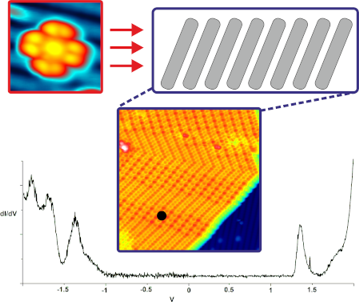
- holds also for layered materials. Single-molecule prototypes or molecular nanostructures are often prepared on metals, which usually provide a sufficiently low diffusion barrier for efficient self-assembly and simultaneously allow for in-depth analysis through atomically precise tools from the family of
Imaging of SARS-CoV-2 infected Vero E6 cells by helium ion microscopy
Beilstein J. Nanotechnol. 2021, 12, 172–179, doi:10.3762/bjnano.12.13
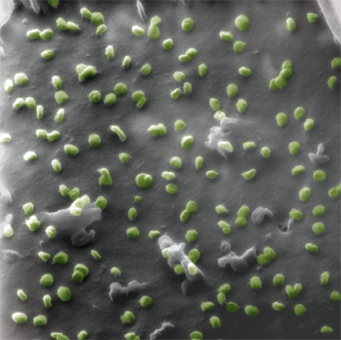
- much lower compared to the energy of sputter-deposited metals. However, it is possible that this unintended, but sometimes useful, carbon deposition can be reduced by HIM imaging in ultra-high vacuum [34][35][36]. The cell structures shown in the HIM images of Figure 3a are sharply resolved over tens





