Search results
Search for "nanoscale" in Full Text gives 929 result(s) in Beilstein Journal of Nanotechnology. Showing first 200.
Potential of a deep eutectic solvent in silver nanoparticle fabrication for antibiotic residue detection
Beilstein J. Nanotechnol. 2024, 15, 426–434, doi:10.3762/bjnano.15.38
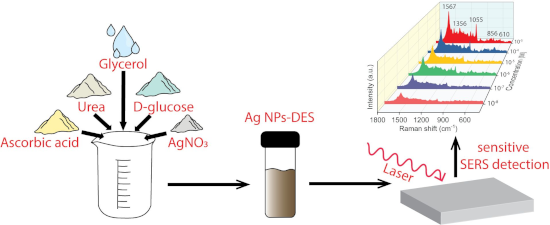
- of plasmonic materials, which extensively respond to electromagnetic waves with proper wavelengths in terms of free electrons resonating to the incident waves [9][15]. This is the fundamental principle of surface plasmon resonance (SPR). Moreover, plasmons are easily controlled at the nanoscale


Classification and application of metal-based nanoantioxidants in medicine and healthcare
Beilstein J. Nanotechnol. 2024, 15, 396–415, doi:10.3762/bjnano.15.36
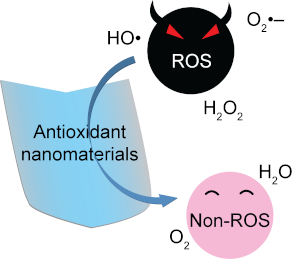
- : (1) nanoliposomes, which are a nanoscale bilayer lipid vesicle [132]; (2) nanocapsules, which consist of an inner aqueous core surrounded by a nontoxic polymeric membrane [133]; (3) solid lipid nanoparticles, which consist of a solid lipid core stabilized by a surfactant [134]; and (4) nanocrystals
- clinical research to clinical practice, some limitations of metal-based nanoantioxidants need to be overcome. First, the nanoscale size of metal-based nanoantioxidants makes these materials distinct from bulk materials because of the quantum size effect. The uncommon nanoscale sizes, which are not familiar


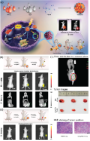
Investigating ripple pattern formation and damage profiles in Si and Ge induced by 100 keV Ar+ ion beam: a comparative study
Beilstein J. Nanotechnol. 2024, 15, 367–375, doi:10.3762/bjnano.15.33
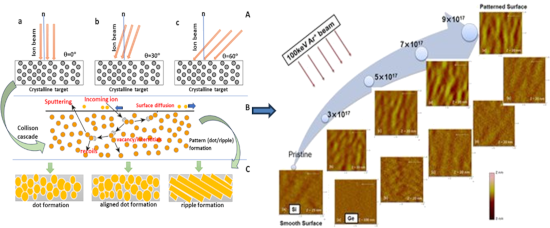
- Research and Innovation, University of Petroleum and Energy Studies University, Dehradun 248007, India 10.3762/bjnano.15.33 Abstract Desired modifications of surfaces at the nanoscale may be achieved using energetic ion beams. In the present work, a complete study of self-assembled ripple pattern
- in a controlled manner on a wide variety of substrates with required dimensions. There are reports from 1960’s, by Cunningham et al. [1] and Navez et al. [2], on the production of submicron and nanoscale patterns by IBS. However, with the availability of high-resolution tools such as atomic force


Comparative electron microscopy particle sizing of TiO2 pigments: sample preparation and measurement
Beilstein J. Nanotechnol. 2024, 15, 317–332, doi:10.3762/bjnano.15.29
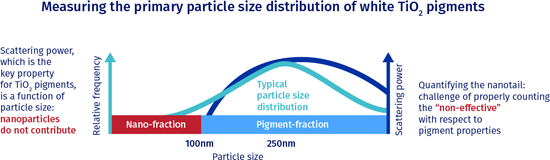
- 100 nm boundary of the EU nanomaterial definition, but the TiO2 pigment manufacturing processes results in a finite nanoscale content fraction. This optically inefficient nanoscale fraction needs to be quantified in line with EU regulations. In this paper, we describe the measurement procedures used
- nanoscale fraction shows the largest deviations, but even here the reproducibility is good. The data were fitted under the assumption that the particle size has a log-normal distribution, the values μ* and σ* were calculated, and the Kolmogorov–Smirnov (KS) test was applied to test the significance of the
- also full spectral data are recorded. Laboratory experimental samples preparation Laboratory anatase samples with varying particle sizes were prepared to test the hypotheses that the optical properties of nanoscale TiO2 are different from pigmentary TiO2 and that the scattering power and blue or yellow


Exploring the relationships between physiochemical properties of nanoparticles and cell damage to combat cancer growth using simple periodic table-based descriptors
Beilstein J. Nanotechnol. 2024, 15, 297–309, doi:10.3762/bjnano.15.27
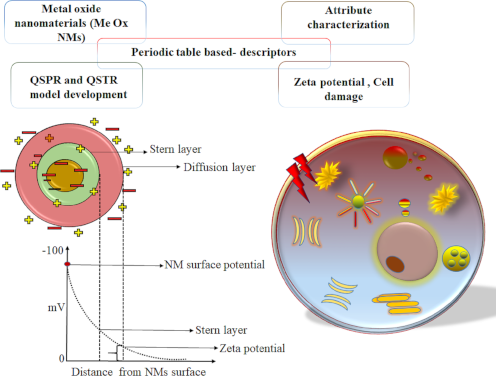
- them effectively for regulated use. Although NMs are utilized in therapeutics, their cytotoxicity has attracted great attention. Nanoscale quantitative structure–property relationship (nano-QSPR) models can help in understanding the relationship between NMs and the biological environment and provide
- structural diversity of metal oxide nanoparticles (MeOx NPs) poses significant challenges in determining their toxic effect on living cells [14][15]. Works related to nanoscale toxicity modeling have been published [16][17][18][19][20] to predict the toxicity profile of MeOx NPs on various cell lines and
- species. The most important criterion to improve nanoscale toxicity models is the selection of the appropriate structural descriptors of NPs. Periodic table-based descriptors have been a promising tool in predicting toxicity profiles and risk assessment of MeOx NPs with high predictivity and


Vinorelbine-loaded multifunctional magnetic nanoparticles as anticancer drug delivery systems: synthesis, characterization, and in vitro release study
Beilstein J. Nanotechnol. 2024, 15, 256–269, doi:10.3762/bjnano.15.24
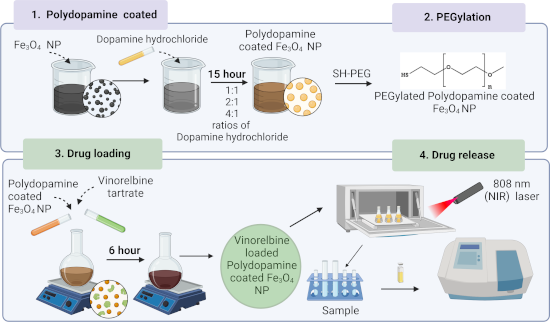
- anticancer drugs while mitigating the adverse effects of large dosage administration [6][7]. Additionally, it offers several advantages, such as controlled release, targeted drug delivery, and improved stability [8]. Moreover, nanoscale drug delivery systems hold great promise for specific cancer treatments
- neurotransmitter naturally occurring in the brain and can spontaneously polymerize into polydopamine (PDA) under alkaline conditions without oxidants [22]. Polydopamine can form a coating with biocompatibility advantages, achieving up to 40% photothermal conversion efficiency, nanoscale dimensions, and


Quantitative wear evaluation of tips based on sharp structures
Beilstein J. Nanotechnol. 2024, 15, 230–241, doi:10.3762/bjnano.15.22
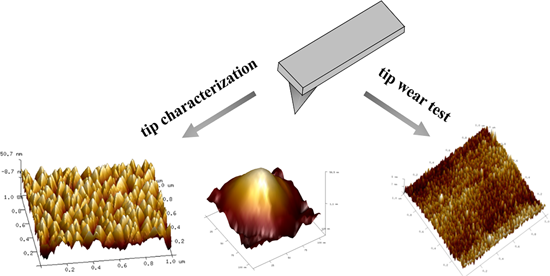
- topography images of standard nanoscale spherical particles and rectangular parallelepiped nanostructures of known shapes and to quantitatively estimate the shape of the tip by measuring the known nanostructures in advance. However, tip characterizers with fixed bodies present significant cost and




Multiscale modelling of biomolecular corona formation on metallic surfaces
Beilstein J. Nanotechnol. 2024, 15, 215–229, doi:10.3762/bjnano.15.21
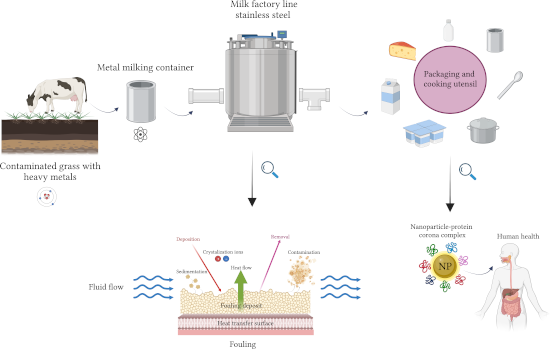
- biologically relevant molecules and nanoscale materials, such as aluminum, has become an increasingly important and intriguing area of research [4]. For long-term storage and preservation of prepared food, the choice of containers and utensils made from specific materials is essential [5]. For example, it was





Ion beam processing of DNA origami nanostructures
Beilstein J. Nanotechnol. 2024, 15, 207–214, doi:10.3762/bjnano.15.20
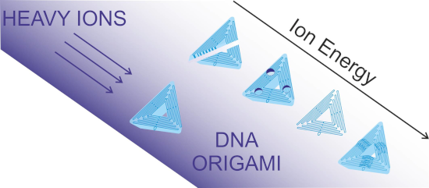
- method for nanofabrication such as FIB, which also happens to cover the low-energy interaction regime. The method is widely available as a complement to scanning electron microscopes. Focused ion beams allow for both subtractive and additive nanoscale manufacturing [31] and can also be used for chemical
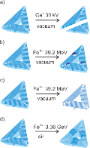
- modifications, which can be further exploited in novel material processing at the nanoscale. Experimental DNA origami synthesis Rothemund 2D triangles were synthesized by mixing 6 nM M13mp18 scaffold ssDNA with 144 nM staple strands in 1× TAE buffer supplemented with 12.5 mM MgCl2 (folding buffer, FOB) and


Modification of graphene oxide and its effect on properties of natural rubber/graphene oxide nanocomposites
Beilstein J. Nanotechnol. 2024, 15, 168–179, doi:10.3762/bjnano.15.16
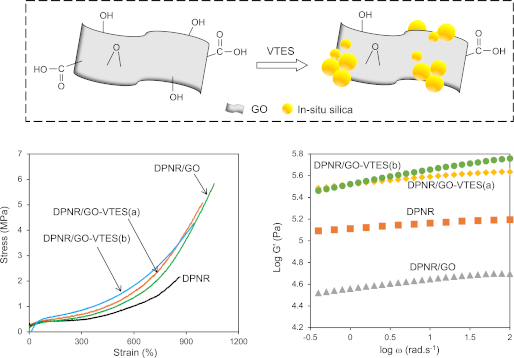
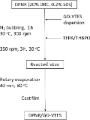
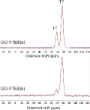
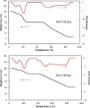
- to vulcanized NR. Moreover, nanoscale carbon-derived materials such as graphene and GO pose limitations in traditional NR vulcanization due to their associated high production costs. However, when ultilized in small quantities, nanoscale carbon-derived materials demonstrate potential in graft






In situ optical sub-wavelength thickness control of porous anodic aluminum oxide
Beilstein J. Nanotechnol. 2024, 15, 126–133, doi:10.3762/bjnano.15.12
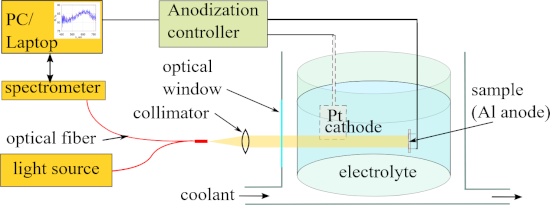
- applications in many fields of science and technology, including nanofabrication [1], optical coatings [2], sensing [3][4][5], and others [6]. Many synthesis protocols have been developed for precise control of the pore structure of PAAO [7], which allow for the creation of nanoscale patterns for various types


Assessing phytotoxicity and tolerance levels of ZnO nanoparticles on Raphanus sativus: implications for widespread adoptions
Beilstein J. Nanotechnol. 2024, 15, 115–125, doi:10.3762/bjnano.15.11
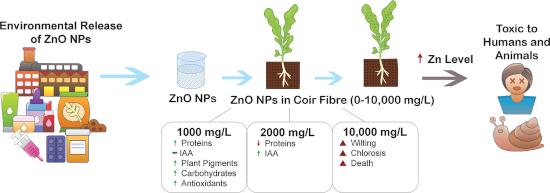
- toxicity of nanoscale agrochemicals and the unknown risks to the environment and humans have been gaining greater attention [9]. The application of ZnO NPs to the soil as fertilizers and pesticides has given rise to increasing usage of ZnO NPs in consumer products and agriculture [15]. The global yearly


Development and characterization of potential larvicidal nanoemulsions against Aedes aegypti
Beilstein J. Nanotechnol. 2024, 15, 104–114, doi:10.3762/bjnano.15.10
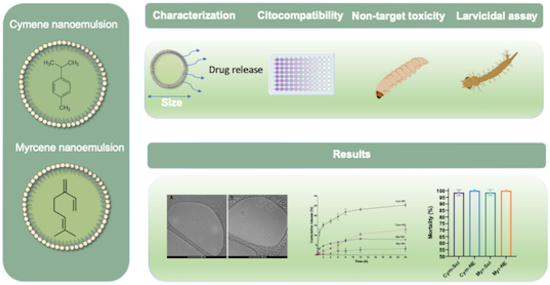
- , leading to the generation of dispersed material on a nanoscale [15]. The low-energy methods are characterized by the use and control of the chemical energy of the system in the formation of droplets on the nanoscale. A crucial point is that these systems can be obtained at low cost and with eco-friendly


Berberine-loaded polylactic acid nanofiber scaffold as a drug delivery system: The relationship between chemical characteristics, drug-release behavior, and antibacterial efficiency
Beilstein J. Nanotechnol. 2024, 15, 71–82, doi:10.3762/bjnano.15.7
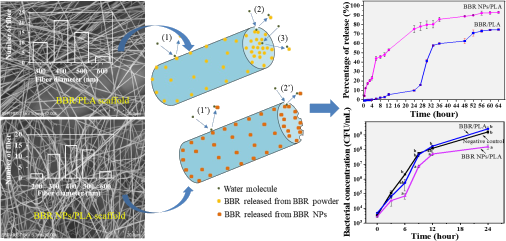
- observed by scanning electron microscopy (SEM, Figure 1). The BBR powder appeared as aggregates of rods in the micrometer size (Figure 1a), while BBR NPs were formed as nanoscale rectangles (Figure 1b). The electrospun PLA nanofibers showed bead-free and uniform morphology with fiber diameter in the range


Curcumin-loaded nanostructured systems for treatment of leishmaniasis: a review
Beilstein J. Nanotechnol. 2024, 15, 37–50, doi:10.3762/bjnano.15.4
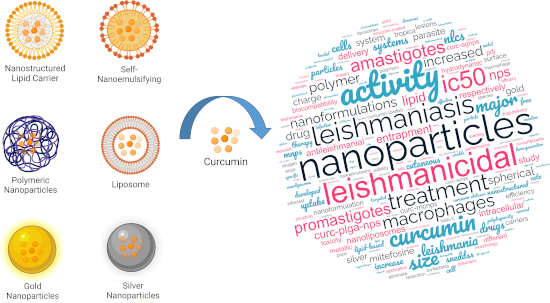
- ]. Although this nanostructured system is a promising carrier, further in vitro and in vivo studies are necessary to evaluate such improvements for curc or other leishmanicidal drugs. Nanoliposomes Nanoliposomes are nanoscale lipid bilayer vesicles mainly composed of phospholipids. These systems (small
- , respectively. Additionally, this nanosystem proved to be biocompatible with skin fibroblasts (in vitro). However, neither the cell viability of this system in healthy macrophages nor models of parasite infection in this cell type were evaluated. Considering that the nanoscale platform approved by the FDA and
- indicators, without evidence of nitric oxide or TNFα production [95]. In this perspective, NLCs have been a nanoscale platform with promising results aimed at encapsulating anti-leishmanial drugs. This encourages further studies to better understand how NLCs might affect the mechanisms of action of curc when


Nanotechnological approaches in the treatment of schistosomiasis: an overview
Beilstein J. Nanotechnol. 2024, 15, 13–25, doi:10.3762/bjnano.15.2
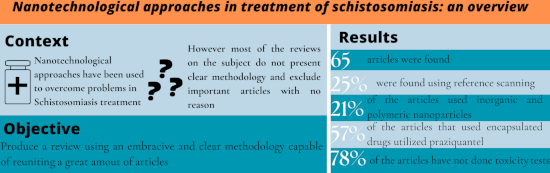
- address all these issues related to PZQ and bring new treatment alternatives [10]. Nanotechnology involves the creation and use of materials and technologies at the nanoscale, while nanomedicine focuses on the application of nanotechnology to treat, monitor, and prevent diseases [11]. Nanomedicine uses


Determination of the radii of coated and uncoated silicon AFM sharp tips using a height calibration standard grating and a nonlinear regression function
Beilstein J. Nanotechnol. 2023, 14, 1200–1207, doi:10.3762/bjnano.14.99
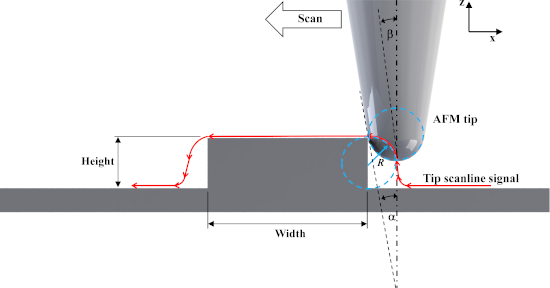
- nanostructured materials, for example, graphene, carbon nanotubes, nanoscale semiconductors, biomaterials, and molecules. Mechanical properties such as surface stiffness, adhesion, friction, electrostatics, and electrowetting can be measured [1][2][3][4]. In contact mode scanning, the contact area between the


Hierarchically patterned polyurethane microgrooves featuring nanopillars or nanoholes for neurite elongation and alignment
Beilstein J. Nanotechnol. 2023, 14, 1157–1168, doi:10.3762/bjnano.14.96
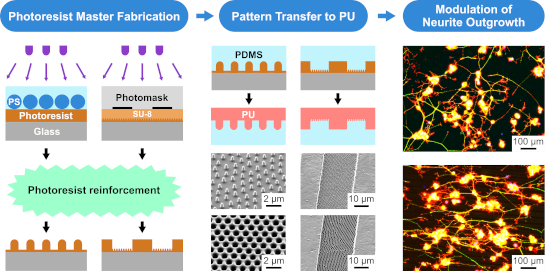
- ; Introduction The surface features of biomaterials at the micro- and the nanoscale play a crucial role in modulating tissue responses and in determining the functional and temporal efficacy of implants [1]. Micro- and nanoscale surface structures affect cellular functions through micro- and nanometer-sized cell


Elasticity, an often-overseen parameter in the development of nanoscale drug delivery systems
Beilstein J. Nanotechnol. 2023, 14, 1149–1156, doi:10.3762/bjnano.14.95
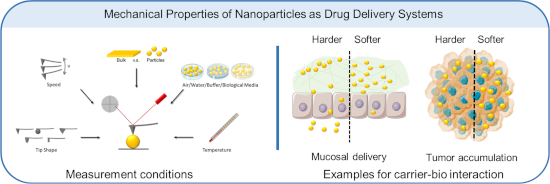
- article, we discuss examples highlighting the influence of elasticity in nanoscale biological interactions focusing on mucosal delivery and on tumor targeting. Besides this, we discuss the influence of different measurement settings using atomic force microscopy for the determination of mechanical
- provides different possibilities of measuring forces at the nanoscale. This can be the acquisition of single force–distance curves on a specific spot after locating the particle in an imaging mode or the creation of whole maps using quantitative imaging modes [20][21][22]. An example is shown for lysozyme


A multi-resistance wide-range calibration sample for conductive probe atomic force microscopy measurements
Beilstein J. Nanotechnol. 2023, 14, 1141–1148, doi:10.3762/bjnano.14.94
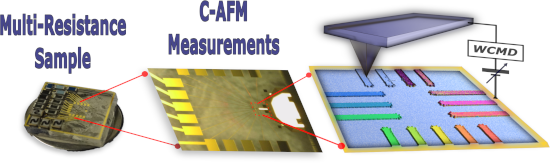
- resistances at the nanoscale has attracted recent attention for developing microelectronic components, memory devices, molecular electronics, and two-dimensional materials. Despite the decisive contribution of scanning probe microscopy in imaging resistance and current variations, measurements have remained
- restricted to qualitative comparisons. Reference resistance calibration samples are key to advancing the research-to-manufacturing process of nanoscale devices and materials through calibrated, reliable, and comparable measurements. No such calibration reference samples have been proposed so far. In this
- than 1% for a reduced range from 1 MΩ to 50 GΩ. Our findings break through the long-standing bottleneck in C-AFM measurements, providing a universal means for adopting calibrated resistance measurements at the nanoscale in the industrial and academic research and development sectors. Keywords


Sulfur nanocomposites with insecticidal effect for the control of Bactericera cockerelli
Beilstein J. Nanotechnol. 2023, 14, 1106–1115, doi:10.3762/bjnano.14.91
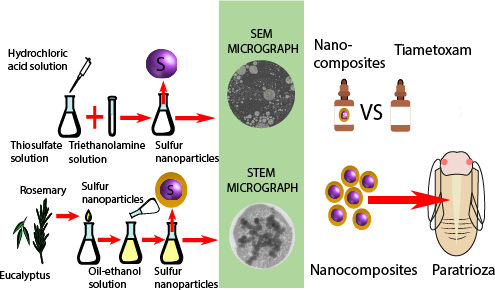
- development of new nanoinsecticides to combat pests in a more productive, cost-effective, and eco-friendly way [8][12]. Nanoscale agricultural products are developed using nanotechnology, such as nanopesticides, nanoinsecticides, nanoemulsions, and nanoparticles, to reduce the use of toxic chemicals [14


Density functional theory study of Au-fcc/Ge and Au-hcp/Ge interfaces
Beilstein J. Nanotechnol. 2023, 14, 1093–1105, doi:10.3762/bjnano.14.90
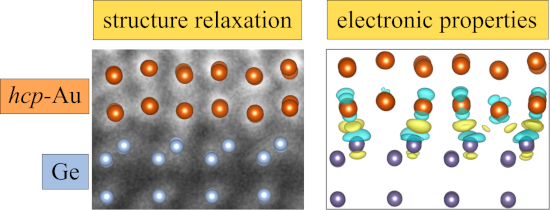
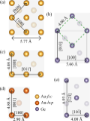
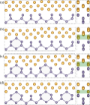
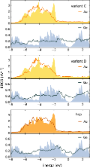
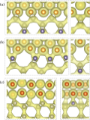
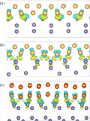
- heterostructure considered here, including the hcp phase of gold, is the most interesting one from the perspective of investigating new phases in nanoscale structures and their possible applications. It is, however, also the most challenging interface for our ab initio calculations. The mutual position of the





Dual-heterodyne Kelvin probe force microscopy
Beilstein J. Nanotechnol. 2023, 14, 1068–1084, doi:10.3762/bjnano.14.88
- ; intermodulation; KPFM; nc-AFM; surface photovoltage; time-resolved measurements; Introduction Kelvin probe force microscopy (KPFM) is a well-known variant of AFM that allows probing at the nanoscale the electrostatic landscape on the surface of a sample by measuring the so-called contact potential difference
- applications of KPFM are extremely broad. It is now used by physicists, chemists, and biologists to characterize the nanoscale electronic/electrostatic properties of an ever-expanding range of materials, interfaces, and devices, in ambient conditions, under ultrahigh vacuum, or at the liquid–substrate
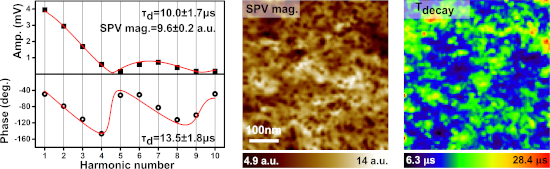
- development of KPFM-based approaches specifically designed to investigate photogeneration mechanisms and charge dynamics at the nanoscale in photovoltaic and optoelectronic materials is an active research area. In photoassisted KPFM, the idea is to probe the surface photovoltage (SPV), which is the




Spatial mapping of photovoltage and light-induced displacement of on-chip coupled piezo/photodiodes by Kelvin probe force microscopy under modulated illumination
Beilstein J. Nanotechnol. 2023, 14, 1059–1067, doi:10.3762/bjnano.14.87
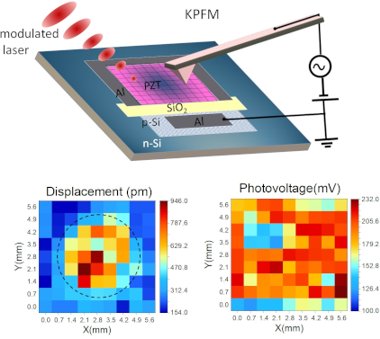
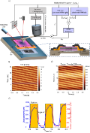
- mechanical oscillation of the piezoelectric membrane with vertical atomic resolution in real-time. This technique offers the opportunity to measure concurrently the optoelectronic and mechanical response of the device at the nanoscale. Furthermore, time-dependent atomic force microscopy (AFM) was employed to
- ] is a powerful and versatile technique to study fundamental and functional characteristics of materials and devices at the nanoscale, with application in physics, materials science, engineering, and biology. It can operate in either static (contact mode) or dynamic (tapping and noncontact mode) modes
- be used to measure contact potential difference (CPD) between the tip and the sample [18][19][20]. In particular, time-dependent KPFM [21][22][23] allows us to determine temporal changes of CPD and understand the dynamic behavior of functional devices at the nanoscale. Kelvin probe force microscopy


Exploring internal structures and properties of terpolymer fibers via real-space characterizations
Beilstein J. Nanotechnol. 2023, 14, 1004–1017, doi:10.3762/bjnano.14.83
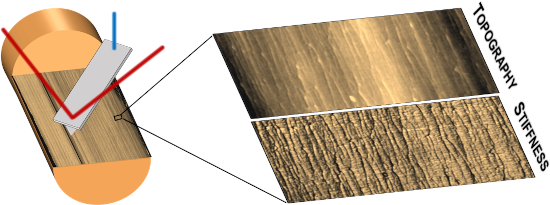
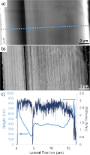
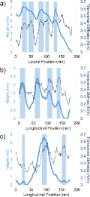
- . Stiffness maps also revealed bands of high stiffness spanning hundreds of nanometers laterally (i.e., left-to-right in each map), along with slightly elevated topographical ribbons. To assess the repeatability of these measurements, we analyzed several nanoscale maps in other representative regions of
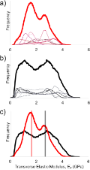
- Technora®) [8][19]. These average values coincide very closely with the modes of each distribution from our nanoscale AFM measurements. Discussion In this study we have, for the first time, isolated and directly characterized the internal structures of Technora® fibers using AFM. Here we elaborate and
- terms of the Technora® nanostructure, our measurements directly reveal two key motifs: (i) the presence of nanoscale fibrils that are well aligned with respect to the fiber axis and form a branched network and (ii) nanoscale domains with high local transverse stiffness. Through WAXD studies, Ferreira et