


Search results
Search for "paper" in Full Text gives 1022 result(s) in Beilstein Journal of Nanotechnology. Showing first 200.
Current-induced mechanical torque in chiral molecular rotors
Beilstein J. Nanotechnol. 2023, 14, 711–721, doi:10.3762/bjnano.14.57
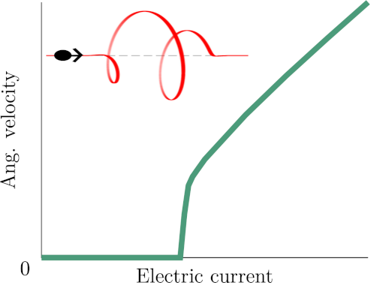
- has been great endeavor to engineer molecular rotors operated by an electrical current. A frequently met operation principle is the transfer of angular momentum taken from the incident flux. In this paper, we present an alternative driving agent that works also in situations where angular momentum of




![[Graphic 29]](/bjnano/content/inline/2190-4286-14-57-i54.svg?max-width=637&scale=1.18182)


A graphene quantum dots–glassy carbon electrode-based electrochemical sensor for monitoring malathion
Beilstein J. Nanotechnol. 2023, 14, 701–710, doi:10.3762/bjnano.14.56
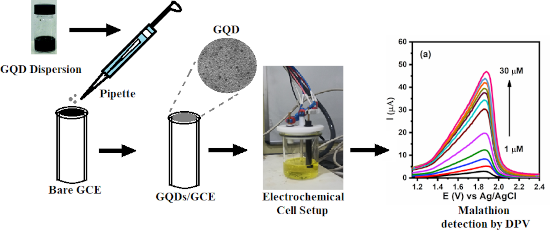
- -functionalized nickel/silver/graphene quantum dot/graphene hybrid for the colorimetric detection of malathion [28]. This paper describes the development of an electrochemical sensor based on a graphene quantum dot-modified glassy carbon electrode (GQDs/GCE) for the determination and quantification of the
- modifications. Glucose (2 g) was dissolved in 20 mL DI water and filtered for the removal of undissolved particles through Whatman filter paper. In the above solution, 20 mL of conc. H2SO4 was added dropwise until it turned brownish under constant stirring. The hydrothermal treatment was conducted by heating
- malathion detection (Figure 10). Conclusion Graphene quantum dots (size range 5 to 40 nm) were chemically synthesized by using glucose as a precursor in a hydrothermal method. This paper describes the fabrication of an electrochemical nanosensor by modifying a bare glassy carbon electrode with GQDs. The


Metal-organic framework-based nanomaterials as opto-electrochemical sensors for the detection of antibiotics and hormones: A review
Beilstein J. Nanotechnol. 2023, 14, 631–673, doi:10.3762/bjnano.14.52
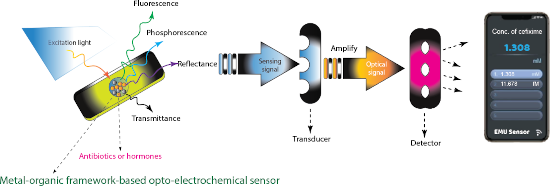
- researchers have published a number of nanomaterial-based (quantum dots, carbon-based, and metal-based) sensors for the detection of various analytes [1][2][7][9][27][28][29][30][31][32][33][34][35][36][37][38]. A review paper that offers a comprehensive analysis of current developments based on metal-organic
- scientists developed a portable, simple, and affordable optical sensor based on test paper with fluorophore immobilisation for a quick and visible detection of antibiotics (Figure 8a). It was investigated and established how tetracycline-induced quenching occurred. As seen in Figure 8b, the fluorophore’s


Transferability of interatomic potentials for silicene
Beilstein J. Nanotechnol. 2023, 14, 574–585, doi:10.3762/bjnano.14.48
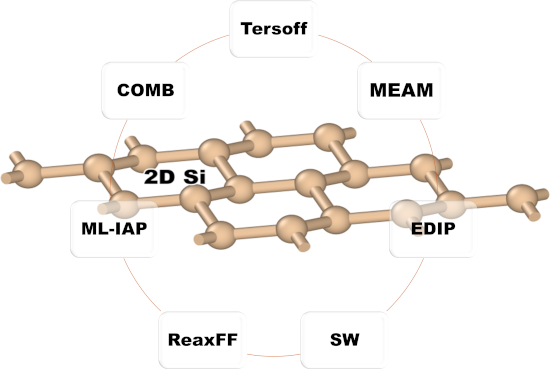
- obtained from the NIST Interatomic Potentials Repository and/or from LAMMPS code sources. Tersoff1988 [33]: the original Tersoff potential for silicon (it is important to remember that this paper proposed a form of potential rather than a specific parametrization for silicon) Tersoff2007 [34]: the Tersoff
![[Graphic 3]](/bjnano/content/inline/2190-4286-14-48-i7.svg?max-width=637&scale=1.18182)

Observation of multiple bulk bound states in the continuum modes in a photonic crystal cavity
Beilstein J. Nanotechnol. 2023, 14, 544–551, doi:10.3762/bjnano.14.45
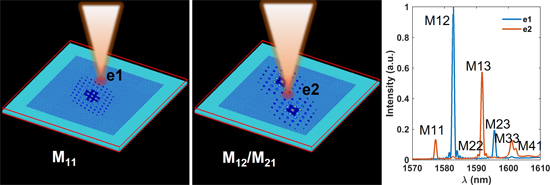
- -emitting devices [15][16][17][37], and nonlinear light generation [18][22][23][38][39][40]. In this paper, we propose a design of symmetry-protected BIC cavities consisting of aluminum gallium arsenide (AlGaAs) nanoblocks on a sapphire substrate. Motivated by the idea of in-plane leakage suppression by a


Carbon nanotube-cellulose ink for rapid solvent identification
Beilstein J. Nanotechnol. 2023, 14, 535–543, doi:10.3762/bjnano.14.44
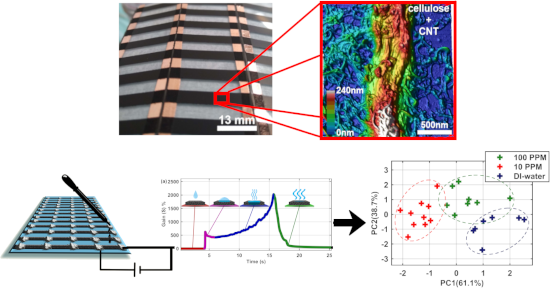
- and flexible devices are paradigms of the current “Industry 4.0”. One can envision applications such as multicomponent liquid and gas sensors, wearables for healthcare, paper-based sensors, and electronic solutions for smart city applications [1][2][3][4][5]. Another area of increasing demand is the
- [39][40]. Besides, graphene films deposited on cellulose paper and a graphene/cellulose composite were also reported as a solvent sensor material [30][33]. However, most of these works rely on cellulose as a paper substrate or as a thick composite film that cannot be readily employed for large-scale


On the use of Raman spectroscopy to characterize mass-produced graphene nanoplatelets
Beilstein J. Nanotechnol. 2023, 14, 509–521, doi:10.3762/bjnano.14.42
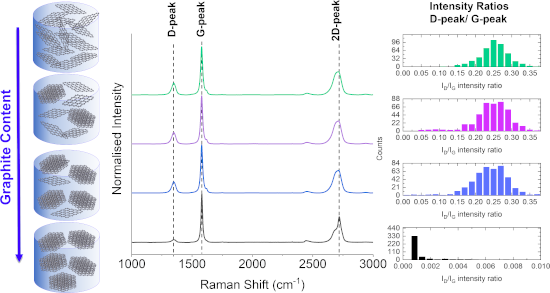
- , it is not clear if Raman spectroscopy has the sensitivity to detect the presence of this material in the final product. In this paper, we examine the effect that increasing amounts of unexfoliated graphitic material in a well-defined sample of GNPs have on the measured Raman spectra. First, a sample
- Lorenztian functions. The peaks were fitted together, with an offset baseline. We have averaged across 441 points in a sample, which is more than is used in a typical workflow, and the effect of the number of points measured is examined later in this paper. Results and Discussion AFM results The aim of the


Specific absorption rate of randomly oriented magnetic nanoparticles in a static magnetic field
Beilstein J. Nanotechnol. 2023, 14, 485–493, doi:10.3762/bjnano.14.39
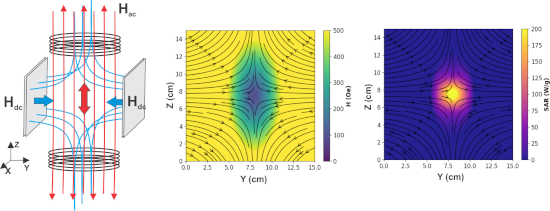
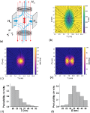
- paper, numerical simulations of the stochastic Landau–Lifshitz equation are used to study the dynamics of magnetization in dilute, randomly oriented assemblies of iron oxide nanoparticles under the combined action of ac and dc magnetic fields. It is shown that for nanoparticles with a diameter D < 25 nm


A mid-infrared focusing grating coupler with a single circular arc element based on germanium on silicon
Beilstein J. Nanotechnol. 2023, 14, 478–484, doi:10.3762/bjnano.14.38
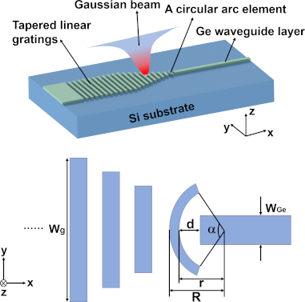
- technological process. Therefore, a focusing grating coupler (FGC) with a simple fabrication process and high coupling efficiency is urgently needed. In this paper, a MIR FGC with a single circular arc element (CAE) based on Ge-on-Si is demonstrated and simulated. The proposed MIR FGC consists of a section of


Conjugated photothermal materials and structure design for solar steam generation
Beilstein J. Nanotechnol. 2023, 14, 454–466, doi:10.3762/bjnano.14.36
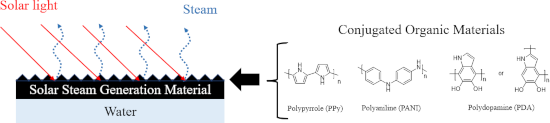
- formed by sequential polymerization on paper substrates, to enhance their light capturing capability (Figure 6a) [32]. Transmission and diffuse reflectance measurements of the PPy nanosheets confirmed that the multilayer PPy nanosheets on the paper substrate exhibited a distinct broadband absorption in
- functions of the membranes. As already described, DPP has been used as the PTM for SSG devices [27]. Microcrystalline solids of DPP molecules were formed in a solution and they were deposited on a filter paper by filtration. The filter papers with the deposited DPP derivatives were employed as photothermal
- films. Optical microscopy was employed to observe the surface structure of the films (Figure 10a–d). Figure 10a shows the filter paper. In the photothermal films, the filter paper is the supporting layer. The filter paper is indeed suitable for this purpose because the cellulose fibers are randomly


Quercetin- and caffeic acid-functionalized chitosan-capped colloidal silver nanoparticles: one-pot synthesis, characterization, and anticancer and antibacterial activities
Beilstein J. Nanotechnol. 2023, 14, 362–376, doi:10.3762/bjnano.14.31
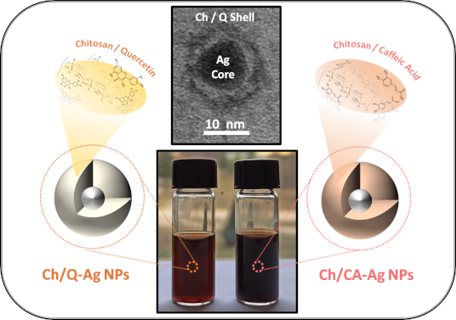
- . Small volumes of Ch/Q- and Ch/CA-Ag NPs were placed on carbon-coated copper grids and allowed to evaporate at room temperature. For negative staining, a drop of freshly prepared 2% uranyl acetate solution was dripped on the copper grid, and excess liquid is removed by a piece of paper after 2 min. Zeta


Bismuth-based nanostructured photocatalysts for the remediation of antibiotics and organic dyes
Beilstein J. Nanotechnol. 2023, 14, 291–321, doi:10.3762/bjnano.14.26
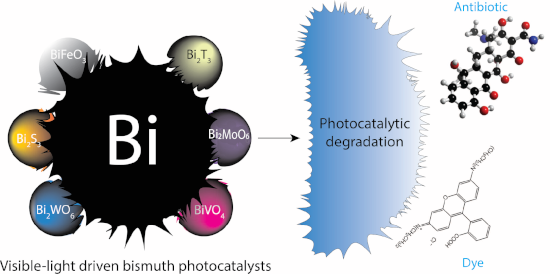
- fresh waters [47][48][49]. According to the paper of Wise in the year 2002 [50], nearly 200,000 tons of antibiotics are consumed globally each year, with roughly 50% being utilized for veterinary medication and growth stimulants. Notably, between the years 2000 and 2010, the amount of antibiotics


Biocatalytic synthesis and ordered self-assembly of silica nanoparticles via a silica-binding peptide
Beilstein J. Nanotechnol. 2023, 14, 280–290, doi:10.3762/bjnano.14.25
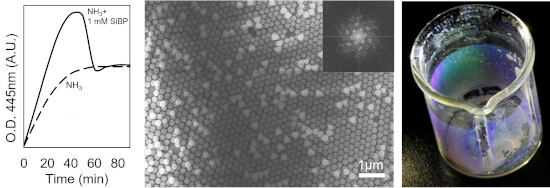
- covers were moved completely out of the colloidal solution. Scanning electron microscopy To analyze as-synthesized particles, 50 µL aliquots of the reaction solutions were placed on standard microscope cover slides. The excess liquid was removed by absorbing on a clean absorbent paper. To analyze self




Spin dynamics in superconductor/ferromagnetic insulator hybrid structures with precessing magnetization
Beilstein J. Nanotechnol. 2023, 14, 233–239, doi:10.3762/bjnano.14.22
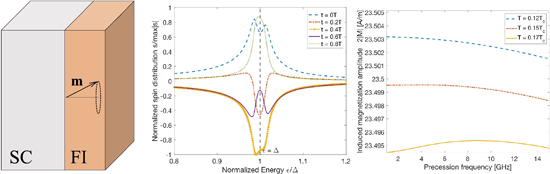
- one takes into account also the density of states correction, which is beyond the scope of the current paper. Thus, the effect of spin distribution function splitting can be revealed in superconducting hybrid systems with nonequilibrium electron–hole distributions such as superconductor/normal metal


Structural, optical, and bioimaging characterization of carbon quantum dots solvothermally synthesized from o-phenylenediamine
Beilstein J. Nanotechnol. 2023, 14, 165–174, doi:10.3762/bjnano.14.17
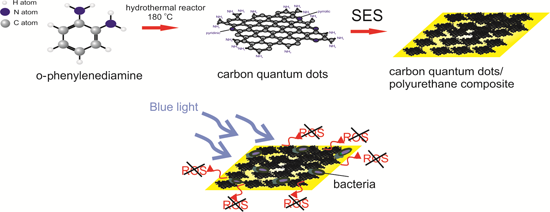
- o-phenylenediamine did not disrupt the cytoplasmic membrane. Cytotoxicity testing Low cytotoxicity is one of the mandatory requirements for biomedical applications. In this paper, we performed cell viability tests by applying the MTT assay toward MRC5 human lung fibroblast cells. Lung fibroblasts


Batch preparation of nanofibers containing nanoparticles by an electrospinning device with multiple air inlets
Beilstein J. Nanotechnol. 2023, 14, 141–150, doi:10.3762/bjnano.14.15
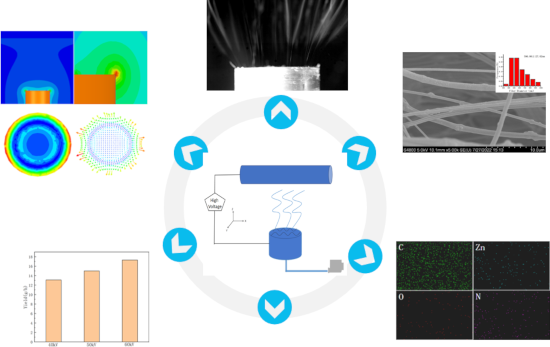
- various fields to improve the performance and technical indicators of products [17][18][19][20]. An electrospinning device with multiple air inlets (EMAI) was designed and developed in this paper to prepare functional nanofibers containing ZnO nanoparticles in batches, as shown in Figure 1. The device


Intermodal coupling spectroscopy of mechanical modes in microcantilevers
Beilstein J. Nanotechnol. 2023, 14, 123–132, doi:10.3762/bjnano.14.13
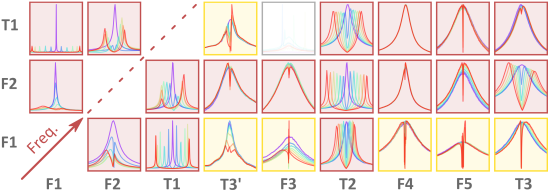
- multitonal responses, from which the force is reconstructed. In this paper, we are building towards a hybrid multifrequency approach different from the ones described above. The on-resonance measurement would follow frequency-modulated AFM or bimodal AFM while being assisted by a new off-resonance excitation


Characterisation of a micrometer-scale active plasmonic element by means of complementary computational and experimental methods
Beilstein J. Nanotechnol. 2023, 14, 110–122, doi:10.3762/bjnano.14.12
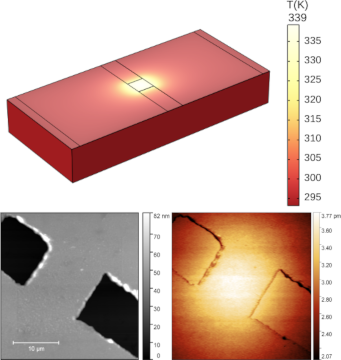
- subsequent paper. At this stage, experiments with active elements of different sizes reveal that the ratio between heated and non-heated surface illuminated by the laser beam influences the intensity of this effect. The ability to observe these details demonstrates the high sensitivity of this technique to
- the differences in optical constants of small areas under investigation. This effect, while highly interesting, deserves its own dedicated investigation and, hence, falls outside the scope of this paper. In Figure 8, the response of both the typical SPR curve and the LIA signal at four selected




Combining physical vapor deposition structuration with dealloying for the creation of a highly efficient SERS platform
Beilstein J. Nanotechnol. 2023, 14, 83–94, doi:10.3762/bjnano.14.10
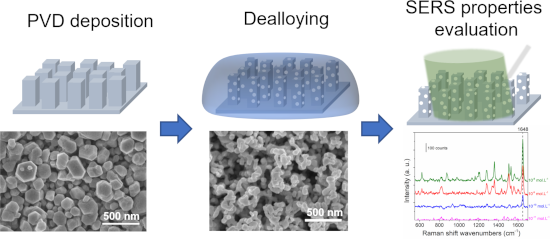
- resulting signal intensity tends to strongly vary due to surface contamination [30]. In this paper, a simple synthesis method to design bimodal porous silver substrate for SERS is reported. Magnetron co-sputtering of a silver and aluminum target was used for the deposition of the precursor alloy thin film
- use of Taro leaves or rose petals as substrates for silver PVD coating leads to a SERS detection limit down to 10−8 mol·L−1 and 10−9 mol·L−1, respectively, for rhodamine 6G (R6G) [55][56]. Moreover, the use of silver-coated paper as a SERS substrate reveals a detection limit down to 10−10 mol·L−1 for




Upper critical magnetic field in NbRe and NbReN micrometric strips
Beilstein J. Nanotechnol. 2023, 14, 45–51, doi:10.3762/bjnano.14.5
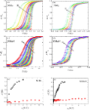
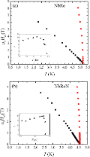
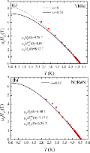
- observed. These results, which cannot be described by the WHH model, are interpreted as an indication of the presence of an unconventional superconducting pairing in the material. In this paper, we measure the temperature dependence of the perperpendicular, Hc2⟂(T), and parallel, Hc2∥(T), critical field of

The influence of structure and local structural defects on the magnetic properties of cobalt nanofilms
Beilstein J. Nanotechnol. 2023, 14, 23–33, doi:10.3762/bjnano.14.3
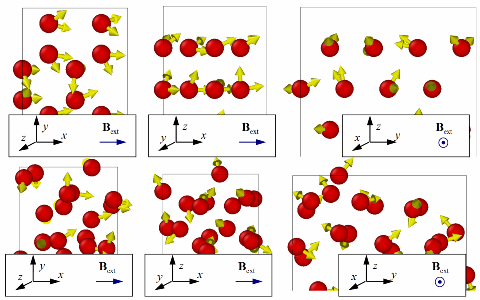
- , Academiei 3/3, Chisinau 2028, Moldova 10.3762/bjnano.14.3 Abstract The present paper considers a mathematical model describing the time evolution of spin states and magnetic properties of a nanomaterial. We present the results of two variants of nanosystem simulations. In the first variant, cobalt with a
- nanomaterial arising from its production are important tasks, often closely related to the composition of the sample in question. In this paper, we propose one mathematical model to investigate the relationship between the material structure and its magnetic properties. Mathematical modeling is used to
- representing the magnetic spin of the particle, ωi is the magnetic moment, and ℏ is the Planck constant. This approach to calculate spin temperature was proposed in [44]. The approach described in this paper and originally proposed by the authors [40] is implemented using direct simulation methods. At each


Atmospheric water harvesting using functionalized carbon nanocones
Beilstein J. Nanotechnol. 2023, 14, 1–10, doi:10.3762/bjnano.14.1
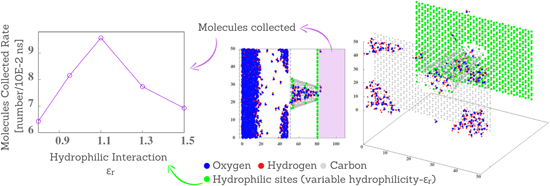
- wettability variations combined with a nanometric design to improve water flow [39][40]. The paper is organized as follows: In the section “Model and Simulation Details”, the model is presented and the simulation method is explained. In the “Results and Discussion” section, the simulation results are shown




From a free electron gas to confined states: A mixed island of PTCDA and copper phthalocyanine on Ag(111)
Beilstein J. Nanotechnol. 2022, 13, 1572–1577, doi:10.3762/bjnano.13.131
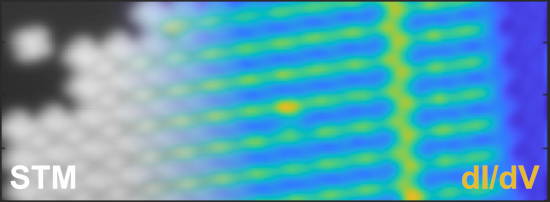
- stacked configuration [19]. When CuPc is on top of PTCDA, the interface state can still be observed [19], and CuPc has a strong bond to the underlying PTCDA layer [20]. In this paper, we present STM and AFM data of P2C and PC phases on Ag(111), concentrating on the PC phase. The high-resolution AFM allows


Structural studies and selected physical investigations of LiCoO2 obtained by combustion synthesis
Beilstein J. Nanotechnol. 2022, 13, 1473–1482, doi:10.3762/bjnano.13.121
- . However, during cooling, the samples heated to 750 and 900 °C had much higher conductivity. The EPR studies suggest the existence of two phases for LCO, and further research on this issue will be the subject of another paper. However, XRD studies clearly indicate that the material is single-phase




Density of states in the presence of spin-dependent scattering in SF bilayers: a numerical and analytical approach
Beilstein J. Nanotechnol. 2022, 13, 1418–1431, doi:10.3762/bjnano.13.117
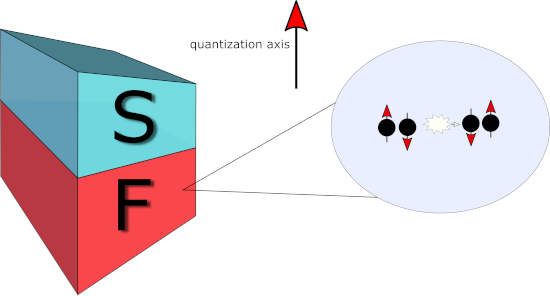
- junctions. We do not consider any additional effects in the SF boundary such as spin-dependent interfacial phase shifts (SDIPS). The effect of SDIPS on the DOS behavior in SFIFS junctions has been studied both analytically [86] and numerically [87]. The paper is organized as follows. In the section (“Model
- mentioned in the previous section. In this paper we consider two cases of the junction transparency: (i) intermediate interface transparency (γB ≥ 1) and (ii) low interface transparency (γB ≫ 1). In both cases, we fix the thickness of the F layer to df = 0.5ξf. Focusing on these cases allows us to discuss





