Search results
Search for "plasmon resonance" in Full Text gives 226 result(s) in Beilstein Journal of Nanotechnology. Showing first 200.
Sandwich-like layer-by-layer assembly of gold nanoparticles with tunable SERS properties
Beilstein J. Nanotechnol. 2016, 7, 1028–1032, doi:10.3762/bjnano.7.95
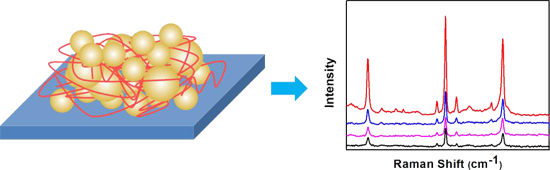
- ; polyelectrolyte; Introduction Surface-enhanced Raman scattering (SERS) spectroscopy, which relies on metal nanostructures made of noble metals (Au, Ag and Cu) that sustain localized surface plasmon resonance (LSPR), is applied as a promising analytical tool for detecting and identifying trace amounts of
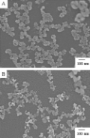
- sodium citrate solution was injected, as shown in Figure 1. The optical absorption peaks located at 520 and 532 nm indicate the strong surface plasmon resonance of the NPs. These uniform negatively charged citrate-protected Au NPs could be readily used in electrostatic LbL assembly. Typical sandwich-like


A terahertz-vibration to terahertz-radiation converter based on gold nanoobjects: a feasibility study
Beilstein J. Nanotechnol. 2016, 7, 983–989, doi:10.3762/bjnano.7.90
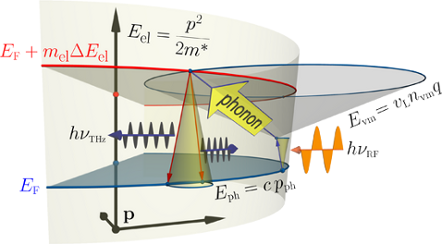
- . [3] on plasmon resonance Raman scattering. For the microwave irradiation, a standard domestic microwave oven would offer a simple practical source at νRF = 2.45 GHz, i.e., hνRF ≈ 1.01·10−2 meV. As this is much smaller than the above phonon-related values, the peak outcome of the THz radiation is not
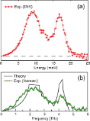
- text for details. Vibrational density of states of gold as extracted from (a) inelastic neutron scattering on thick foils [2], (b) plasmon resonance Raman scattering on nanocrystals [3] (green dots) and reconstructed from force constants fitted to inelastic neutron scattering data from massive single



Large-scale fabrication of achiral plasmonic metamaterials with giant chiroptical response
Beilstein J. Nanotechnol. 2016, 7, 914–925, doi:10.3762/bjnano.7.83
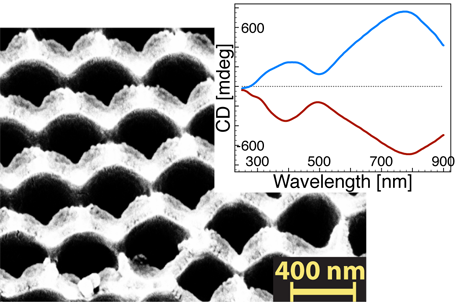
- excitation of surface plasmon polariton (SPP) waves. Compared to the localized surface plasmon resonance from PCMs, SPP waves from ECMs are extremely sensitive to the angle of incidence and less sensitive to structural imperfections [13]. Furthermore, ECMs are defined by having a zero response angle, which

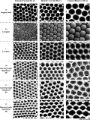


![[Graphic 2]](/bjnano/content/inline/2190-4286-7-83-i2.png?max-width=637&scale=1.18182) , of incident light with respect to the ECM structures.
, of incident light with respect to the ECM structures.



The role of morphology and coupling of gold nanoparticles in optical breakdown during picosecond pulse exposures
Beilstein J. Nanotechnol. 2016, 7, 869–880, doi:10.3762/bjnano.7.79
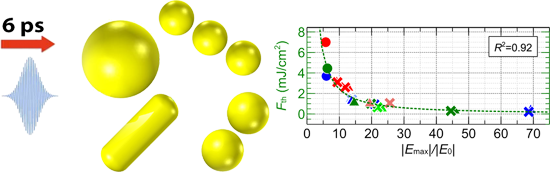
- interactions at the nanoscale using nanoparticles. This relies on the unique tunable optical properties of gold nanoparticle stemming from the interaction of light with the quasi-free electrons in gold. The oscillation of these electrons induces surface plasmon resonance, resulting in the enhancement of the
- incident electric field in the vicinity of the nanoparticle. This can result in secondary phenomena associated with laser pulse interaction, such as heating of the surrounding media, acoustic wave formation and optical breakdown. The surface plasmon resonance is tunable over a wide range of frequencies and
- plasmon resonance coupling that occurs at distances of less than 2.5 diameters between the surfaces of two adjacent nanoparticles [4]. This effect depends on the orientation, spacing and shape of the adjacent nanoparticles [9][13][14][15]. The plasmon coupling effect broadens and shifts the plasmon





Highly compact refractive index sensor based on stripe waveguides for lab-on-a-chip sensing applications
Beilstein J. Nanotechnol. 2016, 7, 751–757, doi:10.3762/bjnano.7.66
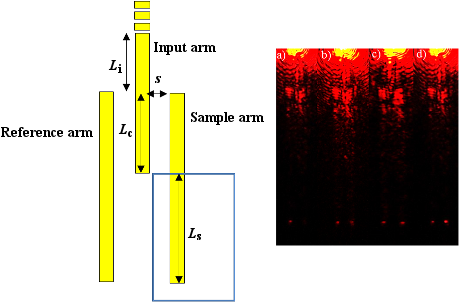
- highly sensitive to the surrounding dielectric environment. This unique property is incredibly useful in sensing applications. Mach–Zehnder (MZ) interferometry [1][2][3][4][5], surface enhanced Raman spectroscopy (SERS) [6][7][8][9], ring resonators [10] and surface plasmon resonance (SPR) [11][12][13



Gold nanoparticles covalently assembled onto vesicle structures as possible biosensing platform
Beilstein J. Nanotechnol. 2016, 7, 655–663, doi:10.3762/bjnano.7.58
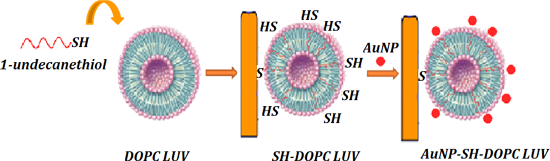
- ]. Note, that when the AuNPs are formed after 8 and 13 min of UV irradiation, bands corresponding to the surface plasmon resonance (SPR) around 520 or 550 nm appeared. This maximum wavelength (λmax) is in accordance with other reported studies [26][29][30], and the small differences founded in the λmax


Fabrication and properties of luminescence polymer composites with erbium/ytterbium oxides and gold nanoparticles
Beilstein J. Nanotechnol. 2016, 7, 630–636, doi:10.3762/bjnano.7.55
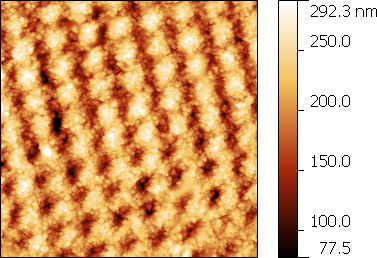
- nanoparticles should be located around the silicon oxide nanoparticles, which prevents their agglomeration up to 0.15 wt % of content and the plasmon resonance absorbance spectra are observable in the polymer nanocomposite. The measurement with a laser scanning microscope (pump wavelength of 488 nm) has shown
- effect can be even larger, since the luminescence excitation wavelength was only at the short wavelength side of the plasmon resonance spectrum. But at the same time the emitted light is just in the optimum range for such excitation, so certain self-enhancement effects take place in our nanocomposites
- distribution of Au and Er/Yb oxide nanoparticles within the matrix polymer. Absorbance bands of Er oxide and AuNPs plasmon resonance absorbance are present in the spectra of nanocomposites. Er luminescence in nanocomposites is enhanced by almost one order of magnitude in the presence of plasmon fields of


Novel roles for well-known players: from tobacco mosaic virus pests to enzymatically active assemblies
Beilstein J. Nanotechnol. 2016, 7, 613–629, doi:10.3762/bjnano.7.54
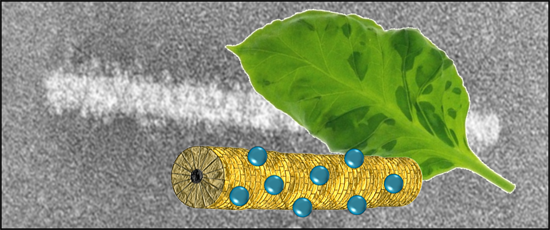
- transduction occurs without a need of reporter molecules, e.g., by optical, electrochemical, mass- or surface plasmon resonance-sensitive techniques [171][172]. The development of site-selective and highly efficient methods for the application of TMV on inorganic or polymeric surfaces (Figure 9) has paved the


Investigating organic multilayers by spectroscopic ellipsometry: specific and non-specific interactions of polyhistidine with NTA self-assembled monolayers
Beilstein J. Nanotechnol. 2016, 7, 544–553, doi:10.3762/bjnano.7.48
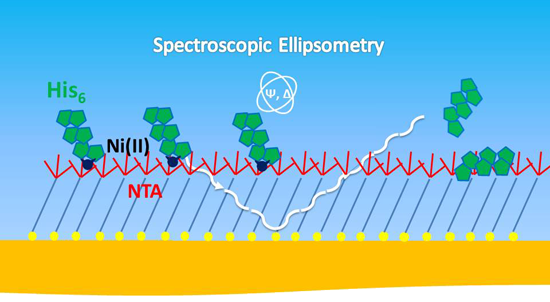
- . Optical methods based on optical reflectivity, such as surface plasmon resonance (SPR) and ellipsometry, allow for label-free, non-invasive, in situ monitoring of molecular adsorption/desorption at surfaces [34][35][36][37][38][39][40]. While SPR-based methods require supports with specific plasmonic




Antibacterial activity of silver nanoparticles obtained by pulsed laser ablation in pure water and in chloride solution
Beilstein J. Nanotechnol. 2016, 7, 465–473, doi:10.3762/bjnano.7.40
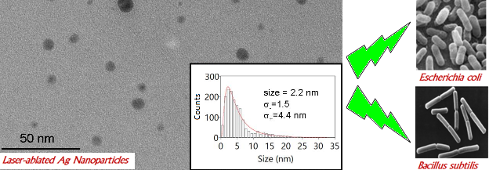
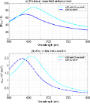
- (blue line). In the latter case, the plasmon resonance appears blue-shifted in both ps and ns samples. Such a shift could be attributed either to a change in the dielectric constant of the liquid environment or, more reasonably, to the different oxidation grade of the NP surfaces, where the NPs obtained


Early breast cancer screening using iron/iron oxide-based nanoplatforms with sub-femtomolar limits of detection
Beilstein J. Nanotechnol. 2016, 7, 364–373, doi:10.3762/bjnano.7.33
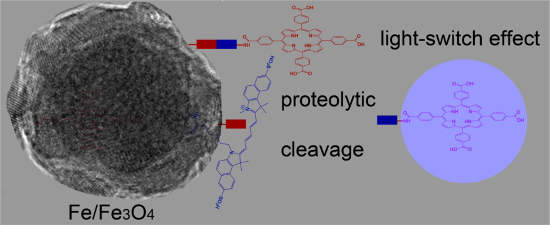
- sequence. A second dye (cyanine 5.5) is permanently linked to the dopamine coating (Figure 1). This design enables both, plasmon-resonance quenching (SET) [20][21] and Förster resonance energy transfer (FRET) quenching [20][22] of the tethered TCPP units. Once TCPP is released via proteolytic cleavage of
- the consensus sequence, its fluorescence will increase (for most of the nanoplatforms). The nanoplatforms for cancer detection are based on proteolytic cleavage of TCPP from the Fe/Fe3O4-core (Figure 2). Increasing the distance between the TCPP fluorophore and the nanoparticle decreases plasmon
- -resonance quenching (dipole–surface energy transfer (SET) [20][21]) from TCPP to Fe/Fe3O4 and Förster resonance energy transfer (FRET [20][22]) from TCPP to cyanine 5.5. The latter is permanently tethered to the inorganic nanoparticle. For all of the employed consensus sequences, with the exceptions of


Hemolysin coregulated protein 1 as a molecular gluing unit for the assembly of nanoparticle hybrid structures
Beilstein J. Nanotechnol. 2016, 7, 351–363, doi:10.3762/bjnano.7.32
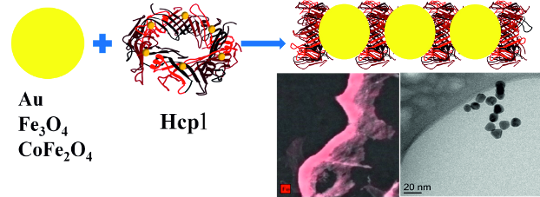
- described in the Experimental section. First, we investigated the influence of ionic strength on the assembly process of Au NPs. In Figure 2, the UV–vis spectra of a Au NP solution with 2 equiv Hcp1_cys3 at different ionic strengths are shown. At low ionic strength (0–6 mmol/L) the surface plasmon resonance
- only takes place for the Hcp1_cys3-functionalized NPs, where the citrate-stabilized Au NPs remain stable as evidenced by their unchanged surface plasmon resonance at 520 nm. When the NaCl concentration exceeded 12 mM, a prompt color change to blue followed by precipitation of a blue solid was observed
- overview spectra (Figure 3A) a red shift of the transversal 520 nm plasmon resonance peak to 530 nm is observed with time and the appearance of a second longitudinal peak first around 617 nm then shifting to 650 nm at the end of the reaction. This peak position around 650 nm stays constant after 18 h. In





Mismatch detection in DNA monolayers by atomic force microscopy and electrochemical impedance spectroscopy
Beilstein J. Nanotechnol. 2016, 7, 220–227, doi:10.3762/bjnano.7.20
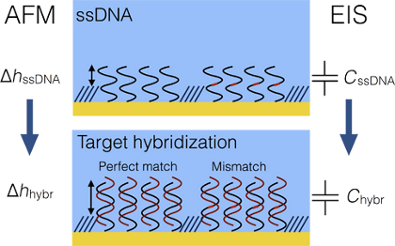
- : hybridization-based detection, detection based on thermal denaturation and protein-mediated detection [5]. For each strategy, different read-out systems and experimental designs have been reported, which include fluorescence [13], surface plasmon resonance [14][15], electrochemical [16][17], atomic force


Characterisation of thin films of graphene–surfactant composites produced through a novel semi-automated method
Beilstein J. Nanotechnol. 2016, 7, 209–219, doi:10.3762/bjnano.7.19
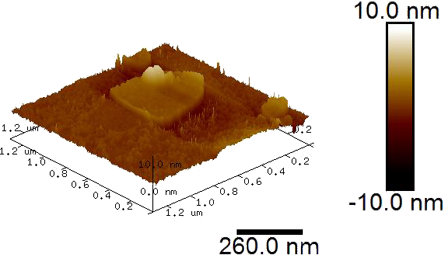
- -coated glass using a method of total internal reflection ellipsometry (TIRE) which revealed the enhancement of the surface plasmon resonance in thin gold films by depositing graphene layers. Keywords: characterization; ellipsometry; graphene; 1H NMR; surfactant; Introduction Since its initial discovery
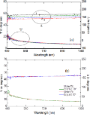
- similar manner. TIRE study The surface plasmon resonance (SPR) phenomenon in graphene films deposited on thin films of gold was studied in more detail using the method of total internal reflection ellipsometry (TIRE), which was developed in the last decade [12][13][14]. TIRE experimental set-up (shown
- of deposited layers. It is quite remarkable to observe spectral features around the plasmon-resonance frequency of the gold substrate, which are not related to graphene itself [22][23] but rather appeared as a result of the interaction of π-electrons in graphene with free electrons in the gold film




Linear and nonlinear optical properties of hybrid metallic–dielectric plasmonic nanoantennas
Beilstein J. Nanotechnol. 2016, 7, 111–120, doi:10.3762/bjnano.7.13
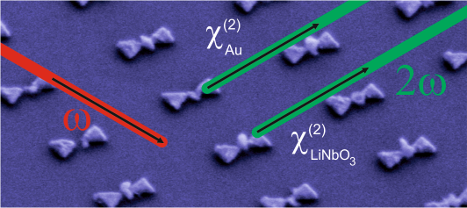
- particles at their respective plasmon resonance. It was also shown that rough metallic films led to enhanced second-harmonic generation [25][26] as well as to enhanced Raman scattering [27][28][29][30] and that both phenomena are related to local field hot spots in the metallic films. The nonlinear optical
- exists inside the gap (in the lower row the particles have been marked for clarity). Thirdly, recent reports suggest that the nonlinearity of gold is very strong. The emission of thin layers, boosted by the presence of a plasmon resonance, yields strong signals [40][44]. We wanted to suppress the strong


Controlled graphene oxide assembly on silver nanocube monolayers for SERS detection: dependence on nanocube packing procedure
Beilstein J. Nanotechnol. 2016, 7, 9–21, doi:10.3762/bjnano.7.2
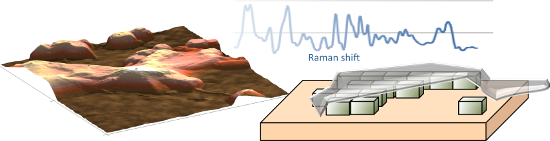
- molecules to large proteins by means of surface-enhanced Raman spectroscopy (SERS) [8][9]. Furthermore, these arrays offer additional sensing capabilities based on the localized surface plasmon resonance (LSPR) sensitivity to subtle changes in the refractive index of the surrounding molecular environment
- new peak at 412 nm and a broader signal centred at 640 nm; similar spectral features were already reported for metal nanoparticles on dielectric support [31][43]. These experimental and theoretical studies demonstrate that the degeneracy of the localized surface plasmon resonance (LSPR) mode is split


Chemiresistive/SERS dual sensor based on densely packed gold nanoparticles
Beilstein J. Nanotechnol. 2015, 6, 2498–2503, doi:10.3762/bjnano.6.259
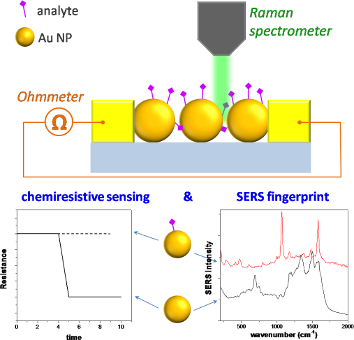
- plasmon resonance, surface-enhanced fluorescence or surface-enhanced Raman spectroscopy (SERS) [2][3]. Among these analytical techniques, SERS is particularly interesting because it can specifically identify the analyte by the unique vibrational signature of chemical groups. Another class of promising


Surface-enhanced Raman scattering by colloidal CdSe nanocrystal submonolayers fabricated by the Langmuir–Blodgett technique
Beilstein J. Nanotechnol. 2015, 6, 2388–2395, doi:10.3762/bjnano.6.245
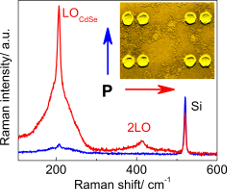
- deposited NCs was less than one monolayer, as determined by transmission and scanning electron microscopy. SERS by optical phonons in CdSe nanocrystals showed a significant enhancement that depends resonantly on the Au nanocluster and dimer size, and thus on the localized surface plasmon resonance (LSPR
- ; localized surface plasmon resonance; metal nanoclusters; phonons; surface-enhanced Raman spectroscopy; Introduction Since its observation in 1974 [1], surface-enhanced Raman scattering (SERS) has become a powerful technique for detecting and studying ultra-low quantities of organic and biological
- rough metal surfaces. The locally enhanced electromagnetic field induced by the localized surface plasmon resonance (LSPR) in the vicinity of metal surface is responsible for the Raman scattering intensity enhancement, which is proportional to the fourth power of the enhancement of the local field [3][4


Green and energy-efficient methods for the production of metallic nanoparticles
Beilstein J. Nanotechnol. 2015, 6, 2354–2376, doi:10.3762/bjnano.6.243
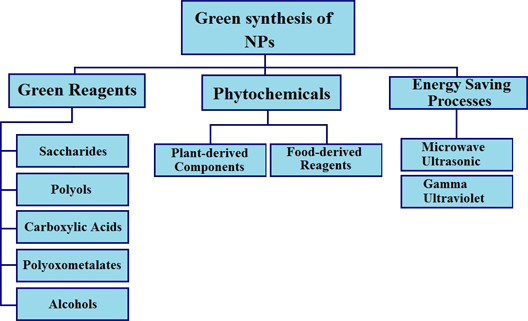
- range of 40–200 nm [86]. Also, Wei et al. used CTS in aqueous solution of AgNO3 and HAuCl4 to act as reducing agent and scaffold for the formation of Au and Ag NPs. They used surface plasmon resonance (SPR) analysis to confirm the formation of NPs [29]. In related reports, they used TEM analysis and


Self-organization of gold nanoparticles on silanated surfaces
Beilstein J. Nanotechnol. 2015, 6, 2345–2353, doi:10.3762/bjnano.6.242
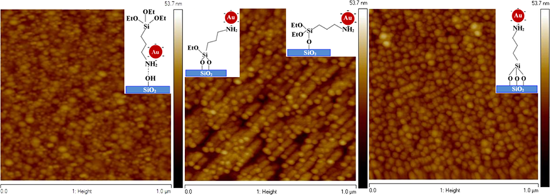
- are fundamentally important and also can be applied for designing and modelling of surface plasmon resonance based sensor applications. Keywords: 3-aminopropyletriethoxysilane; electrostatic interaction; functionalization; gold nanoparticles; self-assembled monolayer; self-organization; Introduction
- structures [8]. AuNPs have been studied intensively for a wide range of applications such as catalysis [9], biosensing [10], colorimetric sensing [11], optical sensing (surface plasmon resonance (SPR) and surface-enhanced Raman scattering (SERS)) [12][13], photonics [13][14], photovoltaic devices [15] and
- photothermal therapy [16]. AuNPs exhibit well-defined optical properties such as surface plasmon resonance, which depends on the size and shape of nanoparticles, interparticle distance and the effective refractive index of the surrounding medium [17]. Different techniques have been used to assemble AuNPs on


Orthogonal chemical functionalization of patterned gold on silica surfaces
Beilstein J. Nanotechnol. 2015, 6, 2272–2277, doi:10.3762/bjnano.6.233
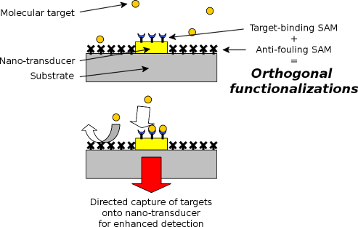
- with the development of localized surface plasmon resonance (LSPR) biosensors, this topic has become a major focus [2][3][4][5][6][7][8]. Indeed, LSPR transduction is expected to yield enhanced signal as compared to classical SPR transduction. However, the enhancement of the LSPR limit of detection is


Au nanoparticle-based sensor for apomorphine detection in plasma
Beilstein J. Nanotechnol. 2015, 6, 2224–2232, doi:10.3762/bjnano.6.228
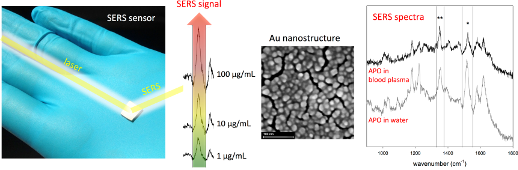
- frequency and width of the plasmon resonance, that can be tailored exploring wide intervals [26]. This makes them suitable for use as substrates for SERS, and in particular, to detect exiguous amounts of analyte with low-intensity Raman signatures or that are hindered by competitive fluorescence. A thorough
- 1A show typical average sizes of such inter-island channels. SERS hinges on the strong interaction between noble metal NPs and visible light through the resonant collective excitation of NP conduction electrons. The resulting surface plasmon resonance peak [28] displays a maximum at about 780 nm


Conformational switching of ethano-bridged Cu,H2-bis-porphyrin induced by aromatic amines
Beilstein J. Nanotechnol. 2015, 6, 2154–2160, doi:10.3762/bjnano.6.221
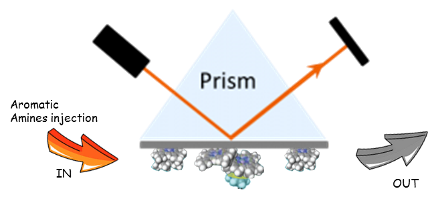
- bis-porphyrin derivative. The Langmuir–Schaefer technique has been used to transfer the floating bis-porphyrin film (when using pure water as a subphase) to a surface plasmon resonance (SPR) substrate and the resulting device was able to detect the presence of aniline at concentrations as low as 1 nM
- were deposited on the SPR slide, and the shift of the SPR angle induced by the injection of amine aqueous solutions at different concentrations was monitored. The effect of aniline on the plasmon resonance of the Cu,H2-Por2 film could be detected when only 1 nM of analyte was fluxed over the active
- -logarithmic trend was proposed [22][23][24]. The recovery of the SPR device was investigated. The initial plasmon resonance angle was obtained when the Cu,H2-Por2 LS film, previously exposed to aniline, was treated for 15 min at 50 °C and then washed with a flow of ultrapure water for 5 min. The response of


Possibilities and limitations of advanced transmission electron microscopy for carbon-based nanomaterials
Beilstein J. Nanotechnol. 2015, 6, 1541–1557, doi:10.3762/bjnano.6.158
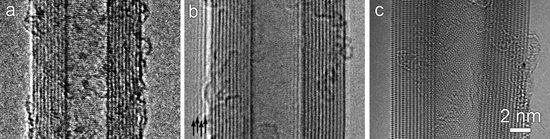
- defect, as imaged by STEM, can act as an atomic antenna in the frequency range of petahertz, and thus enhance the surface plasmon resonance locally. However, more recently, Nelson et al., after extracting the dielectric function from STEM–EELS spectra and comparing it with the calculated results [103


Formation of substrate-based gold nanocage chains through dealloying with nitric acid
Beilstein J. Nanotechnol. 2015, 6, 1362–1368, doi:10.3762/bjnano.6.140
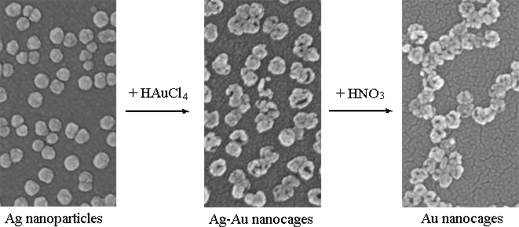
- to their solid counterparts because of the high surface area, low density, and near-infrared localized surface plasmon resonance (LSPR). All these make Au NC an attractive material for various applications in optical [4][5] and electrochemical sensing [6], immunoassay [7], drug release [8], surface
- solution on a copper grid. X-ray diffraction (XRD) analysis was performed by X’Pert-Pro MPD (Panalytical, Holland). The localized surface plasmon resonance (LSPR) spectra of nanoparticles were measured with a Shimadzu UV–vis–NIR 3600 Spectrophotometer against a bare ITO slide as the reference. SEM images