


Search results
Search for "polystyrene" in Full Text gives 234 result(s) in Beilstein Journal of Nanotechnology. Showing first 200.
Ultrastructural changes in methicillin-resistant Staphylococcus aureus induced by positively charged silver nanoparticles
Beilstein J. Nanotechnol. 2015, 6, 2396–2405, doi:10.3762/bjnano.6.246
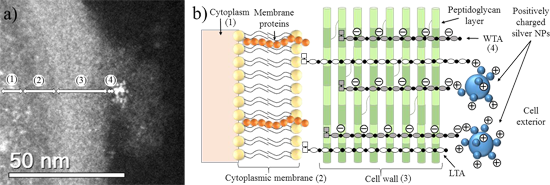
- diluted in Mueller–Hinton broth (Difco, Detroit, Mich.) and plated in flat-bottom polystyrene 96-well tissue culture plates at a final density of 5.0 × 10⁵ CFU/well. Two-fold serial dilutions of AgNPs were prepared at a final volume of 100 µL per well. The final concentration of the AgNPs ranged from 0.4


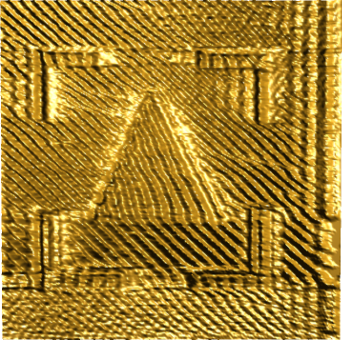
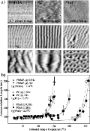
Nanoscale rippling on polymer surfaces induced by AFM manipulation
Beilstein J. Nanotechnol. 2015, 6, 2278–2289, doi:10.3762/bjnano.6.234
- wide spectrum of polymers has been investigated including polystyrene (PS) [13][20], poly(methyl methacrylate) (PMMA) [25], poly(ethylene terephthalate) (PET) [23], poly(vinyl acetate) (PVAc) [26] and poly(ε-caprolactone) (PCL) [23]. Recently, we have reviewed wear occurring on polymeric surfaces and
- rippling for the thin lamellar microphases forming in polystyrene/poly(ethylene oxide) block copolymer (PS-b-PEO) films [48]. In particular via an analysis of the ripple patterns, they have deduced local thermochemical parameters such as the melting temperature of PEO, the Tg of PS, the specific heat of PS
- one to several hundreds of nanometers can be reproduced on the surface of polycarbonate (PC), poly(methyl methacrylate) (PMMA), and polystyrene (PS) films. Authors have clearly shown that the ripple formation varies with T and polymer type (Figure 8a). The dependence on T has been characterized and




Selective porous gates made from colloidal silica nanoparticles
Beilstein J. Nanotechnol. 2015, 6, 2105–2112, doi:10.3762/bjnano.6.215
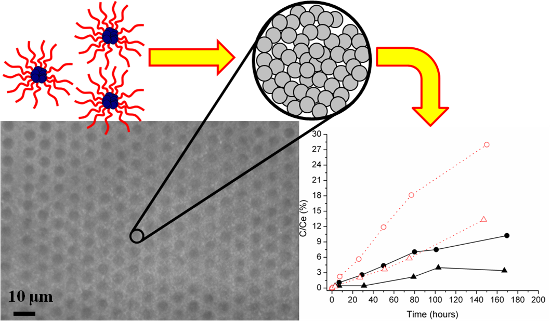
- were prepared by spin-coating deposition of colloidal silica nanoparticles on an appropriate macroporous substrate. Silica nanoparticles very homogenous in size were obtained by sol–gel reaction of a metal oxide silica precursor, tetraethyl orthosilicate (TEOS), and using polystyrene-block-poly


Temperature-dependent breakdown of hydrogen peroxide-treated ZnO and TiO2 nanoparticle agglomerates
Beilstein J. Nanotechnol. 2015, 6, 1897–1903, doi:10.3762/bjnano.6.193
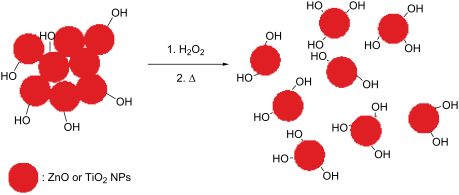
- common ways of increasing the NP dispersion in aqueous media. Polymers such as polystyrene, poly(methyl methacrylate) (PMMA), and poly(acrylic acid) are also widely used to obtain dispersed NPs in aqueous environments [7][8][9]. Although the use of surfactants can provide better dispersion, they




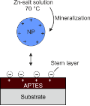
Template-controlled mineralization: Determining film granularity and structure by surface functionality patterns
Beilstein J. Nanotechnol. 2015, 6, 1763–1768, doi:10.3762/bjnano.6.180
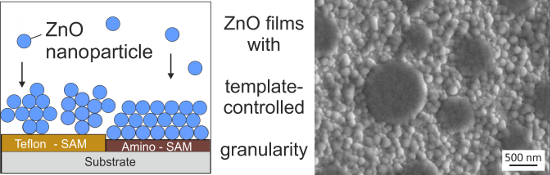
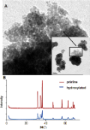
- a templating substrate – properties which, in turn, are key properties for nanodevices. Experimental Template preparation by polymer-blend lithography Polymer solution: Polystyrene (PS, Mw = 96 kg/mol, PDI 1.04) and poly(methyl methacrylate) (PMMA, Mw = 9.59 kg/mol, PDI 1.05) were purchased from

Polymer blend lithography for metal films: large-area patterning with over 1 billion holes/inch2
Beilstein J. Nanotechnol. 2015, 6, 1205–1211, doi:10.3762/bjnano.6.123
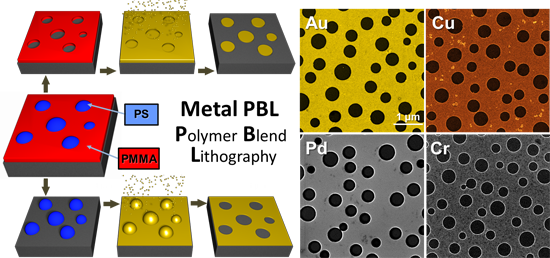
- polystyrene (PS) and poly(methyl methacrylate) (PMMA), dissolved in methyl ethyl ketone (MEK) is used. This system forms a purely lateral structure on the substrate at controlled humidity, which means that PS droplets are formed in a PMMA matrix, whereby both phases have direct contact both to the substrate
- plasmonic resonance; metal islands; metal nanostructures; metal polymer blend lithography (metal PBL); nano-patterned template; nanoscale discs; optical transmission; perforated metal film; polymer phase separation; poly(methyl methacrylate) (PMMA); polystyrene (PS); self-assembly; spin-coating; surface
- polystyrene (PS)/poly(methyl methacrylate) (PMMA) blend film from a blend solution ends with a purely lateral phase separation between the two immiscible polymers under controlled spin-coating parameters (see Figure 1a). As reported in our earlier publication, the ambient atmosphere (humidity), the molar mass


High sensitivity and high resolution element 3D analysis by a combined SIMS–SPM instrument
Beilstein J. Nanotechnol. 2015, 6, 1091–1099, doi:10.3762/bjnano.6.110
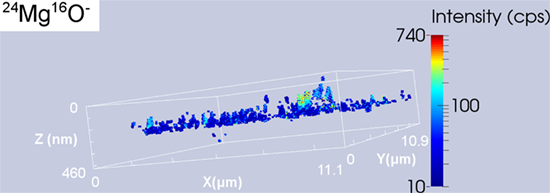
- spectrometry (SIMS) data was combined with topographical data from the scanning probe microscopy (SPM) module for five test structures in order to obtain accurate chemical 3D maps: a polystyrene/polyvinylpyrrolidone (PS/PVP) polymer blend, a nickel-based super-alloy, a titanium carbonitride-based cermet, a
- is widely used in the SIMS field. The 3D SIMS-AFM surface reconstructions are visualised using the SPIP™ software by Image Metrology [15], the ParaView software tool [16] as well as the MayaVI 2 software tool [17]. Results and Discussion PS/PVP polymer blend An annealed polystyrene (PS


Optimization of phase contrast in bimodal amplitude modulation AFM
Beilstein J. Nanotechnol. 2015, 6, 1072–1081, doi:10.3762/bjnano.6.108
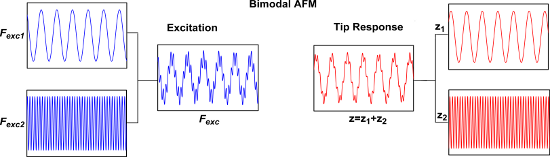
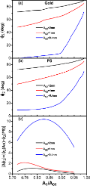
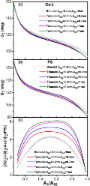
- –surface force is modelled by Equation 6 where a0 is a molecular distance (0.165 nm). Material and cantilever–tip parameters To study the phase contrast we have simulated the bimodal AM operation for two materials gold (Au) and polystyrene (PS). The values of the material properties needed to describe the


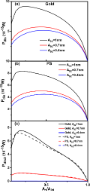
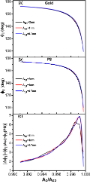
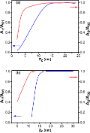

Automatic morphological characterization of nanobubbles with a novel image segmentation method and its application in the study of nanobubble coalescence
Beilstein J. Nanotechnol. 2015, 6, 952–963, doi:10.3762/bjnano.6.98
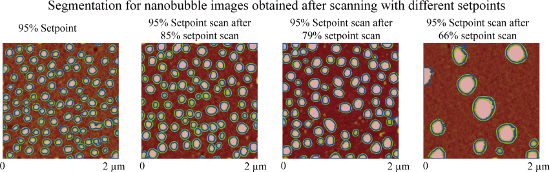
- hydrophobic/superhydrophobic surfaces [22][23][24][25][26][27]. The interaction between NBs and sample surfaces supporting them was also recently investigated. A phenomenon of NB-induced nanoindentions was reported by Wang et al. on an ultrathin polystyrene (PS) film in water [8], and was further confirmed by


Protein corona – from molecular adsorption to physiological complexity
Beilstein J. Nanotechnol. 2015, 6, 857–873, doi:10.3762/bjnano.6.88
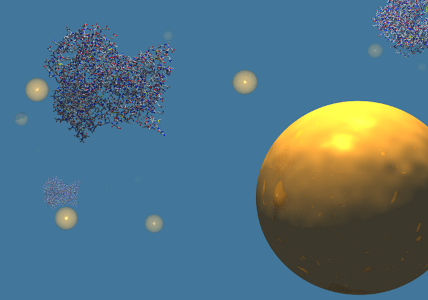
- understand the interactions between NPs and biological systems. Briefly, they used their LC-MS based method to measure time-resolved corona compositions on silica and polystyrene NPs in human serum. By using NPs of various sizes (diameters of about 35, 120, 140 nm), and surface functionalities (amine
- ): pPsNPs (polystyrene NP) and (b): nPsNPs (polystyrene NP) (c): NP coronae were classified into four groups by correlation analysis and relative values were normalized to the maximum amount across all time points for each protein. Protein groups PG I and PG II showed increasing or decreasing binding over



Mapping of elasticity and damping in an α + β titanium alloy through atomic force acoustic microscopy
Beilstein J. Nanotechnol. 2015, 6, 767–776, doi:10.3762/bjnano.6.79
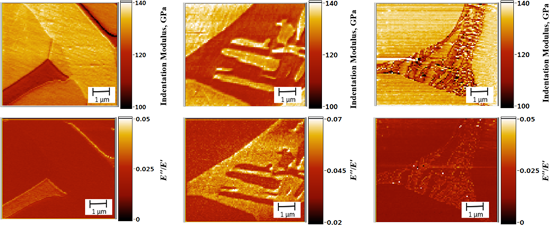
- films [8], NiMnGa films [9], Arabidopsis plant [10], polystyrene–propylene blends [11], nickel base alloys [12][13], ferritic steels [13], and metallic glasses [14]. Besides contact-resonance based methods, multi-frequency AFM techniques have also been used for measurement of elastic and damping


Simple approach for the fabrication of PEDOT-coated Si nanowires
Beilstein J. Nanotechnol. 2015, 6, 640–650, doi:10.3762/bjnano.6.65
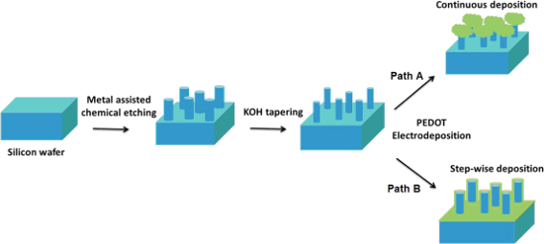
- poly(3,4-ethylenedioxythiophene)/polystyrene sulfonate (PEDOT/PSS) (a successful, commercial, conducting polymer) onto a SiNW array. This gave very promising results for photovoltaic cells based on this heterojunction, with a photon capture efficiency (PCE) of 6.72% [15]. The resulting SiNW/PEDOT/PSS
- -type Si substrate conductive in the anodic area. The deposition was controlled by a Solartron SI 1287 with a computer running CorrWare software. A non-aqueous medium was preferred over the classical sodium polystyrene sulfonate (NaPSS) aqueous environment in order to avoid the important silicon




A surface acoustic wave-driven micropump for particle uptake investigation under physiological flow conditions in very small volumes
Beilstein J. Nanotechnol. 2015, 6, 414–419, doi:10.3762/bjnano.6.41
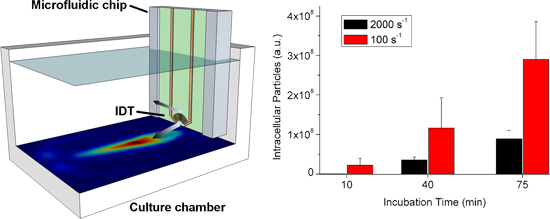
- was driven by an effective RF power of PSAW ≈ 19 dBm at its resonance frequency of 126 MHz. Flow characterization The SAW-induced flow pattern is characterized by scanning particle imaging velocimetry (SPIV). The flow is made visible by 3 μm polystyrene beads and the chamber is scanned in several x–y


Hematopoietic and mesenchymal stem cells: polymeric nanoparticle uptake and lineage differentiation
Beilstein J. Nanotechnol. 2015, 6, 383–395, doi:10.3762/bjnano.6.38
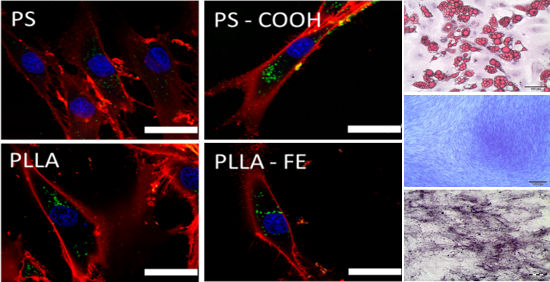
- capacity of hHSCs and hMSCs to obtain a deeper knowledge of the interaction of stem cells and nanoparticles. As model systems of nanoparticles, two sets of either bioinert (polystyrene without carboxylic groups on the surface) or biodegradable (PLLA without magnetite) particles were analyzed. Flow
- were chosen for this study: non-functionalized polystyrene (PS) and carboxy-functionalized polystyrene (PS–COOH). PS–COOH particles are biocompatible, but nondegradable particles whereas poly(L-lactide) particles without (PLLA) and with magnetite (PLLA–Fe) are biocompatible and biodegradable. All
- functionalized polystyrene nanoparticles as described in [18]) or by a combination of miniemulsion and emulsion/solvent evaporation techniques (PLLA nanoparticles without and with magnetite, as described in [19][20]). In all cases, SDS was used as a surfactant for the synthesis or formation of the nanoparticles


Biological responses to nanoscale particles
Beilstein J. Nanotechnol. 2015, 6, 380–382, doi:10.3762/bjnano.6.37

- used in this study were those of current, wide-spread technological importance, such as metals (e.g., silver, gold, platinum), oxides (e.g., silica, iron oxide, cerium oxide, manganese oxide), polymers (e.g., polystyrene) and quantum dots (II/VI semiconductors). Naturally occurring and industrially
Comparative evaluation of the impact on endothelial cells induced by different nanoparticle structures and functionalization
Beilstein J. Nanotechnol. 2015, 6, 300–312, doi:10.3762/bjnano.6.28
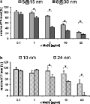
- internalization of Au@Fe3O4, Au@MnO and Fe3O4 particles (Figure 6). Caveolae-mediated uptake was blocked by the use of genistein, which was effectively demonstrated for anionic polystyrene nanoparticles in Hela cells [55]. Contrarily, Fernando et al. observed no changes for the internalization route of polymer
- to be a cell-type-specific process [61][62][63]. In this context, the mouse macrophages cell line J774A.1 used macropinocytosis and clathrin-mediated endocytosis for the uptake of 40 nm sized polystyrene nanoparticles, depending on the lack of caveolin-1 expression in this cell line. In contrast, the




Caveolin-1 and CDC42 mediated endocytosis of silica-coated iron oxide nanoparticles in HeLa cells
Beilstein J. Nanotechnol. 2015, 6, 167–176, doi:10.3762/bjnano.6.16
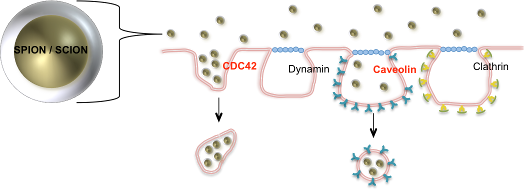
- human alveolar epithelial cells and polystyrene nanoparticles around 100 nm [38] as well as polymer coated gold nanoparticles with a core size around 13 nm [39]. On the other hand there are studies showing the uptake of different nanoparticles by HeLa cells such as quantum dots [35], PEG-PLA particles


Chemoselective silicification of synthetic peptides and polyamines
Beilstein J. Nanotechnol. 2015, 6, 103–110, doi:10.3762/bjnano.6.10
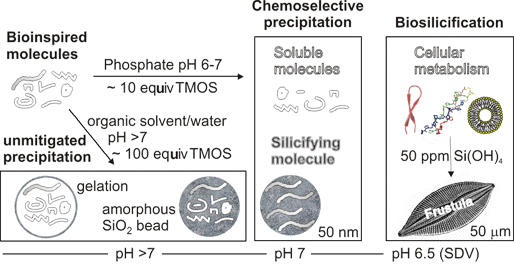
- molecules 2–5. CTC resin [chloro-(2'-chlorotrityl)polystyrene resin] served as a solid support and was functionalized directly with different amines [14]. The nucleophilicity of one nitrogen of 1,3-propylenediamine was annihilated by tritylation with CTC resin (Figure 3 upper row) while the other peripheral




Synthesis of boron nitride nanotubes and their applications
Beilstein J. Nanotechnol. 2015, 6, 84–102, doi:10.3762/bjnano.6.9
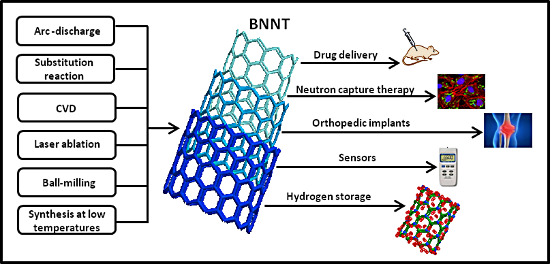
- and it might be worthwhile to further investigate it [71]. BNNT-grafted, poly(glycidyl methacrylate) and polystyrene brushes were prepared via atom transfer radical polymerization [72]. The resulting nanocomposite material was characterized using FTIR, TGA, SEM and TEM. The TEM images clearly show the




The fate of a designed protein corona on nanoparticles in vitro and in vivo
Beilstein J. Nanotechnol. 2015, 6, 36–46, doi:10.3762/bjnano.6.5
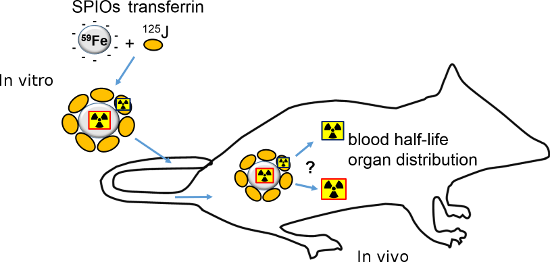
- was proven that the binding of proteins can also be mostly irreversible forming a very long-lasting “hard” corona in blood [34][36]. Using sulfonate- or carboxy-modified polystyrene latex beads and fluorescence-labeled transferrin, Milani et al. found a first layer of transferrin irreversibly bound to


Exploring plasmonic coupling in hole-cap arrays
Beilstein J. Nanotechnol. 2015, 6, 1–10, doi:10.3762/bjnano.6.1
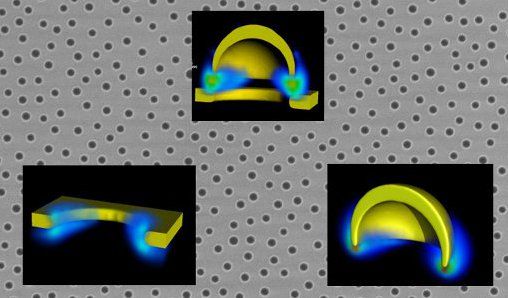
- needs of the fabrication process the gold structures are in contact with the polystyrene (PS) particle, glass substrate and/or the clean room tape which modify the local dielectric environment of the nanoparticle and have to be taken into account when understanding the spectral features. Materials White
- sulfate latex polystyrene particles with diameter of 0.11 µm were obtained from Invitrogen Denmark. Deionized water with 18.2 MΩ resistivity from a Millipore Milli-Q water system. Poly(methyl methacrylate) (PMMA) (Mw 120,000), Polystyrene (Mw 280,000), PDDA (poly(diallydimethylammonium chloride)) (Mw
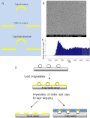
- carried out by exposure of the dry substrates to a 0.2% solution of polystyrene particles in deionized water for 120 s followed by rinsing in deionized water for 60 s and careful drying under N2 flow. Care was taken to dry quickly and to prevent rewetting of the surface. The assembled colloidal monolayer




High-frequency multimodal atomic force microscopy
Beilstein J. Nanotechnol. 2014, 5, 2459–2467, doi:10.3762/bjnano.5.255
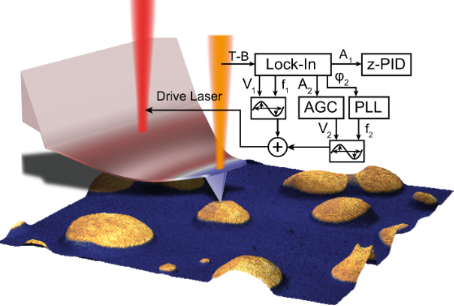
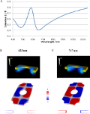
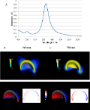
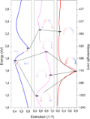
- squeeze-film damping of the cantilever, the latter of which is roughly constant while in feedback. We used a thin-film blend of polystyrene (PS) and poly(methyl methacrylate) (PMMA) as a sample (PS–PMMA–15M, Bruker AFM probes); its separation into soft and hard domains makes it a widely used standard for


Functionalized polystyrene nanoparticles as a platform for studying bio–nano interactions
Beilstein J. Nanotechnol. 2014, 5, 2403–2412, doi:10.3762/bjnano.5.250
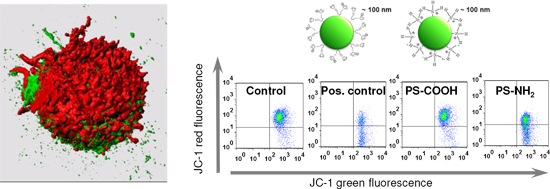
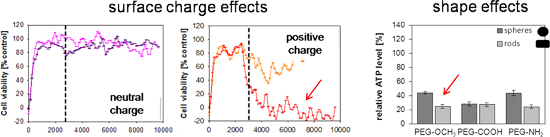
- biodistribution. Polystyrene does not degrade in the cellular environment and exhibits no short-term cytotoxicity. Because polystyrene nanoparticles can be easily synthesized in a wide range of sizes with distinct surface functionalizations, they are perfectly suited as model particles to study the effects of the
- particle surface characteristics on various biological parameters. Therefore, we have exploited polystyrene nanoparticles as a convenient platform to study bio–nano interactions. This review summarizes studies on positively and negatively charged polystyrene nanoparticles and compares them with clinically
- used superparamagnetic iron oxide nanoparticles. Keywords: amino groups; apoptosis; carboxyl groups; cell proliferation; leukemia cell lines; macrophages; mTOR; polystyrene nanoparticles; Review Applications of polystyrene Polystyrene, one of the most extensively used types of plastic [1], is an


Nanoparticle interactions with live cells: Quantitative fluorescence microscopy of nanoparticle size effects
Beilstein J. Nanotechnol. 2014, 5, 2388–2397, doi:10.3762/bjnano.5.248
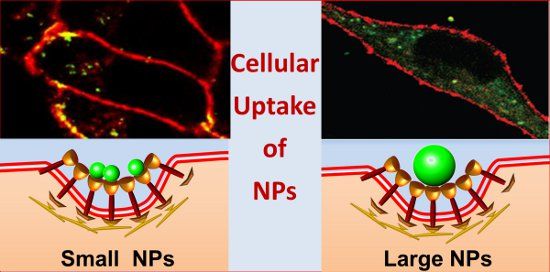
- with widely differing sizes. We have selected very small gold nanoclusters (AuNCs, diameter ≈3 nm) stabilized with dihydrolipoic acid (DHLA), semiconductor core-shell quantum dots (CdSe/ZnS, ≈10 nm) coated with D-penicillamine (DPA) and relatively large polystyrene (PS) NPs (≈100 nm) with different
- ], dihydrolipoic acid-coated gold nanoclusters (DHLA-AuNCs) [29], and fluorescently labeled polystyrene (PS) NPs with covalently attached carboxyl (–COOH, CPS) or amine (–NH2, NPS) surface functionalizations [30]. For comparison, we have also studied plain PS NPs, which were water-solubilized by physically
- clathrin-dependent pathways. In agreement with our results, other studies also showed that clathrin-dependent uptake plays an important role in the internalization of nanoparticles, e.g., silver NPs (diameter: 50 nm) [42] and polystyrene NPS (diameter: 40 nm) [43]. The presence of dynasore also reduced the


Interaction of dermatologically relevant nanoparticles with skin cells and skin
Beilstein J. Nanotechnol. 2014, 5, 2363–2373, doi:10.3762/bjnano.5.245
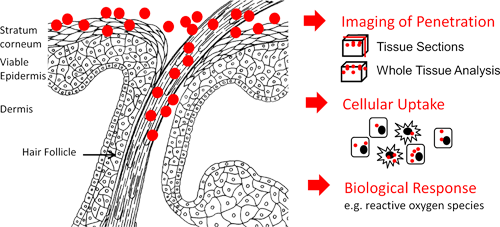
- groups, we observed penetration and cellular uptake of fluorescent polystyrene particles ranging from 40–200 nm in diameter after skin surface stripping in murine and human skin [11][12]. Furthermore, the internalization of a fluorescent vaccinia virus vector (diameter approx. 290 nm) could be
- epithelium. In studies with polystyrene particles as well as Modified Vaccinia Ankara Virus as an example for biologically and immunologically relevant particulates in the context of transcutaneous vaccination, we recently identified hair follicles as sites of nanomaterial translocation into the viable





