


Search results
Search for "saline" in Full Text gives 215 result(s) in Beilstein Journal of Nanotechnology. Showing first 200.
Streptavidin-coated gold nanoparticles: critical role of oligonucleotides on stability and fractal aggregation
Beilstein J. Nanotechnol. 2017, 8, 1–11, doi:10.3762/bjnano.8.1
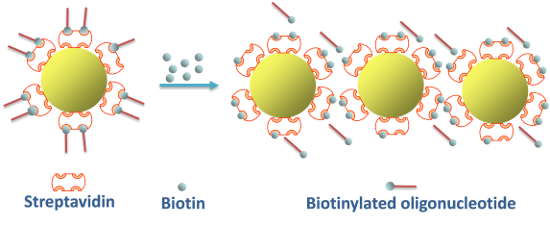
- genomic DNA [13], were purchased from Thermo Fisher Scientific, Inc. Streptavidin from Streptomyces avidinii, provided in lyophilized form in 10 mM PBS, pH 7.4, was purchased from Invitrogen (Italy). Mixed cellulose ester membrane filters were purchased from Whatman (UK). Phosphate buffered saline (PBS




A novel electrochemical nanobiosensor for the ultrasensitive and specific detection of femtomolar-level gastric cancer biomarker miRNA-106a
Beilstein J. Nanotechnol. 2016, 7, 2023–2036, doi:10.3762/bjnano.7.193
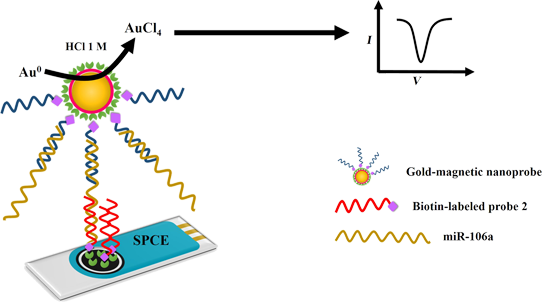
- . Afterward, the particles were exposed to 20 µg of streptavidin and the volume was adjusted to 500 µL with phosphate buffer saline (PBS) (0.01%, pH 7.4). The resulting suspension was incubated under shaking condition at room temperature for 1 h. The particles were washed and magnetically separated. In order


Facile fabrication of luminescent organic dots by thermolysis of citric acid in urea melt, and their use for cell staining and polyelectrolyte microcapsule labelling
Beilstein J. Nanotechnol. 2016, 7, 1905–1917, doi:10.3762/bjnano.7.182
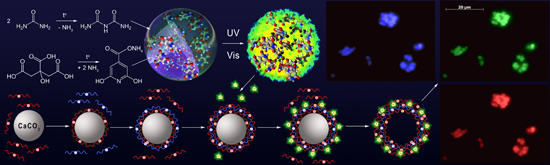
- was determined, according to the protocol of the manufacturer. Cellular staining We used two methods for visualizing cells by synthesized O-dots: without fixing, and with fixing, using a mixture containing 2.5% glutaraldehyde (Sigma) and 4% paraformaldehyde (Sigma) in phosphate-buffered saline (pH 7.2




Surface-enhanced infrared absorption studies towards a new optical biosensor
Beilstein J. Nanotechnol. 2016, 7, 1736–1742, doi:10.3762/bjnano.7.166
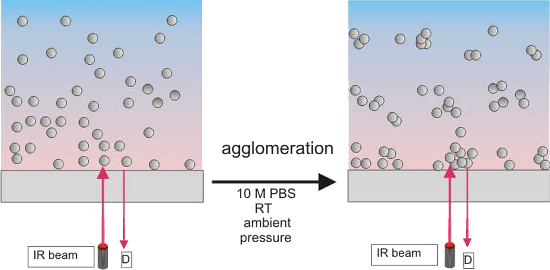
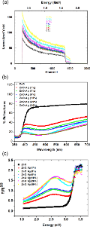
- added by aggregation of nanoparticles. Addition of concentrated phosphate buffered saline (PBS, 10× concentrate) to the water–nanoparticles system causes the aggregation due to the salt effect of PBS. Figure 1 shows the results obtained with the Teflon AF2400 sensor (GaAs etalon, 6 mm thickness, coated


Antitumor magnetic hyperthermia induced by RGD-functionalized Fe3O4 nanoparticles, in an experimental model of colorectal liver metastases
Beilstein J. Nanotechnol. 2016, 7, 1532–1542, doi:10.3762/bjnano.7.147
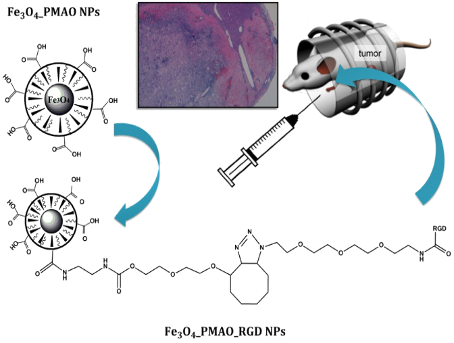
- of the Fe3O4@PMAO_RGD nanoparticles were administered through the splenic artery into the hepatic artery in a group of eight rats (MNpG), without observation of aggregation or arterial thrombosis in any of the animals. The other eight rats were intra-arterially infused with saline and used as
- were discharged. The study was developed on 16 rats that were randomly allocated into two groups: Saline group (SG): Eight rats to be infused intra-arterially with 1 mL of saline, to assess the effects of the infusion procedure on tumor implants. MNp group (MNpG): Eight rats to be infused intra
- microscope (Leika M651), a microcannula (0.014 in OD) was inserted through the splenic artery into the hepatic artery, and a Yasargil clip was placed to stabilize it. Using an infusion pump, 1 mL of saline or magnetic NP fluid (PBS with Fe3O4@PMAO_RGD, to be administered at a dose of 5 mg Fe/kg) was infused


Multiwalled carbon nanotube hybrids as MRI contrast agents
Beilstein J. Nanotechnol. 2016, 7, 1086–1103, doi:10.3762/bjnano.7.102
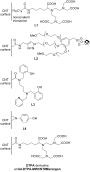
- reason in vivo studies on them are very limited [36]. The Gd-DTPA-oMWCNT#Marangon hybrid could reach a concentration of 5 mg/mL in physiological saline and, according to the study, this dispersibility is during circulation with the blood. Stability is usually assessed directly by visual evaluation of the
- samples in several, especially biocompatible, media, such as water, saline, buffers, plasma, serum, or even cell cultures [18][33][34]. Stable dispersion is obtained by at least several minutes of sonication. Wu proved the stability of SPIO/oMWCNT#Wu in water for two weeks [38]. Models with stem cells
- the dispersion stability of PM-b-PEG/SPIO@oMWCNT#Liu in phosphate-buffered saline (PSB) and in water, thus proving that the presence of the amphiphilic polymer PMETAC-b-PEGMA prevents sedimentation [33]. CoFe2O4/oMWCNT#Wu formed a stable aqueous dispersion for 2 weeks [39]. Maciejewska reported the



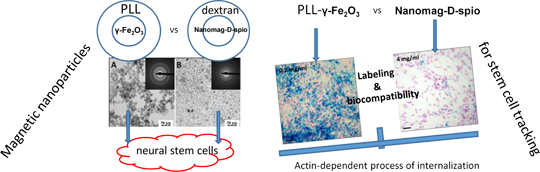
Improved biocompatibility and efficient labeling of neural stem cells with poly(L-lysine)-coated maghemite nanoparticles
Beilstein J. Nanotechnol. 2016, 7, 926–936, doi:10.3762/bjnano.7.84
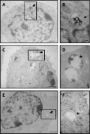
- ) cells. Prussian blue staining After labeling, nanoparticles were removed, cells were washed three times with phosphate buffered saline (PBS), fixed with 4% paraformaldehyde (Sigma-Aldrich) for 20 min, and stained with a 1:1 mixture of 10% K4Fe(CN)6 (Sigma-Aldrich) and 20% HCl for 20 min. Cells were




Reconstitution of the membrane protein OmpF into biomimetic block copolymer–phospholipid hybrid membranes
Beilstein J. Nanotechnol. 2016, 7, 881–892, doi:10.3762/bjnano.7.80
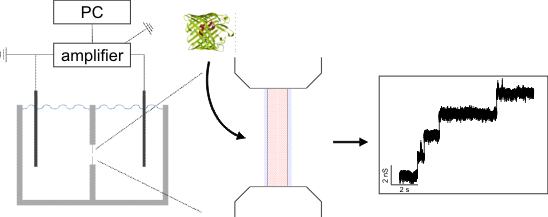
- to dry to get rid of organic solvent. Then, the chambers on both sides of the aperture were filled with degassed KCl saline (1 M KCl, 20 mM Tris (pH 8)) and 2 µL of PIPEO/DPhPC in chloroform was painted across the aperture with a fine brush. Successful self-assembly of a membrane was monitored by



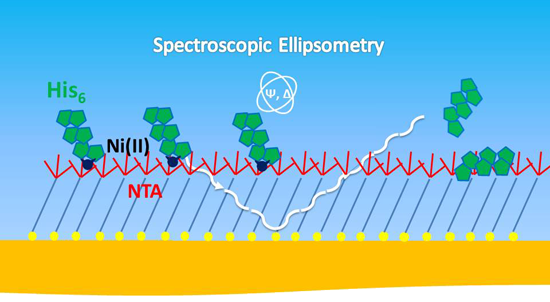
Investigating organic multilayers by spectroscopic ellipsometry: specific and non-specific interactions of polyhistidine with NTA self-assembled monolayers
Beilstein J. Nanotechnol. 2016, 7, 544–553, doi:10.3762/bjnano.7.48
- nanografted areas have been then imaged in soft contact mode in ethanol or in saline buffer (Tris-HCl 20 mM, NaCl 150 mM, pH 7.4) with commercial cantilevers (CSC38 Mikromasch, k = 0.03 N/m) at the minimum force detectable (0.1 nN). Images and data were analyzed with XEI (Park Instruments) and Igor Pro



Efficiency improvement in the cantilever photothermal excitation method using a photothermal conversion layer
Beilstein J. Nanotechnol. 2016, 7, 409–417, doi:10.3762/bjnano.7.36
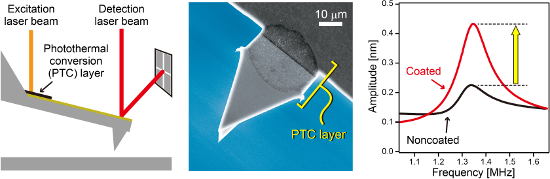
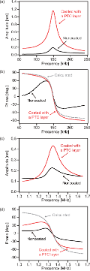
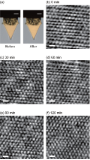
- of AC55 with a spring constant of ≈140 N/m were improved by 6.1 times and 2.5 times, respectively, by coating with a PTC layer. We experimentally demonstrate high stability of the PTC layer in liquid by AFM imaging of a mica surface with atomic resolution in phosphate buffer saline solution for more
- nominal spring constants of 42 and 85 N/m (PPP-NCHAuD and AC55). In addition, we demonstrate high stability of the PTC layer in liquid by long-term FM-AFM imaging of mica with atomic resolution in phosphate buffer saline (PBS) solution. Results and Discussion Preparation of PTC layers Figure 1 shows a



Early breast cancer screening using iron/iron oxide-based nanoplatforms with sub-femtomolar limits of detection
Beilstein J. Nanotechnol. 2016, 7, 364–373, doi:10.3762/bjnano.7.33
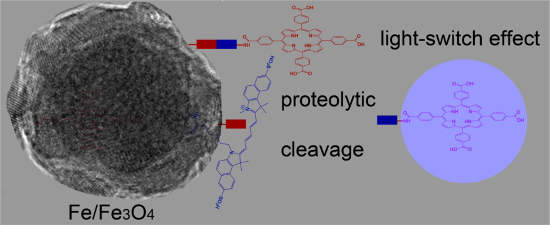
- (phosphate buffered saline, pH 7.4). The average Fe(0) core diameter is 13 ± 0.5 nm, the Fe3O4 shell thickness is 2.0 ± 0.5 nm (Figure 3). Using statistical modeling, the optimal number of TCPP units per nanoparticle was determined to be 35 ± 3, and the number of cyanine 5.5 units to be 50 ± 4 [31]. We have


Surface coating affects behavior of metallic nanoparticles in a biological environment
Beilstein J. Nanotechnol. 2016, 7, 246–262, doi:10.3762/bjnano.7.23
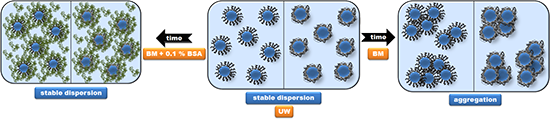
- saline and cell culture media [19][20][21][22][23][24][25][26][30]. The term aggregation indicates strongly bonded or fused particles and agglomeration indicates more weakly bonded particles. All of the obtained results for the agglomeration of differently coated AgNPs and SPIONs in BM are given in Table




Sonochemical co-deposition of antibacterial nanoparticles and dyes on textiles
Beilstein J. Nanotechnol. 2016, 7, 1–8, doi:10.3762/bjnano.7.1
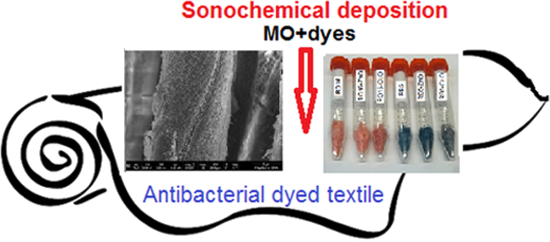
- properties and the dye fastness was studied for 72 h in saline solution aiming at medical applications. Keywords: antibacterial nanoparticles; coating stability; dyes; sonochemical coating; Introduction The preferred technique for coating with nanoparticles (NPs) in most scientific and industrial examples
- the dye structure. The crystalline structure of the metal oxides was examined by XRD (Bruker D8). Leaching experiments Possible leaching of the MO and dyes from the coated textile was tested in saline solution (0.9 % NaCl). A piece of fabric (70 mg) was placed in 10 mL saline and kept at 40 °C for 72
- h under agitation at 100 rpm. The leaching solutions were analyzed by ICP-OES for the presence of ions. The release of NPs into the saline was examined by a high-resolution transmission electron microscope (HRTEM), JEOL, operated at 200 kV. The difference in colorization of the textiles before and




Ultrastructural changes in methicillin-resistant Staphylococcus aureus induced by positively charged silver nanoparticles
Beilstein J. Nanotechnol. 2015, 6, 2396–2405, doi:10.3762/bjnano.6.246
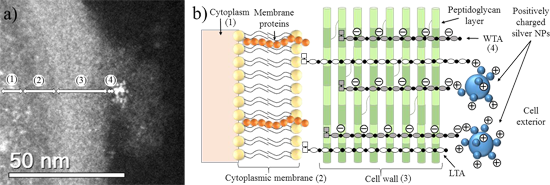
- as described in [56] and as suggested by the CLSI (2011). In brief, single colonies of a microbiological culture were grown in selective chromogenic medium plates (ChromAgar BD Biosciences). The colonies were diluted in saline solution and adjusted to 1.5 × 10⁸ CFU/mL. The bacterial suspensions were


Fabrication of hybrid graphene oxide/polyelectrolyte capsules by means of layer-by-layer assembly on erythrocyte cell templates
Beilstein J. Nanotechnol. 2015, 6, 2310–2318, doi:10.3762/bjnano.6.237
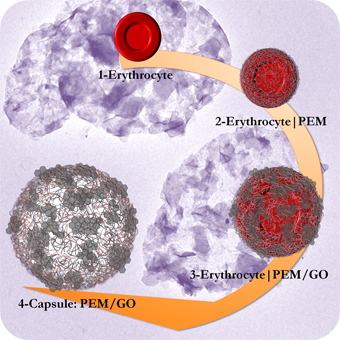
- 15 kg/mol), polystyrenesulfonate sodium salt, (PSS, Mw 70 kg/mol), sodium hypochlorite with active chlorine 13%, phosphate buffered saline 10× (PBS), glutaraldehyde solution grade II 25% in water, Hank´s balanced salt solution 10×, sodium chloride and graphite powder (<45 μm, ≥99.99% trace metals


Electroviscous effect on fluid drag in a microchannel with large zeta potential
Beilstein J. Nanotechnol. 2015, 6, 2207–2216, doi:10.3762/bjnano.6.226
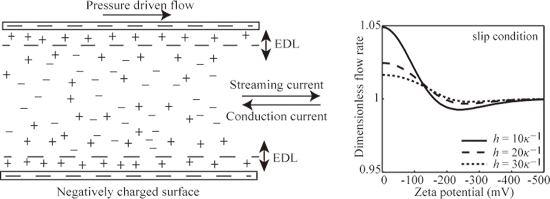
- deionized water and saline solutions using the colloidal probe atomic force microscopy technique. They also found that an increasing surface charge density results in a decreasing slip length. Thus, the coupling between the surface charge and slip should be considered when study the combined effect of EDL


Synthesis, characterization and in vitro biocompatibility study of Au/TMC/Fe3O4 nanocomposites as a promising, nontoxic system for biomedical applications
Beilstein J. Nanotechnol. 2015, 6, 1677–1689, doi:10.3762/bjnano.6.170
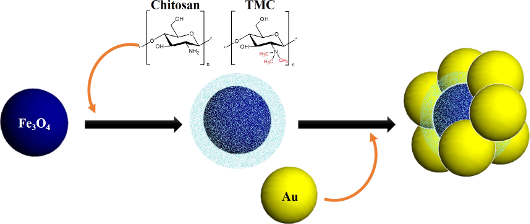
- sodium azide (0.01%) and phosphate buffered saline (PBS) (pH 7.2, 0.01 M), the product was stored at 4 °C in a dark bottle [38]. UV analysis of Au nanoparticles In this study, two modes of analysis were performed to compare the concentration of the Au nanoparticles and the rate at which they were




Atomic force microscopy as analytical tool to study physico-mechanical properties of intestinal cells
Beilstein J. Nanotechnol. 2015, 6, 1457–1466, doi:10.3762/bjnano.6.151
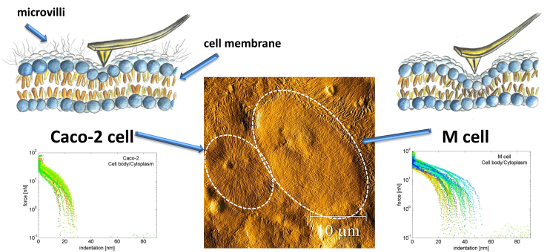
- as described earlier in literature [64]. In brief, cells were quickly rinsed in warm phosphate buffered saline (PBS; 0.01 M phosphate buffer, 0.15 M NaCl, pH 7.4) and fixed with 4% formaldehyde in PBS for 15 min at room temperature (RT). Next, cells were washed with PBS and permeabilized for 5 min at


Scalable, high performance, enzymatic cathodes based on nanoimprint lithography
Beilstein J. Nanotechnol. 2015, 6, 1377–1384, doi:10.3762/bjnano.6.142
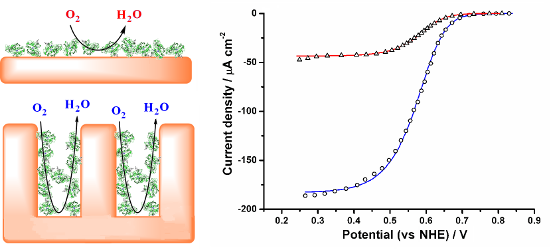
- gift from Amano Enzyme, Inc. (Nagoya, Japan). The specific activity of BOx, measured to be 140 U·mg−1, was determined using 5 mM 2,2'-azino-bis(3-ethylbenzthiazoline-6-sulfonic acid) (ABTS) as an electron donor dissolved in phosphate buffered saline (PBS; 50 mM phosphate buffer containing 0.15 M NaCl


PLGA nanoparticles as a platform for vitamin D-based cancer therapy
Beilstein J. Nanotechnol. 2015, 6, 1306–1318, doi:10.3762/bjnano.6.135
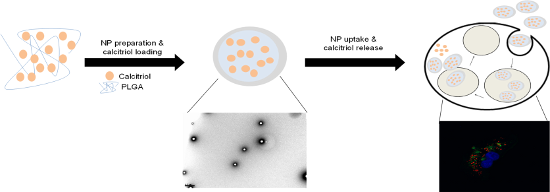
- (C6) (Mw 350.43), phosphate buffered saline (PBS), acetic acid, sulforhodamine B (SRB), trypan blue, ribonuclease A (RNase) from bovine pancreas (Mw 13,700; solution of 50% glycerol), propidium iodide (Mw 668.39, purity ≥ 94%) and Triton XTM-100 were purchased from Sigma-Aldrich (St. Louis, MO, USA


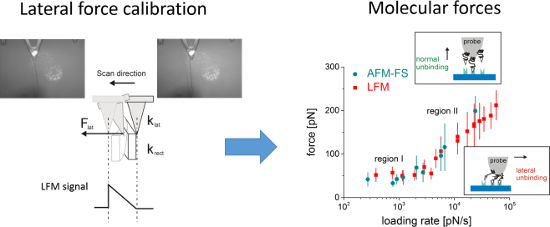
Probing fibronectin–antibody interactions using AFM force spectroscopy and lateral force microscopy
Beilstein J. Nanotechnol. 2015, 6, 1164–1175, doi:10.3762/bjnano.6.118
- fibronectin isolated from human plasma. Other reagents Other reagents used in the experiments were: (a) phosphate buffered saline (PBS, ICN Biomedicals, pH 7.4, containing 10 mM of PO42−, 137 mM of NaCl and 27 mM of KCl) was used to prepare all protein solutions; (b) 3-aminopropyltriethoxysilane (APTES, Sigma



Protein corona – from molecular adsorption to physiological complexity
Beilstein J. Nanotechnol. 2015, 6, 857–873, doi:10.3762/bjnano.6.88
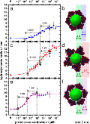
- the polymer shell), by live HeLa cells in the presence or absence of human transferrin (TF) and human serum albumin (HSA) in phosphate-buffered saline (PBS) medium. They studied the uptake of the NPs by quantitative confocal fluorescence microscopy. For comparison, they also studied the cellular



Novel ZnO:Ag nanocomposites induce significant oxidative stress in human fibroblast malignant melanoma (Ht144) cells
Beilstein J. Nanotechnol. 2015, 6, 570–582, doi:10.3762/bjnano.6.59
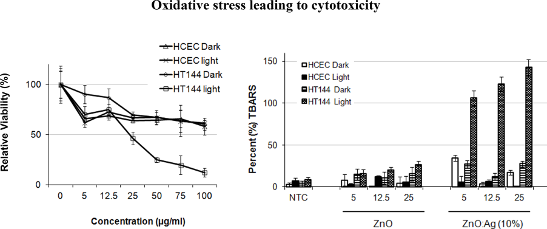
- washed and harvested in ice-cold phosphate buffer saline at 4 °C. Cells were then lysed in cell lysis buffer (2.5 M NaCl, 10 mM Trizma-base at pH 10.0, 100 mM Na2EDTA, 1% sodium sarcosinate, 1% Triton X-100, 10% DMSO) and centrifuged at 15000g for 10 min at 4 °C. The supernatant was collected and




Pulmonary surfactant augments cytotoxicity of silica nanoparticles: Studies on an in vitro air–blood barrier model
Beilstein J. Nanotechnol. 2015, 6, 517–528, doi:10.3762/bjnano.6.54
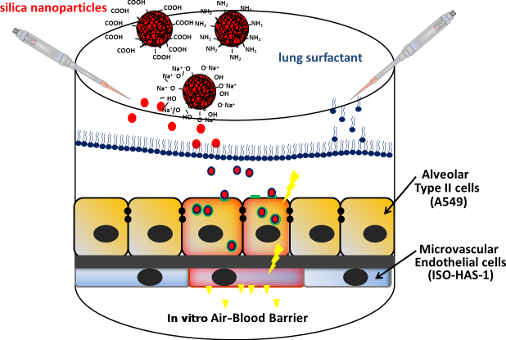
- surfactant substitution and originated from bovine alveolar lavage. It is composed of surfactant proteins SP-B and SP-C as well as phospholipids. It was suspended in PBS (phosphate-buffered saline) at a concentration of 40 mg/mL. Cell culture: ISO-HAS-1 (human microvascular endothelial cell line, originated


Hematopoietic and mesenchymal stem cells: polymeric nanoparticle uptake and lineage differentiation
Beilstein J. Nanotechnol. 2015, 6, 383–395, doi:10.3762/bjnano.6.38
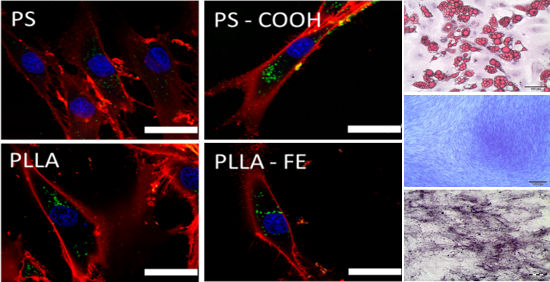
- for 24 h and analyzed by flow cytometry. Flow cytometry Particle uptake, cell viability, and CD marker staining were measured with a flow cytometer (FACS Canto II, BD, Heidelberg, Germany). The cells were washed with phosphate buffered saline without calcium (PBS−, Invitrogen) and incubated with 28.6





