Search results
Search for "semiconductor" in Full Text gives 647 result(s) in Beilstein Journal of Nanotechnology. Showing first 200.
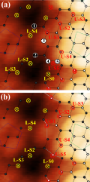
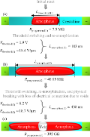
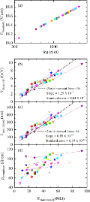
Direct observation of the Si(110)-(16×2) surface reconstruction by atomic force microscopy
Beilstein J. Nanotechnol. 2020, 11, 1750–1756, doi:10.3762/bjnano.11.157
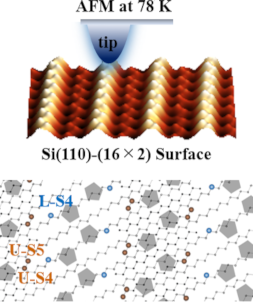
- high-performance metal–oxide–semiconductor field-effect transistors (p-MOSFETs) [1][2] because the hole mobility of Si(110) is twice that of the other Si planes [3]. For surface science research, Si(110) has been used as a template substrate for self-assembled nanowires [4][5][6], nanomeshes [7], and



Seebeck coefficient of silicon nanowire forests doped by thermal diffusion
Beilstein J. Nanotechnol. 2020, 11, 1707–1713, doi:10.3762/bjnano.11.153
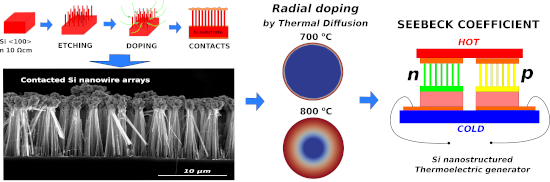
- through a diffusion process, based on a solid source (see Methods section). The main point is that the diffusion process must be performed in a single step (predeposition step), because a drive-in step, typical of the standard diffusion processes currently applied in the semiconductor industry, would


Functional nanostructures for electronics, spintronics and sensors
Beilstein J. Nanotechnol. 2020, 11, 1704–1706, doi:10.3762/bjnano.11.152

- development of microelectronics and computers, based on traditional semiconductor chips, has followed the empirical Moore’s Law (formulated by one of the founders of Intel Corporation, Gordon Moore) for over four decades. Since 1965, Intel has designed chips that fit twice as many transistors into the same
- , Pentium II, Pentium III and Pentium IV, described the stagnation of semiconductor technology as follows [1]: “Officially Moore’s Law ends in 2020 at 7 nm, but nobody cares, because 11 nm isn’t any better than 14 nm, which was only marginally better than 22 nm … thermal dissipation issues thoroughly
- consumption, and at the same time, limits the clock frequency of semiconductor computers to 4–5 GHz. This frequency limit occurs due to temperature limitations posed at the integration level and the switching rate of transistors. It is important to realize that cryogenic cooling of semiconductor chips will
The influence of an interfacial hBN layer on the fluorescence of an organic molecule
Beilstein J. Nanotechnol. 2020, 11, 1663–1684, doi:10.3762/bjnano.11.149
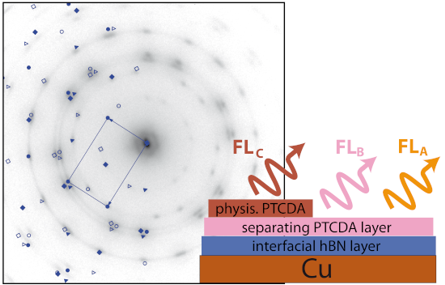
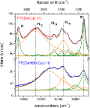
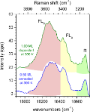
- pumped cw semiconductor laser (Coherent Sapphire LP UBB CDRH) with a wavelength of 458 nm (photon energy of 2.698 eV or 21,816 cm−1) and P = 50 mW. To block the laser light from entering the spectrometer, a long-pass filter (cut-off at 475 nm) was positioned in front of the entrance slit of the






Amorphized length and variability in phase-change memory line cells
Beilstein J. Nanotechnol. 2020, 11, 1644–1654, doi:10.3762/bjnano.11.147
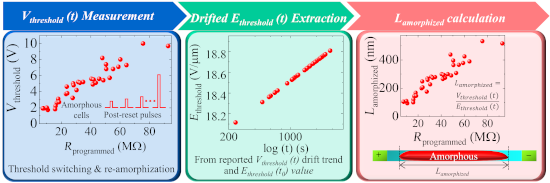
- voltage was monitored with the channel 1 of the oscilloscope and the voltage across the parallel combination of two 50 Ω resistors was monitored with channels 3 and 4 to extract the current through the cell. A semiconductor parameter analyzer (Agilent 4156C) was used for low-voltage read operations with a




A self-powered, flexible ultra-thin Si/ZnO nanowire photodetector as full-spectrum optical sensor and pyroelectric nanogenerator
Beilstein J. Nanotechnol. 2020, 11, 1623–1630, doi:10.3762/bjnano.11.145
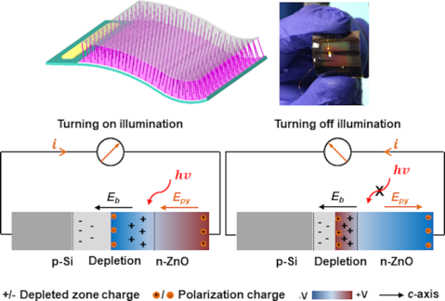
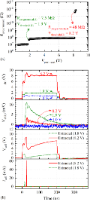
- Liang Chen Jianqi Dong Miao He Xingfu Wang Institute of Semiconductor Science and Technology, South China Normal University, Guangzhou 510631, China School of Physics and Optoelectronic Engineering, Guangdong University of Technology, Guangzhou 510006, China 10.3762/bjnano.11.145 Abstract In this


PTCDA adsorption on CaF2 thin films
Beilstein J. Nanotechnol. 2020, 11, 1615–1622, doi:10.3762/bjnano.11.144
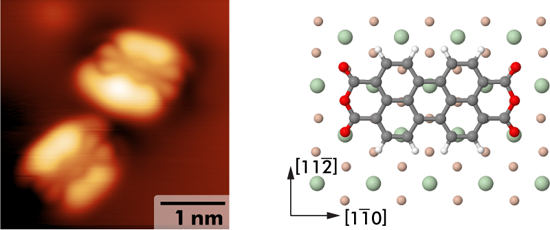
- of 3,4,9,10-perylene tetracarboxylic dianhydride (PTCDA) on metal [6][7][8][9][10][11][12], semiconductor [13], and insulator surfaces [14][15][16][17][18][19], as well as the deposition on conducting surfaces covered by insulating thin films [20][21][22][23][24] or two-dimensional materials [25]. It
- partially KBr-covered Ag(111) surfaces [24] as well as for cyanoporphyrin molecules on KBr-covered Cu(111) surfaces [26]. Here, the understanding of molecular adsorption on insulating thin films is extended by studying an insulator-on-semiconductor system, namely CaF2 thin films grown on Si(111) surfaces


Oxidation of Au/Ag films by oxygen plasma: phase separation and generation of nanoporosity
Beilstein J. Nanotechnol. 2020, 11, 1608–1614, doi:10.3762/bjnano.11.143
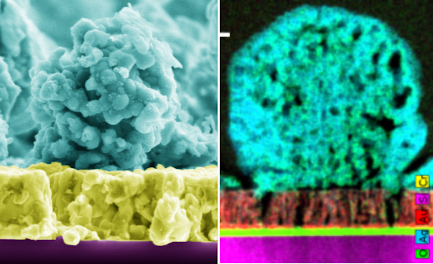
- oxygen, solid-state diffusion in metal alloys as well as the Kirkendall effect. The nanoporous microspheres generated by the silver oxidation within the Au/Ag alloy film might have potential applications to the field of gas sensors and catalysis since those require nanoporous semiconductor materials with


High-responsivity hybrid α-Ag2S/Si photodetector prepared by pulsed laser ablation in liquid
Beilstein J. Nanotechnol. 2020, 11, 1596–1607, doi:10.3762/bjnano.11.142
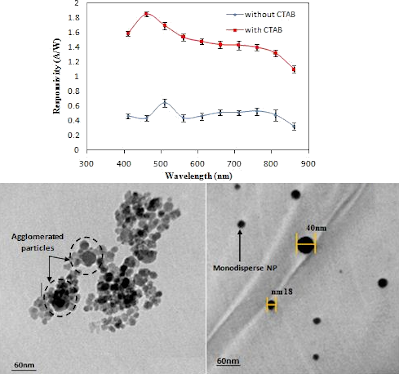
- Ag2S nanoparticles, while the origin of carbon is CTAB. Hall measurement revealed that the Ag2S had a negative Hall coefficient, indicating that it is an n-type semiconductor. This finding agrees well with [39]. Figure 11 shows the dark I–V characteristics of an n-Ag2S/p-Si heterojunction prepared




Optically and electrically driven nanoantennas
Beilstein J. Nanotechnol. 2020, 11, 1542–1545, doi:10.3762/bjnano.11.136
- SERS signal under operation conditions. Moving further towards the (near-) infrared regime, different antennas are employed in a surface-enhanced infrared absorption (SEIRA) configuration [45]. Here the aim is to detect low concentrations of semiconductor nanocrystals through maximum local enhancement
A wideband cryogenic microwave low-noise amplifier
Beilstein J. Nanotechnol. 2020, 11, 1484–1491, doi:10.3762/bjnano.11.131
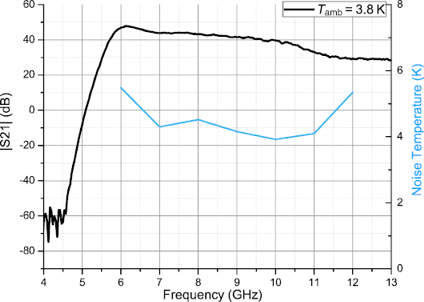
- of liquid helium [11][12][13][14][15][16] and are, usually, placed at the 4 K stage of dilution refrigerators. These amplifiers can be implemented using two modern semiconductor transistor technologies, that is, high-electron-mobility transistor (HEMT) technology, including GaAs and InP, and SiGe
- than 30 dB in the frequency range from 8 to 12 GHz. The evolving semiconductor technology provides the modern market with state-of-art commercially available transistors to substitute old types. A new type of commercially available transistors was used for the cLNA presented in this paper. A




Antimicrobial metal-based nanoparticles: a review on their synthesis, types and antimicrobial action
Beilstein J. Nanotechnol. 2020, 11, 1450–1469, doi:10.3762/bjnano.11.129

- been applied in the food packaging industry and also in the medical field, as shown in Table 3. ZnO is a semiconductor metal oxide with significant antimicrobial properties that can be further improved when applied as a nanomaterial. ZnO NPs have potential application in food preservation as well as


Wafer-level integration of self-aligned high aspect ratio silicon 3D structures using the MACE method with Au, Pd, Pt, Cu, and Ir
Beilstein J. Nanotechnol. 2020, 11, 1439–1449, doi:10.3762/bjnano.11.128
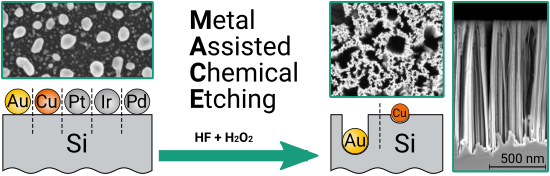
- metal–insulator–semiconductor or metal–insulator–metal capacitors with a high effective area on a small footprint. The high surface area of a silicon nanowire array can be used to fabricate ion-sensitive field-effect transistors (ISFETs) with a high signal-to-noise ratio. An ISFET is a pH sensing
- MEMS process flow. This means that the etched silicon structures have to be fabricated within a pre-defined area of the die with common semiconductor fabrication processes. These nanostructure templates are the basis for a further processing towards integrated functional systems. Results and Discussion
- The fabrication of the wafer-level integrated nanostructure templates is divided into two main parts, i.e., the formation of the noble metal nanoparticles, and the subsequent silicon wet etching process. The subsidiary process steps are standard semiconductor processes and therefore not analysed and


Impact of fluorination on interface energetics and growth of pentacene on Ag(111)
Beilstein J. Nanotechnol. 2020, 11, 1361–1370, doi:10.3762/bjnano.11.120
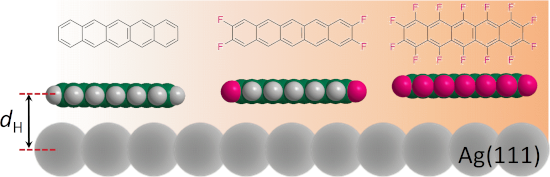
- ]. Fluorination is a viable way to change the ionization energies (IEs) of organic semiconductor thin films [4][5][6], which are an important parameter for energy level alignment [7][8]. Moreover, at organic–metal interfaces, fluorination is believed to decrease the coupling strength between the substrate and the


Controlling the proximity effect in a Co/Nb multilayer: the properties of electronic transport
Beilstein J. Nanotechnol. 2020, 11, 1336–1345, doi:10.3762/bjnano.11.118
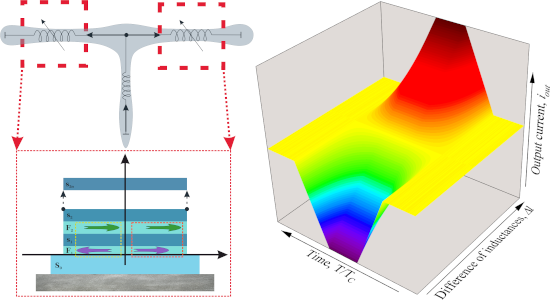
- Contrary to traditional semiconductor basic elements (transistors), tunable kinetic inductors (TKIs), as well as nonlinear elements (Josephson junctions), are not fabricated in a substrate. This allows for 3D topology benefits, which are especially important for deep ANNs. The F1/s/F2/s superlattice, in
- interface of the bulk semiconductor electrode, with thickness LS = 10ξS. In addition, we considered the proximity effect of an artificial ferromagnetic material (AFM), consisting of alternating thin superconducting (LS = 1ξS) and ferromagnetic layers, with an exchange energy of H = 10TC. In an AFM, every
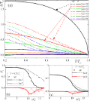
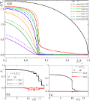
- ). The main source of the superconductivity is the bulk semiconductor layer, while the thin s-layers only slightly support the pairing amplitude coming from the source. Figure 2b shows the spatial distributions of the anomalous Green’s function at the first (n = 0) Matsubara frequency, F1(x), for



Effect of localized helium ion irradiation on the performance of synthetic monolayer MoS2 field-effect transistors
Beilstein J. Nanotechnol. 2020, 11, 1329–1335, doi:10.3762/bjnano.11.117
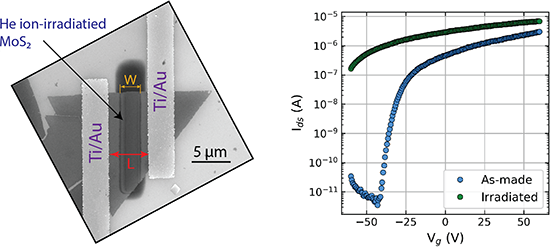
- the deposited metal–semiconductor contact interface. Recent work has shown that irradiation-induced heating of the electrode area can reverse majority carrier polarity in MoTe2 [31], while pre-treatment with a broad-beam argon ion source can decrease the contact resistance of Ni-MoS2 two-fold [32]. In
- -probe geometry. Thus, the absolute values of μ extracted here (approx. 1 cm2 V−1 s−1) are limited by the contact resistance between the gold and the MoS2 [40]. We now consider the effect of irradiating the metal–semiconductor interface. We treated two FETs within each IR regime. For one of the devices
- the interface at this delivered dose. It may be expected that an increase in the Schottky barrier height will occur if the normally pinned Fermi level [42] is now a function of the physical state of the beam-altered metal–semiconductor interface. Ion beam pre-treatment of the contact region before


Structural and electronic properties of SnO2 doped with non-metal elements
Beilstein J. Nanotechnol. 2020, 11, 1321–1328, doi:10.3762/bjnano.11.116
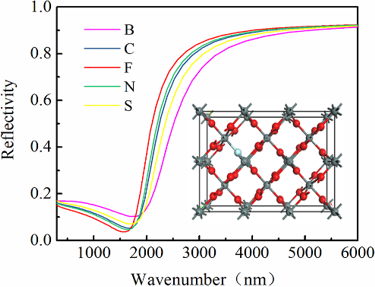
- ) [1][2][3]. TCFs serve as the front electrode of thin film solar cells. Up to now, the solar energy conversion efficiency is about 23.3% [4], and it is important to increase the photovoltaic power generation efficiency, as well as the performance of the front electrode. The intrinsic semiconductor
- successfully prepared from N-doped SnO2 films. Through Al/N co-doping, a p-type SnO2 semiconductor thin film with excellent electrical properties was prepared. The resistivity, hole concentration and hole mobility were 7.1 × 10⁻³ Ω·cm, 6.24 × 1019 cm−3 and 14.1 cm2·V−1·s−1, respectively [8]. Doping SnO2 with F
- band minimum (CBM) and the valence band maximum (VBM) are located at the same G point, which is consistent with the calculation results [14][15] indicating that SnO2 is a direct bandgap semiconductor. In this work, the calculated bandgap is 1.28 eV, which is consistent with previous calculation results




Cryogenic low-noise amplifiers for measurements with superconducting detectors
Beilstein J. Nanotechnol. 2020, 11, 1316–1320, doi:10.3762/bjnano.11.115
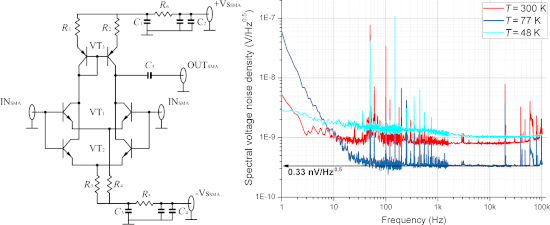
- superconducting sensors and semiconductor detectors [19][20]. Schematic of the 0–120 kHz cryogenic LNA based on paired SSM2210 transistors. The important component values are: R1 = R2 = 100 Ω, R3 = R4 = 4.3 kΩ, C5 = 470 nF. The capacitors are realized in 0402 package (C0G type) and the resistors are realized as


Revealing the local crystallinity of single silicon core–shell nanowires using tip-enhanced Raman spectroscopy
Beilstein J. Nanotechnol. 2020, 11, 1147–1156, doi:10.3762/bjnano.11.99
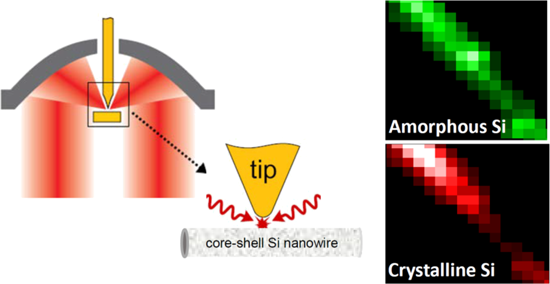
- standing topics of various investigations because silicon is still the most widely used semiconductor material for a broad range of micro- and nano-electromechanical systems, microelectronics, and photovoltaics [1][2]. Silicon nanostructures, such as bottom-up-grown nanowires [3], were also synthesized
- serving as multifunctional platforms for field-effect transistors [4][5][6], photovoltaic devices [7][8][9][10] and miniaturized chemical sensors [5][11][12]. A key element for many of those devices are high-quality nanometer-scale semiconductor junctions, such as pn-junctions that ensure the intended


Excitonic and electronic transitions in Me–Sb2Se3 structures
Beilstein J. Nanotechnol. 2020, 11, 1045–1053, doi:10.3762/bjnano.11.89
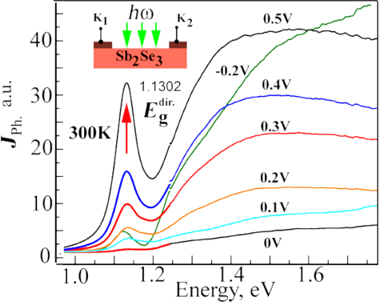
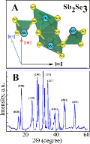
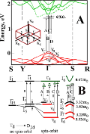
- triselenide; band structure; excitons; optical spectroscopy; reflection and absorption spectra; Introduction Antimony selenide (Sb2Se3) is an inorganic semiconductor compound with interesting photoelectric properties. This material has a high absorption coefficient (≈105 cm−1) in the region of maximum solar
- for lower temperatures. Sb and Se, at a semiconductor purity В5 level (99.9999%), were used as the initial precursors and placed into a container that was evacuated to a residual pressure of 10−5 mmHg. For a thorough mixing of the reacting components in the liquid phase, a rocking device and an
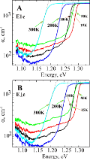
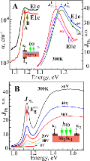
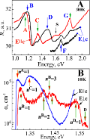
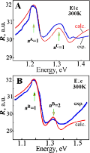
- crystal lattice, Sb2Se3 is a 2D semiconductor with a layered structure in which the Sb and Se atoms are connected with three other atoms of the opposite type, which in turn are connected within the crystal through weak secondary bonds. Figure 2 shows the absorption spectra of the Sb2Se3 crystal (thickness


A new photodetector structure based on graphene nanomeshes: an ab initio study
Beilstein J. Nanotechnol. 2020, 11, 1036–1044, doi:10.3762/bjnano.11.88
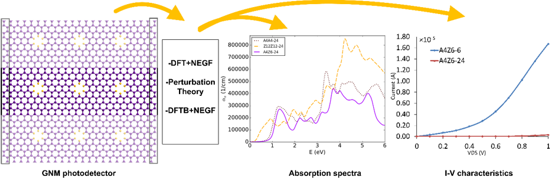
- of GNRs with precise width are challenges concerning these materials. In addition to the electrical properties of GNRs, the use of these materials for the manufacturing of optical detectors has been extensively investigated. Another graphene semiconductor material are graphene nanomeshes (GNMs). The
- used different atoms such as nitrogen, fluorine, and hydrogen to passivate the edge atoms, which yielded different results for the gap size. All these challenges make the production of GNR-based semiconductor materials difficult. However, these challenges are somewhat alleviated in GNMs. Table 1


Highly sensitive detection of estradiol by a SERS sensor based on TiO2 covered with gold nanoparticles
Beilstein J. Nanotechnol. 2020, 11, 1026–1035, doi:10.3762/bjnano.11.87
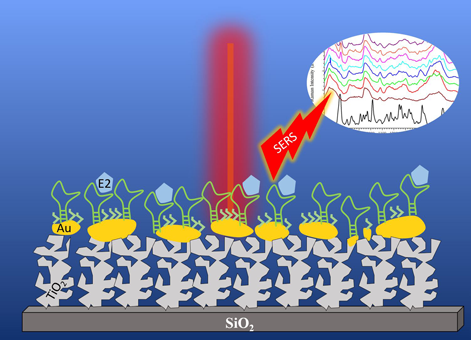
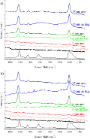
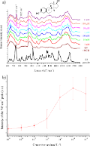
- use of composite systems of dielectrics (TiO2, ZnO) and metallic NPs has gathered increasing attention regarding SERS applications, because the plasmonic enhancement provided by metallic NPs can be combined with the optical properties of the semiconductor such as light trapping, scattering, and
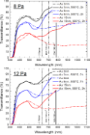
- abovementioned influence of the TiO2 surface on the size of the Au NPs (and consequently their plasmonic properties), a first hint can be found in the optical properties of semiconductor nanostructured materials. Their light-scattering, light-trapping and antireflection abilities, have already been reported to



Electrochemical nanostructuring of (111) oriented GaAs crystals: from porous structures to nanowires
Beilstein J. Nanotechnol. 2020, 11, 966–975, doi:10.3762/bjnano.11.81
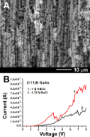
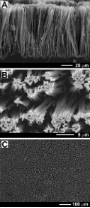
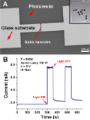
- Electrochemical technology became an established and cost-effective approach for the preparation of porous semiconductor matrices and arrays of nanowires with tailored architecture at the submicrometer scale [1][2][3]. Semiconductor nanotemplates provide many possibilities for nanofabrication through
- electrochemically filling the pores with metallic nanostructures such as nanowires or nanotubes, resulting in the production of 2D metallo-semiconductor interpenetrating networks, which are promising for various nanoelectronic, optoelectronic, plasmonic, and nanophotonic applications [4][5][6]. While the growth of
- nanostructures, including nanowires. Semiconductor nanowires, particularly III–V compound nanowires, show potential for their use as active components in solar cells [7][8][9][10], photodetectors [11], light-emitting diodes [12], transistors [13], and other applications. A uniform array of parallel nanowires





Band tail state related photoluminescence and photoresponse of ZnMgO solid solution nanostructured films
Beilstein J. Nanotechnol. 2020, 11, 899–910, doi:10.3762/bjnano.11.75
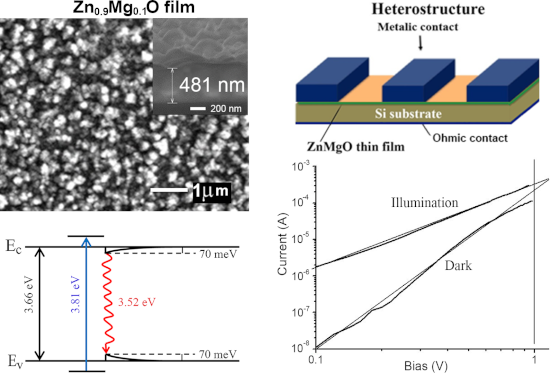
- ; photoluminescence; photosensitivity; spin coating; thin films; ZnMgO semiconductor alloy; Introduction The ZnMgO solid solution system is of interest due to the possibility to tailor many important physical properties by varying their composition. This alloy system covers a wide ultraviolet (UV) spectral range
- ][25][26][27][28][29][30][33][34]. The choice of the substrate is determined by the application. In particular, glass, quartz or sapphire substrates are usually used for photodetectors in the metal–semiconductor–metal (MSM) configuration, including Schottky photodetectors [1][19][24][25][28][29][30][31
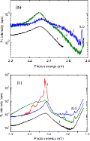
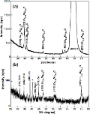
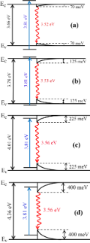
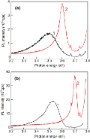
- large band tails with both the incident and scattered photons in the Zn0.60Mg0.40O sample. The prepared ZnMgO thin films were tested for photodetector applications in the metal–semiconductor–metal (MSM) design configuration with coplanar metal Pd contacts in our previous paper [29]. The films

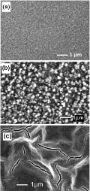
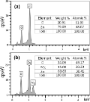
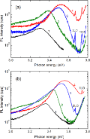
Transition from freestanding SnO2 nanowires to laterally aligned nanowires with a simulation-based experimental design
Beilstein J. Nanotechnol. 2020, 11, 843–853, doi:10.3762/bjnano.11.69

- Wagner and Ellis about the possibility to use a vapor–liquid–solid (VLS) process to grow semiconductor nanowires (NWs), significant work has been published on the production of nanowires [1][2]. It was demonstrated that NWs of different materials can be grown on different substrates and can be