Search results
Search for "size" in Full Text gives 2107 result(s) in Beilstein Journal of Nanotechnology. Showing first 200.
A formulation containing Cymbopogon flexuosus essential oil: improvement of biochemical parameters and oxidative stress in diabetic rats
Beilstein J. Nanotechnol. 2025, 16, 617–636, doi:10.3762/bjnano.16.48
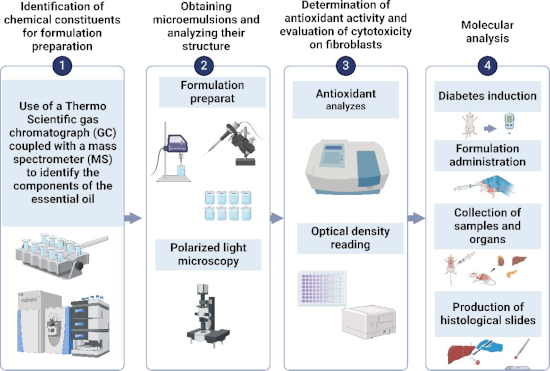
- obtained after consulting the corresponding pseudoternary phase diagram and showed stability, isotropy, Newtonian behavior, nanometric size (15.2 nm), and pH 4.2. Both EOCF and the ME showed high antioxidant activity, but the ME resulted in greater antioxidant activity, potentiating the activity of
- stabilized by surfactants, with a very small droplet size (<100 nm), which facilitates their permeation through membranes [9]. In addition, MEs showed increased anti-inflammatory activity, reduced irritation, and improved the stability of EOs in previous studies [10][11]. Thus, from an innovative perspective
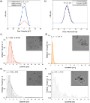
- characterizing nanostructured systems such as MEs, including droplet size, optical properties, and rheological profile. M7-EOCF therefore underwent tests to investigate these parameters. First, the M7-EOCF sample was analyzed by dynamic light scattering, which showed that the system had an average hydrodynamic




Polyurethane/silk fibroin-based electrospun membranes for wound healing and skin substitute applications
Beilstein J. Nanotechnol. 2025, 16, 591–612, doi:10.3762/bjnano.16.46
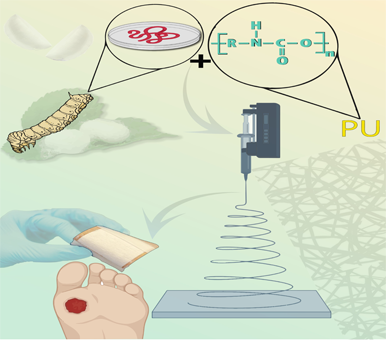
- ]. Nanofibers are considered promising materials because of their size and structure, making them suitable for drug delivery, tissue engineering, tissue scaffolding, and other biomedical applications [12]. They exhibit distinct chemical and physical properties that distinguish them from macroscale structures
- electrospun polymer fibers is affected by electric field intensity, solution viscosity, charge density of the solution, and solution supply rate [56]. The size of the fibers also affects the performance of electrospun nanofiber composites [57]. Numerous polymers and precursors including polylactic acid, PU
- cellular responses. These membranes can be tailored with a diverse range of fibers, weights, densities, porosities, pore size distributions, chemical compositions, morphologies, hardness levels, and elastic properties [65][66]. Importantly, electrospun membranes and the ECM share substantial structural and





Feasibility analysis of carbon nanofiber synthesis and morphology control using a LPG premixed flame
Beilstein J. Nanotechnol. 2025, 16, 581–590, doi:10.3762/bjnano.16.45
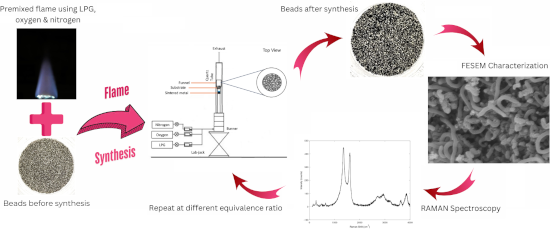
- nucleation rate, which in turn increases the catalyst particle size and the amount of free carbon atoms, producing CNFs with larger diameters and amorphous carbon. According to Raman analysis, the grown CNFs have a high number of defects, which may be good for applications where defective nanomaterials are
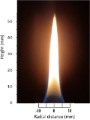
- premixed LPG flame was measured using a type-K thermocouple with an accuracy of ±2.2 °C. The bead size of the thermocouple was 1 mm in diameter. The thermocouple was attached to a traversing system that can be used to move the thermocouple bead to specific spots in the flame. To ensure high-precision
- and the larger diameters compared to CNTs. As the equivalence ratio decreases from rich condition towards stoichiometry conditions, the flame temperature starts to decrease as the flame is leaner than the stoichiometry condition. The increase in particle size is a result of the increased mobility and



Nanomaterials in targeting amyloid-β oligomers: current advances and future directions for Alzheimer's disease diagnosis and therapy
Beilstein J. Nanotechnol. 2025, 16, 561–580, doi:10.3762/bjnano.16.44
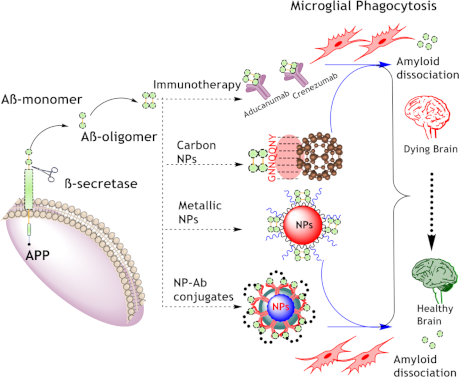
- detection and treatment of AβOs in AD. Because of their nanoscale size, NMs can interact with biological systems in ways that traditional treatments cannot. Their unique properties such as high surface area, quantum effects, and specific physicochemical traits make them ideal for developing advanced
- aggregation of amyloid-β (Aβ) peptides, primarily Aβ40 and Aβ42. These oligomers typically consist of a limited number of Aβ monomers, often ranging from trimers to tetramers, but they can form larger aggregates under certain conditions. Their small size and unique structural properties contribute to several
- challenges in therapeutic targeting. They are considerably smaller than fibrillar aggregates and plaques, making them difficult to target with conventional binding agents. AβOs exhibit significant heterogeneity in size and conformation. This variability means that a single therapeutic agent may not


Functionalized gold nanoflowers on carbon screen-printed electrodes: an electrochemical platform for biosensing hemagglutinin protein of influenza A H1N1 virus
Beilstein J. Nanotechnol. 2025, 16, 540–550, doi:10.3762/bjnano.16.42
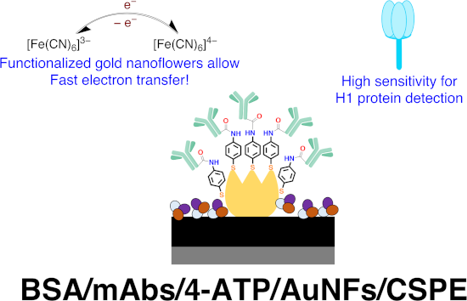
- observed when comparing the surface of the commercial CSPE (Figure 2A) to that of the AuNFs/CSPE (Figure 2B). The gold nanoparticles are evenly distributed across the surface of the electrode (Figure 2C). The deposited nanoparticles show a flower-like morphology with an average size of 139 nm and a
- standard deviation of 44 nm, which suggests size polydispersity (Figure 2D). The flower-like morphology of the nanostructures provides small Au domains across the electrode surface. The shape of these domains confers them with larger surface area than other types of nanostructures with plain geometric
- , the existence of this effect in a material appears to depend on the size of the superficial nanostructures. A similar effect has been reported for 4-ATP-functionalized multilayered nanostructures of Ag, Au, and Pt with a size range between 48 and 130 nm [36][37] as well as for 4-ATP-functionalized


Electron beam-based direct writing of nanostructures using a palladium β-ketoesterate complex
Beilstein J. Nanotechnol. 2025, 16, 530–539, doi:10.3762/bjnano.16.41
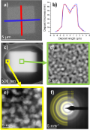
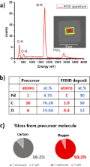
- size. The thinner region of the FEB deposit, located at the edge of the deposit, reveals the crystalline structure of the grains (Figure 2e), where atomic columns can be observed for grains that were oriented along crystallographic directions. The crystalline structure was further examined using
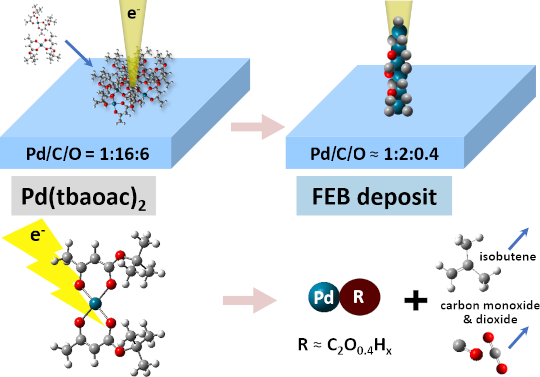
- nanocrystalline material with a grain size of 2 nm. These results confirm that the FEBID material derived from [Pd(tbaoac)2] consists of metallic palladium nanograins embedded in a carbonaceous matrix. EDX measurements were conducted at the center of the deposit, marked as the red area in Figure 3a. The BSE range


Zeolite materials with Ni and Co: synthesis and catalytic potential in the selective hydrogenation of citral
Beilstein J. Nanotechnol. 2025, 16, 520–529, doi:10.3762/bjnano.16.40
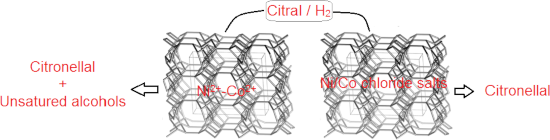
- . Experimental Material and methods Natural zeolite from the San Andrés deposit in Cuba, with a particle size range of 40–160 μm, was used. This zeolitic material consists primarily of mordenite and clinoptilolite-type zeolites (around 80%), along with minor accompanying phases (quartz, montmorillonite, feldspar
- radiation (λ = 1.5406 Å). Data were collected at a scan speed of 2°/min with a step size of 0.05°. SEM images were acquired using a FEI Nova NanoSEM 450 electron microscope. For this purpose, samples were mounted on holders and coated with a thin layer of gold prior to observation. Temperature-programmed


N2+-implantation-induced tailoring of structural, morphological, optical, and electrical characteristics of sputtered molybdenum thin films
Beilstein J. Nanotechnol. 2025, 16, 495–509, doi:10.3762/bjnano.16.38
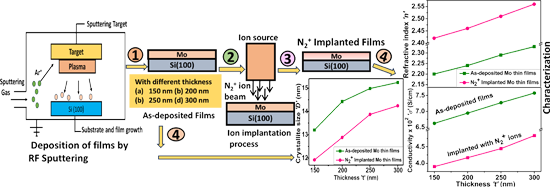
- (111) crystallographic plane. Further, the average crystallite size was calculated using the Scherrer equation [31][32][33]: where k is a constant (k = 0.94) [32][33], λ is the X-ray wavelength (λ = 1.5406 Å), θ is the Bragg angle, and β is the FWHM. Additionally, the microstrain (ε) developed in the
- thin films due to lattice distortions or mismatch was calculated using Wilson’s equation [31][33]: The dislocation density (δ) gives more information about the number of defects in the films; it was calculated from the relation [32]: where D is the average crystallite size. The interplanar spacing (d
- ) and lattice constant (a) were calculated using the relations [13][33]: where h,k, and l are the Miller indices of the corresponding diffraction peak [34]. The obtained values for average crystallite size, microstrain, dislocation density, and interplanar spacing for as-deposited and N2+-implanted Mo


Performance optimization of a microwave-coupled plasma-based ultralow-energy ECR ion source for silicon nanostructuring
Beilstein J. Nanotechnol. 2025, 16, 484–494, doi:10.3762/bjnano.16.37

- lens is employed. The shape and size of the beam are contingent on the extraction voltage applied at the grid and the corresponding ion energy. The directed beam impacts the silicon target kept in ultrahigh vacuum (UHV) within the target chamber. A Faraday cup, connected to a multimeter, measures the
- ions at different incidence angles and for various irradiation times is investigated using AFM in tapping mode. Si cantilevers with tip radii of 10 nm were employed, with scan rate of 1 µm/s and a fixed scan size of 5 µm × 5 µm. Quantitative analysis of the surface topography was conducted using WSxM


Impact of adsorbate–substrate interaction on nanostructured thin films growth during low-pressure condensation
Beilstein J. Nanotechnol. 2025, 16, 473–483, doi:10.3762/bjnano.16.36

- increase in its coverage and the formation of a smaller number of adsorbate islands of larger size. At elevated adsorption rates, an increase in adsorbate–substrate interactions results in the transformation of the surface morphology and the formation of percolating adsorbate structures. Deposition onto
- multicomponent substrates leads to the formation of a stationary surface morphology with an elevated number of adsorbate islands of smaller size, compared to one-component substrates. This study provides a deep insight into the peculiarities of nanostructured thin films’ growth in low-pressure systems with
- well-defined islands or clusters. The strength and nature of these interactions play a pivotal role in determining whether the film growth follows layer-by-layer (Frank–van der Merwe) or island (Volmer–Weber) growth modes [22]. Therefore, central to achieving the control the type and size of surface


Effect of additives on the synthesis efficiency of nanoparticles by laser-induced reduction
Beilstein J. Nanotechnol. 2025, 16, 464–472, doi:10.3762/bjnano.16.35
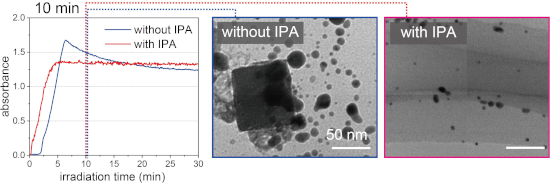
- oxidation; 2) 2–6 min of laser irradiation: particle formation and crystal growth reaction; 3) 6–26 min of laser irradiation: continuous reduction and particle size reduction by laser fragmentation in liquid. Therefore, this means that all reactions are complete after 26 min of laser irradiation in the
- with a wide particle size distribution of >10 nm, particles with a square shape of >50 nm were also observed. It is thought that the square-shaped particles were formed by crystal growth of the atoms produced by laser irradiation as nuclei, while consuming unreacted ions in the solution through a self
- -catalytic effect. This also suggests that the reduction reaction was not complete after 10 min of laser irradiation. The sample after 30 min of laser irradiation shows that particles with a narrow particle size distribution of less than 10 nm in diameter were formed. In contrast, in the sample with 10 vol


Synthetic-polymer-assisted antisense oligonucleotide delivery: targeted approaches for precision disease treatment
Beilstein J. Nanotechnol. 2025, 16, 435–463, doi:10.3762/bjnano.16.34

- (e.g., generations 5 and 6) significantly improved the delivery efficiency of ASOs into HeLa cells, as evidenced by increased luciferase activity in a splicing correction assay. This was attributed to the higher charge density and molecular size of the higher-generation DPLs, which facilitated more
- reduction in tumour size and metastasis in both orthotopic and xenograft models. Importantly, the PEG-PLO-based delivery system showed a lower nitrogen-to-phosphate ratio requirement compared to similar systems using PEG-PLL, thereby reducing the amount of polymer needed for effective siRNA delivery. The
- gradual reduction in skin tumour size by up to 40% after a seven-day treatment with antisense dendriplexes while no significant changes were observed in mice treated with free ASOs. More recently, Tai et al. designed penetratin-conjugated PAMAM G5 dendrimers complexed with an ASO targeting luciferase


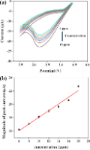
Quantification of lead through rod-shaped silver-doped zinc oxide nanoparticles using an electrochemical approach
Beilstein J. Nanotechnol. 2025, 16, 422–434, doi:10.3762/bjnano.16.33
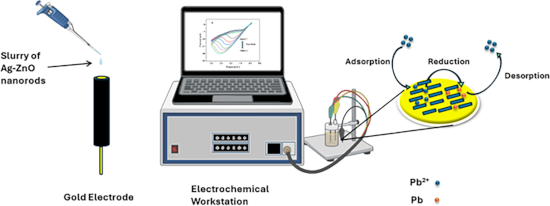
- response, and have a vast range of uses. Zinc oxide shows excellent features, such as nanoscale particles, highly crystalline nature, tunable shape, size and density, and a high aspect ratio. In summary, ZnO nanoparticles offer a versatile platform for technological advancements across fields such as
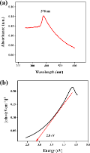
- particularly well-suited for ZnO doping because of its notable characteristics, including strong conductivity, solubility, favorable ionic size, and low orbital energy. These features contribute to the improvement of optical and electrical characteristics of ZnO. The incorporation of silver boosts the mobility
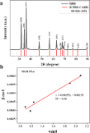
- the ZnO crystal lattice results in a decrement in the peak position values because Ag+ ion (12.2 nm) has a larger ionic size compared to that of the Zn2+ ion (7.4 nm). Consequently, the given data aligns with the decrease in the highest location of the point, indicating a reduction in the c-axis





Size control of nanoparticles synthesized by pulsed laser ablation in liquids using donut-shaped beams
Beilstein J. Nanotechnol. 2025, 16, 407–417, doi:10.3762/bjnano.16.31
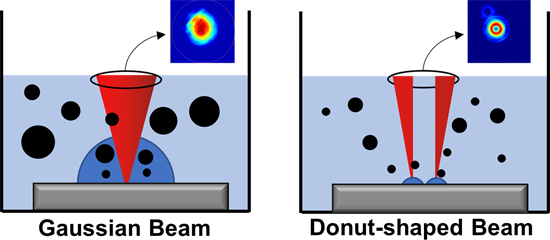
- GROC·UJI, Institute of New Imaging Technologies, Universitat Jaume I, Av. de Vicent Sos Baynat, s/n, 12071 Castellón, Spain 10.3762/bjnano.16.31 Abstract The potential to modify the size distribution of nanoparticles synthesized by pulsed laser ablation in liquids is demonstrated using a donut-shaped
- laser beam. In experiments on pulsed laser ablation in water of gold, yttrium oxide, and high-entropy alloy targets with both Gaussian and donut-shaped beams, we observed a significant reduction in particle size, narrowing of the size distribution width, and an improvement in sphericity when utilizing
- this pioneering study, further investigation with higher temporal and spatial resolution are warranted. Keywords: beam shaping; cavitation bubble; donut beam; gold nanoparticles; high-entropy alloy nanoparticles; nanoparticle size analysis; yttrium oxide nanoparticles; Introduction The demand for


ReactorAFM/STM – dynamic reactions on surfaces at elevated temperature and atmospheric pressure
Beilstein J. Nanotechnol. 2025, 16, 397–406, doi:10.3762/bjnano.16.30
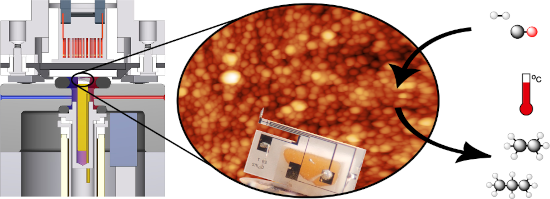
- size distribution of the particles. While maintaining the gas flow, the sample’s temperature was increased with a rate of 1 K per 10 s up to 550 K; at this temperature FTS takes place. This is outside the possible temperature window of scanning with our tuning fork, as explained above. Therefore, we
- were only able to scan at 430 K before (Figure 6b) and after the reaction occurred (Figure 6c). As can be seen, the surface has undergone a change due to the reaction. The particle size distribution has changed; it appears that smaller particles are no longer visible and that there is an increase in
- , exploring the effects of varying support thicknesses and materials, as well as size distributions of metallic nanoparticles, and identifying which product gases are favored under specific reaction conditions, could extend our understanding of FTS. Schematic overview of the experimental setup (left side) and


Engineered PEG–PCL nanoparticles enable sensitive and selective detection of sodium dodecyl sulfate: a qualitative and quantitative analysis
Beilstein J. Nanotechnol. 2025, 16, 385–396, doi:10.3762/bjnano.16.29
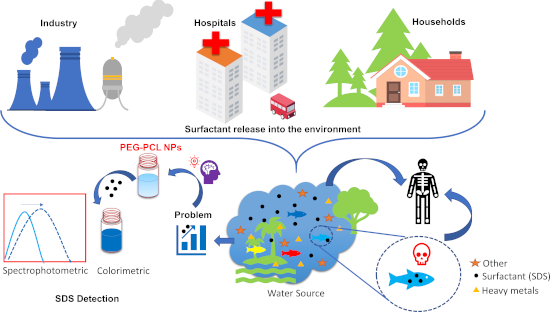
- manipulation of particles with a size less than 100 nm. These tiny particles possess unique physicochemical features, including optical, electrical, magnetic, and catalytic properties [23]. Indeed, the advanced properties of nanoparticles enables them to be used in different areas, such as biosensing, drug
- . Characterization of PEG–PCL nanoparticles The synthesized PEG–PCL nanoparticles were characterized by their unique physicochemical properties, such as size and surface charge. The average hydrodynamic size, monodispersity, and surface charge of the nanoparticles were measured using the ZetaSizer (Nano ZS, Malvern
- , UK). Dried 10 mg/mL PEG–PCL NPs were dissolved in PBS and sonicated for 30 min. The sonicated sample was taken in a cuvette for measurement. The sample pH was in the range of 7.2–7.4. Separate cuvettes (DTS1072 and DTS0012) were used to measure the surface charge and average size of the nanoparticles


Development of a mucoadhesive drug delivery system and its interaction with gastric cells
Beilstein J. Nanotechnol. 2025, 16, 371–384, doi:10.3762/bjnano.16.28

- mucoadhesive drug delivery system that was developed to fulfill these requirements. Alginate nanoparticles were synthesized by water-in-oil emulsification followed by external gelation and then coated with the mucoadhesive polymer Eudragit RS100. The formulated nanoparticles had a mean size of 219 nm and
- adhere to the mucosa. The size of the microspheres, from which the drug was released over a period of 24 h, was in the range of 800–900 µm [26]. Although particulate systems with larger sizes could be advantageous in terms of higher encapsulation efficiency and slower release, they would have a reduced
- surface area for adhesion. Also, mucus penetration would be hindered because of the mesh-like structure of mucin. For therapeutics that have gastric mucosa as target, this might limit the efficiency and decrease the drug absorption at the site. A smaller particle size, however, is advantageous because of


Vortex lattices of layered HTSCs at different vortex–vortex interaction potentials
Beilstein J. Nanotechnol. 2025, 16, 362–370, doi:10.3762/bjnano.16.27
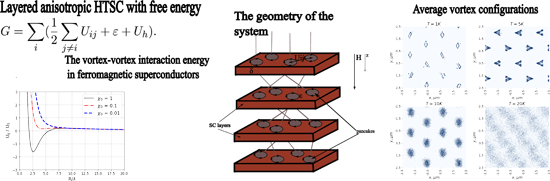
- pancakes in the layer under consideration, is the vortex self-energy per superconducting layer with The simulation is performed for a vortex lattice in a sample whose size in the plane of the superconducting layer is 5 × 5 μm. To eliminate the influence of the boundary, the simulation region has periodic
- qualitatively preserved. The obtained results can be useful for designing superconducting devices of micrometer and submicrometer size. For the potential from Equation 2, vortex lattice melting with increasing temperature was studied. For the potential from Equation 3, the formation of a vortex lattice was


Pulsed laser in liquid grafting of gold nanoparticle–carbon support composites
Beilstein J. Nanotechnol. 2025, 16, 349–361, doi:10.3762/bjnano.16.26
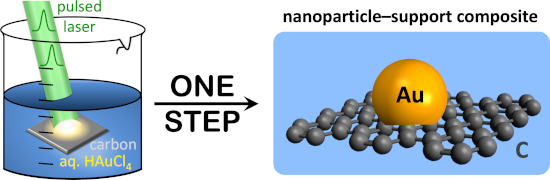
- surfactants for size control [17][18][19]. Nanoparticles prepared by pulsed laser in liquid synthesis are surfactant-free [1], but the same binder strategies are used for nanoparticle–support composites as for conventionally made nanoparticles. Capping ligands and binders hinder intimate contact between
- ]. Pulsed laser-grafted and conventionally prepared electrodes had a mass loading of 70 and 8.5 µg·cm−2geometric, respectively. The diameters of laser-grafted and commercial gold nanoparticles were 200 and 100 nm, respectively. The larger size of laser-grafted gold nanoparticles is not an issue for the
- 200 W and 15 kV. Samples were washed with water, dried, and affixed to double-sided adhesive copper tape. Survey scans were averaged over five scans and spanned 0–1200 eV with a 1 eV step size, 200 ms dwell time, and 160 eV pass energy. High-resolution core level scans were averaged over five scans


Tailoring of physical properties of RF-sputtered ZnTe films: role of substrate temperature
Beilstein J. Nanotechnol. 2025, 16, 333–348, doi:10.3762/bjnano.16.25
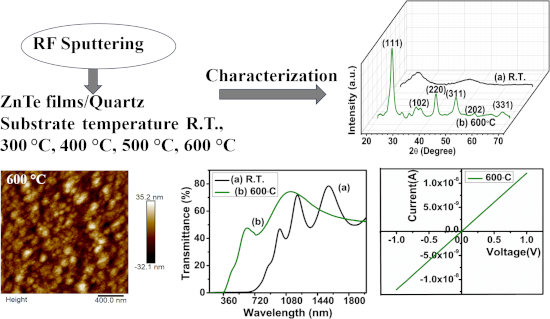
- temperature are amorphous; those deposited at other substrate temperatures are polycrystalline with a cubic zincblende structure and a preferred orientation along the [111] direction. An increase in crystallite size (from 37.60 ± 0.42 Å to 68.88 ± 1.04 Å) is observed with increased substrate temperature. This
- the optical bandgap of the films can be tuned from 1.47 ± 0.02 eV to 3.11 ± 0.14 eV. The surface morphology of the films studied using atomic force microscopy reveals that there is uniform grain growth on the surface. Various morphological parameters such as roughness, particle size, particle density
- to quantum confinement size effects, metal chalcogenides are of importance in different technological domains. Metal chalcogen compounds are composed of a transition metal with one or more members of the chalcogen family, and they exhibit semiconducting properties. Zinc telluride (ZnTe) is a binary

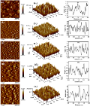

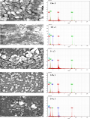


Graphene oxide–chloroquine conjugate induces DNA damage in A549 lung cancer cells through autophagy modulation
Beilstein J. Nanotechnol. 2025, 16, 316–332, doi:10.3762/bjnano.16.24
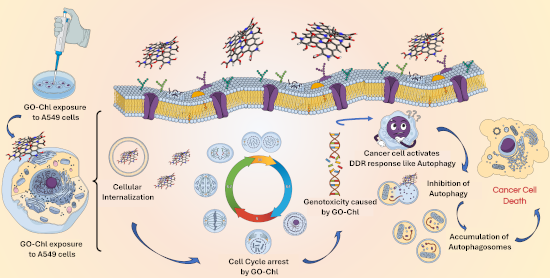
- -based propidium iodide uptake analysis The efficacy of nanomedicines mainly depends upon the effective cellular internalization and their transport to the appropriate intercellular effector site [52][53]. Studies have shown that based on its size and surface characteristics (i.e., hydrophilicity or

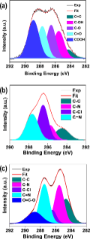


Fabrication and evaluation of BerNPs regarding the growth and development of Streptococcus mutans
Beilstein J. Nanotechnol. 2025, 16, 308–315, doi:10.3762/bjnano.16.23
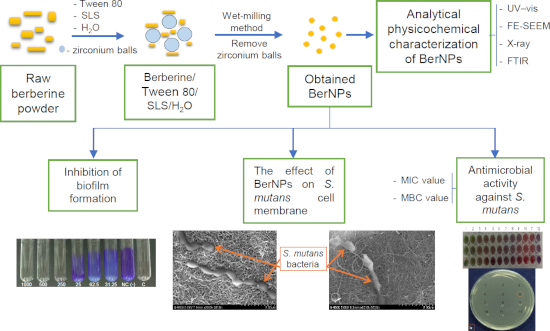
- prepared using a wet-milling method with zirconium balls to enhance bioavailability and expand potential applications. The particle size and physicochemical properties of the BerNPs were analyzed using field-emission scanning electron microscopy (FE-SEM), UV–vis spectroscopy, X-ray diffraction, and Fourier
- formation. The results demonstrated that BerNPs were produced with an average particle size of 40–65 nm. The chemical structure of BerNPs remained consistent with that of berberine, with no modifications occurring during nanoparticle preparation. The BerNPs exhibited the ability to inhibit S. mutans, with
- an efficient technique for fabricating nanoparticles from crystalline structures of organic pharmaceutical raw materials [18]. Other studies have shown that incorporating surfactants into the wet ball milling process significantly enhances particle size reduction, facilitates the effective production




Enhancing mechanical properties of chitosan/PVA electrospun nanofibers: a comprehensive review
Beilstein J. Nanotechnol. 2025, 16, 286–307, doi:10.3762/bjnano.16.22

- sensitive compounds [3]. Electrospun nanofibers exhibit a large surface area, high porosity, and small pore size, making them useful for a wide range of applications, as shown in Figure 1. Chitosan/polyvinyl alcohol (PVA) electrospun nanofibers have many applications, including water treatment, biomedical


Emerging strategies in the sustainable removal of antibiotics using semiconductor-based photocatalysts
Beilstein J. Nanotechnol. 2025, 16, 264–285, doi:10.3762/bjnano.16.21
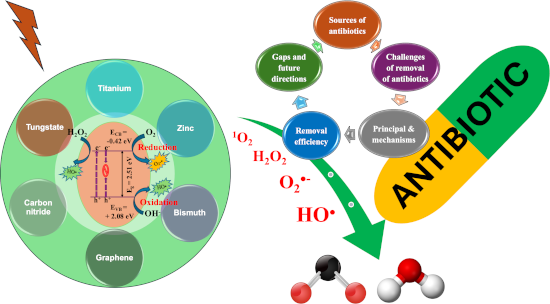
- advanced methods, including sol–gel, hydrothermal, solvothermal, precipitation and template-assisted techniques [53]. The synthesis method chosen often depends on factors such as the desired crystal structure, particle size, surface area, and photocatalytic activity required for the specific application
- recombination rates, and the generated oxygen vacancies, ultimately enhancing catalytic efficiency in visible light or solar-simulated light. The durability of the modified TiO2 relied on the number of electrons in the dopants and their ionic size. Although researchers have significantly improved the catalytic



Preferential enrichment and extraction of laser-synthesized nanoparticles in organic phases
Beilstein J. Nanotechnol. 2025, 16, 254–263, doi:10.3762/bjnano.16.20
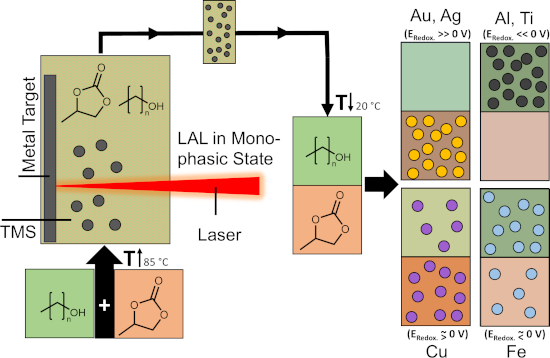
- ) was found to direct both the nanoparticles’ phase selectivity and recovery after cycling. The observed correlations provide potential guidelines for nanoparticle extraction and size separation, relevant for phase transfer and cycling during homogeneous catalysis. Keywords: catalysis; laser ablation
- in liquid; laser synthesis and processing of colloids; phase transfer; size separation; thermomorphic multiphase system; Introduction Laser ablation in liquids (LAL) provides nanoparticles without the need of external surfactants while retaining the initial composition of the educt material in the
- parameters. As such, nanoparticle size [32][33], colloidal stability [33], gas formation [11][34], degree of oxidation [35][36][37], and nanoparticle productivity [11][32][33][34] can be influenced and tailored to specific needs. Although it may be expected that the particles’ reactivity with the solvent and