Search results
Search for "surfaces" in Full Text gives 1303 result(s) in Beilstein Journal of Nanotechnology. Showing first 200.
Exploring the relationships between physiochemical properties of nanoparticles and cell damage to combat cancer growth using simple periodic table-based descriptors
Beilstein J. Nanotechnol. 2024, 15, 297–309, doi:10.3762/bjnano.15.27
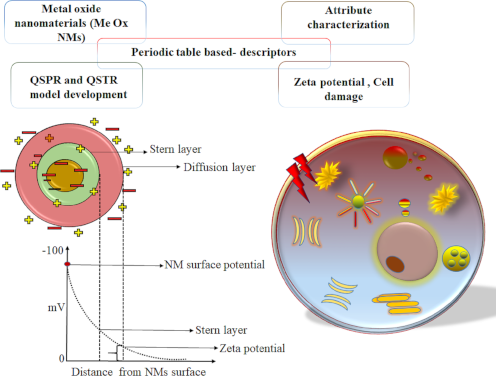
- a vital role in adhesion to the hydro–water interface and solid surfaces, providing an idea about the viability and permeability of the cell membrane under stress. As most of the cell surface carries a negative charge, metals with higher zeta potential can easily enter the cell and increase the


Multiscale modelling of biomolecular corona formation on metallic surfaces
Beilstein J. Nanotechnol. 2024, 15, 215–229, doi:10.3762/bjnano.15.21
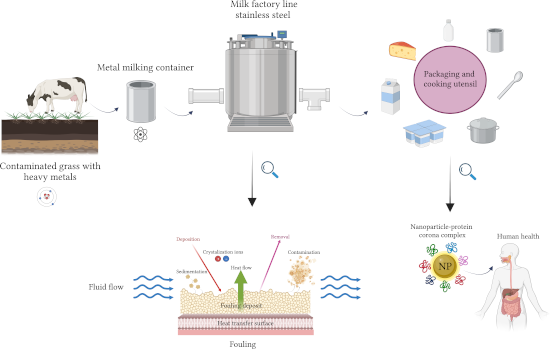
- modelling of the interaction between various surfaces, that is (100), (110), and (111), of fcc aluminum with the most abundant milk proteins and lactose. Our approach combines atomistic molecular dynamics, a coarse-grained model of protein adsorption, and kinetic Monte Carlo simulations to predict the
- protein corona composition in the deposited milk layer on aluminum surfaces. We consider a simplified model of milk, which is composed of the six most abundant milk proteins found in natural cow milk and lactose, which is the most abundant sugar found in dairy. Through our study, we ranked selected
- proteins and lactose adsorption affinities based on their corresponding interaction strength with aluminum surfaces and predicted the content of the naturally forming biomolecular corona. Our comprehensive investigation sheds light on the implications of aluminum in food processing and packaging





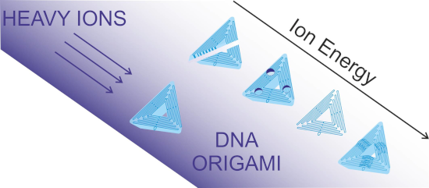
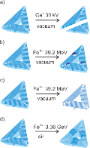
Ion beam processing of DNA origami nanostructures
Beilstein J. Nanotechnol. 2024, 15, 207–214, doi:10.3762/bjnano.15.20
- at least 10 s at a distance of 0.2 mm. A volume of 1 μL of a 6 nM DNA origami solution was then dropped onto the Si chips together with 15 μL of 10× FOB and allowed to incubate for 1 h over an ethanol bath. The surfaces were thoroughly washed with at least 1 mL of 50% ethanol and then dried carefully


Graphene removal by water-assisted focused electron-beam-induced etching – unveiling the dose and dwell time impact on the etch profile and topographical changes in SiO2 substrates
Beilstein J. Nanotechnol. 2024, 15, 190–198, doi:10.3762/bjnano.15.18
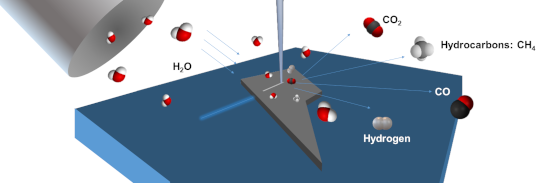
- (and their different adsorption mechanisms on quartz or amorphous silica surfaces), which would be responsible for those topographical changes. This hypothesis could also be supported by the fact that OH− groups can easily interact with the H-terminated surface of amorphous silica. However, they are


Nanocarrier systems loaded with IR780, iron oxide nanoparticles and chlorambucil for cancer theragnostics
Beilstein J. Nanotechnol. 2024, 15, 180–189, doi:10.3762/bjnano.15.17
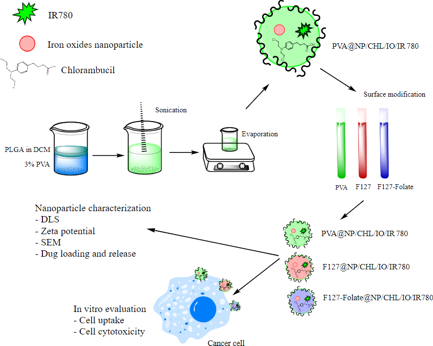
- likewise negatively charged. Another element influencing NP elimination is glomerular filtration. However, endothelial cell surfaces are negatively charged [35], therefore less NPs will be excreted through the kidneys. In regard to extending the half-life of NPs in the bloodstream, the stealth surface of
- nanoparticle surfaces would assist the NPs to enter the cells. Therefore, F127 has been used as a nanoparticle component for drug delivery. For example, doxorubicin-loaded L61/F127 NPs (SP1049C, Supratek Pharma Inc., Montreal, Canada) have reached phase three in clinical trials [41][42]. The F127-folate@NP has


Modification of graphene oxide and its effect on properties of natural rubber/graphene oxide nanocomposites
Beilstein J. Nanotechnol. 2024, 15, 168–179, doi:10.3762/bjnano.15.16
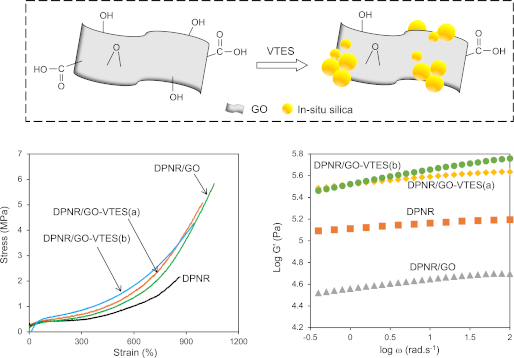
- –OH and –COOH groups on the GO surfaces and –OH group on silica particle surfaces [33]. However, the intensities of these signals decreased in the FTIR spectra of GO-VTES(a) and GO-VTES(b). This may be attributed to a decrease in the number of –OH groups of GO due to the reaction with VTES and the
- distilled water that was dropped onto GO and GO-VTES surfaces. The value of the contact angle elucidates the hydrophilicity or hydrophobicity of the surface. The higher the contact angle, the higher the hydrophobicity. The contact angle of GO is about 67°, and those of GO-VTES(a) and GO-VTES(b) are 91 and
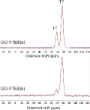
- . However, in the case of GO-VTES(a), the hydrolysis was not completed. Thus, there were fewer –OH groups on the silica and GO surfaces. This result is in agreement with the 29Si NMR and ATR FTIR analysis. Thermal gravimetric analysis results The degradation behavior of GO-VTES was investigated with TGA






Ferromagnetic resonance spectra of linear magnetosome chains
Beilstein J. Nanotechnol. 2024, 15, 157–167, doi:10.3762/bjnano.15.15
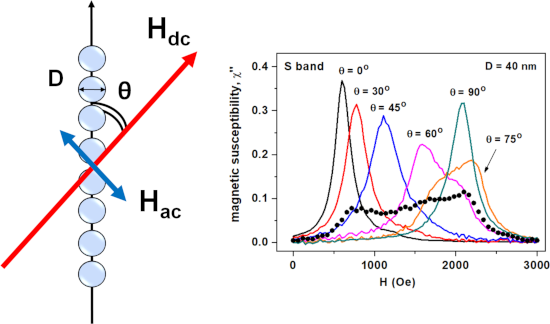
- surfaces of neighboring spherical particles is the sum of the thicknesses of the magnetosome shells 2Ten, where Ten = 4–6 nm is the characteristic thickness of the lipid magnetosome shell. The latter, apparently, weakly depends on the nanoparticle diameter. If this hypothesis is correct, then the average


In situ optical sub-wavelength thickness control of porous anodic aluminum oxide
Beilstein J. Nanotechnol. 2024, 15, 126–133, doi:10.3762/bjnano.15.12
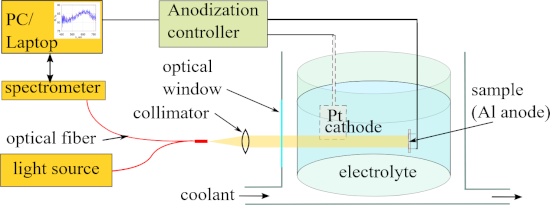
- can result in tens of nanometers PAAO thickness variation due to different anodization reaction rates on surfaces with different crystallographic orientation [20][23]. Additionally, it is known, that anodization of aluminum substrates with (100) surface orientation result in better pore ordering in


Study of the reusability and stability of nylon nanofibres as an antibody immobilisation surface
Beilstein J. Nanotechnol. 2024, 15, 83–94, doi:10.3762/bjnano.15.8
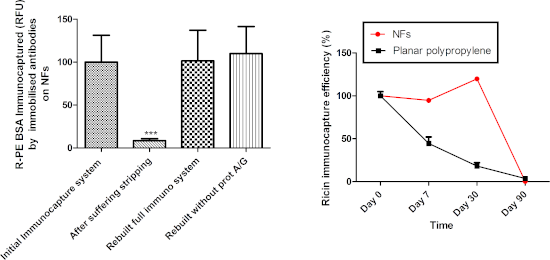
- immobilisation surfaces in biosensors, it seems necessary to study those characteristics of the immobilisation surface that contribute to their lower cost. In this regard, this paper not only investigates the reuse of NFs, but also whether this immobilisation surface provides a longer life for an immunocapture


Influence of conductive carbon and MnCo2O4 on morphological and electrical properties of hydrogels for electrochemical energy conversion
Beilstein J. Nanotechnol. 2024, 15, 57–70, doi:10.3762/bjnano.15.6
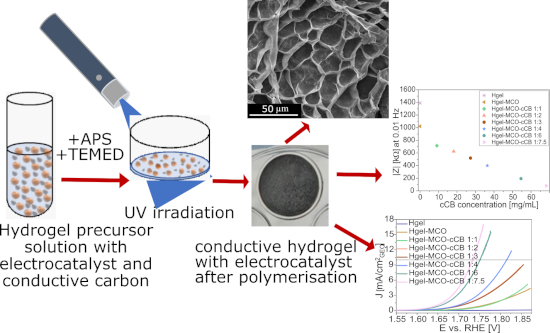
- electrochemically active surfaces. The great advantage of the 3D hydrogel structure is the increase of the catalytic surface area thanks to the possibility of conducting the electrochemical reaction deeper into the structure of the hydrogel. Generation of free space in the form of pores and network structure within


Curcumin-loaded nanostructured systems for treatment of leishmaniasis: a review
Beilstein J. Nanotechnol. 2024, 15, 37–50, doi:10.3762/bjnano.15.4
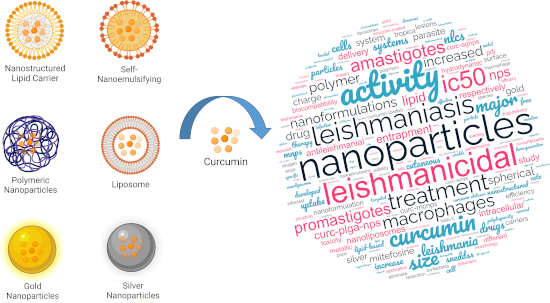
- , sizes, charges, and modified surfaces which improves the leishmanicidal activity of curc and other control drugs. To date, only three in vivo studies in mice using nanostructured curc have been carried out. These were all based on polymers and metallic nanostructures. Despite the conducted


unDrift: A versatile software for fast offline SPM image drift correction
Beilstein J. Nanotechnol. 2023, 14, 1225–1237, doi:10.3762/bjnano.14.101
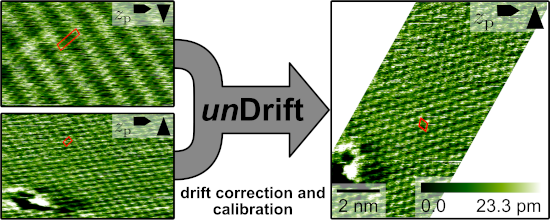
- properties of surfaces and interfaces across a variety of disciplines in chemistry and physics. One of the major artifacts in SPM is (thermal) drift, an unintended movement between sample and probe, which causes a distortion of the recorded SPM data. Literature holds a multitude of strategies to compensate
- force microscopy; calibration; drift correction; image correlation functions; periodic structures; scanning probe microscopy; Introduction In science and technology, scanning probe microscopy (SPM) techniques are widely used to study the structure and properties of surfaces and interfaces from the
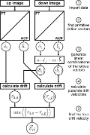
- periodicity. This algorithm does not work reliably for perfectly periodic surfaces without any stationary features as all maxima would have the same intensity; thus, the algorithm cannot decide which maximum corresponds to the shift between the images [30]. For images exhibiting a periodic structure and


A combined gas-phase dissociative ionization, dissociative electron attachment and deposition study on the potential FEBID precursor [Au(CH3)2Cl]2
Beilstein J. Nanotechnol. 2023, 14, 1178–1199, doi:10.3762/bjnano.14.98
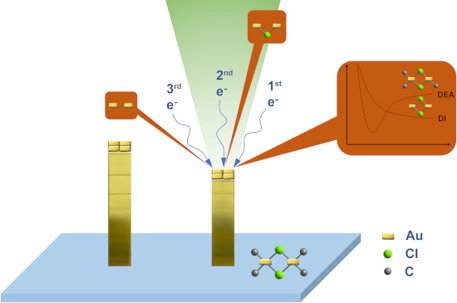
- composition and morphology of FEBID deposits fabricated in an ultrahigh-vacuum (UHV) chamber were explored on different surfaces and at varied beam currents. In the gas phase, dissociative ionization was found to lead to significant carbon loss from this precursor, and about 50% of the chlorine was on average
- nanostructures are critical for the enhancement of absorption and controlled scattering of light [10]. Focused-electron-beam-induced deposition (FEBID) is a direct writing method for controlled deposition/fabrication of nanostructures on either flat or nonflat surfaces. It offers excellent shape control and thus
- processes, rather than direct dissociation without new bond formation. Such rearrangement reactions generally proceed along convoluted paths on the respective potential energy surfaces, which are likely to be altered in the condensed phase or on a substrate surface. Furthermore, considering the current



Spatial variations of conductivity of self-assembled monolayers of dodecanethiol on Au/mica and Au/Si substrates
Beilstein J. Nanotechnol. 2023, 14, 1169–1177, doi:10.3762/bjnano.14.97
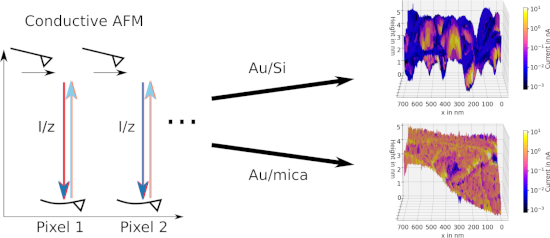
- characteristics. Moreover, the probes used in CAFM are significantly sharper compared to, for example, mercury droplets or eGaIn, which makes it possible to avoid short circuits to the metallic surface relatively easily. In previous studies, CAFM has been used to investigate the conductivity of surfaces and SAMs
- SAM-covered surfaces was observed. This bears important consequences for the choice of substrates for studies on molecular SAMs; flat substrates are advantageous for such studies. Bare Au/Si and Au/mica substrates As mentioned above, two types of Au substrates were investigated, namely Au/Si and Au
- sample plane, this leads to larger variations in the local normal force when the tip lands on a slope. Therefore, the rougher topography is likely influencing the occurrence of high- and low-current areas. More specifically, this means that the conductance can appear higher on slopes and rough surfaces


Elasticity, an often-overseen parameter in the development of nanoscale drug delivery systems
Beilstein J. Nanotechnol. 2023, 14, 1149–1156, doi:10.3762/bjnano.14.95
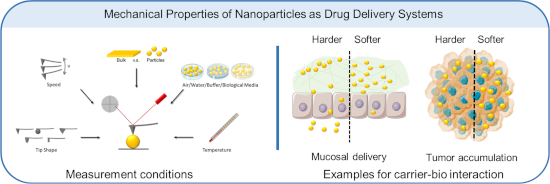
- . HeLa cells show an enhanced uptake by RGD functionalization but it is still reduced in comparison to all hard formulations. Particles with RGD-modified surfaces are superior in tumor accumulation for both soft and hard HNPs, with softer particles showing an overall higher retention in the tumor. This


A multi-resistance wide-range calibration sample for conductive probe atomic force microscopy measurements
Beilstein J. Nanotechnol. 2023, 14, 1141–1148, doi:10.3762/bjnano.14.94
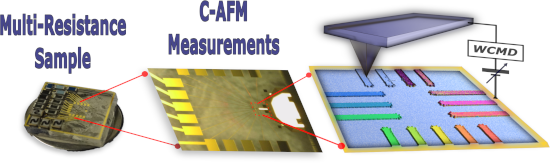
- scanning conditions, current and resistance mapping as well as I–V spectroscopy over a wide range of current measurement (from 100 µA to less than 100 fA) (see Supporting Information File 1, section S1). Previous experiments have shown diamond-coated tips to be most suitable for imaging gold surfaces in


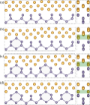
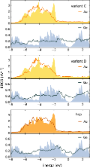
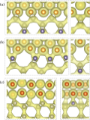
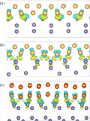
Density functional theory study of Au-fcc/Ge and Au-hcp/Ge interfaces
Beilstein J. Nanotechnol. 2023, 14, 1093–1105, doi:10.3762/bjnano.14.90
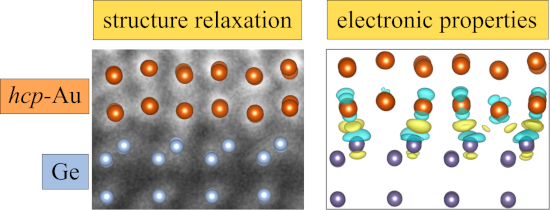
- . Deeper knowledge of surfaces and interfaces in heterostructures can play a crucial role in developing new methods for synthesizing such materials and in expanding their possible applications in nanoscience and nanotechnology. As a result of advances in computational methods and the increasing computer
- the investigated crystal planes and possible interfaces are introduced. Section Results and Discussion begins with convergence tests and calculations conducted for several low-index surfaces and simple Au/Ge interfaces. We then proceed to discussing several variants of a heterostructure with parallel
- , is the energy per atom in the X(Y) bulk form, nX(Y) is the number of X(Y) atoms in the XY supercell and Aint is the area of the interface. The work of separation (Wsep) is defined as the energy required to reversibly separate a bulk material into two semi-infinite bulks with free surfaces. Here we





Properties of tin oxide films grown by atomic layer deposition from tin tetraiodide and ozone
Beilstein J. Nanotechnol. 2023, 14, 1085–1092, doi:10.3762/bjnano.14.89
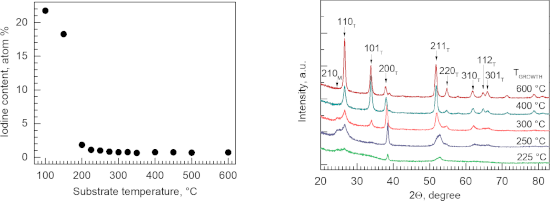
- peak at the binding energy typical of surface OH (Figure 10b). This might be related to the chemisorption and decomposition of environmental humidity, enhanced on more crystallised film surfaces. Such a surface OH contribution has been described earlier [33][34]. Complementarily, the valence-band


Dual-heterodyne Kelvin probe force microscopy
Beilstein J. Nanotechnol. 2023, 14, 1068–1084, doi:10.3762/bjnano.14.88
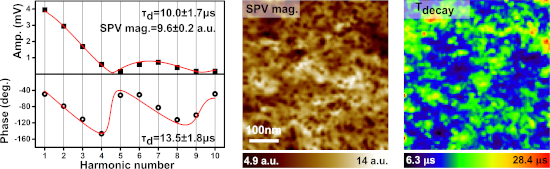
- mode (DHe-KPFM spectroscopy), and 2D dynamic images can be acquired in data cube mode. The capabilities of DHe-KPFM in terms of time-resolved measurements, surface photovoltage (SPV) imaging, and detection of weak SPV signals are demonstrated through a series of experiments on difference surfaces: a
- confinement in the vertical direction and their smooth surfaces with atomic thickness control, very precise control over the optical gap and exciton energy of NSs can be achieved through chemical synthesis, making them very interesting




A visible-light photodetector based on heterojunctions between CuO nanoparticles and ZnO nanorods
Beilstein J. Nanotechnol. 2023, 14, 1018–1027, doi:10.3762/bjnano.14.84
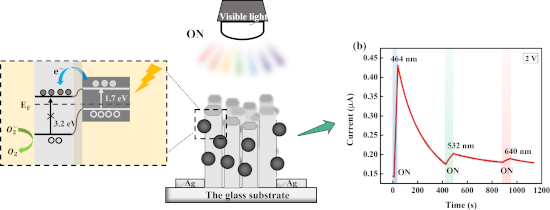
- . The energy-dispersive X-ray spectroscopy (EDS) results in Figure 1c show Zn, Cu, and O, which indicates the presence of ZnO and CuO. No further impurities were found. The results from X-ray diffractometry (XRD) and UV–vis absorption spectroscopy confirm that the nanoparticles covering the surfaces and


Exploring internal structures and properties of terpolymer fibers via real-space characterizations
Beilstein J. Nanotechnol. 2023, 14, 1004–1017, doi:10.3762/bjnano.14.83
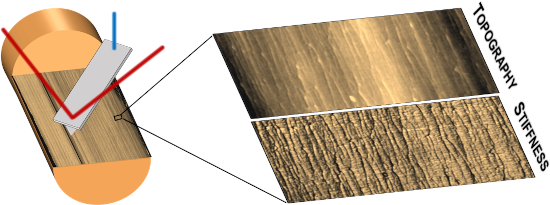
- ® and UHMWPE [9][10][11][12][13]. Here we extend this technique to Technora® by notching individual fibers (Figure 1b), gently opening them along shear planes to expose internal surfaces, and then scanning across those surfaces using an atomic force microscope (AFM) (Figure 1c). AFM scans yield internal
- failure will be brittle and thus more prone to variation. In contrast, Technora® has no such preferential planes, which may explain its more consistent strength values [6][7]. Indeed, we observe stray fibrils protruding in and out of the FIB-notched surfaces of Technora® and no consistent fracture planes
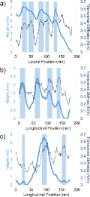
- filaments within Technora® fibers present no such consistent internal planes. Indeed, Ozawa hypothesized that Kevlar® has much wider “internal surfaces” than Technora®, making the former more sensitive to chemical effects [1]. This hypothesis aligns very well with our line scans (Figure 6), which show






Nanoarchitectonics of photothermal materials to enhance the sensitivity of lateral flow assays
Beilstein J. Nanotechnol. 2023, 14, 988–1003, doi:10.3762/bjnano.14.82
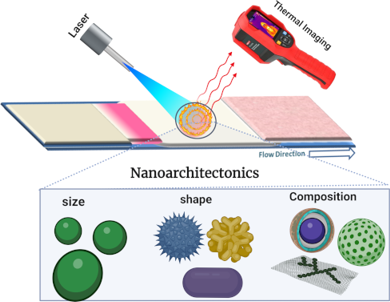
- ], Colloids and Surfaces B: Biointerfaces, vol. 186, by V. Shirshahi; S. N. Tabatabaei; S. Hatamie; R. Saber, “Photothermal enhancement in sensitivity of lateral flow assays for detection of E-coli O157:H7”, article no. 110721, Copyright (2019), with permission from Elsevier. (This content is not subject to


Isolation of cubic Si3P4 in the form of nanocrystals
Beilstein J. Nanotechnol. 2023, 14, 971–979, doi:10.3762/bjnano.14.80
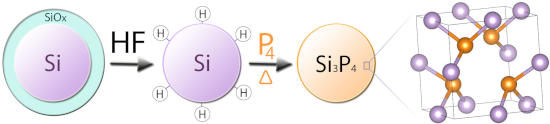
- was shown to be consistent with Si–H bond cleavage and hydrogen desorption from silicon surfaces [29] (including Si NPs [30]) with the bond completely disappearing at 700 °C as indicated by FTIR spectra [31][32][33]. A temperature of 900 °C was chosen to assess the probability of formation of another
- nature of HF). The total etching time was 20 min (HF vapor etching of Si NPs doped with P results in the removal of the oxide layer after 15 min of etching [42]). It should be mentioned that Si NPs with hydrogen-terminated surfaces rapidly oxidize when exposed to air even at room temperatures [43][44


Antibody-conjugated nanoparticles for target-specific drug delivery of chemotherapeutics
Beilstein J. Nanotechnol. 2023, 14, 912–926, doi:10.3762/bjnano.14.75
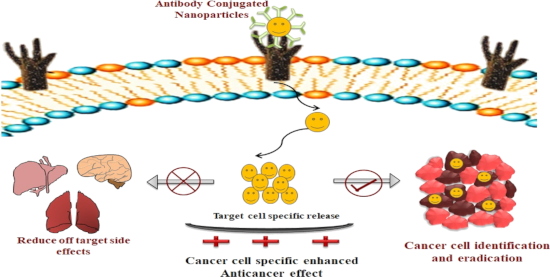
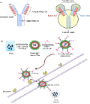
- chemotherapeutics specifically to the targeted cancer cells. ACNPs combine the benefits of NPs and mAbs to provide high drug loads at the tumor site with better selectivity and delivery efficiency. The mAbs on the NP surfaces recognize their specific receptors expressed on the target cells and release the
- fragment antigen-binding (Fab) region of mAbs are chemically conjugated to NP surfaces to recognize protein targets that are overexpressed on the surface of tumor cells. Conjugation of mAbs to NP surfaces improves targeting capacity, cellular uptake, and intracellular stability [12]. The mAb-functionalized
- (ACNPs) combine advantages of NPs and antibodies, which results in more specific and efficient delivery systems (Figure 1). There are a number of approaches for achieving specific conjugation of antibodies on NP surfaces. The selection of the most suitable conjugation method is very important to preserve



Two-dimensional molecular networks at the solid/liquid interface and the role of alkyl chains in their building blocks
Beilstein J. Nanotechnol. 2023, 14, 872–892, doi:10.3762/bjnano.14.72
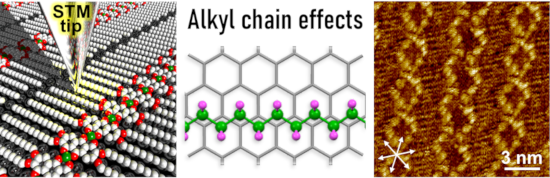
- and desirable nanoarchitectures. Scanning tunneling microscopy is a powerful tool for revealing the molecular conformations, arrangements, and orientations of two-dimensional (2D) networks on surfaces. The fabrication of 2D assemblies involves non-covalent interactions that play a significant role in
- flat conducting substrates, such as metal surfaces and highly oriented pyrolytic graphite (HOPG), under ultrahigh vacuum (UHV) conditions, at solid/air or solid/liquid interfaces [23][24][25][26][27][28]. Although UHV-STM offers high-resolution imaging, it requires large, complex, and expensive
- structures on metallic surfaces, such as Au(111), are different from those on a HOPG surface, even if the molecular building blocks are the same [62][63][64]. This is because of the different molecule–substrate interactions on Au(111) and HOPG. The adsorption energy of alkyl chains on Au(111) has been