Search results
Search for "SEM" in Full Text gives 1114 result(s) in Beilstein Journal of Nanotechnology. Showing first 200.
Biomimetics on the micro- and nanoscale – The 25th anniversary of the lotus effect
Beilstein J. Nanotechnol. 2023, 14, 850–856, doi:10.3762/bjnano.14.69

- with a super depth-of-field microscope, measure cross-sections of veins of wings via SEM, and characterize the nanomechanical structural and elastic behaviour of the structures using a nanoindenter. The authors use the detailed observations obtained to explore the relative aerodynamical performance of
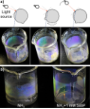
- Mail, Kerstin Koch, Thomas Speck, William M. Megill and Stanislav N. Gorb Eggenstein-Leopoldshafen, Kleve, Freiburg, and Kiel, July 2023 Biological archetype and eponym of the lotus effect: The sacred lotus (Nelumbo nucifera). a) Photo of a lotus plant. b) Scanning electron microscopy (SEM) image of


Ultralow-energy amorphization of contaminated silicon samples investigated by molecular dynamics
Beilstein J. Nanotechnol. 2023, 14, 834–849, doi:10.3762/bjnano.14.68
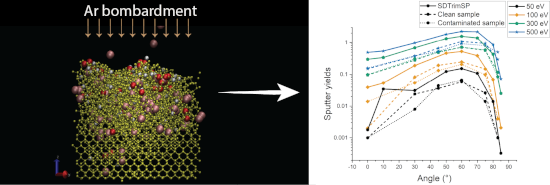
- substantially more controllable at low energies [10][11], which also makes such beams valid candidates for these processes. Another application includes lamella preparation for transmission electron microscopy (TEM). TEM and scanning electron microscopy (SEM) have high constraints regarding cleanliness [12




A wearable nanoscale heart sound sensor based on P(VDF-TrFE)/ZnO/GR and its application in cardiac disease detection
Beilstein J. Nanotechnol. 2023, 14, 819–833, doi:10.3762/bjnano.14.67
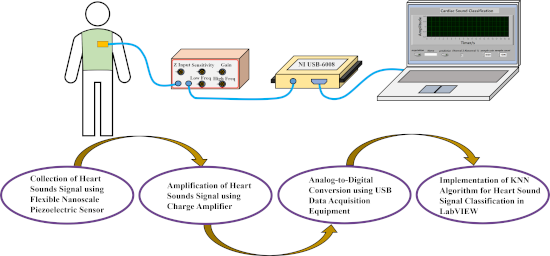
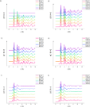
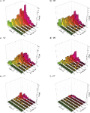
- utilized to analyze the composition and β-phase content of the composite piezoelectric nanofilms, while scanning electron microscopy (SEM) was employed to observe the morphology of the thin film filaments. Figure 6 displays the XRD patterns of the three composite piezoelectric nanofilms. In the P(VDF-TrFE
- is in agreement with the XRD findings. The thickness of the piezoelectric film was determined to be approximately 120 μm using a Vernier caliper with a precision of 0.02 mm. The SEM images in Figure 8 reveal that the microstructure of the nanofilms consists of fibrous filaments at the micro/nanoscale
- . SEM images of a pure PVDF film in Figure 8a and Figure 8b exhibit filamentous fibers with a relatively smooth surface. In contrast, Figure 8c and Figure 8d show that the addition of ZnO to the P(VDF-TrFE) filaments leads to a rough and granular surface, caused by the aggregation of ZnO particles that


Silver-based SERS substrates fabricated using a 3D printed microfluidic device
Beilstein J. Nanotechnol. 2023, 14, 793–803, doi:10.3762/bjnano.14.65
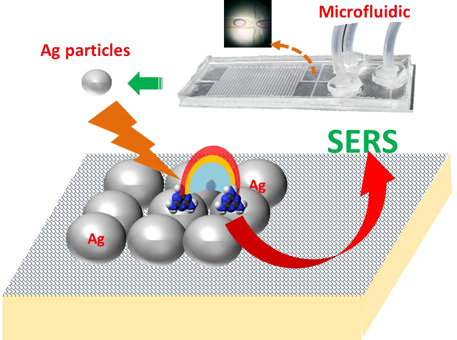
- (USA). Deionized water with a resistivity of 18 MΩ·cm−1, provided by a Milli-Q water purification system (Millipore Corp., MA, USA), was used throughout all the experiments. The morphologies of Ag NPs and SERS substrates were examined using a field-emission scanning electron microscope (FE-SEM, Mira II
- 2). FE-SEM micrographs of the samples are shown in Figure 3. The average sizes of Ag nanoparticles were estimated to be 24.10 ± 0.15, 27.07 ± 0.16, 28.07 ± 0.17, and 30.88 ± 0.31 nm by using the ImageJ program. Based on the calculated data, it is evident that the average size of Ag NPs increases
- with an increase in the concentration of reactants. Structural characterization of the SERS substrate In Supporting Information File 1, Figure S10a shows the SEM image of the SAM of Ag NPs on the surface of methanol, while Figure S10b displays the image of the PS substrate after covering with the Ag



In situ magnesiothermic reduction synthesis of a Ge@C composite for high-performance lithium-ion batterie anodes
Beilstein J. Nanotechnol. 2023, 14, 751–761, doi:10.3762/bjnano.14.62
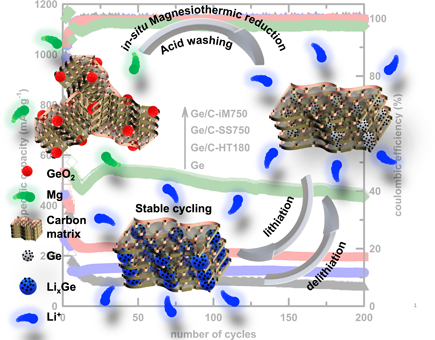
- demonstrate the enhanced contact between the in situ formed Ge and the carbon matrix, which promotes conductivity, accommodates volume variation, and ultimately improves the electrochemical performance of the material. The morphology of the materials was observed using FE-SEM and HR-TEM. As shown in Figure 2a
- carried out for structural and phase information. Infrared (IR, Shimadzu IRAffinity-1S) and Raman (LabRAM HR evolution confocal Raman microscope) spectra were measured for bond analysis. Field-emission scanning electron microscopy (FE-SEM, Hitachi S-4800) and high-resolution transmission electron
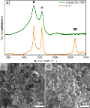
- spectra, and (c) Raman spectra of pure Ge, Ge/C-iM750, Ge/C-HT180, Ge/C-SS750, and BC-800 (see Experimental section for sample denominations). SEM images of (a) Ge and (b) Ge/C-iM750; TEM images of (c) Ge, (d) Ge/C-iM750, (e) Ge/C-HT180, and (f) Ge/C-SS750. CV measurements of (a) pure Ge, (b) Ge/C-iM750


The microstrain-accompanied structural phase transition from h-MoO3 to α-MoO3 investigated by in situ X-ray diffraction
Beilstein J. Nanotechnol. 2023, 14, 692–700, doi:10.3762/bjnano.14.55
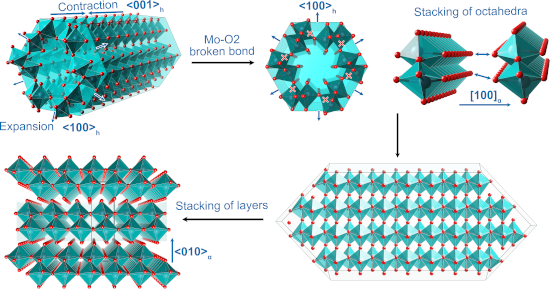
- the ⟨001⟩α direction, and the neighbouring chains share corners to form an octahedron layer along the ⟨100⟩α direction. The octahedron layer grows along the ⟨100⟩α, ⟨101⟩α, and ⟨010⟩α directions to crystalize into the tabular structure seen in the SEM experiment (Figure 1d). The structural phase
- , respectively. (b) Mass fraction of the α-MoO3 phase and the microstrain in the h-MoO3 phase. (c,d) SEM microstructures of samples calcinated at 300 and 450 °C, respectively. Crystal structure of the hexagonal phase MoO3·H2O from the sample calcinated at 375 °C. (a) Result of the Rietveld refinement; (b


Humidity-dependent electrical performance of CuO nanowire networks studied by electrochemical impedance spectroscopy
Beilstein J. Nanotechnol. 2023, 14, 683–691, doi:10.3762/bjnano.14.54
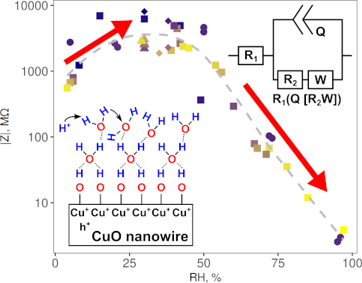
- (Figure 1b,c,e). The average diameters of the individual CuO nanowires, determined from the SEM images, were 50–100 nm, and their lengths varied between 2 and 20 µm (Figure 1a). To optimize the dielectrophoretic alignment of nanowires of such lengths and to maximize the number of the nanowire
- electron microscopy (SEM, Hitachi S4800) and atomic force microscopy (AFM, Asylum Research MFP-3D). Electrochemical impedance measurements were performed under various atmospheric conditions in a custom-made system described elsewhere [28]. The main system parameters were RH from 4% to 97%, gas flow from


SERS performance of GaN/Ag substrates fabricated by Ag coating of GaN platforms
Beilstein J. Nanotechnol. 2023, 14, 552–564, doi:10.3762/bjnano.14.46
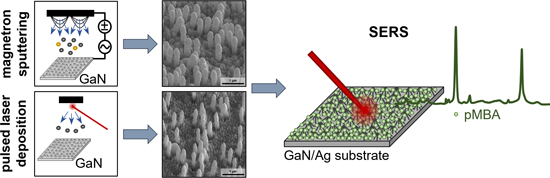
- morphology of fabricated Ag layers examined by scanning electron microscopy (SEM). Then, we present the results of their optical properties determined using UV–vis spectroscopy. Finally, we compare the SERS performance of the GaN/Ag substrates toward 4-mercaptobenzoic acid (pMBA) molecules adsorbed on them
- intense Raman signal. SEM images of the GaN platforms with MS-deposited silver layers of different thicknesses are shown in Figure 2. The morphology of MS-fabricated SERS substrates does not change significantly with the change in Ag layer thickness. With a larger amount of deposited Ag, the thickness of
- in the temperature of the platform. Determination of a numerical value describing the thickness of the Ag layer on nanostructured GaN platforms as a function of the temperature would be complicated because of the complex 3D morphology of the GaN platforms. SEM images of the GaN platforms with PLD


Observation of multiple bulk bound states in the continuum modes in a photonic crystal cavity
Beilstein J. Nanotechnol. 2023, 14, 544–551, doi:10.3762/bjnano.14.45
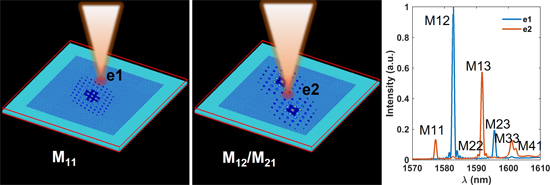
- carried out to compensate for deviations between fabricated and designed values. To obtain devices with larger Q factors and higher scattering power, cavities with larger Na = 30 and Nb = 10 were fabricated. Optical and scanning electron microscopy (SEM) images are given in Figure 3a. A microscope was


Carbon nanotube-cellulose ink for rapid solvent identification
Beilstein J. Nanotechnol. 2023, 14, 535–543, doi:10.3762/bjnano.14.44
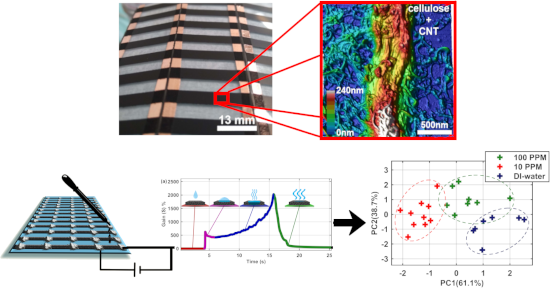
- length of 5 μm were produced at CTNano/UFMG [59][60][61]. Morphological analysis was carried out by scanning electron microscopy (SEM) in a Quanta 200 FEG, using secondary electrons between 2 and 10 kV. Atomic force microscopy (AFM) was carried out on a Bruker MultiMode8 SPM using the intermittent
- and Centro de Microscopia-UFMG for providing the SEM and TEM images included in Supporting Information File 1. Funding The authors also would like to thank Fapemig (Rede 2D and individual projects), INCT Nanomateriais de Carbono, CNPq/MCT, Petrobras, BNDES and CAPES for the funding support. APMB


Nanoarchitectonics to entrap living cells in silica-based systems: encapsulations with yolk–shell and sepiolite nanomaterials
Beilstein J. Nanotechnol. 2023, 14, 522–534, doi:10.3762/bjnano.14.43

- sol–gel methods, as well as pre-synthesised yolk–shell bionanohybrids have been studied subsequently. Optical microscopy and SEM confirm that the silica shell microstructures provide a reduced contact between cells. The inorganic matrix increases the survival of the cells and maintains their
- systems were studied by means of optical and electron microscopy (SEM and FE-SEM). Both techniques allowed us to study in detail the cellular arrangement of the microorganisms and their interaction with the inorganic matrix system. FE-SEM microscopy images of the different gel encapsulation systems are
- improved transport of nutrients and metabolites across the material. The FE-SEM images in Figure 2C and Figure 2D show the same microorganism cells but previously encapsulated in yolk–shell microstructures. They are arranged differently from those immobilized freely in the silica gel substrate. In the


On the use of Raman spectroscopy to characterize mass-produced graphene nanoplatelets
Beilstein J. Nanotechnol. 2023, 14, 509–521, doi:10.3762/bjnano.14.42
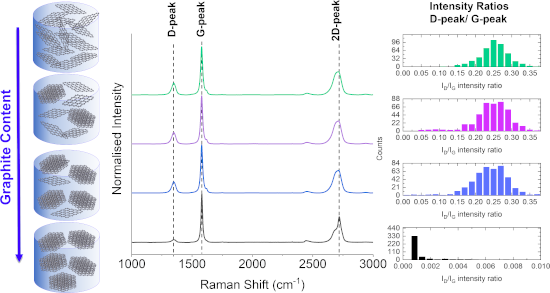
- widely used characterization tool for GR2Ms [8]. A search of Web of Science showed that of 97,532 articles published in the last five years with “Graphene” in the abstract, 9.3% also mentioned “Raman”. This is compared with atomic force microscopy (AFM) (2.4%), scanning electron microscopy (SEM) (11.4
- production of materials. (A) Example AFM image of flakes from the GNPref sample; the scale bar is 2 μm. (B) Example SEM image of flakes from the GNPref sample; the scale bar is 200 nm. (C) Flake sizes of GNPref sample measured by AFM with histograms of the lateral size and thickness distributions. (A


The origin of black and white coloration of the Asian tiger mosquito Aedes albopictus (Diptera: Culicidae)
Beilstein J. Nanotechnol. 2023, 14, 496–508, doi:10.3762/bjnano.14.41
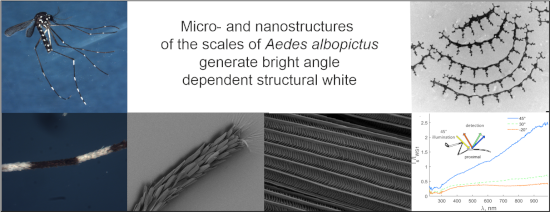
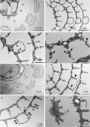
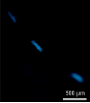
- analysed using scanning electron microscopy, transmission electron microscopy, and fluorescence microscopy. Reflectance spectra of the white areas are measured. No clear difference is present in the morphology of micro- and nanostructures of black and white scales in SEM and TEM, but black scales contain a
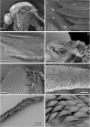
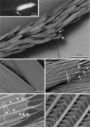
- SEM reveal that the body of Ae. albopictus is covered with scales and microtrichia (Figure 2). Scales of different shape are present on different body parts. Spatulate scales are the most common kind of scales. They are found on the thorax (Figure 2a,b), wings (Figure 2c), halters (Figure 2d), head
- in the morphology of black and white scales in SEM and TEM, except for the small difference in the distance between the longitudinal ridges. The scales appear black and white only under reflected light at low magnification. In our observation of the tarsal scales of Ae. aegypti in a light microscope



Mixed oxides with corundum-type structure obtained from recycling can seals as paint pigments: color stability
Beilstein J. Nanotechnol. 2023, 14, 467–477, doi:10.3762/bjnano.14.37
- results. The Raman modes are A1g (ca. 149 cm−1 and ca. 501 cm−1) and E1g (ca. 222 cm−1, ca. 290 cm−1, ca. 298 cm−1, ca. 402 cm−1, and ca. 615 cm−1, where 290 cm−1 and 298 cm−1 usually are a doublet with E1g symmetry and cannot be easily resolved [20]. Scanning electron microscopy (SEM) The morphology of
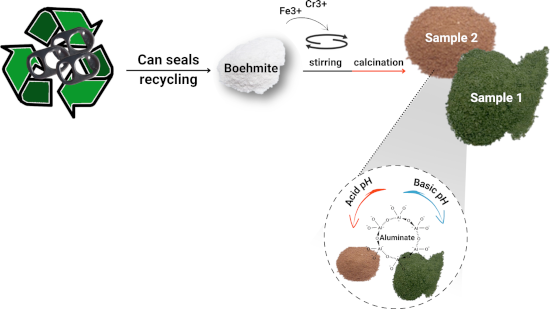
- together with recycled boehmite. The absorbance spectra indicate the presence of 3+ ions in the samples, which are responsible for the colors. The spectra also confirm the type of structure found via XRD and the oxidation state determined from XPS. SEM images show the characteristic morphology of this type
- -performance detector, with a power of 300 W. A scanning electron microscope Hitachi SU8020 SEM (Tokyo, Japan) was used to obtain morphology information. The oxidation state and composition of the chemical elements at the surface were evaluated by X-ray photoelectron spectroscopy (XPS) (Versaprobe PHI 5000


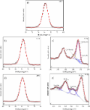


Conjugated photothermal materials and structure design for solar steam generation
Beilstein J. Nanotechnol. 2023, 14, 454–466, doi:10.3762/bjnano.14.36
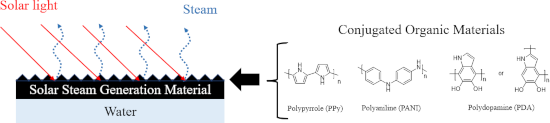
- hydrophobicity allows the material to float on water. Microporous structures were obtained by NaCl particulate leaching. The pore sizes could be flexibly controlled by the size of the NaCl template. This method is simple, low-cost, and easy to scale up. The surface structures of the foam were visualized by SEM
- B. Shao et al., J. Mater. Chem. A, vol. 8, issue 23, © 2020); permission conveyed through Copyright Clearance Center, Inc. This content is not subject to CC BY 4.0. (a) SEM images of the poly(1,3,5-hexahydro-1,3,5-triazine)-based foams at low (up) and high (down) magnifications. (b) An optical image


Evaluation of electrosynthesized reduced graphene oxide–Ni/Fe/Co-based (oxy)hydroxide catalysts towards the oxygen evolution reaction
Beilstein J. Nanotechnol. 2023, 14, 420–433, doi:10.3762/bjnano.14.34
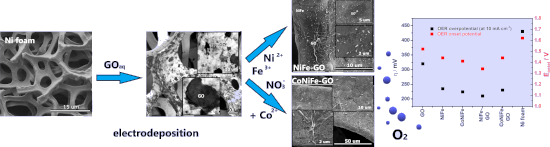
- the electrodeposition of conductive films on active metals [26]. The morphology of the deposits was analyzed by scanning electron microscopy (SEM) and is presented in Figure 1b–f. Typical GO flakes regularly distributed over the surface of the nickel foam were successfully obtained after the one-step
- interconnected nanoflakes, which formed a porous 3D structure uniformly distributed over the entire surface of the nickel foam (Figure 1d). The morphology of the catalysts changed after the combination of GO with NiFe and CoNiFe (Figure 1e,f). In each case, the SEM images clearly show the complete coverage of
- . Deposition of CoNiFe on the GO/Ni foam changed the shape of the GO flakes, with some visible agglomerations (Figure 1f). In contrast, the presence of GO resulted in the formation of a CoNiFe layer, which only remained an interconnected 3D porous material in some areas. Additional SEM images with different




Plasmonic nanotechnology for photothermal applications – an evaluation
Beilstein J. Nanotechnol. 2023, 14, 380–419, doi:10.3762/bjnano.14.33
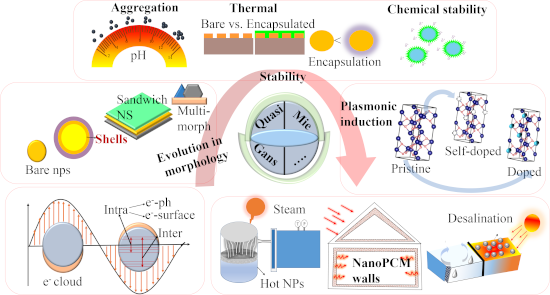


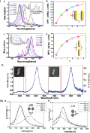


The steep road to nonviral nanomedicines: Frequent challenges and culprits in designing nanoparticles for gene therapy
Beilstein J. Nanotechnol. 2023, 14, 351–361, doi:10.3762/bjnano.14.30

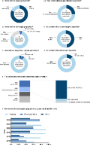
- offer some standards on the most commonly found techniques with an intent to provide a starting point for the development of repeatable protocols. Imaging (individual analysis) For particles that are readily measured in the solid state, we recommend the ISO 19749:221 standard for SEM analysis, ASTM

Polymer nanoparticles from low-energy nanoemulsions for biomedical applications
Beilstein J. Nanotechnol. 2023, 14, 339–350, doi:10.3762/bjnano.14.29
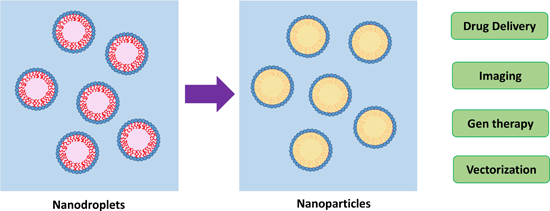
- 80/20 and water contents above 87 wt %, with droplet sizes in the 180–190 nm range. The derived ethyl cellulose nanoparticles had a size between 107 and 161 nm as estimated by TEM and SEM (Figure 2). Dexamethasone (DXM), a steroid with potent anti-inflammatory and immunosuppressant activity, was
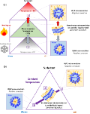
- concentration of nanoparticles in the as-prepared samples, improving surface functionalization, and expanding the range of polymers that can be processed by this approach. Schematics of the structural and curvature changes during (a) PIT and (b) PIC nanoemulsification. (A) TEM and (B) SEM images of ethyl




Biocatalytic synthesis and ordered self-assembly of silica nanoparticles via a silica-binding peptide
Beilstein J. Nanotechnol. 2023, 14, 280–290, doi:10.3762/bjnano.14.25
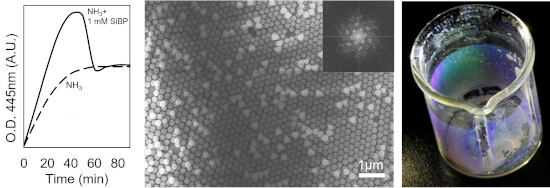
- scattering (DLS). The efficiency of the self-assembly was evaluated with scanning electron microscopy (SEM), UV–vis spectroscopy, and qualitative visual demonstration. Results and Discussion SiBP alone as catalyst Reaction kinetics were studied via OD measurements of the particles and GC analysis of
- of the particles into interconnected particle strands [26]. Our findings indicate that, when used alone, the positively charged SiBP can also act as a cationic emulsifier resulting in the branched fibrillar networks observed by SEM. In this aspect, when used alone, the SiBP mimicked the in vitro
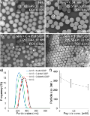
- . To further investigate this interesting profile, samples were collected from the NH3 + 1 mM SiBP reaction and the NH3 only reaction in the middle of the steep increase (20 min), at the peak point (45 min), and in the middle of the steep decrease (55 min) (Figure 4a). SEM analysis showed that very




A novel approach to pulsed laser deposition of platinum catalyst on carbon particles for use in polymer electrolyte membrane fuel cells
Beilstein J. Nanotechnol. 2023, 14, 190–204, doi:10.3762/bjnano.14.19
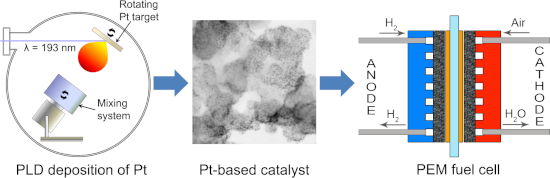
- ; ORR; PEMFCs; PLD deposition; Pt catalyst; rotating ring-disk electrode (RRDE); SEM; TEM; XPS; Introduction Fuel cells, which cleanly and efficiently convert the chemical energy of hydrogen or other fuels to electrical energy, are a good alternative to dirty and wasteful combustion engines for
- , morphology, and chemical composition of the fabricated catalysts were investigated using TEM, SEM, EDX, XPS, and Raman spectroscopy. Electrochemical measurements determined the performance of the fabricated catalysts. Results and Discussion Synthesis of a highly graphitized carbon material The synthesis of
- morphology of the carbon material was examined using a scanning electron microscope (SEM) equipped with energy-dispersive spectroscopy (EDS). SEM measurements of the samples were carried out using a Quanta 3D FEG microscope (FEI, United States). The surface imaging and EDS measurements were done at an



Batch preparation of nanofibers containing nanoparticles by an electrospinning device with multiple air inlets
Beilstein J. Nanotechnol. 2023, 14, 141–150, doi:10.3762/bjnano.14.15
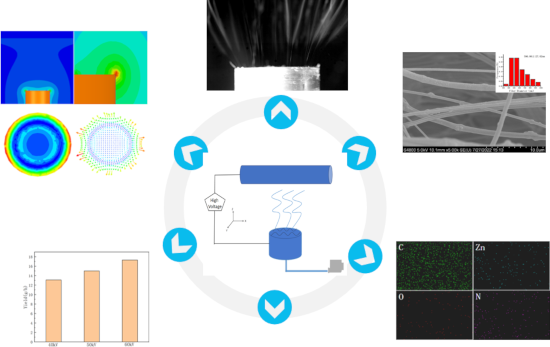
- using an electronic balance (XJ120A, Precisa LTD.). The nanofiber morphology was investigated by a scanning electron microscopy (SEM, Hitachi S4800, Hitachi LTD.), and Image J software (National Institute of Mental Health) was used to characterize the fiber diameter distribution by random selection of
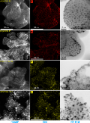
- 100 nanofibers from ten SEM images of each sample. Simultaneously, the element distribution on the sample surface was characterized by a desktop SEM (TM3030, Hitachi LTD.). Electric field simulation Maxwell 3D was used to simulate the electric field distribution of EMAI under different voltages (40


Formation of nanoflowers: Au and Ni silicide cores surrounded by SiOx branches
Beilstein J. Nanotechnol. 2023, 14, 133–140, doi:10.3762/bjnano.14.14
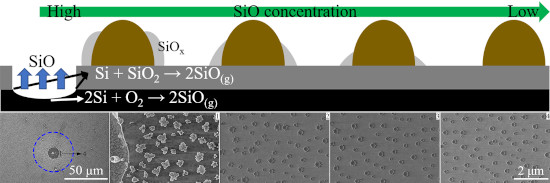
- annealed at 1050 °C was named 15Au5Ni. The morphology was imaged by optical microscopy (OM, Zeiss Axiotech) and high-resolution scanning electron microscopy (HR-SEM, Hitachi S-4800) equipped with energy-dispersive X-ray spectroscopy (EDS, Thermo Scientific). The SEM images were recorded by using mixed
- epitaxial line structures inside the decomposition cavity. Supporting Information Supporting Information File 36: Additional OM, LSM, SEM, EDS and XRD measurements. Acknowledgements Joachim Döll from the Center of Micro- and Nanotechnology (ZMN), a DFG-funded core facility at TU Ilmenau, is acknowledged


Antimicrobial and mechanical properties of functionalized textile by nanoarchitectured photoinduced Ag@polymer coating
Beilstein J. Nanotechnol. 2023, 14, 95–109, doi:10.3762/bjnano.14.11
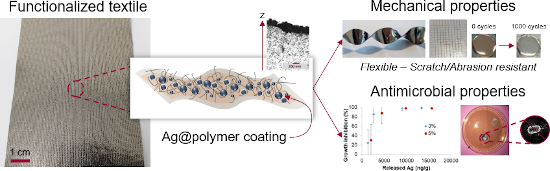
- electron microscopy (SEM), transmission electron microscopy (TEM), and reflectance measurements to assess the optical properties and the durability of the functionalized textiles. Results and Discussion Photoinduced synthesis of the Ag@polymer coating Specific monomers poly(ethylene glycol) 600 diacrylate
- , as well as the final thickness of the metallic layer, account for this difference in reflectivity. Scanning electron microscopy (SEM) carried out on the surface of functionalized textiles revealed the homogenous distribution of AgNPs, with average sizes of 62 ± 2 nm and 58 ± 1 nm for the Ag@PEG600DA
- surface roughness, as can be seen in the SEM images (Figure 7c). Consequently, the diffuse reflectivity drops in favor of the specular reflectance. The particles are no longer simply juxtaposed but form a continuous silver layer, especially after 1000 friction cycles. The characteristic silver plasmon



Combining physical vapor deposition structuration with dealloying for the creation of a highly efficient SERS platform
Beilstein J. Nanotechnol. 2023, 14, 83–94, doi:10.3762/bjnano.14.10
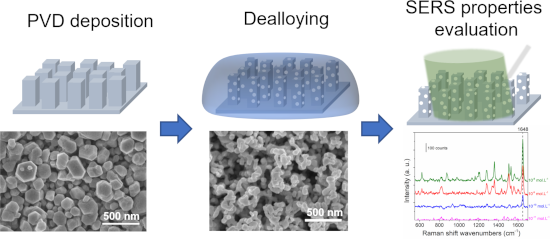
- SERS properties of the nanoporous structure. Using scanning electron microscopy (SEM) and X-ray photoelectron spectroscopy (XPS) the morphology and surface composition of each nanoporous structure were respectively evaluated and used to describe the SERS properties of the samples. Results and
- to the alloy thin film. Three different silver compositions were selected, namely 18, 30, and 36 atom %, and characterized by SEM/energy-dispersive X-ray spectroscopy (EDX). Figure 1 displays the SEM micrograph of the as-deposited thin films. The thin films exhibit a columnar morphology (see the
- cross-section SEM images in Figure 1d–f). The top view images (Figure 1a–c) reveal the presence of dispersed hexagonal columns. A possible explanation for the formation of the hexagonal structure is due to the Guinier–Preston (GP) zone of the silver–aluminum alloy system [31]. The GP zone induces the