


Search results
Search for "X-ray diffraction" in Full Text gives 588 result(s) in Beilstein Journal of Nanotechnology. Showing first 200.
Synthesis of amorphous and graphitized porous nitrogen-doped carbon spheres as oxygen reduction reaction catalysts
Beilstein J. Nanotechnol. 2020, 11, 1–15, doi:10.3762/bjnano.11.1
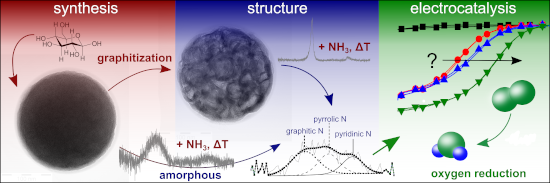
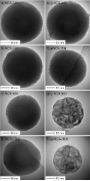
- %). TEM images (Figure 3a–d) reveal no highly ordered domains (e.g., graphene layers) of the said N-doped carbon spheres, which is in good agreement with the results of the X-ray diffraction measurements (XRD, Figure 4), confirming an amorphous carbon structure for all particles mentioned so far. Upon
- thickness of the graphite layers Lc determined by X-ray diffraction measurements. Similar observation was made by Liu et al. for carbon spheres that were synthesized by hydrothermal treatment of a sucrose solution and subsequently graphitized in the presence of nickel-oxide particles. High-resolution TEM
- (Shirley background; peak shape: 70% Gaussian/30% Lorentzian) was carried out using the CasaXPS software package. X-ray diffraction (XRD) measurements were performed using a Bruker D8 Advance instrument (Bruker Karlsruhe), employing Cu Kα radiation (λ = 0.154 nm) in a 2θ range of 5° to 80° (0.02




Synthesis and acetone sensing properties of ZnFe2O4/rGO gas sensors
Beilstein J. Nanotechnol. 2019, 10, 2516–2526, doi:10.3762/bjnano.10.242
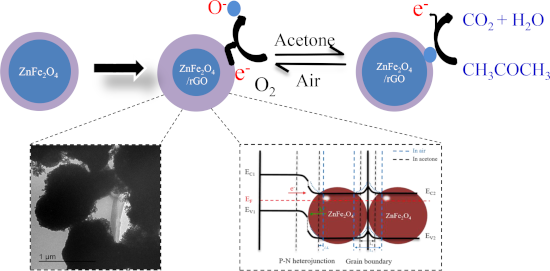
- of ZnFe2O4 and reduced graphene oxide (rGO) with different rGO content were prepared via a simple solvothermal method followed by a high-temperature annealing process in an inert atmosphere. The X-ray diffraction analysis confirmed that the introduction of rGO had no effect on the spinel structure of
- rate of 5 °C/min to reduce GO to rGO [33][34], and five samples were obtained: hollow spheres of pure ZnFe2O4 and ZnFe2O4/rGO composite spheres with 0.1, 0.25, 0.5 and 1 wt % of rGO. Characterization methods The crystal phases of pure ZnFe2O4 and the ZnFe2O4/rGO composites were characterized by X-ray
- diffraction (XRD, Bruker D8 Advance) using Cu Kα radiation at room temperature. The 2θ range was 10−80°, and the scanning rate was 5°·min−1. The microscopic morphology and the size of all samples were observed using a field-emission scanning electron microscope equipped with an energy-dispersive spectrometer




Air oxidation of sulfur mustard gas simulants using a pyrene-based metal–organic framework photocatalyst
Beilstein J. Nanotechnol. 2019, 10, 2422–2427, doi:10.3762/bjnano.10.232
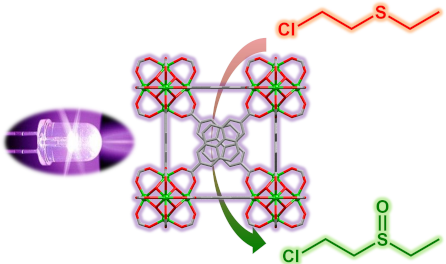
- carbonylation reaction was utilized with 2,7-dibromopyrene as the starting material [46]. Powder X-ray diffraction (PXRD) analysis of the as-synthesized materials revealed that NU-400 is isostructural to the related UiO-67 framework based on 4,4'-biphenyldicarboxylate linkers. Subsequently, the structure of NU




Coating of upconversion nanoparticles with silica nanoshells of 5–250 nm thickness
Beilstein J. Nanotechnol. 2019, 10, 2410–2421, doi:10.3762/bjnano.10.231
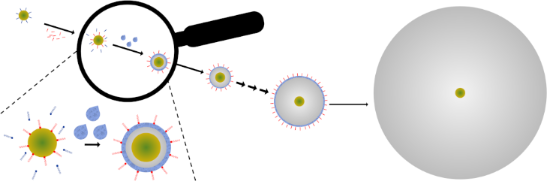
- particles of similar sizes [58][60][61]. Since the surface of the particles corresponds to that of particles from a standard Stöber synthesis, the colloids can be functionalized with the same diverse methods as Stöber silica particles [58]. Figure S5 in Supporting Information File 1 shows X-ray diffraction
- , 20 and 40 ppm) or erbium standard for ICP (c(Er3+) = 1, 5 and 10 ppm). X-ray diffraction (XRD) measurements A minimum amount of 10 mg of dried particles were used for the XRD measurements. The XRD device was a Rigaku SmartLab 3 kW with a DTex Ultra 250 detector (40 kV, 30 mA) equipped with a Cu Kα1


Semitransparent Sb2S3 thin film solar cells by ultrasonic spray pyrolysis for use in solar windows
Beilstein J. Nanotechnol. 2019, 10, 2396–2409, doi:10.3762/bjnano.10.230
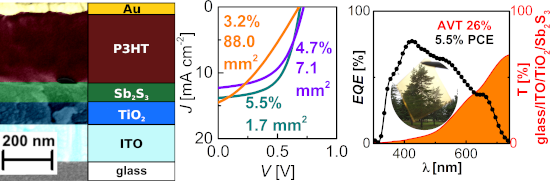
- and back contact is needed to attain an AVT in excess of 20% for the complete solar cell. As-deposited Sb2S3 layers on glass/ITO/TiO2 substrate were amorphous (Figure 1d), as only signals of anatase-TiO2 and In2O3 from the substrate were detected by X-ray diffraction (XRD). In contrast, the XRD
- the I–V measurements. Surface views, by scanning electron microscopy (SEM) of 70 nm (a) and 100 nm (b) thick annealed Sb2S3 layers on a glass/ITO/TiO2 substrate. Photograph (c) of a 5 × 5 cm semitransparent (AVT 26%) stack of glass/ITO/TiO2/100 nm annealed Sb2S3, photographed by J. S. Eensalu. X-ray
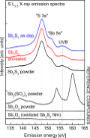
- diffraction patterns (d) and Raman spectra (e) of as-deposited and vacuum-annealed Sb2S3 layers on glass/ITO/TiO2 substrate. S L2,3 XES spectra of two Sb2S3 films, as-deposited (“as-dep.”, blue) and after post-deposition treatment (“annealed”, red), both on a glass/ITO/TiO2 underlay (excitation energy 180 eV



Polyvinylpyrrolidone as additive for perovskite solar cells with water and isopropanol as solvents
Beilstein J. Nanotechnol. 2019, 10, 2374–2382, doi:10.3762/bjnano.10.228
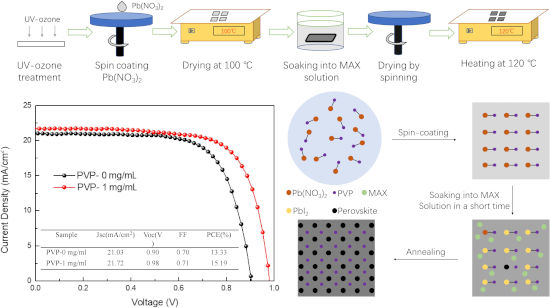
- SUPRA55. X-ray diffraction (XRD) patterns were collected with a SmartLab from Rigaku at 40 kV and 150 mA by using Cu Kα radiation (λ = 0.15405 nm). The photovoltaic performance of the PSCs was recorded using a Keithley 4200 source meter under one-sun AM 1.5G (100 mW·cm−2) illumination with a solar light




Design and facile synthesis of defect-rich C-MoS2/rGO nanosheets for enhanced lithium–sulfur battery performance
Beilstein J. Nanotechnol. 2019, 10, 2251–2260, doi:10.3762/bjnano.10.217
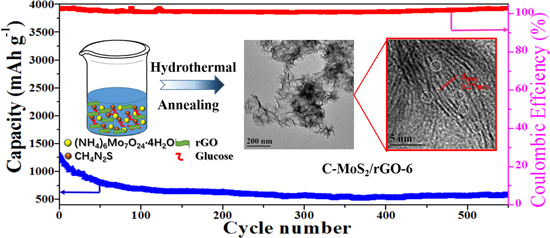
- Libra 200). Powder X-ray diffraction (XRD) measurements were conducted to determine the phase of the as-synthesized composites with Cu Kα radiation operated at 40 kV and 30 mA. X-ray photoelectron spectroscopy (XPS) analysis was performed on a Kratos AXIS Ultra DLD instrument using monochromated Al Kα X


Targeted therapeutic effect against the breast cancer cell line MCF-7 with a CuFe2O4/silica/cisplatin nanocomposite formulation
Beilstein J. Nanotechnol. 2019, 10, 2217–2228, doi:10.3762/bjnano.10.214
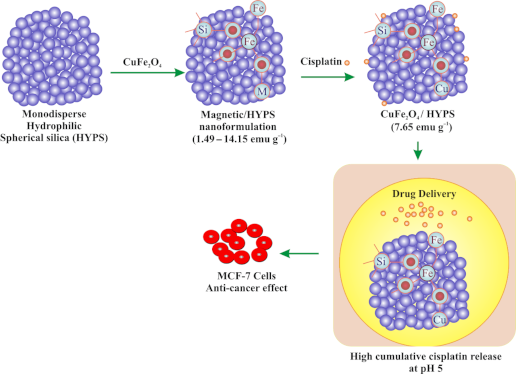
- saline solution. The presence of cubic spinel CuFe2O4 on HYPS was confirmed through powder X-ray diffraction (PXRD), Fourier transform infrared spectroscopy (FTIR) and diffuse reflectance UV–vis spectroscopy (DR UV–vis) analysis. The HYPS particles showed a surface area of 170 m2/g, pore size of 8.3 nm
- multifunctional biomedical applications. The crystalline phase, morphology, magnetization, and coordination environment of various spinel species were characterized using X-ray diffraction (XRD), BET surface area measurements, vibrating sample magnetometry (VSM), diffuse reflectance UV–vis spectroscopy (DR UV–vis
- and CuFe2O4/silicalite. Characterization techniques Powder X-ray diffraction (PXRD) patterns for the CuFe2O4/HYPS nanoformulation were analyzed using a Miniflex 600 instrument (Rigaku, Japan). The surface textures the formulations were analyzed with a ASAP-2020 plus (Micromeritics, USA) instrument


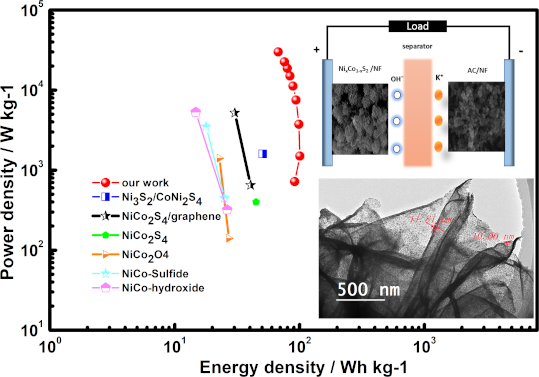
Ultrathin Ni1−xCoxS2 nanoflakes as high energy density electrode materials for asymmetric supercapacitors
Beilstein J. Nanotechnol. 2019, 10, 2207–2216, doi:10.3762/bjnano.10.213
- analysed using X-ray photoelectron spectroscopy (XPS, Kratos AXIS Supra photoelectron spectrometer, Al Kα excitation (1486.6 eV)). Crystalline structure and composition of the samples were characterized by powder X-ray diffraction analysis (XRD, PANaytical MPD) using a Cu Kα (8047.8 eV) radiation source
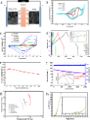
- energy density of 67.5 Wh·kg−1), and excellent cycling stability and capacity retention. These results can be credited to synergic effects rich and fast redox reactions, high conductivity, as well as highly porous and robust ultrathin nanoflakes structures. (a) X-ray diffraction patterns of Ni1−xCoxS2


BergaCare SmartLipids: commercial lipophilic active concentrates for improved performance of dermal products
Beilstein J. Nanotechnol. 2019, 10, 2152–2162, doi:10.3762/bjnano.10.208
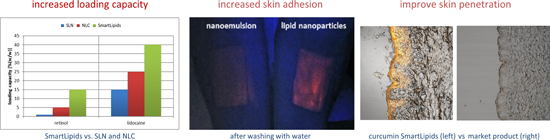
- loaded active agents, which can be measured by combining differential scanning calorimetry (DSC) with X-ray diffraction. Ruick showed a fast transition from the α modification to the β modification when SLNs were produced with tristearin (Figure 3), while a SmartLipids mixture with eight solid lipids
- ][13] (left) and lidocaine [14] (right). X-ray diffraction patterns of SLNs (pink curve) and SmartLipids mixture (red curve) determined directly after production and after one month (SLNs: blue curve) and one year (SmartLipids: black curve) storage at room temperature [5]. Fast degradation of


Green and scalable synthesis of nanocrystalline kuramite
Beilstein J. Nanotechnol. 2019, 10, 2073–2083, doi:10.3762/bjnano.10.202
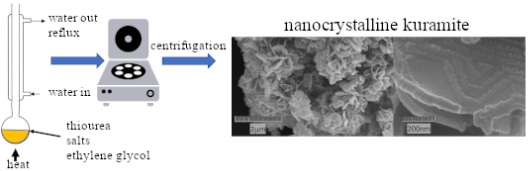
- of nanocrystalline kuramite by means of a simpler, greener and scalable solvothermal synthesis. We exploited a multianalytical characterization approach (X-ray diffraction, extended X-ray absorption fine structure, field emission scanning electron microscopy, Raman spectroscopy and electronic
- others. Natural ternary Cu–Sn–S phases populate the pseudo ternary compositional field mostly along the two CuS–SnS and Cu2S–SnS2 joints [36][44]. Their nanocrystalline counterparts have broadened X-ray diffraction peaks. This limits the discrimination of the different phases and the study of their
- . We synthesized three samples using a solvothermal approach, which was carried out under mild conditions in ethylene glycol as a green solvent. We tackled the aforementioned difficulties in phase assignment by means of thorough characterization, including X-ray diffraction (XRD), scanning electron


Synthesis of highly active ETS-10-based titanosilicate for heterogeneously catalyzed transesterification of triglycerides
Beilstein J. Nanotechnol. 2019, 10, 2039–2061, doi:10.3762/bjnano.10.200
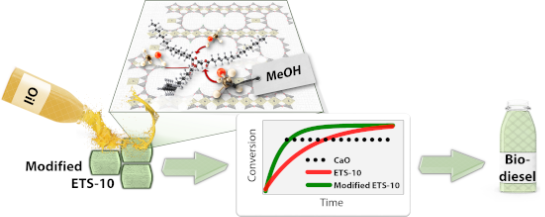
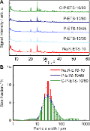
- maximum conversion of 83% after 24 h, the ETS-10-based catalyst reached 100% after 8 h, revealing its higher stability compared to CaO. The following characteristics of the catalysts were experimentally addressed – crystal structure (X-ray diffraction, transmission electron microscopy), crystal shape and
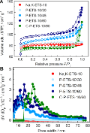
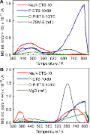
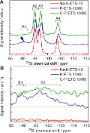
- catalysts were characterized to obtain quantitative information on properties such as crystal structure by X-ray diffraction (XRD), crystal size by laser diffraction, crystal morphology by scanning electron microscopy (SEM) and transmission electron microscopy (TEM), pore width by N2 sorption and Hg








Nanostructured and oriented metal–organic framework films enabling extreme surface wetting properties
Beilstein J. Nanotechnol. 2019, 10, 1994–2003, doi:10.3762/bjnano.10.196
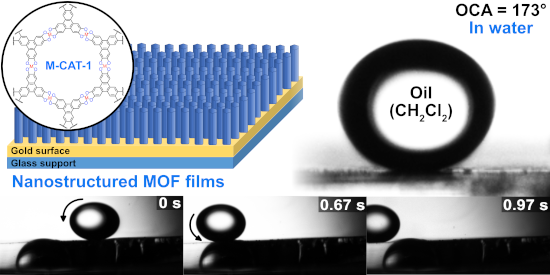
- reflections at qy = 3.9 nm−1 (100), qy = 7.1 nm−1 (200) and qy = 9.2 nm−1 (210) near qz = 0 were indexed according to the powder X-ray diffraction pattern of Co-CAT-1. The (004) reflection, referred to as the in-plane reflection, is visible as a diffuse arc at qz =19 nm−1 (for further details see Supporting


Magnetic properties of biofunctionalized iron oxide nanoparticles as magnetic resonance imaging contrast agents
Beilstein J. Nanotechnol. 2019, 10, 1964–1972, doi:10.3762/bjnano.10.193
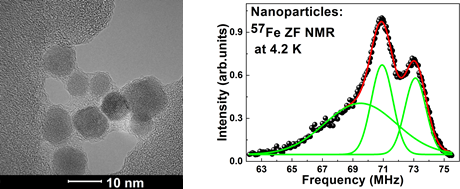
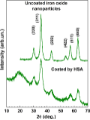
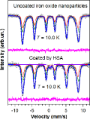
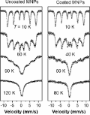
- nanoparticles designed for use as MRI contrast media are precisely examined by a variety of methods: powder X-ray diffraction (XRD), transmission electron microscopy (TEM), Raman spectroscopy, Mössbauer spectroscopy and zero-field nuclear magnetic resonance (ZF-NMR) spectroscopy. TEM and XRD measurements reveal
- nanoparticles, has been repeatedly emphasized, and the exact composition of the MNPs is usually determined using X-ray diffraction (XRD) or Mössbauer spectroscopy with and without magnetic field [12][13][14]. In this work, we show other options for solving this problem using Raman and nuclear magnetic resonance
- Mössbauer and the Raman spectroscopy, measurements and analysis, by the Ministry of Science and Higher Education of the Russian Federation within the State assignment FSRC “Crystallography and Photonics” RAS concerning the TEM. Powder X-ray diffraction measurements were partly performed using the equipment




Facile synthesis of carbon nanotube-supported NiO//Fe2O3 for all-solid-state supercapacitors
Beilstein J. Nanotechnol. 2019, 10, 1923–1932, doi:10.3762/bjnano.10.188
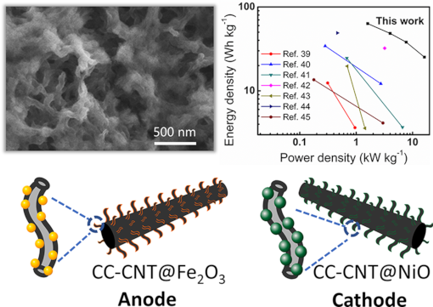
- -SEM, Hitachi S-4800) and a transmission electron microscope (TEM, FEI Tecnai F30) coupled with an energy dispersive X-ray spectrometer. Crystal structures were tested by X-ray diffraction (XRD, Philips, X’pert Pro, Cu Kα, 0.154056 nm). The vibrational information of chemical bonds of samples was


High-tolerance crystalline hydrogels formed from self-assembling cyclic dipeptide
Beilstein J. Nanotechnol. 2019, 10, 1894–1901, doi:10.3762/bjnano.10.184
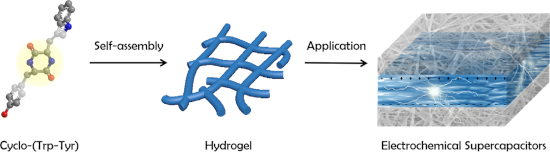
- domains (red regions) (Figure 2B) and beta-sheet secondary structures (blue regions) (Figure 2C). Intriguingly, the X-ray diffraction (XRD) results showed the presence of sharp peaks, indicating that the hydrogel has long-range, ordered, crystal patterns (Figure 2D). The crystal patterns were further


Charge-transfer interactions between fullerenes and a mesoporous tetrathiafulvalene-based metal–organic framework
Beilstein J. Nanotechnol. 2019, 10, 1883–1893, doi:10.3762/bjnano.10.183
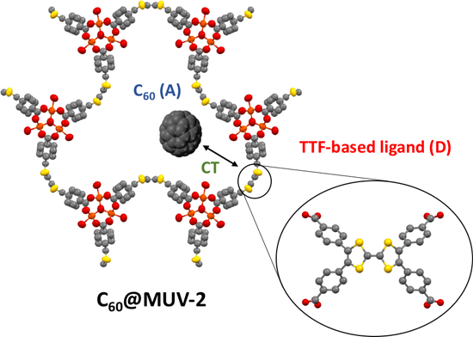
- three days at 60 °C. Then, the material was exhaustively washed with o-dichlorobenzene in order to remove the physisorbed C60 on the MOF surface, washed with methanol and dried at 150 °C for 2 h. The powder X-ray diffraction (PXRD) pattern of C60@MUV-2 shows that the principal peak remains at 3.4
- and solvents employed for the syntheses were of high purity and were purchased from Sigma-Aldrich Co., and TCI. Powder X-ray diffraction patterns were recorded using 0.7 mm borosilicate capillaries that were aligned on an Empyrean PANalytical powder diffractometer, using Cu Kα radiation (λ = 1.54056 Å
- red spheres represent C, S, Fe and O atoms, respectively. Powder X-ray diffraction (PXRD) patterns of simulated and experimental desolvated MUV-2 and C60@MUV-2. a) Raman spectra of C60, MUV-2 and C60@MUV-2. b) Solid-state UV–vis spectra of MUV-2 and C60@MUV-2. The spectra were recorded by dispersing




Fabrication and characterization of Si1−xGex nanocrystals in as-grown and annealed structures: a comparative study
Beilstein J. Nanotechnol. 2019, 10, 1873–1882, doi:10.3762/bjnano.10.182
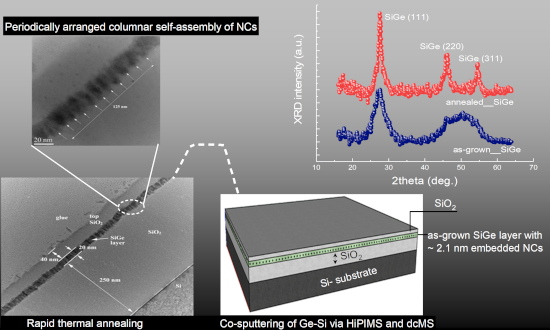
- impulse magnetron sputtering (HiPIMS). The as-grown structures subsequently underwent rapid thermal annealing (550–900 °C for 1 min) in N2 ambient atmosphere. The structures were investigated using X-ray diffraction, high-resolution transmission electron microscopy together with spectral photocurrent
- incidence X-ray diffraction (GIXRD) and high-resolution transmission electron microscopy (HRTEM). Strain relaxation and its effect on the formation of NCs and the resulting interface integrity was studied and compared with structures having a thicker (ca. 200 nm) SiGe layer [23], deposited by radio
- grazing incidence XRD (GIXRD) and X-ray reflectometry (XRR) via Philips X'pert diffractometer (Cu Kα, 0.15406 nm, precision of 0.00001°) and Jeol ARM 200F transmission electron microscopy (TEM). For the X-ray diffraction scans, a 2×Ge(220) asymmetrical hybrid monochromator utilizing line focus, with a 1/4


Long-term entrapment and temperature-controlled-release of SF6 gas in metal–organic frameworks (MOFs)
Beilstein J. Nanotechnol. 2019, 10, 1851–1859, doi:10.3762/bjnano.10.180
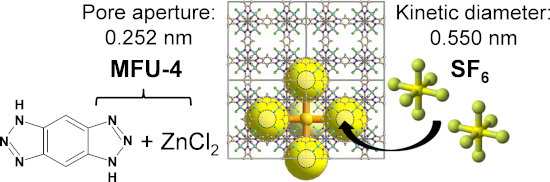
- included powder X-ray diffraction measurements, thermogravimetric analysis, Fourier-transform infrared spectroscopy, scanning electron microscopy, 19F nuclear magnetic resonance spectroscopy and computational simulations. In addition, the possibility to release the gas guest by applying elevated
- molecules left in the pores, thus ensuring that the whole pore volume was available for trapping the SF6 guest. The bulk sample was analyzed before and after the gas loading by conventional analytical methods, including FTIR, powder X-ray diffraction (XRD) and thermogravimetric analysis (TGA). SF6-loading
- SF6. Bands attributed to SF6 are marked with an asterisk. Powder X-ray diffraction analysis of MFU-4 before (black) and after (Sample 3a, blue) the loading of SF6. 19F MAS NMR spectrum of MFU-4 (Sample 3b) loaded with SF6 recorded at room temperature. The spectrum was referenced against CFCl3. (a) MFU


Lipid nanostructures for antioxidant delivery: a comparative preformulation study
Beilstein J. Nanotechnol. 2019, 10, 1789–1801, doi:10.3762/bjnano.10.174
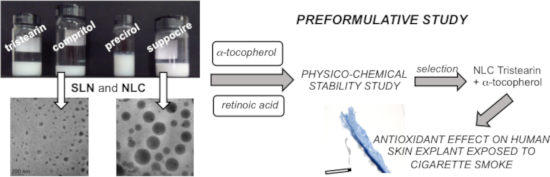
- transmission electron microscopy, small-angle X-ray diffraction, encapsulation efficiency, preliminary stability, in vitro cytotoxicity and protection against cigarette smoke. Nanostructured lipid carriers were found to reduce agglomerate formation and provided better dimensional stability, as compared to
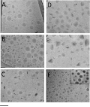
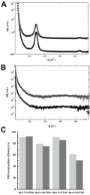

Biocatalytic oligomerization-induced self-assembly of crystalline cellulose oligomers into nanoribbon networks assisted by organic solvents
Beilstein J. Nanotechnol. 2019, 10, 1778–1788, doi:10.3762/bjnano.10.173
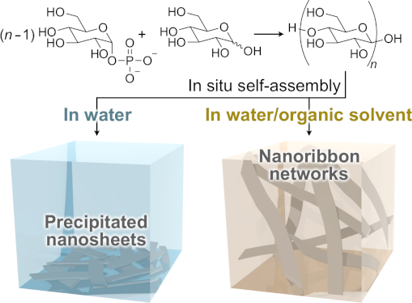
- discussed further below. The crystal structure of the representative products was analyzed by X-ray diffraction (XRD) measurements and attenuated total reflection Fourier-transform infrared (ATR-FTIR) absorption spectroscopy. The XRD profiles showed three peaks at 2θ (θ is the Bragg angle) of 12.2, 19.9





Synthesis of nickel/gallium nanoalloys using a dual-source approach in 1-alkyl-3-methylimidazole ionic liquids
Beilstein J. Nanotechnol. 2019, 10, 1754–1767, doi:10.3762/bjnano.10.171
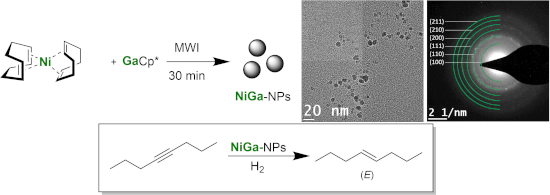
- at 230 °C, a black powder was obtained after 10 min. The TEM measurements show spherical and non-aggregated nanoparticles with a narrow size distribution of 3.0 ± 0.5 nm (Figure 1). To validate the intermetallic 1:1 NiGa phase of the obtained nanoparticles, powder X-ray diffraction pattern (P-XRD) or
- column). The water content measured by coulometric Karl-Fischer titration was below 10 ppm. Powder X-ray diffraction. PXRD data were obtained at ambient temperature on a Bruker D2 Phaser using a flat sample holder and Cu Kα radiation (λ = 1.54182 Å, 35 kV). Samples had been precipitated with acetonitrile




The impact of crystal size and temperature on the adsorption-induced flexibility of the Zr-based metal–organic framework DUT-98
Beilstein J. Nanotechnol. 2019, 10, 1737–1744, doi:10.3762/bjnano.10.169
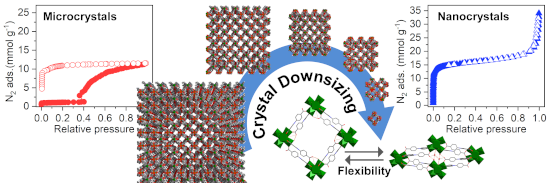
- fragmentation of the crystals. In a series of samples, the average crystal size of DUT-98 crystals was varied from 120 µm to 50 nm and the obtained solids were characterized by X-ray diffraction, infrared spectroscopy, as well as scanning and transmission electron microscopy. We analyzed the adsorption behavior
- -dependent steep water uptake of up to 20 mmol g−1 at 0.5 p/p0 with potential for water harvesting and heat pump applications. We furthermore investigate the temperature-induced structural transition by in situ powder X-ray diffraction. At temperatures beyond 110 °C, the open-pore state of the nanometer
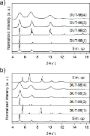
- were analyzed by powder X-ray diffraction (PXRD), illustrating the phase purity of the desired DUT-98op (open pore) phase (Figure 4). A significant peak broadening is observed for samples 3 and 4, which is indicative of the presence of nanometer-sized crystals. Quantitative analysis of the mean crystal



TiO2/GO-coated functional separator to suppress polysulfide migration in lithium–sulfur batteries
Beilstein J. Nanotechnol. 2019, 10, 1726–1736, doi:10.3762/bjnano.10.168
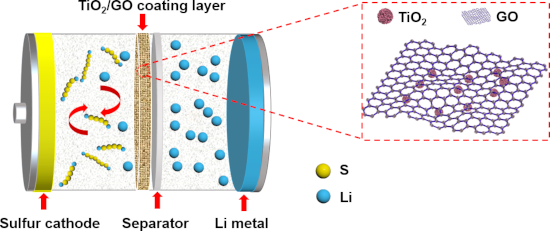
- , which guarantees the excellent cyclic stability and desirable rate performance of Li/S batteries. Figure 2a shows X-ray diffraction (XRD) patterns of the as-spun and as-dealloyed sample. The TiAl foil exhibits Al3Ti (JCPDS 65-2667) and Al (JCPDS 65-2869) phases. After dealloying, the specimen shows a


Novel hollow titanium dioxide nanospheres with antimicrobial activity against resistant bacteria
Beilstein J. Nanotechnol. 2019, 10, 1716–1725, doi:10.3762/bjnano.10.167
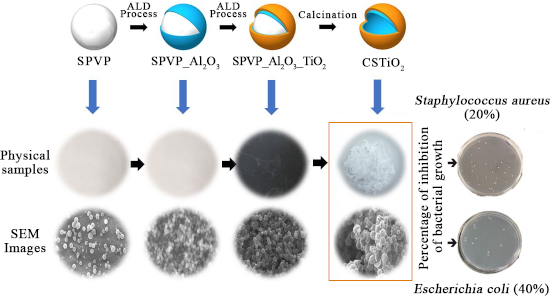
- and titanium dioxide, and after a calcination process, hollow nanospheres were obtained with a radius of approximately 345 nm and shell thickness of 17 nm. The structural characterization was performed using electron microscopy, and X-ray diffraction and small-angle X-ray diffraction evidenced an





