


Search results
Search for "acetone" in Full Text gives 366 result(s) in Beilstein Journal of Nanotechnology. Showing first 200.
A review of carbon-based and non-carbon-based catalyst supports for the selective catalytic reduction of nitric oxide
Beilstein J. Nanotechnol. 2018, 9, 740–761, doi:10.3762/bjnano.9.68
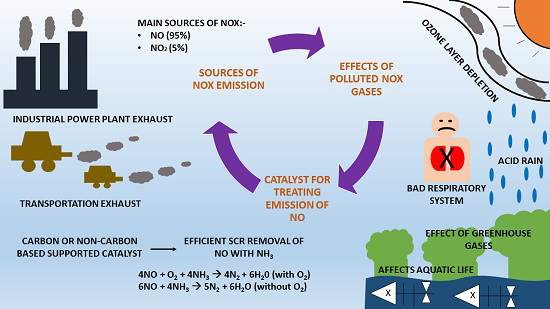
- are known to be hydrophobic in nature. These materials normally show a low affinity against polar solvents, such as water, and in other cases, have a high affinity against non-polar solvents, such as acetone. Although the essence of carbon-based materials are mostly likely to be hydrophobic, which
Synthesis and characterization of two new TiO2-containing benzothiazole-based imine composites for organic device applications
Beilstein J. Nanotechnol. 2018, 9, 721–739, doi:10.3762/bjnano.9.67
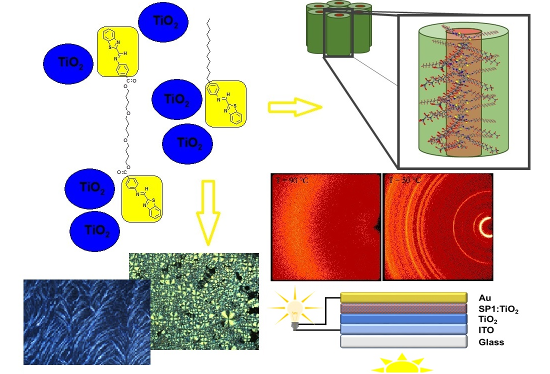
- min, and then the temperature was raised to 170 °C and kept on for 24 h under positive nitrogen pressure. The mixture was then cooled to room temperature, scraped and powdered. The crude product was washed three times with ethanol (3 × 500 mL) and then two times with acetone (2 × 300 mL) to remove
- . The reaction was conducted in argon atmosphere and the condenser was fitted with a Dean–Stark trap. After cooling, the mixture was precipitated with 100 mL of ethanol. The crude product was washed three times with methanol (1500 mL) and then twice with acetone (800 mL) to remove unreacted monomers
- )/Au multilayer structures. First, the ITO-coated glass substrate was cleaned by ultrasonication in acetone and isopropanol for ≈20 min and oxygen plasma for 30 s. TiO2 (3Dnano P25, average particle size 21 ± 5 nm, mixed rutile (20%)/anatase (80%) phases, and a surface area of 50 m2/g) was mixed with






Combined pulsed laser deposition and non-contact atomic force microscopy system for studies of insulator metal oxide thin films
Beilstein J. Nanotechnol. 2018, 9, 686–692, doi:10.3762/bjnano.9.63
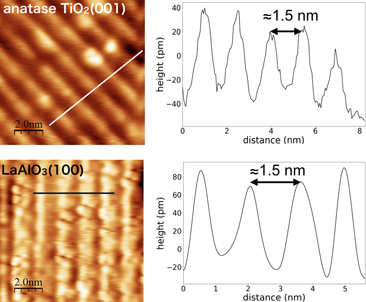
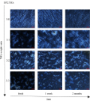
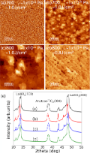
- ). (e) XRD patterns for the samples shown in (a–d). The samples were prepared under different conditions of annealing temperature, oxygen partial pressure, and laser power density as shown in the AFM images. The pulsed laser frequency was fp = 2 Hz. The samples were washed with acetone and ultrapure


Optimisation of purification techniques for the preparation of large-volume aqueous solar nanoparticle inks for organic photovoltaics
Beilstein J. Nanotechnol. 2018, 9, 649–659, doi:10.3762/bjnano.9.60
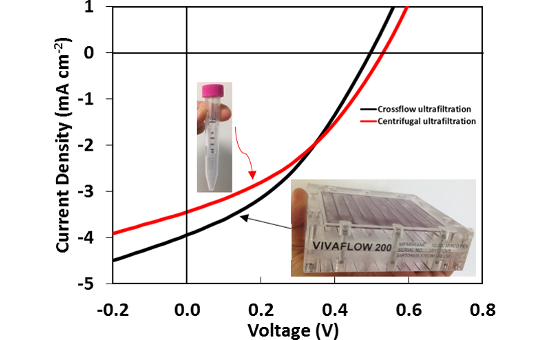
- with 112 rpm/s acceleration for 1 min. Device fabrication On pre-cleaned (water, acetone and isopropanol) patterned ITO glass substrates PEDOT:PSS (HTL Solar) films were spin-coated at 5000 rpm for 1 min and baked for 30 min at 140 °C (film thickness of 35 ± 5 nm). On top of the PEDOT:PSS layer, the


Sensing behavior of flower-shaped MoS2 nanoflakes: case study with methanol and xylene
Beilstein J. Nanotechnol. 2018, 9, 608–615, doi:10.3762/bjnano.9.57

- a good sensor to detect acetone with response to methanol [14]. There are also investigations that marked the high response of MoS2 toward methanol and ethanol [15]. Besides these experimental reports, there are numerous theoretical investigations which illustrate the potential of MoS2 for detecting
- . The substrates were immersed in acetone and isopropyl alcohol and sonicated for 15 min to remove any undesired surface ions. A 200 nm Pt film as a snake-shaped heater was sputtered on the back of the substrate using a sputter coater from Nanostructured Coatings Co. To fabricate the sensor device


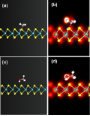
Electron interactions with the heteronuclear carbonyl precursor H2FeRu3(CO)13 and comparison with HFeCo3(CO)12: from fundamental gas phase and surface science studies to focused electron beam induced deposition
Beilstein J. Nanotechnol. 2018, 9, 555–579, doi:10.3762/bjnano.9.53
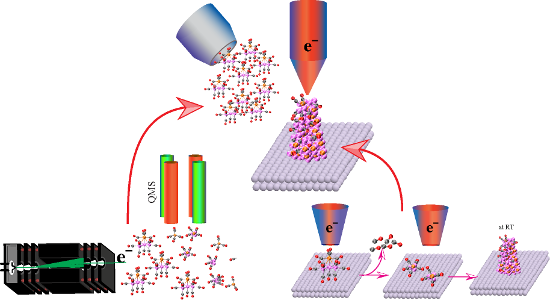


Sugarcane juice derived carbon dot–graphitic carbon nitride composites for bisphenol A degradation under sunlight irradiation
Beilstein J. Nanotechnol. 2018, 9, 353–363, doi:10.3762/bjnano.9.35
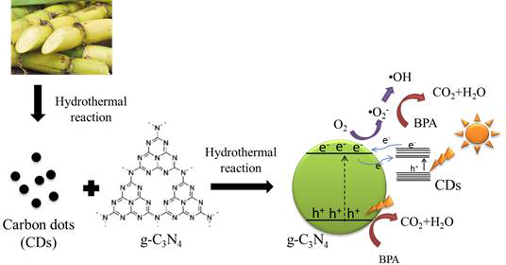
- extracted into a beaker. The acetone solution was added excessively into the solution and centrifuged at 10,000 rpm for 15 min to remove the remaining deposit. A clear yellowish-brown solution was obtained. Preparation of CD/g-C3N4 composites 0.2 g of g-C3N4 was mixed with the previously prepared CD


Design of polar self-assembling lactic acid derivatives possessing submicrometre helical pitch
Beilstein J. Nanotechnol. 2018, 9, 333–341, doi:10.3762/bjnano.9.33
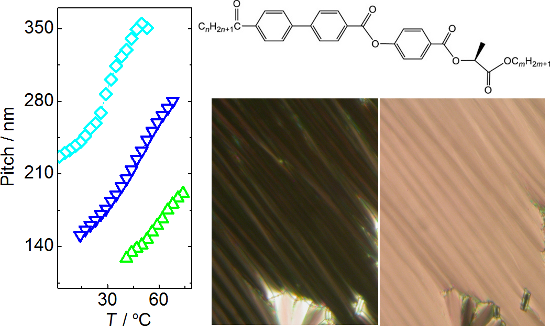
- performed similarly as generally described in [37]. The specific reaction scheme for the synthetic design is presented in Scheme 1. The crude products were purified by column chromatography on silica gel (Kieselgel 60, Merck, Darmstadt) using a mixture of CH2Cl2 and acetone (99.8:0.2) as the eluent and


Wafer-scale bioactive substrate patterning by chemical lift-off lithography
Beilstein J. Nanotechnol. 2018, 9, 311–320, doi:10.3762/bjnano.9.31
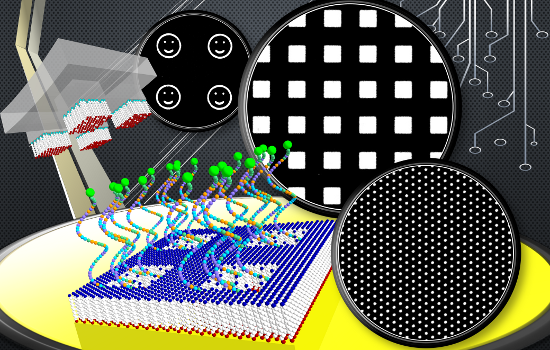
- , USA) was thoroughly mixed, degassed under vacuum, cast onto master molds, and cured on an aluminum-top hot plate at 100 °C overnight. The PDMS stamps were separated from the master molds, sequentially rinsed with acetone and isopropanol, and then blown dry with nitrogen gas. The prepared stamps were


Bombyx mori silk/titania/gold hybrid materials for photocatalytic water splitting: combining renewable raw materials with clean fuels
Beilstein J. Nanotechnol. 2018, 9, 187–204, doi:10.3762/bjnano.9.21
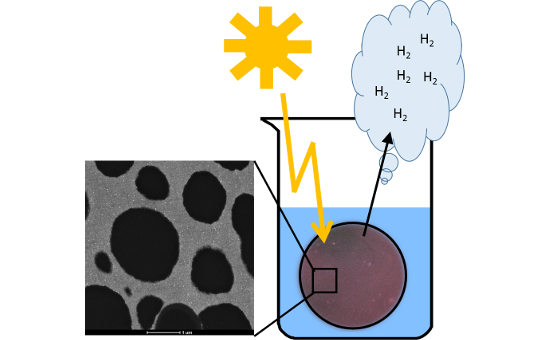
- sulfate (MgSO4, AnalaR Normapure, VWR), sodium phosphate monobasic (NaH2PO4, ACS reagent, Sigma Aldrich), uranyl acetate (p.a., Merck), ethanol absolute (EtOHabs, ≥99.8%, Carl Roth), acetone (≥99.8%, Carl Roth), AGAR Low Viscosity Resin (Plano), and PLANOCARBON (Plano) were used as received. Water-free
- ., and 2× 100% acetoneabs. for 15 min each. Finally, the materials were immersed in Agar Low Viscosity Resin/acetone (1:2 wt/wt) mixtures for 2 h, then in resin/acetone (1:1 wt/wt) mixtures for 2 h, and then in pure resin overnight under a rotatory motion. The as-prepared samples were transferred into a




Electrical properties of a liquid crystal dispersed in an electrospun cellulose acetate network
Beilstein J. Nanotechnol. 2018, 9, 155–163, doi:10.3762/bjnano.9.18
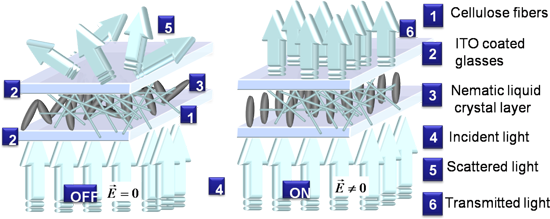
- nano- and micro-fiber cellulose mats used to prepare the electro-optical cells were produced by electrospinning [21][22][28] from an isotropic solution (15%) of cellulose acetate (CA, Aldrich, MW = 60.000 g·mol−1, 40% acetyl groups) in a mixture of dimethylacetamide/acetone (1:2). The solution was


Electron-driven and thermal chemistry during water-assisted purification of platinum nanomaterials generated by electron beam induced deposition
Beilstein J. Nanotechnol. 2018, 9, 77–90, doi:10.3762/bjnano.9.10
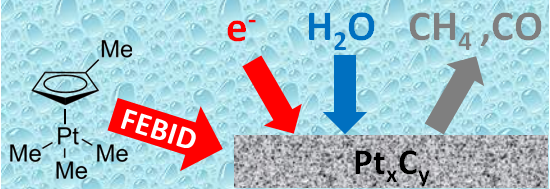
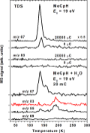
- clearly observed from condensed layers of acetone and acetylacetone [20] in the same setup used also for the experiments described here. Beside the predominant CH4, a small desorption signal with m/z ratio 28 is seen at the start of irradiation (Figure 3). It was identified as a minor CO background signal



Gas-sensing behaviour of ZnO/diamond nanostructures
Beilstein J. Nanotechnol. 2018, 9, 22–29, doi:10.3762/bjnano.9.4
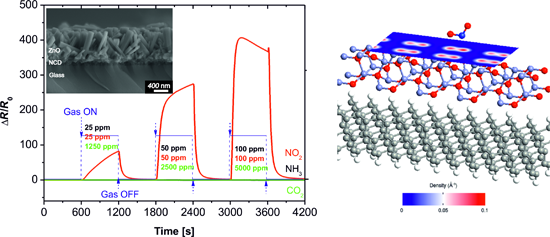
- rapid response speed (2 s) upon exposure to CO [27]. Zhang et al. synthesized hybrid ZnFe2O4/ZnO hollow spheres that exhibited a high sensitivity to acetone and a fast response speed of 5.2 s [28]. In this study we combine the merits of two different materials (n-type ZnO and p-type H-terminated diamond


The role of ligands in coinage-metal nanoparticles for electronics
Beilstein J. Nanotechnol. 2017, 8, 2625–2639, doi:10.3762/bjnano.8.263
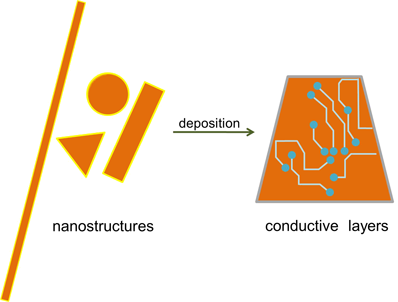
- . Exchanging CTAB with conjugated, thiophene-based polymers provided a stable ink that was used to deposit lines with good electrical conductivities [83]. Silver nanoparticles initially carrying oleylamine were coated with acrylic acid (Figure 2) that provided excellent stability in acetone or ethanol over a


Inelastic electron tunneling spectroscopy of difurylethene-based photochromic single-molecule junctions
Beilstein J. Nanotechnol. 2017, 8, 2606–2614, doi:10.3762/bjnano.8.261
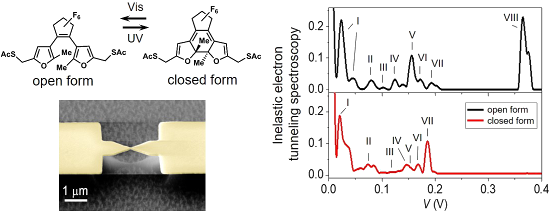
- lithography is performed with a double layer of electron beam resists (copolymer/PMMA). After developing the resists, Au of around 70 nm in thickness is deposited, the electron-beam mask is lifted off in warm acetone, and then the polyimide layer is partially etched away (thickness reduction of ca. 700 nm) by


Robust nanobubble and nanodroplet segmentation in atomic force microscope images using the spherical Hough transform
Beilstein J. Nanotechnol. 2017, 8, 2572–2582, doi:10.3762/bjnano.8.257
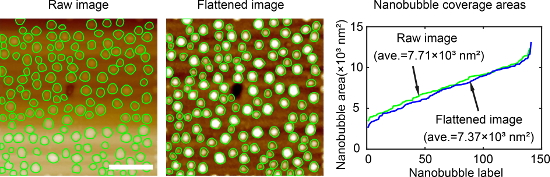
- surface, which was spin-coated as a thin film on a silicon (100) substrate at a speed of 500 rpm. The silicon substrate was cleaned in a sonic bath of piranha, acetone and then water for 30 mins before spin coating. PS particles (molecular weight 350,000, Sigma-Aldrich) were dissolved in toluene


Amplified cross-linking efficiency of self-assembled monolayers through targeted dissociative electron attachment for the production of carbon nanomembranes
Beilstein J. Nanotechnol. 2017, 8, 2562–2571, doi:10.3762/bjnano.8.256
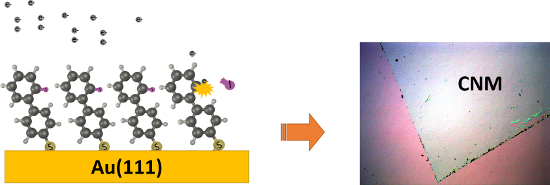
- CNM from the gold, PMMA was used as a coating for the nanomembrane. With the help of aqueous iodine, the PMMA–CNM stack was detached from the gold substrate. Subsequently, the PMMA was dissolved by acetone within a critical-point dryer. Negative halogen ion yield curves for dissociative electron


Interface conditions of roughness-induced superoleophilic and superoleophobic surfaces immersed in hexadecane and ethylene glycol
Beilstein J. Nanotechnol. 2017, 8, 2504–2514, doi:10.3762/bjnano.8.250
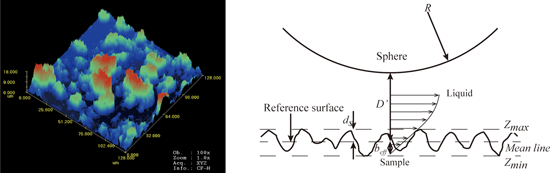
- . Poly(diallyldimethylammonium chloride) (PDDA, MW = 100,000–200,000, Aladdin) was dissolved in DI water to concentrations of 15 and 50 mg·mL−1. SiO2 nanoparticles with a diameter of 7 nm (AEROSIL RX 50, Evonik Industries) were dispersed into acetone (Fisher Scientific) at various concentrations (10 to





Fabrication of CeO2–MOx (M = Cu, Co, Ni) composite yolk–shell nanospheres with enhanced catalytic properties for CO oxidation
Beilstein J. Nanotechnol. 2017, 8, 2425–2437, doi:10.3762/bjnano.8.241
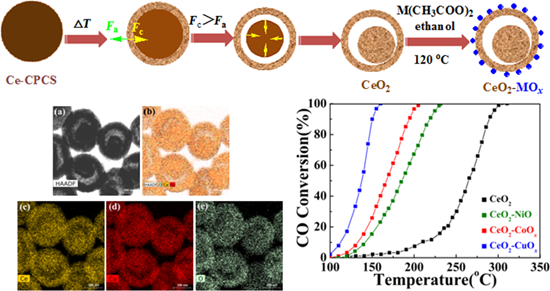
- nanostructures for a broad range of technical applications. Experimental Materials Cerium(III) nitrate hexahydrate (Ce(NO3)3·6H2O), concentrated nitric acid (HNO3, 68%), diethylene glycol (DEG), acetone, copper(II) acetate monohydrate (Cu(CH3COO)2·H2O), nickel(II) acetate tetrahydrate (Ni(CH3COO)2·4H2O), cobalt
- to [27]. In a typical procedure, 0.109 g of Ce(NO3)3·6H2O was dissolved in 5 mL of diethylene glycol under vigorous stirring. Subsequently, 2 mL of concentrated nitric acid and 35 mL of acetone were added to the above solution in sequence, and stirring was continued for another 30 min to form a clear





Involvement of two uptake mechanisms of gold and iron oxide nanoparticles in a co-exposure scenario using mouse macrophages
Beilstein J. Nanotechnol. 2017, 8, 2396–2409, doi:10.3762/bjnano.8.239
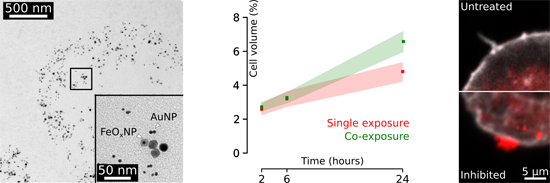
- , the demonstration of interactions between different particle types at the cellular level reveals that synergetic effects, either positive or negative, must be considered for nanotechnology and nanomedicine in particular to develop to its full potential. Experimental Materials HPLC grade acetone

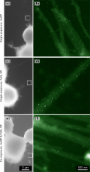


Photobleaching of YOYO-1 in super-resolution single DNA fluorescence imaging
Beilstein J. Nanotechnol. 2017, 8, 2296–2306, doi:10.3762/bjnano.8.229
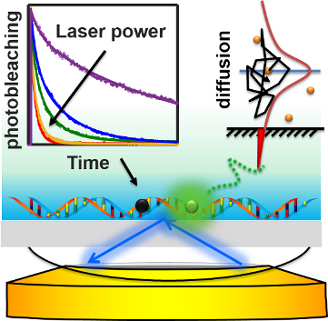
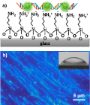
- with nitrogen. The coverslips were immersed in a solution of 1 vol % 3-aminopropyltriethoxysilane (APTES, TCI America) in HPLC grade acetone (Fisher) at 50 °C for 20 min. Afterwards, they were washed with ethanol and water and dried under nitrogen. PDMS blocks were made by thoroughly mixing Sylgard 184




Hydrothermal synthesis of ZnO quantum dot/KNb3O8 nanosheet photocatalysts for reducing carbon dioxide to methanol
Beilstein J. Nanotechnol. 2017, 8, 2264–2270, doi:10.3762/bjnano.8.226
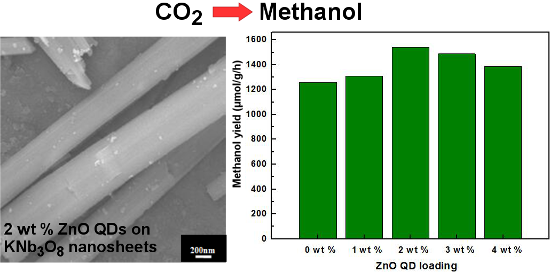
- , East China University of Science and Technology, Shanghai 200237, China 10.3762/bjnano.8.226 Abstract ZnO quantum dots and KNb3O8 nanosheets were synthesized by a two-step hydrothermal method for the photocatalytic reduction of CO2 to methanol where isopropanol is simultaneously oxidized to acetone
- /CH3OH = −0.38 V) [29], the valence band of pure ZnO quantum dots (EVB = 1.6 V) and pure KNb3O8 nanosheets (EVB = 2.52 V) which are more positive than that of the isopropanol oxidation to acetone (EC3H8O/C3H6O = 0.49 V) [30], which made the reduction of CO2 to methanol and the oxidation of isopropanol to
- acetone possible. Under UV irradiation, photoinduced electrons in the conduction band (CB) of KNb3O8 migrate to the valence band (VB) of ZnO quantum dots and combine with the holes to efficiently prevent photogenerated electron–hole pairs from vast and fast recombination. Therefore, the lifetime of free




Evaluating the toxicity of TiO2-based nanoparticles to Chinese hamster ovary cells and Escherichia coli: a complementary experimental and computational approach
Beilstein J. Nanotechnol. 2017, 8, 2171–2180, doi:10.3762/bjnano.8.216
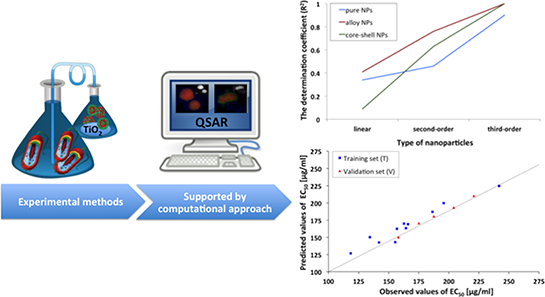
- -Aldrich. Cyclohexane, isopropyl alcohol, hydrazine, acetone, AOT (dioctylsulfosuccinate sodium salt) obtained from POCH S.A. (Poland) were used without further purification. F12 medium, streptomycin and penicillin, glutamine, and heat-inactivated fetal bovine serum (FBS Hi) were purchased from Gibco® Life


Synthesis and characterization of noble metal–titania core–shell nanostructures with tunable shell thickness
Beilstein J. Nanotechnol. 2017, 8, 2083–2093, doi:10.3762/bjnano.8.208
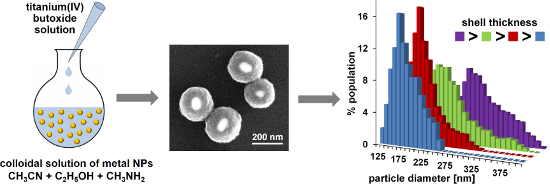
- water and acetone several times. Gold colloids Gold colloids were prepared using the Frens method. 100 mL of 0.01% (w/w) aqueous HAuCl4 solution were heated to boiling point and 0.6 mL of 1% (w/w) of sodium citrate solution were added. In ca. 2 min the boiling solution turned blue (nucleation) and after


A systematic study of the controlled generation of crystalline iron oxide nanoparticles on graphene using a chemical etching process
Beilstein J. Nanotechnol. 2017, 8, 2017–2025, doi:10.3762/bjnano.8.202
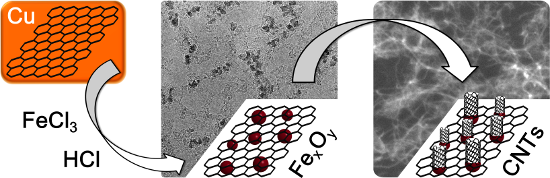
- spin coating from solution [23][25]. The main disadvantage of applying these supporting polymer layers to graphene is their removal during the final steps of the transfer procedure. Dissolving the polymer, for example by using hot acetone, typically leaves residue on the graphene monolayer [22][32][33





