Search results
Search for "assembly" in Full Text gives 575 result(s) in Beilstein Journal of Nanotechnology. Showing first 200.
Molecular architectonics of DNA for functional nanoarchitectures
Beilstein J. Nanotechnol. 2020, 11, 124–140, doi:10.3762/bjnano.11.11
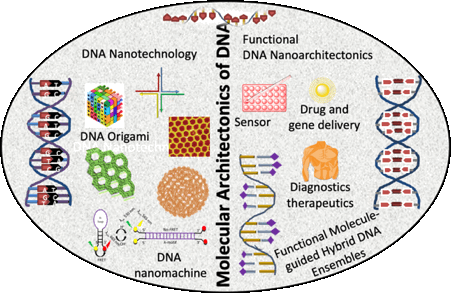
- the key biomolecule central to almost all processes in living organisms. The eccentric idea of utilizing DNA as a material building block in molecular and structural engineering led to the creation of numerous molecular-assembly systems and materials at the nanoscale. The molecular structure of DNA is
- assembly of designed molecular units with fascinating properties and functions is central to all materials and bioengineering processes [1][2][3][4]. The use of biomolecules or synthetic systems with biomolecular components is capable of aiding the judicious regulation of molecular assembly parameters and
- tiles or bricks, which staple in a programmed fashion to form crystalline assembly structures with well-defined geometries, constitute the guiding principles of specific nucleobase pairing-driven DNA nanostructures (DNA nanotechnology) [16][17]. In other words, DNA origami involves the programmed


Advanced hybrid nanomaterials
Beilstein J. Nanotechnol. 2019, 10, 2563–2567, doi:10.3762/bjnano.10.247

- for sensing or corrosion protection. To understand composite formation of a complex hybrid assembly, high quality characterization is paramount. An example is small angle X-ray scattering (SAXS), which was used in the work “Mechanism of silica–lysozyme composite formation unraveled by in situ fast
Label-free highly sensitive probe detection with novel hierarchical SERS substrates fabricated by nanoindentation and chemical reaction methods
Beilstein J. Nanotechnol. 2019, 10, 2483–2496, doi:10.3762/bjnano.10.239
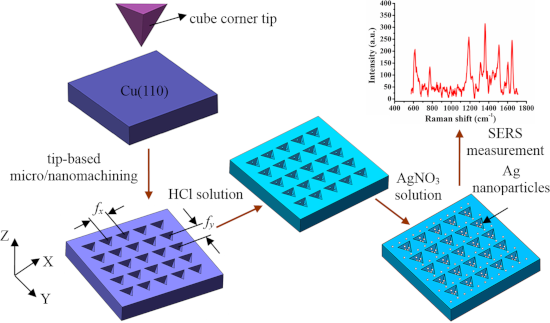
- ], nanostars [17][18], nanoantennas [19], and nanospheres [20]; these have been successfully machined by existing lithography-based technologies. Furthermore, hierarchical substrates have also been fabricated by a combination of lithography [21][22][23][24][25] and self-assembly. Matricardi et al. [21] used
- the template-assisted assembly of gold nanospheres with patterned PDMS molds featuring square array geometries with lattice parameters of 400 to 1600 nm and hole diameters of 230 to 960 nm. Then 4-acetamidothiophenol at 10−4 mol/L was detected using this substrate. Domenici et al. [22] used electron
- beam lithography and self-assembly methods to fabricate gold clusters of micrometer size and regular spacing. Subsequently, the detection resolution of 4-acetamidothiophenol was 0.05 g/L using the substrate. Nanoparticle cluster array structures with a size of 40 nm were fabricated by electron beam


Small protein sequences can induce cellular uptake of complex nanohybrids
Beilstein J. Nanotechnol. 2019, 10, 2477–2482, doi:10.3762/bjnano.10.238
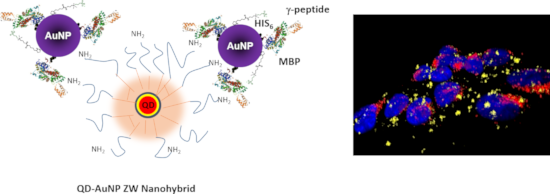
- on the ability of functional fusion proteins presenting a lytic gamma peptide, to promote interactions with HeLa cells and delivery of large hybrid nanostructures. Keywords: bioconjugation; cellular uptake; nanoparticle hybrids; polymer encapsulation; self-assembly; Introduction Developing hybrid
- for the staining of cell membranes [4]. In two separate studies, Chan and co-workers described two interesting hybrid systems. In the first, a charge driven self-assembly of AuNPs and different-colour QDs into multicolour, non-blinking nanohybrids was introduced. These nanohybrids were then coupled to
- have also been discussed [12][14][15]. More recently, there have been a few reports discussing the use of luminescent Eu-loaded hydroxyapatite nanocrystals for rapid HeLa cancer cell imaging [9][11][16], or the nanostructure self‐assembly driven by amino acid coordination to increase the biological

Self-assembly of a terbium(III) 1D coordination polymer on mica
Beilstein J. Nanotechnol. 2019, 10, 2440–2448, doi:10.3762/bjnano.10.234
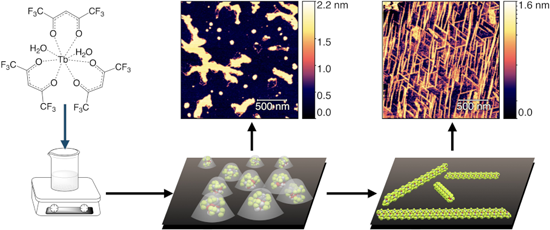
- (375 µs) and the CHCl3 solution (13 µs) further reinforces the idea of water-induced growth. Keywords: atomic force microscopy (AFM); luminescence; nanostructuration; polymer; self-assembly; surface; terbium complexes; Introduction The study of materials for the realization of novel magnetic [1][2][3
- embedded in a suitable electrostatic environment. Indeed, mononuclear single-molecule magnets (SMMs), which are objects showing magnetic hysteresis at the molecular level comprising only one metallic ion (instead of a collective assembly of ions), have been initially observed for a Tb-based molecule [13
- stability against moisture and air ensure the creation of molecular nanochains of several hundred nanometers length as observed by AFM. This self-assembly of molecules into chains is likely to be triggered by the presence of water on the air-cleaved mica surface. Indeed, the strong hydrophilicity of such




Design of a nanostructured mucoadhesive system containing curcumin for buccal application: from physicochemical to biological aspects
Beilstein J. Nanotechnol. 2019, 10, 2304–2328, doi:10.3762/bjnano.10.222
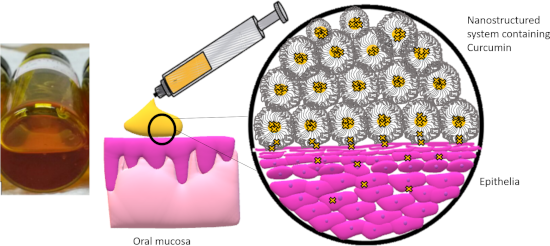
- increase of temperature can promote the self-assembly from unimers to micelles, with large endothermic heat. In this sense, PPO-groups dehydrate in a hydrophobic core with a surrounding hydrated shell. Higher concentrations of P407 are used (15% to 20%, w/w) as colloidal gelling systems in a cubic
- nanometer-sized assembly into three-dimensional micelles with a hydrophobic core of PPO and a hydrophilic shell of PEO that can interact by hydrogen bonds with the hydrophilic acrylic-acid derivative polymer. This results in a binary polymeric system with good viscoelasticity, mucoadhesion, softness and


Dynamics of superparamagnetic nanoparticles in viscous liquids in rotating magnetic fields
Beilstein J. Nanotechnol. 2019, 10, 2294–2303, doi:10.3762/bjnano.10.221
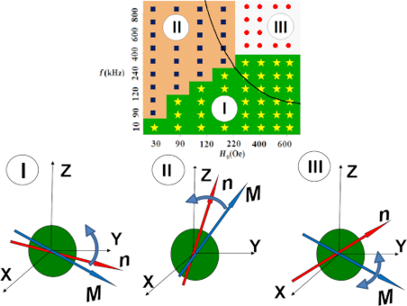
- director are distinguished depending on frequency and amplitude of the rotating magnetic field. The specific absorption rate of a dilute assembly of superparamagnetic nanoparticles in rotating magnetic field is calculated by solving the Landau–Lifshitz stochastic equation for the unit magnetization vector
- and the stochastic equation for the particle director. At elevated frequencies an optimal range of particle diameters is found where the specific absorption rate of an assembly in a rotating magnetic field has a maximum. It is shown that with an optimal choice of the particle sizes sufficiently large
- (AMF) of frequency f = 100–500 kHz and amplitude H0 = 100–200 Oe. This would allow the tumor temperature to be maintained at about 42 °C if a magnetic nanoparticle assembly were capable to absorb efficiently the energy of the alternating magnetic field. According to a number of medical indications [1


Adsorption and desorption of self-assembled L-cysteine monolayers on nanoporous gold monitored by in situ resistometry
Beilstein J. Nanotechnol. 2019, 10, 2275–2279, doi:10.3762/bjnano.10.219
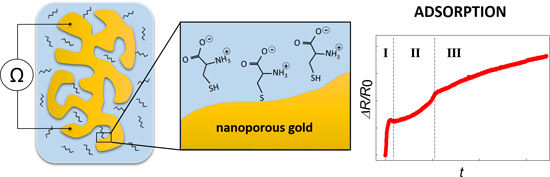
- planar Au surfaces, self-assembly processes are known to occur in adsorption and ordering (also known as “standing up”) stages [6]. The adsorption and ordering of such monolayers has been subject to experimental as well as theoretical investigation for many years, mostly studying the deposition on single
- literature, reporting a relative change in resistance of 6% for propanethiol and 22% for cysteamine monolayer assembly after 24 h [11]. In Figure 1, we can distinguish between three regimes of different slope (denoted as (I) to (III)). Regimes (I) and (III) can be correlated to stages in the adsorption
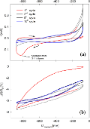
- double-layer capacitance of the substrate [14], Figure 2 compares CVs in 1 M KOH of sample A under cysteine-free conditions (before SAM assembly) and after different treatments. The SAMs can be considered stable between −400 mV (SAM desorption) and −50 mV (cysteine oxidation). At −300 mV, a double-layer

Design and facile synthesis of defect-rich C-MoS2/rGO nanosheets for enhanced lithium–sulfur battery performance
Beilstein J. Nanotechnol. 2019, 10, 2251–2260, doi:10.3762/bjnano.10.217
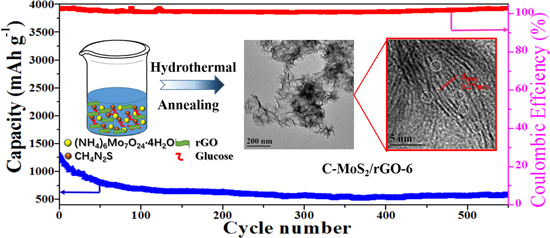
- (3 mL) as the adsorbents. Ultraviolet–visible (UV–vis) absorption spectra of these diluted solutions were collected using a Shimadzu UV 2550 spectrophotometer. Cell assembly and electrochemical measurements The working electrodes were prepared by casting a slurry of 80 wt % active materials (MoS2-S


A novel all-fiber-based LiFePO4/Li4Ti5O12 battery with self-standing nanofiber membrane electrodes
Beilstein J. Nanotechnol. 2019, 10, 2229–2237, doi:10.3762/bjnano.10.215
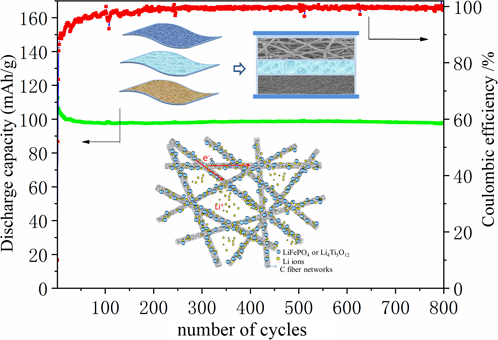
- carried out using a VMP2 electrochemical workstation. EIS was measured in the frequency range of 0.1 Hz to 100 kHz, with a disturbance amplitude of 10 mV. The galvanostatic cycle tests were carried out at different current densities. Assembly of LFP//LTO all-fibers-based battery Polyvinylidene fluoride
- a diameter of 18 mm (Figure S1b, Supporting Information File 1). Before the assembly of the battery, the cut membrane was first soaked in LiPF6 electrolyte for 2–3 h. A gel-state 2025 type coin-cell battery was then assembled in an Ar-filled glovebox using this membrane as the gel electrolyte, and


Ultrathin Ni1−xCoxS2 nanoflakes as high energy density electrode materials for asymmetric supercapacitors
Beilstein J. Nanotechnol. 2019, 10, 2207–2216, doi:10.3762/bjnano.10.213
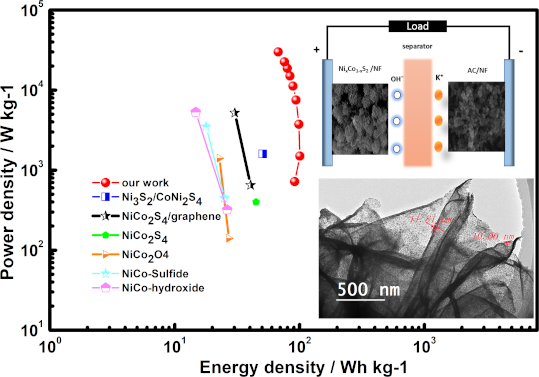
- the loading mass of the active material on the electrode, ΔV is the potential window and ΔV/Δt is the slope of the discharge curve. In order to compare with other materials, the specific capacity was determined as C (C·g−1) = IΔt/m. Assembly of asymmetric supercapacitors To acquire the energy density


Mannosylated brush copolymers based on poly(ethylene glycol) and poly(ε-caprolactone) as multivalent lectin-binding nanomaterials
Beilstein J. Nanotechnol. 2019, 10, 2192–2206, doi:10.3762/bjnano.10.212
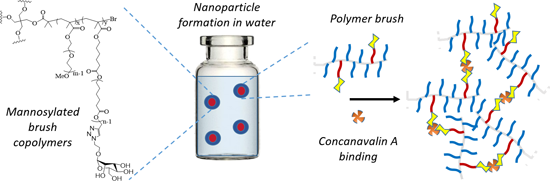
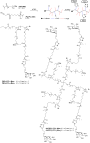
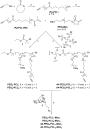
- number of pendant mannose, as well as the self-assembly behavior in water. Remarkably, when the ratios PEG/PCL were 9:1 or 8:2, the polymerizations achieved high conversions (≥87% after 6 h), as calculated from 1H NMR spectroscopy results (see Figure S2, Supporting Information File 1). The
- tendency may be due to the presence of the mannose residues that, being connected to the hydrophobic PCL chains, could affect the self-assembly of the macromolecules and generate some aggregates. Remarkably, four-arm species had a slightly lower Dh than the corresponding linear species. Turbidity assay The



The importance of design in nanoarchitectonics: multifractality in MACE silicon nanowires
Beilstein J. Nanotechnol. 2019, 10, 2094–2102, doi:10.3762/bjnano.10.204
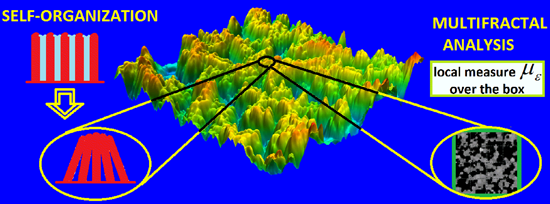
- Stefania Carapezzi Anna Cavallini Department of Physics and Astronomy, University of Bologna, Viale Berti Pichat 6/2, 40127 Bologna, Italy DEI-ARCES, Viale del Risorgimento 2, 40125, Bologna, Italy 10.3762/bjnano.10.204 Abstract Background: Mechanisms of self-assembly/self-organization are
- design through suited statistical analysis tools. Results: We have investigated the self-assembly bundling process of nanowires fabricated by metal-assisted chemical etching (MACE). First, we have applied theoretical models in order to obtain a quantitative estimation of the driving forces leading to
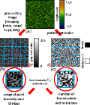
- self-assembly. Then, we have studied the surfaces of the nanoarchitectures by means of multifractal analysis. We have found that these systems are not simple monofractals, but that the more complex paradigm of multifractality (different fractal dimensions across different scales) has to be applied to




Review of advanced sensor devices employing nanoarchitectonics concepts
Beilstein J. Nanotechnol. 2019, 10, 2014–2030, doi:10.3762/bjnano.10.198
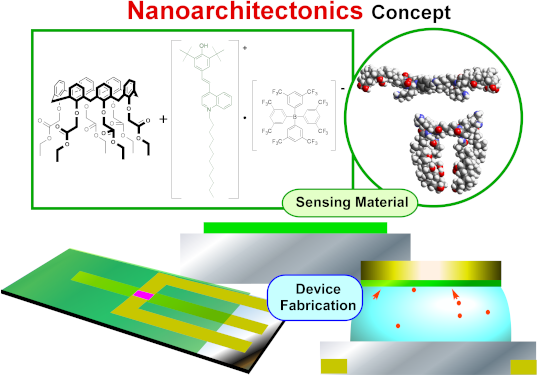
- by Masakazu Aono [54][55]. This conceptual methodology corresponds to the creation of functional materials from nanoscale units through combined processes, including organic synthesis, atomic/molecular manipulation, self-assembly, self-organization, stimuli-based arrangement, and biological treatment
- ][71], biological investigation [72][73][74][75], and biomedical applications [76][77][78]. As compared with simple self-assembly processes, nanoarchitectonics is advantageous for architecting hierarchical structures and interfacing between materials and devices. In addition, the fabrication of sensor
- can be obtained by molecular self-assembly [112][113][114] and template synthesis [115][116][117][118][119]. For example, various sensors with self-assembled fullerene materials and their carbonized materials as sensing structures were reported for aromatic gas vapors [120][121] and carbonized





Nanostructured and oriented metal–organic framework films enabling extreme surface wetting properties
Beilstein J. Nanotechnol. 2019, 10, 1994–2003, doi:10.3762/bjnano.10.196
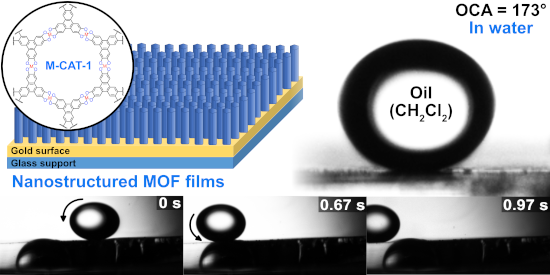
- example, sol–gel synthesis, electrochemical deposition, anodization, electrochemical polymerization, electrospinning, plasma treatment, chemical or hydrothermal methods, vapor deposition, layer-by-layer assembly or laser ablation [19][27][28][29][30][31][32][33][34][35][36][37][38][39]. However, the


Synthesis and potent cytotoxic activity of a novel diosgenin derivative and its phytosomes against lung cancer cells
Beilstein J. Nanotechnol. 2019, 10, 1933–1942, doi:10.3762/bjnano.10.189
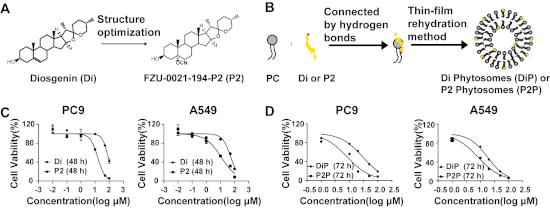
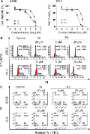
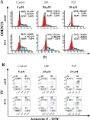
- ingredients could undergo self-assembly into stable vesicles in aqueous solution, which could act as a vehicle to facilitate membrane transport [29]. Compared to liposomes, phytosomes can load more drug molecules, and showed enhanced stability in the lyophilization and reconstitution processes prior to use



High-tolerance crystalline hydrogels formed from self-assembling cyclic dipeptide
Beilstein J. Nanotechnol. 2019, 10, 1894–1901, doi:10.3762/bjnano.10.184
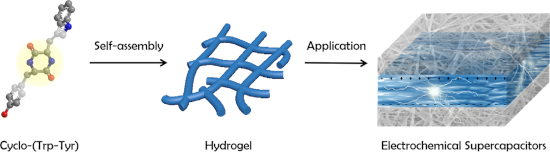
- hydrogelator for the formation of supramolecular hydrogels. The unique hydrogen bonding in C-WY endows a high propensity for self-assembly and the resulting hydrogels are revealed to be crystalline. The crystalline hydrogels possess excellent mechanical capacity and superior tolerance to various harsh
- -assembly of cyclic dipeptides results in highly robust hydrogels which can be applied for electrochemical applications such as electrochemical supercapacitors. Keywords: crystalline hydrogel; cyclic dipeptide; electrochemical supercapacitors; nanoarchitectonics; self-assembly; Introduction On account of
- , which provide a substantial tendency for self-assembly and the formation of gels. In addition, other weak forces, such as π–π stacking, hydrophobic effect, electrostatic interactions, and van der Waals forces, are also serviceable in driving molecular self-assembly of CDPs toward the formation of gels


Fabrication and characterization of Si1−xGex nanocrystals in as-grown and annealed structures: a comparative study
Beilstein J. Nanotechnol. 2019, 10, 1873–1882, doi:10.3762/bjnano.10.182
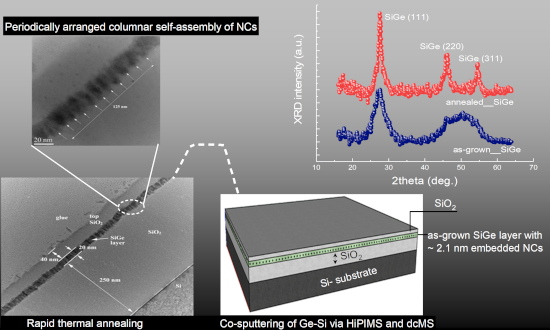
- annealing results in the periodically arranged columnar self-assembly of SiGe core–shell nanocrystals. An increase in photocurrent intensity by more than an order of magnitude was achieved by annealing. Furthermore, a detailed discussion is provided on strain development within the structures, the
- columnar self-assembly of NCs. The analysis showed a well-defined mapping of Si, Ge and Ti (/TiO2) with a small fraction of oxygen observed in the SiGe layer. The NCs columns are arranged periodically, having a width of NCs of 10–15 nm, with a gap of 5–6 nm amorphous SiGeO. We note that the small SiGe
- HiPIMS and dcMS followed by rapid thermal annealing (1 min) at different temperatures. It is shown that HiPIMS deposition facilitates the formation of small nanoparticles/clusters in the as-grown structures. A suitable selection of annealing temperature and time results in the columnar self-assembly of


Nanoarchitectonics meets cell surface engineering: shape recognition of human cells by halloysite-doped silica cell imprints
Beilstein J. Nanotechnol. 2019, 10, 1818–1825, doi:10.3762/bjnano.10.176
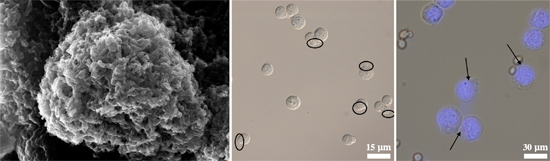
- -assembly of miniature building blocks to form biomimetic soft or rigid shells to encapsulate live cells rendering them with additional functionalities [7]. In general, there are three principal routes to engineer the cell walls or membranes of live cells: 1) deposition of charged or neutral polymers (that


Biocatalytic oligomerization-induced self-assembly of crystalline cellulose oligomers into nanoribbon networks assisted by organic solvents
Beilstein J. Nanotechnol. 2019, 10, 1778–1788, doi:10.3762/bjnano.10.173
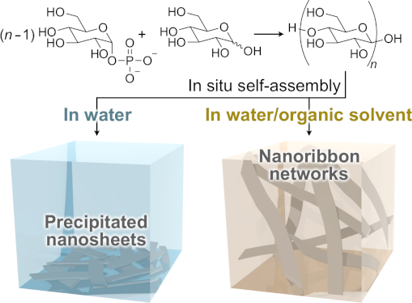
- robust assemblies, whereas the construction of self-assembled materials from such molecules is generally difficult due to their complicated chemical synthesis and low solubility in solvents. Enzyme-catalyzed oligomerization-induced self-assembly has been shown to be promising for creating
- nanoarchitectured crystalline oligosaccharide materials. However, the controlled self-assembly into organized hierarchical structures based on a simple method is still challenging. Herein, we demonstrate that the use of organic solvents as small-molecule additives allows for control of the oligomerization-induced
- self-assembly of cellulose oligomers into hierarchical nanoribbon network structures. In this study, we dealt with the cellodextrin phosphorylase-catalyzed oligomerization of phosphorylated glucose monomers from ᴅ-glucose primers, which produce precipitates of nanosheet-shaped crystals in aqueous





Layered double hydroxide/sepiolite hybrid nanoarchitectures for the controlled release of herbicides
Beilstein J. Nanotechnol. 2019, 10, 1679–1690, doi:10.3762/bjnano.10.163
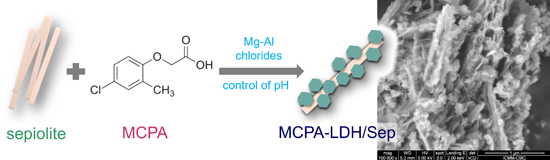
- materials, and macromolecular systems of DNA and cells [2][3][4][5]. In this context, clay-based nanoarchitectonic materials have been developed over the years, starting from classical pillared clays and porous clay heterostructures (PCH) to more innovative materials involving the assembly of different
- are arranged regularly along the structural edges of the fiber, being advantageous to produce functional nanoarchitectures. Thus, in recent years the number of publications related to the assembly of different types of nanoparticulated solids (e.g., metals, metal oxides, and graphene) and sepiolite or
- palygorskite has increased, yielding nanoplatforms useful in a large number of applications from catalysis, environmental remediation, energy production and storage to biomedicine [14][18]. The co-assembly of particles can be reached through several methods, from the direct assembly of the clay to diverse


Chiral nanostructures self-assembled from nitrocinnamic amide amphiphiles: substituent and solvent effects
Beilstein J. Nanotechnol. 2019, 10, 1608–1617, doi:10.3762/bjnano.10.156
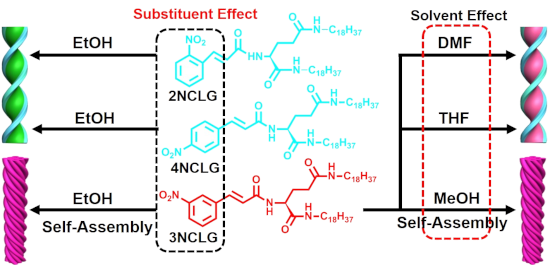
- . Here, using a series of isomeric nitrocinnamic amide derivatives, we have investigated the self-assembly behavior and the effect of the substituent position as well as the solvent on the formation of chiral nanostructures. It was found that totally different chiral nanostructures were formed due to the
- different positions of the nitro group on the cinnamic amide. Moreover, it was found that the chiral sense of the self-assembled nanostructures can be regulated by the solvent whereby helicity inversion was observed. This work provides a simple way to regulate the self-assembly pathway via molecular design
- and choice of solvent for the controlled creation of chiral nanostructures. Keywords: chiral nanostructures; cinnamic acid; helicity inversion; nanoarchitectonics; self-assembly; Introduction The helical structure is widely found in biological systems and is considered to be a basic characteristic




Graphynes: an alternative lightweight solution for shock protection
Beilstein J. Nanotechnol. 2019, 10, 1588–1595, doi:10.3762/bjnano.10.154
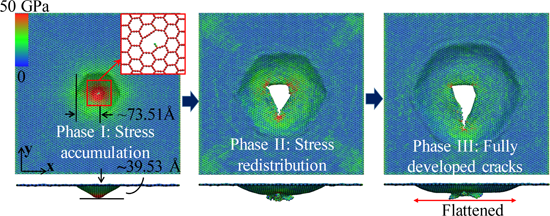
- ) [6] have been fabricated experimentally utilizing cross-coupling methods and a modified Glaser–Hay coupling reaction, respectively. Regarding other GY allotropes, Yuan Q. et al. numerically illustrated the formation of GYs on transition metals via the self-assembly of carbyne chains [7]. Above


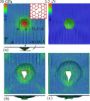
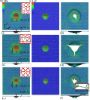


Materials nanoarchitectonics at two-dimensional liquid interfaces
Beilstein J. Nanotechnol. 2019, 10, 1559–1587, doi:10.3762/bjnano.10.153
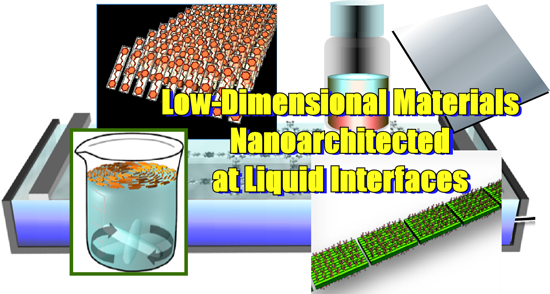
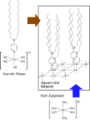
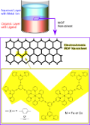
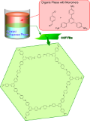
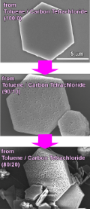
- –Blodgett method, liquid–liquid interfacial precipitation, instructed assembly, and layer-by-layer assembly to give low-dimensional materials including nanowires, nanowhiskers, nanosheets, cubic objects, molecular patterns, supramolecular polymers, metal-organic frameworks and covalent organic frameworks
- ; nanoarchitectonics; self-assembly; Review 1 Introduction: nanoarchitectonics for low-dimensional materials To realize a sustainable society, there are many challenges to overcome in the next 30 years: fulfilling the needs regarding energy consumption, reducing unnecessary emissions, protecting the environment, and
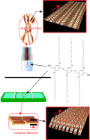
- bottom-up approaches are self-assembly and self-organization based on supramolecular chemistry [69]. These supramolecular mechanisms can be widely observed in various species including small molecules, nanomaterials, and biomolecules [70][71][72][73][74][75]. Despite this generality, there are still many













Synthesis of P- and N-doped carbon catalysts for the oxygen reduction reaction via controlled phosphoric acid treatment of folic acid
Beilstein J. Nanotechnol. 2019, 10, 1497–1510, doi:10.3762/bjnano.10.148
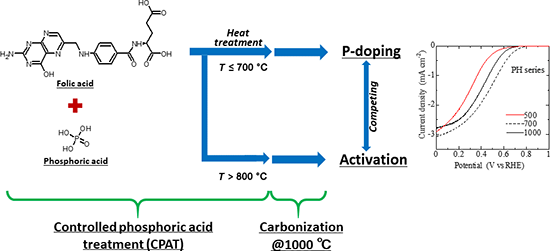
- × 10−6 mol·cm−3. Prior to the tests of the prepared samples, we evaluated Pt/C (IFPC40, ISHIFUKU Metal Industry Co., Ltd.), and the onset potential of Pt/C was 0.96 V. The membrane–electrode assembly was fabricated as follows: The catalyst ink, i.e., the dispersion of the catalyst in Nafion solution