Search results
Search for "calculations" in Full Text gives 787 result(s) in Beilstein Journal of Nanotechnology. Showing first 200.
Characterization, bio-uptake and toxicity of polymer-coated silver nanoparticles and their interaction with human peripheral blood mononuclear cells
Beilstein J. Nanotechnol. 2021, 12, 282–294, doi:10.3762/bjnano.12.23
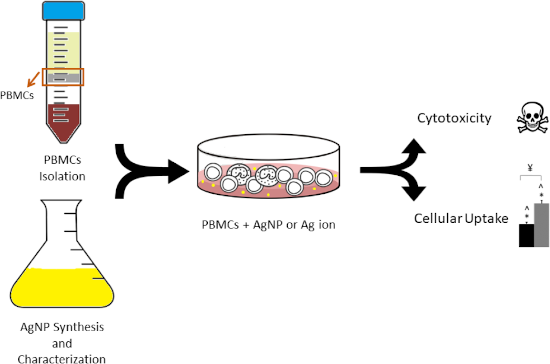
- binding to proteins present in the RPMI. Formation of dissolved silver chloride was suggested by speciation calculations (data not reported, as the accuracy of calculations can be questioned, given the media complexity and difference from those on which the model was validated). There is limited evidence
- sample of Person 5 showed a different trend in the LDH assay than the other samples and it is not clear if this discrepancy was a result of variability between individuals. Excluding the sample of Person 5 from the calculations, the Pearson correlation coefficient indicated a moderate correlation between



Determination of elastic moduli of elastic–plastic microspherical materials using nanoindentation simulation without mechanical polishing
Beilstein J. Nanotechnol. 2021, 12, 213–221, doi:10.3762/bjnano.12.17
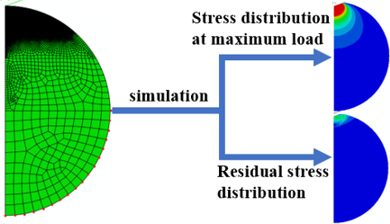
- elastic modulus extracted according to Equation 8. Oliver and Pharr proposed that β = 1.05 with a potential error of approximately ±0.05, based on their analysis of available results 1.0226 ≤ β ≤ 1.085 from experiments and finite element calculations [6]. Finite Element Method To evaluate the mechanical


TiOx/Pt3Ti(111) surface-directed formation of electronically responsive supramolecular assemblies of tungsten oxide clusters
Beilstein J. Nanotechnol. 2021, 12, 203–212, doi:10.3762/bjnano.12.16
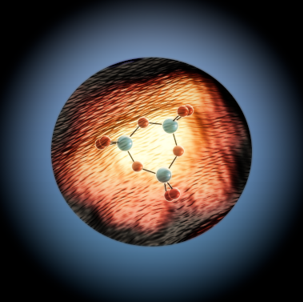
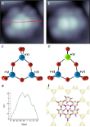
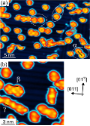
- supramolecular structures. It is noteworthy that individual W3O9 clusters, according to previous density functional theory (DFT) calculations [11], are characterized by the most stable six-membered ring structure with D3h symmetry. It consists of oxygen-bridged tungsten atoms with two additional terminal oxygen
- with a constant distance between them. The DFT calculations of a very similar oxide phase, grown by a reactive Ti deposition on Pt(111) [25], showed that the brightest spots belong to fourfold oxygen-coordinated titanium atoms, whereas threefold coordinated Ti atoms are depicted with less contrast. The
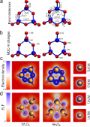
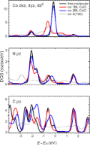
- atoms remain in the oxidation state +VI and one is reduced to +IV (compare Figure 3c and Figure 3d). The latter one has less unoccupied electronic states and, therefore, is not resolved by scanning with a positive bias voltage. Our DFT calculations of W3O9 and of a hypothetical W3O8 molecule in the gas



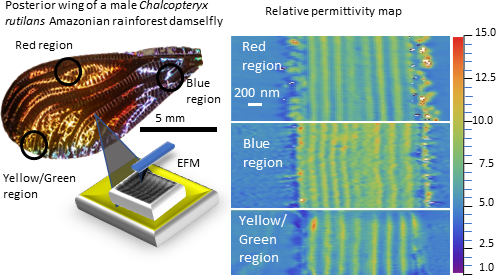
Mapping the local dielectric constant of a biological nanostructured system
Beilstein J. Nanotechnol. 2021, 12, 139–150, doi:10.3762/bjnano.12.11
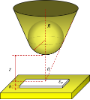
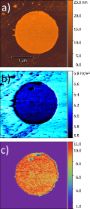
- FIB. Capacitance model with tip, sample, conductive plate, and the parameters used in our calculations. R is the tip apex radius, θ is the tip conical angle, z is the tip–sample distance, h is the sample thickness and εr is the relative permittivity of the sample. The sample is shown on top of the




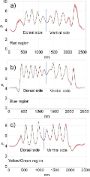
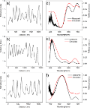
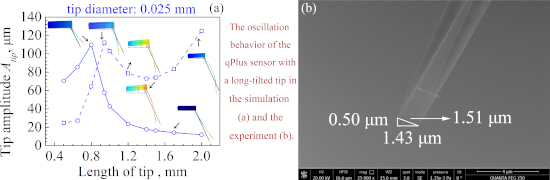
Numerical analysis of vibration modes of a qPlus sensor with a long tip
Beilstein J. Nanotechnol. 2021, 12, 82–92, doi:10.3762/bjnano.12.7
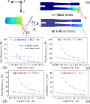
- of the tuning fork prong without a tip. Figure 2b visualizes the mesh distribution used for the calculations. The mesh density increases at the link between the two prongs and near the boundaries of each material. Figure 2c is a zoomed view of the tungsten wire attached to the end of the tuning fork
- case, the volume of the glue in the simulation is approximately equal to the volume of the glue in the experiment. Figure 2d is a false-color representation of the total displacement levels. Warmer colors represent a larger displacement. All calculations were carried out using COMSOL Multiphysics
- used for finite element calculations. Supporting Information Supporting Information File 32: Additional simulation results. Funding The authors gratefully acknowledge the support from the National Key Technologies R&D Program of China (Grant No. 2016YFA0201101), the National Natural Science






Free and partially encapsulated manganese ferrite nanoparticles in multiwall carbon nanotubes
Beilstein J. Nanotechnol. 2020, 11, 1891–1904, doi:10.3762/bjnano.11.170
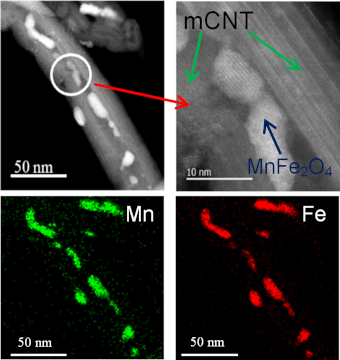
- , experimentally, bulk MnFe2O4 is known to have semiconductor properties [18]. The spectrum shown in Figure 1e contains a main peak at approx. 5.4 eV and weaker peaks at approx. 9.7 eV and 12.1 eV. By comparing the spectrum with the band structure calculations, the first peak (indicated by an arrow in the spectrum




Kondo effects in small-bandgap carbon nanotube quantum dots
Beilstein J. Nanotechnol. 2020, 11, 1873–1890, doi:10.3762/bjnano.11.169
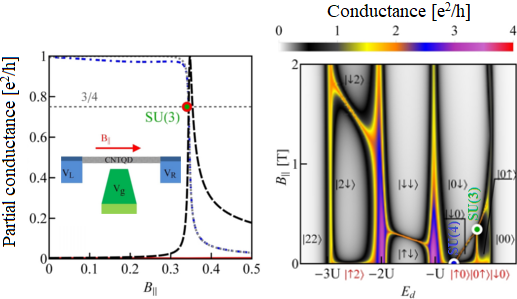
- changes of the bandgap. In the following we show how, for a given nearly metallic nanotube, one can change the position of high-symmetry points by strain and a magnetic field. Our calculations also show that in a quantum dot formed in a small-bandgap nanotube electron and hole states can degenerate in
- Fermi velocity (vF ≅ 0.8c), D is the nanotube diameter, and a is the distance between carbon atoms in the A lattice and the B lattice of graphene (a ≅ 0.254 nm). Eg is the bandgap energy, where Θ is the chiral angle, . According to tight-binding calculations the value of β corresponding to the
- calculations [27][28]. The SBMFA method best describes systems close to the Kondo fixed point, that is, for the case of deep fully degenerate atomic levels at low temperatures. This approximation correctly describes spin or pseudospin fluctuations and reproduces local Fermi-liquid behavior at zero temperature

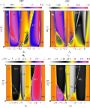


![[Graphic 37]](/bjnano/content/inline/2190-4286-11-169-i52.svg?max-width=637&scale=1.18182) as a functio...
as a functio...


Scanning transmission imaging in the helium ion microscope using a microchannel plate with a delay line detector
Beilstein J. Nanotechnol. 2020, 11, 1854–1864, doi:10.3762/bjnano.11.167
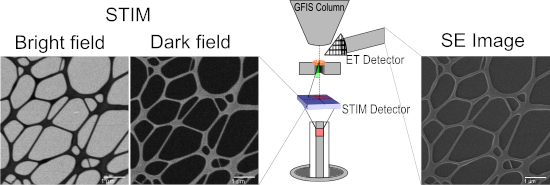
- show the contrast change for low and high scattering angles using BF and ADF detection. We also demonstrate the qualitative match of the contrast in bright-field mode with predictions from binary collision approximation calculations using a test sample. In the case of polycrystalline silicon, we can


Molecular dynamics modeling of the influence forming process parameters on the structure and morphology of a superconducting spin valve
Beilstein J. Nanotechnol. 2020, 11, 1776–1788, doi:10.3762/bjnano.11.160
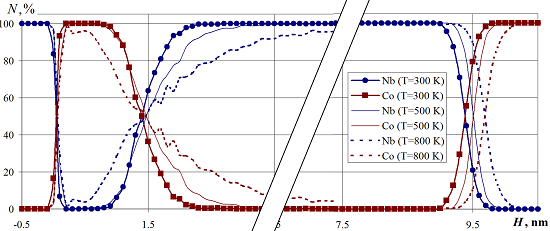
- calculations, a four-fold decrease in the volume of the nanosystem did not affect the nanocomposite layer composition. The layers are connected at the same places, and the proportion of niobium and cobalt differ slightly from the main part of the sample. The obtained data indicate that the initially selected
- an increase or decrease in the number of deposited atoms per unit time introduced into the system from the evaporation zone. Here, numerical calculations for the nanofilm variations with a 2-fold increase and a 1.5-fold decrease of the deposited atom flux density are performed. The relative layered
- composition of the nanocomposite for the calculations is shown in Figure 10. Here, the fraction of elements in the composition during the nanolayer formation when the deposition rate was reduced by 1.5-fold is shown by the solid lines without markers, the increased intensity is represented by dashed lines


Mapping of integrated PIN diodes with a 3D architecture by scanning microwave impedance microscopy and dynamic spectroscopy
Beilstein J. Nanotechnol. 2020, 11, 1764–1775, doi:10.3762/bjnano.11.159
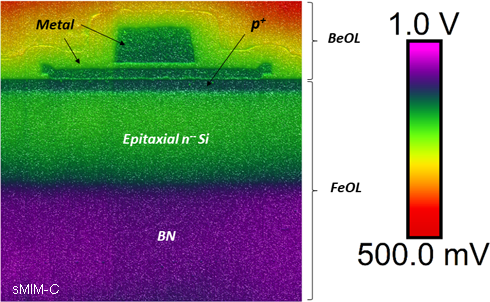
- architecture is analysed. sMIM measurements of the different layers of the PIN diode are presented and discussed in terms of detection mechanism, sensitivity, and precision. In the second part, supported by analytic calculations of the equivalent nano-MIS capacitor, a new multidimensional approach, including a
- . These spatio-spectral plots clearly show how the C–V spectrum varies along the depth profile, and also how junctions measured in the sMIM images might change under the applied bias. In the BN region, according to analytic calculations (Figure 8), the n-type region increases when VDC is decreased. We can
- thresholds used. sMIM maps acquired at VDC = 0 V on a large area (83 µm × 54 µm) of the PIN diode device. (a) ∂C/∂V phase, (b) ∂C/∂V amplitude, (c) sMIM-R, and (d) sMIM-C. The distinct locations of the different layers of the device are also indicated. Analytic calculations of the equivalent capacitance


Application of contact-resonance AFM methods to polymer samples
Beilstein J. Nanotechnol. 2020, 11, 1714–1727, doi:10.3762/bjnano.11.154
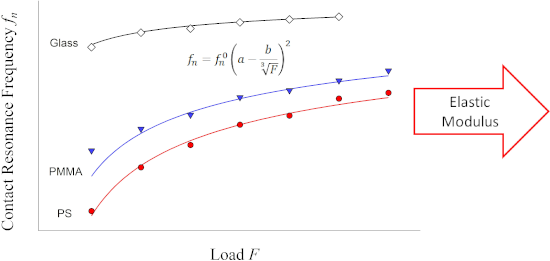
- modulus, but also the measured CR frequency itself are affected by large uncertainties and are often not reproducible. Therefore, several CR-AFM studies on polymers are limited to the mere detection of contrasts in CR frequency, without further calculations and, hence, without a quantitative determination


Selective detection of complex gas mixtures using point contacts: concept, method and tools
Beilstein J. Nanotechnol. 2020, 11, 1631–1643, doi:10.3762/bjnano.11.146
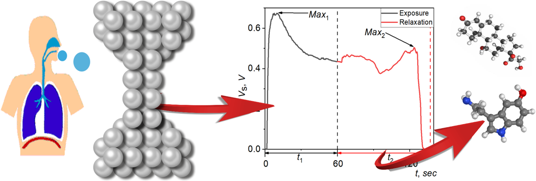
- reagents produced by the NPL Granum company (Kharkiv, Ukraine). Statistical calculations were made using the WEKA data mining software [57]. Additional control and verification of the results were performed with the SPSS statistical package [58]. The data were processed statistically using the standard


![[Graphic 4]](/bjnano/content/inline/2190-4286-11-146-i8.svg?max-width=637&scale=1.18182) in th...
in th...

![[Graphic 7]](/bjnano/content/inline/2190-4286-11-146-i11.svg?max-width=637&scale=1.18182) in the...
in the...
PTCDA adsorption on CaF2 thin films
Beilstein J. Nanotechnol. 2020, 11, 1615–1622, doi:10.3762/bjnano.11.144
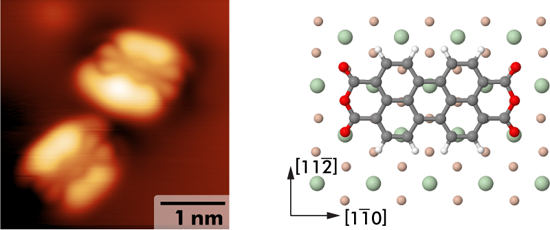
- (111) surface with deposition on thicker CaF2/CaF1/Si(111) films. The identification of mostly single molecules on the CaF1/Si(111) interface layer is explained by the presence of atomic-size defects within this layer. Geometry-optimisation calculations using density functional theory reveal a geometry
- flat-lying geometry is found from geometry-optimisation calculations of a single PTCDA molecule on a CaF2 slab using DFT, whereby an interaction between two carbonyl oxygen atoms and two surface calcium ions leads to a slight deformation of the PTCDA molecule. Methods Sample preparation and STM
- -tracking system [30]. Image data were acquired in constant-current or constant-height mode while applying a sample bias Ub. Gwyddion [31] was used for the image data analysis. Density functional theory calculations were performed using cp2k (http://www.cp2k.org) [32] and parameters similar to previous


Detecting stable adsorbates of (1S)-camphor on Cu(111) with Bayesian optimization
Beilstein J. Nanotechnol. 2020, 11, 1577–1589, doi:10.3762/bjnano.11.140
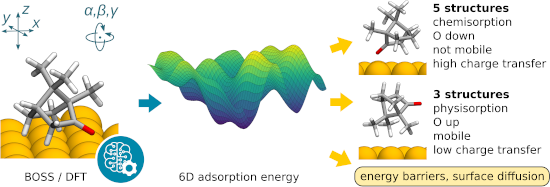
- monolayer formation and hybrid interfaces. In the following sections, we first introduce our computational methods for adsorbate structure identification with BOSS, the first-principles calculations, and their application on detecting the stable adsorbates of camphor on Cu(111). We then present our results
- corresponding charge distribution of an isolated molecule. With this analysis, we study the effect of adsorption on the electronic structure of camphor in the identified stable structures. First-principles calculations We use density-functional theory to calculate the adsorption energy of camphor on Cu(111) in
- , d23 = 2.081 Å), in agreement with previous calculations [52]. We apply this Cu slab model as a building block in the subsequent study of camphor adsorption. Our other building block is the global minimum conformer of camphor, which we add onto the Cu slab model. The (6 × 4) supercell provides a good


Electrokinetic characterization of synthetic protein nanoparticles
Beilstein J. Nanotechnol. 2020, 11, 1556–1567, doi:10.3762/bjnano.11.138
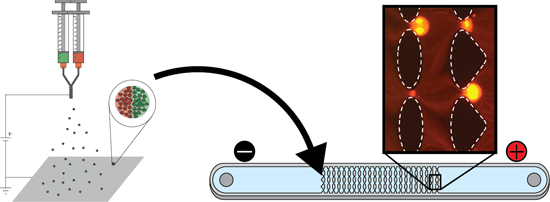
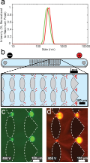
- calculations will be shown later. SPNP-BSA-488 and SPNP-BSA-555 were both measured in the EK microdevices and both particle types were found to be trapped at the same potential, that is, 500 V (Figure 2c and Figure 2d). This result suggesting that the presence of the dye does not affect the EK response has



Design of V-shaped cantilevers for enhanced multifrequency AFM measurements
Beilstein J. Nanotechnol. 2020, 11, 1525–1541, doi:10.3762/bjnano.11.135
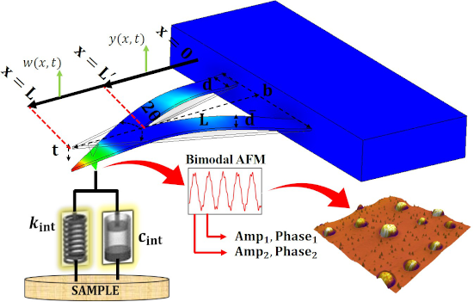
- cantilevers in bimodal AFM. Finally, an analytical relationship is developed based on the numerical calculations. Based on this relationship, users can obtain a better understanding of expected phase contrast by providing the dimensions of the cantilever. This relationship can help experimentalists for


![[Graphic 4]](/bjnano/content/inline/2190-4286-11-135-i26.svg?max-width=637&scale=1.18182) = 15 µm, bref = 8...
= 15 µm, bref = 8...


![[Graphic 17]](/bjnano/content/inline/2190-4286-11-135-i39.svg?max-width=637&scale=1.18182) ) of V-shaped cantilevers for...
) of V-shaped cantilevers for...


Adsorption and self-assembly of porphyrins on ultrathin CoO films on Ir(100)
Beilstein J. Nanotechnol. 2020, 11, 1516–1524, doi:10.3762/bjnano.11.134
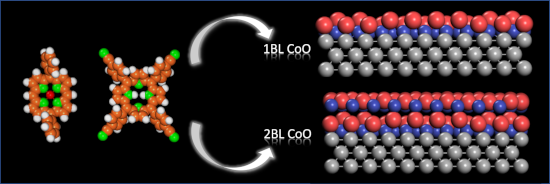
- -hexagonal layer with lattice parameter a2BL CoO = 3.0–3.1 Å [18]. STM images of both films show the positions of the oxygen atoms as bright protrusions [20]. Computational Methods Non-magnetic ab initio calculations were performed using the Vienna Ab-initio Simulation Package (VASP) [32] employing the PBE
- was kept fixed laterally at a position guided by the analysis of our experimental STM images of 1 and by our results on Co phthalocyanine [35]. For the 1BL system, only the bottom Ir layer was kept fixed. For the 2BL calculations, the bare substrate was relaxed first, keeping the bottom Ir layer fixed
- . During subsequent adsorption studies the molecule and the first CoO bilayer were allowed to relax. Calculations were carried out with an energy cutoff of 400 eV and at the gamma point only, all structures were relaxed until forces were smaller than 0.1 eV/Å. STM simulations were performed employing the




Controlling the electronic and physical coupling on dielectric thin films
Beilstein J. Nanotechnol. 2020, 11, 1492–1503, doi:10.3762/bjnano.11.132
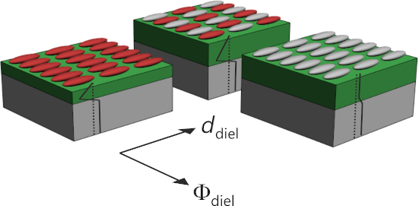
- ) calculations for the isolated molecule indicate that the torsional angle changes from 35 to only 20° upon the formation of the anion. Presumably, the electrostatic interaction of the charged molecules with the substrate completes the planarization. In summary these results suggest that MgO films prepared under
- overlap between the phenyl rings. This will cause an increase in the energy spread of the π bands, resulting in a decrease in the ionization potential and an increase in the electron affinity. Gas phase DFT calculations show that the EA of planar 6P (1.74 eV) is indeed 0.3 eV higher than the EA of twisted




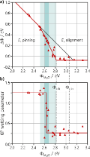
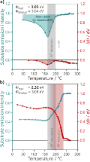
Self-assembly and spectroscopic fingerprints of photoactive pyrenyl tectons on hBN/Cu(111)
Beilstein J. Nanotechnol. 2020, 11, 1470–1483, doi:10.3762/bjnano.11.130
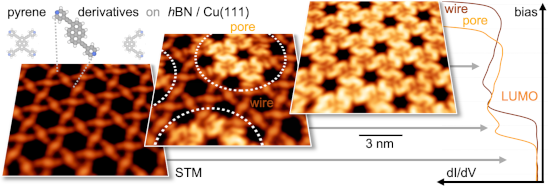
- characterizing a family of pyridin-4-ylethynyl-functionalized pyrene derivatives in different environments. UV–vis measurements in toluene solutions revealed absorption at wavelengths consistent with density functional theory (DFT) calculations, while emission experiments showed a high fluorescence quantum yield
- effect of the substitution on the electronic properties of the pyrene core, DFT calculations were performed (B3LYP/6-31G** level of theory, in vacuum). The frontier Kohn-Sham orbitals of pyrene and the di- and tetrasubstituted (pyridin-4-ylethynyl)pyrenes 1, 2, and 3 are shown in Figure 1b (see also
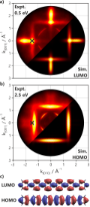
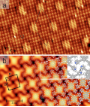
- similarities. For example, the number of antinodes as well as the nodal planes between the experimental images and the calculations were in agreement, strongly suggesting that the STM contrast indeed reflected the MO contributions, corroborating the assignment of spectral features to the HOMOs and the LUMOs




Protruding hydrogen atoms as markers for the molecular orientation of a metallocene
Beilstein J. Nanotechnol. 2020, 11, 1432–1438, doi:10.3762/bjnano.11.127
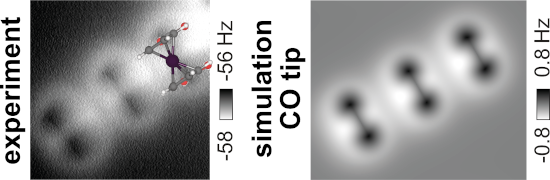
- acid (FDCA) molecules on bulk and thin film CaF2(111) surfaces with non-contact atomic force microscopy (NC-AFM). We use NC-AFM image calculations with the probe particle model to interpret this distinct shape by repulsive interactions between the NC-AFM tip and the top hydrogen atoms of the
- ionised derivates calculations yielded rotational barrier values of up to 1.4 eV [19]. From this class of molecules we investigate the ferrocene derivate 1,1’-ferrocene dicarboxylic acid (FDCA), a ferrocene functionalised with two carboxylic acid moieties. This molecule has been analysed before on Ag(111
- ), Cu(110), and Cu3N/Cu(110) surfaces [20] as well as on the insulator surfaces calcite(104) [21] and CaF2(111) [22]. An eclipsed ferrocene conformation was found to be predominant on the metallic surfaces [20] and on calcite(104) [21]. On CaF2(111) surfaces, density functional theory (DFT) calculations


![[Graphic 10]](/bjnano/content/inline/2190-4286-11-127-i10.svg?max-width=637&scale=1.18182) row of FDCA molecules in geo 2. (a–c) Constant-height frequency-shi...
row of FDCA molecules in geo 2. (a–c) Constant-height frequency-shi...
One-step synthesis of carbon-supported electrocatalysts
Beilstein J. Nanotechnol. 2020, 11, 1419–1431, doi:10.3762/bjnano.11.126

- by weighing the amount of precursor before and after each synthesis using a high precision scale. The calculations were performed by using where is the precursor gas flow rate, Δm is the mass of evaporated precursor, V is the molar volume of an ideal gas (22.4 mol/L), t is overall process time




Transient coating of γ-Fe2O3 nanoparticles with glutamate for its delivery to and removal from brain nerve terminals
Beilstein J. Nanotechnol. 2020, 11, 1381–1393, doi:10.3762/bjnano.11.122
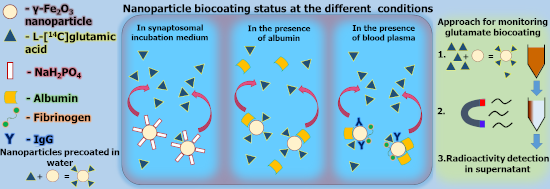
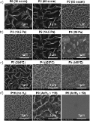
- concentrations was considered as 100% in further calculations. Analysis of the size of γ-Fe2O3 nanoparticles in different media by laser correlation spectroscopy The size of γ-Fe2O3 nanoparticles was measured by dynamic light scattering using a laser correlation spectrometer ZetaSizer-3 (Malvern Instrument, UK
- concentrations in the corresponding incubation medium with no nanoparticles added was used in calculations as a control (100%) and consisted of 30,000 cpm/mL at 1.86 µM glutamate/ʟ-[14C]glutamate. The results were expressed as percentage of the total amount of ʟ-[14C]glutamate in the control. Efficacy of
- literature data have indicated that the nanoparticle concentration is a crucial parameter for the absorption efficacy [26][27]. The ʟ-[14C]glutamate count at the corresponding concentrations in each tetrad was considered as 100% in further calculations (Figure 2). It was shown that nanoparticles at a


Analysis of catalyst surface wetting: the early stage of epitaxial germanium nanowire growth
Beilstein J. Nanotechnol. 2020, 11, 1371–1380, doi:10.3762/bjnano.11.121
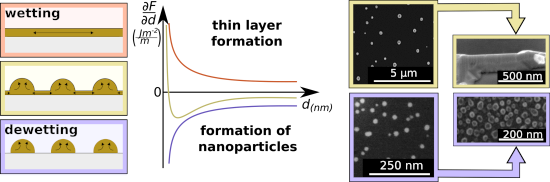
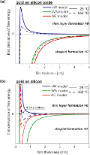
- the vW model fails since gold droplets are formed on the silicon oxide surface. A deep insight into the characteristics and properties of the observed material is needed to perform calculations using van der Waals interactions. However, thermal silicon oxide has no defined crystallographic orientation
- calculations. Hamaker constants correspond to the susceptibility of particles to an electric field of very small length scales generated by the particles themselves [28]. For this reason, these constants are used to determine energy and force values in van der Waals interactions. A more detailed description of
- these clusters or if it just becomes thinner or perforated. However, the TEM data do not show any evidence of a wetting layer at room temperature, since at this temperature only very small gold clusters are seen. This is in agreement with low-energy electron microscopy (LEEM) calculations, which predict


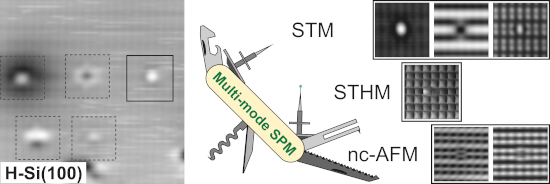
Atomic defect classification of the H–Si(100) surface through multi-mode scanning probe microscopy
Beilstein J. Nanotechnol. 2020, 11, 1346–1360, doi:10.3762/bjnano.11.119
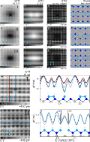
- -terminated tips In Figure 3, we compare AFM line profiles taken across the defect of interest (blue) and a corresponding defect-free region (grey) with a simple theoretical structure optimized by molecular dynamics calculations (see Methods for parameters). A preliminary comparison of Figure 3 with the

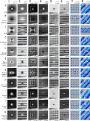


Controlling the proximity effect in a Co/Nb multilayer: the properties of electronic transport
Beilstein J. Nanotechnol. 2020, 11, 1336–1345, doi:10.3762/bjnano.11.118
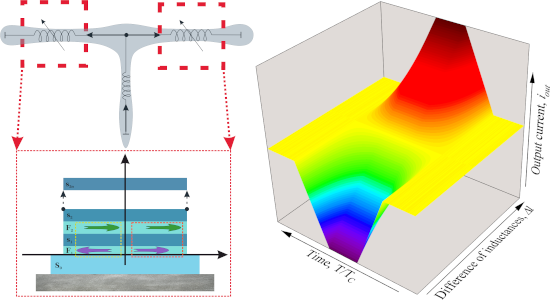
- We present both theoretical and experimental investigations of the proximity effect in a stack-like superconductor/ferromagnetic (S/F) superlattice, where ferromagnetic layers with different thicknesses and coercive fields are made of Co. Calculations based on the Usadel equations allow us to find
- from both sides, leading to two independent parameters, γBSF and γBFS. The ratio between these parameters, γ = ρSξS/ρFξF, is a suitable parameter to understand the physics of the system, since it depends only on the material properties. In our calculations we put the origin of the x axis at the free
- Stuttgart. The lithography was made in the Stockholm University. Funding We acknowledge the partial financial support from Grant No. 20-69-47013 of the Russian Science Foundation (theoretical approach and calculations). R. Morari is grateful for the support from the Russian Ministry of Education and Science