Search results
Search for "drift" in Full Text gives 218 result(s) in Beilstein Journal of Nanotechnology. Showing first 200.
Direct nanoscale observations of the coupled dissolution of calcite and dolomite and the precipitation of gypsum
Beilstein J. Nanotechnol. 2014, 5, 1245–1253, doi:10.3762/bjnano.5.138
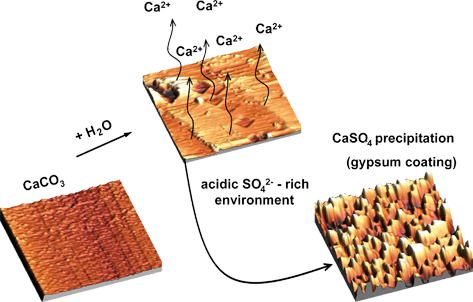
- during the solution saturation state drift. This implies a change in Gibbs energy along the experimental runs. As pointed out by Stipps et al. and de Leeuw et al. [48][49] the observed distortion of the etch pit shape (Figure 3b and Figure 3c) likely corresponds to an increase in the difference of
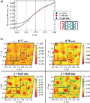
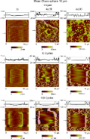
- as long as Ca2+ was being released. AFM deflection images of calcite cleavage surfaces. Top row: a) image in air shows the initial flat surface with a topographic variation that ranges over 2 nm. The white line across the image corresponds to a terrace; b) same surface region with some drift after


Highly NO2 sensitive caesium doped graphene oxide conductometric sensors
Beilstein J. Nanotechnol. 2014, 5, 1073–1081, doi:10.3762/bjnano.5.120
- temperature regulated, HEPA (High-Efficiency Particulate Absorption) filtered air through the Cypher enclosure. Closed-loop temperature control isolates the AFM from room temperature variations, minimizing thermal drift for imaging. During measurements the temperature was kept constant at 26 °C. For all KPFM
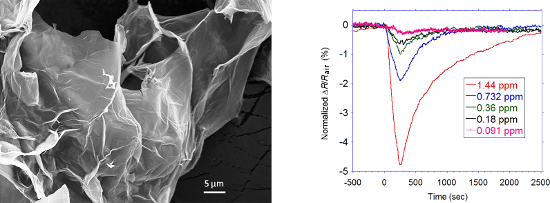
- exhibits a good repeatability, even if a slight drift in the baseline is observed. This may be due to the presence of gas molecules not yet desorbed from the sensor surface. An average time of 540 s is needed to recover after 240 s exposure to 0.732 ppm of NO2. Conclusion We successfully fabricated and




Double layer effects in a model of proton discharge on charged electrodes
Beilstein J. Nanotechnol. 2014, 5, 973–982, doi:10.3762/bjnano.5.111
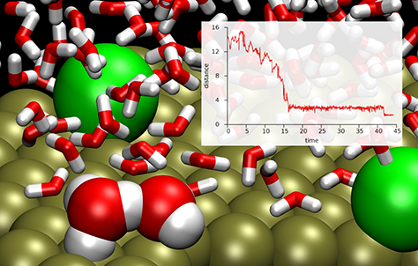
- approximately linear slope in the time interval between about 30 and about 60 ps. This behavior is indicative of the drift regime characteristic for a charged ion migrating in a homogeneous electric field. Thus, proton motion in this regime is dominated by the mean electric field (which can be calculated, e.g


Enhanced photocatalytic activity of Ag–ZnO hybrid plasmonic nanostructures prepared by a facile wet chemical method
Beilstein J. Nanotechnol. 2014, 5, 639–650, doi:10.3762/bjnano.5.75
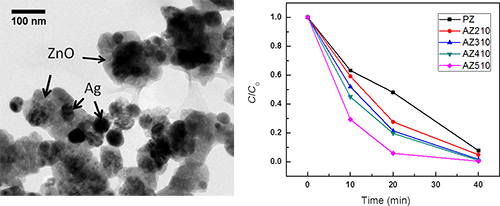
- spectra are due to carbon-coated copper grid. The drift corrected EDX line profile was used to obtain the spatial distributions of the atomic contents across the Ag–ZnO nanostructures. Figure 4d shows the EDX profiles for Zn, O and Ag across the line marked in Figure 4c. Figure 5 show the elemental


Impact of thermal frequency drift on highest precision force microscopy using quartz-based force sensors at low temperatures
Beilstein J. Nanotechnol. 2014, 5, 407–412, doi:10.3762/bjnano.5.48
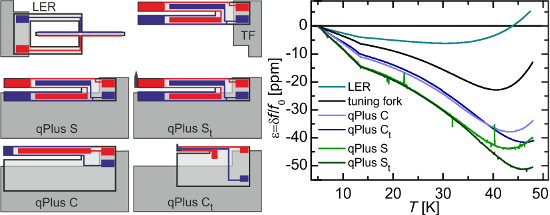
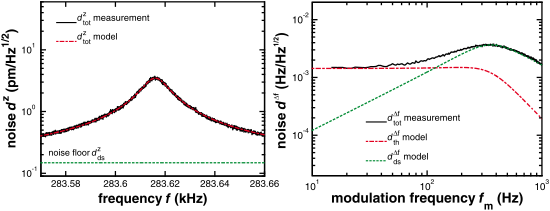
- detector noise. Keywords: AFM; frequency drift; length extensional resonator; needle sensor; qPlus sensor; quartz; Findings Frequency modulation atomic force microscopy [1] has become an essential tool for surface scientist‘s to study chemical and magnetic interactions at the atomic scale [2][3][4][5][6
- contributions are significantly reduced and imaging with millihertz resolution becomes possible [12]. In turn, when B is small the stability of the eigenfrequency f0 is particularly important, because frequency drift noise is proportional to 1/ [7]. The main cause of frequency drift are changes in f0 with
- temperature T, which are material dependent. Even for experiments conducted at liquid helium temperatures, temperature drift limits the achievable resolution. Changes in ambient pressure affect the boiling temperature of helium, e.g., the vapor pressure of He4 at 4.4 K changes at a rate of ≈105 Pa/K [13


Uncertainties in forces extracted from non-contact atomic force microscopy measurements by fitting of long-range background forces
Beilstein J. Nanotechnol. 2014, 5, 386–393, doi:10.3762/bjnano.5.45
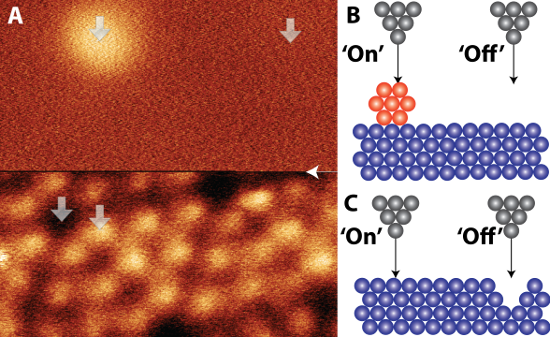
- custom-built atom tracking system developed at the University of Mainz [18] was used to apply feedforward correction to reduce the effect of thermal drift and piezo-electric creep. To obtain the site-specific interaction force, single point Δf(z) spectroscopy measurements were acquired on the adatoms


Control theory for scanning probe microscopy revisited
Beilstein J. Nanotechnol. 2014, 5, 337–345, doi:10.3762/bjnano.5.38
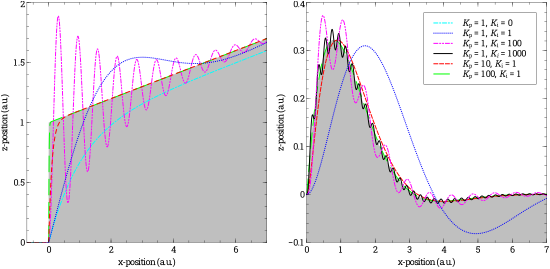
- that steady-state errors in SPM feedback result from a sample drift in the z-direction or from scanning a sample with a tilt. Thus, any system that does not model z-drift or sample tilt should not expect a steady-state error. Complete model of SPM feedback Before running simulations of our simplified


Influence of the adsorption geometry of PTCDA on Ag(111) on the tip–molecule forces in non-contact atomic force microscopy
Beilstein J. Nanotechnol. 2014, 5, 98–104, doi:10.3762/bjnano.5.9
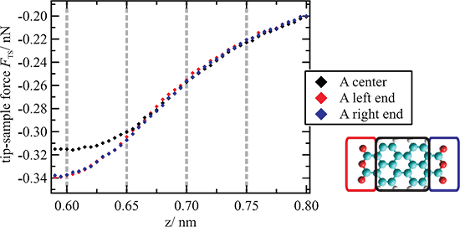
- measurement was about 5 3/4 h, the lateral drift of ≈40 pm/h led to a distortion of the originally rectangular surface area. In addition, a continuous drift of the frequency shift reference point of the order of 0.1 Hz/h was observed. The precise drift as a function of time was determined by a comparison of
- analysis: see below in Figure 3 and Figure 4). The lateral drift was corrected in the images resulting in a distortion of the originally rectangular surface area. The images were linearly interpolated with a factor of 4 to enhance the visibility. Intramolecular structures can be seen in both the raw data



Noise performance of frequency modulation Kelvin force microscopy
Beilstein J. Nanotechnol. 2014, 5, 1–18, doi:10.3762/bjnano.5.1
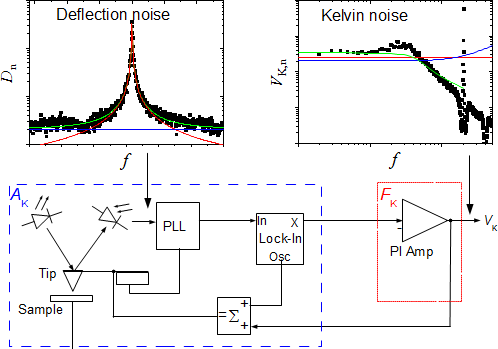
- propagation from sensor displacement noise to the Kelvin voltage output. Giessibl et al. [9] compared qPlus and length-extension resonator (LER) sensors with respect to four noise sources: thermal excitation, sensor displacement noise, oscillator noise and thermal drift noise. The impact of all noise sources





Dynamic nanoindentation by instrumented nanoindentation and force microscopy: a comparative review
Beilstein J. Nanotechnol. 2013, 4, 815–833, doi:10.3762/bjnano.4.93
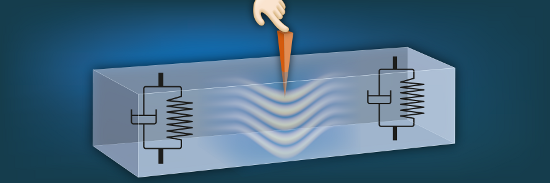
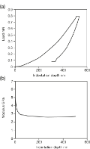
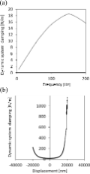
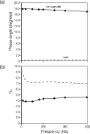
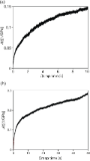
- by a linearized sensor. However, thermal drift and piezo creep can also contribute to the apparent displacement, thus they must be minimized and/or measured and corrected for. This can present a challenge, particularly in AFM, which largely relies on piezoelectric motion transducers. It should be
- noted that a z-sensor, which is used to linearize the z-motion, cannot distinguish between creep and thermal drift. In light of this discussion, additional differences between AFM and INI can be added to those mentioned above: the time resolution of the measurement, which is related to the inertia of
- the system, and the drift/creep characteristics. These are noted in Table 1 as bandwidth and temporal stability. For a given creep time t, the corresponding displacement into the surface h(t) is measured experimentally. The creep behavior can then be modeled following [79] and [80]: with hI being the




Simulation of electron transport during electron-beam-induced deposition of nanostructures
Beilstein J. Nanotechnol. 2013, 4, 781–792, doi:10.3762/bjnano.4.89
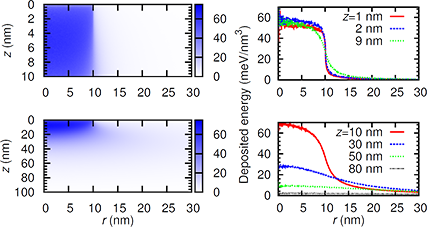
- intervals of these parameters). This can be best observed in the case of the sample with thickness dWCO = 200 nm for z = 50–150 nm. In practice, sample charging effects in the EBID process cause only a minor repulsion of the electron beam (observed as a slight drift in the monitoring images), which can be



Routes to rupture and folding of graphene on rough 6H-SiC(0001) and their identification
Beilstein J. Nanotechnol. 2013, 4, 625–631, doi:10.3762/bjnano.4.69
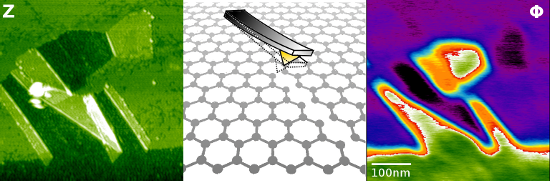
- prior to measurements. All images in this paper are presented without filtering or smoothing. The topographic images are compensated for piezo creep and drift as well as for scanner bow using common plane subtraction and (facet) leveling algorithms of the Gwyddion software package [26]. Results and


Large-scale atomistic and quantum-mechanical simulations of a Nafion membrane: Morphology, proton solvation and charge transport
Beilstein J. Nanotechnol. 2013, 4, 567–587, doi:10.3762/bjnano.4.65
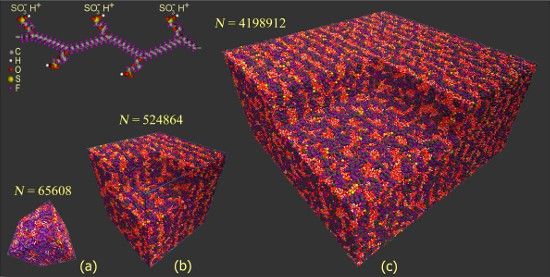
- processes in a system where low energy barriers are effectively washed out by zero-point motion. Because the initial configuration for the QMD simulations of the nanochannel was taken from the classical MD trajectory, it was important to check the stability of the model channel. No strong drift of the


Digging gold: keV He+ ion interaction with Au
Beilstein J. Nanotechnol. 2013, 4, 453–460, doi:10.3762/bjnano.4.53
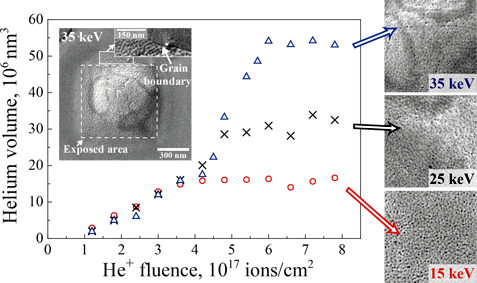
- extremely small [16][17]. This makes the microscope highly suited for obtaining high-resolution images of the surface topography. An image can further be recorded by simultaneous collection of the backscattered He with a microchannel plate [18]. The microscope is also equipped with a silicon drift detector


Kelvin probe force microscopy of nanocrystalline TiO2 photoelectrodes
Beilstein J. Nanotechnol. 2013, 4, 418–428, doi:10.3762/bjnano.4.49
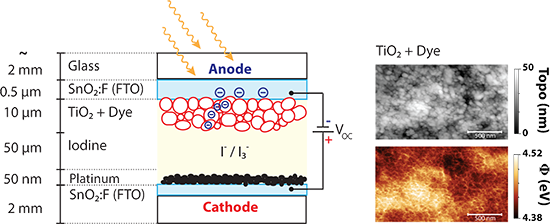
- governed mainly by diffusion and not by drift current (electric field). Preferential trapping of electrons (holes) in defect states of the TiO2 network leads to different diffusion coefficients for electrons and holes. Surface photovoltage under sub-bandgap illumination Figure 6a shows a semilogarithmic


High-resolution nanomechanical analysis of suspended electrospun silk fibers with the torsional harmonic atomic force microscope
Beilstein J. Nanotechnol. 2013, 4, 243–248, doi:10.3762/bjnano.4.25
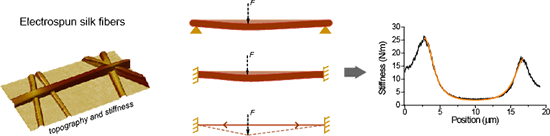
- -average detector signals in vertical and horizontal channels during a tapping-mode AFM experiment. To minimize contributions of drift in quasi-static deflection signals, we previously developed a procedure that takes advantage of the transitions between attractive and repulsive modes [36]. The calibrated


Determining cantilever stiffness from thermal noise
Beilstein J. Nanotechnol. 2013, 4, 227–233, doi:10.3762/bjnano.4.23
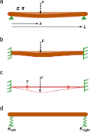
- precision is obtained in determining the eigenfrequency. State-of-the-art test equipment provides an accuracy of absolute frequency measurements below 1 ppm. However, practically the reproducibility is limited by thermal drift of the cantilever resonance between repeated measurements. This explains, for
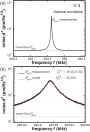
![[Graphic 34]](/bjnano/content/inline/2190-4286-4-23-i40.png?max-width=637&scale=1.18182) measured for the fundamental mode of cantilever V 4. Measureme...
measured for the fundamental mode of cantilever V 4. Measureme...
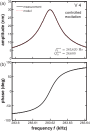
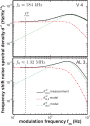
![[Graphic 23]](/bjnano/content/inline/2190-4286-4-23-i29.png?max-width=637&scale=1.18182) measured for cantilever V 4 (A0 = 16.8 nm, demodulator band...
measured for cantilever V 4 (A0 = 16.8 nm, demodulator band...
Influence of diffusion on space-charge-limited current measurements in organic semiconductors
Beilstein J. Nanotechnol. 2013, 4, 180–188, doi:10.3762/bjnano.4.18
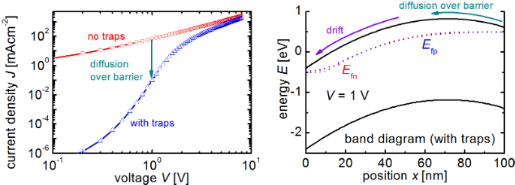
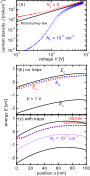
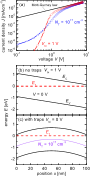
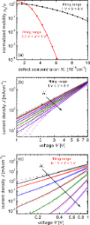
- reasonably accurate mobility values. Keywords: current–voltage curves; electron-only device; drift–diffusion; mobility; simulation; traps; Introduction A frequently used method to analyze charge carrier transport in organic semiconductors is based on space-charge-limited current measurements performed on
- ][21][22][23][24][25][26]. While there have been numerous attempts to develop models to take traps in unipolar devices into account [27][28][29][30][31], nearly all of them still rely on drift as the only transport mechanism. However, traps will often lead to a situation where diffusion currents cannot
- negatively charged defects before they drift to the other contact. This barrier leads to an exponential increase of current with voltage for low voltages similar to the situation in a bipolar diode with a nonzero built-in voltage. To understand the influence of the trap-induced barrier on the interpretation


High-resolution dynamic atomic force microscopy in liquids with different feedback architectures
Beilstein J. Nanotechnol. 2013, 4, 153–163, doi:10.3762/bjnano.4.15
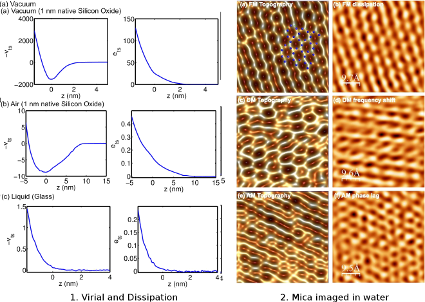
- can be limited by the bandwidth of the amplitude and phase measurements, or the transient response, or the response of the oscillating probe. Drift in dAFM, for example arising from the piezo actuators controlling the image raster, imposes a minimum scan speed and corresponding detection bandwidth


Nanostructure-directed chemical sensing: The IHSAB principle and the dynamics of acid/base-interface interaction
Beilstein J. Nanotechnol. 2013, 4, 20–31, doi:10.3762/bjnano.4.3
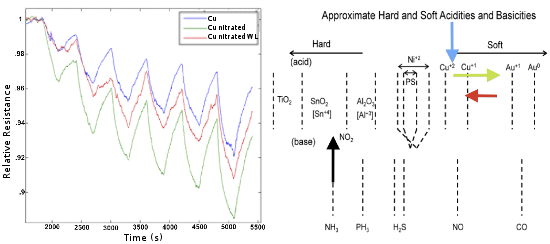
- decreasing resistance. While the response to NH3 is rapid [1][3][8][11] in this unsaturated mode, the system recovery is slowed as NH3, a sticky gas, results in a drift in baseline (see Experimental section). NO2, as a moderate acid, is found to extract electrons from a PS interface [7][29] increasing
- form of an increased resistance. In contrast, at higher fractional TiO2−xNx depositions, Figure 7 demonstrates that white light now increases the sensor response in the form of an increased conductance as the TiO2−xNx [11] decorated interface is found to extract electrons. (Note that the baseline drift


Diamond nanophotonics
Beilstein J. Nanotechnol. 2012, 3, 895–908, doi:10.3762/bjnano.3.100
- high precision. The accuracy of this imaging method is limited only by the applicable laser power and ultimately by instrument drift of the sample scanning unit. The mica mask implantation and GSD imaging method are suitable to create and characterize one or more color centers in diamond with sub 100





Controlled positioning of nanoparticles on a micrometer scale
Beilstein J. Nanotechnol. 2012, 3, 773–777, doi:10.3762/bjnano.3.86
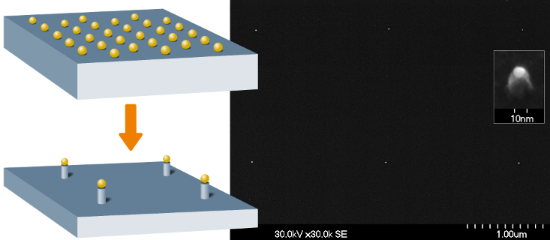
- drift, which in the present case of 100 nm disks arranged in squares added up to approximately 50 nm. Added to this error is the uncertainty of the exact position of the Au NP within any disk. Due to the finite hexagonal order, over larger areas this position can be assumed as random within the disk


Effect of spherical Au nanoparticles on nanofriction and wear reduction in dry and liquid environments
Beilstein J. Nanotechnol. 2012, 3, 759–772, doi:10.3762/bjnano.3.85
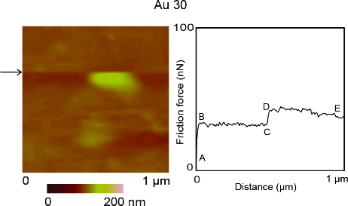
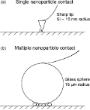
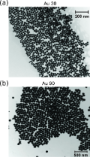
- , can prevent nanoparticles from reaching their intended target [7]. Smaller nanoparticles can diffuse through surfaces and avoid detection by the RES. Studies have shown that forces such as hydrodynamic and van der Waals forces along with the nanoparticle size influence lateral drift (margination) and



The memory effect of nanoscale memristors investigated by conducting scanning probe microscopy methods
Beilstein J. Nanotechnol. 2012, 3, 722–730, doi:10.3762/bjnano.3.82
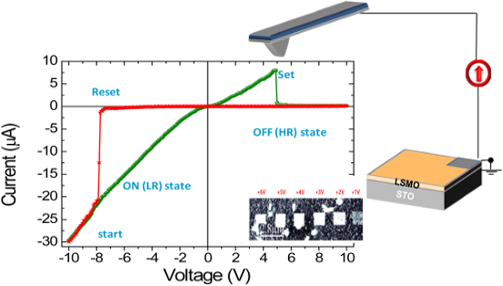
- correlation of device rectification (reset) with the voltage employed to induce each particular state. Analytical simulations by using a nonlinear dopant drift within a memristor device explain the experimental I–V bipolar cycles. Keywords: conductive scanning probe micoscopy; memristor; 3-D modes; resistive
- any frequency, implies that the device is a memristor [5]. A basic mathematical definition of a memristor, assuming an ohmic electron conduction and linear ionic drift in a uniform field, is given by the following equations [2]: where M is the memristance, w is the size of the doped region, D is the
- thickness of the film, RON and ROFF correspond to the resistance of the memristor for completely uniformly doped or undoped cases, respectively, and µ is the drift velocity of the dopants under an electric field E across the doped region in the presence of a current I(t). The switching characteristic


Dimer/tetramer motifs determine amphiphilic hydrazine fibril structures on graphite
Beilstein J. Nanotechnol. 2012, 3, 658–666, doi:10.3762/bjnano.3.75
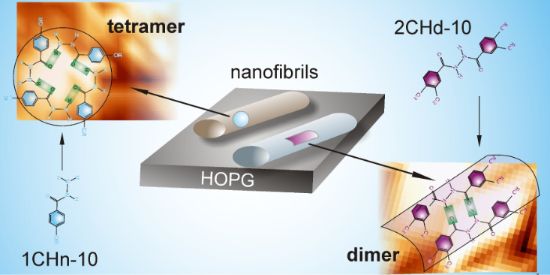
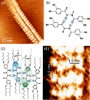
- locating them on a millimetre area substrate; thermal drift; movement/perturbation induced by tip motion and tip contamination [21]; the nonplanar nature of components within individual fibril units; and the presence of dangling alkyl chains. High-resolution STM imaging of 1-D structures has been
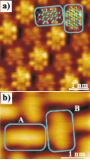
- bare HOPG substrate was imaged to ensure the quality of the STM tip and the cleanliness of the substrate surface. By imaging the atomic structure of the bare graphite, the scanner was calibrated at regular time intervals so that the precision of measurements was solely limited by thermal drift. The
- entire scan area was also imaged before molecules were deposited, to check for graphite artefacts. The ambient temperature was stabilized to be within ±1.0 °C of room temperature, and the scanner was always given time to thermally equilibrate and mechanically relax, to reduce thermal drift and piezo