


Search results
Search for "graphene" in Full Text gives 563 result(s) in Beilstein Journal of Nanotechnology. Showing first 200.
ZnO and MXenes as electrode materials for supercapacitor devices
Beilstein J. Nanotechnol. 2021, 12, 49–57, doi:10.3762/bjnano.12.4
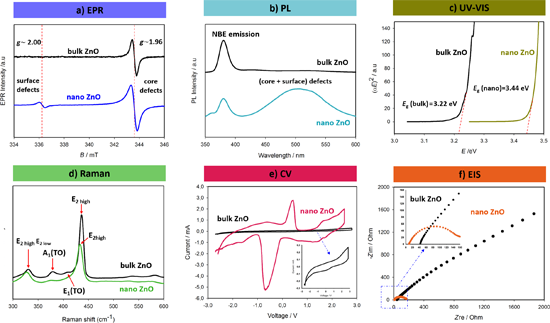
- supercapacitors [15]. Until now, carbon (high surface area), metal oxides (high specific capacitance and low resistance), and conducting polymers are used as electrode materials. The issues of cost, stability, and lifetime are not resolved yet [15]. Graphene seems like one of the possible main electrode materials
- batteries [15][20][21][23]. Gogotsi et al. [24][25][26], who are the pioneers of MXene materials, have defined the relation to MAX phases in a very clear way: MXenes can be produced by etching the A layer from MAX phases. The suffix “ene” is added to emphasize the similarity to graphene. MAX phases are a
- used, for example, in water purification, as electrochemical actuators, as transparent conductive electrodes, and as biosensors [21][22][28]. To enhance the performance of MXene supercapacitors, a variety of materials, such as graphene and carbon nanotubes (CNTs), tin(IV) oxide (SnO2), and iron(III
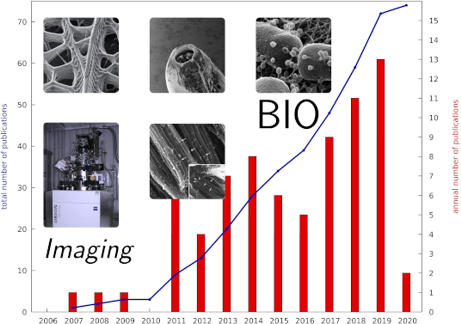
Bio-imaging with the helium-ion microscope: A review
Beilstein J. Nanotechnol. 2021, 12, 1–23, doi:10.3762/bjnano.12.1


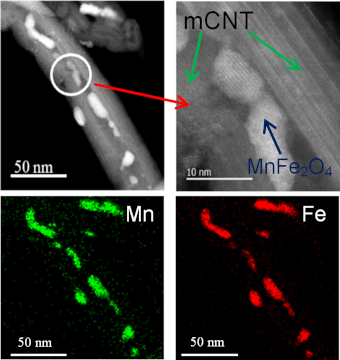
Free and partially encapsulated manganese ferrite nanoparticles in multiwall carbon nanotubes
Beilstein J. Nanotechnol. 2020, 11, 1891–1904, doi:10.3762/bjnano.11.170
- perpendicular to the graphene plane positioned at 3.1 eV (sp2-hybridized carbon network) [34]. These features can be clearly seen in Figure 6. A work function identification of MnFe2O4/MWCNTs is needed to better understand the electronic structure and the interaction between MWCNTs and MnFe2O4 at the interface
- graphite and it is explained by the destabilization of π electrons due to the curvature of the graphene sheets [35]. As observed from Figure 1e and Figure 6, there are large spectral differences between free MnFe2O4, MnFe2O4/MWCNTs, and pristine MWCNTs. Considering that the probing depth of UPS is only at




Kondo effects in small-bandgap carbon nanotube quantum dots
Beilstein J. Nanotechnol. 2020, 11, 1873–1890, doi:10.3762/bjnano.11.169
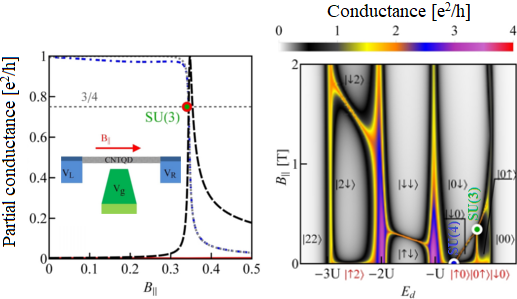
- single-walled carbon nanotube is a hollow cylinder formed of graphene. A CNT can be either metallic or semiconducting, depending on the way graphene is rolled up [37][38]. In the simple “zone folding” picture [39][40], the band structure of CNTs is obtained from the band structure of graphene by imposing
- ]. The nanotubes are characterized by the chiral vector C(n,m), where the integers n and m denote the number of unit vectors along two directions in the honeycomb crystal lattice of graphene. Zone folding theory predicts nanotubes to be metallic if n − m is a multiple of three. According to this
- ” carbon nanotubes [42][43]. The reason for incorrect predictions of the zone folding theory for small-diameter tubes is the neglect of the curvature-induced breaking of the three-fold (C3) rotational symmetry. When graphene is deformed into a nanotube, the curvature causes the overlap matrix elements to

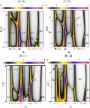
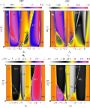


![[Graphic 37]](/bjnano/content/inline/2190-4286-11-169-i52.svg?max-width=637&scale=1.18182) as a functio...
as a functio...


Nanomechanics of few-layer materials: do individual layers slide upon folding?
Beilstein J. Nanotechnol. 2020, 11, 1801–1808, doi:10.3762/bjnano.11.162
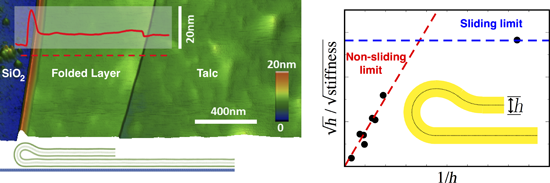
- thickness range. In contrast, tip-enhanced Raman spectroscopy measurements on edges in folded graphene flakes, 14 layers thick, show no significant strain. This indicates that layers in graphene flakes, up to 5 nm thick, can still slip to relieve stress, showing the richness of the effect in 2D systems. The
- obtained interlayer adhesion energy for graphene (0.25 N/m) and talc (0.62 N/m) is in good agreement with recent experimental results and theoretical predictions. The obtained value for the adhesion energy of graphene on a silicon substrate is also in agreement with previous results. Keywords: analytical
- interlayer interactions, have been the primary source of 2D materials [1]. These 2D materials exhibit unusual behavior associated regarding their flexural and adhesive properties [2][3][4][5][6][7][8]. For instance, self-assembled folded flaps and nanoribbons of graphene form by spontaneous folding, sliding
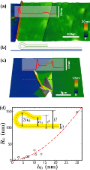
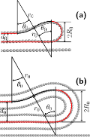

![[Graphic 5]](/bjnano/content/inline/2190-4286-11-162-i8.svg?max-width=637&scale=1.18182) =
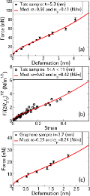
= ![[Graphic 6]](/bjnano/content/inline/2190-4286-11-162-i9.svg?max-width=637&scale=1.18182) as a function of 1/h for the nine measured talc samples. h is a directly measured ...
as a function of 1/h for the nine measured talc samples. h is a directly measured ...
Imaging and milling resolution of light ion beams from helium ion microscopy and FIBs driven by liquid metal alloy ion sources
Beilstein J. Nanotechnol. 2020, 11, 1742–1749, doi:10.3762/bjnano.11.156
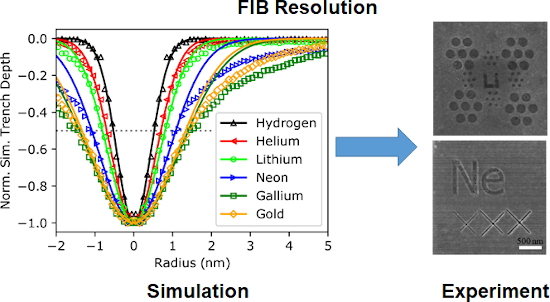
- ], the fabrication of graphene nanomeshes [8], the formation of single Si nanocrystals embedded in SiO2 for single-electron transistors [9], the spatially resolved engineering of the thermal conductivity in individual Si nanowires [10], as well as the creation of nano-Josephson superconducting tunnel


Piezoelectric sensor based on graphene-doped PVDF nanofibers for sign language translation
Beilstein J. Nanotechnol. 2020, 11, 1655–1662, doi:10.3762/bjnano.11.148
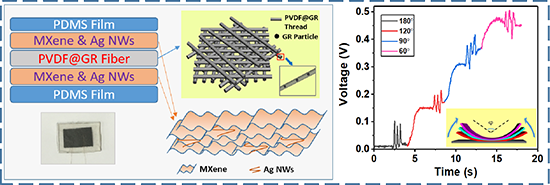
- /bjnano.11.148 Abstract The tracking of body motion, such as bending or twisting, plays an important role in modern sign language translation. Here, a subtle flexible self-powered piezoelectric sensor (PES) made of graphene (GR)-doped polyvinylidene fluoride (PVDF) nanofibers is reported. The PES exhibits
- ][45][46][47][48]. In the era of smart sensing, there is an increasing need for self-powered pressure and bending sensing systems [49][50][51][52][53][54][55][56][57][58][59][60][61][62][63][64]. In this study, we propose a flexible self-powered piezoelectric sensor (PES) based on graphene (GR)-doped
- Pharmaceutical Group. Graphene powder was purchased from Suzhou Carbon Fung Graphene Technology Company. Ag NWs (60 nm in diameter) were purchased from Lit Nanotech. Ti3C2 MXene was purchased from Beijing Beike New Material Technology Company. Polydimethylsiloxane (PDMS) and curing agent were purchased from


High-responsivity hybrid α-Ag2S/Si photodetector prepared by pulsed laser ablation in liquid
Beilstein J. Nanotechnol. 2020, 11, 1596–1607, doi:10.3762/bjnano.11.142
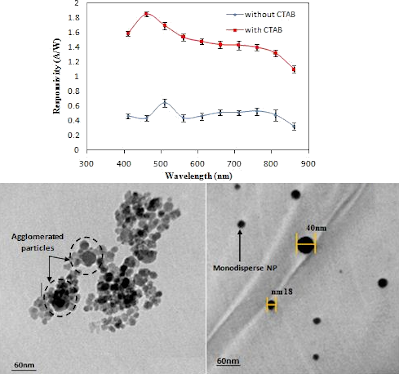
- . synthesized monodisperse Ag2S NPs by using a sonochemical method and fabricated photodetector devices by integrating Ag2S NPs on a graphene sheet [17]. Tretyakov et al. [18] reported the characterization of a Ag2SQD (quantum dots)/Si heterojunction photodetector used for short-wave infrared radiation




Fabrication of nano/microstructures for SERS substrates using an electrochemical method
Beilstein J. Nanotechnol. 2020, 11, 1568–1576, doi:10.3762/bjnano.11.139
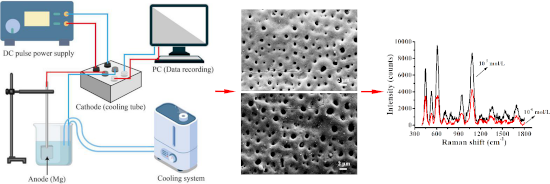
- ] manufactured graphene/Au nanodot array structures, which were used as SERS substrates. The diameter and gap distribution ranged from 30 to 42 nm and from 20 to 30 nm, respectively. In addition, a detection level of 10−9 mol·L−1 for R6G molecules was obtained using the aforementioned SERS substrates. Choi et al


Cu2O nanoparticles for the degradation of methyl parathion
Beilstein J. Nanotechnol. 2020, 11, 1546–1555, doi:10.3762/bjnano.11.137
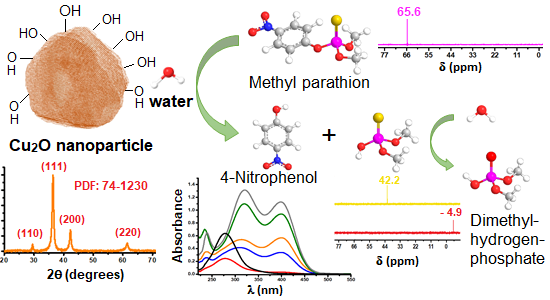
- form on its surface. Consequently, both 16 nm and 29 nm NPs have a similar active surface size and the degradation percentage of MP is similar between 16 nm Cu2O (87%) and 29 nm Cu2O (83%). In order to avoid oxidation of Cu2O NPs, reduced graphene oxide (rGO) can be used as a support [54]. Finally, XPS


Self-assembly and spectroscopic fingerprints of photoactive pyrenyl tectons on hBN/Cu(111)
Beilstein J. Nanotechnol. 2020, 11, 1470–1483, doi:10.3762/bjnano.11.130
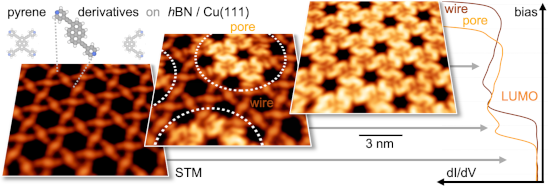
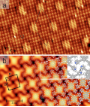
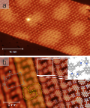
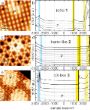
- networks [38], wires of polycyclic aromatic hydrocarbons [39], and graphene patches [40][41] were also performed on hBN/Cu(111). However, advanced supramolecular architectures, such as organic porous networks, have not been reported on either hBN/Cu(111) or other metal-supported hBN monolayers so far, in
- contrast to graphene [42][43][44] or bulk hBN [14][45][46]. Pyrene derivatives are excellent candidates to study the interplay of functionalization and supramolecular organization as the planar polycyclic aromatic core provides an extended π-system that can be readily substituted at distinct positions [47
- anchor for noncovalent functionalization, e.g., to develop graphene platforms to be used in sensing applications [65][66][67] and to employ hBN monolayers for capturing aromatic organic pollutants [68]. On bulk insulators, it was, for instance, demonstrated how the optical properties of an adsorbed




Antimicrobial metal-based nanoparticles: a review on their synthesis, types and antimicrobial action
Beilstein J. Nanotechnol. 2020, 11, 1450–1469, doi:10.3762/bjnano.11.129
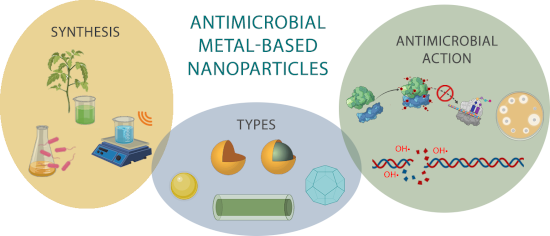
- et al. produced coated sheets of reduced graphene oxide (rGO) which formed a composite compound containing ZnO [24][25]. One method that facilitates the large-scale production of nanoparticles is the MCP technique. This method is based on a chemical exchange reaction that occurs due to the heat and
- nm were synthesized [42]. The chemical vapor deposition method is a technique in which the substrate is exposed to one or more volatile precursors, which react to and/or decompose on the substrate surface to produce the desired thin film deposit. For example, Zhao et al. [44] obtained graphene


One-step synthesis of carbon-supported electrocatalysts
Beilstein J. Nanotechnol. 2020, 11, 1419–1431, doi:10.3762/bjnano.11.126

- the C-matrix and the Pt-NPs during the process. The carbon support consists of carbon nanowalls (CNWs), which are vertically aligned, multilayer graphene nanosheets [18][19]. The morphology of the CNWs, the amount of platinum loading as well as the size of the platinum NPs can be precisely adjusted




Triboelectric nanogenerator based on Teflon/vitamin B1 powder for self-powered humidity sensing
Beilstein J. Nanotechnol. 2020, 11, 1394–1401, doi:10.3762/bjnano.11.123
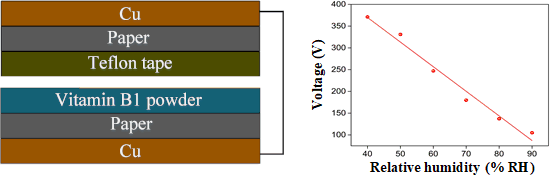
- -free humidity sensors by using biocompatible collagen nanofibrils [43]. More recently, Zhang et al. developed a TENG-driven self-powered flexible humidity sensor based on a tin disulfide nanoflower/reduced graphene oxide (SnS2/rGO) hybrid nanomaterial [44]. However, the large-scale application of TENGs




Effect of localized helium ion irradiation on the performance of synthetic monolayer MoS2 field-effect transistors
Beilstein J. Nanotechnol. 2020, 11, 1329–1335, doi:10.3762/bjnano.11.117
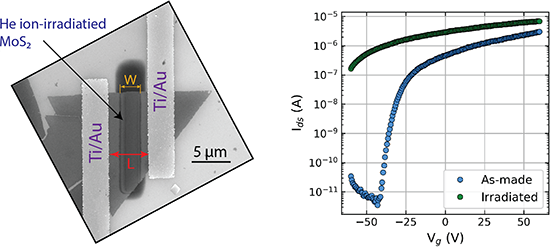
- in MoS2 [11], as well as enhanced out-of-plane charge transfer in 2D graphene/WSe2 heterostructures [12]. Energetic light ions are known to preferentially sputter chalcogen atoms from TMDs while retaining an adequate micrometer-scale structural integrity for irradiation doses up to approx. 1016 ions


Structural and electronic properties of SnO2 doped with non-metal elements
Beilstein J. Nanotechnol. 2020, 11, 1321–1328, doi:10.3762/bjnano.11.116
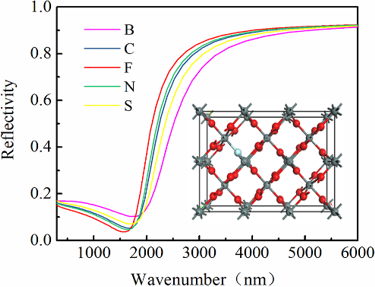
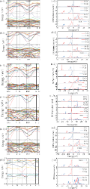
- Jianyuan Yu Yingeng Wang Yan Huang Xiuwen Wang Jing Guo Jingkai Yang Hongli Zhao College of Materials Science and Engineering, Yanshan University, Qinhuangdao 066004, China Department of Environmental and Chemical Engineering, Tangshan University, Tangshan, Hebei 063000, China Graphene Application
- length and charge of the crystal structure with a non-metal atom replacing an O atom. Binding energy of SnO2 with an O atom substituted by a non-metal element. Acknowledgements The numerical calculations in this paper have been carried out at the computing system of the Graphene Application Technology



Growth of a self-assembled monolayer decoupled from the substrate: nucleation on-command using buffer layers
Beilstein J. Nanotechnol. 2020, 11, 1291–1302, doi:10.3762/bjnano.11.113
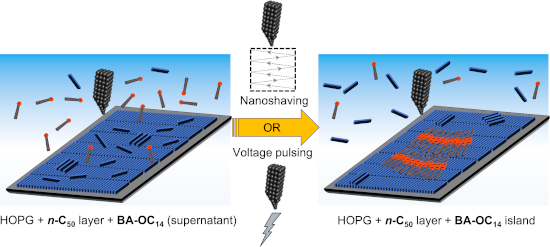
- formed at the solution–solid interface, is a more of routine occurrence than an exception. Such structurally diverse monolayers are typically formed on solid substrates such as highly oriented pyrolytic graphite (HOPG), graphene, and metals such as Cu, Ag and Au and have been characterized using scanning
- . Alkane buffer layers have been employed as efficient electronic decoupling platforms for studying the intrinsic electronic properties of graphene and fullerenes [38]. Apart from alkane derivatives, inorganic systems such as chemisorbed iodine layers [34][35][36][37], and ultrathin layers of KCl [39


Structure and electrochemical performance of electrospun-ordered porous carbon/graphene composite nanofibers
Beilstein J. Nanotechnol. 2020, 11, 1280–1290, doi:10.3762/bjnano.11.112
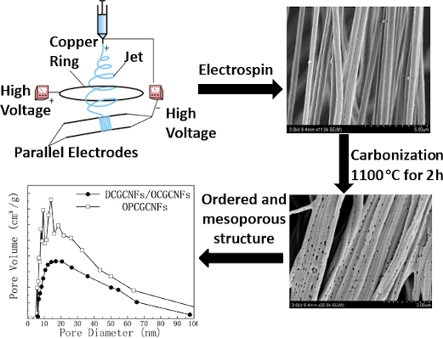
- Yi Wang Yanhua Song Chengwei Ye Lan Xu National Engineering Laboratory for Modern Silk, College of Textile and Engineering, Soochow University, 199 Ren-ai Road, Suzhou 215123, China 10.3762/bjnano.11.112 Abstract Ordered carbon/graphene composite nanofibers (CGCNFs) with different porous
- configurations were used as a material to fabricate supercapacitor electrodes. These nanofibers were synthesized by applying a modified parallel electrode to the electrospinning method (MPEM) in order to generate electrospun polyacrylonitrile (PAN) nanofibers containing graphene. After synthesis, these fibers
- surface area of CGCNFs, thereby significantly increasing their specific capacitance. In addition, the ordering of CGCNFs within the electrode improved the electron transfer efficiency, resulting in a higher specific capacitance. Keywords: carbon/graphene composite nanofibers; carbonization


Ultrasensitive detection of cadmium ions using a microcantilever-based piezoresistive sensor for groundwater
Beilstein J. Nanotechnol. 2020, 11, 1242–1253, doi:10.3762/bjnano.11.108
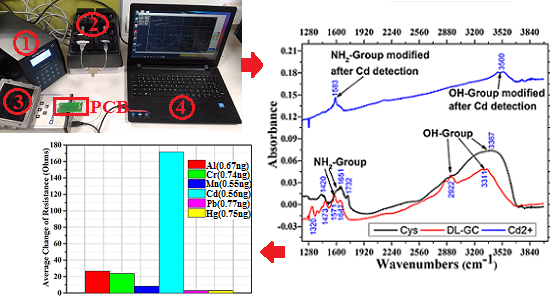
- graphene oxide (RGO)-based sensor and a microfluidic platform fabricated by [25][26][27] can be used with some surface modification for HMIs, but it is mostly capable of detecting in the micromolar range. A polymer-based microcantilever using an encapsulated piezoresistor has been proposed by Kale et al


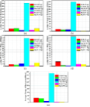


Nonadiabatic superconductivity in a Li-intercalated hexagonal boron nitride bilayer
Beilstein J. Nanotechnol. 2020, 11, 1178–1189, doi:10.3762/bjnano.11.102
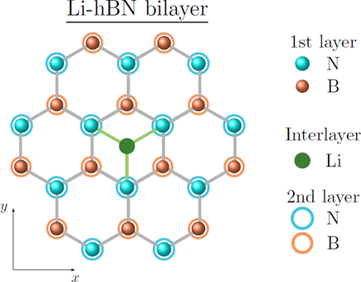
- percent. Keywords: critical temperature; electron–phonon interaction; Li-hBN bilayer; Li-intercalated hexagonal boron nitride (Li-hBN); nonadiabatic superconductivity; vertex corrections; Introduction Low-dimensional systems such as graphene [1][2][3][4][5], silicene [6], borophene [7][8], and
- phosphorene [9][10][11] are mechanically stable only when placed on a substrate [12][13][14]. The substrate should be selected so that it changes the physical properties of the low-dimensional system as little as possible. In the case of graphene, the following substrate materials were used: Co [15], Ni [16
- ][17][18][19], Ru [20][21], Pt [22][23], SiC [24][25][26], and SiO2 [27][28][29]. Unfortunately, the obtained experimental data showed that the incompatible crystalline structure of the above materials leads to significant suppression of the carrier mobility of graphene [13][30]. It is now assumed that


![[Graphic 34]](/bjnano/content/inline/2190-4286-11-102-i54.svg?max-width=637&scale=1.18182) for Li-hBN. The results were obta...
for Li-hBN. The results were obta...
Hybridization vs decoupling: influence of an h-BN interlayer on the physical properties of a lander-type molecule on Ni(111)
Beilstein J. Nanotechnol. 2020, 11, 1168–1177, doi:10.3762/bjnano.11.101
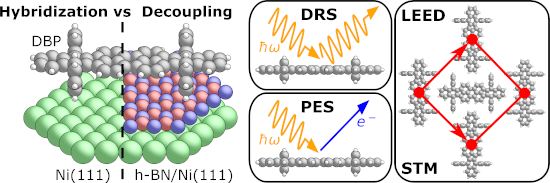
- through different ways such as the usage of wide-band-gap insulator thin films (e.g., oxides, alkali halides) [3][4], a molecular spacer layer [5][6], or sp2-hybridized two-dimensional interlayers (e.g., graphene and hexagonal boron nitride (h-BN)) [7][8]. The advantageous properties of an h-BN monolayer


Scanning tunneling microscopy and spectroscopy of rubrene on clean and graphene-covered metal surfaces
Beilstein J. Nanotechnol. 2020, 11, 1157–1167, doi:10.3762/bjnano.11.100
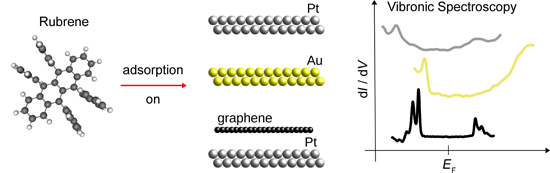
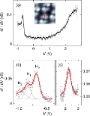
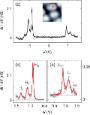
- Karl Rothe Alexander Mehler Nicolas Neel Jorg Kroger Institut für Physik, Technische Universität Ilmenau, D-98693 Ilmenau, Germany 10.3762/bjnano.11.100 Abstract Rubrene (C42H28) was adsorbed with submonolayer coverage on Pt(111), Au(111), and graphene-covered Pt(111). Adsorption phases and
- vibronic properties of C42H28 consistently reflect the progressive reduction of the molecule–substrate hybridization. Separate C42H28 clusters are observed on Pt(111) as well as broad molecular resonances. On Au(111) and graphene-covered Pt(111) compact molecular islands with similar unit cells of the
- superstructure characterize the adsorption phase. The highest occupied molecular orbital of C42H28 on Au(111) exhibits weak vibronic progression while unoccupied molecular resonances appear with a broad line shape. In contrast, vibronic subbands are present for both frontier orbitals of C42H28 on graphene. They



Photothermally active nanoparticles as a promising tool for eliminating bacteria and biofilms
Beilstein J. Nanotechnol. 2020, 11, 1134–1146, doi:10.3762/bjnano.11.98
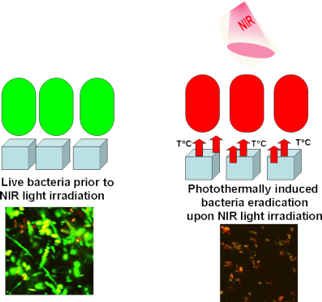
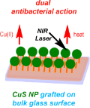
- . In 2018, an interesting approach demonstrated that a paper surface functionalized with gold nanoparticles conjugated with graphene oxide showed NIR laser-triggered photothermal ablation of pathogenic bacteria [64]. Upon NIR light exposure, the fabricated paper generated a temperature increase of over
- nanohole arrays with reduced graphene oxide nanosheets in a unique and flexible polyimide film for laser-gated pathogen inactivation. For the in vivo experiments, the patch was irradiated for 5 min with an LED array (940 nm, 10 W) and the patch surface temperature increased to 52 °C. These tests indicated
- in 77% planktonic P. aeruginosa cell death. In addition, polyurethane nanocomposites containing the same hybrid nanomaterials were also able to eliminate all the surface-grafted P. aeruginosa cells under NIR light irradiation. Reduced graphene oxide, which is characterized by a broad absorption


Applications of superparamagnetic iron oxide nanoparticles in drug and therapeutic delivery, and biotechnological advancements
Beilstein J. Nanotechnol. 2020, 11, 1092–1109, doi:10.3762/bjnano.11.94
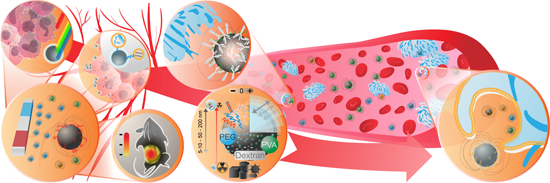
- PEG and adsorbed on reduced graphene oxide sheets, which enhanced the thermal effect of hyperthermia and reduced the viability of breast cancer cells to less than 25% by reaching 43 °C [152]. Also, Zuvin et al. used 4–5 nm SPIONs conjugated with poly(acrylic acid) and anti-HER2 antibody against breast


Monolayers of MoS2 on Ag(111) as decoupling layers for organic molecules: resolution of electronic and vibronic states of TCNQ
Beilstein J. Nanotechnol. 2020, 11, 1062–1071, doi:10.3762/bjnano.11.91
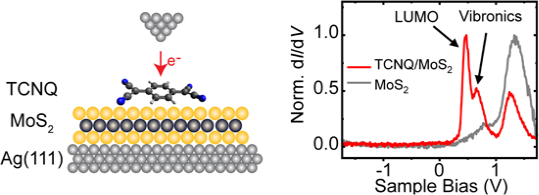
- decouple such flat-lying molecules from a metal, thin insulating layers have been engineered, ranging from ionic salts [15][16], over oxides [17][18][19], nitrides [20], and molecular layers [21][22] to 2D materials, such as graphene [23][24], and hexagonal boron nitride [25]. The most recent development





