


Search results
Search for "junction" in Full Text gives 316 result(s) in Beilstein Journal of Nanotechnology. Showing first 200.
Active and fast charge-state switching of single NV centres in diamond by in-plane Al-Schottky junctions
Beilstein J. Nanotechnol. 2016, 7, 1727–1735, doi:10.3762/bjnano.7.165
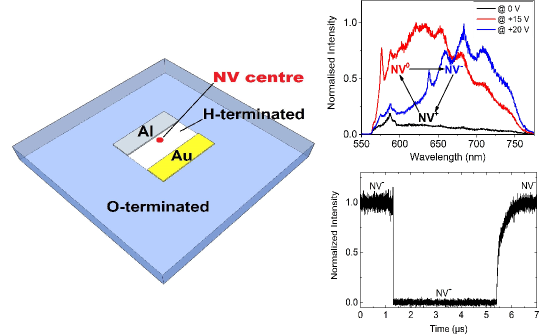
- -terminated) diamond surface. A H-terminated diamond surface exhibits a two-dimensional hole channel a few nanometres below the surface and an aluminium (Al) contact forms a two-dimensional Schottky junction (i.e., in planar configuration) with the p-type surface conductive channel inducing a lateral hole
- depletion layer below and next to the Al contact [18][19]. By applying potentials on the Al-Schottky contact, the applied electric field in the depletion region of the Schottky junction induces a band bending modulation which shifts the Fermi-level over NV charge transition level and the charge state of
- centre sheet density in of [NV] = 106–107 cm−2. We used confocal microscopy with an excitation laser of 520 nm to detect the NV centre photoluminescence in the depletion region of the Schottky junction. Distinct spectral characteristics can be used to identify the charge state: the NV+ centre does not


Analysis of self-heating of thermally assisted spin-transfer torque magnetic random access memory
Beilstein J. Nanotechnol. 2016, 7, 1676–1683, doi:10.3762/bjnano.7.160
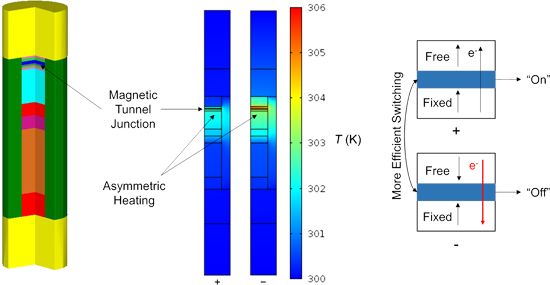
- simulations in order to understand the relative contributions of Joule, thermoelectric Peltier and Thomson, and tunneling junction heating. A 2D rotationally symmetric numerical model is used to solve the coupled electro-thermal equations including thermoelectric effects and heat absorbed or released at the
- tunneling junction. We compare self-heating for different common passivation materials, positive and negative electrical current polarity, and different device thermal anchoring and boundaries resistance configurations. The variations considered are found to result in significant differences in maximum
- , positive polarity, and low thermal anchoring with thermal boundary resistance configurations. Interestingly it is also found that due to the tunneling heat, Peltier effect, device geometry, and numerous interfacial layers around the magnetic tunnel junction (MTJ), most of the heat is dissipated on the






Sb2S3 grown by ultrasonic spray pyrolysis and its application in a hybrid solar cell
Beilstein J. Nanotechnol. 2016, 7, 1662–1673, doi:10.3762/bjnano.7.158
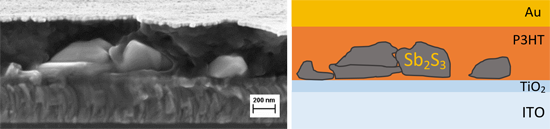
- , situated in the electrical junction created by TiO2 and P3HT (polythiophene) as the electron and hole conductor, respectively. For these type of solar cells, fluorine doped tin oxide (FTO) is prevalently used to contact the TiO2 while evaporated Au has been used to contact the P3HT. The use of a polymeric




Scanning probe microscopy studies on the adsorption of selected molecular dyes on titania
Beilstein J. Nanotechnol. 2016, 7, 1642–1653, doi:10.3762/bjnano.7.156
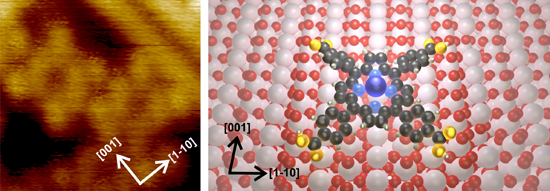
- context, the knowledge of properties of the titania–sensitizer junction is essential for designing efficient devices. Consequently, studies on the adsorption of organic dyes on titania surfaces and on the influence of the adsorption geometry on the energy level alignment between the substrate and an
- charge separation and transport functions are separated. Now, the properties of the semiconductor–sensitizer junction may increase the conversion efficiency in the photovoltaic device. In view of this, it is essential to study the adsorption properties and the charge transfer of organic dyes on the
- determinants, but some of them still play a pivotal role. Second, once the molecular layers are obtained, one may try to seek for correlations between the morphology of the layer and the electrical properties of the junction. An interesting issue is the evolution of excited charge carriers in the molecular


Nonlinear thermoelectric effects in high-field superconductor-ferromagnet tunnel junctions
Beilstein J. Nanotechnol. 2016, 7, 1579–1585, doi:10.3762/bjnano.7.152
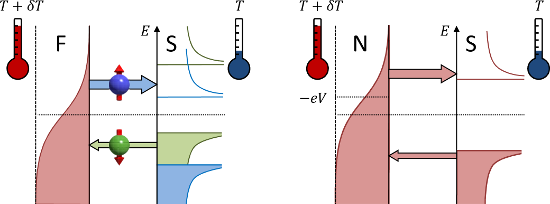
- investigate the dependence of thermoelectric currents on the thermal excitation, as well as on the presence of a dc bias voltage across the junction. Conclusion: Large thermoelectric effects are observed in superconductor/ferromagnet and superconductor/normal-metal hybrid structures. The spin-independent
- -insulator-superconductor junction. Theory In the linear response regime the Seebeck and the Peltier coefficients are related by the Onsager reciprocity relation. Hence a measurement of one determines the other. This is not the case in the nonlinear regime anymore. In the following we derive a generalization
- current from the measure thermally induced charge current. We consider a metal coupled to a superconductor by a tunnel contact, with normal-state tunnel conductance GT. The metal can be a normal metal or a ferromagnet, in which case the junction conductance has a finite spin polarization P. In that


Filled and empty states of Zn-TPP films deposited on Fe(001)-p(1×1)O
Beilstein J. Nanotechnol. 2016, 7, 1527–1531, doi:10.3762/bjnano.7.146
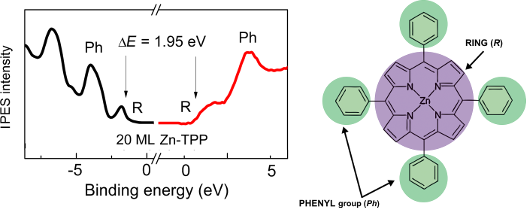
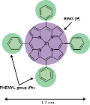
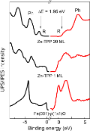
- ]. The changes of the interface dipole, as a function of the film thickness, can thus give a first characterization to evaluate possible barriers that affect the transport properties of the junction. Finally, we summarize in the Table 1 the main energy positions of the R/Ph-HOMO and R/Ph-LUMO molecular

Effect of triple junctions on deformation twinning in a nanostructured Cu–Zn alloy: A statistical study using transmission Kikuchi diffraction
Beilstein J. Nanotechnol. 2016, 7, 1501–1506, doi:10.3762/bjnano.7.143
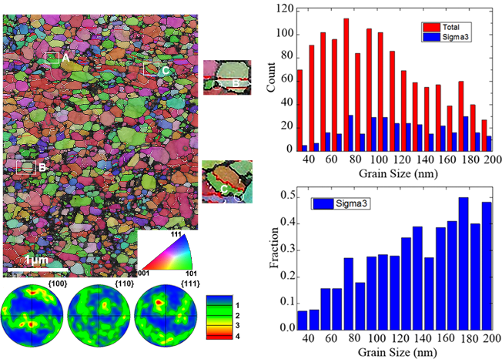
- -pressure torsion. It was found that in 83% of grains containing twins, at least one twin intersects with a triple junction. This suggests that triple junctions could have promoted the nucleation of deformation twins. It should be cautioned that this technique might be unable to detect extremely small
- intersects with a triple junction. It has been reported that the area nearby a triple junction would emit or absorb free volumes to promote the emission of partial dislocations [12] and then emitted partial dislocations would induce the growth of stacking faults or twins [14][15]. Therefore, a twin meeting
- the triple junction could be nucleated from the triple junction. The statistics in Table 1 reveals that 248 out of 300 twinned grains (83%) have at least a twin connected with a triple junction. Two grain size subsets, 30–100 nm and 100–200 nm, are selected to make a comparison in order to avoid



Nanostructured germanium deposited on heated substrates with enhanced photoelectric properties
Beilstein J. Nanotechnol. 2016, 7, 1492–1500, doi:10.3762/bjnano.7.142
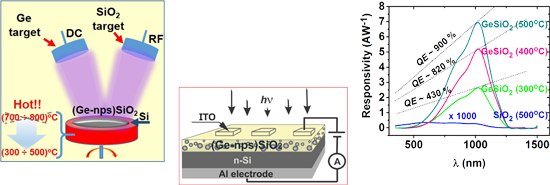
- the n-Si substrate was grounded. In this configuration, the bias voltage is applied across the series combination of junctions, namely at the ITO/Ge:SiO2 interface, the Ge:SiO2 film region, and the junction situated at Ge:SiO2/Si interface [34]. The rectifying behavior (102 rectification ratio at 1 V




The effect of dry shear aligning of nanotube thin films on the photovoltaic performance of carbon nanotube–silicon solar cells
Beilstein J. Nanotechnol. 2016, 7, 1486–1491, doi:10.3762/bjnano.7.141
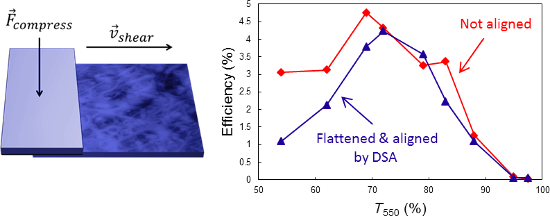
- unanswered. What has been established is that, as one should expect, the quality of the junction plays a large role in overall performance. Since the underlying silicon base is usually a high-grade monocrystalline material, junction quality is dominated by aspects relating to the nanotube thin film. An


Adiabatic superconducting cells for ultra-low-power artificial neural networks
Beilstein J. Nanotechnol. 2016, 7, 1397–1403, doi:10.3762/bjnano.7.130
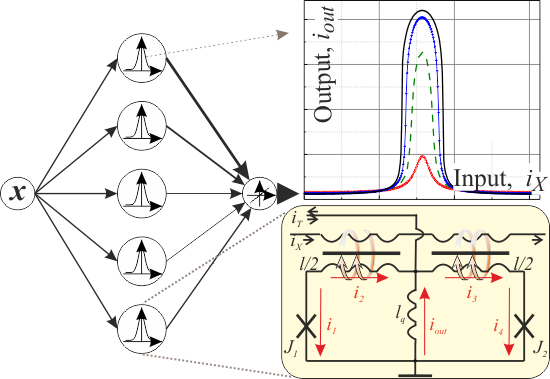
- ), making them relatively slow and hardware/power consumable. The basic element of a superconducting circuit is the nonlinear Josephson junction, which is about three orders faster than a conventional transistor. In contrast to semiconductor neurons, the superconducting one typically consists of just a few
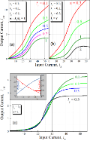
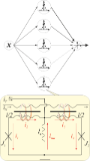
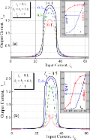
- as a neuron whose activation function usually has a sigmoid-like shape. We start our pursuit of the MLP artificial neuron with an analysis of a simple quantron (or single-junction superconducting interferometer, Figure 1a) transfer function. This function links the applied magnetic flux, ΦX, with
- quantron loop and the relationship between the current through the Josephson junction and its phase, φ, are as follows: One can represent output current as a parametric function [25] and then plot the nonlinear flux-to-current characteristic, as shown in Figure 1b. Note that the resulting transfer function


Ammonia gas sensors based on In2O3/PANI hetero-nanofibers operating at room temperature
Beilstein J. Nanotechnol. 2016, 7, 1312–1321, doi:10.3762/bjnano.7.122
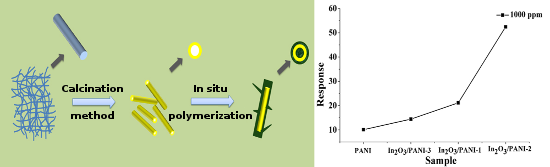
- characteristics of all In2O3/PANI nanofibers clearly exhibit a nonlinear behavior and it can be observed the rectifying behavior in Figure 4, which might result from the p–n junction between the p-type PANI and n-type In2O3 [28][29]. It can be observed that the current of In2O3/PANI showed exponential rise at low
- form a typical ohmic system [31]. Thus, it can be confirmed that a p–n junction between PANI and In2O3 had been formed. Gas sensing properties To study the ammonia sensing behavior of the sensors with different ratios of In2O3 to aniline, the dynamic response of the sensors based on pure PANI and In2O3
- section [40]. Simultaneously, the variation of the PANI region width would have effects on the width of the In2O3 region and on the p–n junction. The electrons of In2O3 and holes of PANI move in opposite directions until the new Fermi level (EF-NH3) reaches equilibrium. In this process, the electron


Fabrication and characterization of branched carbon nanostructures
Beilstein J. Nanotechnol. 2016, 7, 1260–1266, doi:10.3762/bjnano.7.116
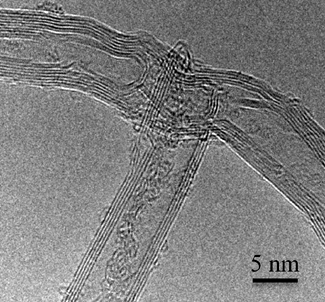
- electronic properties, it is well known that in carbon nanotube networks the junction resistance controls the overall performance [17]. Therefore, in addition to b-MWCNTs/composite applications, the enhanced electrical properties of networks arising within this new material has major potential benefits for


Photocurrent generation in carbon nanotube/cubic-phase HfO2 nanoparticle hybrid nanocomposites
Beilstein J. Nanotechnol. 2016, 7, 1075–1085, doi:10.3762/bjnano.7.101
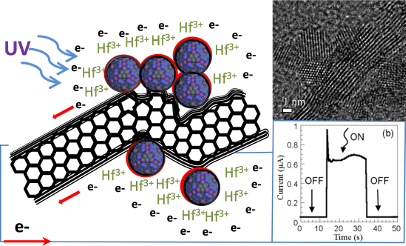
- generally weak with respect to the dark current in the absence of additional Schottky or p–n junction to enhance the photoresponse [63]. This agrees well with the PL measurements of the nanocomposites (see Figure 2) showing no additional spectral features apart from emission peaks associated with Hf3+ and


Role of solvents in the electronic transport properties of single-molecule junctions
Beilstein J. Nanotechnol. 2016, 7, 1055–1067, doi:10.3762/bjnano.7.99
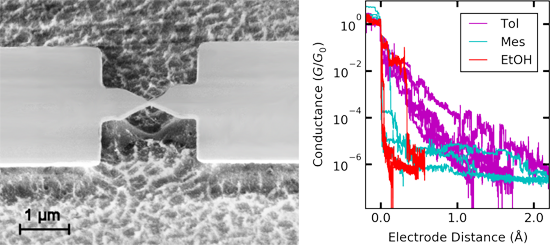
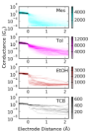
- controllable break junction; molecular electronics; polar solvent; single-molecule junctions; Introduction The electronic transport properties of single-molecule junctions are actively investigated with the aim to utilize such junctions as functional building blocks in electronic devices [1][2][3][4][5][6][7
- to the metal/molecule/metal junction alone, neglecting the contributions Gs of the solvents. This assumption is justified if GJ is much larger than Gs. Except for the seminal studies by Grüter et al. [9][10] the role of the solvent for the transport properties of single-molecule contacts has been
- level alignment [9][10][13][21]. In general, a molecular junction is not formed in all of the breaking curves, but the majority of curves show smooth or noisy distance dependence. These curves are interpreted as tunnelling through the solvent that has no influence on the apparent conductance values of






Modelling of ‘sub-atomic’ contrast resulting from back-bonding on Si(111)-7×7
Beilstein J. Nanotechnol. 2016, 7, 937–945, doi:10.3762/bjnano.7.85
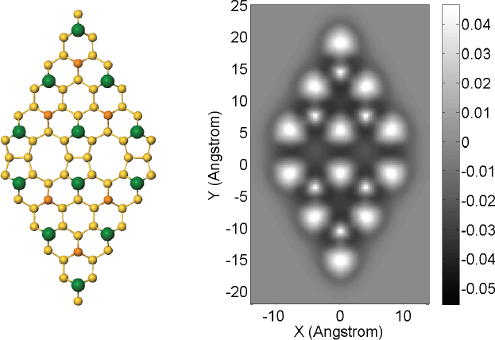
- obtained during imaging of planar organic molecules [3][4]. An important development in the interpretation of sub-molecular resolution imaging has been the explicit consideration of deflection (i.e., mechanical deformation) in the tip–sample junction [5][6][7], which can result in contrast enhancement [6
- end of the bulk tip material, and a single passivated probe particle. In order to simulate the mechanical deformation in the tip–sample junction, the probe particle is allowed to move around the tip base, and acts as a flexible end of the model tip. To model the Si(111)-7×7 surface we imported a
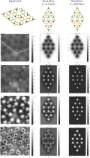
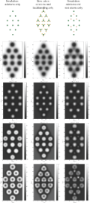
- the tip–sample junction plays in explaining the image contrast, they do not necessarily reveal the origin of the features. Beyond the computational simplicity of the L-J model, an additional advantage compared to more sophisticated modelling techniques is that it is easy to construct “toy” systems


Thermo-voltage measurements of atomic contacts at low temperature
Beilstein J. Nanotechnol. 2016, 7, 767–775, doi:10.3762/bjnano.7.68
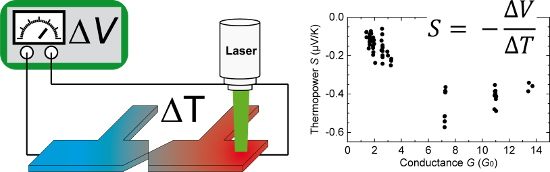
- atomic-sized gold contacts at low temperature. For these measurements a mechanically controllable break junction (MCBJ) system is used and a laser source generates a temperature difference of a few kelvins across the junction to create a thermo-voltage. Since the temperature difference enters directly
- measurement of the resistance change due to laser heating of sensor leads on both sides next to the junction. Our results for the measured thermopower are in agreement with recent reports in the literature. Keywords: atomic contacts; finite element simulations; laser heating; low temperature; mechanically
- controllable break-junction; temperature determination; thermopower; Introduction The energy and heat management in electronic devices has become a challenge in recent years due to the down-scaling of electronic components to the nanoscale, where the transport is governed by quantum-mechanical properties


Magnetic switching of nanoscale antidot lattices
Beilstein J. Nanotechnol. 2016, 7, 733–750, doi:10.3762/bjnano.7.65
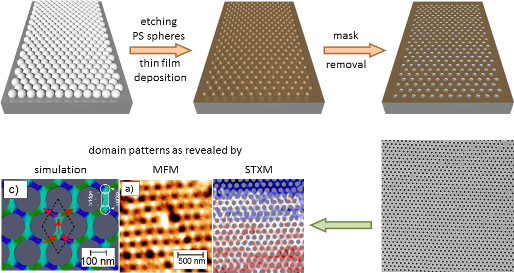
- have a common junction, a residual magnetic charge can be defined, which is the source of the magnetic stray field resulting in the contrast in the MFM investigations [16]. This interpretation is supported by the micromagnetic modelling of the system. Figure 6c shows the simulated magnetisation pattern



Tight junction between endothelial cells: the interaction between nanoparticles and blood vessels
Beilstein J. Nanotechnol. 2016, 7, 675–684, doi:10.3762/bjnano.7.60
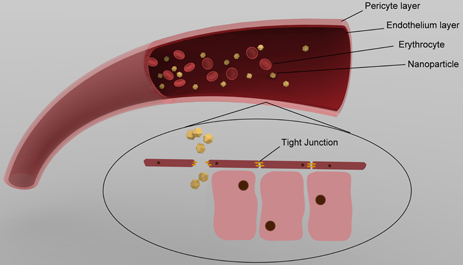
- blood vessels, which are the sites of phosphorylation of tight junction proteins (claudins, occludins, and ZO (Zonula occludens)) proteins, oxidative stress and shear stress. We propose a connection between the presence of nanoparticles and the regulation of the tight junction, which might be the key
- approach for nanoparticles to penetrate endothelial layers and then have an impact on other tissues and organs. Keywords: blood vessels; endothelial cells; nanoparticles; oxidative stress; tight junction; Introduction Products related to nanoparticles (NPs) are increasingly growing in number. We can
- vessels, in particular about (1) NPs pass through the endothelial layer of blood vessels and (2) NPs cause cytotoxicity in surrounding tissues under the endothelial layer. Endothelial cells and tight junction The endothelium provides a thin layer of cells that covers the internal surface of blood vessels

First-principles study of the structure of water layers on flat and stepped Pb electrodes
Beilstein J. Nanotechnol. 2016, 7, 533–543, doi:10.3762/bjnano.7.47
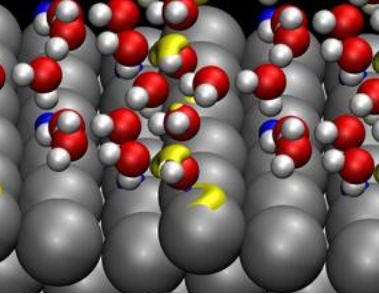
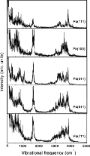
- coverage of adsorbed ions on the junction [19][20][21]. As part of this ongoing research programme, here we present a detailed computational study on the structural and vibrational properties of water layers on flat and stepped Pb surfaces. Besides its relevance for the understanding of microscopic details


Charge and heat transport in soft nanosystems in the presence of time-dependent perturbations
Beilstein J. Nanotechnol. 2016, 7, 439–464, doi:10.3762/bjnano.7.39
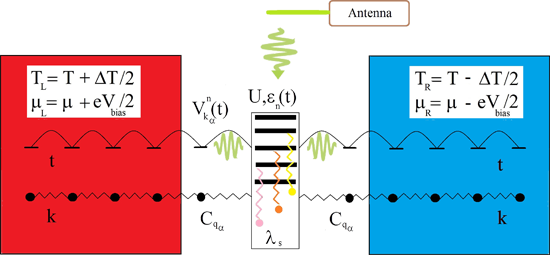
- electronic and vibrational degrees of freedom. Nanoelectromechanical systems (NEMS) are devices similar to molecular junctions. Typically, they consist of a nanobeam resonator that is coupled to an electronic quantum dot junction. Famous examples of NEMS are suspended carbon nanotube (CNT) resonators, which
- of the electronic chemical potentials in the leads provides the bias voltage Vbias applied to the junction: μL = μ + eVbias/2, μR = μ − eVbias/2, with μ being the average chemical potential. The left and right leads will be considered as thermostats in equilibrium at the temperatures TL = T + ΔT/2
- molecular junction will be analyzed. In Equation 6, the coupling between the displacement and a phonon q in the lead α is given by the elastic constant Cq,α. In order to characterize this interaction, one introduces the spectral density J(ω): with M being the mass of the lead atoms and the frequency






Invariance of molecular charge transport upon changes of extended molecule size and several related issues
Beilstein J. Nanotechnol. 2016, 7, 418–431, doi:10.3762/bjnano.7.37
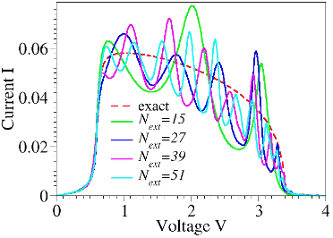
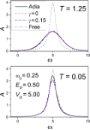
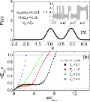
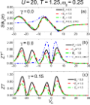
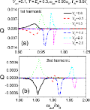
- , characterizing the molecule–electrode couplings (x = L,R). Within the Landauer approach, which provides a general framework to describe the molecular transport within the elastic, uncorrelated transport approximation, the (steady-state) current I through a molecular junction is obtained by integrating the
- molecular junction considered below, which is schematically depicted in Figure 1, reads In the equations above, al (), br (), and cμ () stand for annihilation (creation) operators for electrons in the left and right electrodes and in the “small” molecule, respectively. Restricting to spin-independent
- organic molecules. For concrete cases, the model parameters (Hμ,μ′, τL,R, tL,R) can be obtained within density-functional-based, tight binding (DFTB) frameworks [18][19][20], which represent the state-of-the-art for such larger systems. In a biased junction, they may also nontrivially depend on V and, if


Rigid multipodal platforms for metal surfaces
Beilstein J. Nanotechnol. 2016, 7, 374–405, doi:10.3762/bjnano.7.34

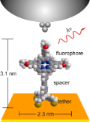
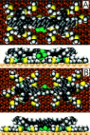
- molecular electronic devices. At present, the field of molecular electronic is far from maturity. The influence of the junction geometry on the electrical characteristics of single molecules remains a fascinating and important area of research. Early experiments have shown that the electrical
- electrical properties [20]. Moreover, transistor-type devices from the same molecule have displayed fundamentally different transport characteristics [21][22]. The organization of the molecules within the junction is usually based on some sort of self-assembly using chemisorption or physisorption methods to
- form monomolecular layers between both electrodes. In many cases, either self-assembled monolayers (SAMs) [23] or Langmuir–Blodgett films (LB) [24][25] of organic molecules on a solid surface provide the order at the molecular level inside the junction to accomplish interface functionalization. The












Synthesis and applications of carbon nanomaterials for energy generation and storage
Beilstein J. Nanotechnol. 2016, 7, 149–196, doi:10.3762/bjnano.7.17
















Effects of electronic coupling and electrostatic potential on charge transport in carbon-based molecular electronic junctions
Beilstein J. Nanotechnol. 2016, 7, 32–46, doi:10.3762/bjnano.7.4
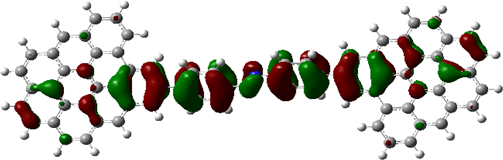
- difficult to calculate accurately, it does provide a basis for the “vacuum level shift” observed in many experiments, including transport and ultraviolet photoelectron spectroscopy of molecular layers on conductors. Keywords: molecular junction electron transport density functional theory molecular devices
- possibility of electronic components that are smaller than existing transistors or diodes, have unusual properties not possible with conventional semiconductors, use less power, or are cheaper than existing microelectronics. A basic element of Molecular Electronics is the “molecular junction (MJ)” consisting
- of molecules oriented between two conductors, with charge transport through the molecular layer. The vast majority of existing junction structures are based on metal/molecule bonding such as the Au/thiol self-assembled monolayers [13][14][15][16][17][18][19][20][21], Langmuir–Blodgett films on metals


Large area scanning probe microscope in ultra-high vacuum demonstrated for electrostatic force measurements on high-voltage devices
Beilstein J. Nanotechnol. 2015, 6, 2485–2497, doi:10.3762/bjnano.6.258
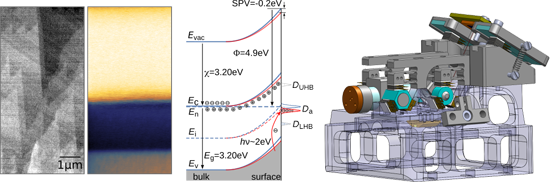
- the benefit of surface photo voltage measurements, we analysed the contact potential difference of a silicon carbide p/n-junction under illumination. Keywords: copper alloy; electrostatic force microscopy; high-voltage device; Kelvin probe force microscopy; silicon carbide (SiC); surface photo
- SiC structure of a power semiconductor device is observed by means of large area KPFM measurements. The structure is a junction barrier Schottky (JBS) rectifier-architecture [26]. We observe the termination region of the device, where highly doped p+-rings are embedded into a large p-type ring. These
- the generated electron–hole pairs are reducing the surface band bending depending on the illumination intensity and energy even until flat-band conditions. To demonstrate the impact of SPV, we illuminated the SiC p/n-junction with laser light of 470–480 nm and a power of maximum 50 mW. An increase of





