Search results
Search for "layers" in Full Text gives 1202 result(s) in Beilstein Journal of Nanotechnology. Showing first 200.
Cross-sectional Kelvin probe force microscopy on III–V epitaxial multilayer stacks: challenges and perspectives
Beilstein J. Nanotechnol. 2023, 14, 725–737, doi:10.3762/bjnano.14.59
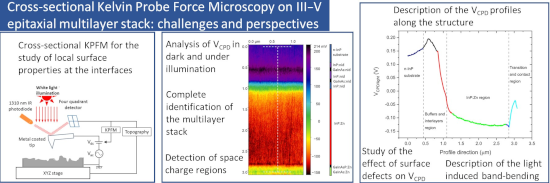
- consisting of many layers and interfaces. The study and the comprehension of the mechanisms that take place at the interfaces is crucial for efficiency improvement. In this work, we apply frequency-modulated Kelvin probe force microscopy under ambient conditions to investigate the capability of this
- technique for the analysis of an InP/GaInAs(P) multilayer stack. KPFM reveals a strong dependence on the local doping concentration, allowing for the detection of the surface potential of layers with a resolution as low as 20 nm. The analysis of the surface potential allowed for the identification of space
- containing numerous layers and interfaces [1]. The capability to conduct local investigations at the nanoscale level that provide information on the electrical properties of materials and along physical interfaces is becoming crucial for solar photovoltaic device efficiency improvement [2]. Electrical


A graphene quantum dots–glassy carbon electrode-based electrochemical sensor for monitoring malathion
Beilstein J. Nanotechnol. 2023, 14, 701–710, doi:10.3762/bjnano.14.56
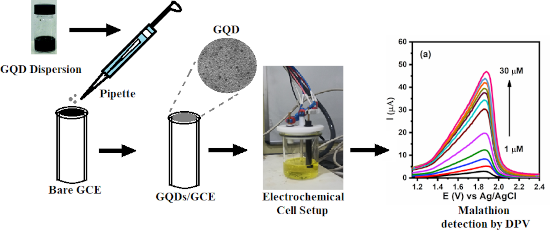
- lowers the detection limit [18]. In an effort to combine the properties of carbon dots and graphene, graphene quantum dots (GQDs) with a size smaller than 100 nm and only a few layers of graphene (3 to 10 layers) have been developed as a new class of carbon nanomaterials [19]. Scientists have explored
- distance, respectively, covered by the GQDs. The variation in size of the GQDs can be determined from the x axis, while from the y axis, the thickness of the GQDs can be obtained. The average thickness of the GQDs is about 2.8 nm, which indicates the presence of 8–9 graphene layers, assuming an interlayer
- containing functional groups are still present in GQDs even after hydrothermal treatment. Due to the nanoscale size of GQDs and a small number of graphene layers, the diffraction peak appears broad [35]. Using the FWHM of the diffraction peak, an average crystallite size of 2.69 nm was calculated for the


The microstrain-accompanied structural phase transition from h-MoO3 to α-MoO3 investigated by in situ X-ray diffraction
Beilstein J. Nanotechnol. 2023, 14, 692–700, doi:10.3762/bjnano.14.55
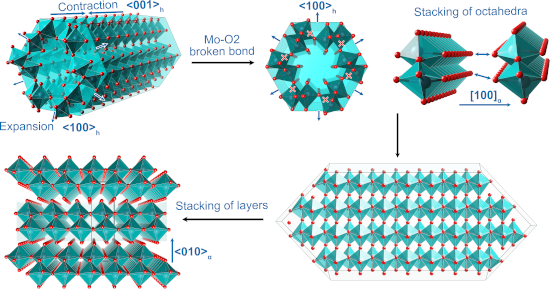
- octahedron layers in the ⟨100⟩α direction. The octahedron layers are bonded by van der Waals interactions in the ⟨010⟩α direction, crystalizing into the α-MoO3 structure. Keywords: microstrain; molybdenum oxide; phase transition; thermal expansion; Introduction Molybdenum exhibits oxidation states ranging
- ], β-MoO3 [15][16], h-MoO3 [17], γ-MoO3 [18], and the high-pressure phase MoO3-II [19]. α-MoO3 and β-MoO3 are the two most commonly reported molybdenum oxides. α-MoO3 is a thermodynamically stable orthorhombic phase. It is a layered crystal with strong covalent bonding within the layers and weak van
- der Waals coupling between layers [20]. β-MoO3 is a metastable phase in which the MoO6 octahedra share corners in three dimensions to construct a monoclinic structure [16]. h-MoO3 is a metastable hexagonal phase. It has the unique structural characteristic that the MoO6 octahedra chains share corners


Humidity-dependent electrical performance of CuO nanowire networks studied by electrochemical impedance spectroscopy
Beilstein J. Nanotechnol. 2023, 14, 683–691, doi:10.3762/bjnano.14.54
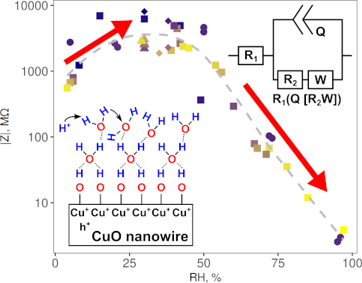
- chemisorption and physisorption at the nanowire interface, which suppress electronic transport inside the p-type semiconductor nanowire but enhance ionic transport in the water layers adsorbed on the nanowire surface. Possible physicochemical processes at the nanowire surface are discussed in line with
- formation of additional physisorbed H2O layers through hydrogen bonding (Figure 3e). The conduction process occurs by the Grotthuss mechanism [29][33][34] of H+ hopping through the network of H2O molecules on the surface (H3O+ + H2O ↔ H2O + H3O+). Higher humidity causes increased concentration of H+ and
- the increasing contribution of ionic conductivity in the water layers. At RH above 60%, the constant phase element and the Warburg element appeared in the equivalent circuit, suggesting an increasing part of water physisorption and condensation. All in all, the influence of these factors can explain


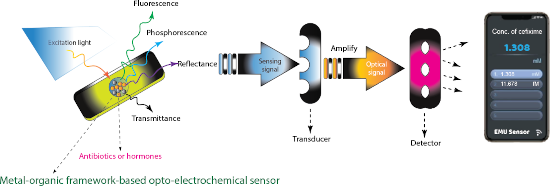
Metal-organic framework-based nanomaterials as opto-electrochemical sensors for the detection of antibiotics and hormones: A review
Beilstein J. Nanotechnol. 2023, 14, 631–673, doi:10.3762/bjnano.14.52


SERS performance of GaN/Ag substrates fabricated by Ag coating of GaN platforms
Beilstein J. Nanotechnol. 2023, 14, 552–564, doi:10.3762/bjnano.14.46
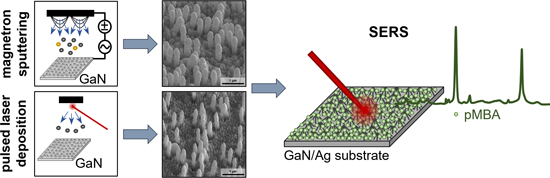
- substrates using pulsed laser deposition (PLD) and magnetron sputtering (MS) and their evaluation as potential substrates for surface-enhanced Raman spectroscopy (SERS) are reported. Ag layers of comparable thicknesses were deposited using PLD and MS on nanostructured GaN platforms. All fabricated SERS
- plasmonic metals or their alloys [23][24][25][26][27][28][29][30][31][32]. The chemical and electrochemical etching of GaN heteroepitaxial layers leads to various nanostructures formed on line defects (dislocations), such as straight nanopillars, bunches of nanopillars, and pits [31][32]. The nanostructured
- morphology of fabricated Ag layers examined by scanning electron microscopy (SEM). Then, we present the results of their optical properties determined using UV–vis spectroscopy. Finally, we compare the SERS performance of the GaN/Ag substrates toward 4-mercaptobenzoic acid (pMBA) molecules adsorbed on them


Observation of multiple bulk bound states in the continuum modes in a photonic crystal cavity
Beilstein J. Nanotechnol. 2023, 14, 544–551, doi:10.3762/bjnano.14.45
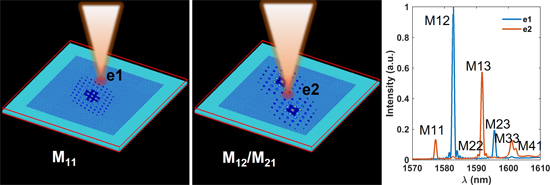
- along the z direction was applied as the source. Perfectly matched layers are used at all boundaries of the simulation region. The mode patterns are captured by adding a field monitor at the middle plane of the structure. An apodization window is utilized in the monitor to filter out the incident power


Carbon nanotube-cellulose ink for rapid solvent identification
Beilstein J. Nanotechnol. 2023, 14, 535–543, doi:10.3762/bjnano.14.44
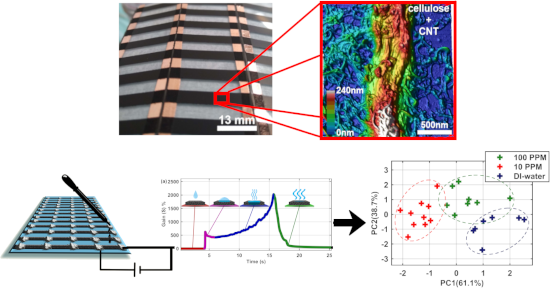
- changing the number of painted layers. Figure 1b shows a histogram of the initial resistance distribution of the sensors averaged over around 400 devices, demonstrating the system’s robustness for large-scale production. The resistance distribution was fitted using an exponentially modified Gaussian (EMG
- ) and the calculated mean resistance (with standard deviation) is 1.26 ± 0.07 kΩ. A geometry optimization was also performed to find out the maximum gain response as a function of width, length, and number of painted layers (see Supporting Information File 1 for details). To better understand how MWCNTs


On the use of Raman spectroscopy to characterize mass-produced graphene nanoplatelets
Beilstein J. Nanotechnol. 2023, 14, 509–521, doi:10.3762/bjnano.14.42
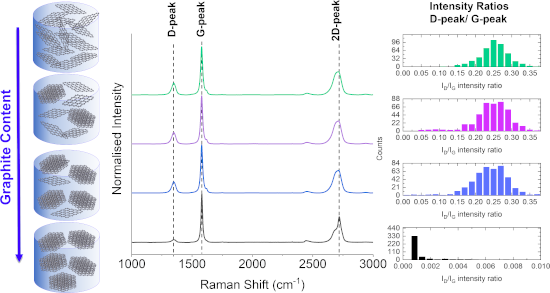
- these two extremes, the peak shape evolves gradually, and while the 2D peak from bilayer graphene has been shown to comprise four components, deconvolution for higher layer numbers has not been reliably carried out. The spectrum recorded from flakes with ten or more layers is typically indistinguishable
- from that of bulk graphite. However, it is important to note that this behaviour can be affected by the stacking order. For example, for turbostratic graphite, where there is random rotational alignment between the layers, the 2D band also has the shape of a single Lorentzian line [21]. However, it
- lateral size of 218 nm. We did not attempt to give a number of layers for these flakes. Yet, we do note that while the natural interlayer spacing for graphite is 0.34 nm, it has been reported previously that for similarly produced flakes, monolayer flakes had a measured thickness of 2 nm, with each


Conjugated photothermal materials and structure design for solar steam generation
Beilstein J. Nanotechnol. 2023, 14, 454–466, doi:10.3762/bjnano.14.36
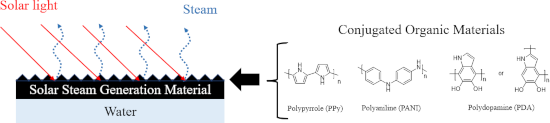
- the spectral range of terrestrial solar irradiation (Figure 6b and Figure 6c). Single-layer PPy nanosheets transmit 0.2–0.3% of light, while two or more layers of the PPy nanosheets exhibit a very low transmittance over the entire solar spectrum. It is interesting to note that the light absorption
- depends on the number of layers, which was caused by the surface structure of the multilayer PPy nanosheets. The high roughness and sharp local curvature of the multilayer PPy nanosheets were retained and incident light was effectively redistributed. In other words, transmitted light is confined in the
- multilayer PPy nanosheets, and this results in internal light scattering between the layers (Figure 6d). These multilayer nanosheets promote a broadband and wide-angle light absorption across the entire solar spectrum, thus increasing the solar thermal conversion efficiency to 95.33%. Polyaniline


Plasmonic nanotechnology for photothermal applications – an evaluation
Beilstein J. Nanotechnol. 2023, 14, 380–419, doi:10.3762/bjnano.14.33
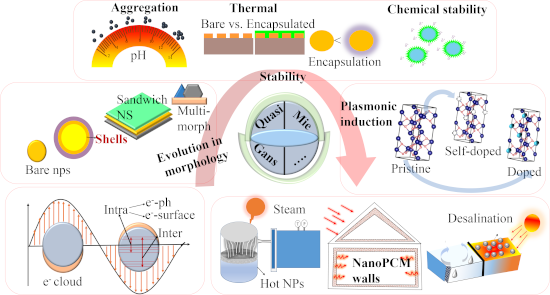
- interaction between inner-core and outer-shell plasmons, PT energy transduction is significantly more effective. The absorption coefficient (Cabs) of the nanomatryushka (NM) can be calculated by varying the volumetric factor of the different layers of the nanostructures and the refractive index of the




Quercetin- and caffeic acid-functionalized chitosan-capped colloidal silver nanoparticles: one-pot synthesis, characterization, and anticancer and antibacterial activities
Beilstein J. Nanotechnol. 2023, 14, 362–376, doi:10.3762/bjnano.14.31
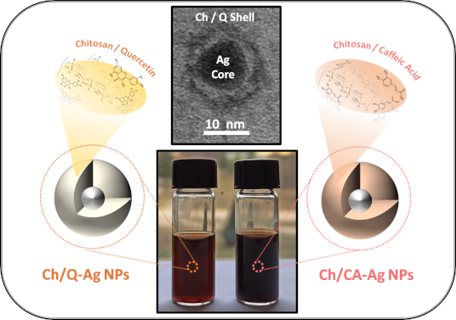
- acid, and chitosan) used in the structure of the shell layers. In the FTIR spectrum of pure quercetin (Figure 3a) the bands observed at about 3408 and 3292 cm−1 correspond to phenolic O–H stretching [64]. The peak at 1671 cm−1 stems from the stretching of the C=O carbonyl functional group. The
- Figure 4a and Figure 4b, the Ag NPs covered by chitosan layers comprising quercetin or caffeic acid have mostly spherical shapes. However, both samples also include nanostructures with different shapes, such as rods and triangles, in smaller numbers than the spherical particles. This also resulted in


Biocatalytic synthesis and ordered self-assembly of silica nanoparticles via a silica-binding peptide
Beilstein J. Nanotechnol. 2023, 14, 280–290, doi:10.3762/bjnano.14.25
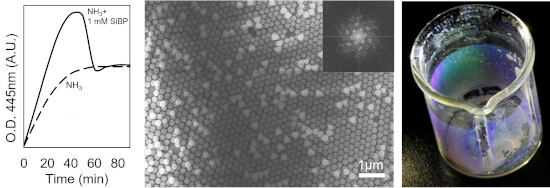
- structure of silica particles, in which the alternate layers differ in refractive index. The periodic difference in the refractive index creates photonic band gaps, in which certain wavelengths of the light cannot propagate, depending on the size of the periodic structures and the differences in the




Nanotechnology – a robust tool for fighting the challenges of drug resistance in non-small cell lung cancer
Beilstein J. Nanotechnol. 2023, 14, 240–261, doi:10.3762/bjnano.14.23
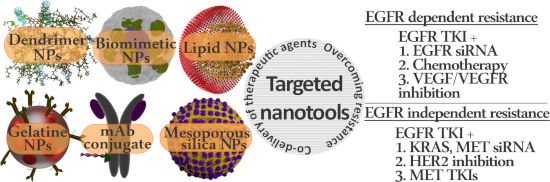
- nanosized drug delivery carriers: Mixed-layer and multilayered nanocarriers with bioresponsive and cleavable layers, possessing different functional properties for improving the enhanced permeability and retention (EPR) effect, diffusion in the tumor microenvironment, cellular internalization and


Concentration-dependent photothermal conversion efficiency of gold nanoparticles under near-infrared laser and broadband irradiation
Beilstein J. Nanotechnol. 2023, 14, 205–217, doi:10.3762/bjnano.14.20
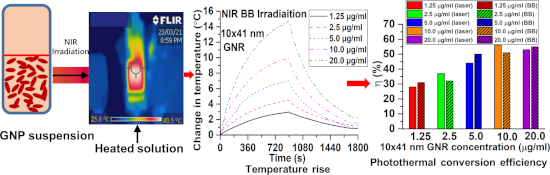
- GNPs, the scattering increases in relation to the absorption [30]. Also, with an increase in the concentration of GNPs, the absorption of the incident radiation occurs predominantly in the first few layers of the suspension [31], and there may be interparticle coupling of plasmon reponses, which can be




A novel approach to pulsed laser deposition of platinum catalyst on carbon particles for use in polymer electrolyte membrane fuel cells
Beilstein J. Nanotechnol. 2023, 14, 190–204, doi:10.3762/bjnano.14.19
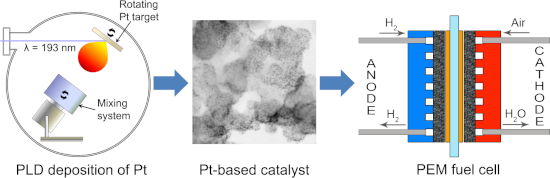
- to deposit Pt for the cathode of PEM fuel cells only in a few studies, and in all of them only on gas diffusion layers of carbon fabric or on proton conductive Nafion membrane [27][32][33]. According to our knowledge, no studies have been reported on the PLD deposition of Pt catalyst on carbon
- , Figure S2) were recorded from an area of about 1.5 × 3.5 mm for materials prepared in the form of layers with a thickness of about 0.4 mm. However, due to the small depth of collecting the photoelectrons in XPS (about 3 to 10 nm), the recorded signal comes only from the material’s surface. Consequently
- result mean that the PLD-deposited Pt on the carbon support is oxidized to a higher extent than the reference Pt catalyst. Based on our experience with Pt deposited by PLD as thick continuous layers, slightly oxidized Pt layers can be deposited by the PLD method under vacuum conditions. Thus, we suspect



High–low Kelvin probe force spectroscopy for measuring the interface state density
Beilstein J. Nanotechnol. 2023, 14, 175–189, doi:10.3762/bjnano.14.18
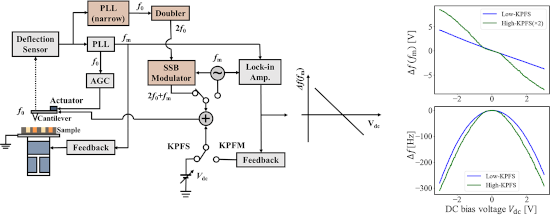
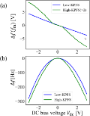
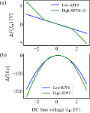
- the localized energy levels of insulating layers on semiconductor surfaces has been reported to be feasible [22]. Therefore, we can expect that the KPFS method described above can be combined with high–low KPFM to measure the energy distribution of the interface states. In this study, we propose high



Combining physical vapor deposition structuration with dealloying for the creation of a highly efficient SERS platform
Beilstein J. Nanotechnol. 2023, 14, 83–94, doi:10.3762/bjnano.14.10
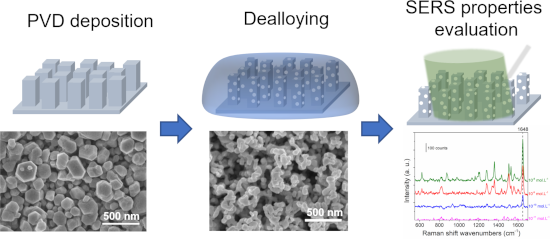
- dealloying was performed in HCl for 10, 30, 60, and 120 min. The lamellar structure in the as-prepared sample is due to the rotation of the substrate during deposition. The film presents a multilayer structure composed of Ag-rich and Ag-poor layers which are formed due to distance variation between the
- rotating substrate and the Ag target (i.e., Ag-rich layers are formed when the substrate is close to the Ag target while Ag-poor layers are formed when the substrate is far from the Ag target). The formation of these nanolayers has already been reported in the literature [24][37]. Higher magnification SEM
- ). These small pores highlight the early dealloying stage and the propagating front at the grain boundaries [38]. After 30 min in HCl, bigger pores are formed (Figure 2b) and the cross-section image shows structures made of a porous and full layers (Figure 2f). After 60 min of dealloying, the initial




Liquid phase exfoliation of talc: effect of the medium on flake size and shape
Beilstein J. Nanotechnol. 2023, 14, 68–78, doi:10.3762/bjnano.14.8
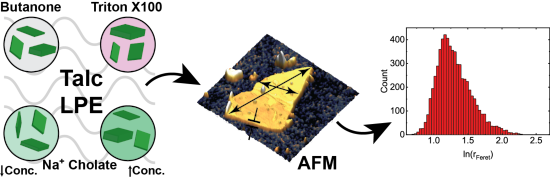
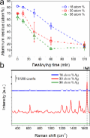
- substrate appears in black to dark blue. Following previous works, we consider flakes with ten or less layers as “few-layer” [25]. Since talc has a layer thickness of approximately 1 nm [12], we did not convert the height to the number of layers as it is a direct conversion. Few-layer flakes appear in light
- Fernandes and co-workers [24], simply looking at mean flake thickness and standard deviation of a sample does not account well for the volume (or mass) of few-layer flakes versus bulk flakes (thicker than 10.5 nm for talc, which represents 10 or more layers). We calculated the mass ratio of bulk (M) and few
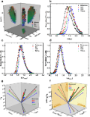
- offer a comparison of the characteristics of the sample. The samples differ more in thickness-related parameters (thus, the number of layers) than in the lateral size-related parameters. To further compare shape-related features of the samples, we plotted topological vectors of pairwise ratios among



Gap-directed chemical lift-off lithographic nanoarchitectonics for arbitrary sub-micrometer patterning
Beilstein J. Nanotechnol. 2023, 14, 34–44, doi:10.3762/bjnano.14.4
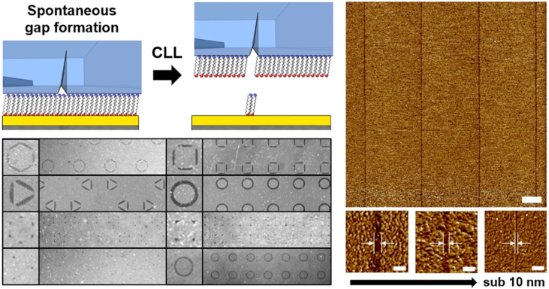
- ) was obtained from the ELGA PURELAB classic system (Taipei, Taiwan). CLL operation processes and bioactive substrates preparation In a manner similar to a previous study [26], silicon substrates with 100 nm thick Au and 5 nm Cr adhesive layers were prepared by thermal evaporation. To prepare a SAM


The influence of structure and local structural defects on the magnetic properties of cobalt nanofilms
Beilstein J. Nanotechnol. 2023, 14, 23–33, doi:10.3762/bjnano.14.3
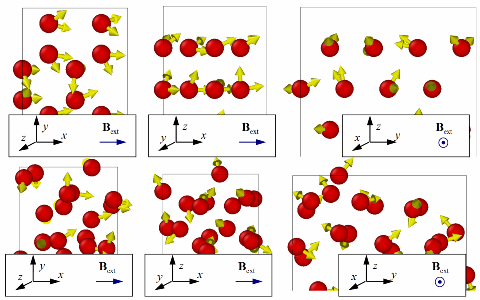
- properties of the nanomaterial were investigated in this work using a promising nanocomposite formed by alternating layers of cobalt and niobium. The proposed composite has potentially promising functional properties and can be used in magnetic systems with controlled effective energy exchange in Josephson
- of the sample. The results of numerical experiments are described in the literature [37][38][39]. The next stage of sample study involved the optimization of the nanofilm interface. The basic magnetic properties of the nanocomposite depend on the quality of the interface between the layers, so the
- problem of obtaining clearly separated contact layers is highly relevant. Using simulations, it was demonstrated that optimization of the nanofilm interface can be obtained either by introducing additional intermediate thin layers neutral to the original composition, such as aluminum oxide, or by


Electrical and optical enhancement of ITO/Mo bilayer thin films via laser annealing
Beilstein J. Nanotechnol. 2022, 13, 1589–1595, doi:10.3762/bjnano.13.133
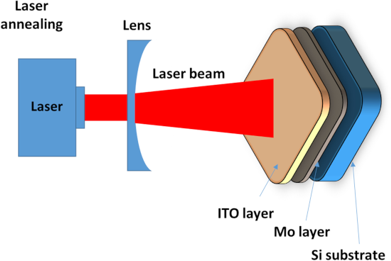
- significantly improve the electrical properties without affecting the optical transmission [9]. Several metals have been used for such thin layers, including silver [10], aluminium [11], copper [12], and gold [13]. Molybdenum thin films are another choice for the application in solar cells because of good


Induced electric conductivity in organic polymers
Beilstein J. Nanotechnol. 2022, 13, 1551–1557, doi:10.3762/bjnano.13.128
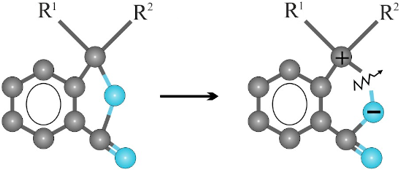
- without exposure to room atmosphere between cycles of formation of different layers. Glass or oxidized silicon were used as substrates. The substrates were preliminarily cleaned in ethanol and distilled water in an ultrasonic bath. The surfaces were hydrophilized by treating the substrates with



Photoelectrochemical water oxidation over TiO2 nanotubes modified with MoS2 and g-C3N4
Beilstein J. Nanotechnol. 2022, 13, 1541–1550, doi:10.3762/bjnano.13.127
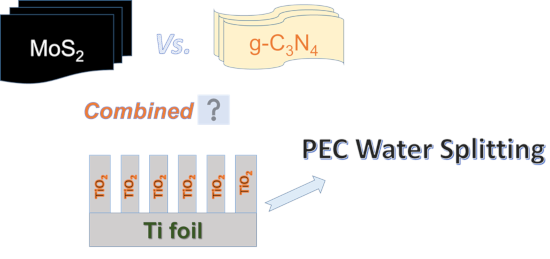
- filter cutting at 380 nm. Results and Discussion Characterizations of materials Figure 1a displays the morphology of TNAs, which have a uniform distribution of nanotubes with average diameters ranging from 80–100 nm and a length of 500 nm (Figure 1b). The MoS2 material exhibits the stacked layers of 2D


A TiO2@MWCNTs nanocomposite photoanode for solar-driven water splitting
Beilstein J. Nanotechnol. 2022, 13, 1520–1530, doi:10.3762/bjnano.13.125
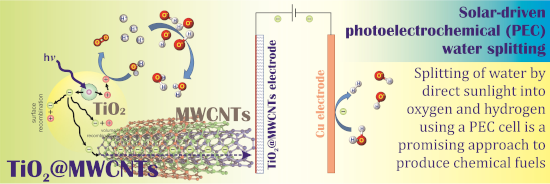
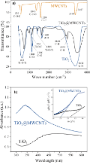
- 42.6° correspond to the d-spacing between graphene sheets and the lateral correlation of graphite layers, which is presentative for MWCNTs [27]. Additionally, the XRD pattern of TiO2 exhibits peaks at 25.4° and 48.2°, ascribed to the anatase phase, while the other peaks at 27.6° and 36.2° are