


Search results
Search for "ligands" in Full Text gives 331 result(s) in Beilstein Journal of Nanotechnology. Showing first 200.
Hybrid Au@alendronate nanoparticles as dual chemo-photothermal agent for combined cancer treatment
Beilstein J. Nanotechnol. 2018, 9, 2947–2952, doi:10.3762/bjnano.9.273
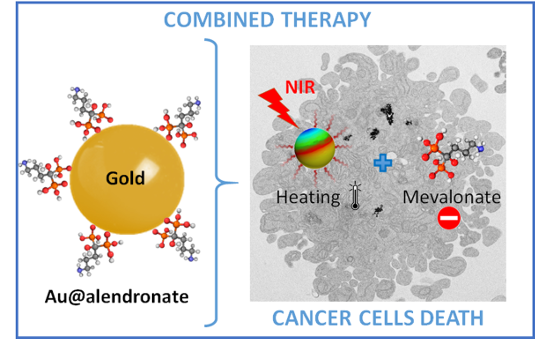
- internalized by the cells and accumulates preferentially into bone tissue. Benyettou et al. showed that alendronate-coated magnetic NPs favour the intratumoral uptake and inhibit tumor growth [10]. HMBPs are also effective ligands to stabilize nanoparticles under biological conditions [11][12][13][14][15


Magnetic and luminescent coordination networks based on imidazolium salts and lanthanides for sensitive ratiometric thermometry
Beilstein J. Nanotechnol. 2018, 9, 2775–2787, doi:10.3762/bjnano.9.259
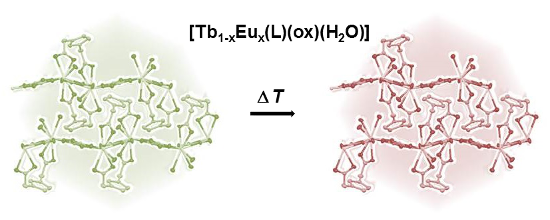
- coordination networks can be obtained either by the use of specific luminescent organic ligands or by the use of main-group elements, d10 transition metals or of trivalent lanthanide ions for the inorganic moiety [13][14]. The luminescent properties of the trivalent lanthanide ions are particularly interesting
- applications of lanthanide-based networks in information storage, quantum computing and spintronics [19][20][21][22][23]. Most of these lanthanide-based networks are obtained with neutral organic ligands such as benzene-1,4-dicarboxylate (1,4-bdc) [24], benzene-1,3,5-tricarboxylate (TMA) [25], pyridine-2,5
- -dicarboxylate (2,5-H2pdc) [24] or 1H-2-propyl-4,5-imidazoledicarboxylate (pimda) [26]. Only few examples of lanthanide-based networks obtained with charged ligands are reported in the literature [27][28][29][30]. Following this last point, we have chosen to synthesize lanthanide-based networks from positively



SERS active Ag–SiO2 nanoparticles obtained by laser ablation of silver in colloidal silica
Beilstein J. Nanotechnol. 2018, 9, 2396–2404, doi:10.3762/bjnano.9.224
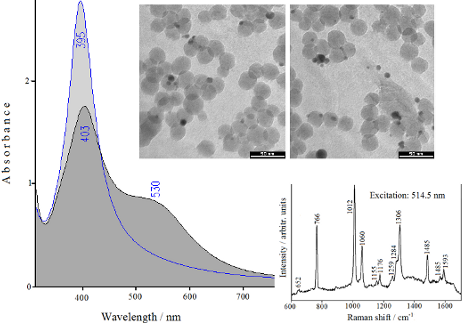
- adhere to silica can be stabilized in colloidal suspensions far better than in pure metal colloids, providing improved reproducibility of the SERS data. The second motivation is to exploit the adsorption capability of the colloidal silica for various organic ligands, for example glucose, formaldehyde
- silver, but that can undergo SERS enhancement thanks to the vicinal presence of silver nanoparticles. The Ag–SiO2 colloidal nanoparticles also show an efficient SERS response for organic ligands such as 2,2'-bipyridine at a laser excitation wavelength of 1064 nm. The possibility to observe FT-SERS


High-throughput micro-nanostructuring by microdroplet inkjet printing
Beilstein J. Nanotechnol. 2018, 9, 2372–2380, doi:10.3762/bjnano.9.222
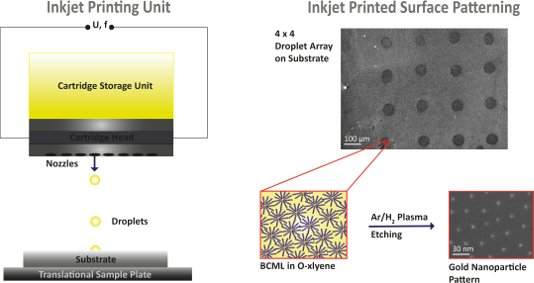
- BCML can intrinsically only coat surfaces with nanoparticle arrays, many biosensor applications also require well-defined structures and concentrations of ligands in microarrays [17]. Particularly the generation of cell arrays is a highly challenging task [18][19]. A feasible strategy would therefore


Block copolymers for designing nanostructured porous coatings
Beilstein J. Nanotechnol. 2018, 9, 2332–2344, doi:10.3762/bjnano.9.218
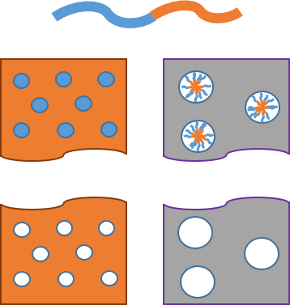
- moieties. In this study, the metallo-complex selected is Ru(II)-terpyridine bis-complex. By washing the film with a Ce(IV)-containing acid solution, the Ru(II) complex between the blocks is oxidized into Ru(III) that is able to form only a monocomplex with the terpyridine ligands, thus breaking one metallo


Lead-free hybrid perovskites for photovoltaics
Beilstein J. Nanotechnol. 2018, 9, 2209–2235, doi:10.3762/bjnano.9.207
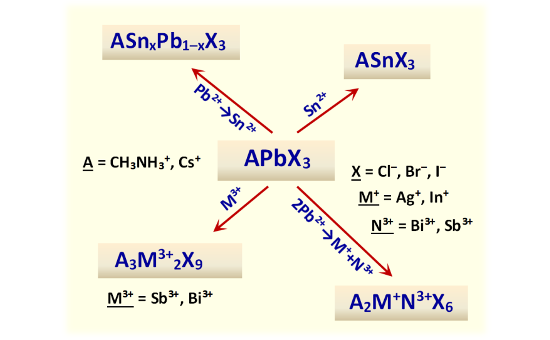
- -dependent bandgap, decreasing from 1.47 nm for the smallest NCs to 1.36 eV to the largest ones. The NCs are free from any surface ligands and stable long enough for the preparation of solar cell electrodes [130]. The Cs2SnI6 HPs can be formed by in situ oxidizing unstable CsSnI3 with air oxygen [112] or


Colorimetric detection of Cu2+ based on the formation of peptide–copper complexes on silver nanoparticle surfaces
Beilstein J. Nanotechnol. 2018, 9, 1414–1422, doi:10.3762/bjnano.9.134
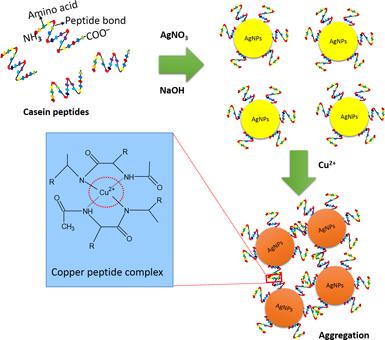
- samples [13][14]. However, the use of gold and/or platinum limits the affordability of sensing probe. As exemplified in this work, cost-effective silver nanoparticles (AgNPs) having specifically modified ligands for detecting lower concentrations of Cu2+ offer a more portable and practical approach. In a
- Cu2+-binding casein peptide ligands. The solution of aggregates was incubated for 20 min to allow for the coordination to occur. Results and Discussion Synthesis and characterization of casein peptide-capped AgNPs The surface plasmon resonance (SPR) of spherical AgNPs immediately caused an absorbance
- below the normal blood concentration of Cu2+, which is in the range of 24–135 µg/dL [27]. The interaction of Cu2+ with the peptide ligands on the AgNP surfaces attracts neighboring AgNPs, which is observed as a color change from yellow to red. The change in absorbance was monitored by UV–vis


Chemistry for electron-induced nanofabrication
Beilstein J. Nanotechnol. 2018, 9, 1317–1320, doi:10.3762/bjnano.9.124

- surface and are decomposed under the tightly focused electron beam to yield a solid deposit. The precursor consists of elements that are desired in the deposit and of ligands which provide the molecules with sufficient volatility to be handled via a gas injection system. Ideally, the precursor molecule
- dissociates completely under the impact of an impinging electron so that the desired nonvolatile elements remain on the surface while the ligands desorb and are pumped out of the vacuum chamber. However, until recently, FEBID has relied nearly exclusively on precursors that were developed specifically for
- the ligands is co-deposited along with the desired elements. This unintended contamination often deteriorates the targeted properties of the deposit and thus impedes the progress of FEBID technology [7][8]. Novel molecular precursors and improved processes are thus needed to advance FEBID to its full
Formation mechanisms of boron oxide films fabricated by large-area electron beam-induced deposition of trimethyl borate
Beilstein J. Nanotechnol. 2018, 9, 1282–1287, doi:10.3762/bjnano.9.120
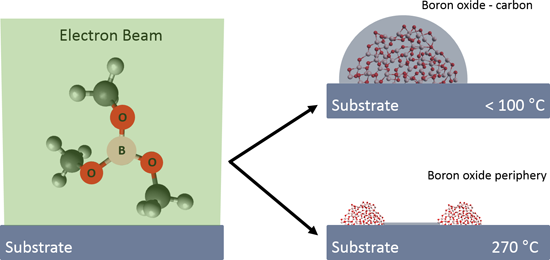
- exclusively, and temperature-dependent desorption of methyl ligands from dissociated TMB precursor, which result in large changes in the deposition rate and stoichiometry as a function of the temperature. Conclusion In conclusion, the deposition mechanisms of EBID using TMB precursor were explored at silicon



Magnetic characterization of cobalt nanowires and square nanorings fabricated by focused electron beam induced deposition
Beilstein J. Nanotechnol. 2018, 9, 1040–1049, doi:10.3762/bjnano.9.97
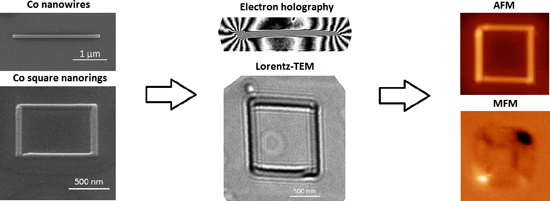
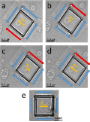
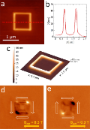
- a substrate to decompose molecules that are adsorbed on the surface. The non-volatile part of the molecule is deposited, whereas volatile ligands are pumped away. FEBID is a versatile technique for nanoprototyping and research, as it permits the deposition of material in a variety of shapes with

Towards the third dimension in direct electron beam writing of silver
Beilstein J. Nanotechnol. 2018, 9, 842–849, doi:10.3762/bjnano.9.78
- ]. For the deposition of metals, typically metal-organic precursor compounds are employed [3]. The organic ligands bring the desired metal into the gas phase. Hence, a sufficiently high stability and vapor pressure is usually accompanied by a large amount of carbon in the compound [10]. This carbon is
- appropriate ligands. Even more importantly, the ligands tend to be only weakly bonded and, thus, easily exchange the metal atom [26]. These properties exclude the gas-phase FEBID of silver for conventional gas-injection systems (GIS) that are flanged at the outer chamber walls. Recently, the first gas-phase
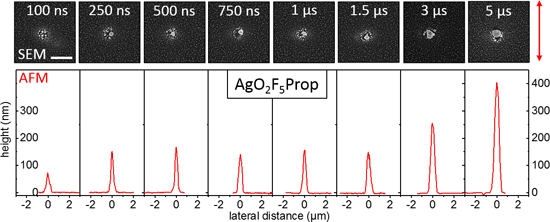
- adsorbate-limited deposition regime. Dependent on the actual dwell time of the beam, co-dissociation of non-desorbed ligands as well as of residual carbon hydrates from the vacuum background is expected. Figure 2 displays results for a dwell time series using a 150 pA beam for both precursor compounds. The


Tuning adhesion forces between functionalized gold colloidal nanoparticles and silicon AFM tips: role of ligands and capillary forces
Beilstein J. Nanotechnol. 2018, 9, 660–670, doi:10.3762/bjnano.9.61
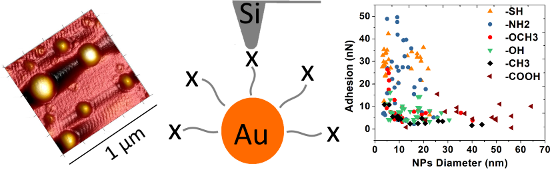
- surface treatment. One approach is the functionalization of the surfaces with various ligands. For instance, grafting a thin molecular film with hydrophobic tail groups on a surface, formed by self-assembly process, prevents the formation of nano- or microdroplets of water on the treated sample, or
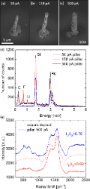
- , but also by the interactions of the NPs and silicon substrate during nanomanipulation in AFM in tapping mode [23]. Despite its inertness [24], Au NPs can be relatively easily functionalized with organic ligands resulting in the formation of stable colloids [23][25]. The possibility of changing the
- ligands chain length, tail group and the packing order (disorder) of the molecular coating makes functionalized NPs an attractive model systems for studying the nature of interactions, and particularly adhesion at the nano and molecular level. The prospect of modifying the chain length of the ligands


Mechanistic insights into plasmonic photocatalysts in utilizing visible light
Beilstein J. Nanotechnol. 2018, 9, 628–648, doi:10.3762/bjnano.9.59
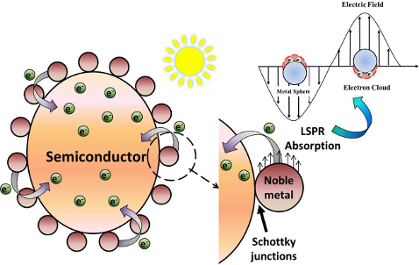
- , and electronic interactions between the stabilizing ligands and nanoparticles [11]. Besides, the creation of a Schottky junction with a noble metal and a semiconductor acts to retard the recombination rate of electrons and holes [12]. LSPR takes place when noble metal NPs are excited by the





Facile phase transfer of gold nanorods and nanospheres stabilized with block copolymers
Beilstein J. Nanotechnol. 2018, 9, 616–627, doi:10.3762/bjnano.9.58
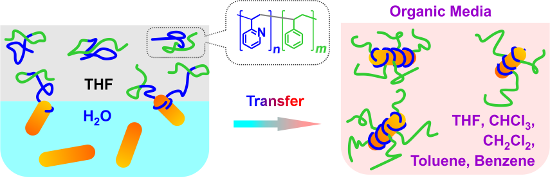
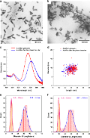
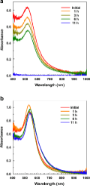
- of pyridine groups with the nanoparticle surface is weaker, thus retaining an opportunity for further changes of the stabilizing ligands. The relative shortcoming of our method is its low net yield, which is below 50% when taking into account both the synthetic and phase transfer stages. Using TEM


Electron interactions with the heteronuclear carbonyl precursor H2FeRu3(CO)13 and comparison with HFeCo3(CO)12: from fundamental gas phase and surface science studies to focused electron beam induced deposition
Beilstein J. Nanotechnol. 2018, 9, 555–579, doi:10.3762/bjnano.9.53
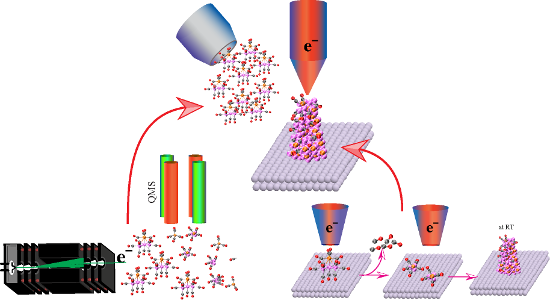
- electron–molecule interactions rather than the more common thermal fragmentation of precursor species, and various classes of chemical compounds have been considered [4][5] as precursors for FEBID. For instance, metalorganic precursors containing hydrocarbons and chelating ligands can be stable precursors
- and simple in handling, but these benefits come at the expense of incorporation of large amounts of carbon in the deposits by incomplete decomposition or co-deposition of the liberated ligands. Recent developments demonstrate elegant deposit purification techniques to obtain pure, high quality metals
- concluded that in general electron induced dissociation of surface adsorbed precursor molecules proceeds in two steps. Electron induced desorption of ligands associated with the precursor occurs to some extent in the first step (e.g., desorption of one of the PF3 groups in Pt(PF3)4 to form a Pt(PF3)3


Green synthesis of fluorescent carbon dots from spices for in vitro imaging and tumour cell growth inhibition
Beilstein J. Nanotechnol. 2018, 9, 530–544, doi:10.3762/bjnano.9.51
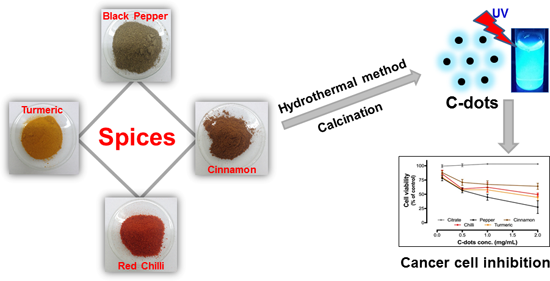
- . Generally, the synthesis of C-dots is a multistep and tedious procedure, which is often expensive. Moreover, a surface passivation with other ligands or additives is frequently needed in order to obtain exacerbated intrinsic fluorescence properties [5][12][13]. Recently, green synthesis methods of C-dots


Electron interaction with copper(II) carboxylate compounds
Beilstein J. Nanotechnol. 2018, 9, 384–398, doi:10.3762/bjnano.9.38
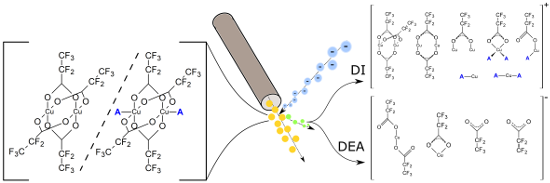
- both the carboxylate ligands and/or the amine ligands from the complexes. Moreover, the fragmentation of the ligands themselves is visible in the mass spectrum below m/z 140. For the studied complexes the metallated ions containing both ligands, e.g., Cu2(O2CC2F5)(RNH2)+, Cu2(O2CC2F5)3(RNH2)2+ confirm
- -friendly than copper(I) compounds, which are usually air and moisture sensitive, which results in decomposition of the precursor itself. Also, introduction of amine ligands was expected to be advantageous. In fact, the reducing action of ammine ligands was discussed previously with respect to FEBID
- secondary electrons in FEBID acting on much wider range than is the focus of the primary beam leads to broadening of the deposited structure [36]. The importance of the DI and/or DEA processes in FEBID was also discussed by Warneke et al. [37] with the focus on the appropriate choice of the ligands on the


Wafer-scale bioactive substrate patterning by chemical lift-off lithography
Beilstein J. Nanotechnol. 2018, 9, 311–320, doi:10.3762/bjnano.9.31
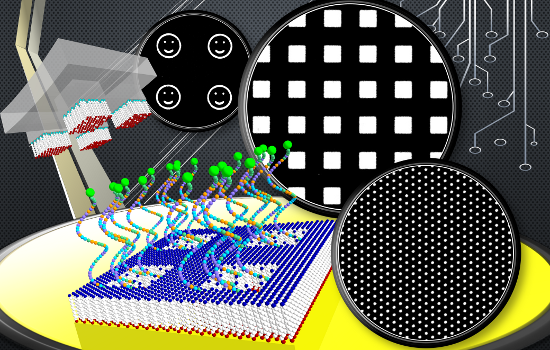
- therefore be fulfilled with different molecules, e.g., ligands, and the substrate is active for biological responses. Comparing to conventional lithographic stamping processes which use mobile inks, this approach solves the problems of molecular lateral diffusion and gas transport obstacles. The fabricated


Anchoring of a dye precursor on NiO(001) studied by non-contact atomic force microscopy
Beilstein J. Nanotechnol. 2018, 9, 242–249, doi:10.3762/bjnano.9.26
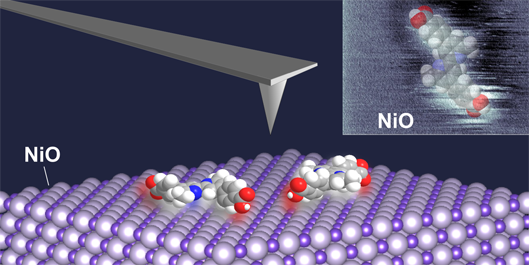
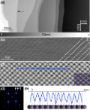
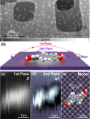
- sensitizing NiO surfaces for an optimized photon absorption is an on-surface dye synthesis, which has earlier been termed the “surfaces-as-ligands” approach [42]. The first ligand is designed to anchor to the surface through groups such as carboxylic or phosphonic acids and has a metal-binding domain such as



Gas-assisted silver deposition with a focused electron beam
Beilstein J. Nanotechnol. 2018, 9, 224–232, doi:10.3762/bjnano.9.24
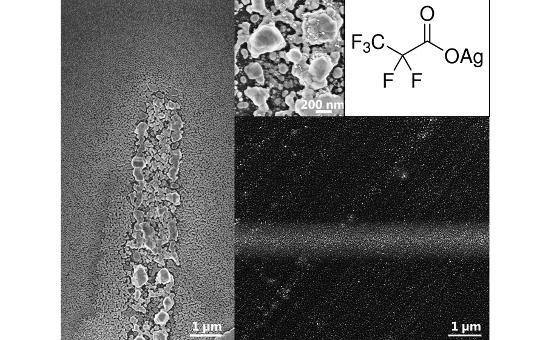
- organic precursors are introduced with a gas injection system (GIS) and physisorb onto the substrate. The electrons induce local precursor dissociation on the surface, which in the ideal case results in a selective and pure metal deposit and volatile organic ligands. However, the organic ligand elements
- interaction into deposited metal atoms and volatile, yet still physisorbed ligands. Due to the high electron flux within the PE beam area, the desorption rate of these volatile ligands is lower than their dissociation rate, resulting in a higher carbon content. Outside the PE beam area, the adsorbates still
- dissociate by electron impact into deposited metal atoms and volatile physisorbed ligands. Yet the desorption rate of the ligands is larger than their further dissociation by the much lower electron flux, preventing co-deposition and leading to purer silver deposits. Due to writing in multiple passes, the


Comparative study of post-growth annealing of Cu(hfac)2, Co2(CO)8 and Me2Au(acac) metal precursors deposited by FEBID
Beilstein J. Nanotechnol. 2018, 9, 91–101, doi:10.3762/bjnano.9.11
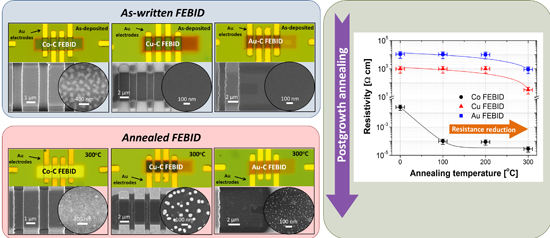
- capable of defining 3-dimensional metal deposits at nanometre scale for above applications. However, codeposition of organic ligands when using organometallic precursors is a typical problem that limits FEBID of pure metal nanostructures. In this work, we present a comparative study using a post-growth
- (up to 95 atom % relative to carbon) were obtained by means of impact-enhanced desorption of residual organic ligands using a supersonic argon carrier gas jet to deliver the organometallic precursor [45]. Other works suggest the autocatalytic deposition of carbonyls, such as Fe(CO)5 [46][47] and Co2


Electron-driven and thermal chemistry during water-assisted purification of platinum nanomaterials generated by electron beam induced deposition
Beilstein J. Nanotechnol. 2018, 9, 77–90, doi:10.3762/bjnano.9.10
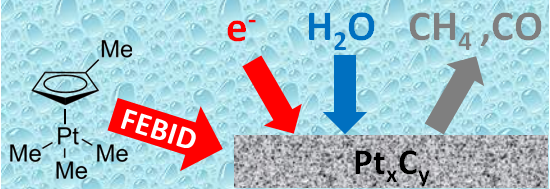
- desired solid material and organic ligands that enhance their volatility. Metal organic precursors are thus used to fabricate metallic deposits. In the ideal case, a pure metal should remain at the surface while the organic ligands decompose into volatile products that are pumped away. However, this is
- usually not the case and material from the ligands tends to be incorporated in the deposit and thus deteriorates its physical properties [1][9][10][11]. Trimethyl(methylcyclopentadienyl)platinum(IV) (MeCpPtMe3, Figure 1a) is widely applied as precursor for deposition of Pt because of its very favourable
- with equally small contributions of ethane (C2H6) according to a mass spectrum recorded during the initial stages of electron exposure (Supporting Information File 1, Figure S2). The very small quantity of C2H6, confirms again the previous conclusion [10] that recombination of CH3 ligands dissociating


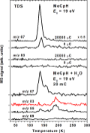

Response under low-energy electron irradiation of a thin film of a potential copper precursor for focused electron beam induced deposition (FEBID)
Beilstein J. Nanotechnol. 2018, 9, 57–65, doi:10.3762/bjnano.9.8
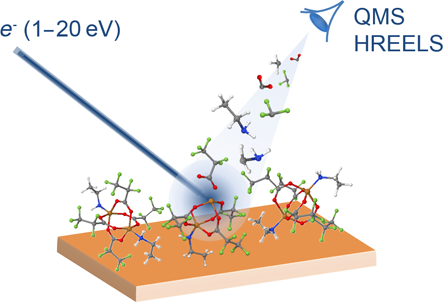
- ligands that are solid and stable under ambient conditions. They are directly deposited on the surface for studying the fragmentation with surface science tools. Results: Infrared spectroscopy and high-resolution electron energy loss spectroscopy (HREELS) are combined to show that the precursor is able to
- spontaneously lose amine ligands under vacuum. This loss can be enhanced by mild heating. The combination of mass spectrometry and low-energy electron irradiation (0–15 eV) shows that full amine ligands can be released upon irradiation, and that fragmentation of the perfluorinated ligands is induced by
- electrons of energy as low as 1.5 eV. Finally, the cross section for this process is estimated from the temporal evolution in the experiments on electron-stimulated desorption (ESD). Conclusion: The release of full ligands under high vacuum and by electron irradiation, and the cross section measured here




Impact of titanium dioxide nanoparticles on purification and contamination of nematic liquid crystals
Beilstein J. Nanotechnol. 2017, 8, 2766–2770, doi:10.3762/bjnano.8.275
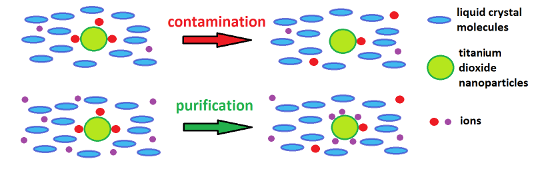
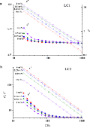
- by plasma synthesis and were not covered with any ligands. Dry NPs were added to LCs at a concentration of 0.25, 0.5 and 1 wt %. The composites were prepared in isotropic phase over one hour by ultrasonication. To estimate ion density (c) and average diffusion coefficient (D) in LC1, LC2 and their
The rational design of a Au(I) precursor for focused electron beam induced deposition
Beilstein J. Nanotechnol. 2017, 8, 2753–2765, doi:10.3762/bjnano.8.274
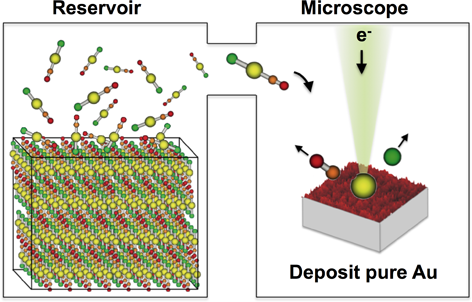
- ], they are often inefficient in removing the ligands that are currently used to make the precursor molecules volatile [28][29][30]. The decomposition of the precursor is then incomplete, leaving large parts of the ligand structure on the surface. This leads to for instance low metal content and poor
- sufficiently reactive to yield the desired reaction product in a single step, but not so reactive that it dissociates unselectively or has a short shelf life. It has already been determined that electrons cannot remove large ligands. Examples are the cyclopentadienyl ligand in trimethyl(methylcyclopentadienyl
- several questions. How do the ligands determine stability, shelf life and volatility? What is the origin of the short lifetime of ClAuCO in vacuum? Why is MeAuPMe3 volatile, while ClAuPMe3 is not? And can we, based on the results we have, come to a rational design of a Au precursor with the desired





