


Search results
Search for "low energy" in Full Text gives 295 result(s) in Beilstein Journal of Nanotechnology. Showing first 200.
Electron interactions with the heteronuclear carbonyl precursor H2FeRu3(CO)13 and comparison with HFeCo3(CO)12: from fundamental gas phase and surface science studies to focused electron beam induced deposition
Beilstein J. Nanotechnol. 2018, 9, 555–579, doi:10.3762/bjnano.9.53
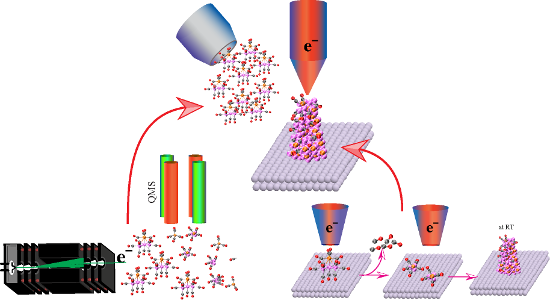
- carbonyl complex H2FeRu3(CO)13 covering its low energy electron induced fragmentation in the gas phase through dissociative electron attachment (DEA) and dissociative ionization (DI), its decomposition when adsorbed on a surface under controlled ultrahigh vacuum (UHV) conditions and exposed to irradiation
- are largely unaffected by either further electron irradiation or annealing to room temperature, with a predicted metal content similar to what is observed in FEBID. Furthermore, gas phase experiments indicate formation of Fe(CO)4 from H2FeRu3(CO)13 upon low energy electron interaction. This fragment
- could desorb at room temperature under high vacuum conditions, which may explain the slight increase in the Ru/Fe ratio of deposits in FEBID. With the combination of gas phase experiments, surface science studies and actual FEBID experiments, we can offer new insights into the low energy electron


Single-step process to improve the mechanical properties of carbon nanotube yarn
Beilstein J. Nanotechnol. 2018, 9, 545–554, doi:10.3762/bjnano.9.52
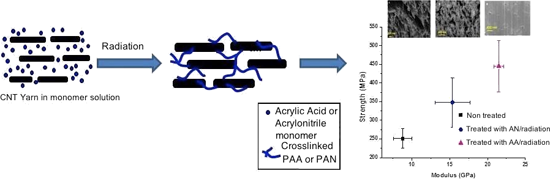
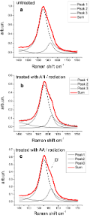
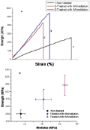
- device, which uses both low energy Ar ions and low-energy electrons. Data were collected and analyzed using the Advantage data system (v.4.61). XPS survey spectra were collected from 0 to 1350 eV. Raman analyses were carried out in a Horiba Jobin-Yvon T64000 Raman spectrometer equipped with a Peltier




Revealing the interference effect of Majorana fermions in a topological Josephson junction
Beilstein J. Nanotechnol. 2018, 9, 520–529, doi:10.3762/bjnano.9.50
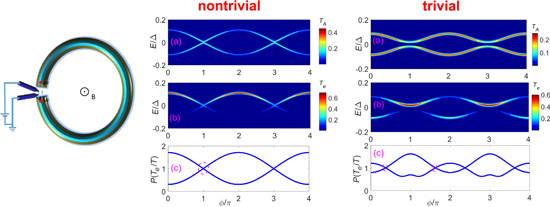
- [6]. Then, the low-energy effective Hamiltonian is Here, = ψ†ψ is the number operator and ψ = γ3 + iγ2. Then, the occupation number has two values: Nv = 0,1, with Nv = 0 corresponding to the even parity state, and Nv = 1 corresponding to the odd parity state. The Josephson current mediated by the
- junction shown in Figure 1a. While there are only two MFs, the parity of states will not be destroyed even if we consider the effective coupling induced by the finite length of the wire. In this case, the total low-energy effective Hamiltonian can be described as follows: Here, Γeff is the effective


Electron interaction with copper(II) carboxylate compounds
Beilstein J. Nanotechnol. 2018, 9, 384–398, doi:10.3762/bjnano.9.38
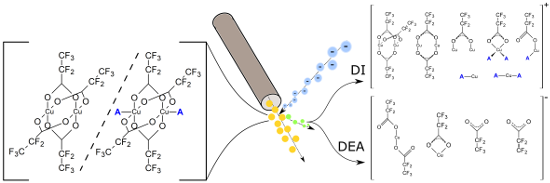
- fragments of these complexes are formed through single particle resonant processes close to 0 eV. Keywords: amines; dissociative electron attachment; dissociative ionization; FEBID; low energy electrons interaction; Introduction Present technological changes require the development of new methods and new
- low energy electrons (below 100 eV). These electrons can diffuse to the surface and initiate reactions in the precursor molecules. As a result, a deposit is formed. This technique enables the production of free standing 3D nanostructures and is already used commercially for the repair of
- electron ionization (EI), dissociative ionization (DI) [17][18][19] processes. Their kinetic energy is only a few eV, with energy distribution determined by the type of wafer and energy of primary beam [20][21]. Thorman et al. have compared gas phase and surface data on low energy electron interactions


Sugarcane juice derived carbon dot–graphitic carbon nitride composites for bisphenol A degradation under sunlight irradiation
Beilstein J. Nanotechnol. 2018, 9, 353–363, doi:10.3762/bjnano.9.35
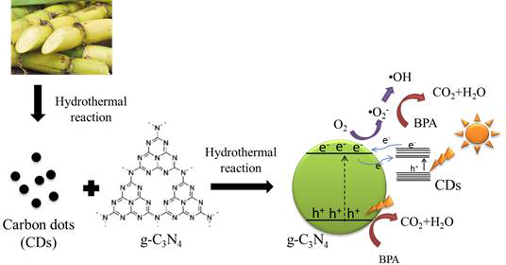
- irradiation because the UCPL properties of CDs (which could overcome the low energy of NIR-light photons to initiate the excitation of electrons) are not detected in Figure 3b. The PL spectra in Figure 3d were evaluated to determine the charge separation efficiency of all composites. The recombination of


Liquid-crystalline nanoarchitectures for tissue engineering
Beilstein J. Nanotechnol. 2018, 9, 205–215, doi:10.3762/bjnano.9.22
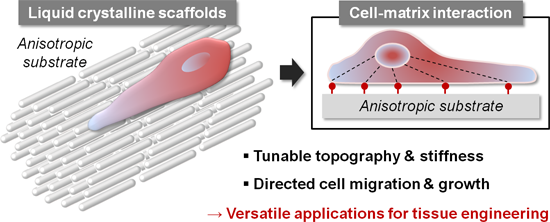
- lies in their self-assembly behavior and the formation of hierarchical 3D nanoarchitectures with long-range order. This spontaneous organization has strong advantages such as structural biomimicry, facile bottom-up processing, straightforward upscaling, and low energy cost. In tissue engineering


Bombyx mori silk/titania/gold hybrid materials for photocatalytic water splitting: combining renewable raw materials with clean fuels
Beilstein J. Nanotechnol. 2018, 9, 187–204, doi:10.3762/bjnano.9.21
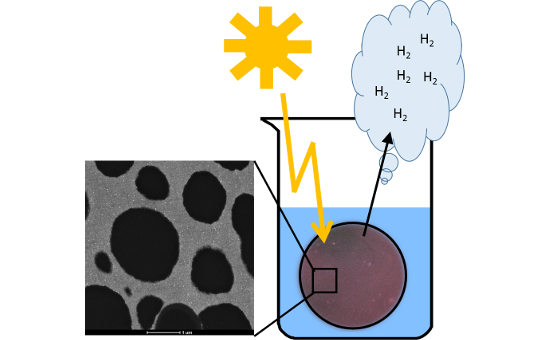
- 8 eV electrons and low-energy argon ions to prevent any localized charge build-up. The spectra were fitted with one or more Voigt profiles (binding energy uncertainty: ±0.2 eV). The analyzer transmission function, Scofield sensitivity factors [54], and effective attenuation lengths (EALs) for


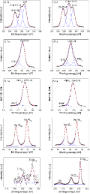


Response under low-energy electron irradiation of a thin film of a potential copper precursor for focused electron beam induced deposition (FEBID)
Beilstein J. Nanotechnol. 2018, 9, 57–65, doi:10.3762/bjnano.9.8
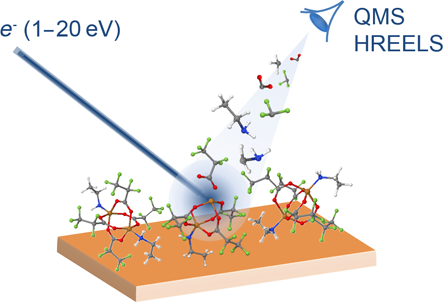
- spontaneously lose amine ligands under vacuum. This loss can be enhanced by mild heating. The combination of mass spectrometry and low-energy electron irradiation (0–15 eV) shows that full amine ligands can be released upon irradiation, and that fragmentation of the perfluorinated ligands is induced by
- for ligands fragmentation allow one to envisage the use of the two precursors for FEBID studies. Keywords: amines; copper(II); electron-stimulated desorption; FEBID precursors; HREELS; low-energy electrons; perfluorinated carboxylates; Introduction The high electrical conductivity of copper makes it
- introduction into vacuum, like the work on Cis-platin particles by Warneke and co-workers [13]. We propose here a similar approach in the apparatus in Orsay devoted to the study of surface processes induced by low-energy electrons in the 0–20 eV range. This range is of particular interest as the low-energy



Transition from silicene monolayer to thin Si films on Ag(111): comparison between experimental data and Monte Carlo simulation
Beilstein J. Nanotechnol. 2018, 9, 48–56, doi:10.3762/bjnano.9.7
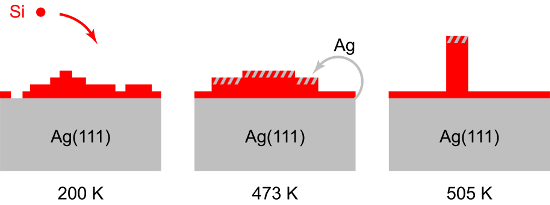
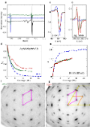
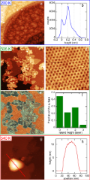
- ) and low energy electron diffraction have been used to follow the growth of Si films on Ag(111) at various temperatures. Using a simple growth model, we have simulated the distribution of film thickness as a function of coverage during evaporation, for the different temperatures. In the temperature
- honeycomb-chained triangle (HCT) reconstruction observed on a Ag/Si(111) surface, it has been hypothesized that the observed films could result from the growth of diamond-like Si with Ag acting as a surfactant [28]. Such conclusions were also supported by low energy electron diffraction (LEED) [29][30

Review on optofluidic microreactors for artificial photosynthesis
Beilstein J. Nanotechnol. 2018, 9, 30–41, doi:10.3762/bjnano.9.5
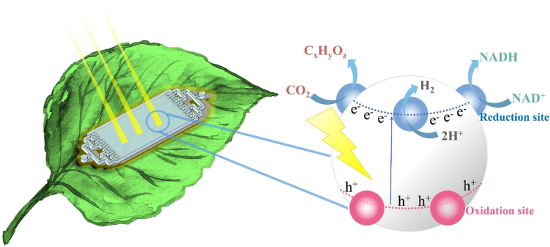
- low energy conversion efficiency (typically <1%) to capture sunlight and CO2 for the production of carbohydrates, even after billions of years of evolution, and it is far from its theoretical limit of 30% [48]. This gives great room to develop an improved scientific solution to produce basic food


The rational design of a Au(I) precursor for focused electron beam induced deposition
Beilstein J. Nanotechnol. 2017, 8, 2753–2765, doi:10.3762/bjnano.8.274
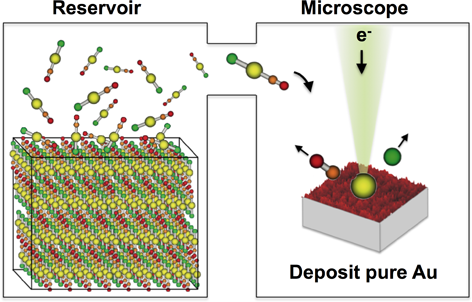
- nanopores of a zeolite, directly after synthesis. We expect this to be a challenging experimental route. The second solution is the rational design of a new precursor. Me ligands reduce aurophilic interactions and thereby increase the stability of Au(I) compounds. Also, low-energy electrons are efficient in


Hyperthermic intracavitary nanoaerosol therapy (HINAT) as an improved approach for pressurised intraperitoneal aerosol chemotherapy (PIPAC): Technical description, experimental validation and first proof of concept
Beilstein J. Nanotechnol. 2017, 8, 2729–2740, doi:10.3762/bjnano.8.272
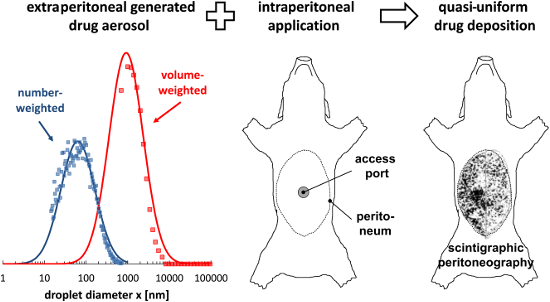
- single-photon emission computed tomography/computed tomography (SPECT/CT)) in supine position were performed by means of a double-head gamma camera (Siemens SymbiaT2, Siemens Medical Systems, Hofmann Estates, IL, USA) equipped with low-energy high-resolution collimators. To receive a 360° acquisition, 32




Dry adhesives from carbon nanofibers grown in an open ethanol flame
Beilstein J. Nanotechnol. 2017, 8, 2719–2728, doi:10.3762/bjnano.8.271
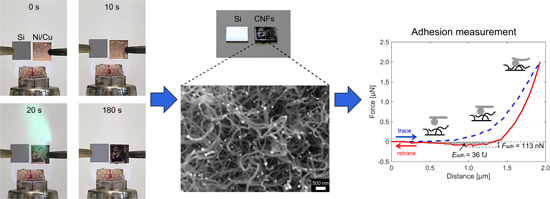
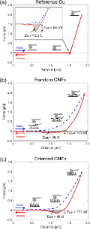
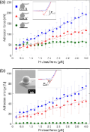
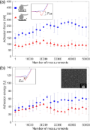
- eV energy and low-energy argon ions to prevent any localized charge build-up. The spectra were fitted with one or more Voigt profiles (binding energy uncertainty: ±0.1 eV). All spectra were referenced to the C 1s peak of hydrocarbons at 285.0 eV binding energy, controlled by means of the well-known


Beyond Moore’s technologies: operation principles of a superconductor alternative
Beilstein J. Nanotechnol. 2017, 8, 2689–2710, doi:10.3762/bjnano.8.269

- computing to be extraordinarily difficult, even if foreseeable advances in complementary metal-oxide-semiconductor (CMOS) technology are taken into account [10]. Low energy efficiency leads to high power consumption and also limits the clock frequency to 4–5 GHz. This frequency limit occurs due to


Interactions of low-energy electrons with the FEBID precursor chromium hexacarbonyl (Cr(CO)6)
Beilstein J. Nanotechnol. 2017, 8, 2583–2590, doi:10.3762/bjnano.8.258
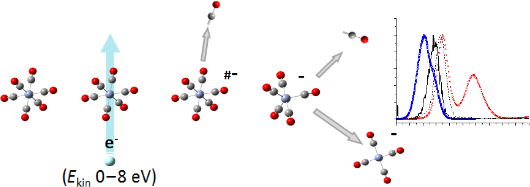
- Ciências e Tecnologia, Universidade NOVA de Lisboa, Campus de Caparica, 2829-516 Caparica, Portugal 10.3762/bjnano.8.258 Abstract Interactions of low-energy electrons with the FEBID precursor Cr(CO)6 have been investigated in a crossed electron–molecular beam setup coupled with a double focusing mass
- the desired metal, with the formation of non-defined deposits on the surface. When high-energy electrons interact with the surface, a cascade of low-energy electrons (LEE) and backscattered electrons are generated. Many chemical reactions can be triggered by those secondary electrons with an energy
- multiple ionization in a femtosecond laser field was recently reported by Tanaka et al. [24] for Cr(CO)6, Mo(CO)6 and W(CO)6. In the present work we studied the interaction of LEE with the chromium carbonyl precursor, Cr(CO)6. In general, a low-energy electron may be captured by a target molecule, which



PTFE-based microreactor system for the continuous synthesis of full-visible-spectrum emitting cesium lead halide perovskite nanocrystals
Beilstein J. Nanotechnol. 2017, 8, 2521–2529, doi:10.3762/bjnano.8.252
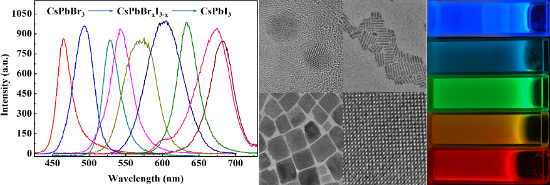
- the coefficient of thermal expansion, and β is the Debye temperature), increasing temperature leads to the decease of the band gap. This phenomenon makes it easy for the charge carriers (electrons and/or holes) to be activated and to move to a low energy state in comparison with the charge carriers at
- low temperatures. The recombination of the charge carriers at a low energy state leads to the emission of light with at a longer wavelength than that at a high energy state, which results in red shift as shown in Figure 5. Such behavior is in accord with the PL behavior of most semiconductors [38][39


Synthesis of metal-fluoride nanoparticles supported on thermally reduced graphite oxide
Beilstein J. Nanotechnol. 2017, 8, 2474–2483, doi:10.3762/bjnano.8.247
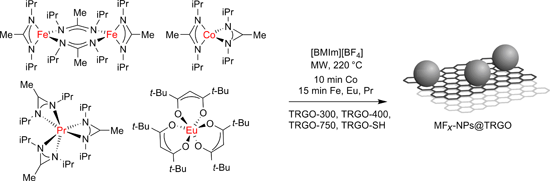
- Suzuki–Miyaura coupling reaction [14]. In 2011, metal carbonyls in dispersion with TRGO and ionic liquid (IL) were exposed to short low-energy microwave irradiation. The resulting Ru@TRGO and Rh@TRGO particles had high catalytic hydrogenation activity [12]. Metallic nanoparticles on graphene have


Comparing postdeposition reactions of electrons and radicals with Pt nanostructures created by focused electron beam induced deposition
Beilstein J. Nanotechnol. 2017, 8, 2410–2424, doi:10.3762/bjnano.8.240
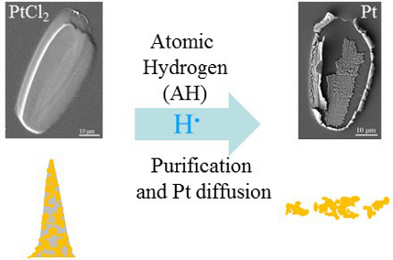
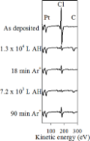
- )) is initiated by low energy secondary electrons produced as a result of the interaction of the primary beam with the substrate. The ability of electrons to purify PtCl2 deposits by such an electron-stimulated process is also supported by the Hess cycle in Scheme 1 [52][53]. These calculations are
- same order of magnitude as the escape depth of the Auger electrons (inelastic mean free path = 1–2 nm [51][54]). However, Cl− ions are almost certainly being produced by low energy secondary electrons, which are themselves being generated at significantly greater depths within the deposit (the depth of




Electron beam induced deposition of silacyclohexane and dichlorosilacyclohexane: the role of dissociative ionization and dissociative electron attachment in the deposition process
Beilstein J. Nanotechnol. 2017, 8, 2376–2388, doi:10.3762/bjnano.8.237
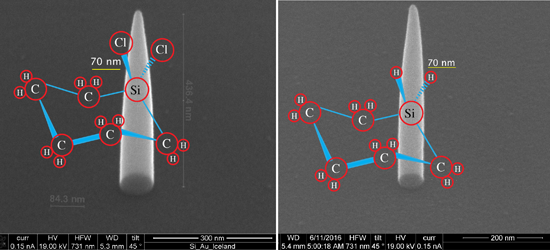
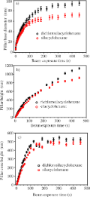
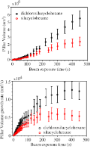
- attachment; dissociative ionization; electron beam induced deposition; low-energy electrons; silacyclohexane; Introduction Focused electron beam induced deposition (FEBID) [1][2] is a 3-D direct writing method suitable for the fabrication of nanostructures, even on non-planar surfaces. This approach is in
- low-energy electrons under single-collision conditions, it was shown that while appreciable decomposition of DCSCH was affected through DEA, SCH was inert with regards to this process. Dissociative ionisation, on the other hand, leads to similar fragmentation of both these molecules. For reference
- conducted the first EBID experiments with DCSCH and SCH, and we discuss these in the context of potential effects on the growth dynamics through the very different sensitivity of these molecules towards electrons of very low energy (<10 eV). Furthermore, both molecules are potential precursors for the





Dissociative electron attachment to coordination complexes of chromium: chromium(0) hexacarbonyl and benzene-chromium(0) tricarbonyl
Beilstein J. Nanotechnol. 2017, 8, 2257–2263, doi:10.3762/bjnano.8.225
- formation. However, the primary electron (PE) beam striking the substrate gives rise to a large amount of back-scattered electrons (BSEs) and secondary electrons (SEs) [6][7][8]. It is nowadays very well known that these low energy electrons (<100 eV) may induce fragmentation of the adsorbed precursor
- primary beam. To date there have been several papers devoted to the studies of the interaction of low energy electrons with gas-phase organometallic complexes. Particular attention has been paid to the compounds containing monodentate (e.g., carbonyl [12][13][14], trifluorophosphine [11][15], chloride [16
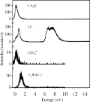
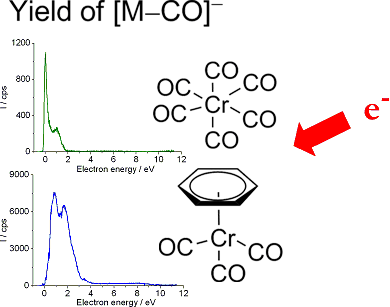
- impact of low-energy electrons on gas-phase chromium(0) hexacarbonyl (Cr(CO)6) and benzene-chromium(0) tricarbonyl ((η6-C6H6)Cr(CO)3) has been investigated. Measurements have been taken as a function of incident electron energy in the energy range between 0–12 eV. In this energy range, it is very well
Comprehensive investigation of the electronic excitation of W(CO)6 by photoabsorption and theoretical analysis in the energy region from 3.9 to 10.8 eV
Beilstein J. Nanotechnol. 2017, 8, 2208–2218, doi:10.3762/bjnano.8.220
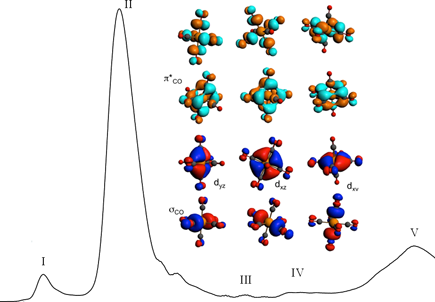
- initio molecular dynamics simulations of focused electron beam induced deposition (FEBID) precursor molecules adsorbed on fully and partially hydroxylated SiO2 surfaces [24]. Electron-induced reactions in FEBID processes are initiated by low-energy secondary electrons rather than the high-energy primary


Suppression of low-energy dissociative electron attachment in Fe(CO)5 upon clustering
Beilstein J. Nanotechnol. 2017, 8, 2200–2207, doi:10.3762/bjnano.8.219
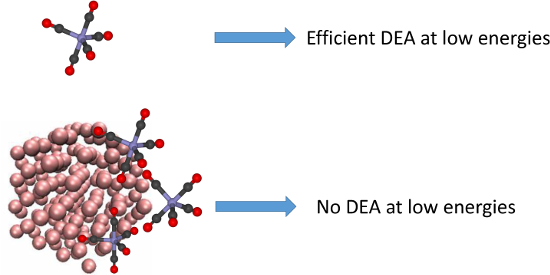
- [12][13]. The environment can thus both enhance and suppress the low-energy DEA reactions and it is difficult to assess its effect a priori. Clusters represent an ideal tool for studying the effect of an environment since they allow for using the same experimental approach as the gas phase studies
- of the CLUSTER setup (lack of low-energy electrons in the incident beam). The SF6− signal from SF6 peaks at electron energies 0.65 eV lower than Fe(CO)4− from iron pentacarbonyl clusters. Figure 3 shows the yields of anions where the dominant fragment Fe(CO)4− is bound to intact monomeric units [Fe
- (CO)5]m·Fe(CO)4−, m = 1….4. The high resolution CLUSTER data for pure Fe(CO)5 clusters show that the low-energy peaks have maxima around 0.65 eV, similar as Fe(CO)4− in Figure 2. The lower resolution CLUB data agree very well and provide the ion yields also for very weak fragments. Finally, we show


Electronic structure, transport, and collective effects in molecular layered systems
Beilstein J. Nanotechnol. 2017, 8, 2094–2105, doi:10.3762/bjnano.8.209
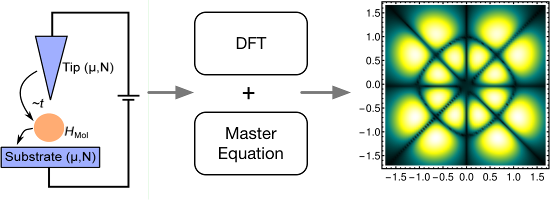
- combined with the strong acceptor molecule F4TCNQ. In general all of the fabricated heterostructures revealed new low-energy optical excitations originating from hybrid states. These states are of special importance for the transport characteristics of the hybrid materials. In contrast to other organic
- only include a (typically small) number of relevant molecular orbitals in Ψmol and throw out the same number or more of high-energy orbitals from ΨS. Which ones these are is irrelevant for the low-energy physics. The remaining wave functions are linearly independent. However, the KS orbitals for the
- direct tunneling amplitude between the tip and a representative low-energy substrate state, specifically the Bloch state at the K point localized on one of the two sublattices, modified by the Löwdin orthonormalization with respect to the CoPc HOMO and the tip. The amplitude is enhanced where large


![[Graphic 29]](/bjnano/content/inline/2190-4286-8-209-i41.png?max-width=637&scale=1.18182) between the occupations nA and nB of the two checkerboard sublattices for a) asy...
between the occupations nA and nB of the two checkerboard sublattices for a) asy...

![[Graphic 30]](/bjnano/content/inline/2190-4286-8-209-i42.png?max-width=637&scale=1.18182) per site for a) asymmetric tunneling, Γtop/Γbottom = 0.5, and b) symmetric tunneli...
per site for a) asymmetric tunneling, Γtop/Γbottom = 0.5, and b) symmetric tunneli...
Adsorbate-driven cooling of carbene-based molecular junctions
Beilstein J. Nanotechnol. 2017, 8, 2060–2068, doi:10.3762/bjnano.8.206
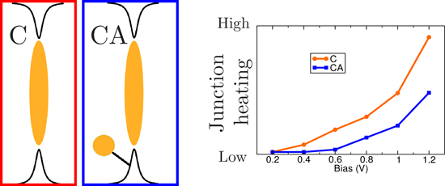
- –Einstein distribution for C and CA, with low-energy modes populated (Figure 4a,d). At 0.6 V higher-energy modes of the C junction get populated while the mode populations for the CA junction roughly still follow a BE distribution (Figure 4b,e). At 1.2 V the electronic current has established a clearly non
- molecular junction in the low bias regime. HCD mediated by adsorbate states As previously mentioned, the NH2 adsorbate introduces additional features in the low-energy CA DOS (blue line in Figure 2a). The position and bias dependence of these states can influence the heating and cooling dynamics of the


![[Graphic 14]](/bjnano/content/inline/2190-4286-8-206-i21.png?max-width=637&scale=1.18182) = 176 meV as a function of applied bias for the C and CA junctions, a...
= 176 meV as a function of applied bias for the C and CA junctions, a...

Coexistence of strongly buckled germanene phases on Al(111)
Beilstein J. Nanotechnol. 2017, 8, 1946–1951, doi:10.3762/bjnano.8.195
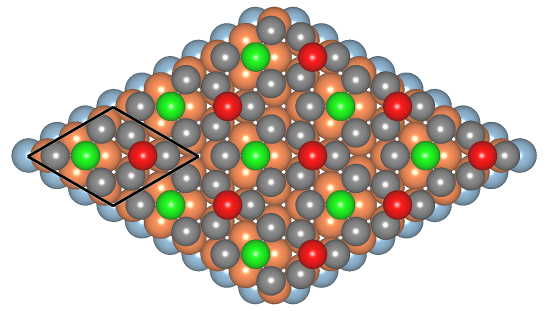
- Ge3Pt tetramers. In another study, Au(111) was chosen as a possible substrate for the formation of germanene because alloy formation was believed to be avoided using this substrate. Deposition of one monolayer (ML) of Ge on Au(111) at ≈200 °C resulted in low energy electron diffraction (LEED) data
- Weimin Wang Roger I. G. Uhrberg Department of Physics, Chemistry, and Biology, Linköping University, S-581 83 Linköping, Sweden 10.3762/bjnano.8.195 Abstract We report a study of structural and electronic properties of a germanium layer on Al(111) using scanning tunneling microscopy (STM), low
- energy electron diffraction and core-level photoelectron spectroscopy. Experimental results show that a germanium layer can be formed at a relatively high substrate temperature showing either (3×3) or (√7×√7)R±19.1° reconstructions. First-principles calculations based on density functional theory suggest





