Search results
Search for "migration" in Full Text gives 209 result(s) in Beilstein Journal of Nanotechnology. Showing first 200.
Electrical response of liquid crystal cells doped with multi-walled carbon nanotubes
Beilstein J. Nanotechnol. 2015, 6, 396–403, doi:10.3762/bjnano.6.39
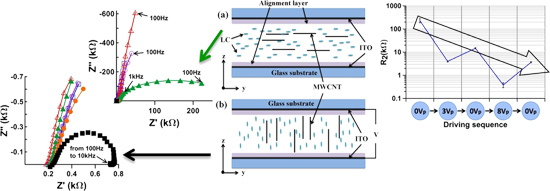
- linear. If the study includes the effect of external electric fields, as in this case, the AC signal probe should be set on a bias (offset) DC voltage. However DC voltage leads to electrolytic degeneration of the LC cell by ion generation and migration, and eventual adsorption of the charges onto the


Hematopoietic and mesenchymal stem cells: polymeric nanoparticle uptake and lineage differentiation
Beilstein J. Nanotechnol. 2015, 6, 383–395, doi:10.3762/bjnano.6.38
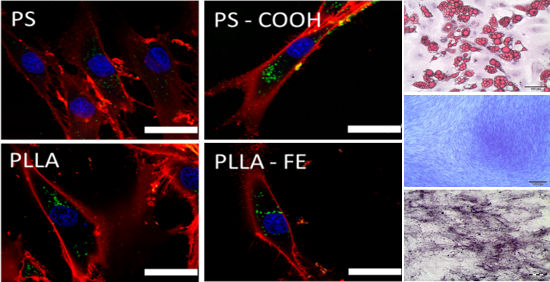
- ex vivo and are therefore amenable to further treatment. Here, nanomaterials could provide a means of manipulating the fate of the stem cells, for example, by influencing migration in vivo by (over-)expression of homing receptors or influencing stem cell differentiation by providing the cells with an
- combination of nanoparticles with these two stem cell types derived from the bone marrow is very promising not only for labelling to monitor biodistribution and migration of stem cells but also to establish the “pharmacokinetics” of such cellular therapeutics. Furthermore, such nanoparticles can be


Mechanical properties of MDCK II cells exposed to gold nanorods
Beilstein J. Nanotechnol. 2015, 6, 223–231, doi:10.3762/bjnano.6.21
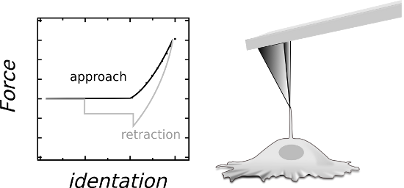
- migration, proliferation and tissue formation [19][20]. Mechanical behavior of living cells can be monitored spatially resolved in a concentration and time dependent manner using scanning probe techniques. It is possible to investigate local cellular elastic properties under physiological conditions using
- signaling, for both CTAB spheres and rods, we found within 24 h after treatment a reduction of mitochondrial activity (by MTS or LDH) as well as the activation of reactive oxygen species [13][25]. Cellular mechanics plays an important role in many biological processes comprising cell adhesion, migration


Kelvin probe force microscopy in liquid using electrochemical force microscopy
Beilstein J. Nanotechnol. 2015, 6, 201–214, doi:10.3762/bjnano.6.19
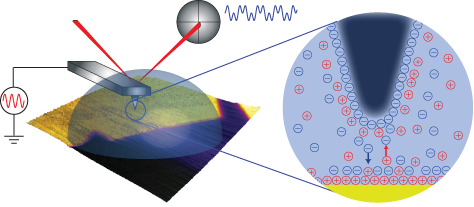
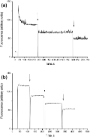
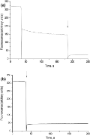
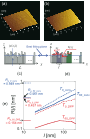
- local concentration of ions through migration (field-driven ion transport) and diffusion (concentration-gradient-driven transport) both to and from the solid–liquid interface as well as electron transfer reactions across the interface, resulting in a broad spectrum of charge relaxation timescales (ns–s
- presence of diffuse ion dynamics, precluding the use of KPFM. The observed hysteretic response can be explained as a combination of tip–sample interactions caused by field-driven migration and concentration-gradient-driven diffusion of ions in the bulk electrolyte, as well as possible steric effects


![[Graphic 6]](/bjnano/content/inline/2190-4286-6-19-i11.png?max-width=637&scale=1.18182) response collected 200 nm above a grounded Au electrode in (a, b, c) air, (d, e, f) decane an...
response collected 200 nm above a grounded Au electrode in (a, b, c) air, (d, e, f) decane an...


![[Graphic 22]](/bjnano/content/inline/2190-4286-6-19-i27.png?max-width=637&scale=1.18182) spectra [bias-on] collected 500 nm above HOPG in aqueous solutions of increasing salt concent...
spectra [bias-on] collected 500 nm above HOPG in aqueous solutions of increasing salt concent...

![[Graphic 25]](/bjnano/content/inline/2190-4286-6-19-i30.png?max-width=637&scale=1.18182) spectra [bias-on] collected 500 nm above (a) HOPG and (b) Au in milli-Q water (vertical color...
spectra [bias-on] collected 500 nm above (a) HOPG and (b) Au in milli-Q water (vertical color...

![[Graphic 27]](/bjnano/content/inline/2190-4286-6-19-i32.png?max-width=637&scale=1.18182) spectra [bias-on] recorded 500 nm above a HOPG/Au boundary in milli-Q water. T...
spectra [bias-on] recorded 500 nm above a HOPG/Au boundary in milli-Q water. T...

Increasing throughput of AFM-based single cell adhesion measurements through multisubstrate surfaces
Beilstein J. Nanotechnol. 2015, 6, 157–166, doi:10.3762/bjnano.6.15
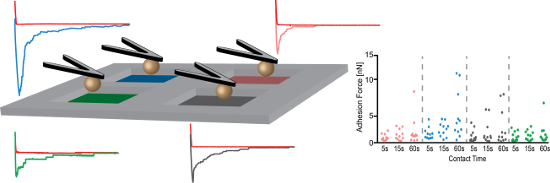
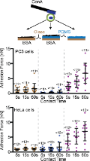
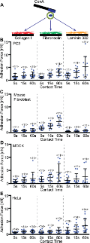
- force spectroscopy; Introduction The regulated adhesion of mammalian cells with the extracellular matrix (ECM) and surrounding cells is crucial in biological processes such as cell migration, differentiation, proliferation, and apoptosis. Since impaired cell adhesion causes a wide range of diseases
- available equivalents are commonly expensive. The masks described herein require a mold, which can be easily produced in workshop, and the PDMS components. The usage of the mask is not limited to AFM-based SCFS, as the four-well mask is only one of many possible dimensions and forms. For example, migration


Functionalization of α-synuclein fibrils
Beilstein J. Nanotechnol. 2015, 6, 124–133, doi:10.3762/bjnano.6.12
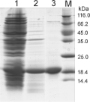
- similar to those of α-Syn. The theoretical molecular mass of α-SynC141 (14.46 kDa) was confirmed by mass spectrometry. However, a band corresponding to about 18 kDa was observed in SDS-PAGE (Figure 1). Assuming that a very acidic C-terminus of α-Syn weakly interacts with SDS, the electrophoretic migration


Materials and characterization techniques for high-temperature polymer electrolyte membrane fuel cells
Beilstein J. Nanotechnol. 2015, 6, 68–83, doi:10.3762/bjnano.6.8
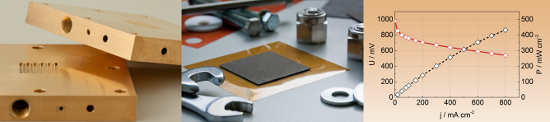
- the catalyst layer. As shown in Figure 8, the PTFE content controls the acid migration from the doped membrane to the catalyst layer and has therefore a significant effect on the cell performance. In case of MEAs employing fumapem® AM (AB-PBI·5H3PO4), the optimal PTFE content for HT-PEMFC electrodes




Mammalian cell growth on gold nanoparticle-decorated substrates is influenced by the nanoparticle coating
Beilstein J. Nanotechnol. 2014, 5, 2479–2488, doi:10.3762/bjnano.5.257
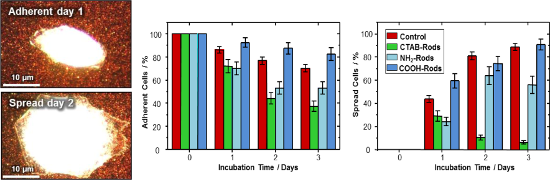
- cell migration and no significant particle internalization occurred. Concerning cell adhesion and spreading as compared to cell growth on bare substrates after 3 days of incubation, a reduction by 45% and 95%, respectively, for the surfactant particle coating was observed, whereas the amino-terminated
- nanoparticle infiltration into a tissue lesion or by insertion of nanoparticle patterned implants. This can potentially influence cell migration, which has implications in wound healing [13]. Recently, a study by Yang et al. tracked the migration behavior of prostate carcinoma cells (PC3, epithelial) and human
- (i.e., the marking of cell movement by the voids created on a nanoparticle carpet) was used already in 1977 to visualize cell migration [15]. Because nanoparticles are so prevalently used to coat surfaces (for instance, to create biofilm resistance on implants [16], to enhance stability or to create a


Synthesis of Pt nanoparticles and their burrowing into Si due to synergistic effects of ion beam energy losses
Beilstein J. Nanotechnol. 2014, 5, 1864–1872, doi:10.3762/bjnano.5.197
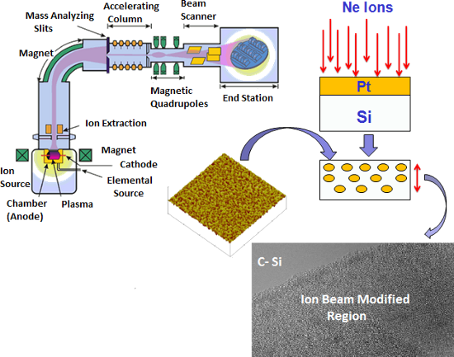
- coupling. The melting of materials along the ion trajectory generates a surface tension gradient due to an imbalance of the surface and the interface energies, which further gives rise to mass transport through capillary action. The migration of metallic atoms and subsequent agglomeration can result in the



Formation of CuxAu1−x phases by cold homogenization of Au/Cu nanocrystalline thin films
Beilstein J. Nanotechnol. 2014, 5, 1491–1500, doi:10.3762/bjnano.5.162
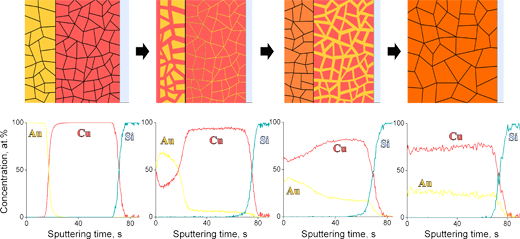
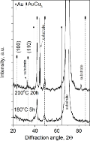
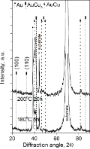
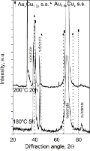
- , an extensive intermixing had taken place, accompanied by grain boundary migration, grain growth, and formation of CuPd and Cu3Pd phases. Similar results were obtained in Cu/Pd [23] Ni2Si/Si [24] and Fe/Pt [9] systems. In [10] these results were summarized and an interpretation based on the grain






Influence of the PDMS substrate stiffness on the adhesion of Acanthamoeba castellanii
Beilstein J. Nanotechnol. 2014, 5, 1393–1398, doi:10.3762/bjnano.5.152
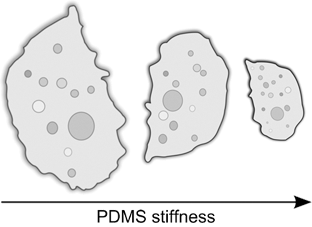
- environments. Cells can even adapt their direction of migration on materials with gradually changing stiffness, a phenomenon known as mechanotaxis [4][5]. This adaptation is presumably due to an active probing of the cellular microenvironment by nanobiomechanical mechanisms in cells, allowing them to reorient



Mimicking exposures to acute and lifetime concentrations of inhaled silver nanoparticles by two different in vitro approaches
Beilstein J. Nanotechnol. 2014, 5, 1357–1370, doi:10.3762/bjnano.5.149
- proliferation and migration (chemotaxis) both decreased, and the release of cytokines was affected. Increased IL-8 and decreased IL-6 and vascular endothelial growth factor (VEGF) levels were detected at high Ag NP concentrations [65]. These studies however, were obtained with human mesenchymal stem cells



Magnesium batteries: Current state of the art, issues and future perspectives
Beilstein J. Nanotechnol. 2014, 5, 1291–1311, doi:10.3762/bjnano.5.143
- mobility. This was attributed to the strong coulombic interactions with BH4− resulting from the small cage size. They proposed that increasing the cage size, by partial substitution of BH4− with the larger AlH4−, may enable magnesium ion migration, however, this was not experimentally demonstrated. Another


Self-organization of mesoscopic silver wires by electrochemical deposition
Beilstein J. Nanotechnol. 2014, 5, 1285–1290, doi:10.3762/bjnano.5.142
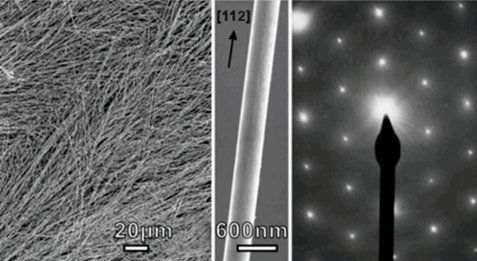
- realized easily because of convection and migration of the ions in the electric field. Our thin film electrodeposition system is closer to an ideal two-dimensional growth system, which helps to explain the low diameters of the silver wires. The growth mechanism of the silver wires can be explained in the




Model systems for studying cell adhesion and biomimetic actin networks
Beilstein J. Nanotechnol. 2014, 5, 1193–1202, doi:10.3762/bjnano.5.131
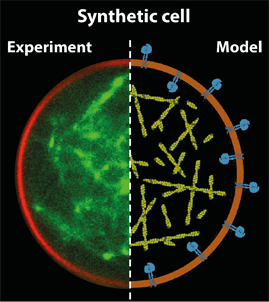
- 10.3762/bjnano.5.131 Abstract Many cellular processes, such as migration, proliferation, wound healing and tumor progression are based on cell adhesion. Amongst different cell adhesion molecules, the integrin receptors play a very significant role. Over the past decades the function and signalling of
- shape and for maintaining cell viability, migration, and tissue integrity [3]. Cell–cell and cell–substrate adhesion are mediated by different proteins, the cell adhesion molecules (CAMs). A very important group of CAMs is the integrin family, which functions both as cell–substrate and cell–cell
- proteins like integrin is important for cell shape and migration. The actin-based motility of cells is driven by myosin, a molecular motor, which converts chemical energy in the form of ATP to mechanical energy, thus generating force and movement [20]. When integrins have created a cell–ECM contact they


Functionalized nanostructures for enhanced photocatalytic performance under solar light
Beilstein J. Nanotechnol. 2014, 5, 994–1004, doi:10.3762/bjnano.5.113
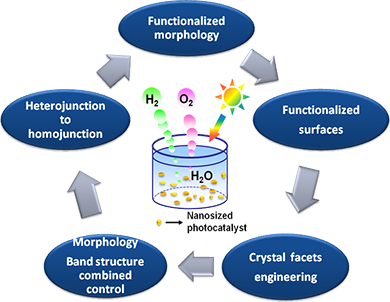
- the migration of photogenerated charges from the interior of the semiconductor to its surface avoiding their bulk recombination enables substantial improvement of photocatalytic efficiency. In this regard, semiconductors with nanosized functionalized morphology could be a beneficial choice. Since the
- photocatalysts can also facilitate the migration of photogenerated charges from bulk to surface [10]. It has been reported that porous semiconductor photocatalysts, such as TiO2 [11], Nb2O5 [12] and Ta2O5 [10], displayed much better photocatalytic properties than their bulk counterparts. Meanwhile, when
- significantly improved photocatalytic activity compared to CdS prepared by traditional approaches [30]. The enrichment of Pt around nanostep regions revealed the preferred migration of photoexcited electrons there and the reduction H2PtCl6 precursor to metallic Pt. Similar nanosteps were also reported by Kudo


Double layer effects in a model of proton discharge on charged electrodes
Beilstein J. Nanotechnol. 2014, 5, 973–982, doi:10.3762/bjnano.5.111
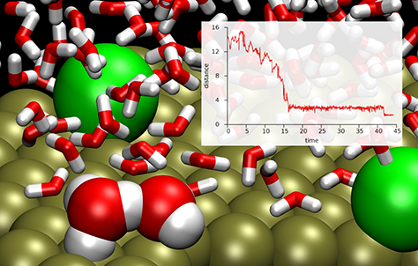
- reactive force field procedure to statistically study the large number of proton transfer pathways by developing empirical valence bond (EVB) force fields for Grotthuss style proton migration and proton discharge at the water/Pt(111) [16][17] and the water/Ag(111) interface [18]. The first EVB models were
- the pure water case, in spite of the fact that the total surface charge is identical in all cases. For the Na+ simulation the intermediate slope of the curve is the smallest, in line with the fact that the net surface charge density is reduced and thus the driving force for migration and discharge is


Manipulation of isolated brain nerve terminals by an external magnetic field using D-mannose-coated γ-Fe2O3 nano-sized particles and assessment of their effects on glutamate transport
Beilstein J. Nanotechnol. 2014, 5, 778–788, doi:10.3762/bjnano.5.90
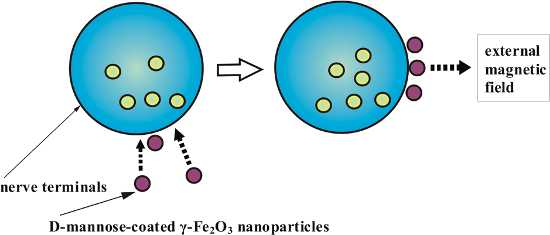
- agents for human use (Endorem, Guerbet, France; Resovist, Bayer Schering Pharma AG, Germany). Until the discontinuation of their manufacture, they had been used for study of migration of Endorem-labeled cells to a cortical photochemical lesion or compression of a spinal cord lesion in rats [8][9]. Some



Design criteria for stable Pt/C fuel cell catalysts
Beilstein J. Nanotechnol. 2014, 5, 44–67, doi:10.3762/bjnano.5.5
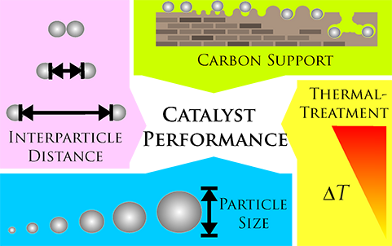
- ]. This may be either due to migration and collision of platinum particles on the surface of the carbon support with successive coalescence, or due to strong carbon corrosion. In the second case, neighboring but initially separated particles come into contact with each other because of a successive
- shrinkage of the carbon support on which they are located [49]. However, also in the first possible case of agglomeration and coalescence due to migration, carbon corrosion may be involved and lead to a weakening of the interactions between platinum particles and support. Alternatively a preferential local
- and ”melt” together when they come into contact, as pointed out by the 1st green circle where “necking” (i.e. a thin bridge between two particles) can be identified. We hereafter refer to this type of particle growth mechanism as agglomeration due to migration, as it is often found in the literature




Surface assembly and nanofabrication of 1,1,1-tris(mercaptomethyl)heptadecane on Au(111) studied with time-lapse atomic force microscopy
Beilstein J. Nanotechnol. 2014, 5, 26–35, doi:10.3762/bjnano.5.3
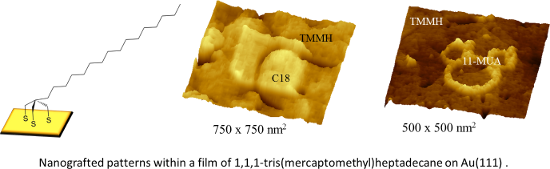
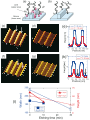
- surface coatings that resist damage. Multidentate molecules provide a model surface that will resist self-exchange and surface migration, and enable further steps of chemical reactions with high fidelity. Degradation of alkanethiol SAMs on metal surfaces is caused by UV exposure, thermal desorption, and


Preparation of NiS/ZnIn2S4 as a superior photocatalyst for hydrogen evolution under visible light irradiation
Beilstein J. Nanotechnol. 2013, 4, 949–955, doi:10.3762/bjnano.4.107
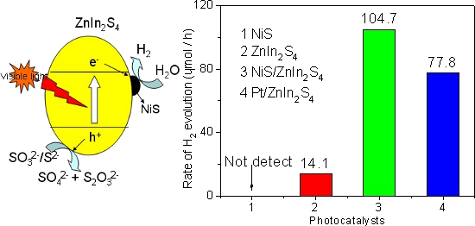
- step hydrothermal processes is beneficial for the directional migration of the photo-excited electrons from ZnIn2S4 to NiS. The highest photocatalytic hydrogen evolution rate (104.7 μmol/h), which is even higher than that over Pt/ZnIn2S4 nanocomposite (77.8 μmol/h), was observed over an optimum NiS
- the poor separation efficiency and migration ability of the photo-excited charge carriers. A variety of effects have been made to enhance the photocatalytic performance of ZnIn2S4. For example, by size control on ZnIn2S4 [20], doping with transition metals [21] and incorporation of metal sulfides [22


Challenges in realizing ultraflat materials surfaces
Beilstein J. Nanotechnol. 2013, 4, 875–885, doi:10.3762/bjnano.4.99
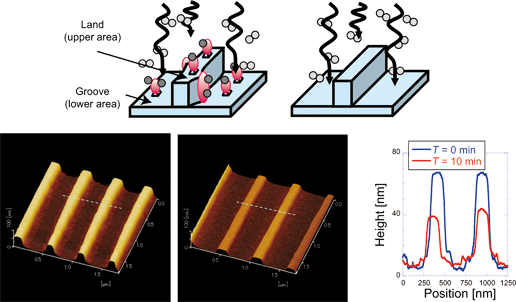
- ]. In this study, radio frequency (RF) sputtering was used to deposit Al2O3 nanoparticles on an alumina substrate. In the case of conventional RF sputtering, the migration length of the Al2O3 nanoparticles on the substrate surface depends on the Schwöbel barrier [48] in the free energy profile. The
- migration length is short near the scratches because the Schwöbel barrier is high at their rims. Thus, the rate of deposition of the Al2O3 nanoparticles is higher at ridge sites than in flat areas. Hence, since the Al2O3 nanoparticles preferentially aggregate at the ridges, repairing the scratches by
- condition prevented a heating of the substrate surface. Hence, the DPPs generated on the ridges of the scratches activated the Al2O3 particles and increased their migration length, thereby allowing them to desorb from the ridge [50]. In contrast, the Al2O3 particles on the slopes and flat regions of the

Large-scale atomistic and quantum-mechanical simulations of a Nafion membrane: Morphology, proton solvation and charge transport
Beilstein J. Nanotechnol. 2013, 4, 567–587, doi:10.3762/bjnano.4.65
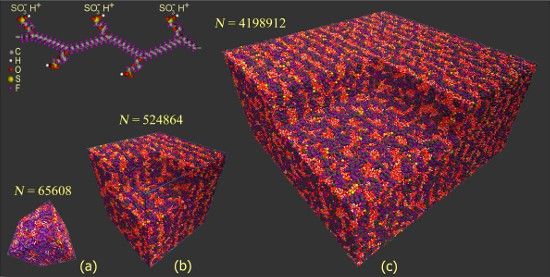
- -conducting hydrophilic channel within the Nafion membrane and studied it with quantum molecular dynamics. The extensive 120 ps-long density functional theory (DFT)-based simulations of charge migration in the 1200-atom model of the nanochannel consisting of Nafion chains and water molecules allowed us to


Deformation-induced grain growth and twinning in nanocrystalline palladium thin films
Beilstein J. Nanotechnol. 2013, 4, 554–566, doi:10.3762/bjnano.4.64
- twinning/detwinning processes, stress-driven grain boundary migration and the formation of shear bands [4][5][6][7]. When studying the mechanical properties of nc metals and the associated deformation mechanisms, it is important to consider the preparation technique for the corresponding bulk nc metal
- for the remaining strain that does not come from dislocation/twin activity. Lohmiller et al. has already reported other mechanisms, such as GB shear and slip, as well as GB migration resulting in grain growth [28][45]. Conclusion NcPd thin films with a grain size of about 35 nm (plane view) were
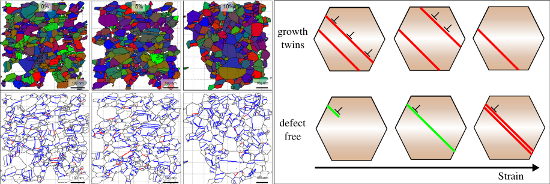
- migration out of the grain. If the grains are initially defect free, partial dislocations nucleate into a defect free grain and can form stacking faults and twinning faults by successive nucleation of partial dislocations. Overview of the structural properties of the three ncPd sample sets analyzed using


Nanoglasses: a new kind of noncrystalline materials
Beilstein J. Nanotechnol. 2013, 4, 517–533, doi:10.3762/bjnano.4.61
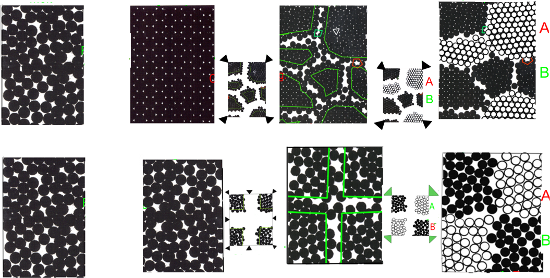
- significance of nanometer-sized patterning of the surface of nanoglasses agrees with the results of recent studies [62][63][64] indicating that the spatial patterning of biochemical cues controls several cellular processes such as spreading, adhesion, migration and proliferation. In fact, these studies