Search results
Search for "nanorods" in Full Text gives 230 result(s) in Beilstein Journal of Nanotechnology. Showing first 200.
Determination of Young’s modulus of Sb2S3 nanowires by in situ resonance and bending methods
Beilstein J. Nanotechnol. 2016, 7, 278–283, doi:10.3762/bjnano.7.25
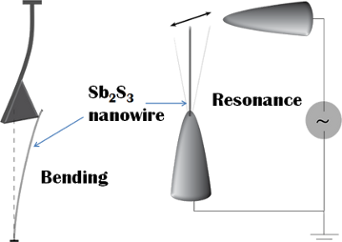
- ] applications. It has also been studied as a photonic bandgap material in the visible region of the electromagnetic spectrum [12]. Synthesis and characterization of various Sb2S3 nanostructures including dendrites [13], nanorods [14], whiskers [15], nanowires (NWs) [16][17] and nanotubes [18] have been reported


Evaluation of gas-sensing properties of ZnO nanostructures electrochemically doped with Au nanophases
Beilstein J. Nanotechnol. 2016, 7, 22–31, doi:10.3762/bjnano.7.3
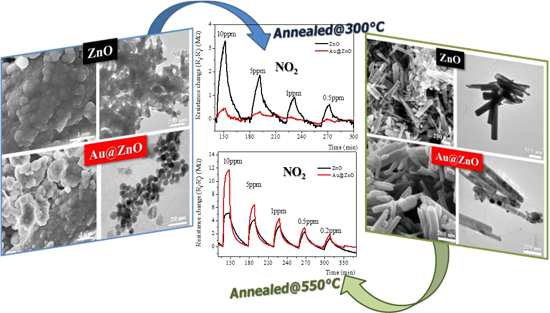
- affected by this drawback, improving the stability of gas sensors [9][15][16]. Additionally, also the use of one-dimensional nanostructures (e.g., nanorods, nanowires, and nanobelts), with high surface to volume ratio, improves the gas-sensing properties [9][17]. Among different MOS, ZnO has been widely
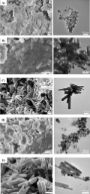
- nanostructures were lower than those of pristine and Au-doped ZnO nanorods, revealing that for NO2 gas-sensing the rod-like structure and the intimate contact between stabilized Au NPs and ZnO nanorods have a significant positive effect on the resistance of sensors and, consequently, their response. Experimental
- decorated with spherical Au NPs. In the case of Au@ZnO annealed at 300 °C, the density of Au NPs on ZnO nanostructures was higher than that in the case of hybrid nanocomposites annealed at 550 °C in which the surface of ZnO nanorods was decorated with only few Au NPs. The annealing temperature strongly




Blue and white light emission from zinc oxide nanoforests
Beilstein J. Nanotechnol. 2015, 6, 2463–2469, doi:10.3762/bjnano.6.255
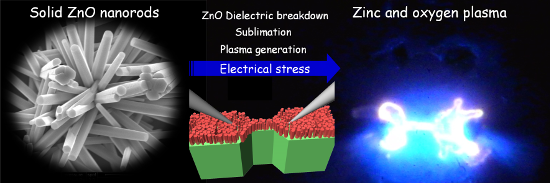
- , University of Connecticut, Storrs, Connecticut 06269, USA 10.3762/bjnano.6.255 Abstract Blue and white light emission is observed when high voltage stress is applied using micrometer-separated tungsten probes across a nanoforest formed of ZnO nanorods. The optical spectrum of the emitted light consistently
- rise to light emission. Experimental ZnO growth Chemical bath deposition (CBD), a low-cost solution-based technique [18][19], is used to grow ZnO nanorods on oxidized silicon wafers with previously fabricated, highly doped, p-type, nanocrystalline silicon microstructures. The samples were precleaned by
- hexahydrate, 25 mM of hexamethylenetetramine and 6 mM of poly(ethyleneimine) for 24 h, and kept at 90 °C. The process yields 2–2.5 μm long ZnO nanorods homogeneously grown along the c-direction of the wurtzite structure with 50–250 nm diameter (Figure 1) on top of a very thin layer of ZnO film (≈2–3 nm


Structural and magnetic properties of iron nanowires and iron nanoparticles fabricated through a reduction reaction
Beilstein J. Nanotechnol. 2015, 6, 1652–1660, doi:10.3762/bjnano.6.167
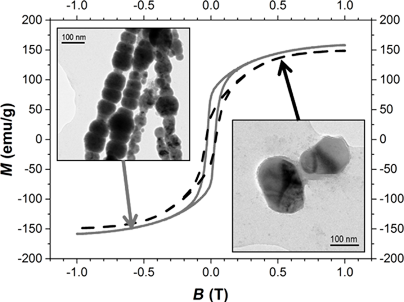
- properties depending on different preparation conditions. However, it is difficult to find the publications where these nanostructures are compared directly regarding to their properties. Indeed, there are few articles where authors have reported that the magnetic nanorods (NRs) and nanowires (NWs) exhibit a



Possibilities and limitations of advanced transmission electron microscopy for carbon-based nanomaterials
Beilstein J. Nanotechnol. 2015, 6, 1541–1557, doi:10.3762/bjnano.6.158
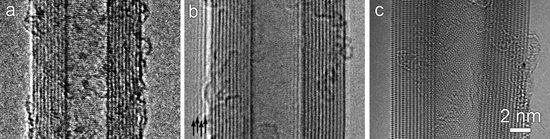
- straightforward manner. Following the large improvement in the spatial resolution of 2D imaging, atomically resolved 3D reconstruction has been achieved and demonstrated on Au nanorods [84]. Encouragingly, only a few projections are required for the reconstruction thanks to an improvement of the reconstruction


Peptide-equipped tobacco mosaic virus templates for selective and controllable biomineral deposition
Beilstein J. Nanotechnol. 2015, 6, 1399–1412, doi:10.3762/bjnano.6.145
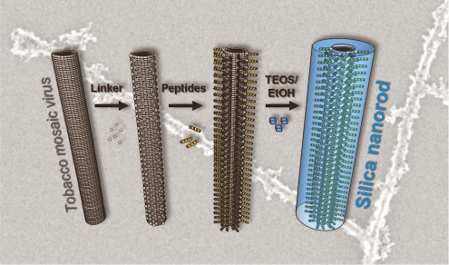
- applicable mineralized nanorods lie in selectivity and adjustability of the inorganic material deposited on the biological, rod-shaped backbones, with respect to thickness and surface profile of the resulting coating, as well as the avoidance of aggregation into extended superstructures. Nanotubular tobacco
- reactions, however, TMV particles presented extensive rearrangement into head-to-tail structures [34][65]. These were laterally aligned or even star-shaped [64] 3D arrays in many of the studies, reflecting and expanding the well-known capacities of these bio-nanorods to form various aggregates up to liquid
- sequence types on structure-directing TMV nanorods. This allows for the systematic investigation of their influence on silica coating reactions via ethanol-containing TEOS on this viral backbone for the first time. Genetically modified TMV particles (TMVLys) with an accessible amino group on every CP




Growth and morphological analysis of segmented AuAg alloy nanowires created by pulsed electrodeposition in ion-track etched membranes
Beilstein J. Nanotechnol. 2015, 6, 1272–1280, doi:10.3762/bjnano.6.131
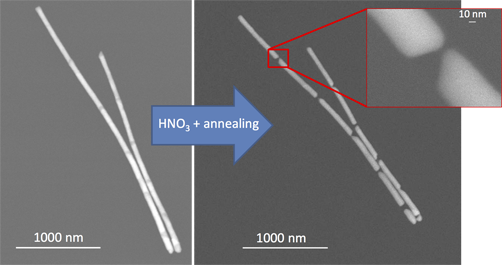
- segment length is crucial for many applications [28][30][32][33]. AuAg nanowires are particularly investigated in the fields of optics and electronics. Bimetallic AuAg nanowires are very promising as sensing tools for surface enhanced Raman spectroscopy [34]. As an example, AuAg alloy nanorods show
- enhanced sensing resolution compared to pure Au nanowires [35] while Au@Ag core shell nanorods allow to adjust the resonance frequency by varying the shell thickness [36]. Furthermore, optical applications include the readout of striping patterns in AuAg segmented nanowires via optical brightfield

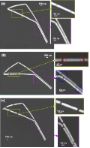
Effects of swift heavy ion irradiation on structural, optical and photocatalytic properties of ZnO–CuO nanocomposites prepared by carbothermal evaporation method
Beilstein J. Nanotechnol. 2015, 6, 928–937, doi:10.3762/bjnano.6.96
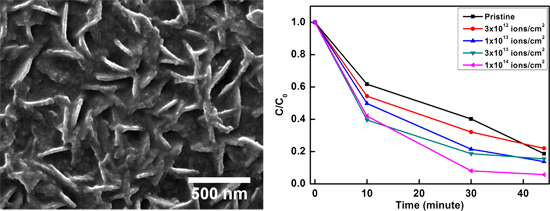
- absorption spectroscopy and Raman spectroscopy. XRD studies showed the presence of ZnO and CuO nanostructures in the nanocomposites. FESEM images revealed the presence of nanosheets and nanorods in the nanocomposites. The photocatalytic activity of ZnO–CuO nanocomposites was evaluated on the basis of
- large nanorods with distinct facets and increased width can be clearly seen. However, the density of nanorod-like structures formed is small and the average aspect ratio of such nanostructures was found to be 2.7, which is much smaller than that of the nanostructures in the pristine sample and the
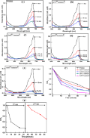
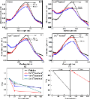
- change in morphology from nanosheets to nanorods upon swift heavy ion irradiation at higher fluence is really interesting considering the appreciable radiation stability of ZnO. Figure 2 shows the XRD patterns of pristine nanocomposite and samples irradiated with 90 MeV Ni ions at fluences of 3 × 10¹³



Morphology control of zinc oxide films via polysaccharide-mediated, low temperature, chemical bath deposition
Beilstein J. Nanotechnol. 2015, 6, 799–808, doi:10.3762/bjnano.6.83
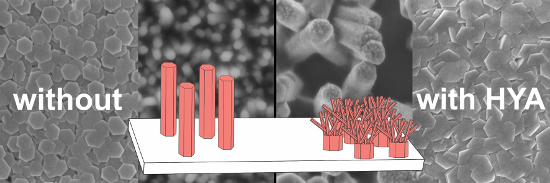
- band gap (3.37 eV) (data not shown). However, the final evidence is presented by the efficient growth of ZnO on the seeded slides; in contrast, unseeded slides did not properly support the growth of ZnO. Step 2: First CBD In the absence of hyaluronic acid (HYA), highly vertically aligned ZnO nanorods
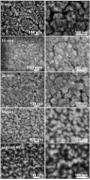
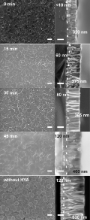
- grow on priorly seeded glass slides, when the procedure described in the Experimental section is applied. The growth of aligned ZnO nanorods arrays on different substrates has been previously reported [15][17][43][44]. The scanning electron micrographs in Figure 2 show a nanorod array that was grown
- resulting zinc oxide, HYA was dissolved in water during the first CBD at different time intervals (0, 15, 30 and 45 min). The growth of the ZnO nanorods (Figure 2) is assumed to proceed continuously on the seeded glass slides until HYA is added to the reaction mixture, which at this point may affect the




Morphological and structural characterization of single-crystal ZnO nanorod arrays on flexible and non-flexible substrates
Beilstein J. Nanotechnol. 2015, 6, 720–725, doi:10.3762/bjnano.6.73
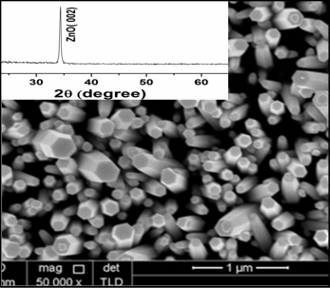
- arrays were investigated using various techniques such as field emission scanning electron microscopy (FESEM) and X-ray diffraction (XRD) measurements, which revealed the formation of dense ZnO nanorods with a single crystal, hexagonal wurtzite structure. The aspect ratio of the single-crystal ZnO
- nanorods and the growth rate along the (002) direction was found to be sensitive to the substrate type. The lattice constants and the crystallite size of the fabricated ZnO nanorods were calculated based on the XRD data. The obtained results revealed that the increase in the crystallite size is strongly
- associated with the growth conditions with a minor dependence on the type of substrate. The Raman spectroscopy measurements confirmed the existence of a compressive stress in the fabricated ZnO nanorods. The obtained results illustrated that the growth of high quality, single-crystal ZnO nanorods can be


Electromagnetic enhancement of ordered silver nanorod arrays evaluated by discrete dipole approximation
Beilstein J. Nanotechnol. 2015, 6, 686–696, doi:10.3762/bjnano.6.69
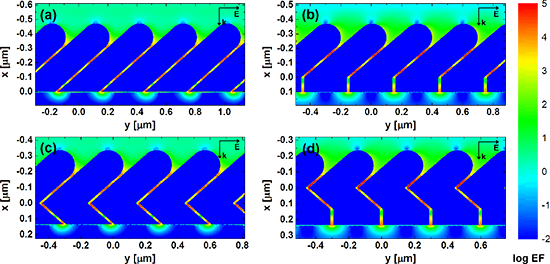
- ., structure, length, excitation wavelength, incident angle and polarization, and gap size has been investigated. “Hotspots” were found distributed in the gaps between adjacent nanorods. Simulations of AgNR arrays of different lengths revealed that increasing the rod length from 374 to 937 nm (aspect ratio
- al. observed that the SERS intensity was dramatically enhanced when the nanorod length increased from 190 to 508 nm in the random AgNR arrays prepared by OAD method. The high aspect ratio and the lateral overlap between adjacent nanorods were considered as the main factors responsible for this
- OAD method [16]. The nanorods were arranged in the hexagonal lattice with a centre-to-centre distance of 300 nm unless otherwise noted (Figure 1a). The orientation of the oblique nanorods was chosen to be along the y-direction, and the tilting angle was set to 42° relative to the y-direction [16]. The


Novel ZnO:Ag nanocomposites induce significant oxidative stress in human fibroblast malignant melanoma (Ht144) cells
Beilstein J. Nanotechnol. 2015, 6, 570–582, doi:10.3762/bjnano.6.59
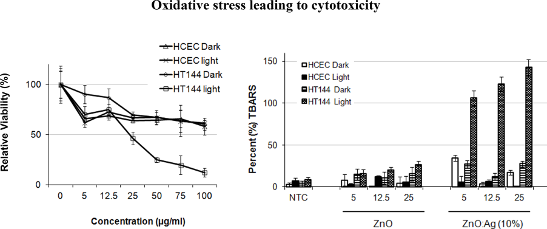
- in the light source used, the percentage of Ag content or the cellular model used. Sharma et al. [32] reported zinc oxide nanoparticles with different formulations (0.1, 0.2, 0.3 and 0.4%) of Ag (size range: 23–59 nm) for their antibacterial activity and Shah et al. [33] reported that ZnO nanorods




Filling of carbon nanotubes and nanofibres
Beilstein J. Nanotechnol. 2015, 6, 508–516, doi:10.3762/bjnano.6.53
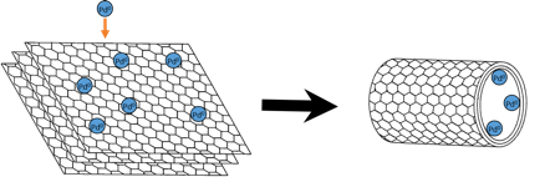
- , a variety of bismuth–tin nanostructures covered by CNTs have been produced via in situ filling. It was demonstrated that the MSnO2/MBi2O3 ratio was instrumental in the formation of the encased nanostructures (nanoparticles, nanorods, and nanowires) [116]. Recent developments Although several drug


Nanoparticle shapes by using Wulff constructions and first-principles calculations
Beilstein J. Nanotechnol. 2015, 6, 361–368, doi:10.3762/bjnano.6.35
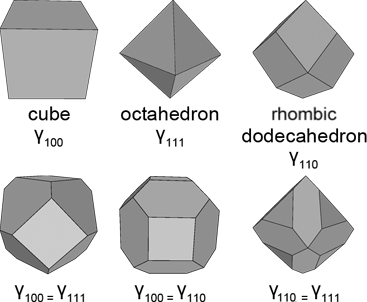
- , experimentally it has been found that objects such as nanorods can be systematically produced with an adequate selection of the solution growth. In that case the symmetry breaking appears very early in the formation of the seed as then some of the facets (but not all those equivalent by symmetry) can be blocked



Comparative evaluation of the impact on endothelial cells induced by different nanoparticle structures and functionalization
Beilstein J. Nanotechnol. 2015, 6, 300–312, doi:10.3762/bjnano.6.28
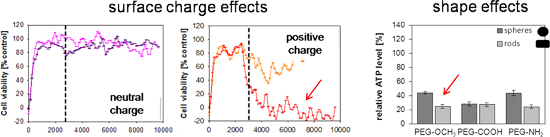
- [7] are suggested. Gold nanorods were shown to have better optical imaging properties compared to spherical gold nanoparticles [8][9][10]. Importantly, the cytotoxicity of gold nanoparticles depends on the surface coating. Cetyltrimethylammonium bromide (CTAB), an important material during synthesis


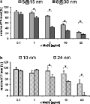


Mechanical properties of MDCK II cells exposed to gold nanorods
Beilstein J. Nanotechnol. 2015, 6, 223–231, doi:10.3762/bjnano.6.21
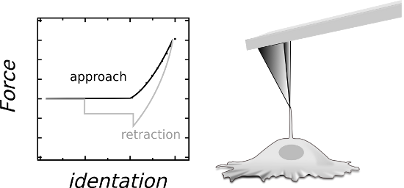
- the cellular response to external stimuli. Results: Mechanical properties of confluent MDCK II cells exposed to gold nanorods as a function of surface functionalization and concentration have been explored by atomic force microscopy and quartz crystal microbalance measurements in combination with
- fluorescence and dark-field microscopy. Conclusion: We found that cells exposed to CTAB coated gold nanorods display a concentration-dependent stiffening that cannot be explained by the presence of CTAB alone. The stiffening results presumably from endocytosis of particles removing excess membrane area from
- CTAB coated rods suggesting an increase in acoustic load corresponding to a larger stiffness (storage modulus). Keywords: atomic force microscopy; CTAB; gold nanorods; membrane tension; MDCK II cells; QCM; Introduction The interest in gold nanoparticles (NP) for biomedical applications in the field


Mammalian cell growth on gold nanoparticle-decorated substrates is influenced by the nanoparticle coating
Beilstein J. Nanotechnol. 2014, 5, 2479–2488, doi:10.3762/bjnano.5.257
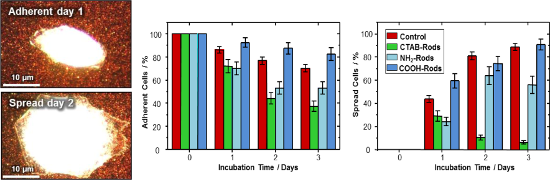
- Planck Institute for Biology of Ageing, Joseph-Stelzmann-Straße 9b, 50931 Cologne, Germany 10.3762/bjnano.5.257 Abstract In this work, we study epithelial cell growth on substrates decorated with gold nanorods that are functionalized either with a positively charged cytotoxic surfactant or with a
- nanorods, which were applied to the basolateral side of the cells, has a recognizable influence on the growth behavior and thus the coating should be carefully selected for biomedical applications of nanoparticles. Keywords: basolateral application; cytotoxicity; electric cell–substrate impedance sensing
- enhanced compared to apical exposure [17]. In this study, epithelial cells grown on substrates decorated with gold nanorods exhibiting different surface coatings are compared with cells growing on bare substrates in order to assess the impact of the coating agents on basolateral nanoparticle application


Low-cost plasmonic solar cells prepared by chemical spray pyrolysis
Beilstein J. Nanotechnol. 2014, 5, 2398–2402, doi:10.3762/bjnano.5.249
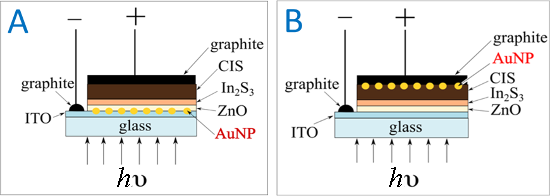
- the smaller absorbing volume. The use of mesoporous TiO2 or ZnO nanorods provides increased surface area of the absorber, while the introduction of metal nanoparticles allows photons to be captured via plasmonic effects [1][2][3][4]. This work attempts to utilize the advantages of the plasmon effect
- with a band gap of 1.5 eV that is often used as a photovoltaic absorber. Previously published, related work by our research group regarding CIS-based solar cells includes: the synthesis and properties of CIS [5][6], application of CIS in extremely thin absorber solar cells based on ZnO nanorods [7


Inorganic Janus particles for biomedical applications
Beilstein J. Nanotechnol. 2014, 5, 2346–2362, doi:10.3762/bjnano.5.244
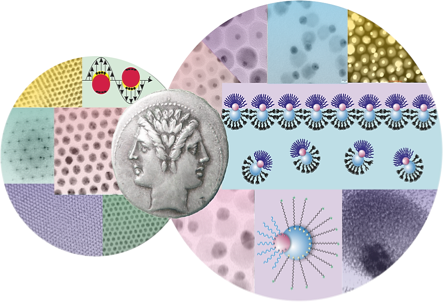
- ]. Moreover, Au nanorods as well as Au@MnO@SiO2 Janus particles were shown to emit strong photoluminescence under two photon excitation used for in vitro imaging (Figure 14) [39][92]. In comparison to conventional microscopy, multi-photon microcopy is superior regarding the reduced fluorescence background






Liquid-phase exfoliated graphene: functionalization, characterization, and applications
Beilstein J. Nanotechnol. 2014, 5, 2328–2338, doi:10.3762/bjnano.5.242
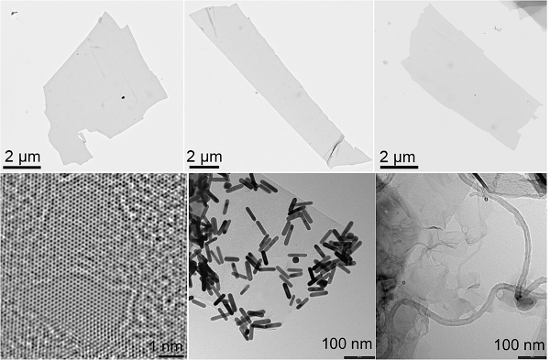
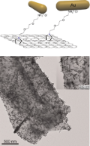
- cycloaddition, performed on graphene by employing an aldehyde and an α-amino acid as precursors, attacks both graphene faces and edges. This reactivity was observed by introducing protonated terminal amino groups that selectively bind gold nanorods allowing the recognition of the reactive sites by low
- graphene layers and carbon nanofibers. (b) Carbon nanofibers marked with Au Nanorods. (c) Representative TEM micrograph of a graphene sheet. (d) HR-TEM image of graphene. Reprinted with permission from [9], copyright 2012 The Royal Society of Chemistry. Ultrasound-assisted synthesis of MWNTs from graphite




Localized surface plasmon resonances in nanostructures to enhance nonlinear vibrational spectroscopies: towards an astonishing molecular sensitivity
Beilstein J. Nanotechnol. 2014, 5, 2275–2292, doi:10.3762/bjnano.5.237
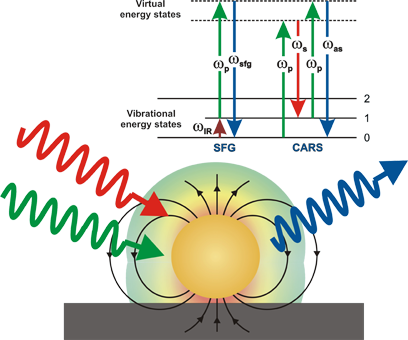
- and compositions, which altogether define the light absorbance, and so the LSPR spectral peak. As shown in Figure 4, depending on those parameters, the resonance frequency can be tuned over all the visible and near-infrared ranges [9][10][11][12][15]. For example, gold nanorods (Figure 4a) present two




Hybrid spin-crossover nanostructures
Beilstein J. Nanotechnol. 2014, 5, 2230–2239, doi:10.3762/bjnano.5.232
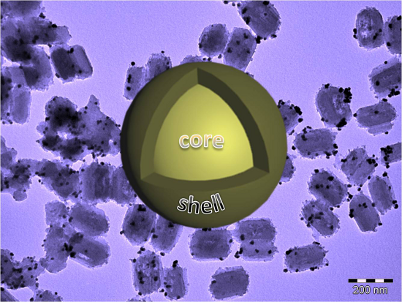
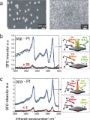
- beam lithography (EBL) and lift off strategies, we developed localized surface plasmon (LSP) substrates consisting of a series of arrays of gold nanorods with different aspect ratios (Figure 7a) [34]. After this, the photonic device was finalized with a 60 nm thin film of the SCO complex, Fe(hptrz)3
- (OTs)2, spin-coated onto the top. For a given particle size, aspect ratio and distance between particles, each array of gold nanorods have a characteristic LSP resonance (LSPR) wavelength that will also depend on the refractive index value of the surrounding media (Figure 7b). As a result, the LSPR of



Controlling the dispersion of supported polyoxometalate heterogeneous catalysts: impact of hybridization and the role of hydrophilicity–hydrophobicity balance and supramolecularity
Beilstein J. Nanotechnol. 2014, 5, 1749–1759, doi:10.3762/bjnano.5.185
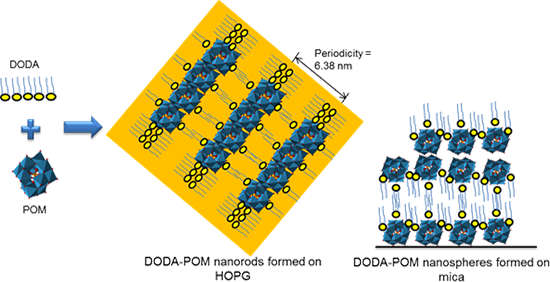
- hybrids are deposited. For instance, surfactant-encapsulated clusters of POM anions, formed through electrostatic interactions, were reported to form well-ordered straight nanorods on graphite [17], whereas hybrid materials formed through covalent functionalization of POM formed planar layer-by-layer
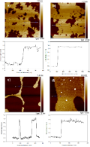
- other (Figure 4). The domains of self-assembled nanorods were oriented at about 120° toward each other. The 2-dimensional fast Fourier transformation (2D-FFT) analysis of the images revealed three pairs of bright spots arranged in a three-fold rotational symmetry. These resemble the hexagonal
- arrangement of carbon atoms in the graphite basal plane, and hence reveal that the orientation of nanorods in the hybrid material is indeed controlled by the epitaxial interaction of DODA chains with HOPG. The periodicity of the nanorod arrays, measured as peak-to-peak distances from AFM cross-section


Ionic liquid-assisted formation of cellulose/calcium phosphate hybrid materials
Beilstein J. Nanotechnol. 2014, 5, 1553–1568, doi:10.3762/bjnano.5.167
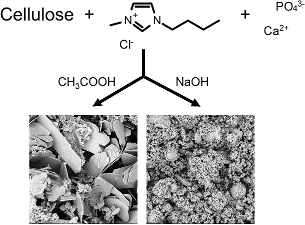
- . Figure 6 shows representative TEM images of thin sections of GAA and NaOH. Overall, TEM cross-sections show a high conservation of structures between the two different approaches. Samples obtained in the presence of GAA (CCPH1-4) are highly homogeneous and consist of densely packed nanorods with a length


Growth evolution and phase transition from chalcocite to digenite in nanocrystalline copper sulfide: Morphological, optical and electrical properties
Beilstein J. Nanotechnol. 2014, 5, 1542–1552, doi:10.3762/bjnano.5.166
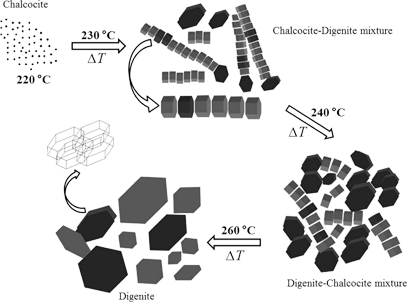
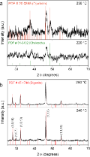
- in an organic solvent and amorphous CuxS was obtained in aqueous solution. Nanoparticle-like nucleation centers are formed at lower temperatures (220 °C), mixtures of morphologies (nanorods, nanodisks and nanoprisms) are seen at 230 and 240 °C, in which the nanodisks are predominant, while big
- obtained at 220 °C (Figure 2a). At 230 °C short chains of stacked nanorods with lengths (l) and width (w) of about 13.97 ± 2.7 × 5.86 ± 1.09 nm (from 260 particles), are seen in Figure 2b. Some hexagonal nanodisks of about 20–40 nm and prisms of about 50 nm are also observed. At 240 °C (Figure 2c) aligned
- nanorods are seen with similar dimensions (13.55 ± 1.86 × 5.91 ± 0.75 nm from 130 particles) to those seen at 230 °C. The size of the CuxS crystals at the higher temperature is not significantly different. However, the amount of crystals with a prism geometry is increased. These two types of morphology are