


Search results
Search for "platinum" in Full Text gives 342 result(s) in Beilstein Journal of Nanotechnology. Showing first 200.
Cyclodextrin inhibits zinc corrosion by destabilizing point defect formation in the oxide layer
Beilstein J. Nanotechnol. 2018, 9, 936–944, doi:10.3762/bjnano.9.86
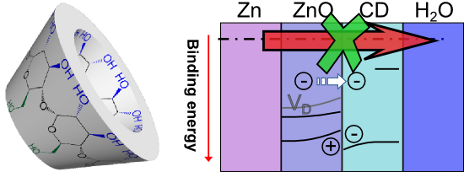
- Luggin capillary, a platinum foil counter electrode, and a zinc working electrode with an exposed surface area of 0.196 cm2. The electrolyte volume for the measurements was 10 mL, and the electrolyte surface was ≈2.5 cm away from the surface of the working electrode. All electrode potentials shown here
- calculated as Here, z is the charge transfer number (for Zn, z = 2), F the Faraday constant, Vf is the volume flow rate and A the area of the working electrode. The experiments were conducted using the cell design described elsewhere [17][18]. The cell was equipped in a classical manner: A platinum wire was


Facile chemical routes to mesoporous silver substrates for SERS analysis
Beilstein J. Nanotechnol. 2018, 9, 880–889, doi:10.3762/bjnano.9.82
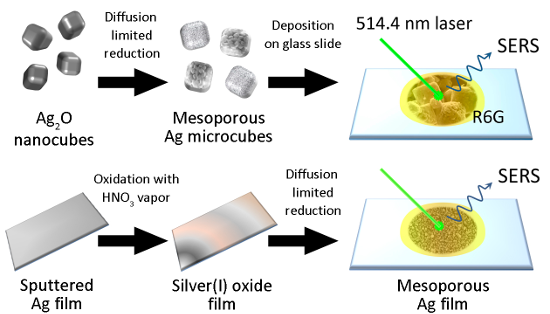
- due to the low redox potential of most of the metals, leading to fast oxidation or corrosion of metal sponges in ambient conditions. The oxidation stability of noble metals makes them more reliable as functional materials and thus materials such as porous silver, gold and platinum can be kept for a


Noble metal-modified titania with visible-light activity for the decomposition of microorganisms
Beilstein J. Nanotechnol. 2018, 9, 829–841, doi:10.3762/bjnano.9.77
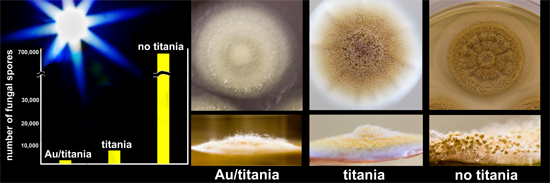
- , 90, 95 and 99.5% (v/v)) for 10 min each. Then, samples were washed with tert-butyl alcohol three times, soaked in it and dried under vacuum. Samples were sputtered with platinum for 60 s from three directions and observed by SEM (JSM-7400F, JEOL). Antifungal activity test The antifungal tests were


Synthesis and characterization of two new TiO2-containing benzothiazole-based imine composites for organic device applications
Beilstein J. Nanotechnol. 2018, 9, 721–739, doi:10.3762/bjnano.9.67
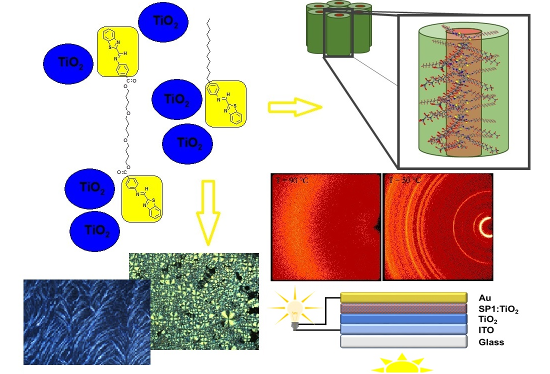
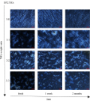
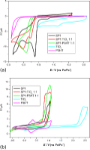
- ], electrochemical measurements were carried out using an Eco Chemie Autolab PGSTAT128n potentiostat, glassy carbon electrode (diameter 2 mm), platinum coil and silver wire as working, auxiliary and reference electrodes, respectively. The potentials are referenced with respect to ferrocene (Fc), which was used as






Dynamics and fragmentation mechanism of (C5H4CH3)Pt(CH3)3 on SiO2 surfaces
Beilstein J. Nanotechnol. 2018, 9, 711–720, doi:10.3762/bjnano.9.66
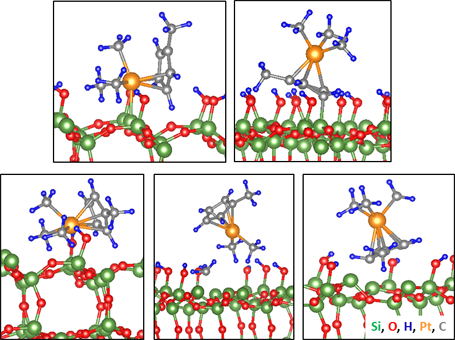
- /bjnano.9.66 Abstract The interaction of trimethyl(methylcyclopentadienyl)platinum(IV) ((C5H4CH3)Pt(CH3)3) molecules on fully and partially hydroxylated SiO2 surfaces, as well as the dynamics of this interaction were investigated using density functional theory (DFT) and finite temperature DFT-based
- ); focused electron beam induced deposition (FEBID); precursor; trimethyl(methylcyclopentadienyl)platinum(IV) ((CH3-C5H4)Pt(CH3)3); Introduction Nanoscale device applications require a growth of regular or specially patterned transition metal nanodeposits. Electron beam induced deposition (EBID), is a size




Review: Electrostatically actuated nanobeam-based nanoelectromechanical switches – materials solutions and operational conditions
Beilstein J. Nanotechnol. 2018, 9, 271–300, doi:10.3762/bjnano.9.29
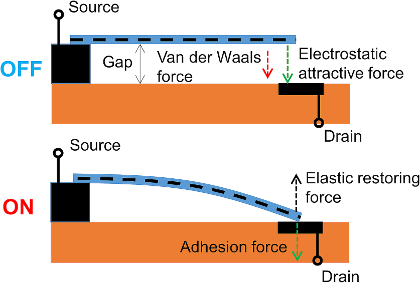
- ] top-down NEM switch fabrication approaches. Similarly to copper, the fabrication of a platinum cantilever NEM switching element involved an additional thermal annealing step at 300 °C to reduce the stress gradient in the beam. The usability of platinum for electron-beam lithography-based fabrication
- of NEM relay-only and CMOS–NEM hybrid circuits was demonstrated. Platinum cantilevers with thickness of ≈60–70 nm, length of ≈3.2–3.5 μm and gap of 100 nm, showed a jump-in voltage of 3.3 V in 3T configuration, and 5–6 V in the CMOS–NEM hybrid circuit [114]. Ruthenium also allows CMOS compatible


Bombyx mori silk/titania/gold hybrid materials for photocatalytic water splitting: combining renewable raw materials with clean fuels
Beilstein J. Nanotechnol. 2018, 9, 187–204, doi:10.3762/bjnano.9.21
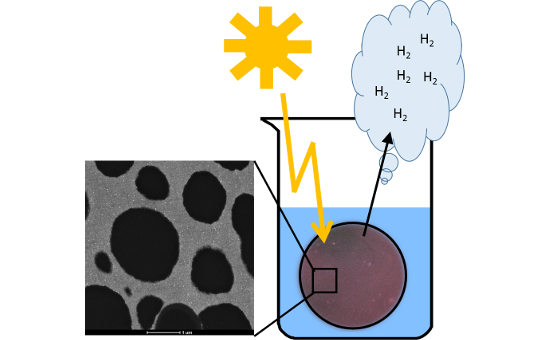
- bandgap of the TiO2 semiconductors [21]. Gallo et al. used amorphous TiO2 doped with Au and/or platinum (Pt) NPs to split water under ultraviolet (UV)-A light and simulated sunlight. Best results with 1.6 mmol/(h·g) of H2 production were obtained with Au0.5Pt0.5/TiO2 catalysts [22]. Chen et al. used




Atomic layer deposition and properties of ZrO2/Fe2O3 thin films
Beilstein J. Nanotechnol. 2018, 9, 119–128, doi:10.3762/bjnano.9.14
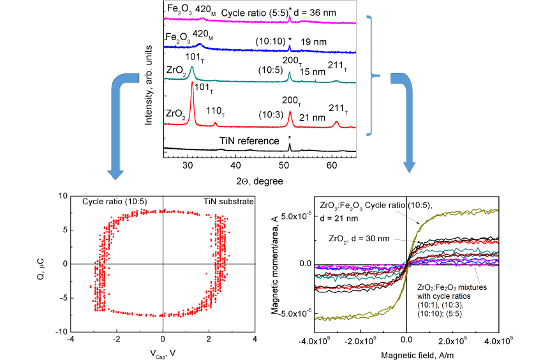
- deposited on TiN substrates were supplied with platinum electrodes, with an area of 0.204 mm2, that were electron-beam-evaporated on top of the films. In addition, for investigating deposition uniformity in terms of conformal growth, stacked three-dimensional structures of silicon substrates with an aspect


Electron-driven and thermal chemistry during water-assisted purification of platinum nanomaterials generated by electron beam induced deposition
Beilstein J. Nanotechnol. 2018, 9, 77–90, doi:10.3762/bjnano.9.10
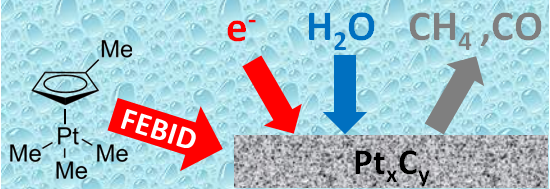
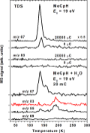
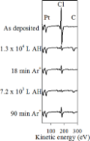
- highly contaminated by carbon originating from the precursor used in the process. Recently, it was shown that platinum nanostructures produced by FEBID can be efficiently purified by electron irradiation in the presence of water. If such processes can be transferred to FEBID deposits produced from other
- carbon-containing precursors, a new general approach to the generation of pure metallic nanostructures could be implemented. Therefore this study aims to understand the chemical reactions that are fundamental to the water-assisted purification of platinum FEBID deposits generated from trimethyl
- (methylcyclopentadienyl)platinum(IV) (MeCpPtMe3). The experiments performed under ultrahigh vacuum conditions apply a combination of different desorption experiments coupled with mass spectrometry to analyse reaction products. Electron-stimulated desorption monitors species that leave the surface during electron exposure



The rational design of a Au(I) precursor for focused electron beam induced deposition
Beilstein J. Nanotechnol. 2017, 8, 2753–2765, doi:10.3762/bjnano.8.274
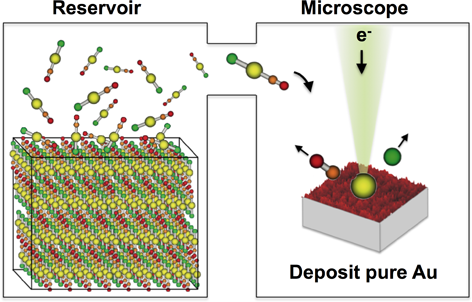
- )platinum(IV) ((MeCp)PtMe3) [29][31], or the acetylacetonate ligand in dimethyl(acetylacetonate)gold(III) ((acac)AuMe2) [30], leaving the majority of the carbon in the deposit. In contrast, small groups such as halides, CO and (a single) methyl ligand can be removed [29]. Successful examples of FEBIP


Interactions of low-energy electrons with the FEBID precursor chromium hexacarbonyl (Cr(CO)6)
Beilstein J. Nanotechnol. 2017, 8, 2583–2590, doi:10.3762/bjnano.8.258
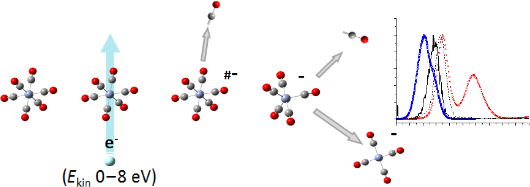
- studies with η-(C3H5)Ru(CO)3Br [5] and the bimetallic precursor HFeCo3(CO)12 [6][7]. Results of electron interactions with platinum-based precursors, such as Pt(PF3)4 and MeCpPtMe3 [8][9][10], as well as with Co(CO)3NO and W(CO)6 [11][12][13] were also reported. Metal carbonyl precursors were investigated



Direct writing of gold nanostructures with an electron beam: On the way to pure nanostructures by combining optimized deposition with oxygen-plasma treatment
Beilstein J. Nanotechnol. 2017, 8, 2530–2543, doi:10.3762/bjnano.8.253
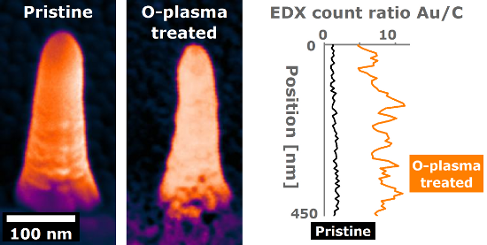
- purity [48]. For cobalt, a combination of heat, H2 exposure and electron irradiation improved the metal content in the deposits [49]. Similarly, in the case of platinum, several purification approaches have been studied, including laser assisted purification [50][51], a sequential EBID process and
- different surface mechanisms prevented the direct application of the methods used for Pt purification to Au purification. These differences between the platinum precursor MeCpPtMe3 and the acetylacetonate-based gold precursors Me2-Au-acac, Me2-Au-tfac, and Me2-Au-hfac become evident by the fact that atomic
- layer deposition is feasible for platinum [58][59], but has proved very challenging for gold [60][61]. While the encouraging results from Pt purification can provide inspiration, it is still necessary to develop new procedures for the purification of FEBID gold. Roughly, all these procedures that strive

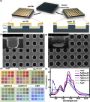
Refractive index sensing and surface-enhanced Raman spectroscopy using silver–gold layered bimetallic plasmonic crystals
Beilstein J. Nanotechnol. 2017, 8, 2492–2503, doi:10.3762/bjnano.8.249
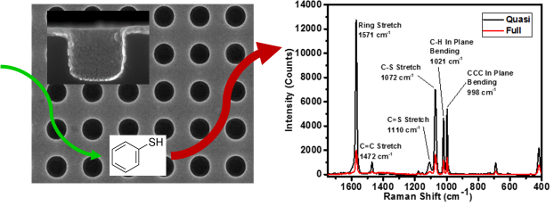
- % methylhydrosiloxane)-(dimethylsiloxane) (HMS-301), poly(7–8% vinylmethylsiloxane)-(dimethylsiloxane), (VDT-731), platinum divinyltetramethyldisiloxane (SIP6831.1) and (1,3,5,7-tetravinyl-1,3,5,7-tetramethylcyclotetrasiloxane) (7900), were purchased from Gelest. Polyethylene glycol (PEG, MW = 10,000 g/mol) and


Comparing postdeposition reactions of electrons and radicals with Pt nanostructures created by focused electron beam induced deposition
Beilstein J. Nanotechnol. 2017, 8, 2410–2424, doi:10.3762/bjnano.8.240
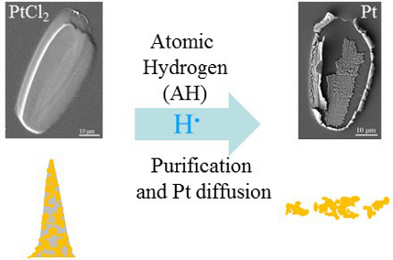
- purification by LAEBID resulted not only in higher platinum content but also in an improved platinum coalescence and a transition from amorphous to graphitic carbon. The net effect of these chemical and structural transformations was a 100-fold improvement in nanowire resistivity, while maintaining a high
- postdeposition electron-induced purification methods using O2 and H2O [13][17]. The majority of the work described in this study investigates potential strategies for purifying platinum-based FEBID deposits created from cis-Pt(CO)2Cl2 by treatment with electrons and AH, strategies which were deemed capable of
- present in the platinum-containing precursors (MeCpPtMe3, Pt(hfac)2, and Pt(PF3)4) was also evaluated. Experimental FEBID structures were fabricated using two different systems: (i) a PHI 610 scanning Auger microprobe system (Auger electron spectroscopy (AES)), where deposits were subsequently treated




Robust procedure for creating and characterizing the atomic structure of scanning tunneling microscope tips
Beilstein J. Nanotechnol. 2017, 8, 2389–2395, doi:10.3762/bjnano.8.238
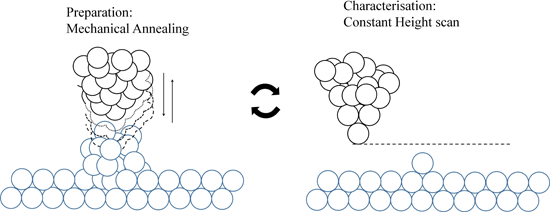
- Au surface was prepared in situ by several cycles of argon sputtering at 1 keV at 5 · 10−5 mbar for 15 min and annealing at 600 K for 1 min to ensure a clean crystalline surface. The STM tips used in the experiments were commercial Unisoku platinum–iridium (PtIr) tips having a tip radius of less than


Surfactant-induced enhancement of droplet adhesion in superhydrophobic soybean (Glycine max L.) leaves
Beilstein J. Nanotechnol. 2017, 8, 2345–2356, doi:10.3762/bjnano.8.234
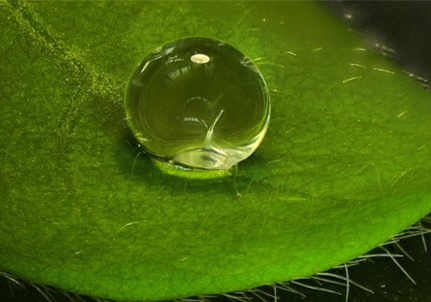
- mbar) atmosphere to avoid ice crystal formation on the plant surfaces. The samples were platinum-coated before transferring them into the precooled (−140 °C) SEM chamber. The transfer of the frozen samples was performed using an evacuated (10−2 mbar) transfer chamber. The cryo-fixed samples were


Suppression of low-energy dissociative electron attachment in Fe(CO)5 upon clustering
Beilstein J. Nanotechnol. 2017, 8, 2200–2207, doi:10.3762/bjnano.8.219
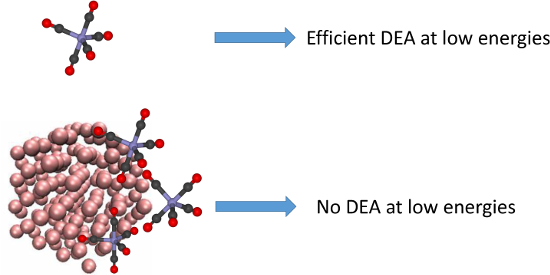
- anion synthesis in pure Fe(CO)5 clusters. As already mentioned, Massey et al. [20] studied degradation of Fe(CO)5 films condensed on a xenon spacer on platinum foil by electron stimulated desorption. They did not observe any anion desorption at electron energies below 4 eV and strong desorption signals


Evaluating the toxicity of TiO2-based nanoparticles to Chinese hamster ovary cells and Escherichia coli: a complementary experimental and computational approach
Beilstein J. Nanotechnol. 2017, 8, 2171–2180, doi:10.3762/bjnano.8.216

- ), platinum (Pt), or palladium (Pd) [13][14], (e) the use of dye-modified TiO2 [15][16], or (f) coupling TiO2 with other semiconductors [17][18]. In the current work, we will focus on surface modification methods. Metal-ion doped TiO2 (so-called second generation nanomaterials) may cause adverse effects not


Functional materials for environmental sensors and energy systems
Beilstein J. Nanotechnol. 2017, 8, 2015–2016, doi:10.3762/bjnano.8.201

- tens of mW) are key elements for adequate air-quality measurement at indoor and outdoor levels. This Thematic Series, published in the platinum open access Beilstein Journal of Nanotechnology, is an exciting collection of works on functional nanomaterials such as metal oxides, carbon nanomaterials (e.g
Carbon nano-onions as fluorescent on/off modulated nanoprobes for diagnostics
Beilstein J. Nanotechnol. 2017, 8, 1878–1888, doi:10.3762/bjnano.8.188
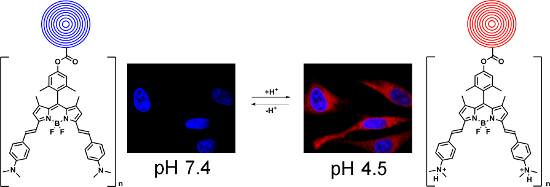
- . Experimental Materials All solvents and reagents were purchased from Sigma-Aldrich in high purity grade. All reactions and measurements were carried out under ambient conditions, unless otherwise stated. Instrumentation Thermogravimetric analysis (TGA) TGA was conducted on a TA Q500 analyzer, using a platinum




Evaluation of preparation methods for suspended nano-objects on substrates for dimensional measurements by atomic force microscopy
Beilstein J. Nanotechnol. 2017, 8, 1774–1785, doi:10.3762/bjnano.8.179
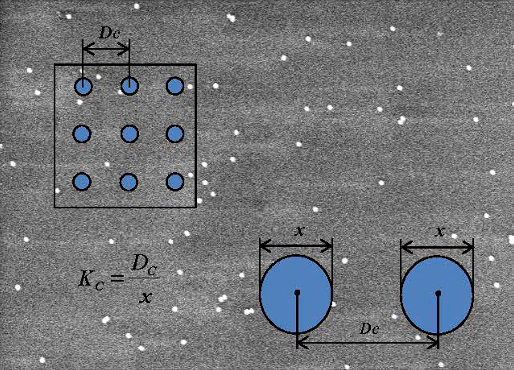
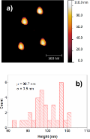
- 2. No additional post-conditioning of the sample/substrate was performed. For the SEM evaluation of membrane filtered samples it was helpful to sputter a thin (≈1 nm) platinum layer over the surface to prevent charging effects. Liquid phase preparation As mentioned before, preparation should lead


Synthesis and catalytic application of magnetic Co–Cu nanowires
Beilstein J. Nanotechnol. 2017, 8, 1769–1773, doi:10.3762/bjnano.8.178
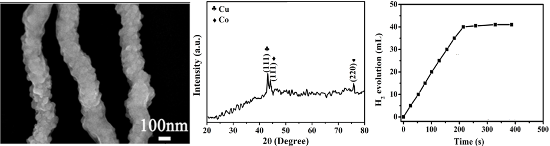
- elemental spectrum corresponding to the selected area. Figure 4b shows that the as-prepared product contained elemental cobalt as well as elemental copper, which is in accordance with the XRD patterns. Additionally, silicon, carbon and platinum peaks were from the calculation of the elementary composition


Three-in-one approach towards efficient organic dye-sensitized solar cells: aggregation suppression, panchromatic absorption and resonance energy transfer
Beilstein J. Nanotechnol. 2017, 8, 1705–1713, doi:10.3762/bjnano.8.171
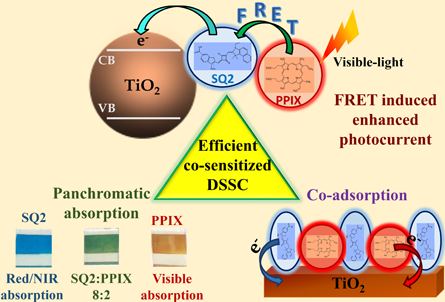
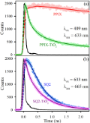
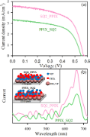
- increased absorption window, FRET-enhanced photocurrent and the prevention of SQ2 aggregation. Experimental Reagents TiO2 nanoparticles (21 nm), protoporphyrin IX (PPIX), platinum chloride (H2PtCl6), lithium iodide (LiI), 4-tert-butylpyridine (TBP) and iodine (I2) were purchased from Sigma-Aldrich. Squarine
- sensitized DSSCs are named SQ2_PPIX and PPIX_SQ2 according to the sequence of dye used for sensitization. To ease the comparison, the total immersion time was 24 h during both mixed-dye sensitization and sequential sensitization. The counter electrodes were prepared by depositing platinum on the FTO
- substrates via thermal decomposition of 5 mM platinum chloride (in isopropanol) at 385 °C for 30 min. 60 μm thick Surlyn was used as a spacer between the active and counter electrodes. The I−/I3− redox couple, which was prepared by mixing iodine crystal (I2), lithium iodide (LiI), and 4-tert-butylpyridine



Near-infrared-responsive, superparamagnetic Au@Co nanochains
Beilstein J. Nanotechnol. 2017, 8, 1680–1687, doi:10.3762/bjnano.8.168
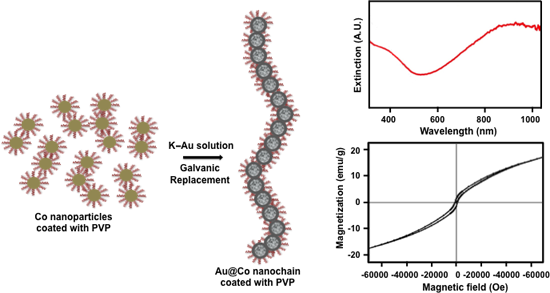
- the hollow nanostructure. As noted above, PVP is widely used as a colloidal stabilizer to inhibit the aggregation of metal nanoparticles such as gold [49][50][51][52], silver [53][54], platinum [55][56][57], palladium [46][57][58][59], nickel [60][61], and cobalt [62][63]. To verify this hypothesis in


Oxidative stabilization of polyacrylonitrile nanofibers and carbon nanofibers containing graphene oxide (GO): a spectroscopic and electrochemical study
Beilstein J. Nanotechnol. 2017, 8, 1616–1628, doi:10.3762/bjnano.8.161
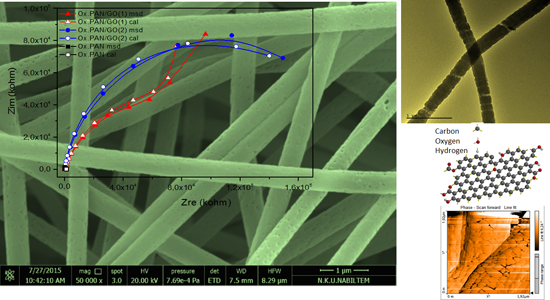
- . Oxidized PAN nanofiber mats were used as free standing working electrodes, a platinum wire was used as counter electrode, and a silver wire was used as pseudo-reference electrode. EIS data were simulated with electrical equivalent circuit by using the ZSimpWin V.3.10 analysis program. Experimental and





