Search results
Search for "precursor" in Full Text gives 617 result(s) in Beilstein Journal of Nanotechnology. Showing first 200.
Wet-spinning of magneto-responsive helical chitosan microfibers
Beilstein J. Nanotechnol. 2020, 11, 991–999, doi:10.3762/bjnano.11.83
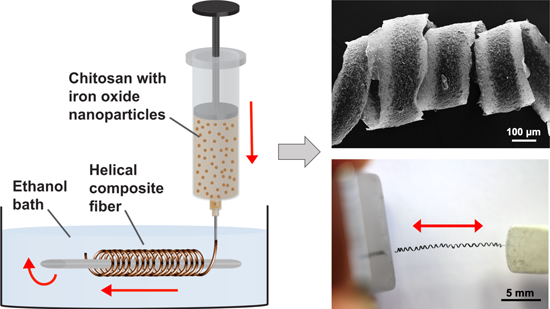
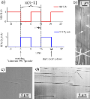
- chitosan solutions containing IOPs (orange lines). The precursor solution consisted of 30 mg·mL−1 chitosan and 10 mg·mL−1 IOPs. (C) Chitosan–IOP microfibers on a glass slide obtained by wet-spinning followed by coagulation in ethanol. Vibrating sample magnetometer analysis of bare IOPs (brown line), bare


Atomic layer deposition for efficient oxygen evolution reaction at Pt/Ir catalyst layers
Beilstein J. Nanotechnol. 2020, 11, 952–959, doi:10.3762/bjnano.11.79
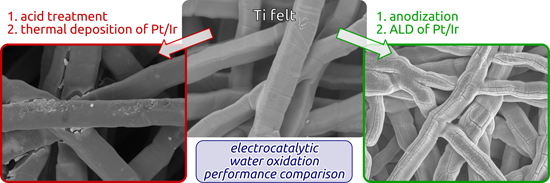
- well documented in the literature, and this paper provides a direct comparison under identical experimental conditions of electrochemical measurements and in identical units. In the first method, based on classical engineering, the bimetallic catalyst is deposited by dip-coating in a precursor solution
- consider here two distinct catalyst preparation methods. As a standard method used in the engineering context, we perform an acid etch of the titanium fibers (to generate surface roughness and thereby increase the specific surface area), followed by dip-coating of a noble metal salt precursor solution on
- the performance comparison. Results and Discussion Catalyst coating: thermal decomposition In the thermal decomposition method, platinum and iridium metal salts (the perchlorometallates) were dissolved in 1:1 ratio in butanol to form the catalyst precursor solution. The Ti felts (two distinct


Band tail state related photoluminescence and photoresponse of ZnMgO solid solution nanostructured films
Beilstein J. Nanotechnol. 2020, 11, 899–910, doi:10.3762/bjnano.11.75
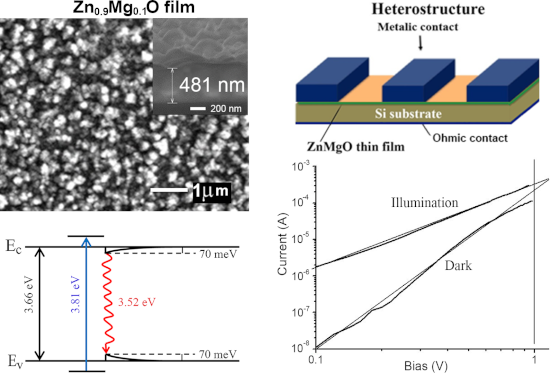
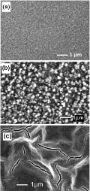
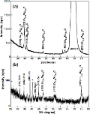
- to some Zn clusters [43]. A peak at 40.5° marked with an asterisk in Figure 6b was previously found in ZnO nanopowders prepared by the sol–gel method with zinc acetate dihydrate as a precursor [44]. In contrast to this, only peaks related to the Zn0.8Mg0.2O phase are observed in the film annealed at
- the oxygen gas flow by means of a syringe controlled by a stepper motor (Jova Solutions TIMS-0201™), operated by a computer. The produced film thickness is determined by the rate of precursor solution injection and the duration of deposition process. Usually, an injection rate of 0.33 mL/min was used

Simulations of the 2D self-assembly of tripod-shaped building blocks
Beilstein J. Nanotechnol. 2020, 11, 884–890, doi:10.3762/bjnano.11.73
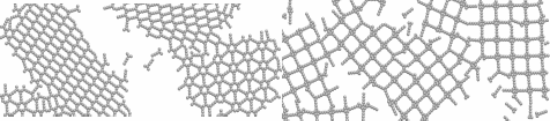
- this research, several factors have been established that can help to control the self-assembly process, such as precursor design [4][5], substrate nature and symmetry [6][7], type of solvent and its concentration, and thermodynamic conditions. The knowledge of the influence of these variables is


Transition from freestanding SnO2 nanowires to laterally aligned nanowires with a simulation-based experimental design
Beilstein J. Nanotechnol. 2020, 11, 843–853, doi:10.3762/bjnano.11.69
- temperature, the inflow was changed to a gas mixture of 5% oxygen in argon, which initiates the NW growth. Although often no inflow of oxygen is reported in literature, oxygen as a process gas has to be provided and – as we showed previously – it cannot originate from the precursor powder [19]. The oxygen of
- the thermally reduced SnO2 powder of the precursor will be bound in the CO/CO2 gas generated by the carbothermal reduction. After a specified process duration, the introduced gases were changed back to 100% Ar and a volumetric flow of 25 sccm was maintained during the cool down phase the furnace
- of oxygen consumed by the carbon due to CO or CO2 formation [19][20]. As previously discussed, taking care to ensure a vacuum-tight system and a homogeneous temperature distribution for the powder precursor as well as for the substrate position, the main influencing parameters on the growth mode





Nickel nanoparticles supported on a covalent triazine framework as electrocatalyst for oxygen evolution reaction and oxygen reduction reactions
Beilstein J. Nanotechnol. 2020, 11, 770–781, doi:10.3762/bjnano.11.62
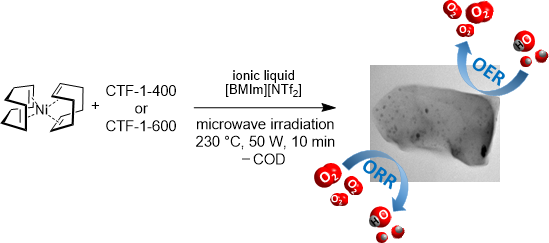
- immobilized on the CTFs via the decomposition of the metal precursor in the IL (Scheme 1). The composites were designated Ni/CTF-1-400-X and Ni/CTF-1-600-X, where X represents the weight percentage of nickel in the composite material based on flame atomic absorption spectroscopy (AAS). Nickel loadings of 20
- to 35 wt % on CTF-1 were obtained. The initial Ni/CTF mass ratios were 1:2 and 1:1. Thus, a large fraction of the nickel precursor was indeed deposited on the CTF. The starting mass ratio of 1:2 (or 33 wt % Ni) yielded 20–22 wt % Ni/CTF-1; the ratio of 1:1 (corresponding to 50 wt % Ni) gave 33–35 wt
- in a glovebox for 12 h. The mass of the nickel precursor was set to yield 0.5 or 1.0 wt % metal nanoparticles in IL, whereas 1.0 wt % CTF was used for all syntheses in IL dispersions. This dispersion was placed in a microwave (CEM Discover) and irradiated with a power of 50 W to 230 °C for 10 min


Effect of Ag loading position on the photocatalytic performance of TiO2 nanocolumn arrays
Beilstein J. Nanotechnol. 2020, 11, 717–728, doi:10.3762/bjnano.11.59
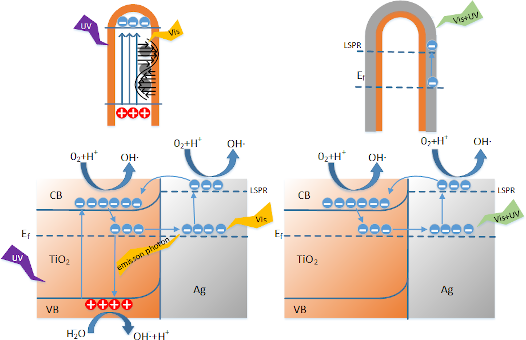
- nanocolumns was deposited (300 cycles) on the AAO template using ALD (home-built) with TiCl4 as the precursor. The preparation of Ag-filled TiO2 nanocolumns (AFT) was as follows: A sample deposited with TiO2 was placed in a vacuum evaporation apparatus (Shen Yang, LN-1004A) and subjected to Ag deposition at a


A novel dry-blending method to reduce the coefficient of thermal expansion of polymer templates for OTFT electrodes
Beilstein J. Nanotechnol. 2020, 11, 671–677, doi:10.3762/bjnano.11.53
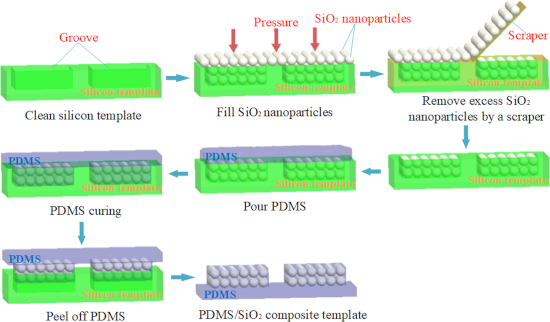
- a sol–gel precursor by adding tetraethyl orthosilicate (TEOS) to polyvinyl pyrrolidone (PVP), and then synthesized a silica/PVP nanofiber composite by electrospinning. The content of silica nanofibers in the composite is 9.1 wt %, and the CTE was decreased by ca. 40%. Jeyranpour et al. [13] studied


Exfoliation in a low boiling point solvent and electrochemical applications of MoO3
Beilstein J. Nanotechnol. 2020, 11, 662–670, doi:10.3762/bjnano.11.52
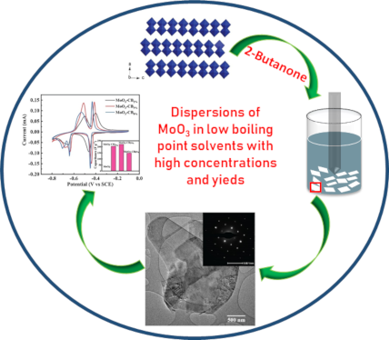
- ]. It is also reported that the exfoliation efficiency of layered materials may differ depending on the bulk precursor. To validate this, the exfoliation of MoO3 was carried out from two different precursors procured from different manufacturers. Similar concentrations of MoO3 dispersions were obtained

Preparation, characterization and photocatalytic performance of heterostructured CuO–ZnO-loaded composite nanofiber membranes
Beilstein J. Nanotechnol. 2020, 11, 631–650, doi:10.3762/bjnano.11.50
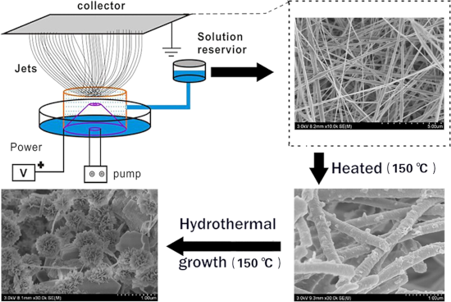
- . Carbonized PVDF/PAN CNFs have excellent mechanical properties due to the partial melting of PVDF after carbonization leading to point bonding. Therefore, blends of these two polymers were used as precursor for preparing the heterostructured CuO–ZnO-loaded CNF membranes (CNFMs) in our studies. In our previous











Silver-decorated gel-shell nanobeads: physicochemical characterization and evaluation of antibacterial properties
Beilstein J. Nanotechnol. 2020, 11, 620–630, doi:10.3762/bjnano.11.49
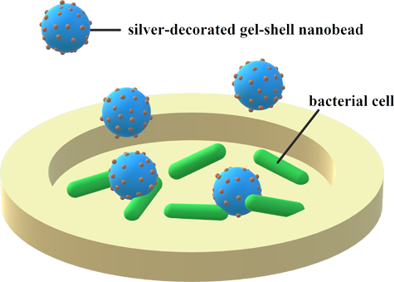
- incorporation of [Ag(NH3)2]+ complexes, followed by the reduction of the silver precursor with polyvinylpyrrolidone [23]. The resulting composite was examined with regard to its antimicrobial properties against Escherichia coli and Staphylococcus aureus bacteria. Similarly, Liao et al. obtained polystyrene


Soybean-derived blue photoluminescent carbon dots
Beilstein J. Nanotechnol. 2020, 11, 606–619, doi:10.3762/bjnano.11.48
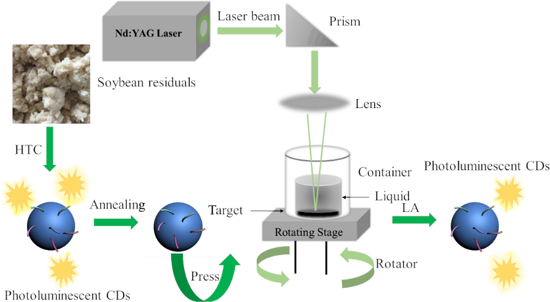
- ] synthesized photoluminescent CDs of 1.5–4.5 nm in diameter from orange juice at 120 °C. Liu et al. [22] produced photoluminescent polymer nanodots of 3–5 nm in diameter by using grass as a precursor at 180 °C, and Zhu et al. [10] synthesized bifunctional blue-emission carbon nanodots with diameters of 13–40
- the fluorescent quenching to the aggregation of CDs, which increased the particle size from 2.6 ± 0.2 nm to 4.4 ± 0.2 nm. However, there are few studies in the literature focusing on the comparison of the PL behavior of CDs made from the same biomass precursor with different synthetic or processing


Interfacial charge transfer processes in 2D and 3D semiconducting hybrid perovskites: azobenzene as photoswitchable ligand
Beilstein J. Nanotechnol. 2020, 11, 466–479, doi:10.3762/bjnano.11.38
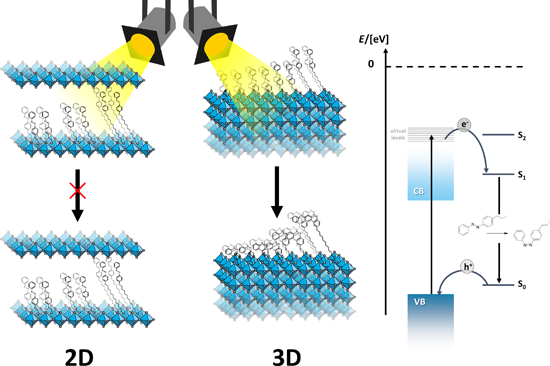
- perovskite phase a 1.0 M PbBr2 stock solution in DMF was prepared. 2.0 equiv of the appropriate Azo-(O)Cn ligand was added to the solution. Under vigorous stirring 0.2 mL of the precursor solution was added quickly into 30 mL DCM (n = 2) or acetone (n = 4, 12). The suspension was stirred for 1 h, then the
- solution in dried triethylene glycol was prepared. For the preparation of the precursor MABr (0.9 equiv) and the appropriate Azo(O)Cn ligand (0.1 equiv) were dissolved and the solution was cooled for at least 1 h. Under vigorous stirring 0.2 mL of the precursor solution was added quickly into 30 mL DCM




An advanced structural characterization of templated meso-macroporous carbon monoliths by small- and wide-angle scattering techniques
Beilstein J. Nanotechnol. 2020, 11, 310–322, doi:10.3762/bjnano.11.23
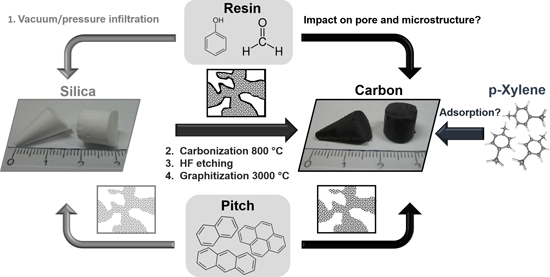
- physisorption was applied, using deuterated p-xylene (DPX) as a contrast-matching agent in the neutron scattering process. The impact of the carbon precursor on the structural order on an atomic scale in terms of size and disorder of the carbon microstructure, on the nanopore structure, and on the template
- porosity on the precursor materials is expected as some materials are better graphitizable than others. For instance, resin-based carbon materials are not graphitizable, while pitch-based carbon materials develop a comparably high structural order upon heat treatment and can be converted into graphite. The
- main approaches to influence the carbon structure are the choice of the carbon precursor and the applied heat treatment temperature for carbonization or graphitization. These two factors have the highest impact on the resulting sp2-hybridized microstructure. Since the porosity mainly consists of




Understanding nanoparticle flow with a new in vitro experimental and computational approach using hydrogel channels
Beilstein J. Nanotechnol. 2020, 11, 296–309, doi:10.3762/bjnano.11.22
- synthesis, the ligand mixture of PVP and PEI was heated to dissolution in the solvent TREG at 90 °C for 10 min. The iron precursor, Fe(acac)3 was subsequently added to this reactant mixture and thermally decomposed at 290 °C for 1 h to form the iron oxide NPs. The different biocompatible iron oxide NP


Facile biogenic fabrication of hydroxyapatite nanorods using cuttlefish bone and their bactericidal and biocompatibility study
Beilstein J. Nanotechnol. 2020, 11, 285–295, doi:10.3762/bjnano.11.21
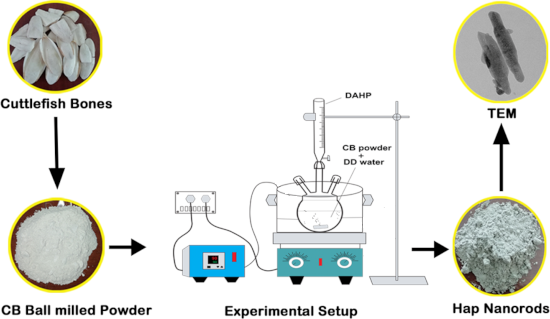
- nontoxicity, worldwide availability and low production cost of cuttlefish bone products makes them an excellent calcium carbonate precursor for the fabrication of hydroxyapatite. In the present study, a novel oil-bath-mediated precipitation method was introduced for the synthesis of hydroxyapatite (Hap
- ) nanorods using cuttlefish bone powder as a precursor (CB-Hap NRs). The obtained CB-Hap NRs were investigated using transmission electron microscopy (TEM), Fourier transform infrared spectroscopy (FTIR), X-ray diffraction (XRD) and thermogravimetric analysis (TGA) techniques to evaluate their
- spectrum of aragonite cuttlefish bone (CB), calcite, and hydroxyapatite (Hap) nanorods using cuttlefish bone powder as a precursor (CB-Hap NRs). The impurity peaks are indicated by an “x”. FTIR spectra of cuttlefish bone and hydroxyapatite (Hap) nanorods using cuttlefish bone powder as a precursor (CB-Hap


High-performance asymmetric supercapacitor made of NiMoO4 nanorods@Co3O4 on a cellulose-based carbon aerogel
Beilstein J. Nanotechnol. 2020, 11, 240–251, doi:10.3762/bjnano.11.18
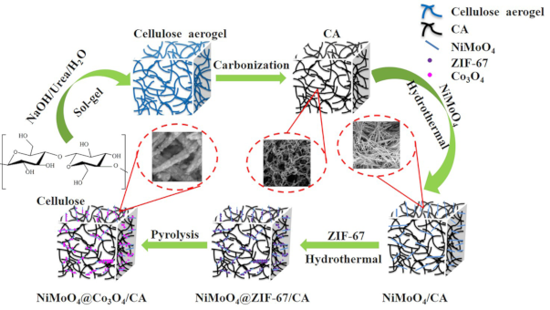
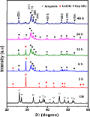
- on the above considerations, we present a simple scalable strategy to fabricate an integrated NiMoO4@Co3O4 hierarchical porous structure aligned on CA, which is derived from a cellulose precursor, to be applied in an advanced asymmetric supercapacitor (ASC). The NiMoO4 nanorods originated from ZIF-67
- aerogel precursor, which was produced from microcrystalline cellulose (MC). Second, the produced CA was used as the backbone for the growth of NiMoO4 nanorods employing a hydrothermal method followed by heat treatment. By this approach, NiMoO4/CA composites were obtained, in which the NiMoO4 nanorods
- uniformly filled the 3D network of CA, providing plenty of sites for coupling with ZIF-67. Third, ZIF-67 was in situ crystallized on the surface of the NiMoO4/CA skeleton by a hydrothermal method. Finally, after the pyrolysis of the NiMoO4@ZIF-67/CA precursor at 350 °C for 2 h under air atmosphere, the




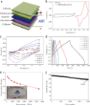
Simple synthesis of nanosheets of rGO and nitrogenated rGO
Beilstein J. Nanotechnol. 2020, 11, 68–75, doi:10.3762/bjnano.11.7
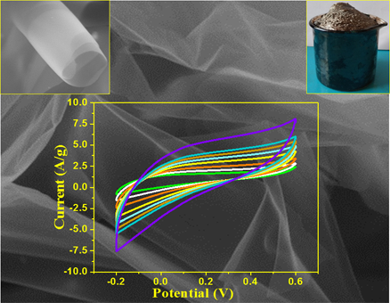
- any solvents, metal catalysts, reagents and hazardous chemicals. Similarly, N-rGO nanosheets have also been synthesized using glycine as precursor. Results and Discussion The typical XRD patterns of rGO and N-rGO nanosheets are shown in Figure 1. The XRD pattern of the as-prepared rGO (Figure 1a
- oxygen atmosphere. The sugar undergoes dehydration, producing a black foam in ca. 7 min. Finally, the resultant product was collected for further analysis. A similar procedure was followed to prepare N-rGO using glycine as precursor. Hydrogen treatment of rGO nanosheets Hydrogen-treated reduced graphene


Recent progress in perovskite solar cells: the perovskite layer
Beilstein J. Nanotechnol. 2020, 11, 51–60, doi:10.3762/bjnano.11.5

- [29][30]. Here, some common and effective methods are introduced. Additives As is now well known, introducing additives to perovskite precursor solutions is a common way to optimize the film morphology and enhance the crystalline quality. Wang et al. [31] demonstrated a method to achieve fast
- formation and crystallization of perovskite films by incorporating hydrobromic acid (HBr) into the perovskite precursor solutions. Here, the halogen ion, a strong donor, can interact strongly with Pb2+ to form a homogeneous solution, which is beneficial for the swift growth of high-quality films. A
- over time is summarized in Figure 3. Spray coating Spray coating is the fastest method of obtaining scalable perovskite layers providing a high coating rate in a continuous process. For the first time, Lidzey et al. [43] used the ultrasonic spray coating technique to coat a precursor solution


Gold and silver dichroic nanocomposite in the quest for 3D printing the Lycurgus cup
Beilstein J. Nanotechnol. 2020, 11, 16–23, doi:10.3762/bjnano.11.2
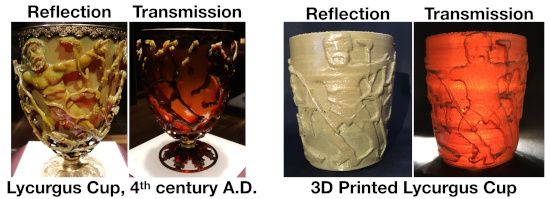
- exposing a solution of the silver precursor, sodium citrate, and a photopolymer initiator to sunlight for four months. When the same starting solution was exposed to incandescent light or xenon light to decrease the synthesis time, the final AgNP solutions presented different colorations. The dichroic
- , ending in a yellow transparent solution. Synthesis of AuNP The AuNP were synthesized using the Standard Turkevich method [16]. In brief, 95 mL of 0.14 mM gold precursor solution (0.133 mL of 0.1 M HAuCl4 in 95 mL of DI water) was heated to 100 °C. The reduction of the gold precursor solution was



Synthesis of amorphous and graphitized porous nitrogen-doped carbon spheres as oxygen reduction reaction catalysts
Beilstein J. Nanotechnol. 2020, 11, 1–15, doi:10.3762/bjnano.11.1
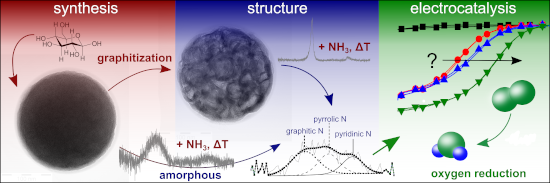
- of N sites, which influence the ORR activity even if they are not the active ORR sites themselves [27]. The N content depends on the amount of nitrogen in the precursor, the N(C) precursor concentration, the reaction temperature as well as the duration of the doping treatment. During ammonia




Self-assembly of a terbium(III) 1D coordination polymer on mica
Beilstein J. Nanotechnol. 2019, 10, 2440–2448, doi:10.3762/bjnano.10.234
- ceric oxide [38] surfaces and is favored by the presence of moisture [35]. As far as surface deposits are concerned, the epitaxial orientation of tungsten oxide (WO3) nanowires upon deposition on air-cleaved mica [21] has been linked to the formation of K2CO3 acting as a precursor for the pure WO3
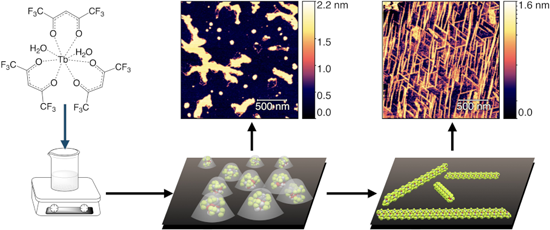
- nanowires. For [Tb(hfac)3·2H2O]n@mica a similar growth of the nanochains along preferential directions on the mica substrate is observed. However, it is very unlikely that K2CO3 acts as a precursor for our compound making this hypothesis the less accurate. The second hypothesis, which we consider more
- report on highly luminescent and magnetic terbium one-dimensional coordination polymers on a mica substrate with the possible formula [Tb(hfac)3·2H2O]n@mica. These deposits can be obtained from [Tb(hfac)3·2H2O]n, which is a standard precursor to build luminescent and magnetic molecules. Its high




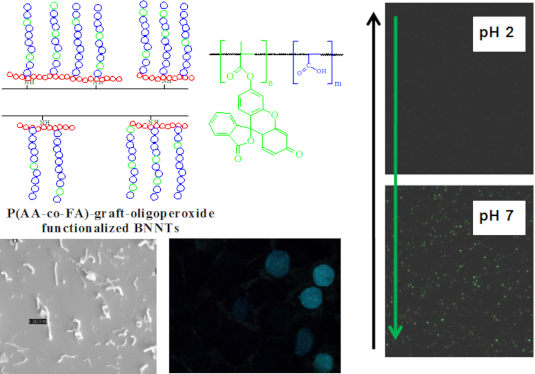
pH-Controlled fluorescence switching in water-dispersed polymer brushes grafted to modified boron nitride nanotubes for cellular imaging
Beilstein J. Nanotechnol. 2019, 10, 2428–2439, doi:10.3762/bjnano.10.233
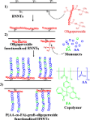
- ) and Fe2O3 (0.166 g) [25]. Briefly, the precursor mixture was transferred to an alumina boat and preheated at 180 °C for 15 min and then the alumina boat was placed into the center of the tubular furnace (Protherm, Furnaces PTF 14/50/450). The BNNT synthesis was performed under saturated NH3 atmosphere


Air oxidation of sulfur mustard gas simulants using a pyrene-based metal–organic framework photocatalyst
Beilstein J. Nanotechnol. 2019, 10, 2422–2427, doi:10.3762/bjnano.10.232
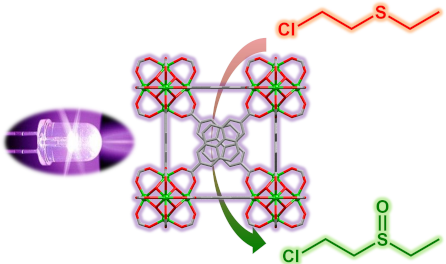
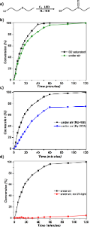
- an active photocatalyst, where the pyrene-based linkers are expected to play the role of photosensitizers responsible for singlet oxygen production under UV irradiation, several control studies were performed to firmly establish the role of the linker. We explored the ability of pure linker precursor




Semitransparent Sb2S3 thin film solar cells by ultrasonic spray pyrolysis for use in solar windows
Beilstein J. Nanotechnol. 2019, 10, 2396–2409, doi:10.3762/bjnano.10.230
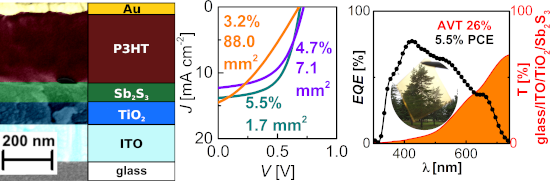
- detected, which is an expected result when crystalline Sb2S3 is formed [28][46][49]. No traces of additional phases were detected by either XRD or Raman in any glass/ITO/TiO2/Sb2S3 samples. Chlorine, which could originate from the SbCl3 precursor, was not detected by energy-dispersive X-ray spectroscopy