


Search results
Search for "response" in Full Text gives 1009 result(s) in Beilstein Journal of Nanotechnology. Showing first 200.
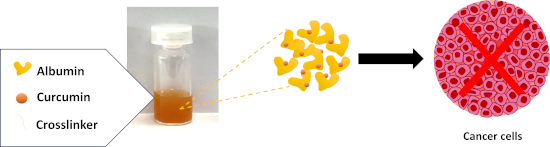
Curcumin-loaded albumin submicron particles with potential as a cancer therapy: an in vitro study
Beilstein J. Nanotechnol. 2023, 14, 1127–1140, doi:10.3762/bjnano.14.93
- addition, the removal of sericin, which requires a degumming process, is a prerequisite for using silk cocoons in biomedical applications to reduce the risk of an inflammatory response [18]. However, this degumming process can lead to damage to the silk structure, increase the polydispersity of the silk




A bifunctional superconducting cell as flux qubit and neuron
Beilstein J. Nanotechnol. 2023, 14, 1116–1126, doi:10.3762/bjnano.14.92
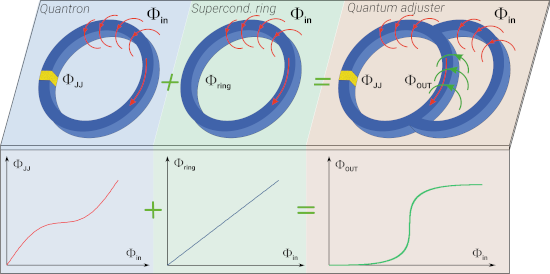
- transfer characteristic should be such that small fluctuations at the input do not produce a noticeable response, but above a certain threshold, any signal at the input produces a fixed magnetic flux at the output. Also, if it were possible to adapt the ASL cell in a perceptron to process the signal from a



Dual-heterodyne Kelvin probe force microscopy
Beilstein J. Nanotechnol. 2023, 14, 1068–1084, doi:10.3762/bjnano.14.88
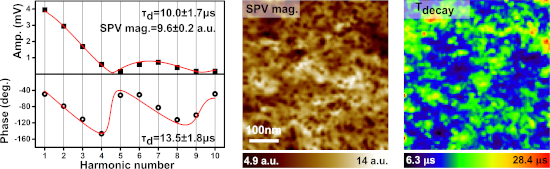
- ]). Each of these approaches have advantages and disadvantages. Intensity-modulated KPFM implementation is straightforward, since it simply consists in analysing the frequency response of the time-average CPD under modulated illumination. Nevertheless, it is prone to capacitive artefacts [15]. Accurate
- (SPV decay time constant) images can be mapped by appropriately fitting the amplitude spectrum. As with AM-heterodyne KPFM, there is a frequency mixing effect due to the capacitance term, and we restrict ourselves to the first harmonic to describe the time response of the capacitance gradient (K1




Spatial mapping of photovoltage and light-induced displacement of on-chip coupled piezo/photodiodes by Kelvin probe force microscopy under modulated illumination
Beilstein J. Nanotechnol. 2023, 14, 1059–1067, doi:10.3762/bjnano.14.87
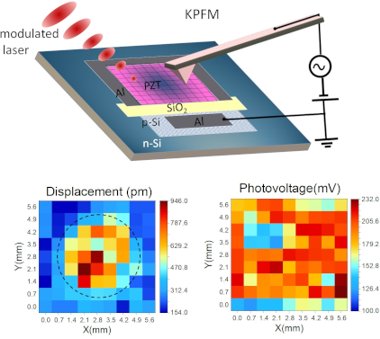
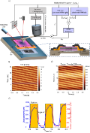
- mechanical oscillation of the piezoelectric membrane with vertical atomic resolution in real-time. This technique offers the opportunity to measure concurrently the optoelectronic and mechanical response of the device at the nanoscale. Furthermore, time-dependent atomic force microscopy (AFM) was employed to


A visible-light photodetector based on heterojunctions between CuO nanoparticles and ZnO nanorods
Beilstein J. Nanotechnol. 2023, 14, 1018–1027, doi:10.3762/bjnano.14.84
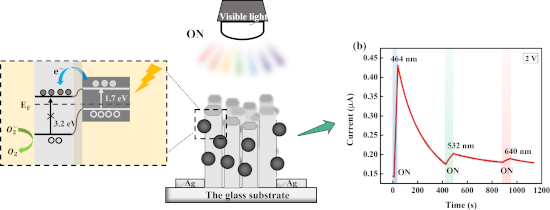
- , increasing the visible-light intensity promotes more excited electrons in the conduction band (CB) of CuO NPs. These electrons transfer to the CB of ZnO NRs and increase the photocurrent collected by the Ag electrodes. Response time and recovery are essential when evaluating a photodetector’s performance
- . The response time is defined as the time to approach 63% of the maximum recorded photocurrent, while the recovery time is the time to decay to 37% of the highest value of the photodetector [46]. Under the 395 nm light illumination, response time and recovery time are estimated at about 21.38 s and
- visible region. It can be seen in Table 1 that previous papers about CuO/ZnO-based photodetectors mainly investigated the response in the UV light range and did not demonstrate the sensitivity of the devices to visible light. In this work, we show the performance of our device under exposure to visible


Exploring internal structures and properties of terpolymer fibers via real-space characterizations
Beilstein J. Nanotechnol. 2023, 14, 1004–1017, doi:10.3762/bjnano.14.83
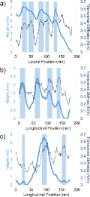
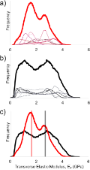
- the context of these experiments. The mean provides an overall average mechanical response, but it is more sensitive to impacts of individual scans than the mode, which tells us the ET value measured most frequently in different areas. For example, in the overall ET distribution in Technora® (Figure
- ][21]. We have implicitly focused on Kevlar® cores, but when full Kevlar® fibers are subjected to transverse compression, we would expect a mixed mechanical response based on both core and skin stiffness. Thus, our broad distributions in nanoscale Kevlar® values and this clear distinction between nano
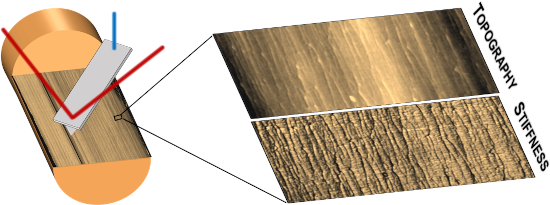
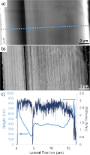
- pixels, ca. 10 nm/pixel), depending on whether the map was intended to characterize fiber nanostructure or microstructure. To clarify, both transverse stiffness and transverse elastic modulus maps obtained with AFM provide information about the local mechanical response of the material. Transverse






Nanoarchitectonics of photothermal materials to enhance the sensitivity of lateral flow assays
Beilstein J. Nanotechnol. 2023, 14, 988–1003, doi:10.3762/bjnano.14.82
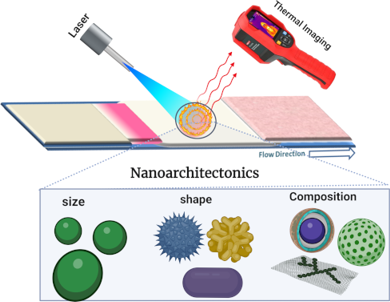
- change [20][21]. Generally, photothermal nanomaterials are being used in cancer therapy, removal of bacterial biofilms, and sensing applications [22][23][24]. Photothermal nanomaterials produce heat in response to the irradiation of photons at a particular wavelength [23]. Similarly, when plasmonic
- result revealed that 100 nm GNPs had a better colorimetric and photothermal response than the smaller GNPs (Figure 7C). This increase in photothermal efficiency is attributed to the increased cross-sectional area of each particle. However, a further increase in the size of GNPs reduced the flow of


Prediction of cytotoxicity of heavy metals adsorbed on nano-TiO2 with periodic table descriptors using machine learning approaches
Beilstein J. Nanotechnol. 2023, 14, 939–950, doi:10.3762/bjnano.14.77
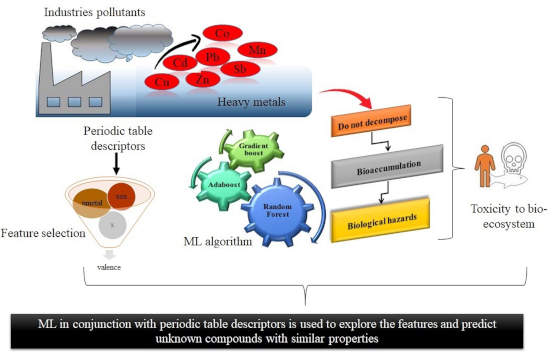
- the response and the predictor as well as solve regression problems. Additionally, such methods overcome problems with weak predictors and can be used to reduce the overfitting of the training data by averaging and incorporating multiple models. Ensemble learning is established with multiple
- sorted response-based approach using the in-house dataset division tool (https://dtclab.webs.com/software-tools). In this study, the size ratio was set at 3:1 (training set/test set) for dataset division. In almost any ML algorithm, different models are trained for a dataset and the best-performing model
- tool for the characterization of interpolation spaces based on the modeled descriptors and response functions. The applicability domain developed here is based on the features of some specific heavy metal salts, that is, CdCl2, ZnCl2, MnCl2, CoCl2, CuSO4, NiCl2, Pb(NO3)2, and SbCl3. The developed model


Antibody-conjugated nanoparticles for target-specific drug delivery of chemotherapeutics
Beilstein J. Nanotechnol. 2023, 14, 912–926, doi:10.3762/bjnano.14.75
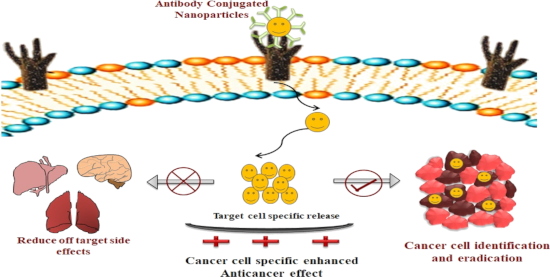
- chemotherapeutic agent in a controlled manner. Appropriately designed and synthesized ACNPs are essential to fully realize their therapeutic benefits. In blood stream, ACNPs instantly interact with biological molecules, and a protein corona is formed. Protein corona formation triggers an immune response and
- enhanced humoral immune response. The protein corona formation on Ab-conjugated NPs mediates a more specific and sensitive antibody–antigen interaction [83]. The group of de Puig evaluated the effect of a protein corona on anti-NS1 Ab-conjugated star-shaped gold NPs. They found that the protein corona
- of NP surfaces with targeting moieties such as antibodies protects the chemotherapeutic agent from enzymatic degradation and improves the internalization into targeted cancer cells. Multifunctionalized NPs improve the tumor targeting ability, boost the body’s antitumor immune response, and decrease



Ultralow-energy amorphization of contaminated silicon samples investigated by molecular dynamics
Beilstein J. Nanotechnol. 2023, 14, 834–849, doi:10.3762/bjnano.14.68
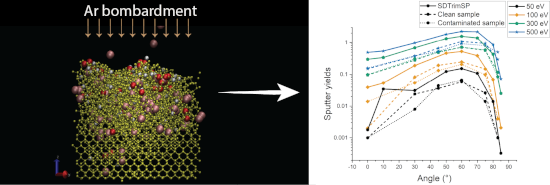
- during the Ar ion bombardment near the sample surface. Oxygen and silicon exhibit a particularly strong interaction [35][36], and partial charges contribute significantly to the bond energy. ReaxFF potentials can describe this phenomenon and allow one to simulate the response of the sample bombarded with




A wearable nanoscale heart sound sensor based on P(VDF-TrFE)/ZnO/GR and its application in cardiac disease detection
Beilstein J. Nanotechnol. 2023, 14, 819–833, doi:10.3762/bjnano.14.67
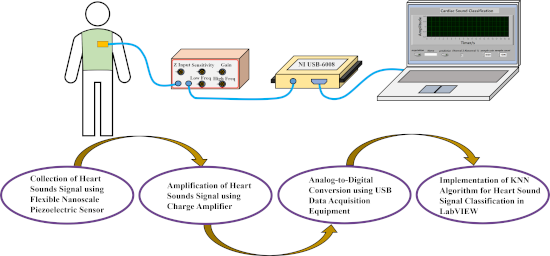
- signal is characterized by low sound pressure and medium-to-high frequency, and the heart sound sensor must exhibit good acoustic and electrical response frequency bandwidth in the range of 20 to 200 Hz. To evaluate the sensor's acoustic-electric conversion ability at the same frequency but at varying
- sound pressure levels, we set the signal generator to emit a sine wave with a frequency of 180 Hz, and adjust the amplitude of the signal generator and power amplifier to control the sound pressure. We gradually increased the sound pressure from 65 to 85 dB, and measured the sensor response at 2 dB
- (VDF-TrFE)/ZnO piezoelectric film with 10% ZnO and 0.1% GR as test samples. Figure 10 shows the results, with the response open-circuit voltage of the sensor gradually increasing with rising sound pressure, and the slope of the tangent line also increasing. The P(VDF-TrFE)/ZnO/GR sensor had higher


Nanostructured lipid carriers containing benznidazole: physicochemical, biopharmaceutical and cellular in vitro studies
Beilstein J. Nanotechnol. 2023, 14, 804–818, doi:10.3762/bjnano.14.66
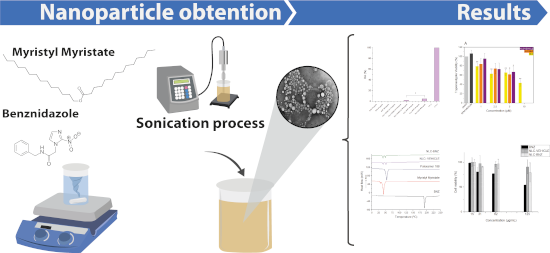
- higher cumulative release and considerable higher activity against amastigotes compared to previously reported BNZ-loaded NLCs. Moreover, we report the dose-response intrinsic activity of myristyl myristate, a relatively common constituent of NLCs, against T. cruzi, which might be of future interest to
- 6.07 µM), whereas the NLC-BNZ and NLC-VEHICLE also exhibited a dose-response behavior despite comparatively large variability across replicates. While for free BNZ the estimated EC50 value was 6.07 µM with similar reported values (6.04 µM [48]) for the same parasite classification (TcI), the NLC-BNZ
- formulations was thus performed, demonstrating that myristyl myristate, at a relatively low concentration, has a negative effect on parasite viability (dose-response studies for myristyl myristate against amastigotes are shown in Supporting Information File 1). This may imply that myristyl myristate cannot be


Carboxylic acids and light interact to affect nanoceria stability and dissolution in acidic aqueous environments
Beilstein J. Nanotechnol. 2023, 14, 762–780, doi:10.3762/bjnano.14.63
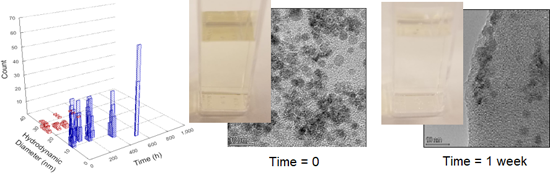
- ceria [52]. Group two includes only one sample, namely glyceric acid. When stored in the dark, there was a slight reduction in hydrodynamic particle size over time, and the color remained yellow, similar to the response to group one. However, when exposed to light, there was an immediate reduction in
Control of morphology and crystallinity of CNTs in flame synthesis with one-dimensional reaction zone
Beilstein J. Nanotechnol. 2023, 14, 741–750, doi:10.3762/bjnano.14.61
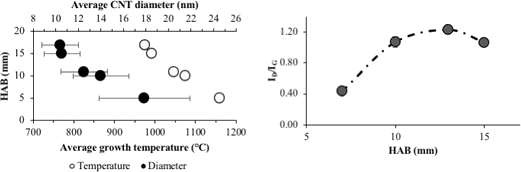
- utilized in photon energy conversion devices due to the excellent photo response in the visible and near-UV light regions. Hence, controlling morphology and functionalization of such nanomaterials during synthesis will open vast opportunities to satisfy the requirements for various specific applications


Cross-sectional Kelvin probe force microscopy on III–V epitaxial multilayer stacks: challenges and perspectives
Beilstein J. Nanotechnol. 2023, 14, 725–737, doi:10.3762/bjnano.14.59
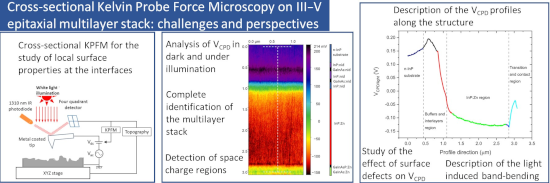
- of the surface cross section was achieved thanks to the wide light spot. Finally, the power density was 750 W·m−2 as measured by a thermal power sensor S401C from Thorlabs, which has a flat spectral response in the white-light range of wavelengths. This relatively low power density allows one to


Current-induced mechanical torque in chiral molecular rotors
Beilstein J. Nanotechnol. 2023, 14, 711–721, doi:10.3762/bjnano.14.57
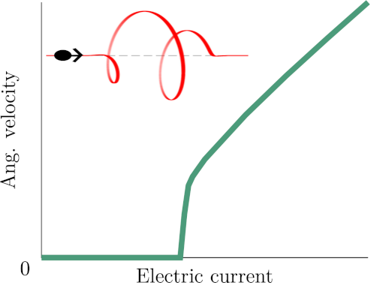
- . We expect that the threshold current will vanish in a strongly overdamped limit and a linear response of is expected. The results presented here demonstrate a directed current-induced rotation without any angular momentum transfer in a molecular rotor. We remark that each electron boosts the angle
- linear response (under the threshold current). A small symmetry breaking is needed in order to discriminate between the three states. Quantum effects are responsible for a rich transport phenomenology of molecular junctions [20]. Here, we pause to discuss quantum effects related to the electronic degrees




![[Graphic 29]](/bjnano/content/inline/2190-4286-14-57-i54.svg?max-width=637&scale=1.18182)


A graphene quantum dots–glassy carbon electrode-based electrochemical sensor for monitoring malathion
Beilstein J. Nanotechnol. 2023, 14, 701–710, doi:10.3762/bjnano.14.56
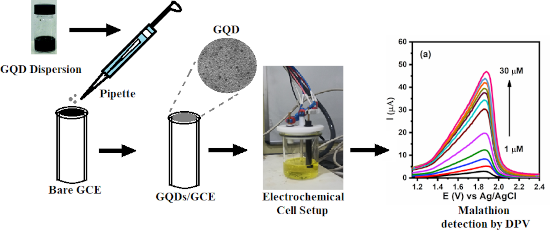
- use of graphene and its derivatives is widespread for electrochemical detection since 2D graphene sheets provide numerous electrochemical sites for the detection of target molecules, while electrons in the sp2-hybridized pz orbital have a faster electron transfer rate, which enhances response time and


Humidity-dependent electrical performance of CuO nanowire networks studied by electrochemical impedance spectroscopy
Beilstein J. Nanotechnol. 2023, 14, 683–691, doi:10.3762/bjnano.14.54
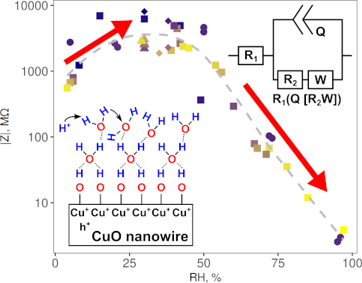
- , which was explained by water chemisorption on the nanowire surface [6][13][18][19]. Nevertheless, for single nanowires assembled on electrodes by dielectrophoresis (DEP), the opposite response to humidity was observed [21]. Besides, unusual responses to humidity were shown for nanowires of other
- (Figure 4a). The humidity responses calculated as the ratio of maximal to minimal values are ca. 30 for R1 and ca. 2000 for R2. Also, the humidity response of ca. 2 is even smaller than that for R1. All in all, the resistance R2 from nanowire interconnects is more suited for sensing because it changes
- measurements, the sample was stored in air atmosphere at RH 20%. The spectra were analysed using a complex plane Nyquist plot. The spectra were first fitted using the “Find circle” tool, and the equivalent electrical circuit was derived. Then the impedance element values were found using frequency response


Investigations on the optical forces from three mainstream optical resonances in all-dielectric nanostructure arrays
Beilstein J. Nanotechnol. 2023, 14, 674–682, doi:10.3762/bjnano.14.53
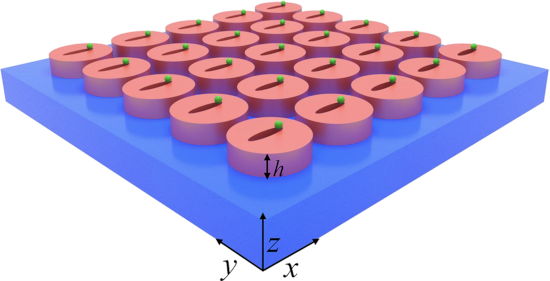
- scattering spectra of these modes are analyzed by the multipole decomposition method, which ensures that strong TD response, the anapole mode composed of simultaneously working TD and ED momentums, and the quasi-BIC resonance arising from an out-of-plane MD mode can all be excited using similar structures
- nanoscale polystyrene (PS) spheres in the slot of the all-dielectric nanostructures. All these spheres have their own response to the incident radiations (e.g., Mie resonances). However, we noted that due to the small size of the spheres and the relatively lower refractive index of the polymeric material
- the TD resonance requires the presence of a set of magnetic dipoles arranged head-to-tail to form a closed loop. This kind of TD resonance is usually called magnetic TD. In contrast, the TD response due to a circular configuration of electric dipoles is called electric TD. In this work, we focus only


Metal-organic framework-based nanomaterials as opto-electrochemical sensors for the detection of antibiotics and hormones: A review
Beilstein J. Nanotechnol. 2023, 14, 631–673, doi:10.3762/bjnano.14.52
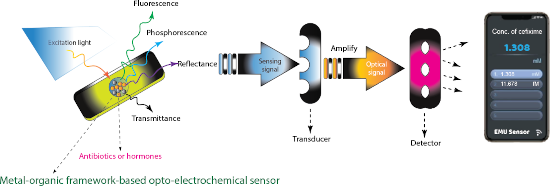
- and challenges It is crucial to assess the performance of sensors during development using standard metrics such as selectivity, sensitivity, the limit of detection (LOD), and response time. Selectivity refers to a sensor’s capacity to respond to a narrow range of target analytes while resisting
- blank signal must be produced by this concentration (CLOD) [39]. Sensitivity (S) is defined as the ability to change the measured signals (optical or electrical) in response to a change in the amount of analyte. This has a close connection to a sensor’s LOD; the LOD decreases as the sensitivity
- are correlated with sensor response time. An ideal sensor, when taking into account the aforementioned key parameters, should be specific for the target analytes, sensitive to changes in analyte concentrations, have a rapid response time, have a long lifespan of at least several months, and be small


Carbon nanotube-cellulose ink for rapid solvent identification
Beilstein J. Nanotechnol. 2023, 14, 535–543, doi:10.3762/bjnano.14.44
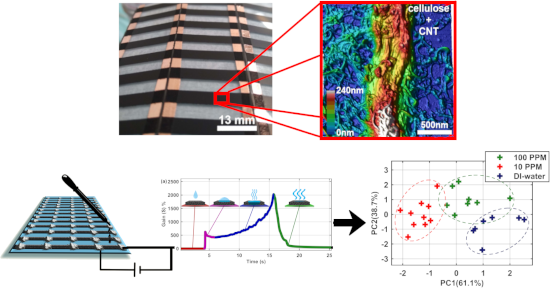
- devices that can be easily fabricated by scalable printing techniques. We monitored the electrical response due to the interaction between a given liquid with the carbon nanotube–cellulose film over time. Using principal component analysis of the electrical response, we were able to extract robust data to
- ) and the calculated mean resistance (with standard deviation) is 1.26 ± 0.07 kΩ. A geometry optimization was also performed to find out the maximum gain response as a function of width, length, and number of painted layers (see Supporting Information File 1 for details). To better understand how MWCNTs
- more information). Also, to compare our results with a simple conductive response to the pure liquids, we performed control experiments on a substrate without applying the ink. Our sensor film proved to be two orders of magnitude more sensitive than the bare substrates with only electrical contacts


Microneedle patches – the future of drug delivery and vaccination?
Beilstein J. Nanotechnol. 2023, 14, 494–495, doi:10.3762/bjnano.14.40

- , and MN patch diagnostic systems barely appear on the research landscape. Microneedle vaccination patches are closer to clinical acceptance and have enormous promise, given the demand for high volume, low cost, rapidly deployable vaccination in response to pandemics like COVID-19 [4], and companies
Specific absorption rate of randomly oriented magnetic nanoparticles in a static magnetic field
Beilstein J. Nanotechnol. 2023, 14, 485–493, doi:10.3762/bjnano.14.39
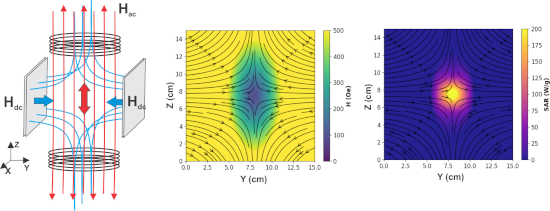
- the tumor in the range of 41–43 °C over several medical treatments leads to the tumor destruction, as well as to the activation of the body’s immune response to cancer cells [8]. However, the introduction of MH into clinical practice is hindered by a number of difficulties. Unfortunately, it is not


Plasmonic nanotechnology for photothermal applications – an evaluation
Beilstein J. Nanotechnol. 2023, 14, 380–419, doi:10.3762/bjnano.14.33
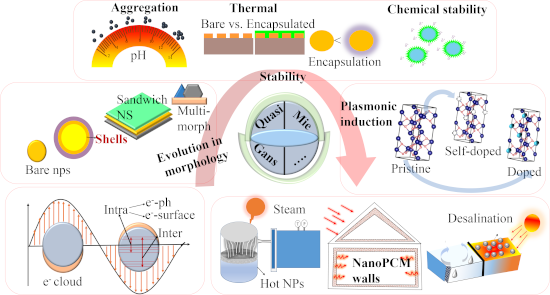
- as spheres and nanorods. 2.1 The plasmonic oscillation frequency The optical response of plasmonic nanoparticles, such as AuNPs, to incident electromagnetic radiation depends on their size, shape, morphology, proximity to one another, as well as the surrounding medium [32]. The vast changes in




Quercetin- and caffeic acid-functionalized chitosan-capped colloidal silver nanoparticles: one-pot synthesis, characterization, and anticancer and antibacterial activities
Beilstein J. Nanotechnol. 2023, 14, 362–376, doi:10.3762/bjnano.14.31
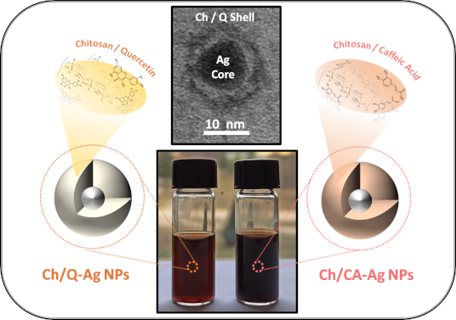
- response, the cells were treated for 24 h in a medium with five different concentrations of Ch/Q- and Ch/CA-Ag NPs in dilutions of 1/1, 1/2, 1/3, 1/4, and 1/5 (v/v), where DMEM without phenol red was used for dilution of Ag NPs. Since the NPs were dispersed in distilled water, distilled water without NPs





