Search results
Search for "surface morphology" in Full Text gives 273 result(s) in Beilstein Journal of Nanotechnology. Showing first 200.
Fabrication of hierarchically porous TiO2 nanofibers by microemulsion electrospinning and their application as anode material for lithium-ion batteries
Beilstein J. Nanotechnol. 2017, 8, 1297–1306, doi:10.3762/bjnano.8.131
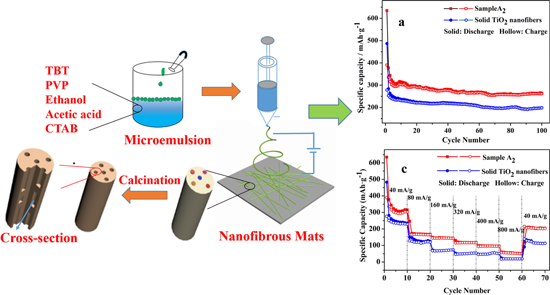
- porous TiO2 nanofibers were recorded on a Bruker D8 Advance X-ray diffractometer with Cu Kα radiation (wavelength λ = 1.54 Å) at a scanning speed of 4 °C/min. A Hitachi field emission scanning electron microscope (FE-SEM, SU4800) was employed to observe the surface morphology of porous TiO2 nanofibers
- distribution. Nevertheless, it can be observed that with decreasing relative content of TBT/paraffin oil, the surface morphology looks worse, and the distribution of the fiber diameter becomes increasingly non-uniform. This is because the butoxyl groups in TBT serve as additional surfactant, which is




Metal oxide nanostructures: preparation, characterization and functional applications as chemical sensors
Beilstein J. Nanotechnol. 2017, 8, 1205–1217, doi:10.3762/bjnano.8.122
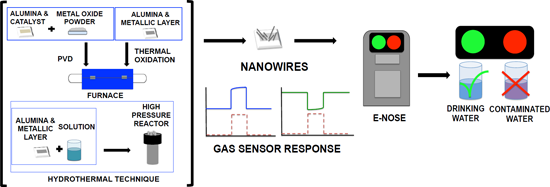
- commercialize chemical sensors based on these structures. Surface morphology and composition were studied through scanning electron microscopy and Raman spectroscopy, respectively, confirming the high surface-to-volume ratio (fundamental for chemical sensing). Moreover, we tested the functional properties with


Growth, structure and stability of sputter-deposited MoS2 thin films
Beilstein J. Nanotechnol. 2017, 8, 1115–1126, doi:10.3762/bjnano.8.113
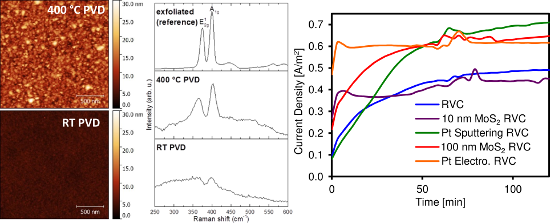
- , electron beam and light scattering, scanning and spectroscopic methods as well as electrical device characterization. We find that room-temperature-deposited MoS2 films are amorphous, of smooth surface morphology and easily degraded upon moderate laser-induced annealing in ambient conditions. In contrast
- , films deposited at 400 °C are nano-crystalline, show a nano-grained surface morphology and are comparatively stable against laser-induced degradation. Interestingly, results from electrical transport measurements indicate an unexpected metallic-like conduction character of the studied PVD MoS2 films
- ≈10 to ≈1000 nm which were deposited by magnetron sputter deposition onto SiO2-coated silicon (Si) wafers and reticulated vitreous carbon (RVC) electrodes for water electrolysis. Surface morphology, structure, chemical composition, stability and electrical properties of MoS2 thin films deposited at


Fully scalable one-pot method for the production of phosphonic graphene derivatives
Beilstein J. Nanotechnol. 2017, 8, 1094–1103, doi:10.3762/bjnano.8.111
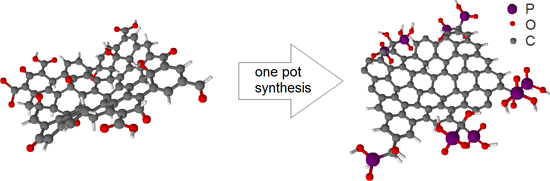
- reaction with H3PO3. The scheme of the reaction is presented in Figure 1. The first visual observations revealed that after functionalization the color of the previously yellow-brownish GO changed to shiny greyish. The surface morphology of GO and GO-P was examined with SEM (Figure 2). The images


Study of the correlation between sensing performance and surface morphology of inkjet-printed aqueous graphene-based chemiresistors for NO2 detection
Beilstein J. Nanotechnol. 2017, 8, 1023–1031, doi:10.3762/bjnano.8.103
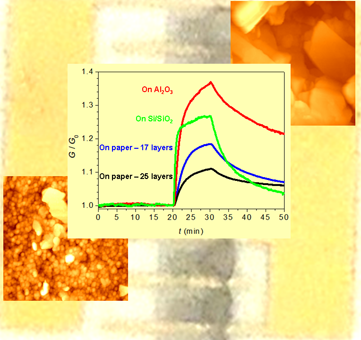
- investigated, in order to understand whether there is any correlation with the surface features of the printed material. To this end, a morphological investigation with AFM has been performed. Figure 6 and Figure 7 report typical AFM images of the surface morphology of the graphene material on each device
- fabrication in comparison to other techniques commonly used, e.g., drop-casting deposition. Overall, the main drawback in paper-based devices is the surface morphology of the sensing film, induced by the granular surface of the substrate. The Al2O3-based device, which shows a surface characterized by planar
- an effective bulk path, which results in a lower base resistance. The edge accumulation is also responsible of the difficulties in controlling the base conductance value as a function of the number of inkjet-printed layers. Regarding the electrical responses and their correlation to the surface


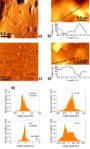
Near-field surface plasmon field enhancement induced by rippled surfaces
Beilstein J. Nanotechnol. 2017, 8, 956–967, doi:10.3762/bjnano.8.97
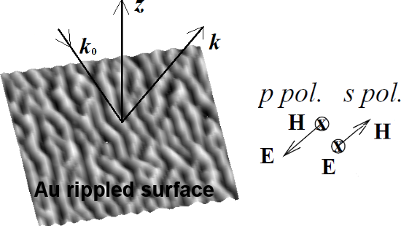
- properties [13][14]. Although the occurrence of surface plasmon-enhanced nonlinear optical effects is rather well understood, further investigation into the spectral dependence and magnitude dependence of the field enhancement as related to surface morphology [2]. Particular attention has been paid to the
- role, in particular whenever the nanostructure morphology shows anisotropy at the local scale. Polarization can induce strong confinement of plasmons in the resonance region in close correlation with the local surface morphology, characterized by a pattern of hills and valleys. As a consequence, an
- corresponding point-by-point enhancement factors. This approach has the advantage that it allows for a much finer spatial discretization, and hence, an improved ability to correlate the hot spots to the surface morphology. The main disadvantage of our method is that since is applied in the frequency domain, we


Vapor-phase-synthesized fluoroacrylate polymer thin films: thermal stability and structural properties
Beilstein J. Nanotechnol. 2017, 8, 933–942, doi:10.3762/bjnano.8.95
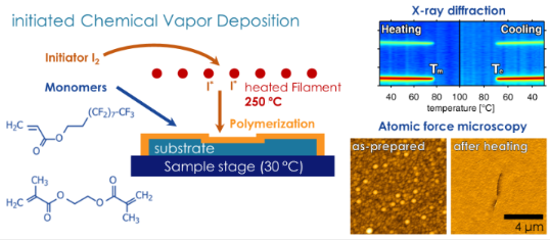
- -PFDA and cross-linked alterations thereof are chemically stable in the investigated temperature range, within the detection limits of the FTIR spectroscopy measurement. Surface morphology and wettability The impact of the cross-linker on the surface morphology of p-PFDA films was investigated by atomic
- 23.7 nm. The mean radius of the spherical structures is about 200 nm, as determined from the autocorrelation length of the micrograph. Upon addition of EGDMA, the surface morphology is drastically changed. The hillock-like structure of pure p-PFDA is reduced to a few aggregated clusters, interrupting
- morphology were recorded by AFM (Figure 3b). For the p-PFDA films, a completely different surface morphology results. The spherical aggregates in the as-prepared polymer are completely absent and a relatively smooth surface results instead. The morphology is still reminiscent of the hillock-like structures


Synthesis of coaxial nanotubes of polyaniline and poly(hydroxyethyl methacrylate) by oxidative/initiated chemical vapor deposition
Beilstein J. Nanotechnol. 2017, 8, 872–882, doi:10.3762/bjnano.8.89
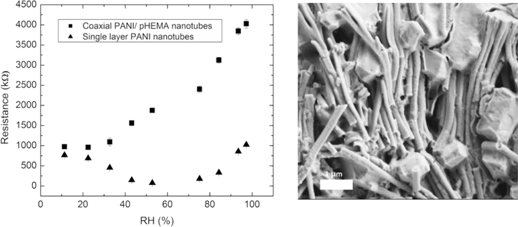
- degree of crystallinity [47]. The surface morphology of the PANI thin films was examined by using AFM analysis (Figure 4). The RMS surface roughness of the as-deposited thin films of 350 nm thickness was measured as 30 nm on a flat substrate, and the roughness increased with film thickness. When the


Selective detection of Mg2+ ions via enhanced fluorescence emission using Au–DNA nanocomposites
Beilstein J. Nanotechnol. 2017, 8, 762–771, doi:10.3762/bjnano.8.79
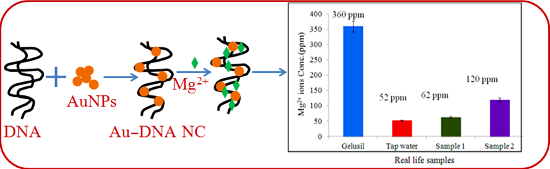
- from the observed changes in the optical absorption, plasmon band, zeta potential, DLS particle size distribution, as well as TEM and AFM surface morphology analysis. Circular dichroism studies also revealed that DNA-functionalized AuNP binding caused a conformational change in the DNA structure. Due




Diffusion and surface alloying of gradient nanostructured metals
Beilstein J. Nanotechnol. 2017, 8, 547–560, doi:10.3762/bjnano.8.59
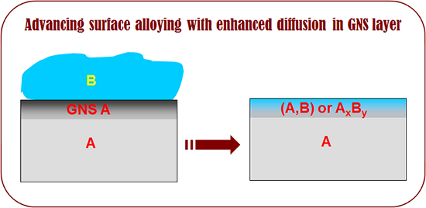
- studying the structure and surface morphology evolution of the GNS sample in the H2O2 solution, Wen et al. [95] revealed that the accelerated formation of nanoporous structure was mostly due to the higher chemical reactivity of the GNS Ti, which promoted the decomposition of H2O2 and the formation of




Modeling of the growth of GaAs–AlGaAs core–shell nanowires
Beilstein J. Nanotechnol. 2017, 8, 506–513, doi:10.3762/bjnano.8.54
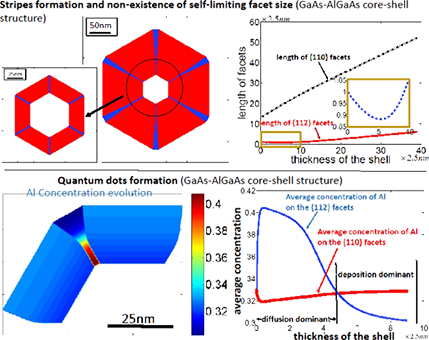
- Figure 7b). It is obvious that a model assuming pure materials cannot address the mechanisms leading to the non-homogeneous distribution of Al in the shell. A two-dimensional fully faceted model [8] was developed for the growth of the shell with an AxB1−x (AlxGa1−xAs) alloy on a hexagonal core. Surface
- morphology and composition on the i-th facet evolve as where δ is the ratio of the density of lattice sites on the surface to that in the bulk. For each component m, ξm is the local composition fraction of atoms m of the surface layer and Moreover, ξA + ξB = 1. is the surface-diffusion flux of component m


Study of the surface properties of ZnO nanocolumns used for thin-film solar cells
Beilstein J. Nanotechnol. 2017, 8, 446–451, doi:10.3762/bjnano.8.48
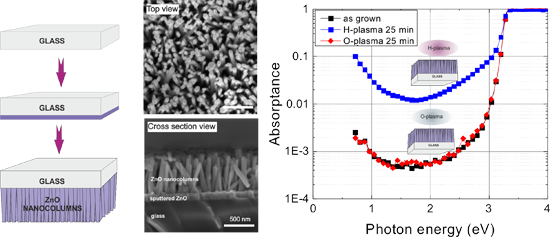
- on a sample holder. After termination the sample was thoroughly washed in deionized water and dried in nitrogen flow. The surface morphology of the samples was characterized by SEM (MAIA3, TESCAN). The electron energies were 5 keV or 10 keV. An in-lens detector was used to image the investigated



Laser irradiation in water for the novel, scalable synthesis of black TiOx photocatalyst for environmental remediation
Beilstein J. Nanotechnol. 2017, 8, 196–202, doi:10.3762/bjnano.8.21
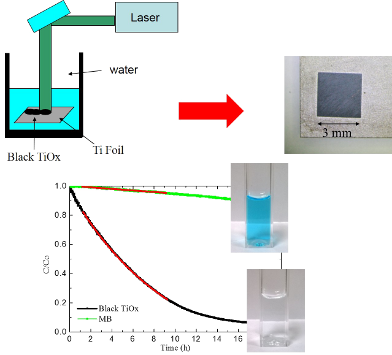
- surface morphology, as reported by SEM, reveals that after irradiation, the black surface is uniformly covered by small structures (Figure 2 centre). A high magnification image (Figure 2 right) shows that they consist of cavities and grain boundaries. It is worth noting that the nanostructure of the film


Influence of hydrofluoric acid treatment on electroless deposition of Au clusters
Beilstein J. Nanotechnol. 2017, 8, 183–189, doi:10.3762/bjnano.8.19
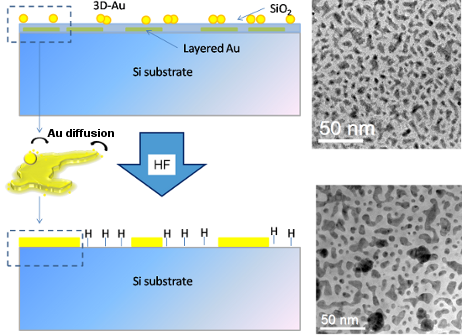
- (Figure 3a) and after (Figure 3b) an HF postdeposition treatment of 70 s. The postdeposition treatment clearly results in a much flatter surface morphology than in the untreated sample. This effect can be quantified by calculating the root mean square (RMS) roughness from the two 1 × 1 µm scans in Figure


Obtaining and doping of InAs-QD/GaAs(001) nanostructures by ion beam sputtering
Beilstein J. Nanotechnol. 2017, 8, 12–20, doi:10.3762/bjnano.8.2
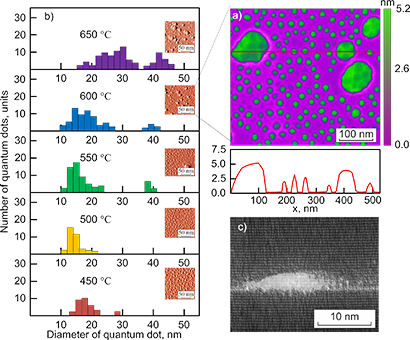
- impurity flux did not exceed the GaAs flux. The surface morphology was studied with an atomic force microscope Solver HV in the semicontact mode by NSG10 probes using positional marks, which allowed us to identify specific region on a surface [33]. The structure of the quantum dots was studied with a


Annealing-induced recovery of indents in thin Au(Fe) bilayer films
Beilstein J. Nanotechnol. 2016, 7, 2088–2099, doi:10.3762/bjnano.7.199
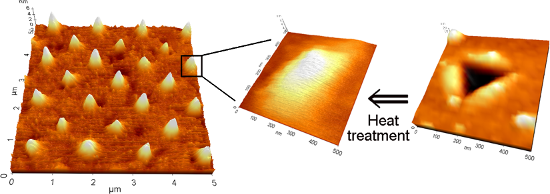
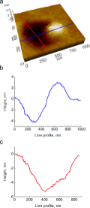
- thin metal films. The localized defects in the film were introduced by load-controlled nanoindentation. We employed atomic force microscopy (AFM) for studying the surface morphology evolution upon annealing; special attention was paid to the healing processes in the indented area and the dewetting





Chitosan-based nanoparticles for improved anticancer efficacy and bioavailability of mifepristone
Beilstein J. Nanotechnol. 2016, 7, 1861–1870, doi:10.3762/bjnano.7.178
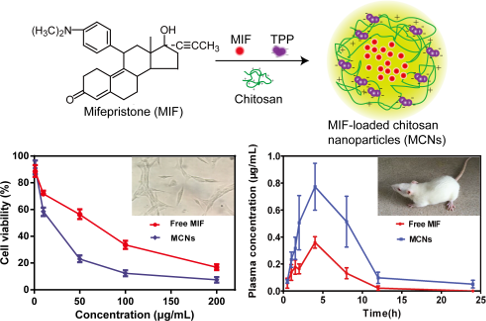
- the broad, amorphous structure of CNs (Figure 4D), indicating that the MIF was embedded in the CNs. Size and surface morphology of MCNs The diameters of CNs and MCNs measured by a Malvern particle size analyzer were found to be from 180 to 200 nm (Figure 5A). The morphologies of CNs and MCNs were


Precise in situ etch depth control of multilayered III−V semiconductor samples with reflectance anisotropy spectroscopy (RAS) equipment
Beilstein J. Nanotechnol. 2016, 7, 1783–1793, doi:10.3762/bjnano.7.171
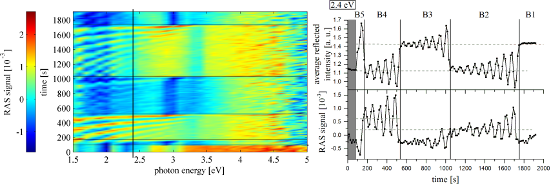
- analyze interferometric data and, hence, etch depth or rate, but also to gain information on other material properties of interest. Information on surface morphology of a monocrystalline semiconductor sample can be extracted – either on an atomic scale due to specific surface reconstructions [3][5][37][38


Effective intercalation of zein into Na-montmorillonite: role of the protein components and use of the developed biointerfaces
Beilstein J. Nanotechnol. 2016, 7, 1772–1782, doi:10.3762/bjnano.7.170
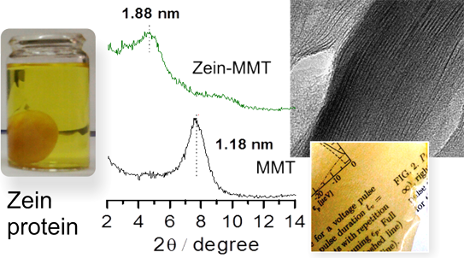
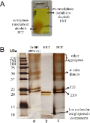
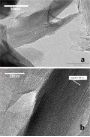
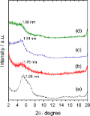
- shift values were referenced to tetramethylsilane. The qualitative analysis of protein fractions (λ = 250–600 nm) and the UV–vis transmittance (λ = 200–800 nm) of bionanocomposite films (rectangular shape, 2 cm × 4 cm) were determined using a Shimadzu UV-1201 spectrophotometer. Surface morphology was




Numerical investigation of depth profiling capabilities of helium and neon ions in ion microscopy
Beilstein J. Nanotechnol. 2016, 7, 1749–1760, doi:10.3762/bjnano.7.168
- + irradiation of polyimide (PI) and polyethersulfone improves the moisture uptake in the films [7]. Further applications include metal adhesion on polymer surface [8], novel inorganic films by ion bombardment of polymers [9], surface morphology for biocompatibility [10], etch resistance of polymers [11


Nanostructured TiO2-based gas sensors with enhanced sensitivity to reducing gases
Beilstein J. Nanotechnol. 2016, 7, 1718–1726, doi:10.3762/bjnano.7.164
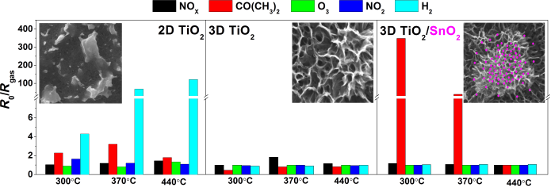
- , however, recently more sophisticated nanostructures such as nanowires, nanorods, nanoplates have been exploited [23][26][30][31]. The recourse of such a direction of research results from microstructural aspects such as grain size and surface morphology, which are among the most important factors


Role of RGO support and irradiation source on the photocatalytic activity of CdS–ZnO semiconductor nanostructures
Beilstein J. Nanotechnol. 2016, 7, 1684–1697, doi:10.3762/bjnano.7.161
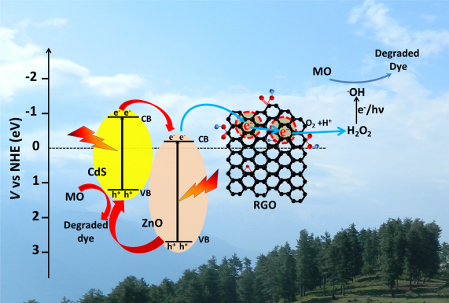
- charge carriers between the two semiconductors. Plots obtained by the transformation of the Kubelka–Munk function vs the energy of light are presented in Figure 3, which clearly shows the band gap narrowing in both the semiconductors due to the addition of GO. SEM analysis The surface morphology of all
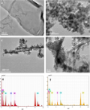
- electron microscopy (TEM) analysis was performed to obtain further information on the surface morphology and microstructures of all prepared nanostructures (Figure 6). The TEM image of GO shows the flake-like shape (Figure 6a). The CdS NP are about 20 nm in size (Figure 6b). The TEM images of the CdS–ZnO




Development of adsorptive membranes by confinement of activated biochar into electrospun nanofibers
Beilstein J. Nanotechnol. 2016, 7, 1556–1563, doi:10.3762/bjnano.7.149
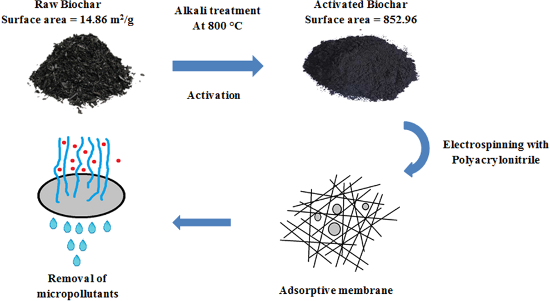
- subjected to methanol and heat treatment. Characterization of fabricated NFMs The surface morphology of the fabricated membranes was examined using a JSM-840A (JEOL, Japan) scanning electron microscope (SEM) at an acceleration voltage of 10 kV. For this analysis, small amounts of the samples were coated




Surface roughness rather than surface chemistry essentially affects insect adhesion
Beilstein J. Nanotechnol. 2016, 7, 1471–1479, doi:10.3762/bjnano.7.139
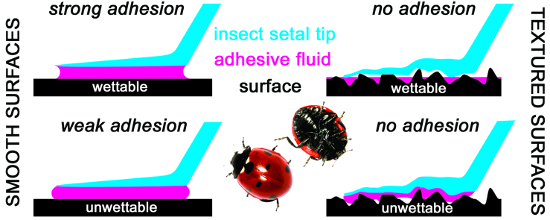
- not yet been fully resolved. Therefore, in order to obtain a deeper understanding of this bio-attachment phenomenon, it is crucial to systematically investigate the influence of both the surface chemistry and surface morphology on insect attachment properties using a greater range of surfaces with



Effect of tetramethylammonium hydroxide/isopropyl alcohol wet etching on geometry and surface roughness of silicon nanowires fabricated by AFM lithography
Beilstein J. Nanotechnol. 2016, 7, 1461–1470, doi:10.3762/bjnano.7.138
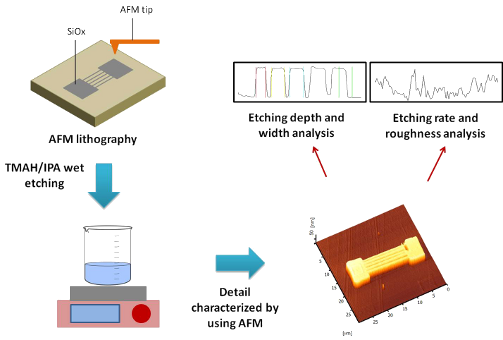
- %) and temperature (65 °C) in order to study the relationships of the etching depth and width, etching rate and surface roughness. Characterization The surface morphology of the silicon nanowires was characterized in detail using AFM. The elemental analysis of the fabricated silicon nanowire was carried